
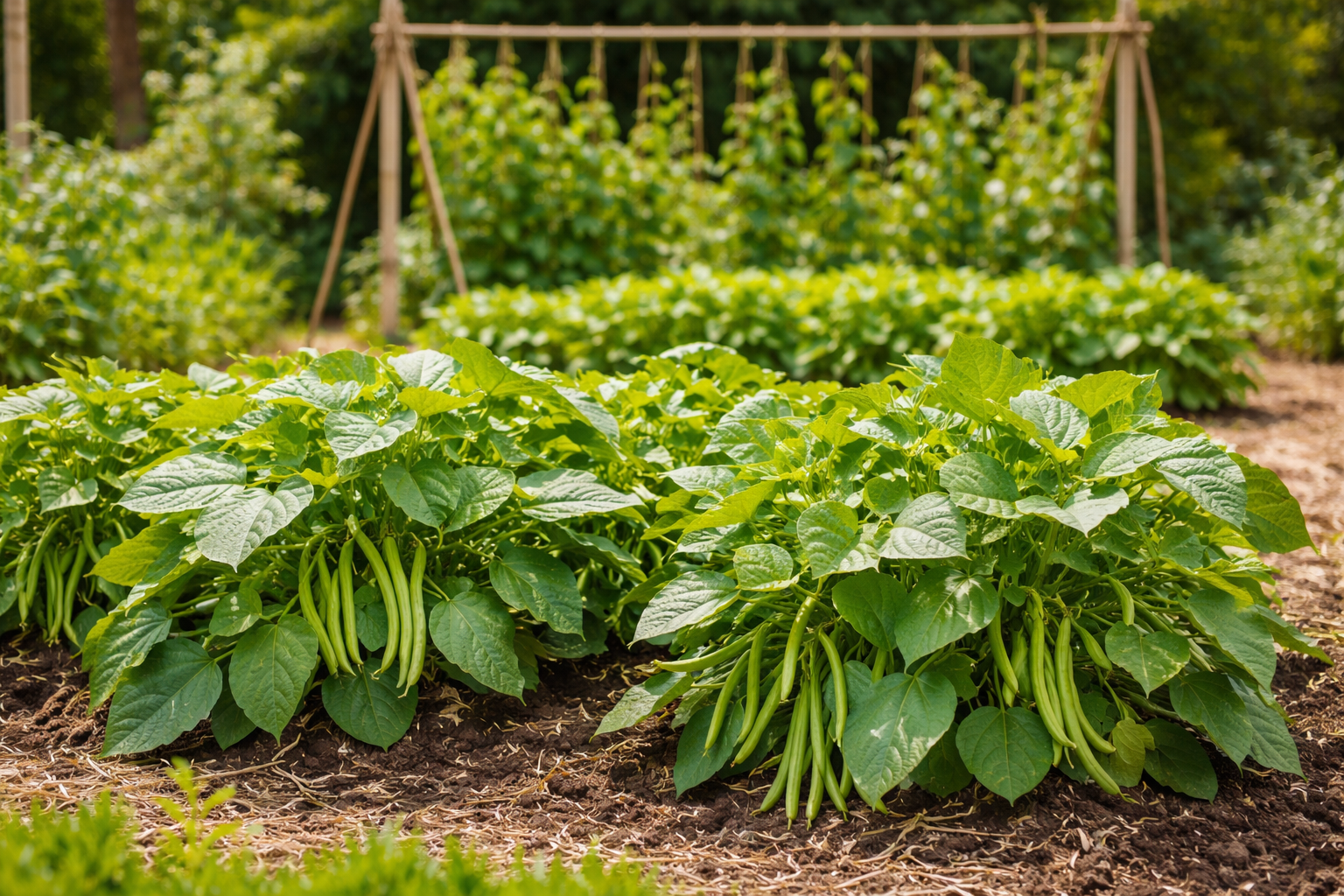
I’ve planted bush beans because they were supposed to be the easy option. No teepee, no cattle panel, no six-foot bamboo circus in the middle of the bed. Then a hard rain hit, the outside plants slumped into the mulch, and that neat little “no trellis needed” promise started to look a bit too neat.
So, do bush beans need a trellis? In most gardens, no. True bush beans are short, upright plants, and University of Minnesota Extension describes them as upright plants that do not need support, growing about two feet tall. That simple answer gets fuzzy once you add raised-bed edges, heavy pod load, containers, or a seed packet that said “bush” while the plant in front of you is trying to climb the fence.
The useful version is this: skip the full trellis for real bush beans, add light support when plants lean, and give actual twining plants something to climb.
- How to tell bush beans from pole beans and half-runners
- When “no trellis” is the right call
- When a little support saves the crop from mud and crowding
- How to choose bush or pole beans by harvest style and space
- What to do when a “bush” bean starts acting like a vine
At a Glance: the fast decision box
| What the plant is doing | What to do next |
|---|---|
| Standing upright at about 1 to 2 feet | Skip the trellis |
| Leaning under pods or after rain | Use low support, not a tall trellis |
| Sending out short runners | Treat it like a half-runner and add light support |
| Twining around netting, stakes, or nearby plants | Give it a real trellis because it is behaving like a climber |
| Crowded into a tiny container or perched on a raised-bed edge | Use a small support line or stake to keep pods off wet soil |
Do Bush Beans Need a Trellis? The Straight Answer
Bush beans are built for a different job than pole beans. On the University of Minnesota page above, bush beans are described as upright plants around two feet tall with a shorter burst of flowering and pod set. Utah State University Extension says much the same thing, noting that most bean varieties are bush plants that do not need support during growth. That is why the default answer is no.
Pole beans are another story. The same Minnesota guide says pole beans are twining vines that can grow six feet or taller and must be supported. That one distinction matters more than anything else in this article. A trellis is not for “beans” as a category. It is for climbing habit.
Quick rule: If the plant stands upright and stays fairly compact, leave it alone. If it leans, help it low. If it twines, give it height.
That’s why the stock advice can trip people up. “No trellis needed” is true for a clean, well-spaced row of true bush snap beans. It is not a promise that every plant will stand like a tiny soldier through wind, rain, pod weight, and wonky spacing.
How to Tell Whether You Have Bush, Pole, or Half-Runner Beans
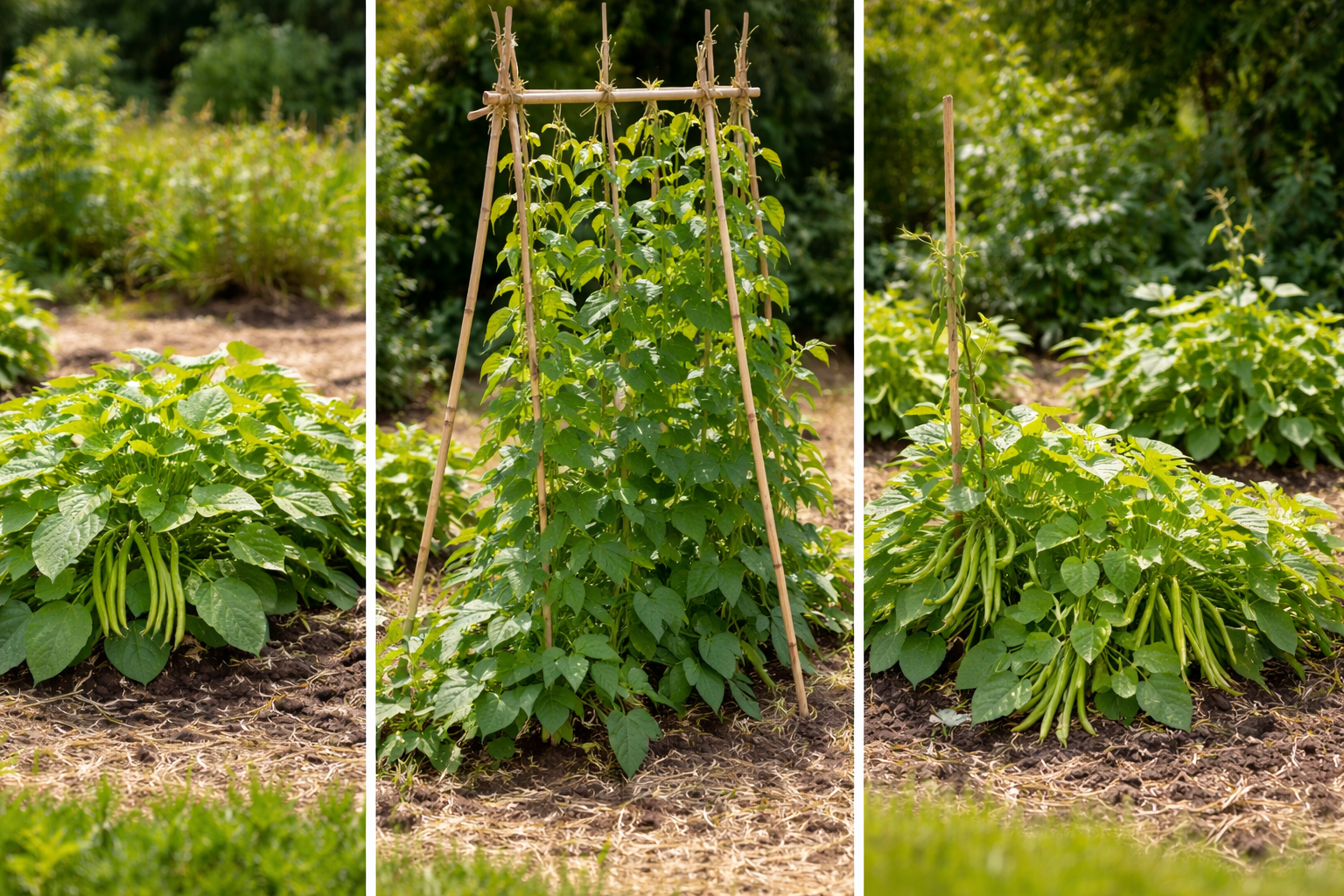
Before you build anything, check the plant. North Carolina State’s Plant Toolbox lays it out cleanly: pole beans require a climbing trellis, whereas bush bean cultivars are compact and do not need a climbing support. The same profile notes that bush beans suit containers while pole beans make better use of vertical space. That is a good first sort.
In the bed, bush beans usually grow as a compact clump. They top out around 18 to 24 inches. The stems may lean a little once pods fill, but they do not go looking for something to wrap around. Pole beans do. They send out a vine, reach, and start twining around whatever is close. You can almost watch them make up their mind.
Half-runners are where gardeners get ambushed. Minnesota Extension lists half-runner vines as plants that can benefit from support and usually stay under about three feet. They are not full-on pole beans, but they are not the tidy little mound people picture when they hear “bush bean” either.
- Bush bean: compact, upright, short, no real twining
- Pole bean: obvious vine, active twining, wants height
- Half-runner: short runners or loose vines, often better with a little help
If a seed packet said bush but the plant is reaching, grabbing, or wrapping, trust the plant. Labels are nice. The stems are nicer.
When Bush Beans Benefit From Light Support
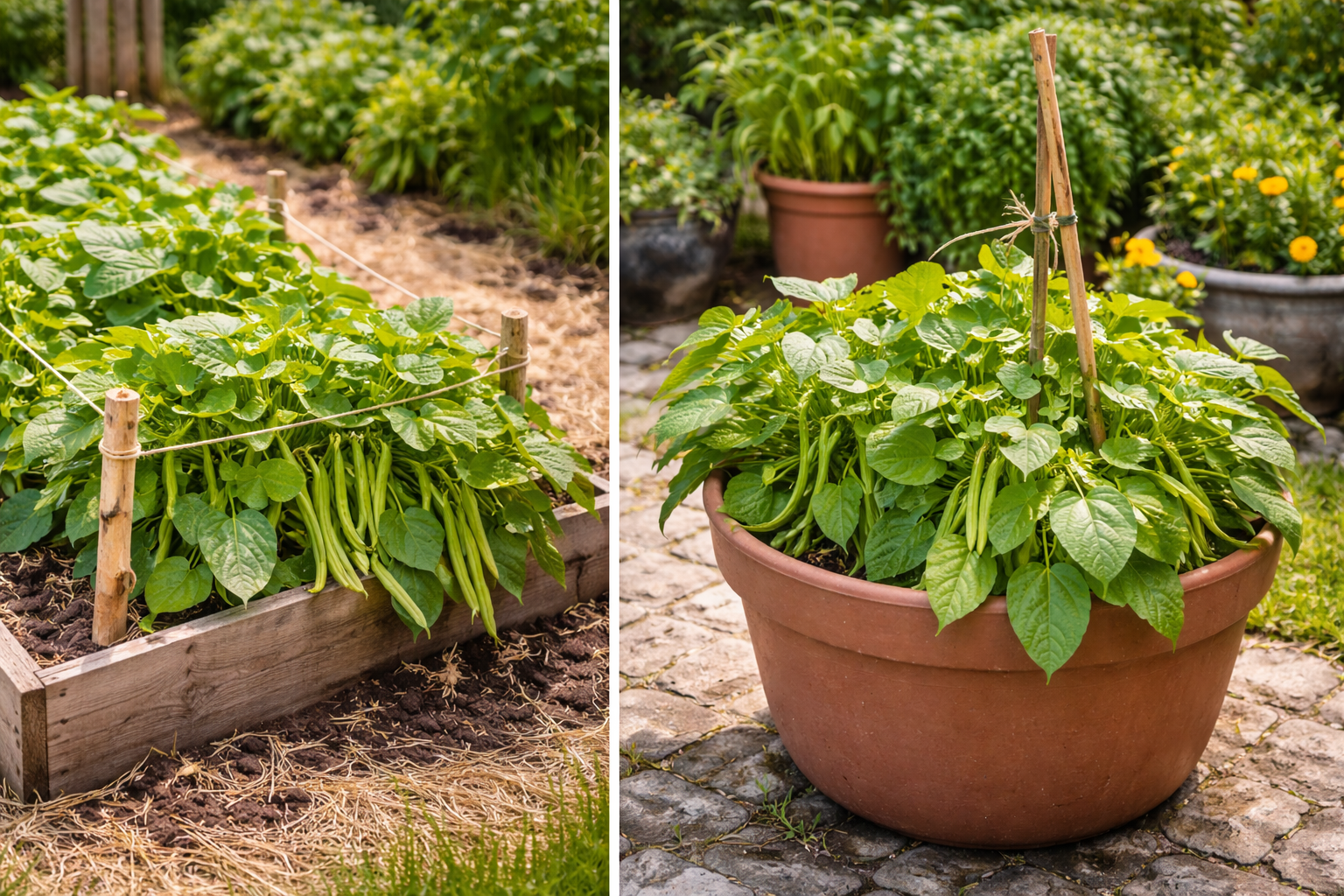
This is the part most quick-answer pages skip. A full trellis is overkill for true bush beans. Light support can still make sense.
The first common case is heavy pod load. Bush beans set a lot in a short window, and the stems can get pulled sideways once the row starts filling out. The second is weather. Rain softens the soil, wind pushes from one side, and then the outside plants do that slow flop into the path. The third is geometry. A plant in the center of a row has neighbors to brace against. A plant on the edge of a raised bed does not.
I see this most in tidy raised beds where the beans are planted in a single line along the front edge because it looks nice. It does look nice. Then the pods touch damp mulch and the lower leaves get crowded. That is when a tiny bit of support pays off.
Note: Leaning is not the same as climbing. Bush beans that slump under weight usually need a nudge, not a six-foot frame.
Containers create the same problem in miniature. North Carolina State notes that bush beans suit containers, and that is true. But a pot puts all the stems in a tight ring with no neighboring row to hold them up. If the mix dries hard, then gets soaked, then dries again, the plant can tilt and stay tilted.
If your raised bed also runs dry between waterings, a steady setup helps. A drip line or soaker approach like the one covered in Best Irrigation for Raised Beds keeps the bed from swinging between powder and swamp.
The Simplest Support Options That Work Better Than a Full Trellis
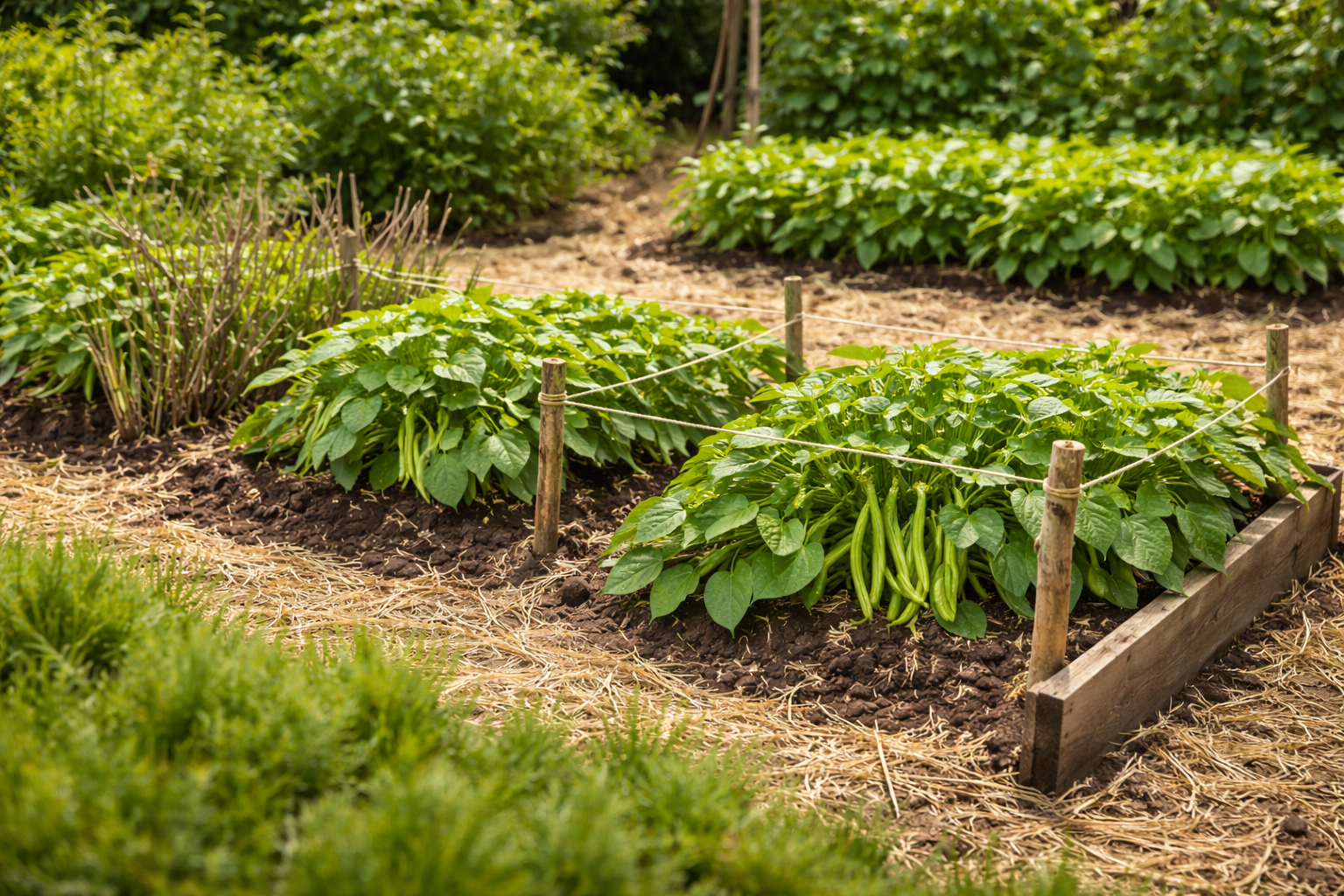
You do not need to build a cathedral for bush beans. Most of the time, one of these low-effort fixes works better.
Hill the base to firm the plant. Pull a little soil or compost around the lower stem after the plants are established. Not piled up to the moon, just enough to steady the root zone. This helps after heavy rain and on loose raised-bed mix.
Use short twiggy brush. Old pea brush works well here. Tuck a few twiggy branches around the row and the stems rest on them without much training. It looks scrappy, but it works.
Run a low twine line. Put a short stake at each end of the row and stretch soft twine 8 to 12 inches above the soil. For a longer row, two lines, one on each side, make a mini weave that keeps plants from splaying outward.
Support the edge, not the whole bed. If the outer plants are the only problem, just brace that side. A lot of gardeners build a structure for all the plants when what they really needed was one skinny line along the front.
Remember: Bush beans are low and determinate. Treat them more like a crop that needs a fence rail than a vine that needs training.
If you want to see what true vine support looks like, compare that with the more vertical setups in How to Support Cucumber Plants for Healthier Vines and Easier Harvests. Bush beans usually need much less than that.
Bush Beans vs Pole Beans: Choose by Space, Harvest Style, and Hassle
Sometimes the trellis question is really a crop-choice question.
Minnesota Extension says bush beans give you a shorter flowering and pod-setting period, which is why they work well for canning and freezing. You get a bigger flush at once. Pole beans keep producing over a longer season, and they use vertical space better.
Iowa State puts numbers on the tradeoff. In its green bean FAQ, a 10-foot row of bush beans spaced 2 inches apart is expected to produce about 4 to 5 pounds, while a 10-foot row of pole beans spaced 4 inches apart can produce about 8 pounds. Then Iowa State adds the part people always forget: bush beans save the labor, material cost, and time of building support.
| If you want… | Pick… | Why |
|---|---|---|
| A simple crop with no big structure | Bush beans | Less setup and a quick harvest window |
| A longer picking season | Pole beans | They keep flowering and setting pods longer |
| More yield from a short row | Pole beans | Vertical plants can outproduce bush rows |
| A big batch for freezing or canning | Bush beans | Their harvest comes in a tighter flush |
If your real goal is “I don’t want to build anything,” bush beans are usually the right fit. If the goal is “I want the most beans from the least ground,” the answer starts drifting toward pole beans pretty fast.
What to Do When “Bush” Beans Start Vining, Falling Over, or Grabbing Everything
Start with the behavior, not the label.
If the plant is just leaning under pod weight, firm the base and add low support. If it is making a loose, messy reach but not really climbing, treat it like a half-runner and give it a short stake or twine line. Minnesota Extension’s half-runner note is useful here because it frames support as a benefit, not a strict requirement.
If the stems are wrapping around a fence, netting, or neighboring tomato cage, that is not ordinary bush-bean flopping. That is climbing behavior. At that point, stop trying to win an argument with the seed packet and give the plant a proper support.
If only the outside row is collapsing, resist the urge to build for every plant. One side brace is often enough. If a container plant is falling open like a split umbrella, a single short stake and a loose tie near the middle usually fixes it.
Practical check: Watch the plant for a week. Leaning after rain is one thing. Twining around nearby stems is another.
There is also a not-so-glamorous possibility: mixed seed. It happens. If a few plants look like perfect little bush snap beans and two others are making a break for the fence, treat them separately and move on.
Plant Bush Beans So They Can Support Themselves
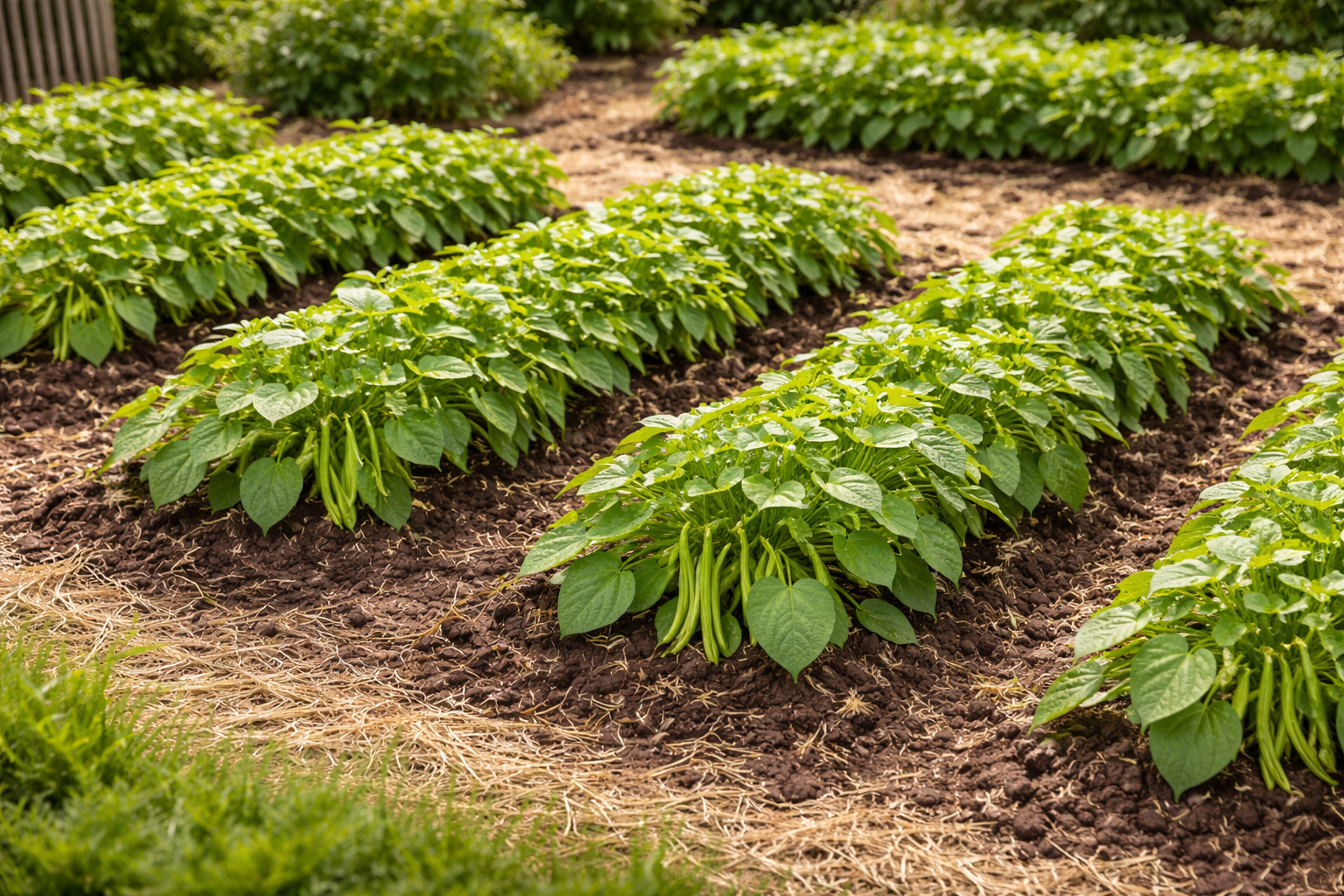
Good planting does half the support job for you. The University of Arizona’s bean guide says bush beans stand erect without support and gives a useful spacing range of 2 to 4 inches apart in rows 18 to 24 inches apart. Minnesota Extension lands in a similar place with seeds four inches apart and rows two to three feet apart. Those are not random numbers. Close enough for the plants to form a stand, open enough for air and harvest.
Spacing changes the way bush beans behave. A single isolated plant has to carry all its own weight. A proper row lets stems lean lightly into each other. That is one reason scattered planting in little pockets often looks floppier than a full row, even when the variety is the same.
Water matters too. Utah State says water needs are most critical during flowering and pod sizing. Uneven moisture does not just shave yield. It can leave stems soft, plants stressed, and pods dirtier because the whole row loses that nice upright posture.
For a basic setup, aim for:
- Full sun
- Seeds about 1 inch deep
- 2 to 4 inches between bush bean seeds
- 18 to 24 inches between rows, or a bit wider if access is tight
- Steady moisture through flowering and pod fill
That is also why “bush beans are falling over” can be a spacing problem wearing a support hat.
The Bush Bean Support Mistakes That Waste Time and Cut Into Harvests
Building a pole-bean trellis for a crop that stays two feet tall. It burns time, clutters the bed, and usually solves a problem you do not have.
Treating “no trellis” like “no observation.” Bush beans are low-maintenance. They are not self-editing. If pods are dragging in wet mulch, step in early.
Planting a single line along the edge and expecting row behavior. A center row can brace itself. An exposed edge row often cannot. That one catches people every season.
Ignoring twining because the packet said bush. Plants do not care what the packet promised. If it climbs, support it.
Waiting until the crop is muddy. The best time to add a low line is when the row starts to lean, not when the lower pods already look like they were rolled in coffee grounds.
Here is the clean rule I keep coming back to: if the plant stands upright and stays clean, skip the trellis. If it leans but does not climb, use light support. If it twines, give it something to climb and stop overthinking it.
FAQ
Can bush beans grow on a trellis if one is already there?
Yes. They can grow near a trellis just fine, but true bush beans usually will not use it the way pole beans do. If the plants are compact and upright, the trellis is just background scenery. If they start twining, then you are likely dealing with a climbing or half-runner type.
Should you use tomato cages for bush beans?
Usually no. Tomato cages are more structure than most bush beans need. A low twine line, short stake, or a little hilling is a better fit. A cage only makes sense when a container-grown plant keeps collapsing outward and you already have one on hand.
Do bush lima beans need support too?
Bush lima beans follow the same general logic as other bush beans. Bush forms need far less support than pole forms. If the variety is sold as pole lima, plan for a trellis. If the pods are the part that matters most later on, harvest timing is a separate issue covered in When to Pick Butter Beans.

Michael Rowan is the founder and lead writer at The Garden Playbook. He has spent 10+ years growing plants across a range of settings — from indoor houseplants and container gardens to raised beds and in-ground plots — adapting methods to different light levels, seasons, and growing conditions.
Michael focuses on practical, experience-based guidance grounded in fundamentals: soil health, watering strategy, plant nutrition, pruning and propagation, and integrated pest management (IPM). His work aims to help readers diagnose common problems (such as yellowing leaves, stunted growth, or pest pressure) and apply straightforward solutions that are realistic for home gardeners.
At The Garden Playbook, Michael develops tutorials and plant guides using a consistent process: documenting real outcomes where possible, explaining the “why” behind each step, and verifying higher-risk topics (such as plant toxicity or pest treatment options) against reputable horticultural references.