You buy a packet of seeds, tuck them into the soil, and picture a cheerful little beginner vegetable garden a few weeks later. Then the radishes never bulb, the tomato outgrows its pot like a teenager in a borrowed suit, and the zucchini starts acting like it pays the mortgage. That is usually the moment people realize the phrase “easy to grow” is a bit slippery.
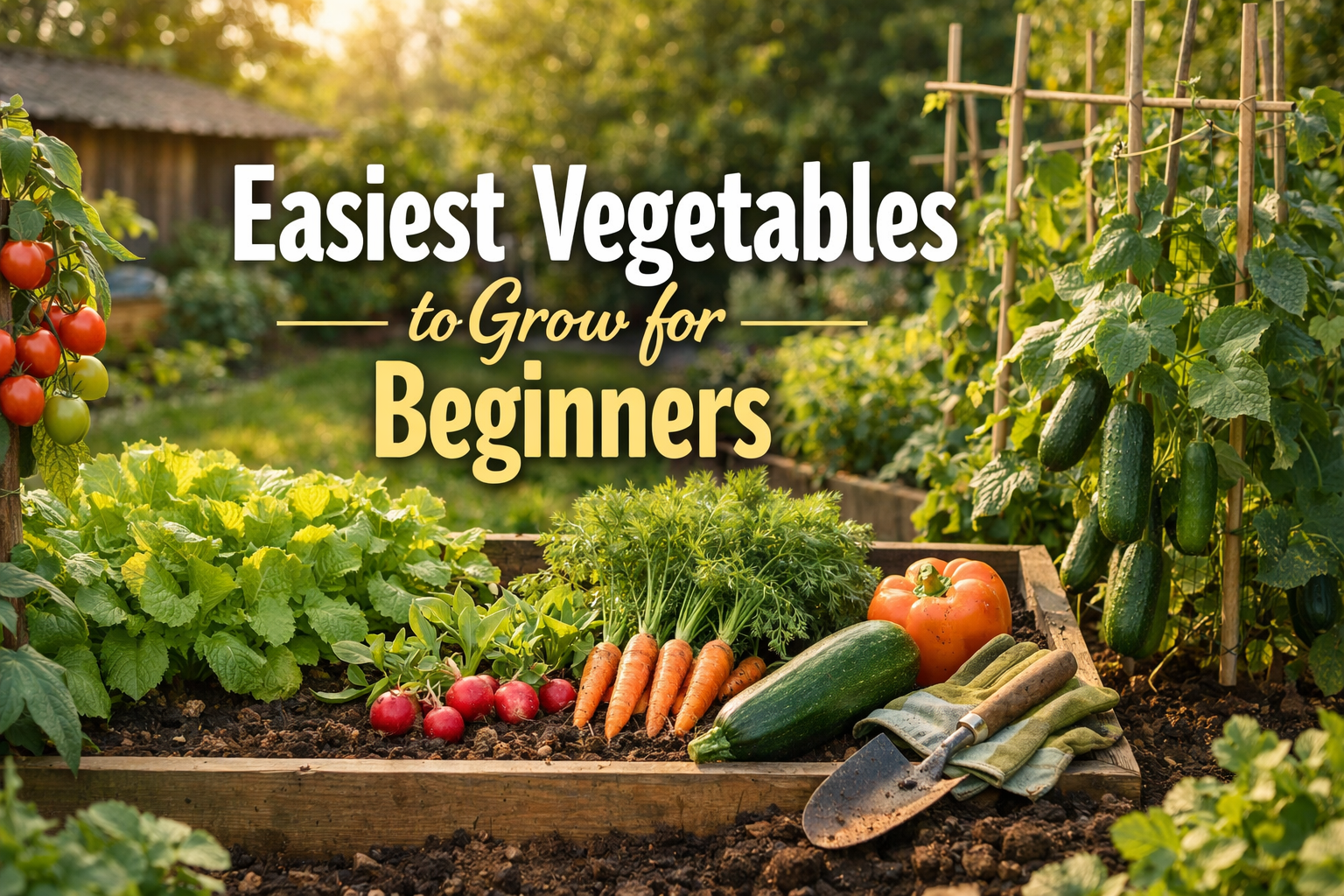
If you want the direct answer, the easiest vegetables to grow for beginners are leaf lettuce, radishes, bush beans, peas, green onions, zucchini if there is room to spread, cherry tomatoes if you start with a transplant, and potatoes in a grow bag. Those crops are forgiving in ways that matter. They sprout or establish without much drama, they give a harvest before your enthusiasm runs out, and they do not ask for expert-level timing or constant fussing.
But the stock answer is still incomplete. A vegetable can be easy in a raised bed and annoying in a tiny pot. It can be easy in cool spring weather and miserable if planted too early or too late. And some crops that always show up on “easy vegetables” lists are only easy if your soil, space, and summer weather happen to line up.
That is the tension this article is built to fix.
- Which vegetables are the best first wins for beginners
- Which popular crops look easy but come with strings attached
- How to match vegetables to your space, season, and attention span
- Whether to start from seed or buy a transplant
- The setup choices that keep beginner vegetables from turning weirdly difficult
Start Here: pick the easiest crop for your actual setup
| If this sounds like you | Start with | Skip for now |
|---|---|---|
| “I want something fast” | Radishes, leaf lettuce | Peppers, big tomatoes |
| “I only have a balcony or patio” | Lettuce, green onions, cherry tomatoes, potatoes in a grow bag | Sprawling zucchini, unsupported cucumbers |
| “I forget to water sometimes” | Bush beans, green onions, zucchini in the ground | Small hot containers packed with thirsty plants |
| “I want one crop that feels rewarding” | Cherry tomatoes or zucchini | Carrots in rough soil |
The easiest vegetables to grow for beginners, if you want the shortest useful answer
For most first-time gardeners, the best first picks are not the crops with the fanciest seed catalog photos. They are the ones that forgive small mistakes and still give you something back.
That is why the shortlist is pretty stable: leaf lettuce, radishes, bush beans, peas, green onions, zucchini, cherry tomatoes, and potatoes in a grow bag. I keep coming back to that group because each one gives a beginner a different kind of win. Lettuce and radishes are fast. Bush beans are steady. Peas are satisfying in cool weather. Green onions are low drama. Zucchini is wildly productive when it is happy. Cherry tomatoes feel generous in summer. Potatoes are tactile and fun, especially for people who want proof that something is happening under the soil.
What makes these crops “easy” is not magic. It is that they clear four hurdles better than most vegetables do: they establish cleanly, they recover from minor mistakes, they produce in a reasonable time, and they do not demand advanced pruning, support, or pest management right out of the gate.
The one wrinkle is context. Zucchini is easy if you have space. Cherry tomatoes are easy if you start with a healthy transplant and give it a sensible container or bed. Peas are easy in a cool spring, less so in sudden heat. So yes, there is a generic answer. The useful answer comes from matching that shortlist to your setup.
Use this simple filter to tell whether a vegetable is actually beginner-friendly
Here is the filter I use. It is not fancy, but it works.
A truly beginner-friendly vegetable does four things well:
- It gets going without much coaxing. Radishes, beans, peas, and lettuce usually germinate or establish without a lot of drama if the timing is right.
- It forgives a small mistake. Miss one perfect watering with lettuce and you may see some sulking. Miss one with carrots or peppers at the wrong moment and the whole crop can slow down.
- It gives a reward before you lose steam. Cornell Cooperative Extension’s planting guide lists radishes at about 25 to 30 days, bush beans at about 45 to 60 days, and leaf lettuce around 50 to 60 days depending on type and season. That kind of turnaround keeps beginners engaged.
- It does not ask for advanced handling. Once a crop starts needing pruning systems, trellising decisions, or very exact soil texture, it stops being a clean first recommendation.
This is where a lot of “easy vegetables” lists go slightly sideways. They treat easy like a personality trait. It is not. It is a fit question.
Sunlight is the first reality check. The University of Wisconsin-Madison Extension says most vegetables need full sun, which means at least six hours of direct sunlight each day, and the area should be well drained so water does not puddle after rain. The University of Maryland Extension gives the same baseline and adds a very practical note: the site should be close to water. That sounds obvious until somebody puts their first raised bed in the prettiest spot in the yard and then gets tired of hauling a hose across the lawn. Been there. Not my best planning day.
So the filter becomes simple:
- If you have less than six hours of sun, go lighter on fruiting crops and focus on leafy or cool-season vegetables.
- If the soil is rough, rocky, or compacted, do not make carrots your first test of self-worth.
- If you want a fast morale boost, plant radishes or leaf lettuce.
- If you want a summer crop with more payoff, go with cherry tomatoes from a transplant or zucchini with room to spread.
Start with these vegetables first if you want quick wins, not gardening homework
This is the tight shortlist I would actually hand to a beginner standing in a nursery aisle, trying not to overbuy and overcomplicate things.
Leaf lettuce
Leaf lettuce is one of the best beginner vegetables because it does not ask for much space, it can grow in containers or beds, and you can harvest outer leaves instead of waiting for one all-or-nothing moment. It is forgiving and visually rewarding. The small catch is heat. Once the weather turns hot, lettuce can bolt and go bitter fast.
Radishes
Radishes are fast enough to feel almost theatrical. Cornell’s planting guide puts them in the 25 to 30 day range, which is part of the appeal. They are direct-sown, quick, and honest. If radishes fail, the cause is usually clear: crowding, rough soil, heat, or inconsistent moisture. That makes them unusually good teachers.
Bush beans
Bush beans are one of the most reliable warm-season beginner crops. They germinate cleanly once the soil is warm, they do not need the support systems pole beans need, and they often mature in roughly 45 to 60 days. Pick them while they are young and the plants usually keep producing.
Peas
Peas are satisfying because they feel generous in spring. They climb a little, they flower, they give you something fun to pick, and they do not need a giant setup. The tradeoff is timing. In a cool spring, peas are lovely. In a spring that flips to heat early, they can feel rushed.
Green onions
Green onions do not get enough respect in beginner guides. They are compact, useful in the kitchen, and they are forgiving. Cornell’s chart lists green onions around 60 to 70 days, but they are flexible in a way that makes them feel easier than that number sounds.
Zucchini
Zucchini is an easy vegetable in the most chaotic way possible. Once it is happy, it produces hard. Cornell’s chart puts summer squash in the 40 to 55 day range from transplant outdoors, and that lines up with the general beginner experience: quiet, quiet, quiet, then suddenly too much. The catch is space and airflow. One plant can get big enough to bully a small bed.
Cherry tomatoes
Tomatoes are always on these lists, and I do think cherry tomatoes belong here. Not giant slicing tomatoes. Cherry tomatoes. The University of Maryland Extension notes that tomatoes need full sun, usually at least six hours and preferably eight to ten, and most mature in about 65 to 90 days from transplant depending on the variety. For a beginner, that matters. Start with a healthy transplant and a sane container size, and cherry tomatoes can feel generous rather than finicky. A smaller fruiting plant forgives a lot more than a big beefsteak type does.
Potatoes in a grow bag
Potatoes in a bag are one of the more enjoyable beginner projects because the process feels tactile and concrete. You plant, you hill, you water, and the harvest still has a little treasure-hunt energy. The trick is not to stuff too many seed potatoes into one bag or let the bag bake in hard afternoon heat. A practical guide on growing potatoes in a grow bag gets into the details if that is the route you want to try.
- Leaf lettuce for quick, repeat harvests
- Bush beans for steady summer payoff
- Cherry tomatoes from a transplant for a satisfying “I actually grew this” moment
Match the crop to your space so “easy” stays easy
A lot of beginner frustration is really a space mismatch. The crop was not impossible. It was just put in the wrong setting.
If you only have a balcony or patio
Stick with crops that behave well in containers: leaf lettuce, green onions, bush beans, potatoes in a grow bag, and cherry tomatoes if the pot is truly large enough. Small containers dry out fast, which turns a manageable crop into a thirsty little diva. That is why container size is not a fussy detail. It changes the whole season. A guide on what size pot works for cherry tomatoes is helpful here because the usual “just use a 5-gallon pot” advice is often too blunt.
If you have a small raised bed
This is probably the easiest format for a beginner. You get better control over soil, a neat layout, and enough room for several forgiving crops at once. Lettuce, radishes, peas, bush beans, and one carefully placed zucchini can work well. Just do not crowd it. Beginners almost always plant like they are trying to win a density contest.
If you have in-ground space
You have more room for the big personalities: zucchini, cucumbers, tomatoes, potatoes, and wider bean plantings. The tradeoff is that in-ground beds expose you to whatever soil you already have. If it is compacted, poorly drained, or rocky, the extra space will not save you from that.
Containers add one more wrinkle. They are great for control, but they heat up and dry out faster. In July, a small black pot in full sun can go from fine to floppy in a day. That is one reason a bigger container often makes a plant feel easier. It buffers your mistakes. A piece on better tomato pots for steadier watering explains that point well, though the logic applies beyond tomatoes.
Plant by season and you remove half the frustration
A vegetable that feels easy in the right season can feel absurdly difficult in the wrong one. This is one of the biggest beginner blind spots.
Cool-season easiest picks
Leaf lettuce, radishes, peas, and green onions are solid starter crops for cool weather. They handle spring better than warm-season vegetables do, and they often reward beginners faster. If the weather is still flirting with cold nights, these are safer bets.
Warm-season easiest picks
Bush beans, zucchini, cherry tomatoes, and potatoes make more sense once the weather has settled. Cornell’s guide places tender transplants such as tomato, pepper, cucumber, and summer squash outdoors in late spring when soil temperatures are warmer, and it flags bush beans as frost-tender as well. That matches what gardeners see every year: warm-season vegetables hate cold starts, and they do not hide their displeasure.
This is where the hardiness-zone map confuses people. The USDA Plant Hardiness Zone Map is useful, but it is based on average annual extreme minimum winter temperature. It tells you which perennials are likely to survive winter, not exactly when to sow beans or set out tomatoes. For annual vegetables, frost dates and soil warmth matter more than the zone label on its own.
So the practical rule is simple. If the crop loves heat, wait for heat. If the crop handles cool weather, use that window instead of fighting it.
- Cool spring: lettuce, radishes, peas, green onions
- Warm late spring into summer: bush beans, zucchini, cherry tomatoes, potatoes
- If nights are still cold: hold off on tomatoes, peppers, cucumbers, and summer squash
Start from seed or buy a transplant? Use the lazy-smart rule
Beginners often make life harder by starting the right crop in the wrong way.
The lazy-smart rule is this: direct sow quick, straightforward crops that establish well where they grow, and buy a transplant for warm-season crops that benefit from a head start.
Direct sow these first
Radishes, leaf lettuce, bush beans, and peas are classic direct-sow vegetables. Cornell’s planting guide lays out direct-seeding windows for those crops and places tender warm-season transplants later, once conditions are warmer. That lines up with how these plants behave. Radishes and beans do not need an indoor production line. They just need decent timing and enough room.
Buy transplants for these first
Cherry tomatoes are far easier for most beginners as transplants than as indoor-started seedlings. You skip the lights, the legginess, the hardening-off drama, and the little trays that somehow become a second job. I feel fairly strongly about this one. If somebody is brand new, I would rather see them buy one healthy tomato transplant and direct sow the rest.
Peppers are also easier from transplants, but I still would not put them in the very first confidence-building tier unless the climate is warm and the gardener is patient.
If you later decide to grow cucumbers, support matters more than people think. A guide on supporting cucumber plants is worth reading before vines start wandering off like they own the place.
These popular vegetables look easy, but I would not make them your first bet
Some vegetables are perfectly growable for beginners. I am not saying otherwise. I am saying they are not the cleanest first bet.
Carrots
Carrots are popular, but they ask for more than people realize. Loose, deep, stone-free soil helps a lot. In rough or compacted ground, roots fork, stall, or come out looking like they lost an argument with the earth. If your soil is lovely, go ahead. If it is average suburban dirt, carrots are not the best first confidence crop.
Large slicing tomatoes
Big tomatoes are more demanding than cherry tomatoes. They still want strong support, steady watering, good airflow, and enough sun to ripen well. The plant often gets large before the payoff shows up. That gap between effort and reward can frustrate new gardeners.
Peppers
Peppers are not impossible. They are just slower, and they like reliable warmth. In a long hot season, they can be pretty relaxed. In a cool or short season, they can sit there looking technically alive while not doing much. That is not the sort of feedback a beginner usually wants.
Cucumbers in cramped spaces
Cucumbers are easy enough if there is room, warmth, water, and a support plan. But in a cramped setup without trellising, they sprawl, tangle, and become one of those crops that feels easy in theory and messy in practice.
Broccoli
Broccoli has more timing pressure and pest pressure than many beginners expect. It is not a disaster crop, but it is not where I would start if the goal is a clean first win.
This is the distinction that gets lost a lot: “possible for beginners” is not the same thing as “best for beginners.”
Do these five setup moves and your “easy” vegetables stay low-drama
Good setup work saves more seasons than good pep talks do.
Choose a sunny spot and get stronger growth
The Wisconsin Extension guidance says most vegetables need at least six hours of direct sun, and Maryland says the same while noting that more is better for many crops. Tomatoes, in particular, are happier with eight to ten hours when available. If your site only gets half a day of sun, lean toward leafy greens and away from heat-loving fruiting plants.
Fix drainage and avoid root stress
Vegetables do not like sitting in waterlogged ground. Wisconsin says the garden should be well drained and not puddle after heavy rain. If water stands there after a storm, roots are going to sulk. Raised beds, added organic matter, or a better site can fix a lot.
Start with decent soil and avoid stunted plants
Maryland Extension recommends soil that is deep, crumbly, rich in organic matter, and well drained. Penn State notes that most vegetables grow best in soil with a pH around 6.8 to 7.2. That is not trivia. If the soil is badly off, growth often looks weak in ways that no amount of cheerful watering will solve.
Plant less and get better results
This feels almost rude to say, but beginners usually plant too much. They buy every packet that looks fun, sow too thickly, then spend the next month trying to fix crowding. Start smaller. Three healthy rows are better than a packed bed you stop enjoying by June.
Water consistently and avoid feast-or-famine growth
Maryland’s watering advice is practical: new seeds need more frequent shallow moisture at first, while established plants do better with deeper, less frequent watering around the base. That rhythm matters because wild swings between bone dry and drenched can make easy vegetables act oddly fast.
The beginner mistakes that make easy vegetables feel weirdly hard
The mistake is usually not “you are bad at gardening.” It is usually one of these.
Planting warm-season vegetables too early
Tomatoes, beans, cucumbers, and squash do not enjoy cold starts. They sit, stall, or just look unhappy. If a crop loves heat, wait until the weather actually feels settled.
Crowding seedlings and skipping thinning
This one gets radishes and carrots all the time. The tops look full and promising. Underground, the roots are competing like mad. Thin early. It feels harsh for about ten seconds, and then the crop does better.
Choosing varieties that outgrow the space
A compact patio cherry tomato and a vigorous indeterminate cherry tomato are not the same creature. Same with bush beans versus pole beans, and compact zucchini versus sprawling types. The label matters more than beginners expect.
Underestimating how fast containers dry out
A decorative pot that looked roomy in May can become a hot little root oven by July. This is one reason people think they are bad at tomatoes, lettuce, or beans in pots when the real issue is container volume and heat.
Ignoring support until the plant flops
Tomatoes and cucumbers are easier when support goes in early. Add it late, and you end up wrestling stems that were minding their own business until you tried to “fix” them.
Growing things you do not actually like to eat
This sounds basic, but it changes the whole season. FoodPrint makes the point plainly in its beginner gardening advice: grow what you will actually use. That one choice quietly solves a lot. A bed of kale you resent is harder to care for than a bed of lettuce you plan to cut for lunch.
If this happens, check that
| Problem | Most likely cause | Next move |
|---|---|---|
| Radishes all leaves, no bulbs | Crowding, heat, uneven moisture | Thin them, re-sow in cooler weather |
| Tomato looks stressed in a pot | Container too small or drying too fast | Move up in pot size, water deeply and consistently |
| Peas stop producing fast | Spring warmed up quickly | Treat peas as an early crop, not a summer one |
| Zucchini feels huge and chaotic | Plant was given too little room | Grow one plant, not three, and give it airflow |
If you want the shortest version of the whole article, here it is. For the fastest morale boost, plant radishes and leaf lettuce. For a steady, low-fuss harvest, plant bush beans and green onions. For summer payoff, grow cherry tomatoes from a transplant and zucchini only if there is room. For an easy container project that still feels fun, try potatoes in a grow bag.
That is a much better first season than trying to prove something to a bed of carrots and full-size heirloom tomatoes on day one.
FAQ
Can beginners grow vegetables with only four to five hours of sun?
Yes, but the crop list changes. Leafy greens and some cool-season vegetables are the better bet. Fruiting crops such as tomatoes, peppers, and cucumbers usually want more sun to produce well.
How many different vegetables should a beginner plant in the first season?
Three to five is a good working number. That is enough variety to keep things interesting without creating a maintenance mess.
Are tomatoes really one of the easiest vegetables to grow?
Cherry tomatoes can be. Large slicing tomatoes are a different story. For beginners, tomatoes are easiest when they are compact or cherry-fruited, started from a transplant, given real sun, and grown with proper support and enough root space.

Michael Rowan is the founder and lead writer at The Garden Playbook. He has spent 10+ years growing plants across a range of settings — from indoor houseplants and container gardens to raised beds and in-ground plots — adapting methods to different light levels, seasons, and growing conditions.
Michael focuses on practical, experience-based guidance grounded in fundamentals: soil health, watering strategy, plant nutrition, pruning and propagation, and integrated pest management (IPM). His work aims to help readers diagnose common problems (such as yellowing leaves, stunted growth, or pest pressure) and apply straightforward solutions that are realistic for home gardeners.
At The Garden Playbook, Michael develops tutorials and plant guides using a consistent process: documenting real outcomes where possible, explaining the “why” behind each step, and verifying higher-risk topics (such as plant toxicity or pest treatment options) against reputable horticultural references.