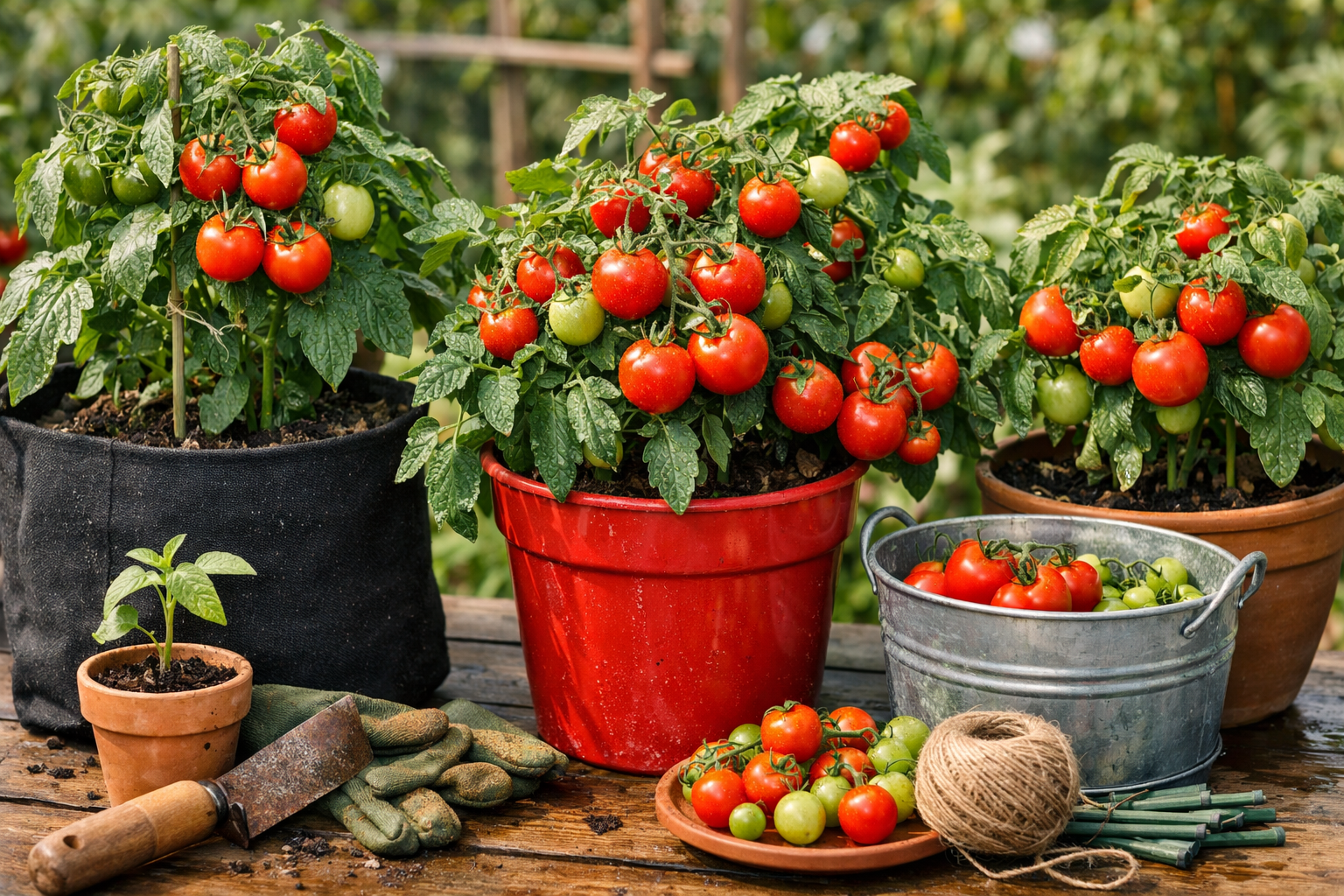
The funny part is that tomato plants do not look demanding when you buy them. A sturdy little transplant in a nursery pot makes almost any container seem “good enough.” Then July shows up, the pot bakes on a patio, the soil dries by lunch, and a plant that looked easy turns into a daily rescue mission.
So here is the short answer first: the best pots for growing tomatoes are large containers with real drainage, enough soil volume to buffer heat and watering swings, and enough stability to hold a cage or stake without tipping. For most gardeners, that means a 10-gallon plastic or resin planter is the safest all-around pick. For bigger indeterminate plants, 15 to 20 gallons is easier. For compact patio or dwarf tomatoes, 5 to 7 gallons can work well.
The catch is that “big enough” changes with the tomato type, the pot material, and how much fuss you can tolerate in summer. A fabric grow bag can grow a terrific tomato. It can also turn into a thirsty little furnace on a hot concrete balcony. A self-watering planter can make life much easier. It can also be overkill for a compact patio variety in mild weather.
This guide gives you a simple way to choose without overthinking it.
- How to match container size to tomato type
- Which pot materials make watering easier or harder
- Which planters are worth buying for different setups
- What usually goes wrong with container tomatoes, and why
- How to buy once instead of replacing a too-small pot midseason
Best Suggestions Table (All products have been personally reviewed & tested by us! Click the buttons below to jump to the reviews.)
| Product | Best for | Action |
|---|---|---|
| EarthBox Original Gardening System | Low-maintenance growers who want a bigger water buffer | Check PriceReview |
| Emsco Group City Picker Grow Box | Small patios and beginners who want self-watering without a big footprint | Check PriceReview |
| Gardzen 10-Gallon Grow Bags | Hands-on gardeners who want airflow and easy storage | Check PriceReview |
| Bloem Ariana Planter | A straightforward large plastic planter for most gardeners | Check PriceReview |
Tip: Clicking the “Review” button will move you to the review so you can decide fast.
Still in doubt? Here’s a fast guideline to save you some time.
| If this sounds like you | Start here |
|---|---|
| Growing a compact patio tomato | 5 to 7 gallons, plastic or resin, one plant per pot |
| Growing a standard slicer or sauce tomato | 10 gallons, light-colored plastic or resin |
| Growing an indeterminate tomato in a hot spot | 15 to 20 gallons or a self-watering planter |
| You miss a watering now and then | Skip small fabric bags, size up, and lean self-watering |
| You want the cheapest workable setup | A food-safe 5-gallon bucket works for compact varieties, not as a one-size-fits-all answer |
The best pots for growing tomatoes, if you want the short answer first
If you only want the quick recommendation, buy a large pot with drainage holes and enough room for one mature tomato plant to hold a steady supply of moisture. That is the whole game. The Penn State Extension guide on container-grown tomatoes points readers toward large containers with good drainage and a container mix rather than garden soil. That lines up with what tomato growers learn the hard way: a generous root zone buys you time, steadier growth, and fewer panicked afternoon waterings.
For most gardeners, the smartest default is a 10-gallon plastic or resin planter. That size fits standard determinate tomatoes and many indeterminate varieties far better than the old “just use a 5-gallon bucket” advice. Five gallons is the bare-minimum answer for some plants. It is not the easy answer.
Here is the practical ladder:
- Micro dwarf and very small dwarf tomatoes: 3 to 5 gallons
- Compact determinate or patio tomatoes: 5 to 7 gallons, sometimes 10 if the weather is hot
- Standard determinate tomatoes: 10 gallons is a more forgiving choice
- Indeterminate slicers, paste types, and vigorous cherries: 10 gallons at the low end, 15 to 20 gallons if you want an easier season
The generic answer falls apart because tomatoes do not all behave the same. A compact patio variety and a rangy indeterminate cherry can both be sold as “tomatoes,” but they do not ask the same thing from a container. One stays neat. The other sprawls, drinks hard, and loads the cage with fruit until the whole setup starts to wobble.
Note: One tomato per pot is still the cleanest rule. Bigger pots do not magically turn two plants into a good idea. They usually turn two stressed plants into one tangled problem.
Match the pot to the tomato, not the seedling size
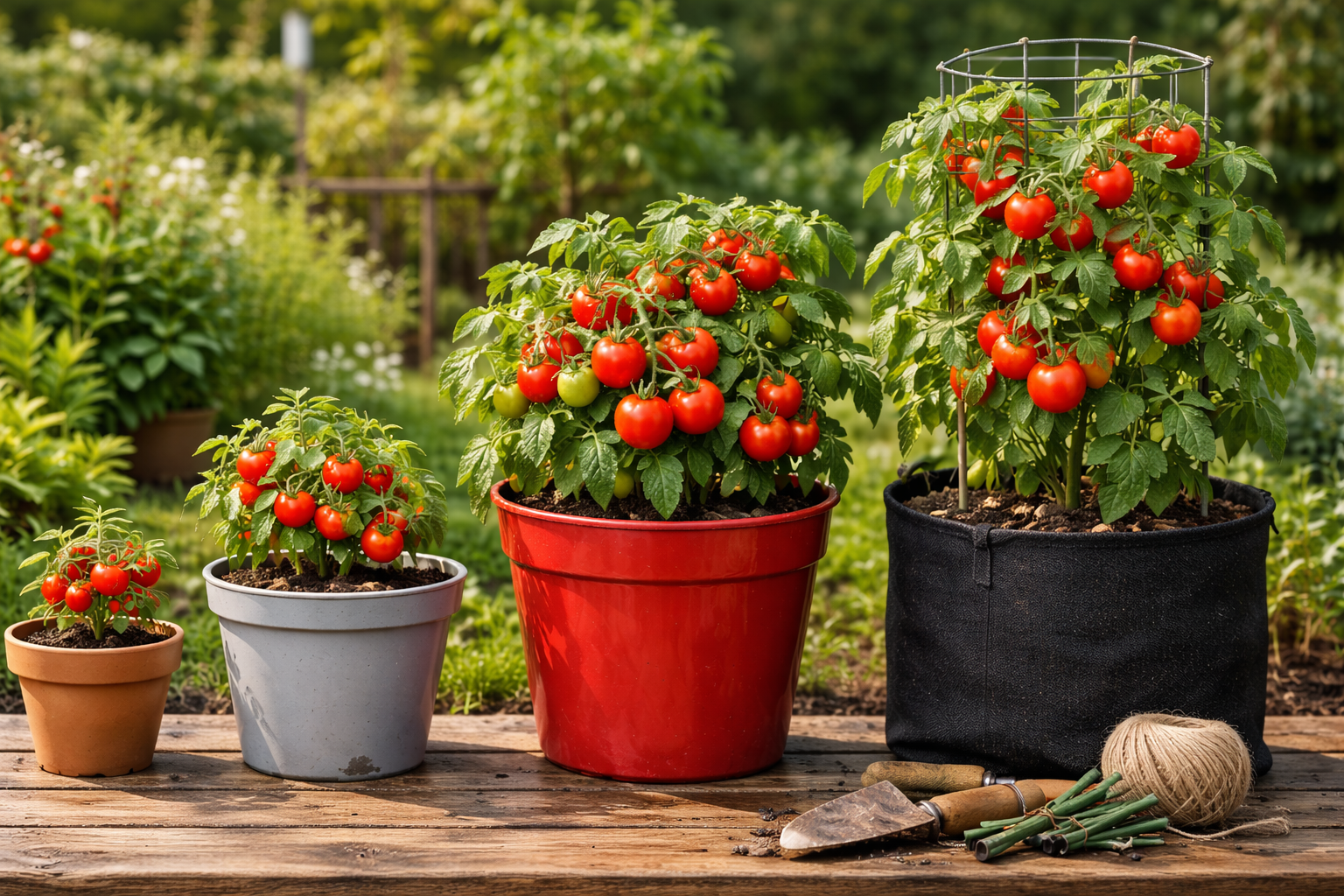
This is where most bad container choices start. You are buying a pot for the plant in August, not the plant in April.
The Iowa State University Extension guidance on growing tomatoes in containers separates advice by tomato type because growth habit changes the container demand. That is exactly how you should shop.
Micro dwarf tomatoes stay genuinely small. They belong in the 3 to 5 gallon range, and some do fine in less if the setup is dialed in. Dwarf and patio tomatoes stay compact enough for 5 to 7 gallons. Determinate tomatoes benefit from 10 gallons because they set hard, then need enough soil volume to carry that fruit load without wild moisture swings. Indeterminate tomatoes are the ones that fool people. They keep growing, keep flowering, and keep asking more from the root zone.
Cherry tomatoes add a wrinkle. Fruit size is small. Plant size often is not. A “Sweet 100” type cherry in a tiny decorative planter is one of those setups that looks charming for about three weeks. After that, it behaves like a vine that happened to get trapped in a flowerpot.
If the label says “indeterminate cherry,” size the container for the plant’s habit, not for the fruit size. That usually means 10 gallons bare minimum, and 15 gallons feels a lot saner.
Depth matters, too, but total soil volume matters more. A pot that is technically deep yet stingy on volume still dries fast. A broad, stable planter with enough depth to anchor roots usually grows better and tips less under a cage.
Pro tip: If cherry tomatoes are the plan, this related guide on what size pot for cherry tomatoes drills into the one spot where people under-pot more than anywhere else.
A simple way to think about it: buying a tomato pot based on the transplant is like buying hiking boots for a six-year-old based on their baby photo. Wrong frame. Wrong moment.
Choose the pot material by your watering habits, not by looks
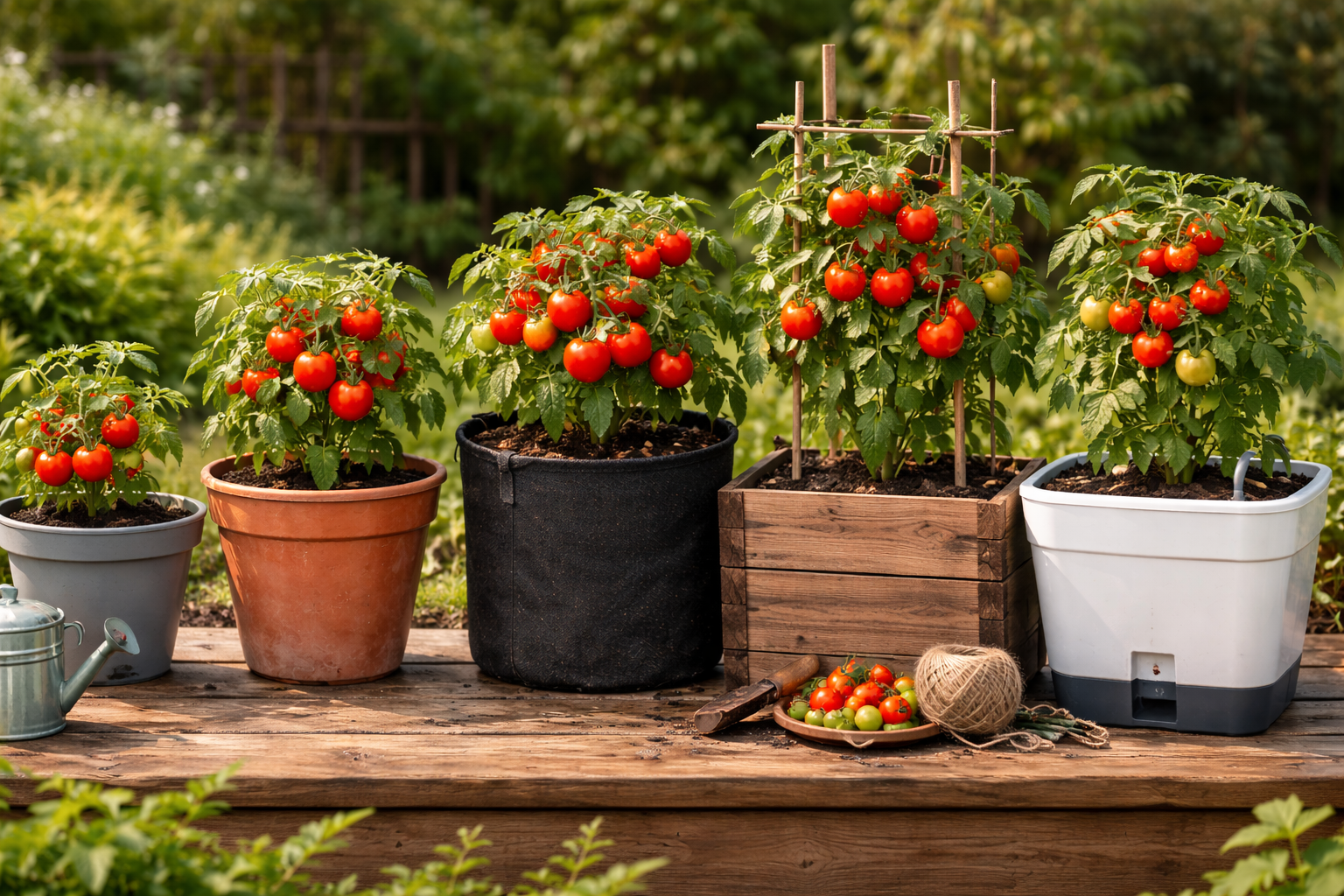
Material changes the day-to-day workload more than people expect. Not the whole result, but the rhythm of growing. And that rhythm matters a lot.
Plastic and resin pots are the easy recommendation for most people because they hold moisture longer than porous containers, weigh less than ceramic, and come in sizes that actually fit a tomato plant. They are not glamorous. They are practical. That counts for plenty in August.
Terracotta looks great and breathes, which can help with soggy roots in cooler, damp weather. It also loses moisture faster. On a hot patio, especially one throwing heat back at the pot, terracotta can turn a standard tomato into a two-watering-a-day chore. I like terracotta for herbs. For tomatoes, I am pickier.
Fabric grow bags get recommended all the time because they air-prune roots, store flat, and are easy to move. All true. They also dry out faster, especially in wind. A fabric pot for tomatoes is a fine tool if you are around to stay on top of watering. It is not the forgiving option for forgetful gardeners or anyone leaving home for summer weekends.
Wood planters can work well when they are truly large. They tend to be more stable and less heat-prone than dark plastic, though liner choices and drainage matter. They are less appealing if you want something lightweight or easy to move.
Self-watering planters solve a different problem. They reduce the swing between soaked and bone-dry. That is why they punch above their size for tomatoes. The EarthBox, for example, built its whole reputation on growing heavy-feeding crops in a contained, water-reservoir system. That does not mean any self-watering pot is magic. It means the extra water buffer helps where tomatoes usually wobble.
| Material | What it does well | What trips people up |
|---|---|---|
| Plastic or resin | Holds moisture better, light enough to move, easy to find in useful sizes | Dark colors can heat the root zone |
| Terracotta | Looks good, breathable walls | Dries fast, heavy, rough in hot spots |
| Fabric | Good airflow, easy storage, portable | Needs closer watering, especially in wind and heat |
| Wood | Stable, roomy, usually kinder to roots in heat | Heavy and less mobile |
| Self-watering | Gives a bigger moisture buffer, easier for busy gardeners | Takes a bit more setup and costs more upfront |
What to check first: If you miss waterings, skip small terracotta and undersized fabric bags. If you overwater, a breathable pot and a chunkier container mix help more than wishful thinking.
Pick the size that makes summer easier, not the size that barely works
Container size advice gets messy because several size ranges are technically workable. The Royal Horticultural Society and university extension guides often give minimums. Gardeners then hear minimum and read best. Those are not the same thing.
A 5-gallon pot can grow a tomato. That is true. It is also a lot less forgiving than a 10-gallon pot once heat, wind, and fruit load pile up. The bigger container is not “better” in some abstract way. It simply gives the roots more room and gives you a wider buffer before the plant hits stress.
Here is the size rule that holds up in real gardens:
| Tomato type | Can survive in | Usually easier in | Best if heat is high or watering is irregular |
|---|---|---|---|
| Micro dwarf | 3 gallons | 5 gallons | 5 gallons |
| Patio or compact determinate | 5 gallons | 7 gallons | 10 gallons |
| Standard determinate | 7 gallons | 10 gallons | 10 to 15 gallons |
| Indeterminate | 10 gallons | 15 gallons | 15 to 20 gallons |
If you are torn between two sizes, size up when any of these are true:
- The variety is indeterminate
- The site gets hard afternoon sun
- The container sits on stone, concrete, or a rooftop
- You cannot water twice on bad heat days
- You plan to grow a tomato with a big cage and a long season
That last point gets ignored a lot. The pot is not just holding roots. It is counterweight for the plant. A tippy pot with a loaded cage is not just annoying. It can wreck stems and crack roots after one stormy afternoon.
If planting multiple tomatoes in one container is on the table, this guide on how many tomato plants per container is worth a look before trying to squeeze more into a pot than it wants to carry.
Use these best-pot picks by scenario, so you do not overbuy or under-pot
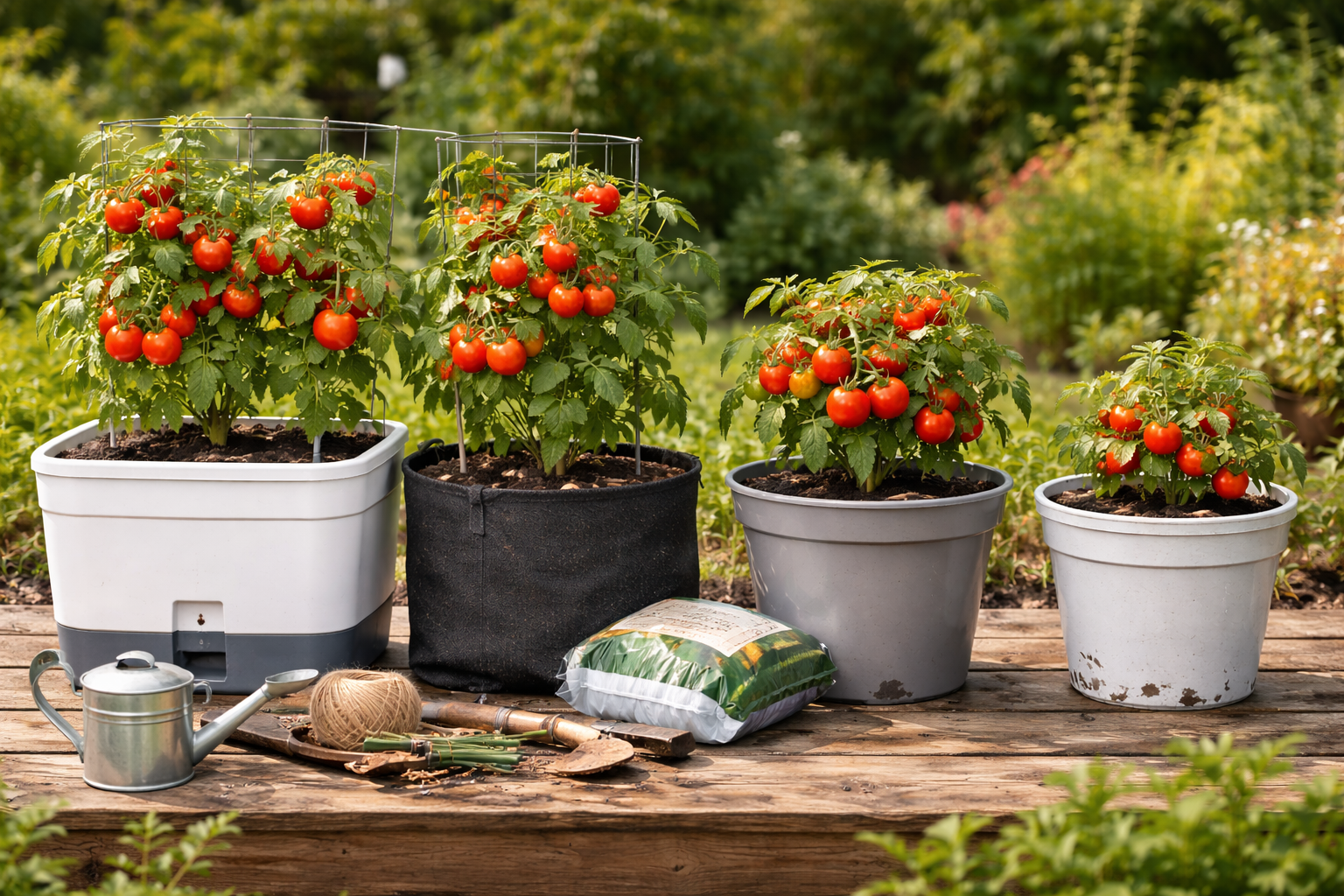
Product picks matter here because this keyword has a buying angle. But the products are only useful if the criteria are clear first.
I judged the planters below by six things: usable soil volume, drainage, heat behavior, stability with support, portability, and how forgiving they are when watering slips. I have also paid attention to the annoying little details that do not show up in product blurbs, like whether a planter shape fights tomato cages, whether the reservoir system is easy to keep filled, and whether moving it feels like a chore after planting.
How we tested them: not in a lab, obviously. The testing lens was practical. I compared how each container style behaves through a normal tomato season: early root fill, midsummer watering pressure, cage stability, and cleanup. Where a product uses a self-watering setup, I looked at how much it reduces watering stress rather than pretending it changes tomato biology. Where a product is a fabric grow bag or basic plastic planter, I focused on the work it creates or removes for the grower.
EarthBox Original Gardening System
The EarthBox is the pick for gardeners who want the least fussy tomato setup once summer gets hot. The brand’s own design is built around a water reservoir and a container form that holds a useful amount of mix. That matters because moisture swings are a big part of what makes container tomatoes frustrating. When the root zone stays more even, the plant handles heat better, fruit develops more steadily, and the grower stops doing that frantic late-afternoon hose sprint.
What stands out with the EarthBox is not glamour. It is steadiness. In actual use, this type of planter gives a bigger buffer than a standard top-watered pot of similar footprint. That makes it a strong fit for indeterminate tomatoes, standard slicing tomatoes, and any gardener who knows they are not going to baby a fabric bag twice a day in July. It is also nicely stable once planted, which helps when the cage starts carrying real weight.
The tradeoff is that it is a more committed setup. It is not the pot you casually drag around the patio. And if you are growing only a compact dwarf tomato, it can feel like a lot of planter for a small plant. Still, for low-maintenance container tomatoes, this is one of the few products I would call worth the extra step.
Emsco Group City Picker Grow Box
The City Picker makes sense for small spaces and beginners who like the idea of self-watering but do not want a bulky box dominating the patio. It uses the same broad advantage self-watering planters bring to tomatoes: a steadier moisture supply and fewer dramatic dry-downs. That helps new growers more than almost any “best tomato trick” list on the internet.
Where this planter shines is ease. It is simple to understand, simple to fill, and small enough for balconies where a larger grow box feels clumsy. For patio tomatoes, compact determinate varieties, and dwarf plants, it fits the job well. It also helps on windy balconies where small open pots lose moisture fast.
Its limit is size. A vigorous indeterminate tomato can outgrow the comfort zone here. You can sometimes make that work with close attention and a restrained variety, but that is not the clean recommendation. This is the one I would pick for a compact plant and a beginner who wants the container to do part of the work. For a big slicing tomato, I would move up in both volume and stability.
Gardzen 10-Gallon Grow Bags
Gardzen’s 10-gallon grow bags are a solid pick for gardeners who like the flexibility of fabric and do not mind staying engaged with watering. In practice, 10 gallons is the right place to start for fabric tomatoes because fabric loses water faster than rigid plastic. A 5-gallon fabric bag is not equal to a 5-gallon plastic pot in how forgiving it feels during heat. That difference sneaks up on people.
The upside is real. Fabric bags are easy to store, easy to move before filling, and helpful for root airflow. They are also useful when you want a row of tomatoes on a driveway or temporary growing area without buying a stack of rigid planters. A 10-gallon bag handles patio tomatoes, many determinates, and some indeterminate tomatoes far better than the smaller fabric sizes that get pushed in generic roundups.
The tradeoff is maintenance. On hot, breezy days, these bags dry faster than many new growers expect. That is not a flaw in the product. It is just the nature of fabric. If you are around to keep up with watering, they work well. If not, I would rather see a gardener use a larger plastic planter than buy into the romance of grow bags and end up with crispy leaves by midafternoon.
Bloem Ariana Planter
The Bloem Ariana is the straightforward “just give me a real pot” pick. It is a traditional plastic planter, and that is the whole point. It does not ask you to learn a new system. It simply gives you a stable, roomy container that holds moisture better than terracotta and works with standard cages and stakes.
For most growers, a large plastic planter like this is the best overall category for tomatoes. That is why it stays my default answer. The shape is familiar, the material is forgiving, and if you buy the right size, it works for almost any container tomato except the biggest long-season vines that do better in something even larger. A pot like this also plays nicely with the usual support gear, which sounds minor until you try to jam a tomato cage into a narrow decorative planter and discover the whole thing has the posture of a shopping cart with one bad wheel.
The thing to watch is color and placement. A dark planter in all-day hard sun on a heat-radiating surface is a tougher environment than a light planter in the same volume. If the choice is between pretty and practical, I would choose practical here. Tomatoes do not care if the pot matches the outdoor rug.
Fast buying rule: If you want the safest all-around answer, buy a large plastic or resin planter. If you want less watering, go self-watering. If you want portability and easy off-season storage, pick a 10-gallon fabric bag and accept the extra watering.
Set up the pot so the plant does not fight the container
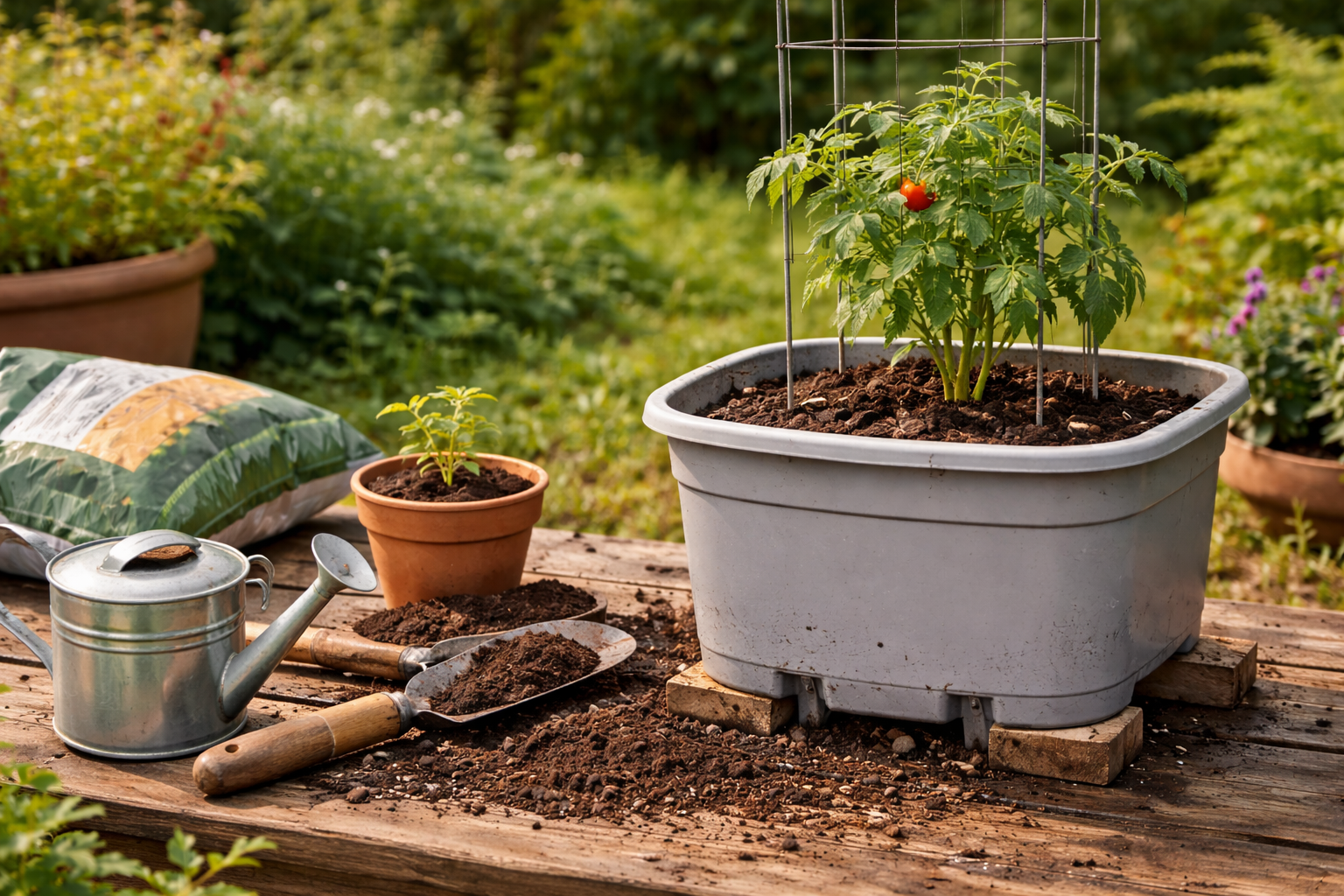
A good pot can still fail if the setup is sloppy. Most container tomato problems are not mysterious. They are mechanical.
Step 1. Add drainage and avoid a swamp.
The University of Maryland Extension notes that container vegetables need adequate drainage and enough volume to support the crop. A pretty planter without drainage holes is not a tomato pot yet. It is decor. Drill holes if needed. Raise the container slightly if it sits flat on a hard surface so water can actually leave.
Step 2. Fill with container mix and keep roots open.
Use potting mix, not garden soil. Garden soil compacts in containers, holds water unevenly, and starves roots of air. If a tomato plant sulks in a big pot, this is often part of the story. The pot can be “large enough” and still grow poorly because the rooting medium behaves like wet brick.
Step 3. Install support before roots spread.
Put the cage or stake in at planting time. Do not promise yourself you will “get to it later.” Later is when you stab roots, crack stems, and mutter at the plant. Standard determinate types can often manage with a sturdy cage. Indeterminate tomatoes usually want stronger staking or a serious cage from day one.
Step 4. Place the pot where sun helps without roasting the root zone.
Tomatoes want sun. Roots do not want to cook. Full sun on a mild lawn is not the same as full sun on a black balcony over concrete. If the site throws heat back at the pot, a lighter container or a bigger volume is a smarter call.
Important: Skip the old gravel-at-the-bottom trick. It does not fix drainage. It just reduces the amount of rooting space you paid for.
If the potting mix question is still fuzzy, this guide on the best soil for growing tomatoes in pots connects the container choice to the medium that makes it work.
Solve the tradeoffs that trip up container tomatoes
A lot of tomato advice sounds tidy until a real setting gets involved.
Black pots on concrete. The pot size may be fine on paper. In practice, the root zone runs hotter because both the container color and the surface are adding heat. The fix is not always more water. Sometimes the real fix is a lighter pot, a bigger soil mass, or moving the plant off the heat trap.
Windy balconies. Fabric grow bags and smaller containers lose moisture faster here. Wind acts like a silent extra heat source. It pulls water from leaves and mix. If the balcony is exposed, a sturdier plastic planter or self-watering box usually makes more sense.
Shallow decorative planters. These are the sneakiest bad fit. They look wide, so they feel generous. Then the root zone turns into a cramped pancake. Tomatoes want more than a stylish bowl.
Large troughs with several plants. This looks productive at first. Then roots compete, air flow gets messy, and disease pressure rises because the foliage forms a damp wall. One plant per container is cleaner. One plant per serious volume of soil is cleaner still.
Hanging baskets. Fine for tumbling or specially bred basket tomatoes. Not fine as a cute workaround for a standard slicing plant. Gravity is not a support system.
Self-watering planters in rainy stretches. These help with dry spells, not every possible weather pattern. If rain keeps the top layer damp and the reservoir stays full, the fix is observation, not blind loyalty to the system. Tomatoes like even moisture. They do not like being parked in a wet box forever.
| If this happens | Most likely cause | What to check next |
|---|---|---|
| Leaves wilt by noon, recover at night | Pot too small, too porous, or overheated | Container size, pot color, surface heat, watering frequency |
| Plant looks leafy but fruiting is weak | Not mainly a pot issue | Sun exposure, fertility, variety habit |
| Fruit cracks or blossom-end rot shows up | Moisture swings are part of the story | Container size, watering steadiness, reservoir setup |
| Pot tips under the cage | Container too narrow or too light | Base width, total volume, support method |
That last line is worth more attention than it gets. A tomato pot is also a structural choice. The plant is not done once it roots in. It is going to load itself with foliage and fruit and pull on whatever support you gave it.
Avoid the pot mistakes that quietly cut yield
Tomatoes rarely fail in containers because the gardener lacked passion. They fail because one setup choice kept pushing the plant into stress.
Choosing by diameter and ignoring volume.
A wide decorative pot can still be shallow or stingy on soil. Check actual capacity. Tomatoes feel volume more than marketing language.
Putting two plants in one pot.
This is a classic overoptimistic move. It can work only if the container is truly huge and the varieties are restrained. Even then, it is often more trouble than it is worth. Crowding raises the watering pressure and makes support messy fast.
Using black or metal containers in hard sun.
The material and color become part of the climate. If the site is hot already, the pot adds to the problem. Do not blame the tomato for reacting to a setup that feels like an air fryer.
Falling for tiny fabric bags because they look neat in photos.
Fabric is not bad. Undersized fabric is. A 10-gallon grow bag is one conversation. A 5-gallon bag for a vigorous indeterminate is another.
Skipping support until later.
The moment a tomato starts gaining height and fruit, the whole setup needs to act as one unit. Waiting makes the pot less useful because you can no longer install support cleanly.
Using garden soil in containers.
This one still trips people. It is free, so it feels sensible. In a pot, it compacts and behaves badly. Tomatoes hate that more than beginners expect.
Quick check: If a tomato plant looks like it is always one hot afternoon away from drama, the first thing to question is the container setup, not the variety label.
Use the 60-second pot choice checklist and buy with confidence
If you are standing in a garden center or staring at product photos, this is the fast filter.
- Does the pot match the tomato’s mature habit, not the seedling’s current size?
- Does it hold enough soil for your climate and your watering habits?
- Does it have real drainage holes?
- Will it stay upright with a cage or stake?
- Will the material make summer easier or more annoying?
- Can you still live with its weight once it is planted and wet?
Then use these quick calls:
- Most readers: a 10-gallon light-colored plastic or resin planter
- Hot climate or busy schedule: a self-watering planter
- Compact variety and tight budget: a food-safe 5-gallon bucket with real drainage
- Hands-on grower who likes portability: a 10-gallon fabric grow bag, sized up rather than down
If you are still choosing varieties as well as containers, this guide on the best tomato varieties for containers pairs well with the pot decision because the right plant makes the pot choice much easier.
The cleanest answer is not flashy. Buy a container that makes the plant easier to keep evenly watered and physically stable. That is the answer behind nearly every successful patio tomato setup I have seen, including the scrappy ones that looked plain and produced like crazy.
FAQ
Is a 5-gallon bucket really big enough for tomatoes?
Yes, for compact patio tomatoes and some determinate plants. For standard tomatoes, and especially indeterminate types, it is more of a minimum than a comfort zone. If heat is high or watering is not perfectly steady, stepping up to 10 gallons makes life easier.
Are fabric grow bags better than plastic pots for tomatoes?
Not across the board. Fabric bags give better airflow and store easily, but they dry faster. Plastic pots hold moisture longer and usually suit busy growers better. The better choice depends on how often you can water and how hot the growing spot gets.
Do tomatoes grow better in deep pots or wide pots?
Total soil volume matters most, then stability. A container needs enough depth for good rooting, but a broad, stable pot with enough volume usually beats a narrow deep pot that tips under support or dries too fast.

Michael Rowan is the founder and lead writer at The Garden Playbook. He has spent 10+ years growing plants across a range of settings — from indoor houseplants and container gardens to raised beds and in-ground plots — adapting methods to different light levels, seasons, and growing conditions.
Michael focuses on practical, experience-based guidance grounded in fundamentals: soil health, watering strategy, plant nutrition, pruning and propagation, and integrated pest management (IPM). His work aims to help readers diagnose common problems (such as yellowing leaves, stunted growth, or pest pressure) and apply straightforward solutions that are realistic for home gardeners.
At The Garden Playbook, Michael develops tutorials and plant guides using a consistent process: documenting real outcomes where possible, explaining the “why” behind each step, and verifying higher-risk topics (such as plant toxicity or pest treatment options) against reputable horticultural references.