
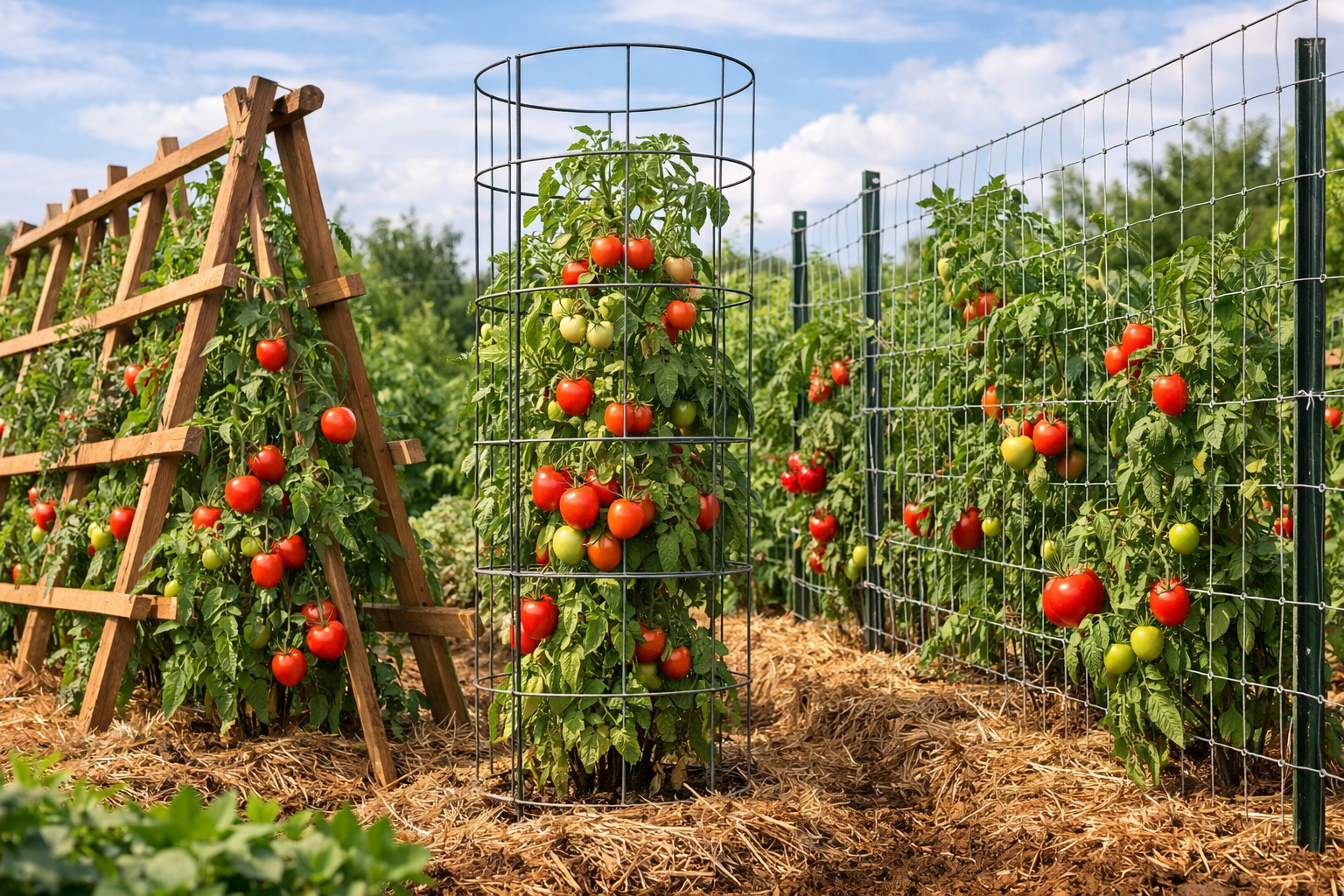
The usual tomato-support mistake starts in spring, when the plant is eight inches tall and looks harmless. You grab a cone cage from the shed, push it in, and think, “That’ll do.” Then July shows up. The vine is shoulder-high, one side is loaded with fruit, the cage is leaning like a shopping cart with a bad wheel, and you’re out there tying stems to anything that doesn’t move.
So, what is the best trellis for tomatoes? For most home gardens, the best answer is a heavy-duty cage for a single indeterminate plant, or a Florida weave or cattle panel setup for several plants in a row. That’s the plain answer. The useful answer is that your best support changes with plant type, garden layout, wind, and how much tying and pruning you’re willing to keep up with all summer.
That last part gets skipped a lot. A support can look “strong” and still be the wrong pick if it turns every week into a pruning chore or turns a patio pot into a top-heavy wobble machine.
Here’s what this guide will help you sort out:
- Which support makes the most sense for determinate vs indeterminate tomatoes
- How cages, stakes, Florida weave, string trellises, and cattle panels actually compare
- What separates a useful tomato cage from the flimsy stuff that folds midseason
- Which product examples fit common garden setups
- How to install and train plants without making a bigger mess later
Best suggestions table (products below are evaluated against the same garden-use criteria and linked so you can jump fast.)
| Product | Best for | Action |
|---|---|---|
| Texas Tomato Cages 20″ Medium | One big indeterminate plant |
Check Price Review |
| Gardener’s Supply Lifetime Tomato Cages | Gardeners who want reusable heavy-duty cages |
Check Price Review |
| Gardener’s Blue Ribbon Ultomato | Compact to medium plants and easy storage |
Check Price Review |
| Hydrofarm Tomato Tree with 3′ Tower | Patio growers with compact varieties |
Check Price Review |
Tip: Use the review buttons if you’re already down to a few likely fits.
Start here
- If you’re growing one large indeterminate tomato, start with a heavy-duty cage.
- If you’re growing a row of tomatoes, start with Florida weave or a cattle panel trellis.
- If you’re growing a compact determinate or patio type, a smaller cage can work well.
- If you’re growing in a pot, judge the container first. A weak pot setup makes even a decent trellis act flimsy.
- If you hate constant tying and pruning, skip the single-stake route.
The best trellis for tomatoes depends on one thing first: how your plant grows
University extension guidance lands in the same place on this point: tomato support starts with growth habit, not with whatever support happens to be on sale. The University of Minnesota Extension separates determinate plants, which stay shorter and set fruit over a tighter window, from indeterminate plants, which keep growing and fruiting until frost. That’s the split that matters.
If you’re growing a big indeterminate slicer or heirloom, a small cone cage is usually a trap. If you’re growing a compact determinate in a calm, sheltered bed, that same cage may be fine.
A fast way to think about it:
| Garden situation | Best starting point | Why it works |
|---|---|---|
| One indeterminate plant in-ground | Heavy-duty cage | Less tying, better branch support, easier harvest |
| Several indeterminate plants in a row | Florida weave or cattle panel | More practical for repeated spacing and full-season growth |
| Determinate or bush tomato | Sturdy medium cage | Contains the plant without overbuilding the setup |
| Patio pot or grow bag | Compact support matched to pot size | Stops the support from outgrowing the container’s stability |
Quick rule: Match the support to the plant you’ll have in late summer, not the seedling you’ve got in May.
Match the support to the tomato, so July doesn’t turn into a rescue mission
There are two bad guesses gardeners make here. One is “cherry tomatoes stay small.” The fruit stays small. The plant often doesn’t. The other is “heirlooms just need a little extra tying.” Some do. Some become a viney, top-heavy octopus by midseason.
The North Dakota State University Extension notes that staking systems often need tall stakes and regular pruning to stay manageable. That’s fine if you enjoy training plants. If you don’t, that support choice starts charging rent every week.
Here’s the cleaner way to decide:
- Determinate tomatoes: Usually do well in a sturdy cage. They stay more compact and set fruit over a shorter run.
- Indeterminate tomatoes: Need taller support and more season-long control. Heavy-duty cages, cattle panels, string trellises, and Florida weave all beat light cone cages here.
- Heirloom indeterminates: Give them your strongest support. Large fruit and sprawling vines stack weight fast. A guide on growing heirloom tomato plants makes the same point from the growing side: these plants reward space and support.
- Indeterminate cherry tomatoes: Don’t get fooled by the fruit size. The vines can run wild, especially in rich soil.
If you want a rough shortcut, a one-stake system works best for gardeners willing to prune to one or a few main stems. A cage works better if you’d rather let the plant keep more side growth and still have something holding it together.
And for containers? Pot size changes the answer. A compact cherry tomato in the right container is one thing. A vigorous indeterminate in an undersized pot is another. That’s where cherry tomato pot size matters more than people expect.
Choose the right support style for your setup, not just the prettiest idea on Pinterest
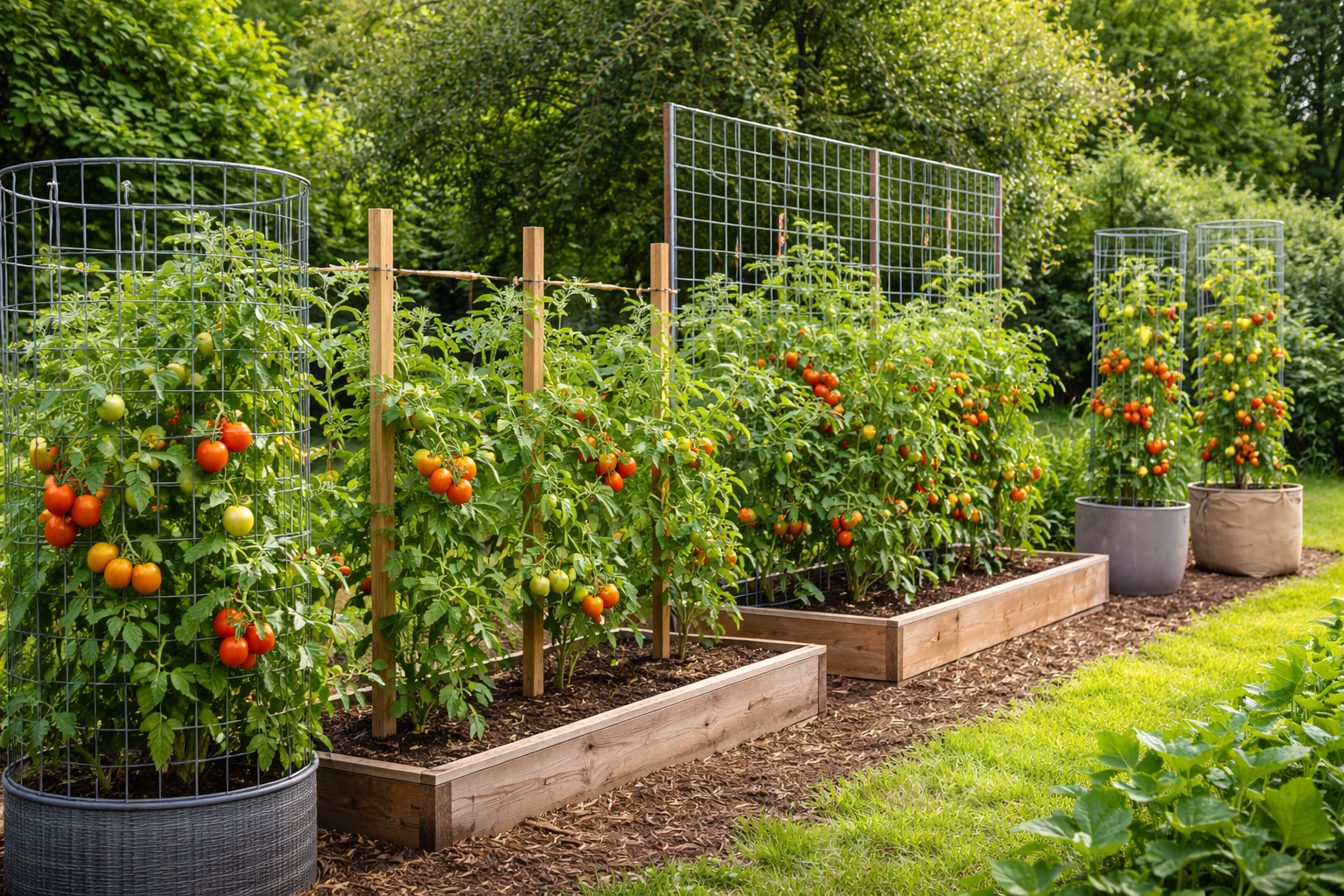
Some trellis ideas look great in a photo and turn annoying in actual use. Arches can be lovely. So can teepees. But if you’re trying to harvest heavily loaded slicers in a tight raised bed, “lovely” is not the main test.
Think in setups.
Single plant in-ground. A heavy-duty cage is hard to beat. You get branch support from multiple sides, decent harvest access, and less tying than with a bare stake.
Row planting. Florida weave makes sense once you’re planting several tomatoes in a straight run. It scales better than fussing with separate cages, and it keeps fruit off the ground. Better Homes & Gardens lays out the basic method well, including the advice to install the posts early before roots spread.
Raised beds. This is where cattle panel trellises and bed-mounted string systems start to shine. They use space well and keep the bed from turning into a jungle you can’t reach into.
Containers and grow bags. The support has to match the pot. Not just the plant. A tall, narrow trellis in a light container can get tippy fast after a rain and a flush of new growth. For container growers, the pot often decides the support, which is why pieces on pots for growing tomatoes end up being more relevant to trellising than you’d think.
Fence-line or small-space growing. String trellises and flat panel supports keep the footprint tidy. They work best if you’re consistent with tying.
Pro tip: If you already know you won’t prune every few days, don’t pick a system that only looks neat when it gets constant attention.
Compare the main tomato trellis options by strength, cost, pruning, and hassle
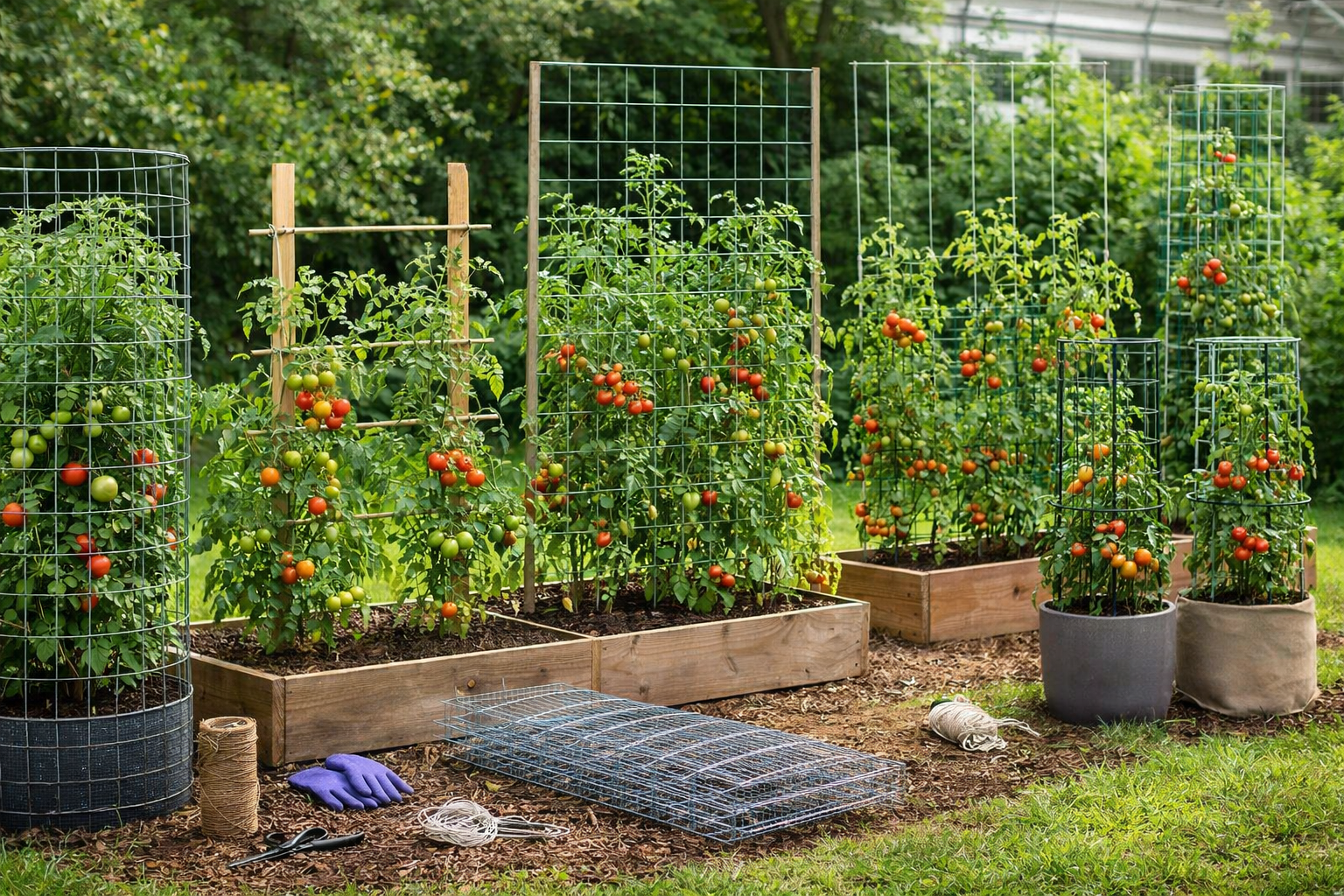
This is where most articles get mushy. They’ll call several methods “great” without saying what you pay for that choice in time, storage, or sanity.
| Support type | Best use | Main tradeoff |
|---|---|---|
| Heavy-duty cage | Single indeterminate or determinate plant | Bulkier to store |
| Single stake | Pruned plants, tight spacing | Most tying and pruning work |
| Florida weave | Rows of tomatoes | Less ideal for isolated plants or odd spacing |
| Cattle panel | Raised beds and long rows | Heavier material, not as easy to move |
| String trellis | Greenhouse or neat vertical rows | Needs steady maintenance |
| Compact planter-trellis system | Patio and compact varieties | Often outgrown by vigorous indeterminate plants |
The Illinois Extension points out a detail that matters more than it sounds: cages with openings around 4 to 6 inches make harvesting easier. That’s one of those nuts-and-bolts points you notice fast once fruit starts setting. Tiny openings make harvest annoying. Very wide openings can do a poor job of controlling side growth.
One more thing. A support is not only holding stems up. It’s buying you airflow, pickability, and fewer snapped branches after summer storms.
Buy once, not twice: what to look for in a tomato trellis that actually lasts
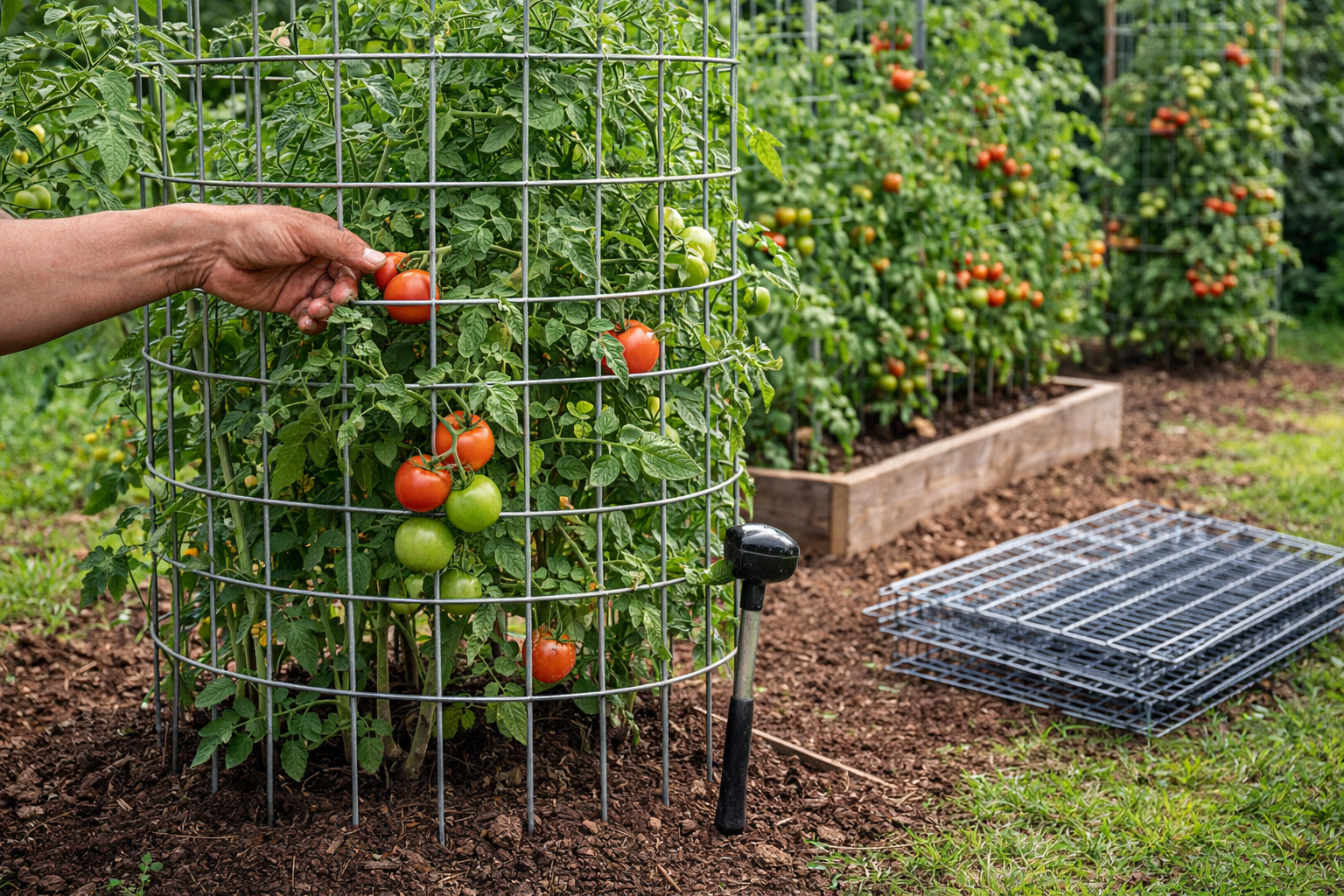
Before the product picks, here’s the filter I use. Not “strong” in some fuzzy way. Specific stuff.
- Height: Tall enough for the plant type. Big indeterminates often laugh at short cages.
- Width and shape: Wide enough to hold branching, not just a central stem.
- Rigidity: Real resistance to leaning and twisting under fruit load.
- Harvest access: Openings big enough to reach ripe fruit without breaking stems.
- Anchoring: A way to stay put in the ground or stay balanced in a container.
- Storage: Flat-folding or easy breakdown helps if you grow more than a few plants.
How I judged these: each product below was assessed against those same questions, plus one practical test gardeners know well: what happens when the plant is no longer cute. If a support only works while the plant is small, or only works if you prune hard enough to force the plant to fit, it drops down the list.
Texas Tomato Cages 20″ Medium
This is the sort of cage people buy after they’ve already lost patience with cheap cone cages. The official Texas Tomato Cage product pages describe the medium version as a tall, two-part cage with a 20-inch diameter and legs that go into the soil for stability. That tells you a lot right away: it is built for full-season use, not for a polite little patio tomato. The shape matters as much as the material. A real cage needs to support branching from several directions, and that wider footprint helps. For one large indeterminate tomato in-ground, this is the style I’d trust first. It fits the classic home-garden problem well: one or two prized plants that need something sturdy without turning support into a weekly project. The tradeoff is space and storage. These are not tiny, and they aren’t the cheapest route into tomato support. But if you’ve ever watched a loaded vine pull a weak cage sideways after a storm, this category starts making a lot of sense. Best for: big indeterminate slicers, heirlooms, and gardeners who want a “set it up right once” cage.
Gardener’s Supply Lifetime Tomato Cages
Gardener’s Supply has built a whole category around reusable plant supports, and that matters here because the best tomato support is often the one you’re still happy to use in year three. The Lifetime Tomato Cage line is aimed at gardeners who want something sturdier than hardware-store wire cones, with easier setup and repeat use. The upside is obvious: reusable cage, cleaner look, less piecing together. The catch is also obvious once you think about plant vigor. These make more sense for medium-duty needs, well-managed indeterminates, or gardeners growing a mix of determinate and moderately vigorous types. If your tomatoes regularly hit “small monster” mode by August, a heavier and taller cage shape may still beat this style. Where this one wins is convenience. If you want a support you can pull out each spring without rebuilding a system from scratch, it has a lot going for it. Best for: gardeners who value repeat use, medium-duty support, and less fiddling.
Gardener’s Blue Ribbon Ultomato
The Ultomato has been around a while because it hits a sweet spot for a lot of home gardeners: more structure than a flimsy cone cage, less bulk than a heavy galvanized cage. Product descriptions for the line point to adjustable support clips and a stake-based frame, which makes sense for compact to medium plants and for gardeners who want something easy to store. That adjustable-frame idea is the reason this one can work well for determinate tomatoes, peppers, and smaller indeterminates that are kept under control. I would not treat it as an all-purpose answer for every tomato. That’s where people get burned. A vigorous indeterminate loaded with fruit can simply outgrow the support style or start making the frame feel underbuilt. For the right job, though, it’s useful. It gives better control than bargain cone cages, it stores easily, and it’s approachable for newer gardeners. Best for: compact or medium plants, mixed vegetable beds, and gardeners who want a step up without going full heavy-duty.
Hydrofarm Tomato Tree with 3′ Tower
This one is really a patio-container answer, not a universal tomato answer. Product listings for the Hydrofarm Tomato Tree describe a self-watering planter paired with a tower support that expands to roughly 3 feet. That tells you the intended use right away: compact varieties, small spaces, and growers who want a tidy all-in-one setup. For a determinate patio tomato or a modest cherry variety, that can be genuinely handy. The integrated container-and-support idea also solves a container problem many people miss: trying to jam a tall trellis into a pot that was never stable enough to hold it. Still, you have to be realistic. Three feet of support is not a big-vine answer. Not even close. If the plant tag hints at vigorous indeterminate growth, move on. If the goal is a clean balcony setup with a compact plant, this makes much more sense. Best for: small patios, compact varieties, and gardeners who want a neater container setup.
Note: A product can be good and still be wrong for your tomato. That’s the whole game here.
Install the support early and train the plant before it starts fighting back
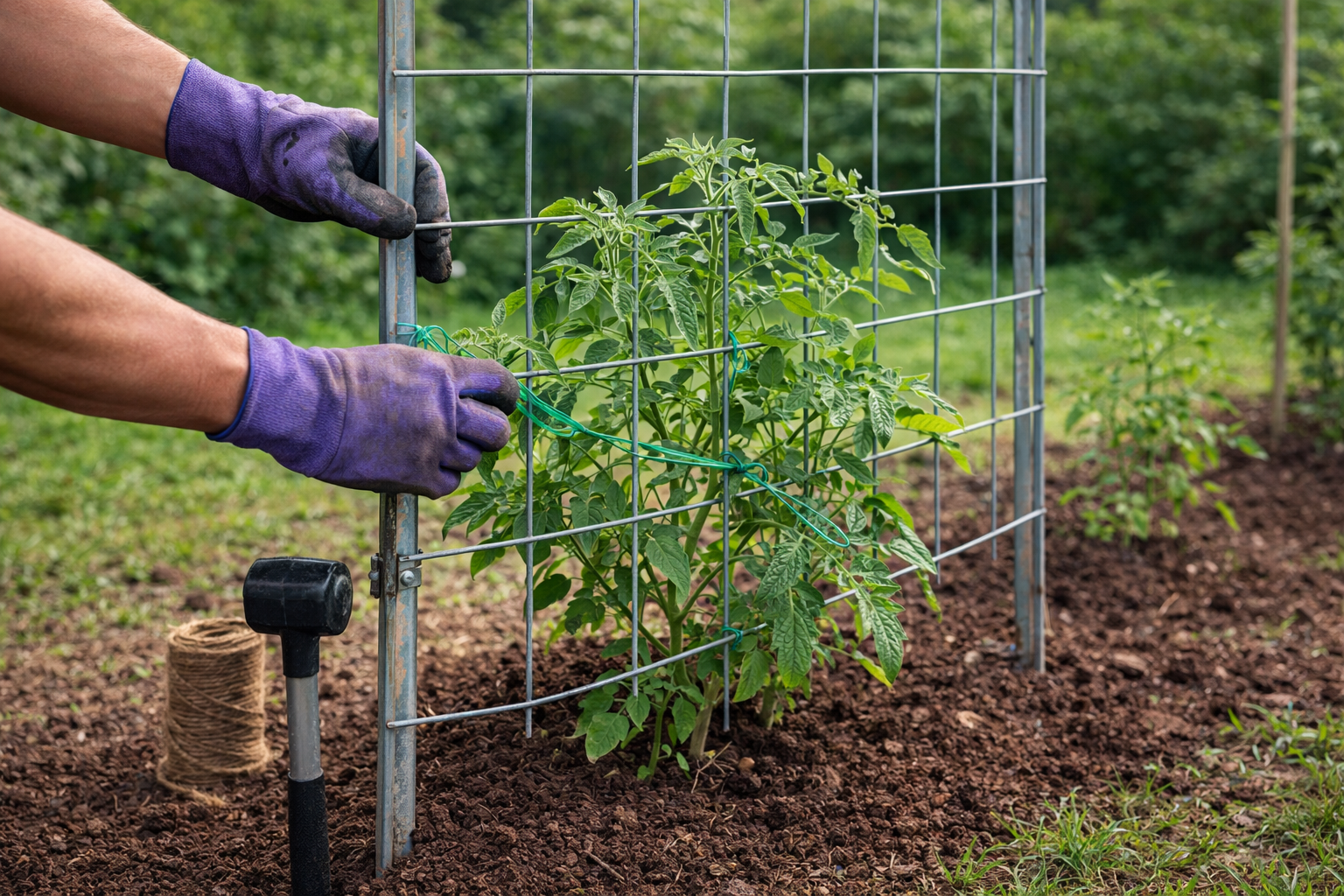
The best support in the world becomes awkward if it goes in late. Roots spread fast. Stems get brittle. Then the job gets more delicate than it needs to be.
Install early to avoid root damage.
Extension guidance from the University of California system advises putting supports in at planting time. That’s boring advice right up until you try forcing a stake between mature roots and end up wincing the whole time.
Tie loosely to avoid stem scars.
Use soft twine, tomato clips, or plant ties with room for stem thickening. Tight ties cut in. Not instantly, usually. A few hot weeks later.
Add support as the plant climbs.
With Florida weave, run new twine levels as the plants gain height. In practice, many growers add lines at roughly 8-inch intervals. With cages, guide wandering stems back inside before they harden off in the wrong direction.
Prune to match the support.
Single stakes and string trellises ask for more pruning. Cages let you keep more growth. That’s one reason cages are easier for gardeners who don’t want a standing appointment with tomato suckers.
Important: Wear gloves when handling cut wire or panel supports, and set posts firmly. Support jobs go sideways fast when the hardware is half-installed.
Avoid the mistakes that make good trellises fail anyway
Some failures are about weak materials. A lot are about mismatch.
Using a short cage for a vigorous indeterminate.
This is the classic one. The plant spills over the top, side branches load one side, and the whole thing starts leaning. A stronger cage would have helped, yes. So would a bigger one.
Waiting too long to install support.
Late supports always feel like emergency medicine. You’re working around roots, threading stems through wires, and snapping a few because the plant has already chosen its shape.
Ignoring container stability.
If a pot is too small, too light, or too top-heavy, the trellis keeps inheriting the blame. Sometimes the support isn’t the first problem. The container is. That’s also why articles on how many tomato plants fit per container matter here. Crowding two plants into one pot rarely ends with a neat support setup.
Overcrowding plants.
The University of Wisconsin Extension notes the airflow and access gains that come with vertical growing. Pack plants too tightly and you lose half the benefit. Harvest gets annoying, foliage stays wetter, and support gets harder because stems compete for the same space.
Reusing dirty ties or supports after disease trouble.
If the season ended with disease issues, clean up the support system before reusing it. This is one of those small chores that feels skippable until you regret being lazy about it.
Already planted and the support is too weak?
Don’t rip everything out. Add a second stake or side support, tie heavy fruiting branches first, then stabilize the main cage. If the plant is in a pot and the whole setup wobbles, fix the container stability before adding taller hardware. A bigger pot with the right mix can matter as much as a new cage, which is where a guide to tomato potting soil becomes surprisingly relevant.
Use the no-regret trellis framework and choose in 60 seconds
If the choices are starting to blur together, use this and move on.
- Identify the plant type. Determinate means medium support is often enough. Indeterminate means think taller and stronger from the start.
- Count the plants. One plant points toward a cage. A row points toward Florida weave, string, or panel systems.
- Be honest about maintenance. If you won’t prune and tie regularly, don’t choose a support that depends on that.
- Check the site. Windy yard, balcony, or light container? Put stability ahead of neat looks.
- Pick the strongest simple option that fits. The support that still makes sense in August is the right one.
Still in doubt? Here’s a fast guideline.
- Best for one large indeterminate: Texas Tomato Cage style heavy-duty cage
- Best for a tomato row: Florida weave or cattle panel trellis
- Best for compact determinate plants: medium sturdy cage or Ultomato-style support
- Best for patio pots: compact support matched to a stable container
- Best for low-maintenance gardeners: cage over single stake
That’s the whole decision, honestly. Not glamorous. But it works.
FAQ
What support works best for tomatoes in a windy yard?
A heavy-duty cage with solid ground anchoring is usually the safer pick for a single plant. In rows, firmly set posts with Florida weave or a rigid panel system hold up better than light cages that catch wind and twist.
Should tomato suckers be removed if the plant is in a cage?
Usually not as aggressively as with a single-stake system. Cages are useful because they let you keep more side growth. Light thinning for airflow and access can help, but a cage does not need the same strict pruning routine as a stake or string setup.
Can one trellis support two tomato plants?
Only in a few compact setups, and it often gets cramped fast. Two plants usually compete for airflow, space, and support. For most home gardens, one solid support per plant is the cleaner bet unless you’re using a row system built for multiple plants.

Michael Rowan is the founder and lead writer at The Garden Playbook. He has spent 10+ years growing plants across a range of settings — from indoor houseplants and container gardens to raised beds and in-ground plots — adapting methods to different light levels, seasons, and growing conditions.
Michael focuses on practical, experience-based guidance grounded in fundamentals: soil health, watering strategy, plant nutrition, pruning and propagation, and integrated pest management (IPM). His work aims to help readers diagnose common problems (such as yellowing leaves, stunted growth, or pest pressure) and apply straightforward solutions that are realistic for home gardeners.
At The Garden Playbook, Michael develops tutorials and plant guides using a consistent process: documenting real outcomes where possible, explaining the “why” behind each step, and verifying higher-risk topics (such as plant toxicity or pest treatment options) against reputable horticultural references.