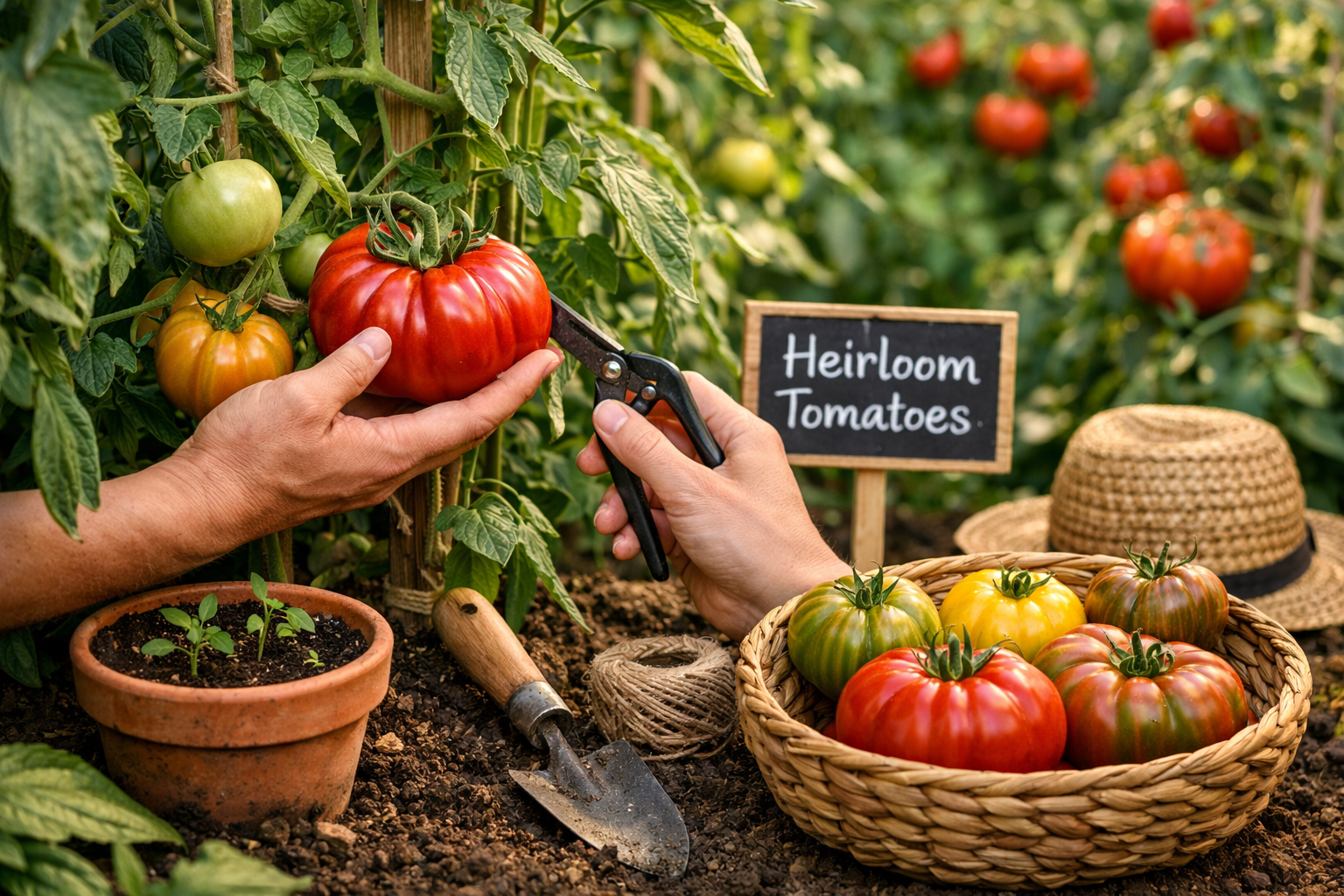
I still remember the first heirloom tomato plant I grew because it looked so promising right up until it didn’t. The seedling took off, the vines sprawled, the leaves looked lush, and I was already picturing those huge, lumpy, old-fashioned tomatoes on the kitchen counter. Then the first fruits split after a hot spell, a few blossoms dropped, and the whole thing turned into a lesson in how “grow tomatoes in full sun and water them well” is correct, but not nearly specific enough to be useful.
That is the real trick with heirlooms. The basic tomato rules still apply, but heirlooms tend to punish inconsistency faster. Bigger fruit, thinner skins, longer seasons for some varieties, and more vigorous growth can turn a simple tomato plant into a high-maintenance mess if the variety, support, spacing, and watering rhythm do not match your setup.
If you want the direct answer to how to grow heirloom tomato plants, here it is: choose a variety that fits your climate and space, start or plant it only when warmth is reliable, give it full sun, deep fertile but well-drained soil, strong support, steady moisture, and enough airflow that the plant never turns into a damp green traffic jam. Do that, and heirlooms are not hard. Ignore one or two of those pieces, and they can feel strangely fussy.
In this guide, you’ll learn how to choose the right heirloom for your garden, when timing matters more than enthusiasm, how to manage watering so fruit does not crack, and what usually goes wrong when the plant looks healthy but still underperforms.
Key takeaway:
Heirloom tomatoes are not harder because they are heirlooms. They are harder when the variety is a bad match for the space, the support is too weak, or the watering swings between drought and flood.
How to grow heirloom tomato plants without making it harder than it needs to be
The fastest way to get good results is to stop thinking of heirlooms as one category with one care routine. A compact heirloom cherry in a large pot is not the same job as a giant pink beefsteak in an exposed bed. They may both be heirlooms, but they do not ask the same things from you.
At the most practical level, a successful heirloom setup comes down to six decisions:
- Pick a variety that suits your season, not just your appetite.
- Plant only when the weather is warm enough to support fast root growth.
- Give the plant as much direct sun as you realistically can.
- Use soil that drains well but holds enough moisture to avoid wild swings.
- Support the plant before it gets heavy.
- Water deeply and consistently instead of randomly and reactively.
That may sound obvious, but most tomato frustration starts when one of those is treated casually. I have seen more heirloom failures from “I’ll cage it later” and “I water when I remember” than from pests or disease. A big heirloom tomato is a bit like loading a bookshelf from the top shelf down. It might stand for a while, but the structure is working against you from day one.
Here’s what nobody tells you often enough: heirlooms reward steadiness. They do not need perfection. They need fewer sudden changes. If the soil swings from dusty dry to soaked, the fruit tells you. If the plant gets crowded and airflow drops, the leaves tell you. If you pick a variety that needs a long season but live where summer arrives late, the calendar tells you.
Common mistake:
Treating “heirloom tomato” like it describes plant size, speed, or ease. It does not. It mostly tells you about the variety’s history and seed behavior, not whether it is the right fit for your garden.
Pick the right heirloom first, because the wrong one can feel impossible
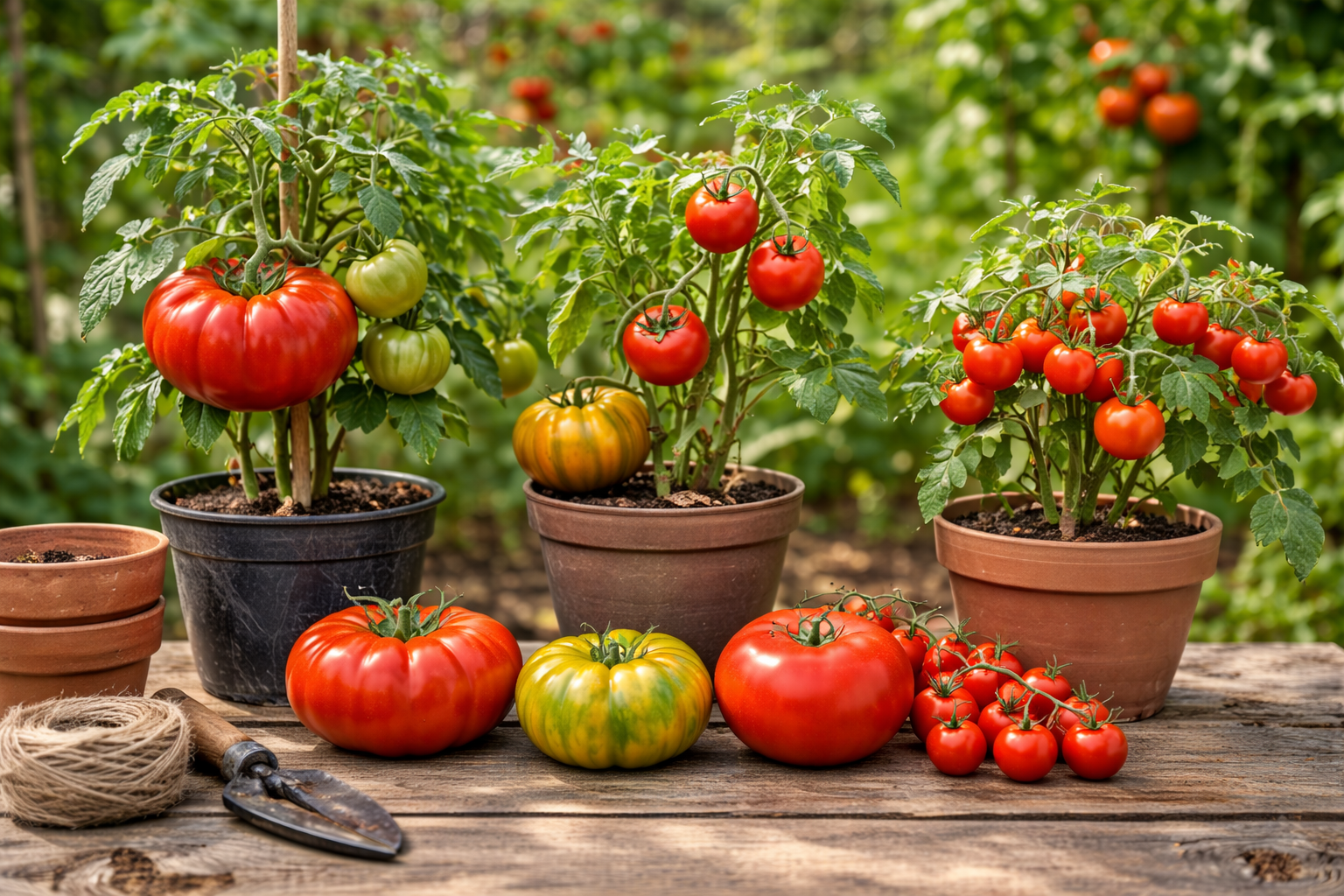
This is where a lot of gardeners create their own problem. They choose the most dramatic-looking heirloom they can find, usually a massive beefsteak with the exact flavor profile they want, and only later realize it needs more season, more support, more pruning discipline, and more patience than they expected.
A better way to choose is to start with your constraint.
If your biggest constraint is season length, lean toward earlier-maturing and smaller-fruited heirlooms. If your biggest constraint is space, choose a compact or more manageable plant rather than a rampant indeterminate vine. If your biggest priority is easiest success, heirloom cherry tomatoes are usually far more forgiving than giant slicers. If your goal is thick sandwich slices and you have room plus a decent season, then a beefsteak-type heirloom makes sense.
Think of it like shoes. People talk about “good walking shoes” as if that is one thing, but the right shoe changes depending on whether you are walking city streets, hiking in mud, or standing all day at work. Heirlooms work the same way. The best one is not the one with the best reputation in isolation. It is the one that fits the job.
Here is a simple decision framework:
- If you are a beginner, start with an heirloom cherry or a medium slicer.
- If you garden in a short season, favor earlier maturity over giant fruit size.
- If you only have containers, do not assume every heirloom is a good container plant.
- If you want to save seeds later, choose clearly labeled open-pollinated heirlooms.
Many heirloom varieties reach maturity somewhere around 60 to 80 plus days after transplant, and some take longer. That is why the seed packet matters more than most people think. A giant late-season tomato can be outstanding in the right climate and wildly disappointing in the wrong one.
If you are trying to match variety to a pot or patio setup, this is where a container-specific guide becomes useful. Choosing container tomato varieties by plant habit and space will save you from forcing an oversized heirloom into a setup that was never going to feel easy.
Key takeaway:
Do not ask, “What is the best heirloom tomato?” Ask, “Which heirloom is best for my season, my space, and the amount of maintenance I will actually do?”
Get timing right: heirlooms do not reward impatience
Tomatoes love warmth, and heirlooms are no exception. In fact, because some heirlooms need longer to mature, gardeners often get nervous and try to cheat the season by planting too early outside. That usually backfires.
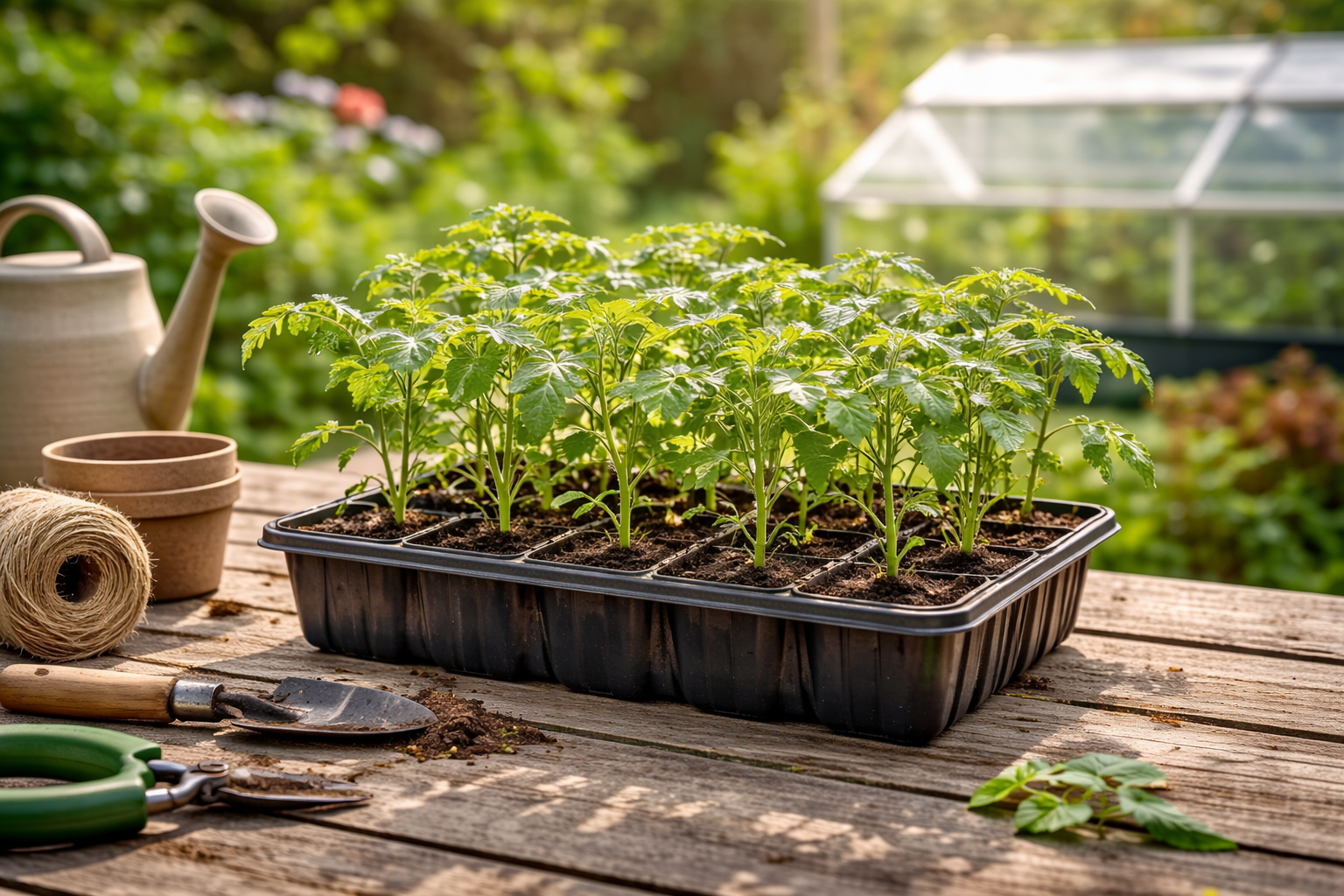
For most gardeners, starting seeds indoors about six to eight weeks before the last frost is a sensible rule. What matters more than the exact week, though, is what happens after that. If the seedlings are ready but the ground is still cold and the nights are still chilly, rushing them outdoors can stall the plant so badly that any “head start” disappears.
The better rule is this: if nights are still hovering on the cool side, wait. Strong early root growth matters more than winning the calendar. The Royal Horticultural Society’s tomato growing guidance also stresses warmth and gradual hardening off before planting out, which lines up with what experienced growers learn pretty quickly the hard way. A tomato planted into genuinely warm conditions often overtakes one that sat sulking through a cold spell.
Hardening off deserves a plain-English explanation because it sounds more complicated than it is. You are just teaching indoor-grown seedlings not to panic when they meet sun, wind, and outdoor temperature swings. Put them outside for short periods, increase exposure gradually over about a week, and avoid the classic mistake of moving them from cozy windowsill to full afternoon sun in one jump.
Here is the if/then version:
- If your last frost date is approaching but nights are still cool, keep the seedlings indoors a little longer and keep them growing steadily.
- If your season is short, gain time by starting seeds on time indoors, not by gambling on cold outdoor weather.
- If seedlings are getting leggy indoors, improve light and pot them up if needed rather than planting too early into bad conditions.
I have had far better results waiting for that stretch of warmer nights than forcing an early transplant and hoping for the best. When heirlooms decide to sit still, they can lose precious weeks.
Give them the site they actually want: warm, sunny, and not crowded
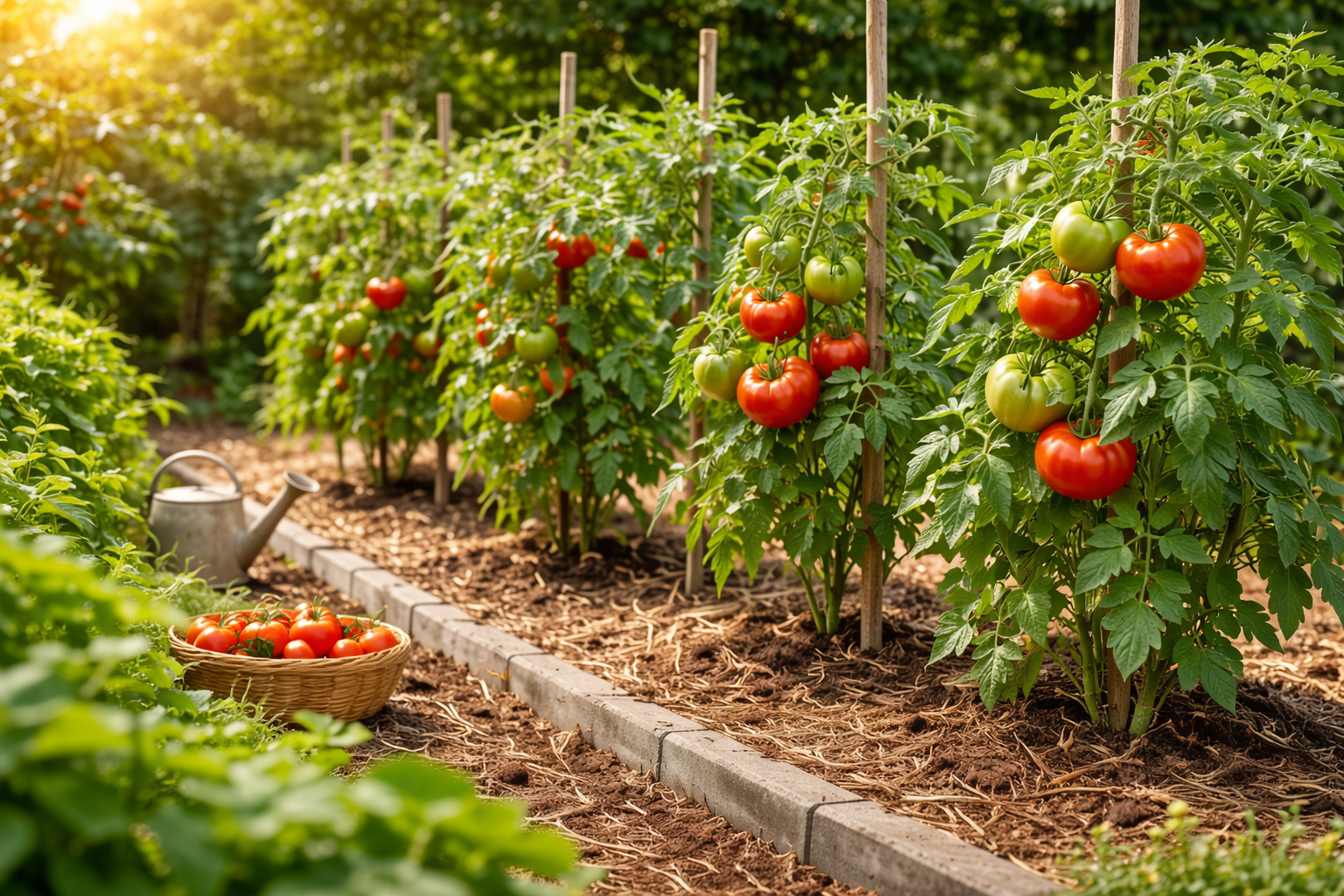
The standard advice is full sun, and yes, that is true. But “full sun” only helps if the rest of the site makes sense. A warm, bright planting area with decent airflow and good drainage will outperform a technically sunny spot that stays soggy, crowded, or cold.
Aim for at least six to eight hours of direct sun, with more generally helping fruit production. Heirlooms grown in marginal light often produce tall plants with less satisfying yields and weaker flavor. When people say their heirlooms got huge but did not deliver, I often look at light first, then nitrogen, then pruning.
Soil matters, but not in the vague “make it rich” way you hear so often. You want fertile soil with structure. That means it should drain well enough that roots can breathe, but hold enough moisture that you are not constantly chasing drought stress. Compost helps, but piling on high-nitrogen fertility can give you a gorgeous green plant that seems more interested in leaves than fruit.
Spacing matters more with heirlooms than many gardeners expect because vigorous growth plus large leaves can create a dense canopy fast. A rough baseline of two to three feet apart works for many full-size heirlooms, with more room often helping in humid climates or where disease pressure is common. Crowding does not just make the bed look lush. It traps moisture, reduces airflow, and makes routine pruning or harvesting annoying enough that people stop doing it.
Deep planting is one of the most useful simple wins. Tomatoes can form roots along buried stem tissue, so setting transplants deeper than they were in the pot helps build a stronger root system. That extra rooting can make a real difference once summer heat kicks in.
If you are growing in containers, the potting mix becomes even more important because containers exaggerate every mistake. A good breakdown of what makes a tomato potting mix hold moisture without turning heavy and airless can help you avoid the two extremes I see most often: mixes that stay soggy and mixes that dry into a brick.
Common mistake:
Planting a full-size heirloom into the same tight spacing you would use for a smaller, more compact tomato. The plant may survive, but the maintenance gets harder and the risk of disease climbs.
Support, pruning, and spacing: this is where big heirlooms stop acting polite
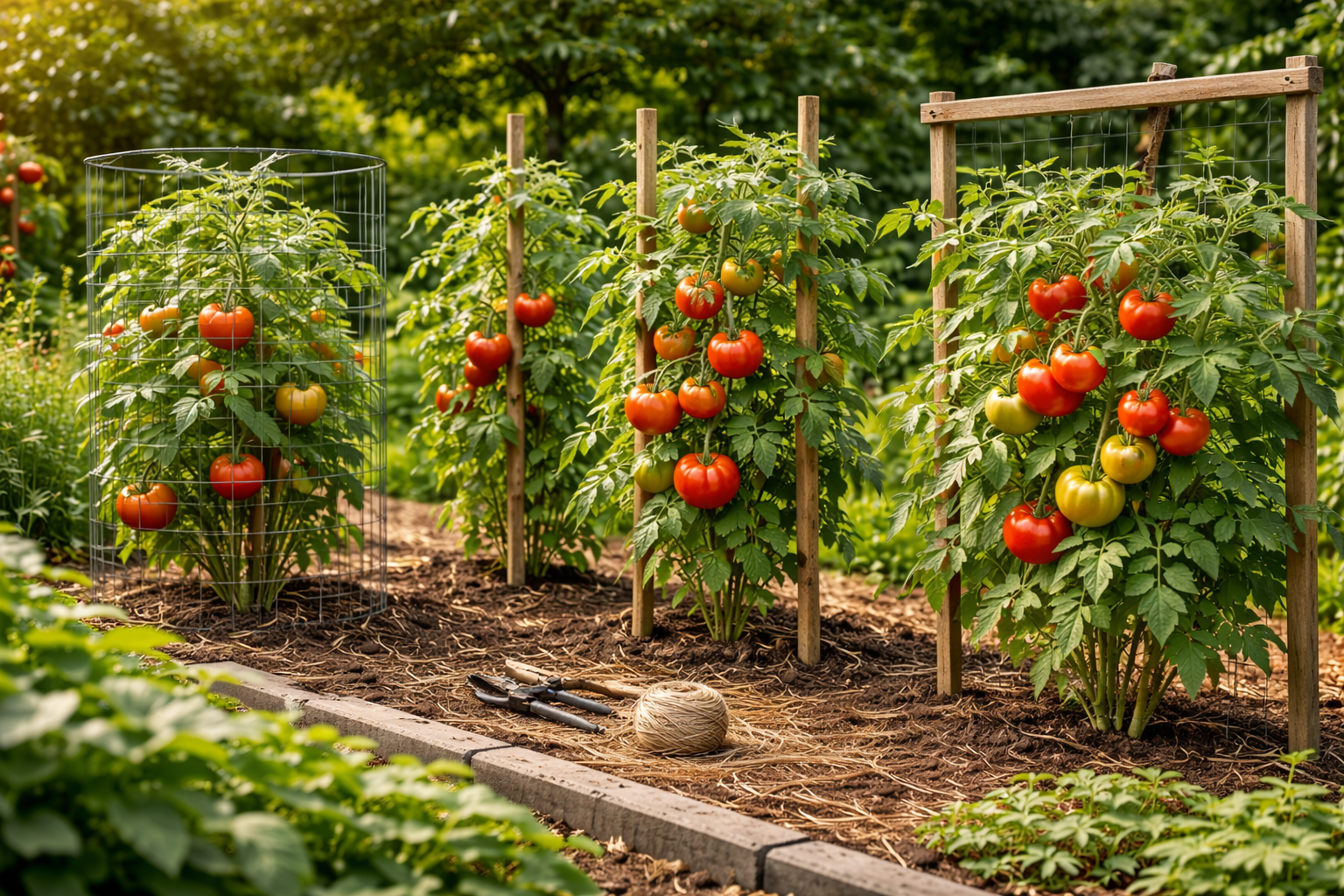
Some heirloom plants stay manageable. Many do not. If you grow large-fruited indeterminate heirlooms, assume they will need more support than the cheap cone-shaped cage people keep buying out of optimism.
This is one of those places where I learned to stop being casual. Early on, I used flimsy cages because they were easy to grab and looked fine at planting time. By midsummer, the plants had outgrown them, branches were leaning out, fruit weight was pulling everything sideways, and tying on emergency supports turned into an awkward rescue operation. Since then, I have treated support as a first-step decision, not a midseason fix.
Here is the practical comparison:
- Cages are simple and beginner-friendly, but they need to be sturdy and tall enough to handle a strong plant.
- Stakes use less space and can work very well, but they require regular tying and more attention.
- Trellises give good structure if you like a more organized pruning system.
Pruning depends partly on growth habit. Determinate tomatoes tend to stay more compact and do not usually want aggressive pruning. Indeterminate tomatoes keep growing and often benefit from selective pruning to improve airflow and keep the plant manageable. That does not mean stripping the plant bare. It means removing what is clearly creating crowding, rubbing, or chaos.
Here is the useful rule: prune for a reason. If removing a sucker or lower leaf improves airflow, access, or structure, that makes sense. If you are hacking away because someone on the internet said pruning always equals bigger harvests, slow down. Too much pruning can reduce leaf area the plant needs to ripen fruit properly and can expose fruit to excess sun.
Key takeaway:
Support is not just about holding up the plant. It is about keeping fruit clean, airflow open, and maintenance easy enough that you keep up with it.
Watering and feeding: most heirloom problems start here, not with bad luck
If you told me I could only fix one part of a struggling heirloom setup, I would usually choose watering before fertilizer. Not because feeding does not matter, but because inconsistent moisture causes a surprising number of the problems gardeners blame on variety, weather, or random tomato drama.
The goal is steady moisture. Not wet all the time. Not dry until the leaves complain. Steady. Deep watering followed by reasonable drying in the upper layer works far better than tiny daily splashes that barely reach the root zone.
This matters especially with heirlooms because many have thinner skins and larger fruit. When the plant goes through a dry stretch and then suddenly takes up lots of water, fruit can swell faster than the skin can handle, which is one big reason cracking happens. The same kind of stress can also contribute to blossom end rot problems. The University of Maryland Extension explains that blossom end rot is usually tied to disrupted calcium movement in the plant, often because moisture levels fluctuate, rather than simply meaning the soil lacks calcium.
That distinction matters because it changes what you should do next. If fruit is cracking or showing blossom end rot, more fertilizer is often the wrong first move. Fix watering rhythm first.
Here is the if/then version that actually helps in the garden:
- If fruit splits after a hot dry stretch followed by heavy watering or rain, the problem is usually inconsistency, not variety failure.
- If plants are huge and leafy but fruit set is poor, you may be overfeeding nitrogen or growing in less-than-ideal light.
- If lower fruit show blossom end rot, focus on consistent moisture and root health before chasing miracle amendments.
Mulch helps more than people expect because it slows moisture swings and keeps soil from heating and cooling so abruptly. It is not glamorous advice, but it works. One of the clearest differences I have seen in hot spells is between mulched heirlooms that keep a more even pace and bare-soil plants that lurch between stress and recovery.
For feeding, start with decent soil, then use a measured approach rather than a panic approach. Heavy nitrogen pushes foliage. Once plants are established and moving toward flowering and fruiting, most gardeners do better with balanced feeding and restraint. More is not better. Better-timed is better.
Common mistake:
Seeing a tomato problem and immediately reaching for fertilizer. Many heirloom issues are really watering, spacing, or support problems wearing a fertilizer costume.
Growing heirloom tomatoes in containers, raised beds, and short seasons
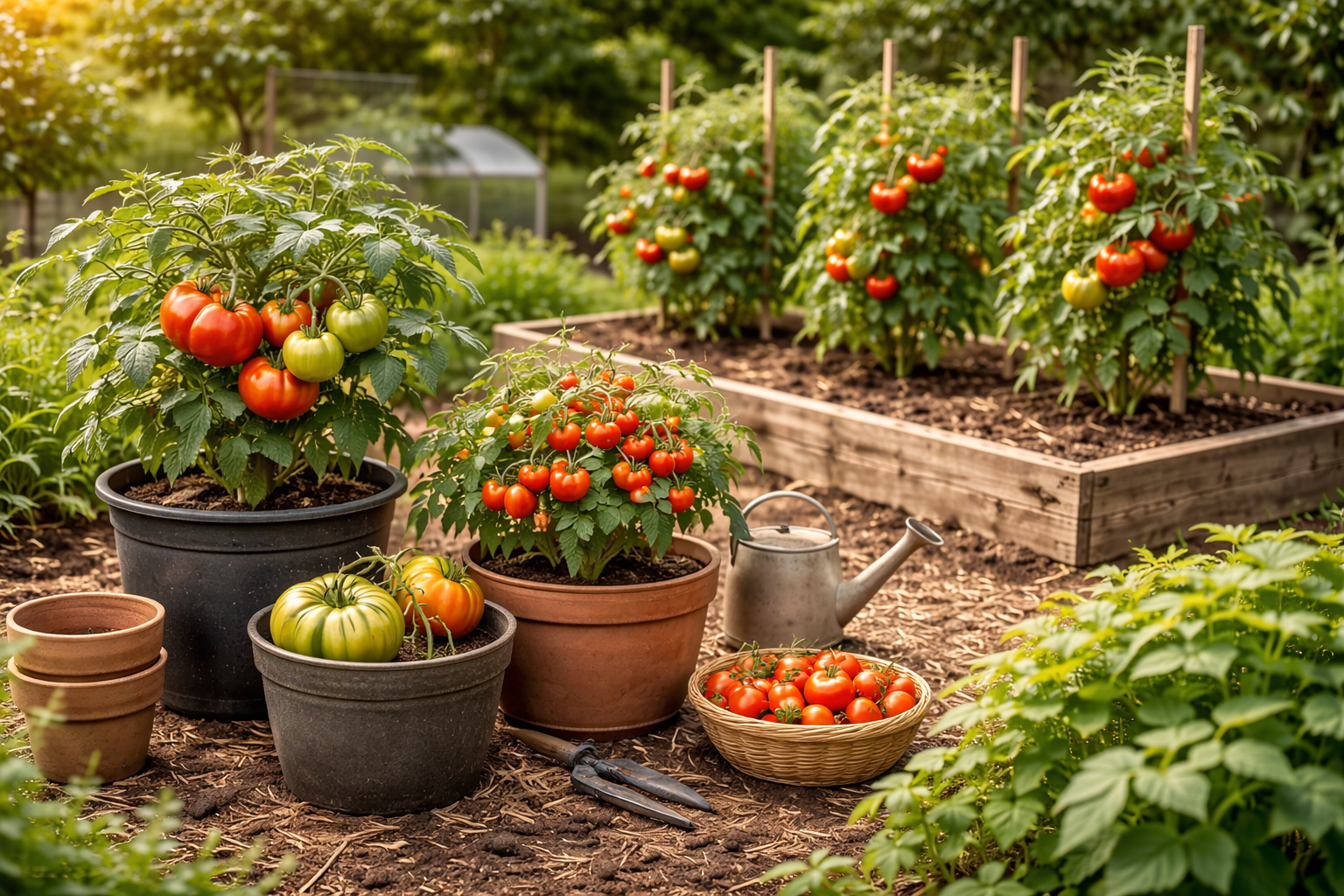
This is where the generic advice breaks down fastest because the same heirloom can feel easy in one setup and ridiculous in another.
In containers, heirlooms can do very well, but only when the pot is large enough, the mix drains well, and you accept that containers dry out faster than in-ground beds. Large-fruited heirlooms in undersized containers are where many gardeners accidentally create a full-time watering job. If you want a lower-maintenance container plant, smaller-fruited or more compact heirlooms usually make more sense than giant slicers.
In raised beds, you get better control over soil texture and drainage, which heirlooms appreciate. But raised beds do not cancel out spacing rules. In fact, because raised beds look neat and productive when planted densely, people often overpack them. The result can be a wall of foliage that is hard to prune, hard to inspect, and slow to dry after rain or watering.
In short seasons, variety choice becomes the whole story. This is not where you gamble on the latest giant beefsteak just because the photos are beautiful. Earlier-maturing heirlooms, medium slicers, and many cherries are usually better bets. If you live where summer arrives late or cool weather returns early, use indoor seed starting to buy time and use variety maturity days as a screening tool, not a decorative detail.
If you are unsure whether your setup is the problem, ask these three questions:
- Is the variety too large or too late for the season?
- Is the root zone drying too fast or staying too wet?
- Is the plant crowded enough that routine care has become annoying?
Those three questions solve more tomato mysteries than people realize.
One more thing that helps in containers and raised beds: match the variety to the setup instead of trying to force the setup to accommodate the variety. That sounds obvious, but it saves a lot of frustration. It is often easier to switch to a better-fitting heirloom than to keep engineering around the wrong one.
Key takeaway:
The real question is not whether heirloom tomatoes can grow in pots or short seasons. The real question is whether the variety, root space, and season length all line up.
What usually goes wrong, and how to fix it before the season slips away
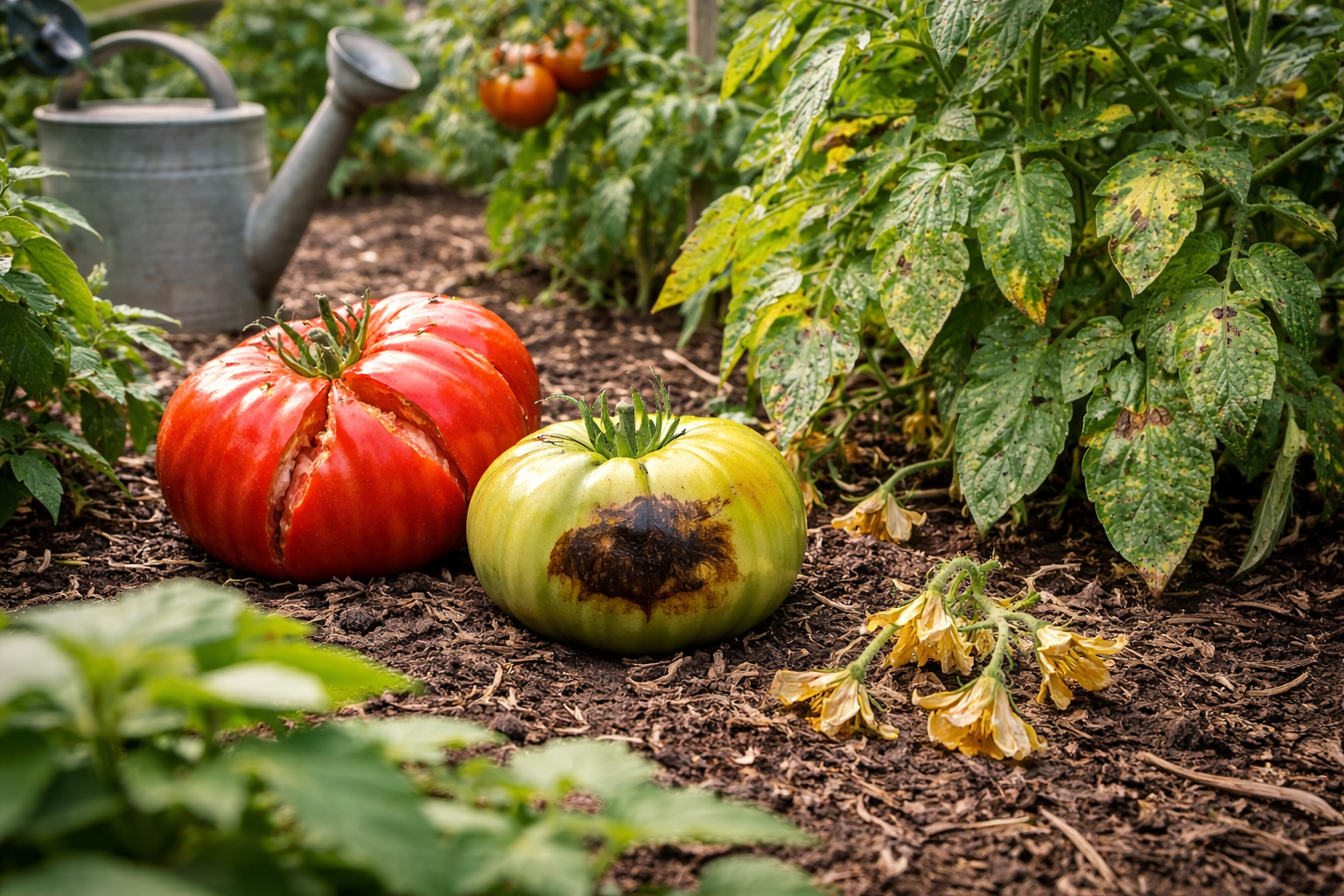
Most heirloom tomato problems look dramatic, but the fix is often surprisingly ordinary. The key is not to panic and treat every symptom as a separate crisis.
If tomatoes are cracking, look first at uneven watering, sudden rain after dry weather, and overripe fruit left hanging too long. Pick ripe fruit promptly and stabilize moisture as much as possible.
If flowers drop and fruit set is poor, consider temperature swings, insufficient sun, or excess nitrogen. Sometimes the plant looks fantastic because it is overfed, not because it is balanced.
If the fruit bottoms turn black, think blossom end rot and go back to moisture consistency and root health. Do not assume the answer is dumping in more fertilizer.
If the plant is huge but underperforming, the usual suspects are too much nitrogen, too little light, or too much shade from overcrowding. I have seen beds that looked almost tropical from a distance but produced less useful fruit than a simpler, better-spaced row with calmer growth.
If disease starts showing up on leaves, improve airflow, keep foliage from staying wet longer than necessary, and avoid turning the plant into a dense tangle. Basic prevention matters. A crowded heirloom canopy in humid weather is asking the plant to fight with one hand tied behind its back.
This is also where crop rotation helps if you have had tomato disease in the same area before. It is not always easy in small gardens, but repeating tomatoes in the exact same spot year after year can stack the odds against you.
If a particular plant performs beautifully and you want to grow it again, seed saving is one of the joys of heirlooms. Because many heirloom varieties are open-pollinated, saved seed can grow true to type when handled properly. The University of Minnesota Extension’s seed-saving guidance is helpful if you want to carry a favorite variety into next season.
Common mistake:
Treating every tomato symptom like a pest or disease emergency. Start with watering, spacing, support, and light before assuming the problem is exotic.
When to harvest heirloom tomatoes, and why perfect-looking is often too late
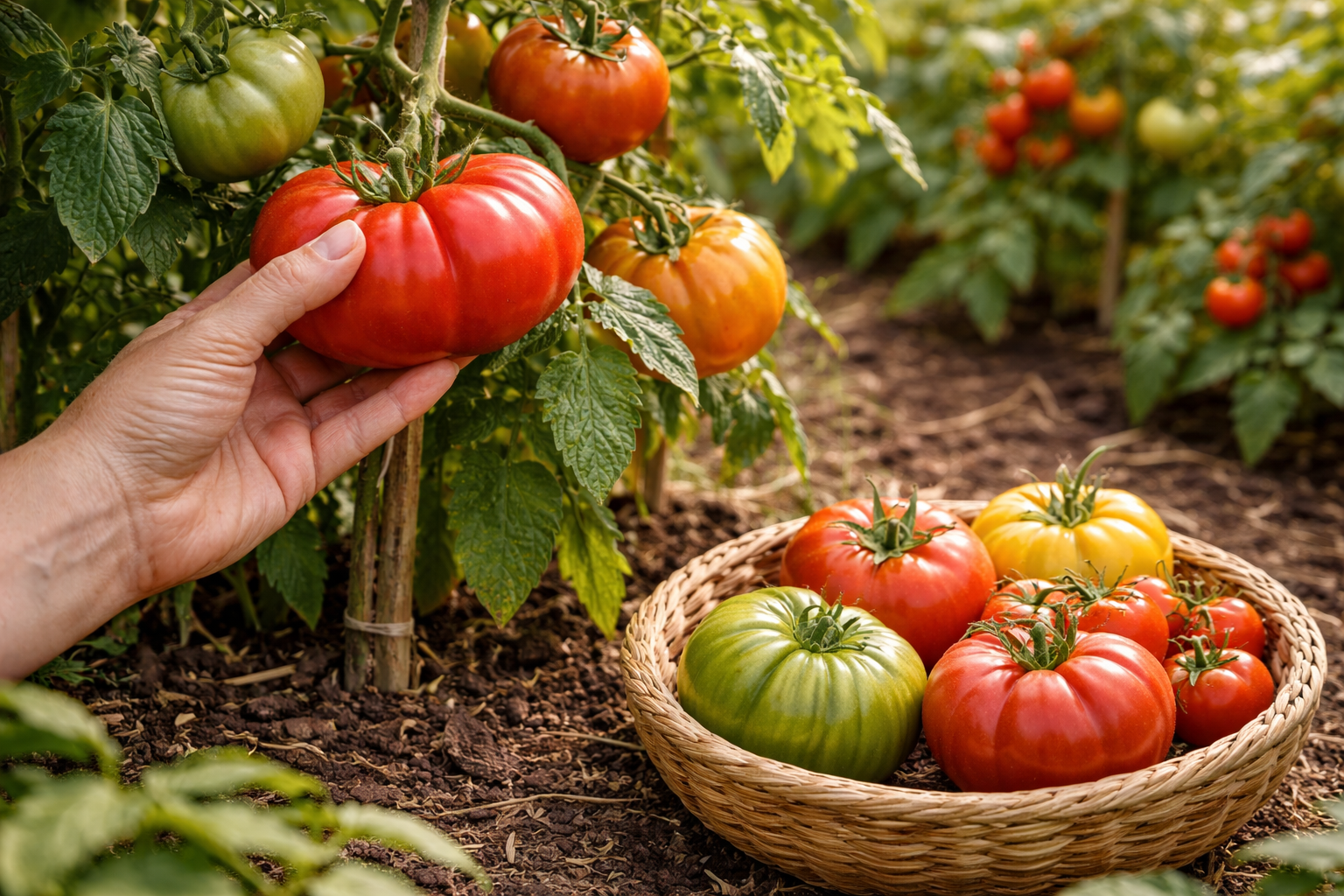
Heirlooms teach you to let go of the idea that every tomato should look like a glossy supermarket model. Some are ribbed, some are oddly shaped, some stay greenish when ripe, and some soften faster than hybrids. Waiting for a flawless look can mean waiting too long.
The better harvest test is color plus feel plus familiarity with the variety. When the fruit reaches its mature color and has a slight give, it is usually time. With crack-prone heirlooms, picking promptly is often the difference between bringing in a beautiful tomato and finding a split one after the next watering or rain.
I tend to harvest a little earlier with large heirlooms if the weather is unstable. That is not cheating. That is protecting the fruit at the point where flavor is already there. Once you have grown the same variety for a season or two, you start to recognize its version of ripe rather than chasing some universal tomato look that does not exist.
This is also a good time to keep notes. Which variety tasted worth the effort? Which one cracked too easily in your conditions? Which one needed more support than it justified? Heirloom growing gets easier when you stop treating every season like a blind date and start building a short list of varieties that have already proved themselves in your garden.
The gardeners who seem effortlessly good at heirlooms are usually not doing anything mystical. They are repeating what worked, adjusting what did not, and matching the next variety more carefully to the conditions they actually have.
FAQ
Are heirloom tomato plants harder to grow than regular tomatoes?
Not automatically. They are often less forgiving of inconsistent watering, weak support, crowding, and poor variety choice. In the right setup, many heirlooms are straightforward to grow.
Do heirloom tomatoes need cages or stakes?
Many do, especially larger indeterminate types. The bigger the plant and fruit, the less likely a flimsy cage will be enough. Strong support early is much easier than emergency support later.
Can you save seeds from heirloom tomatoes?
Yes, many heirlooms are open-pollinated, which is one of their biggest appeals. If the plant performed well in your garden, saving seed can be a smart way to keep a variety you already know suits your conditions.

Michael Rowan is the founder and lead writer at The Garden Playbook. He has spent 10+ years growing plants across a range of settings — from indoor houseplants and container gardens to raised beds and in-ground plots — adapting methods to different light levels, seasons, and growing conditions.
Michael focuses on practical, experience-based guidance grounded in fundamentals: soil health, watering strategy, plant nutrition, pruning and propagation, and integrated pest management (IPM). His work aims to help readers diagnose common problems (such as yellowing leaves, stunted growth, or pest pressure) and apply straightforward solutions that are realistic for home gardeners.
At The Garden Playbook, Michael develops tutorials and plant guides using a consistent process: documenting real outcomes where possible, explaining the “why” behind each step, and verifying higher-risk topics (such as plant toxicity or pest treatment options) against reputable horticultural references.