
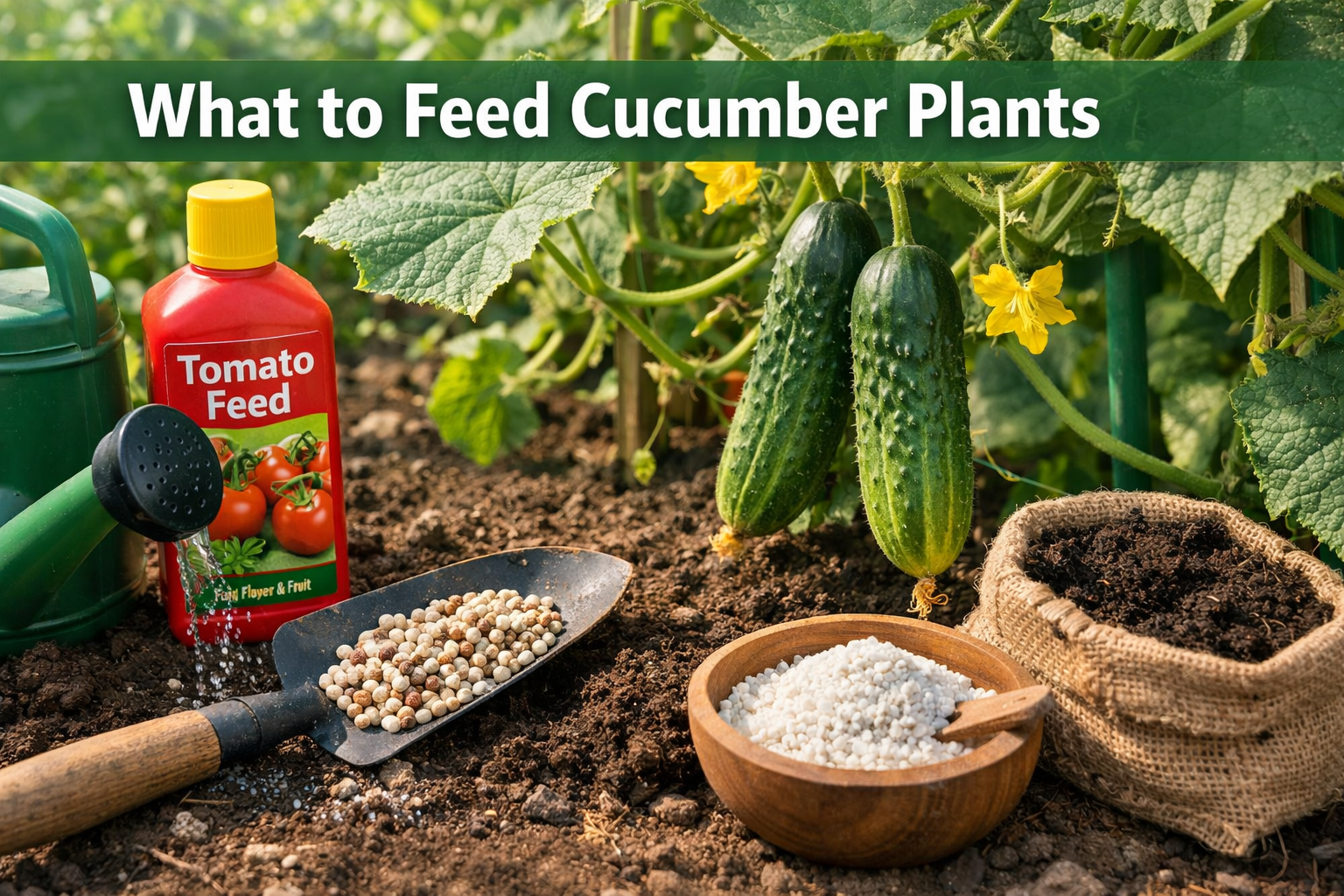
I’ve made this mistake in a hot patio summer. A cucumber in a pot looked hungry, so I kept giving it general feed. The vine turned into a green tangle, the leaves got huge, and the harvest stayed weirdly stingy.
The Royal Horticultural Society advises feeding container cucumbers every 10 to 14 days with a general liquid fertilizer, then switching to a high-potash liquid feed such as tomato feed once flowering starts. That is the cleanest answer to what to feed cucumber plants. The useful answer is a bit sharper: rich garden soil often needs very little extra feeding, pots need a rhythm, and too much nitrogen at the wrong stage buys you leaves instead of cucumbers.
That is where most advice gets fuzzy. “Use tomato feed” is often right, but only once the plant is moving from building vine to building fruit. Before that, fertile soil, compost, and a balanced feed do most of the work.
At a glance: the cucumber feed map
| Stage | What to feed | How often | Watch out for |
|---|---|---|---|
| At planting | Compost, well-rotted manure, or a balanced fertilizer in lean soil | Once, into the bed or mix | Fresh manure, poor drainage, lawn fertilizers |
| Early vine growth | Balanced feed if growth is weak or the setup is lean | Light and steady, not heavy | Pushing high nitrogen too long |
| First flowers | High-potash liquid feed, often tomato feed | Start the switch here | Staying on leafy growth feed too long |
| Heavy fruiting | Continue high-potash feed, keep moisture even | Regular in pots, lighter in rich beds | Dry-wet swings that mimic deficiency |
| Yellow leaves or poor fruit | Diagnose first, then feed | Only after ruling out water and pollination issues | Treating every pale leaf like a fertilizer emergency |
Fast rule: balanced support while the plant builds, then more potassium once flowers show up.
Here’s what you’ll leave with:
- What to use at planting, not just later in the season
- When tomato feed makes sense and when it is too early
- How feeding changes in pots, grow bags, raised beds, and rich ground
- How to tell hunger apart from water stress, overfeeding, and poor pollination
- Which popular shortcuts are more myth than help
What to Feed Cucumber Plants for Steady Growth and Better Fruit
The short answer is stage-based. Feed cucumbers with fertile soil or compost at planting, use a balanced fertilizer while the plant is putting on leaves and vines, then switch to a high-potash feed when the first flowers appear.
If the plant is in rich ground and growing well, feeding can stay light. If it is in a pot or grow bag, the same plant usually needs a more regular rhythm because the roots run out of room and the mix gets flushed every time you water hard in summer.
Think of it like this: early on, the plant is building a frame. Later, it is trying to fill that frame with fruit. A balanced feed helps build the frame. A high-potash feed helps the plant lean into flowering and fruiting.
Fast Rule: If the cucumber has no flowers yet, stay balanced. If flowers are opening, switch to a higher-potash feed. If the bed is already rich and the vine looks strong, feed less, not more.
This is also where NPK labels stop looking like alphabet soup. You do not need a perfect formula. You just need the pattern. Balanced early. More potassium later. And no wild overcorrection because one leaf went pale after a hot afternoon.
Build the Nutrient Base Before Planting So Later Feeding Actually Works
Feeding cucumbers starts before the bottle comes out. A weak root zone makes every later fertilizer choice feel hit-or-miss.
University of Minnesota Extension recommends a soil pH between 6.0 and 6.5, plus well-rotted manure or compost to improve the soil, and it warns against both fresh manure and “Weed and Feed” products in vegetable beds. That one chunk of advice clears up a lot. Cucumbers like moisture-retentive but well-drained soil. They do not like a sour, compacted, waterlogged patch that you try to rescue with liquid feed every Saturday.
If your bed is already rich with compost and drains well, you may not need much routine fertilizer at all. That sounds almost too simple, but it tracks. Many gardeners feed because the crop is called “hungry,” when the real issue was thin soil, dry roots, or a cramped container from day one.
For average or lean soil, mix in compost and add a balanced fertilizer before planting. For grow bags and big containers, a quality potting mix with compost and a light starter feed gives you a calmer season. You are building buffer. That matters more than people think.
A quiet but very real mistake is using fresh manure because it feels “strong.” It is strong in all the wrong ways for this job. It can bring weed seeds, bacteria, and a burst of nutrition that is too rough for a young transplant.
Note: If the bed stays soggy after rain, fix drainage before adding more fertilizer. Feeding a stressed root zone is like topping up a leaking bucket.
Switch the Feed When Flowering Starts So the Plant Stops Chasing Leaves
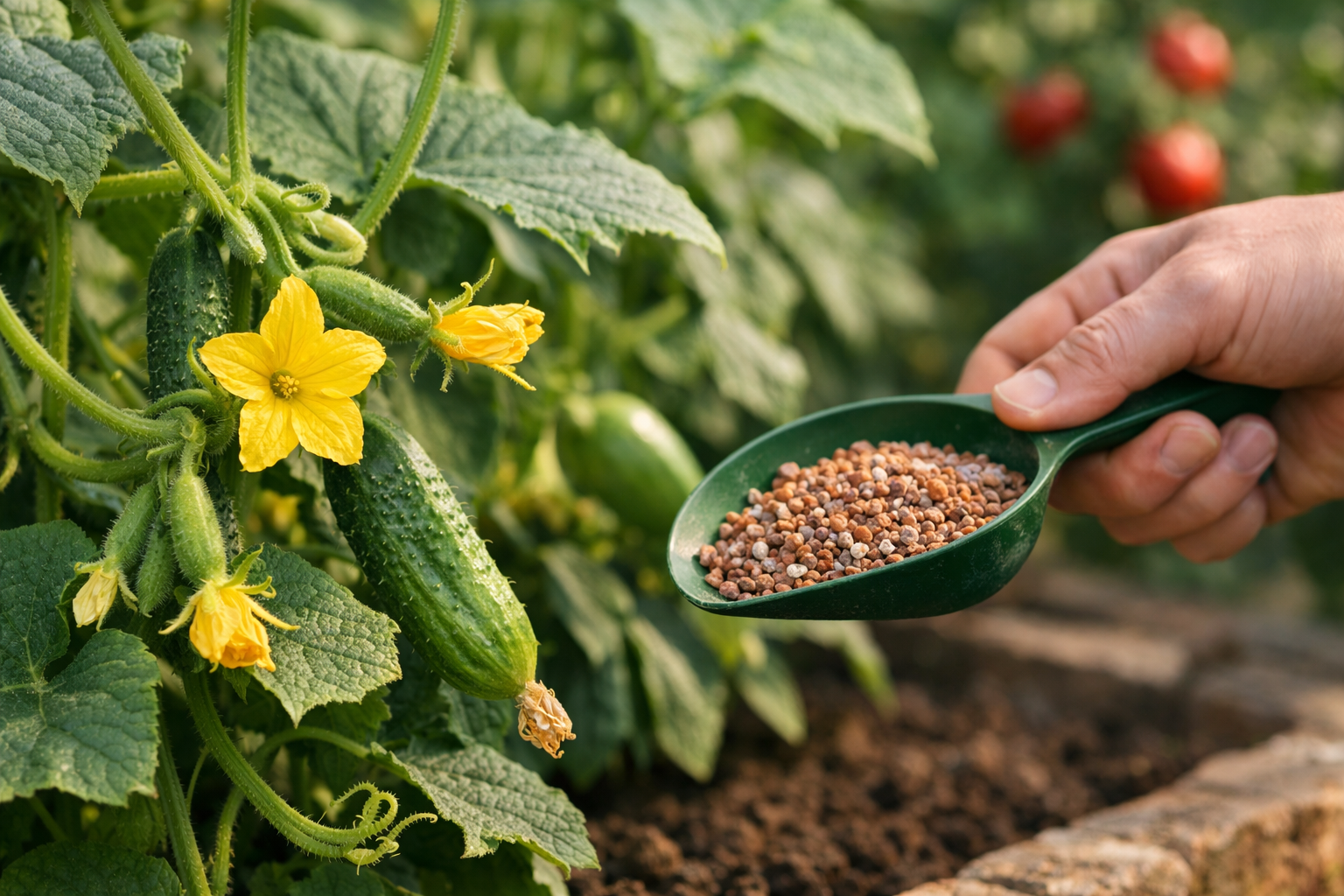
This is the hinge point that changes the whole season.
Before flowering, cucumbers use nitrogen to build leaf area and vine growth. That is normal. But once flowers show up, the plant’s job changes. Keep pushing high nitrogen, and you can end up with a jungle that looks fantastic from three feet away and underdelivers up close.
Clemson Extension notes that overfertilizing with nitrogen encourages excess vine growth and reduces fruit production. That is not abstract. You can see it in the garden. Big, handsome leaves. Long runners. Then small harvests, delayed fruit, or oddly weak production.
This is why tomato feed comes up so often in cucumber advice. It is not magic. It is just a practical high-potash option that matches the plant’s priorities once flowering starts. If the first blossoms are opening, that is the cue. Make the switch then, not three weeks later when you are already annoyed at the plant.
There is one catch. A pale, slow young plant in poor soil still needs support before flowering. Do not read “switch later” as “starve now.” If early growth looks thin, use a balanced fertilizer first and get the plant moving, then change gears once flowers appear.
I have found that this is where gardeners get seduced by appearance. A lush cucumber feels healthy, so they keep feeding for more lushness. But a productive cucumber is not trying to win a leaf contest. It is trying to set and size fruit.
Remember: A big vine is not the goal. Fruit is the goal. If flowers are open, feed for fruiting.
Feed Potted Cucumbers More Often Than Bed-Grown Plants
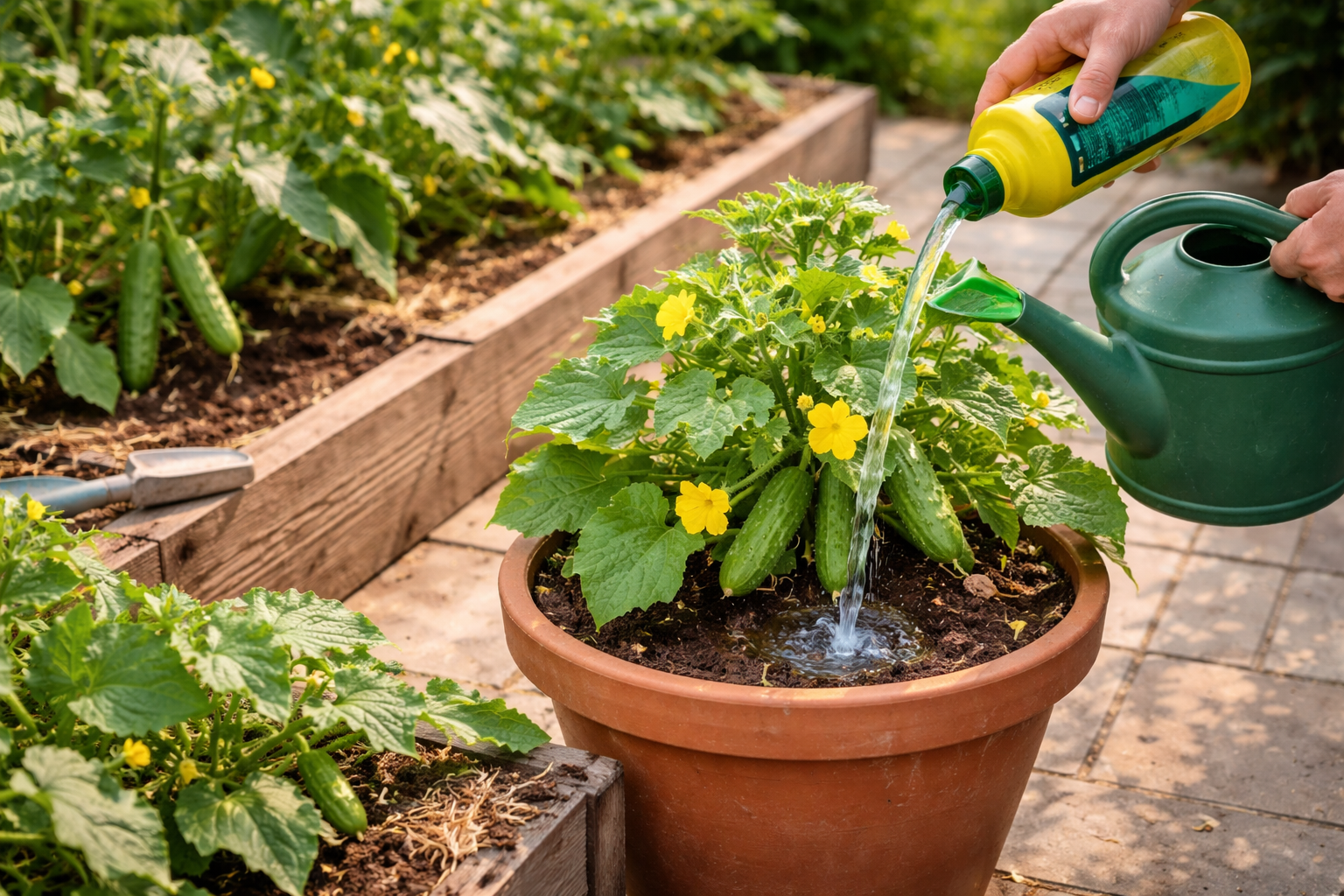
A cucumber in rich ground and a cucumber in a patio pot are not living the same life. They should not be fed as if they are.
In the ground, roots can travel, moisture swings are slower, and compost in the bed keeps working. In a pot, the root zone is small, warm, and quick to dry out. Every heavy watering moves nutrients through the mix faster. That is why container feeding always sounds more hands-on.
The size of the container changes the whole equation. A small pot dries fast, salts build faster, and the plant becomes touchy. The pot-size rule in what size container to grow cucumbers and the spacing rule in how many cucumber plants per container both matter here because cramped roots create fake “fertilizer problems” all season long.
If your cucumber is in a grow bag, large pot, or greenhouse container, keep feeds lighter and steadier. General liquid feed while the plant is building. High-potash feed after flowering starts. If the mix already contains slow-release fertilizer, do not stack full-strength liquid feed on top right away. Watch the plant first.
For bed-grown cucumbers, especially in soil that was improved with compost, routine feeding can be much lighter. Sometimes the best move is to water well, mulch, and leave the plant alone. Not every cucumber wants another meal.
That is why blanket schedules feel off. The setup drives the rhythm.
Apply Fertilizer Without Burning Roots or Wasting Feed
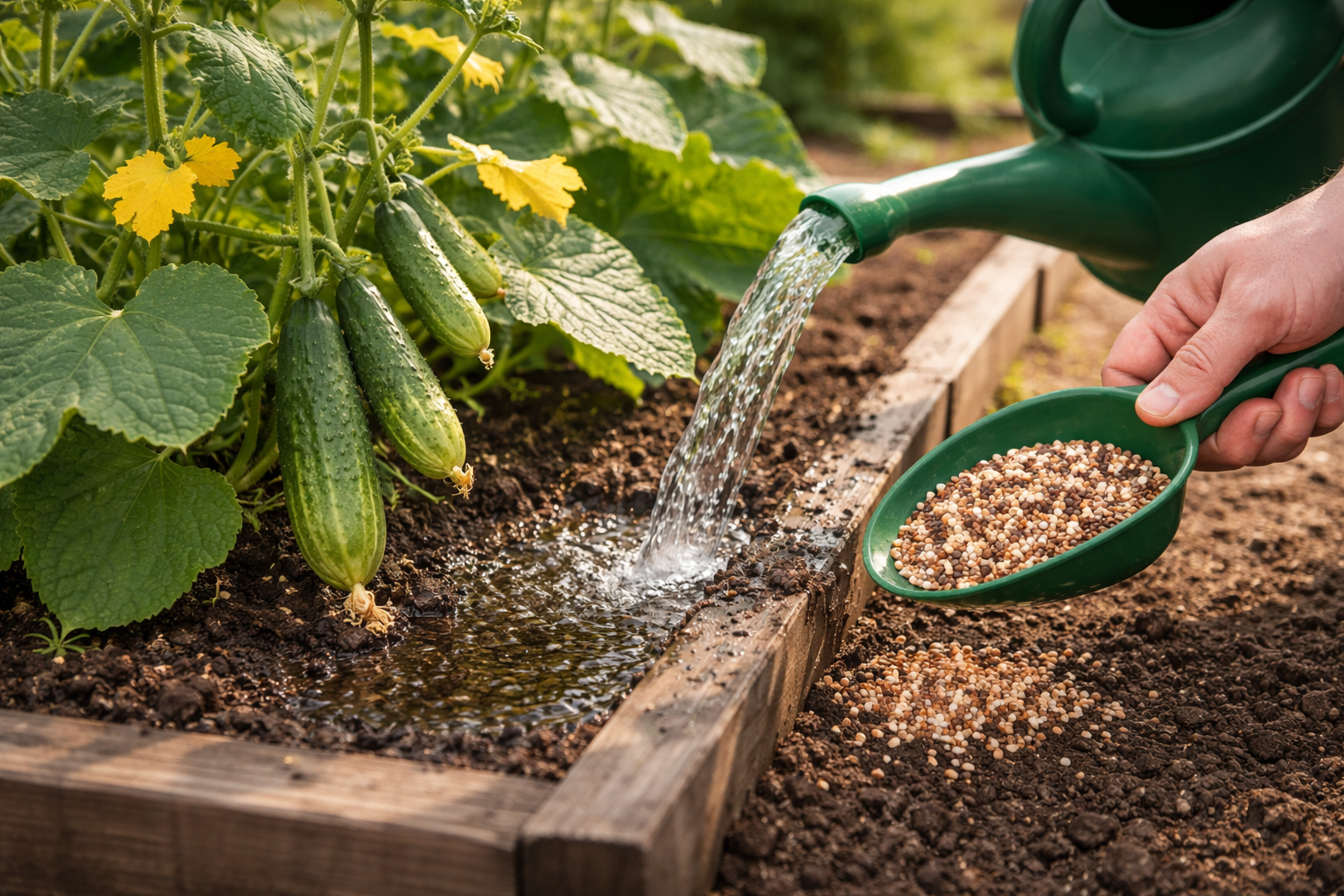
The right feed applied badly still gives lousy results.
Water first so dry roots do not get scorched
If the potting mix or soil is dry, water before feeding. Fertilizer on dry roots is one of the fastest ways to get edge burn, salt stress, and that faintly crispy look that makes people think the plant suddenly “caught a disease.”
Use liquid feed for speed and granular feed for background support
Liquid fertilizer is easy to meter out, which is why it works so well for pots and grow bags. Granular or slow-release fertilizer makes more sense as background support in beds or large containers. Neither is morally better. They just solve different problems.
Keep side-dressing off the stem so it reaches feeder roots
Clemson advises applying side-dressed fertilizer about 4 to 6 inches from the plants. That spacing is useful because feeder roots sit out from the stem, not right against it. Heap fertilizer against the base, and you raise the risk of burn without helping uptake much.
Keep foliar feeding in its place
Ohio State’s vegetable crop guidance treats foliar feeding as a supplement, not a replacement for root-zone nutrition. That is the sane way to think about it. Foliar sprays can have a role in narrow cases, but they are not the backbone of a cucumber feeding plan. If the root zone is poor, fix that first.
One more thing. Feed at the base, not over the leaves, and do it when the plant is not already stressed by midday heat. That simple timing choice saves a surprising amount of grief.
Support also matters here. A vine that is lifted, aired out, and easier to water cleanly is easier to feed cleanly too. The setup ideas in how to support cucumber plants make that pretty obvious once the plant gets moving.
Read Yellow Leaves and Weak Fruit Before Reaching for More Feed
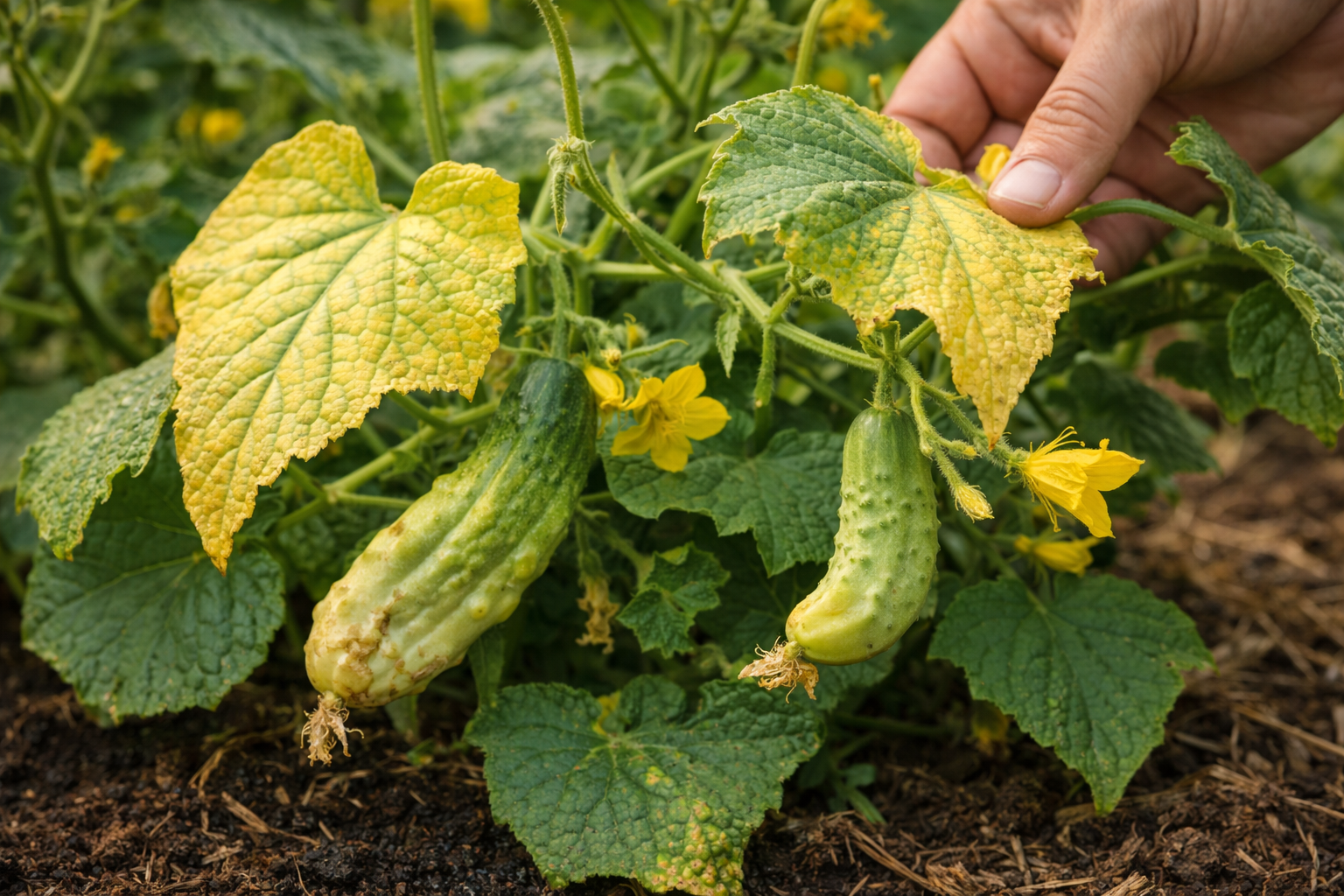
Yellow leaves do not automatically mean “more fertilizer.” That shortcut causes a lot of messy seasons.
Older leaves yellowing first can point to a nitrogen shortage. A plant that stays pale and slow in poor soil may need balanced feeding. But cucumbers also yellow when roots keep swinging from too wet to too dry, when drainage is bad, or when the plant is simply crowded and tired in a too-small container.
Clemson also notes that misshapen cucumbers are often tied to low fertility or poor pollination. That is a good reminder. Poor fruit shape is not a one-cause symptom. If flowers are dropping, bees are scarce, or the weather has turned rough, the problem might not be nutrition at all.
Here is a quick way to sort it out:
| Symptom | Likely cause | First move |
|---|---|---|
| Older leaves yellowing, weak overall growth | Low fertility or underfeeding | Use a balanced feed and check moisture |
| Leaf edges look scorched after feeding | Overfeeding or feeding dry roots | Flush with water and pause feeding |
| Loads of leaves, not much fruit | Too much nitrogen | Switch to high-potash feed |
| Wonky or underfilled fruit | Pollination trouble, uneven moisture, or low fertility | Check pollination, watering rhythm, then feed if needed |
If growth stalls and fruit set gets weird, the bigger troubleshooting picture in why aren’t my cucumbers growing is worth a look because too much nitrogen, heat stress, and cramped roots can all masquerade as “bad feeding.”
The Feeding Shortcuts That Backfire on Cucumber Plants
Every crop has its folk remedies. Cucumbers collect a few of the louder ones.
The big one is Epsom salt. University of Minnesota Extension says Epsom salts can be harmful to soil, plants, and water unless a magnesium deficiency is actually present. So no, it is not a general cucumber booster. It is a targeted fix for a specific shortage, and most gardens are not dealing with that shortage in the first place.
Another shortcut is assuming more feed always means more cucumbers. Once the plant is healthy and fruiting, overfeeding is often the faster way to make things worse. Salts build up. Water uptake gets messy. The vine gets lush and a bit lazy.
Routine foliar feeding belongs in the same bucket. It sounds neat because it feels direct. Spray the leaves, feed the plant. But root-zone nutrition still does the heavy lifting for cucumbers, so foliar feeding is not the main plan.
Homemade teas and improvised fertilizers can work, but they vary a lot. If you use them, treat them like mild support, not like a precise program. A garden does not care whether a feed sounds natural or old-school. It cares whether the roots can use it, whether the timing makes sense, and whether the dose is sane.
Note: The most expensive feeding mistake is not underfeeding. It is misreading the problem, then throwing three fixes at it at once.
A Simple Cucumber Feeding Schedule by Setup, Not Guesswork
If you want the simplest working plan, use this one.
Rich in-ground bed
Start with compost or well-rotted manure before planting. Feed lightly or not at all unless growth looks weak. Once flowering starts, a light high-potash feed can help, but rich soil often carries the plant a long way on its own.
Average garden bed
Use compost plus a balanced starter fertilizer. If early growth is pale or slow, give a light balanced feed. Once flowers open, switch to a high-potash feed. Keep watering steady.
Raised bed
Treat it like an average bed unless the soil is very rich. Raised beds drain faster, so water rhythm matters more than many people expect. If the bed dries fast, nutrient uptake gets erratic and the plant can look hungry when it is really just thirsty.
Large pot or grow bag
Use a good potting mix, start light, then feed regularly. General liquid feed while the plant is building. High-potash liquid feed once flowers appear. If the mix contains slow-release fertilizer, keep early liquid feeding modest and watch the leaves rather than forcing a schedule.
Greenhouse container
Feed on the same stage logic as outdoor pots, but pay even closer attention to moisture. Warm covered spaces make roots run through water and nutrients fast. Small misses pile up quicker in there. Ask me how I know.
Fast Rule
If the soil is rich, feed less. If the root zone is small, feed more carefully and more often. If flowers are open, stop feeding like the plant is still trying to make leaves.
Late in the season, back off if the plant is clearly winding down or disease has taken hold. A tired cucumber is not a project to be force-fed back into youth. Pick what is there, keep harvesting on time, and move on. The sizing cues in how do you pick a cucumber help here because overgrown fruit also drags the plant’s momentum down.
FAQ
Can I use tomato feed on cucumber plants from day one?
You can, but it is usually not the best opening move. Tomato feed makes more sense once flowers appear because cucumbers then need more help with flowering and fruiting. Early on, fertile soil and a balanced feed are usually a better match.
Should I feed cucumber seedlings right after they sprout?
Not heavily. Seedlings are easy to overdo. If they are in fresh seed-starting mix and look healthy, let them grow a bit first. Start light once true leaves develop and the plant is moving into active growth, then step up feeding after transplanting if the setup is lean.
Is fish emulsion a good choice for cucumbers in containers?
It can be useful early because it is gentle and often nitrogen-forward, but it is still only part of the story. Once cucumbers start flowering, a higher-potash feed usually makes more sense. In containers, the bigger win is not the brand or the ingredient. It is matching the feed to the stage and keeping watering even.

Michael Rowan is the founder and lead writer at The Garden Playbook. He has spent 10+ years growing plants across a range of settings — from indoor houseplants and container gardens to raised beds and in-ground plots — adapting methods to different light levels, seasons, and growing conditions.
Michael focuses on practical, experience-based guidance grounded in fundamentals: soil health, watering strategy, plant nutrition, pruning and propagation, and integrated pest management (IPM). His work aims to help readers diagnose common problems (such as yellowing leaves, stunted growth, or pest pressure) and apply straightforward solutions that are realistic for home gardeners.
At The Garden Playbook, Michael develops tutorials and plant guides using a consistent process: documenting real outcomes where possible, explaining the “why” behind each step, and verifying higher-risk topics (such as plant toxicity or pest treatment options) against reputable horticultural references.