Most basil pot advice falls into the same trap. It gives you the smallest pot that can work, then acts surprised when the plant starts drooping by late afternoon and drinking like mad.
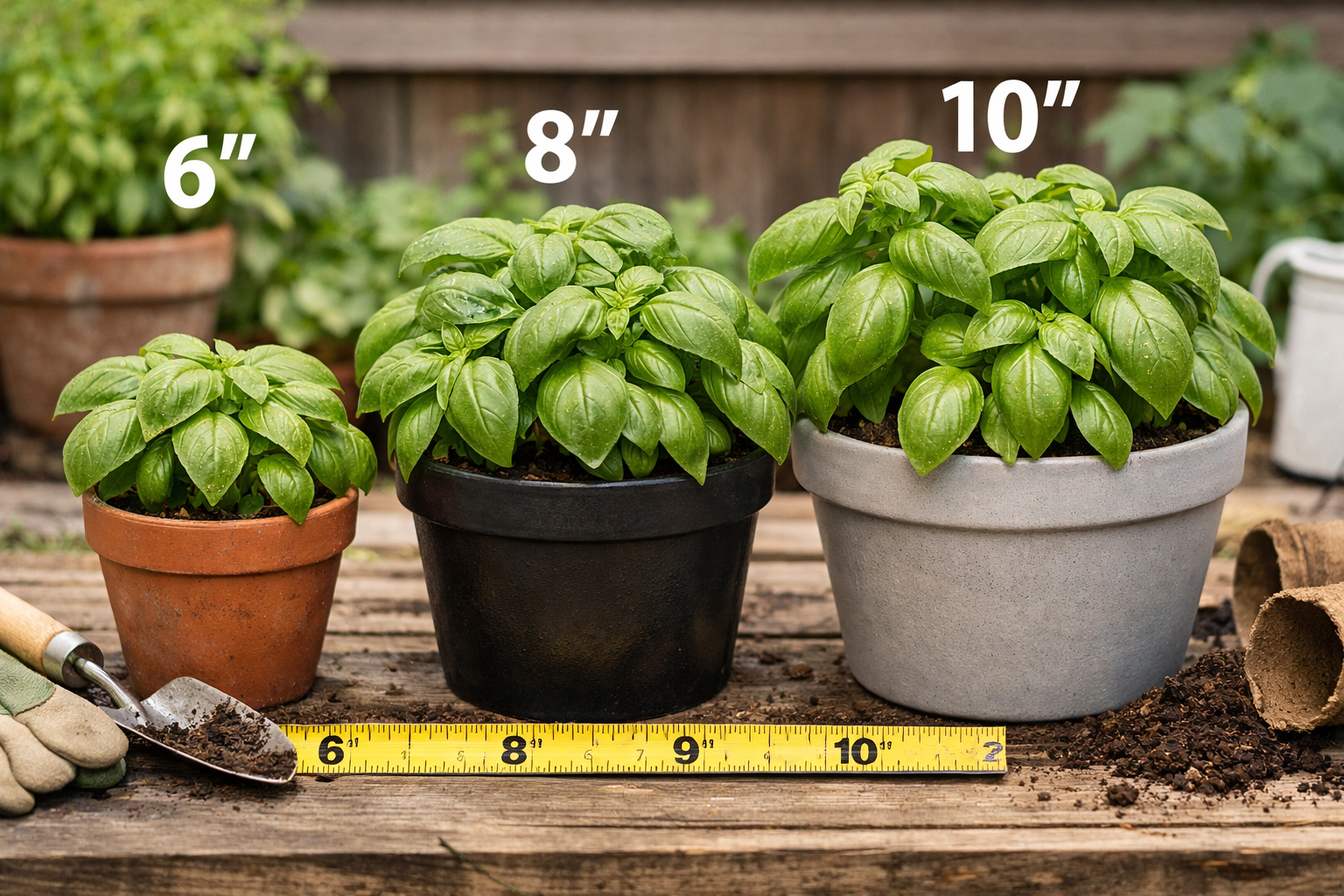
So, what size pot for basil actually works? For one standard basil plant, 8 inches wide and about 8 inches deep is the safe minimum. 10 inches is the easier long-term choice. That extra room is not about pampering the roots. It gives you a bigger moisture buffer, which is the part people feel in real life.
I learned this the mildly annoying way years ago with a nice-looking 6-inch terracotta pot on a bright patio table. The basil looked great for a week. Then summer showed up, I missed one watering, and the plant collapsed into a green handkerchief by lunch.
What you’ll get from this guide
- The fastest way to choose between a 6-, 8-, 10-, or 12-inch basil pot
- How pot size changes for grocery-store basil, Thai basil, and compact globe basil
- Why width, depth, and pot material all change how often you water
- What goes wrong when the pot is too small, or weirdly too big
- How to repot and space basil so the bigger pot fixes the problem instead of making a new one
Fast fit chart
| If your setup looks like this | Start here | Watch for |
|---|---|---|
| One standard sweet basil plant | 8 to 10 inches wide | Fast drying in hot weather |
| One compact globe basil | 6 to 8 inches wide | Overpotting indoors |
| Grocery-store basil clump | Split first, then 8-inch pots | Crowding and early stress |
| Two or three basil plants together | 10 to 12 inches wide | Poor airflow and damp foliage |
| Sunny patio, balcony rail, or windy porch | Lean bigger, not smaller | Afternoon wilt from heat and dry mix |
The short answer: an 8-inch pot works, a 10-inch pot is easier
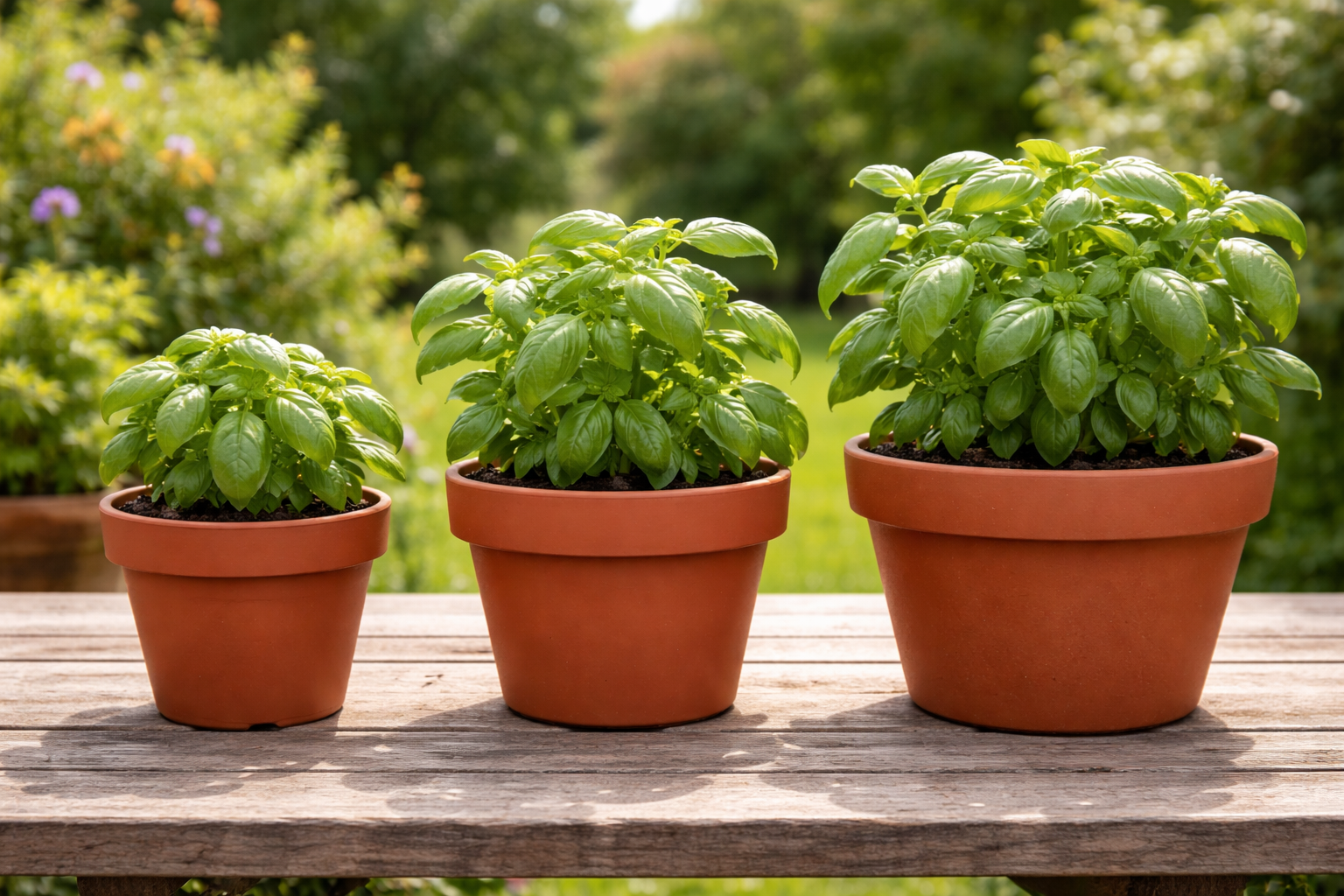
The Royal Horticultural Society says basil does well in containers and advises choosing one that is at least 20 cm, or 8 inches, wide and deep. That is the cleanest source-backed baseline you’re going to find. So if you want one simple number, use 8 inches as the floor.
But “works” and “works without fuss” are not the same thing.
An 8-inch container is enough for one standard basil plant. A 10-inch pot is usually better because it holds more mix, dries out less violently, and gives you more wiggle room if the plant gets fuller than expected. If you’ve ever come home to basil that looked fine at breakfast and offended by dinner, that’s the extra two inches doing real work.
Remember: a 6-inch pot can keep basil alive. It is not the low-maintenance answer for most people.
If you’re growing for garnish, an 8-inch pot is usually plenty. If you want regular handfuls for pasta, sandwiches, or pesto, jump to 10 inches and don’t overthink it.
Match the pot to the basil you actually have
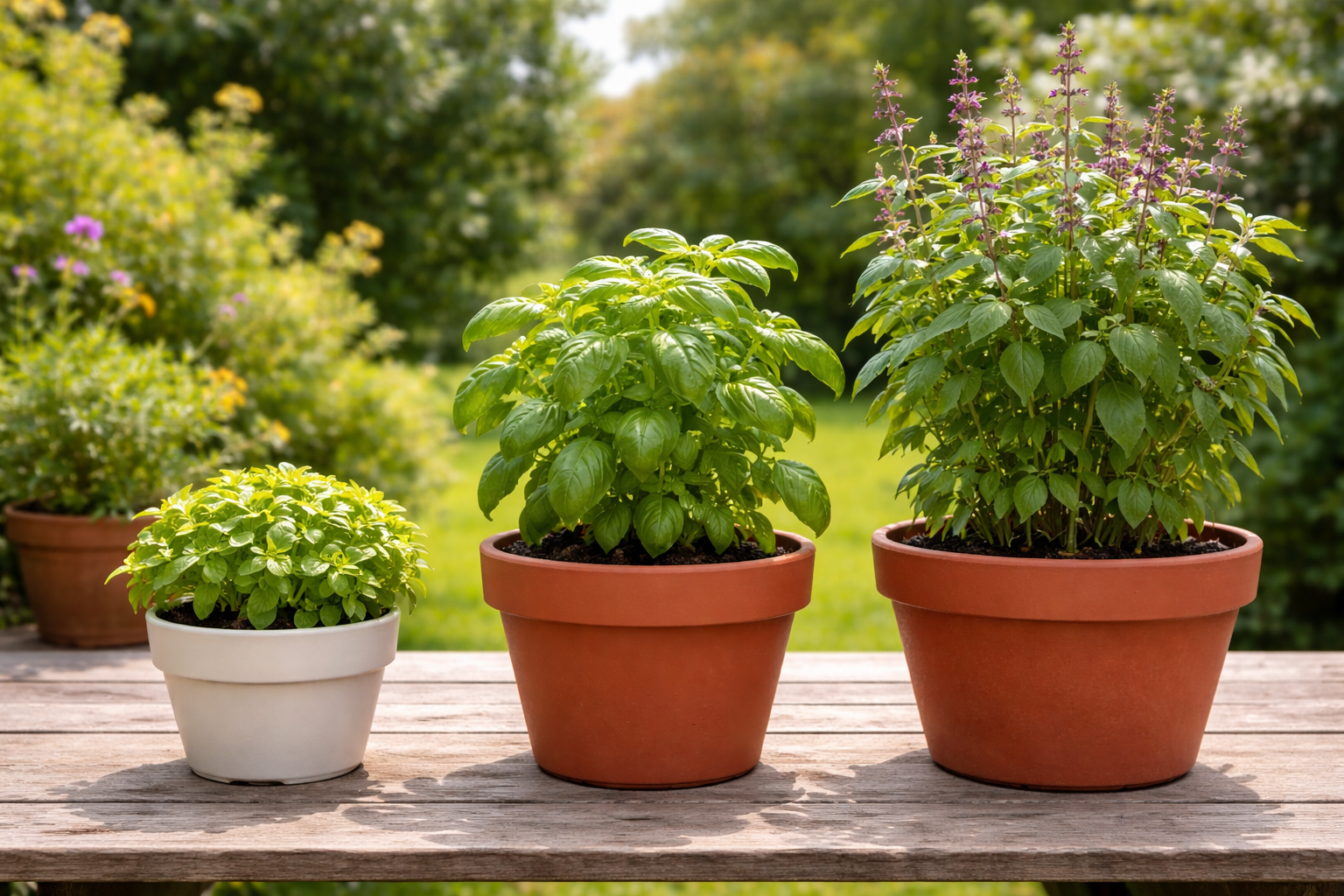
This is where a lot of pot-size advice gets sloppy. “Basil” sounds like one thing, but a compact globe basil and a vigorous Genovese basil are not playing the same game.
University of Minnesota Extension lists spicy globe basil at about 8 to 10 inches tall, while Thai basil can run 24 to 36 inches in good conditions. That size spread tells you right away that one blanket pot answer is too blunt.
Use this rule instead:
- Compact or globe basil: 6 to 8 inches can work well, especially indoors.
- One standard sweet basil or Genovese plant: 8 to 10 inches is the sweet spot.
- Thai basil or larger vigorous types: 10 inches is usually a calmer choice than 8.
- Multiple finished plants in one container: 10 to 12 inches, with honest spacing.
Grocery-store basil is its own little scam, or close enough. It looks lush because you are usually buying a crowded clump of many seedlings. That fullness is not proof that basil likes cramped roots. It is a temporary visual effect. Once those stems start competing for light, air, and moisture, the whole thing gets touchy fast.
If that’s what you’re holding, split the clump into sections before you size the pot. A packed supermarket basil plant dropped whole into one bigger pot often stays crowded. It just becomes crowded in more soil. For seed-starting density and spacing logic, how many basil seeds per pot is a better question than most people ask at first.
Use this fast fit test to choose the right size without guessing
Pot size comes down to three things: how many basil plants are going in, how hot the spot gets, and how often you water like a normal person, not like your best self on day one.
Try this quick fit test:
- If you have one standard basil plant and you check it often, start at 8 inches.
- If you miss waterings, travel, or grow on a hot patio, go to 10 inches.
- If you grow indoors in average light, stay moderate. Bigger is not always better there.
- If you want two or three plants together, move into the 10- to 12-inch range and don’t crowd the stems.
That last point matters more than people think. A larger pot is not just extra root room. It is a bigger buffer against sudden drying. It also gives you a better margin for error with summer heat.
But there is a flip side. Indoors, a very large pot can stay damp too long if light is mediocre and growth is slow. The basil is small, the root system is small, and the mix sits there wet and chilly. You were trying to be generous. The plant reads it as soggy.
A simple default that works for most setups
One basil plant = 8 to 10 inches wide, around 8 inches deep, with drainage holes. Hotter spot or less frequent watering? Lean to 10. Dimmer indoor spot? Stay closer to 8.
Choose width, depth, and material that help instead of hurt
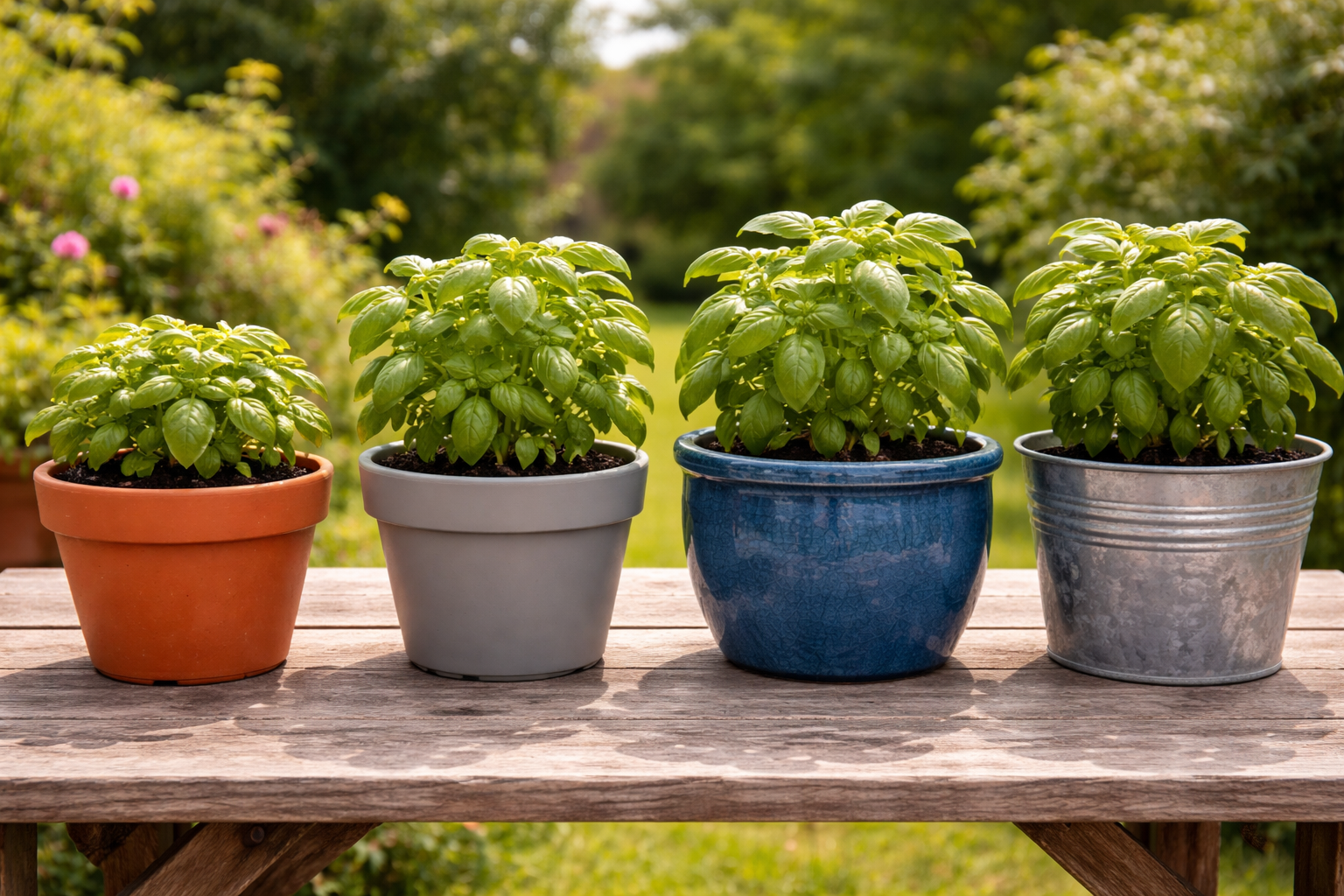
Diameter gets all the attention, but basil cares about three pot traits at once: width, depth, and what the pot is made from.
Width is the headline because it affects how much mix surrounds the plant. Depth still matters. The RHS does not split those hairs and simply says at least 8 inches wide and deep. That’s a good practical floor because shallow containers dry fast and give roots less room to spread.
Then there is material. Iowa State University Yard and Garden notes that clay pots allow air through the root zone and dry faster, while plastic pots are lighter and hold moisture longer. The same source also points out that herbs in clay can need water once or twice a day in summer heat. That tells you what to do with basil pretty fast.
- Terracotta or clay: good if you overwater, live somewhere humid, or like the look enough to babysit the watering.
- Plastic or resin: better for most people because the mix stays evenly moist longer.
- Glazed ceramic: can work well, but check drainage and weight.
- Metal: not my favorite for basil in full sun. Root zones heat up quickly.
Drainage is non-negotiable. Iowa State says containers need sufficient drainage holes, and University of Maryland Extension says indoor herb containers need adequate drainage holes too. So skip decorative cachepots unless the basil is inside a real nursery pot that can drain freely.
If you’re comparing containers more closely, best pot for basil breaks down the material tradeoffs in more detail.
Repot and space basil so the bigger pot actually solves the problem
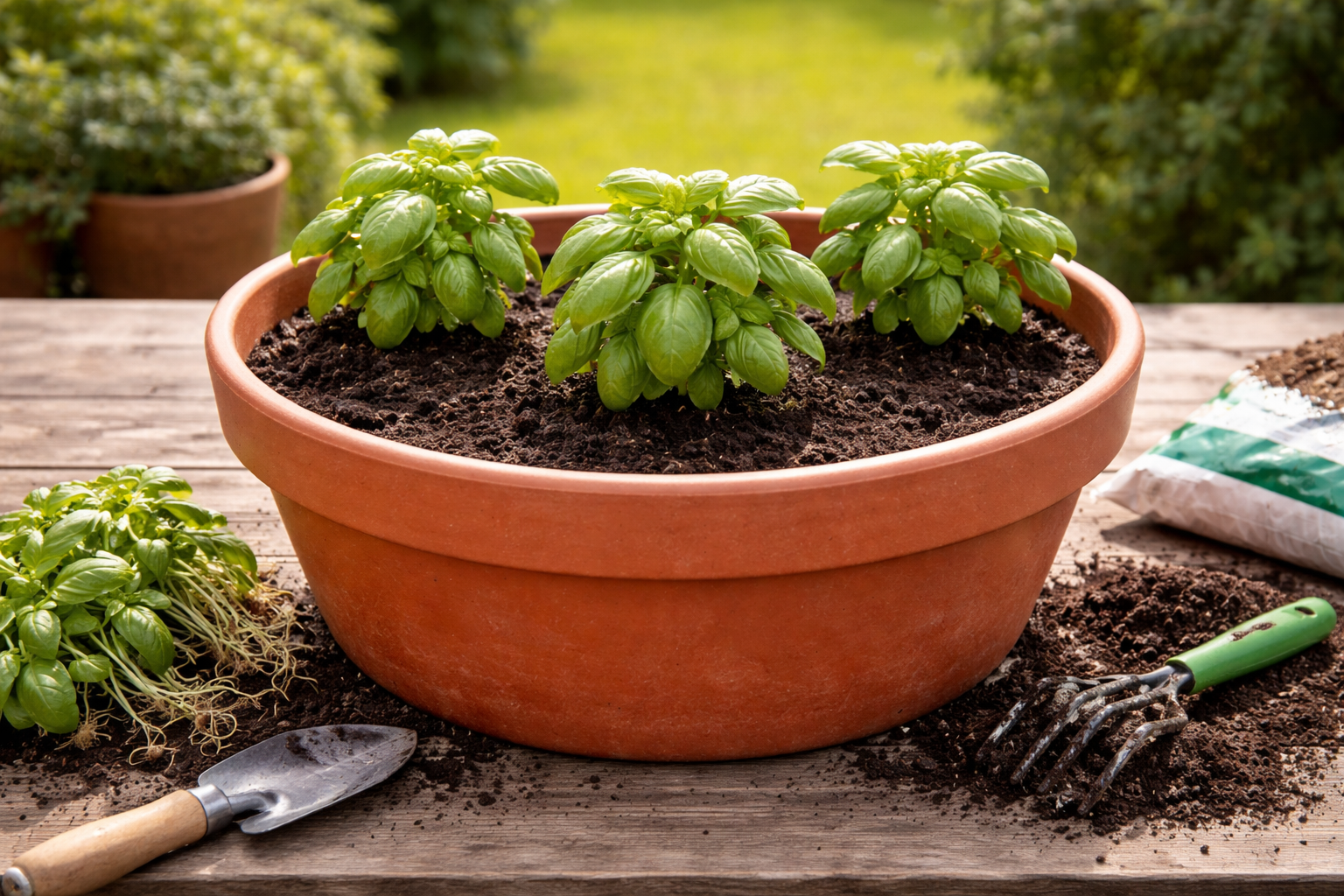
A bigger pot only helps if the roots can use it.
The RHS advises planting basil at the same level it was growing before and spacing plants at least 10 cm, or 4 inches, apart. That spacing is a useful floor in containers too. Basil packed tighter than that gets leafy up top but tends to become a humid little traffic jam in the middle.
Use these steps when repotting:
Step 1. Split crowded clumps to cut competition.
If the root ball is a supermarket tangle, divide it into smaller sections first. That one move often helps more than jumping to a giant pot.
Step 2. Keep the crown at the same soil level.
Don’t bury the stem deeper just because you have more pot to fill.
Step 3. Use container mix, not garden soil.
Iowa State recommends a well-drained commercial potting mix for herbs. Garden soil in a pot turns dense and sluggish.
Step 4. Leave room between finished plants.
A full-looking pot on day one can become a cramped, damp mess by week three.
Note: If basil is staying in one pot for the season, a crowded “starter look” is not the goal. Airflow counts.
After the pot choice is sorted, how to grow sweet basil in a pot is the next piece that actually gets you a plant worth cutting from all summer.
Water, pinch, and harvest based on what the pot is telling you
Small basil pots do not just dry faster. They dry faster unevenly. The top can look fine, the root zone can be heading south, and then the plant throws a fit all at once.
The RHS says established basil should be kept evenly moist, and the University of Maryland says indoor herbs should be watered regularly and thoroughly. Put those together and the useful takeaway is simple: water by feel, not by calendar.
A decent home rule is to check the top inch of mix and lift the pot now and then. Light pot, dry top inch, droopy leaves by midday? That’s a thirsty basil. Wet mix, heavy pot, and droop that never really perks up? That’s a drainage or overpotting issue.
Pot size also changes how harvesting works. In a cramped pot, every missed watering pushes the plant closer to stress. Stressed basil bolts sooner. Once flowering starts, leaf flavor slides a bit and the plant shifts energy away from fresh leaf growth.
So pinching matters. Once the plant is growing with a few sets of leaves, pinch the shoot tips to push side branching. If basil is allowed to become one tall stem in a tiny pot, the plant feels lanky and stingy. If it is pinched in a roomy enough pot, you get the shape most cooks actually want: low, bushy, and easy to harvest.
If plant size is the next question after pot size, how big does basil get gives a better picture of what’s normal for sweet, globe, and Thai basil.
Avoid the pot-size mistakes that make basil stall, droop, or bolt
Most basil trouble in containers is not mysterious. It is usually one of a handful of setup mistakes.
Picking the tiniest workable pot.
A 6-inch pot can grow basil. It is just a high-attention setup, especially in clay or full sun.
Leaving grocery basil crowded.
The plant looks lush on the day you buy it. Then the stems start fighting for light, water, and air. The whole thing gets fussy.
Going huge indoors.
When the pot is much larger than the root ball and the light is average, the mix can stay wet too long. The basil isn’t drinking fast enough to balance it out.
Ignoring material.
Clay dries faster. Plastic hangs onto moisture longer. Same plant, same size, very different watering rhythm.
Confusing bushiness with pot size.
Pot size helps basil stay steady. Pinching is what makes it branch.
Quick diagnosis
- Droopy and the pot feels light: water stress from a too-small or too-fast-drying setup
- Droopy and the mix is still wet: drainage problem, oversized pot, or stale compacted mix
- Small leaves and early flowers: stress from crowding, dryness, or heat
- Slow growth with pale leaves indoors: often a light problem first, not a signal to use a much larger pot
Adjust for indoor basil, hot patios, mixed planters, and bigger harvest goals
Same herb, different setup, different answer. That’s why the SERP gets messy on this topic.
Indoor basil.
University of Maryland says most herbs need a sunny south or west window with at least five hours of sun a day, and extra grow light time may be needed in winter. That means indoor basil is often limited by light before it is limited by root room. So keep the pot moderate. An 8-inch pot is often enough for one plant indoors if the light is solid.
Hot patios and balconies.
This is where 10 inches starts to earn its keep. Heat, wind, and reflective surfaces dry pots faster than people expect. A small pot on a balcony rail can go from “looks good” to “good grief” in one bright afternoon.
Mixed planters.
Shared containers can work, but only if the neighbors want similar warmth, sun, and steady moisture. Basil and a moisture-lover can get along. Basil and something that wants to dry hard between waterings, not so much. For pairings that actually make sense, what to plant with basil in a container is a better next read than random companion-planting lists.
Bigger harvest goals.
If you want enough basil for regular pesto, don’t set that goal on a tiny countertop pot and then feel cheated. One well-grown plant in a 10-inch pot can be productive. A tiny pot is better for pinches and garnish than for armfuls.
Pro tip: when you’re torn between two sizes, pick the one that matches your watering habits, not your optimism.
FAQ
Can basil grow in a 6-inch pot?
Yes. A compact basil variety or a small plant can do fine in a 6-inch pot for a while. The catch is maintenance. Small pots dry quickly, so they ask for closer watering and offer less forgiveness in hot weather.
Will a bigger pot make basil bushier?
Not by itself. A bigger pot gives roots more room and smooths out watering swings. Bushiness comes from pinching the growing tips so the plant branches instead of stretching into one tall stem.
Can basil and parsley share a pot?
They can, if the container is large enough and the mix drains well. Use a wider pot, not a cramped one, and leave enough room so neither plant is jammed against the other. Basil likes steady moisture, which lines up better with parsley than with herbs that want to dry hard between waterings.

Michael Rowan is the founder and lead writer at The Garden Playbook. He has spent 10+ years growing plants across a range of settings — from indoor houseplants and container gardens to raised beds and in-ground plots — adapting methods to different light levels, seasons, and growing conditions.
Michael focuses on practical, experience-based guidance grounded in fundamentals: soil health, watering strategy, plant nutrition, pruning and propagation, and integrated pest management (IPM). His work aims to help readers diagnose common problems (such as yellowing leaves, stunted growth, or pest pressure) and apply straightforward solutions that are realistic for home gardeners.
At The Garden Playbook, Michael develops tutorials and plant guides using a consistent process: documenting real outcomes where possible, explaining the “why” behind each step, and verifying higher-risk topics (such as plant toxicity or pest treatment options) against reputable horticultural references.