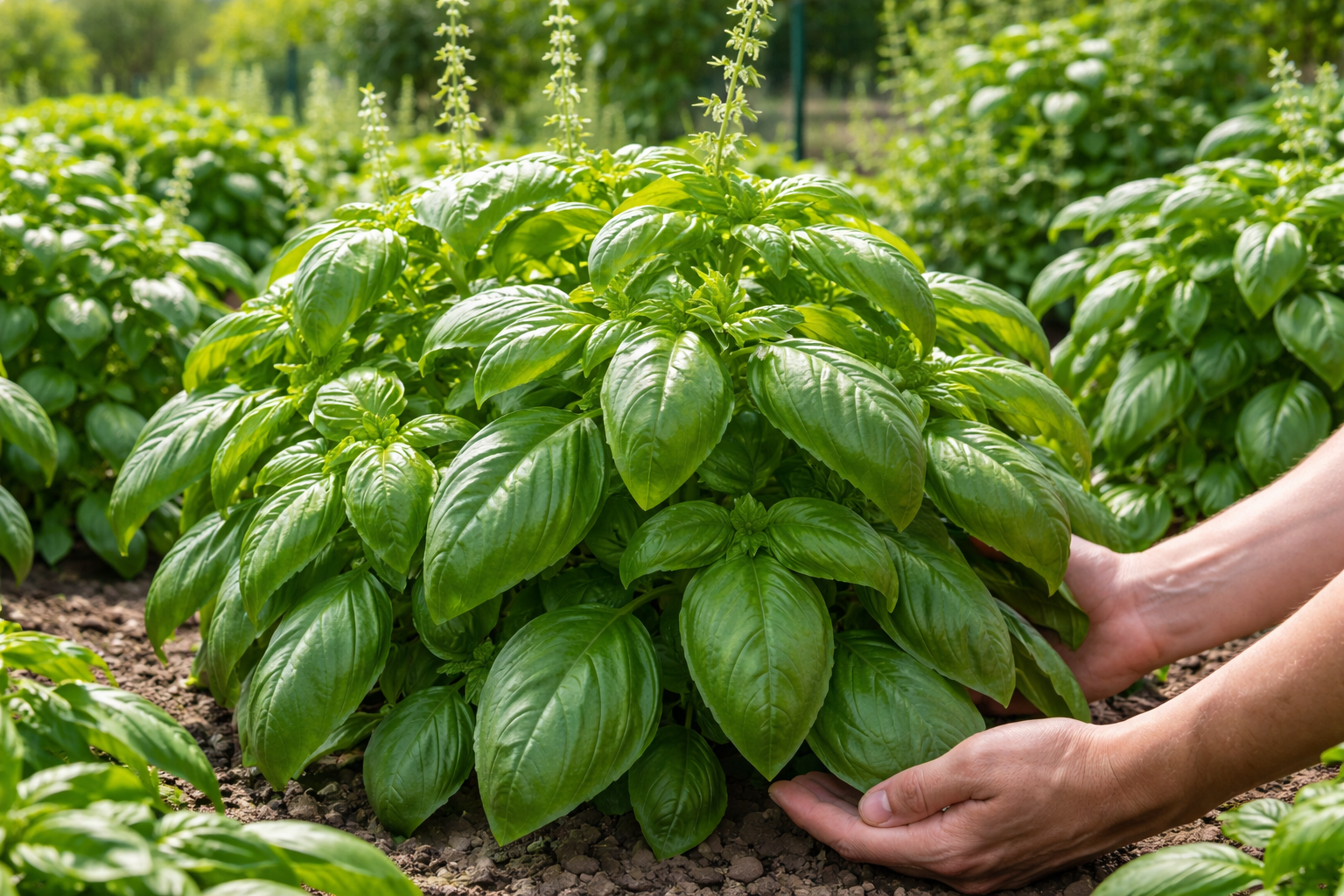
You buy a basil plant, set it on the brightest spot you have, and wait for it to turn into one of those leafy green mounds you see in garden photos. A few weeks later, you’ve got either a tiny clump that looks stuck or one long stem shooting upward like it’s trying to escape. That’s usually the moment people ask: how big does basil get?
For most home gardeners, common basil ends up around 12 to 24 inches tall. Compact kinds stay closer to 6 to 12 inches. Bigger types can push into the 24 to 36 inch range in warm, sunny conditions. The catch is that height alone tells you almost nothing useful. A 10-inch plant can be thriving. A 20-inch plant can be late, leggy, and half a step from flowering itself out.
That’s the tension with basil. The generic answer is easy. The useful answer is better: size changes with the variety, how often you pinch it, how crowded the roots are, whether it’s in a pot or in the ground, and whether the plant is making leaves or racing toward flowers.
- What mature basil height looks like for the most common types
- Why width matters as much as height
- How pot size, pruning, and sunlight change basil plant size
- Why tall basil is not always healthy basil
- How to tell whether your basil is small because of genetics or because something is off
What to check first (simplified)
| If your basil looks like this | Most likely cause | What to do next |
|---|---|---|
| Short and dense | Dwarf variety or good pinching | Keep harvesting from the tips |
| Tall and sparse | Low light, late pruning, or bolting | Cut above a node and check light |
| Full at the store, stalled at home | Too many seedlings in one small pot | Divide or repot it |
| Leaves shrinking and growth slowing | Roots cramped or watering swings | Move to a roomier pot with drainage |
Fast rule: judge basil by leaf production and branching, not by raw height.
How big does basil get? Here’s the useful answer most gardeners need
The Royal Horticultural Society puts basil in the rough zone most gardeners already see at home: around 30 to 60 cm tall, which is about 12 to 24 inches. That range fits standard sweet basil grown for kitchen use. It also explains why one person’s basil tops out at salad-bowl height while another person’s gets close to knee-high in midsummer.
But basil has a funny habit. The plants people enjoy harvesting most are often not the tallest ones.
A good kitchen basil plant is usually compact, leafy, and branching from several points. If you’ve grown basil for pesto, pasta, or sandwiches, you already know the sweet spot. You’re not after a single long cane with a tuft on top. You want a plant that keeps replacing what you cut.
Note: A 14-inch basil plant with lots of side shoots is usually in better shape than a 24-inch plant with one main stem and flower buds forming.
So the practical answer goes like this:
- Most common: 12 to 24 inches tall
- Compact or globe: 6 to 12 inches tall
- Larger warm-season types: 24 to 36 inches tall in strong conditions
- Typical spread: often 10 to 18 inches for standard basil, less for dwarf forms, more for roomy garden plants
If your basil stays shorter than that but looks full, bright, and easy to harvest, you’re probably fine. If it rockets upward without filling out, that’s when size stops being a brag and starts being a clue.
Match the variety to the size you actually want
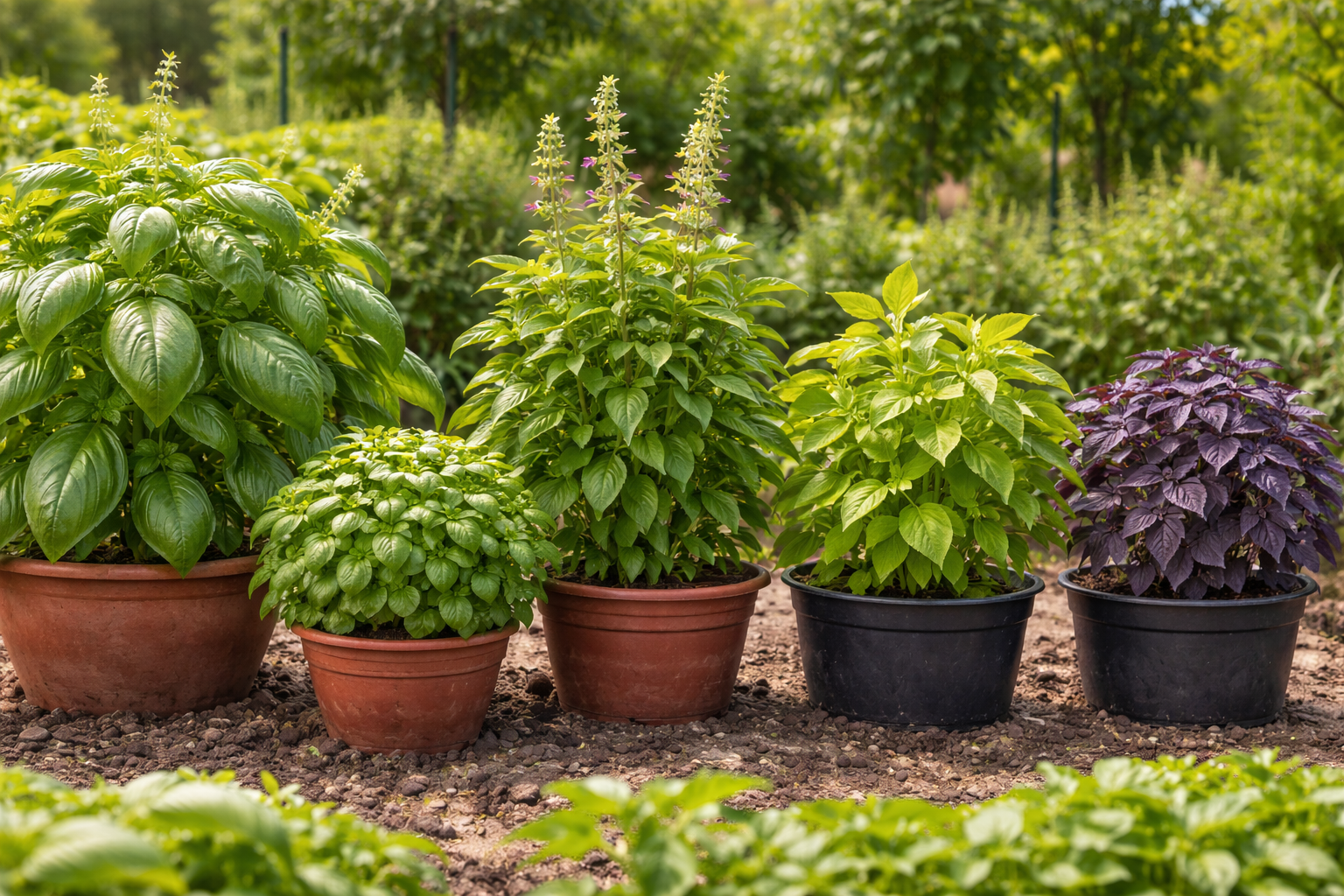
Variety is the first thing to check because the genetics set the ceiling before your care routine does. UF/IFAS Gardening Solutions notes that basil types vary quite a bit, from low, compact forms to larger plants grown for bulk leaf harvest. That’s not trivia. It changes what “normal” looks like on your patio, windowsill, or raised bed.
| Basil type | Typical height | Typical width | Best fit |
|---|---|---|---|
| Sweet / Genovese basil | 12 to 30 inches | 12 to 18 inches | Big leaf harvests, pesto, classic kitchen use |
| Greek / globe basil | 6 to 12 inches | 6 to 12 inches | Small pots, edging, tidy habit |
| Thai basil | 18 to 24 inches | 10 to 16 inches | Stir-fries, upright growth, warmer gardens |
| Lemon basil | Around 12 inches, sometimes more | 8 to 14 inches | Small herb plantings, lighter harvests |
| Purple basil | 18 to 24 inches | 10 to 16 inches | Color, mixed herb beds, moderate harvest |
If you want a countertop plant that stays neat, globe basil is your friend. If you want armfuls of leaves, go with sweet basil or Genovese and give it real space. People get tripped up here all the time. They plant a compact kind, then worry because it never becomes a 2-foot shrub. Or they buy a vigorous sweet basil and act surprised when it starts muscling its way past the parsley.
I’ve seen this a lot with mixed herb planters. The basil isn’t “taking over” because basil is aggressive in some abstract way. It’s just the wrong basil in the wrong box.
Pro tip: Pick them by growth habit first, flavor second, if your space is tight. That’s backwards from how most people shop, and it saves headaches.
Read height and width together so you don’t misjudge a healthy plant
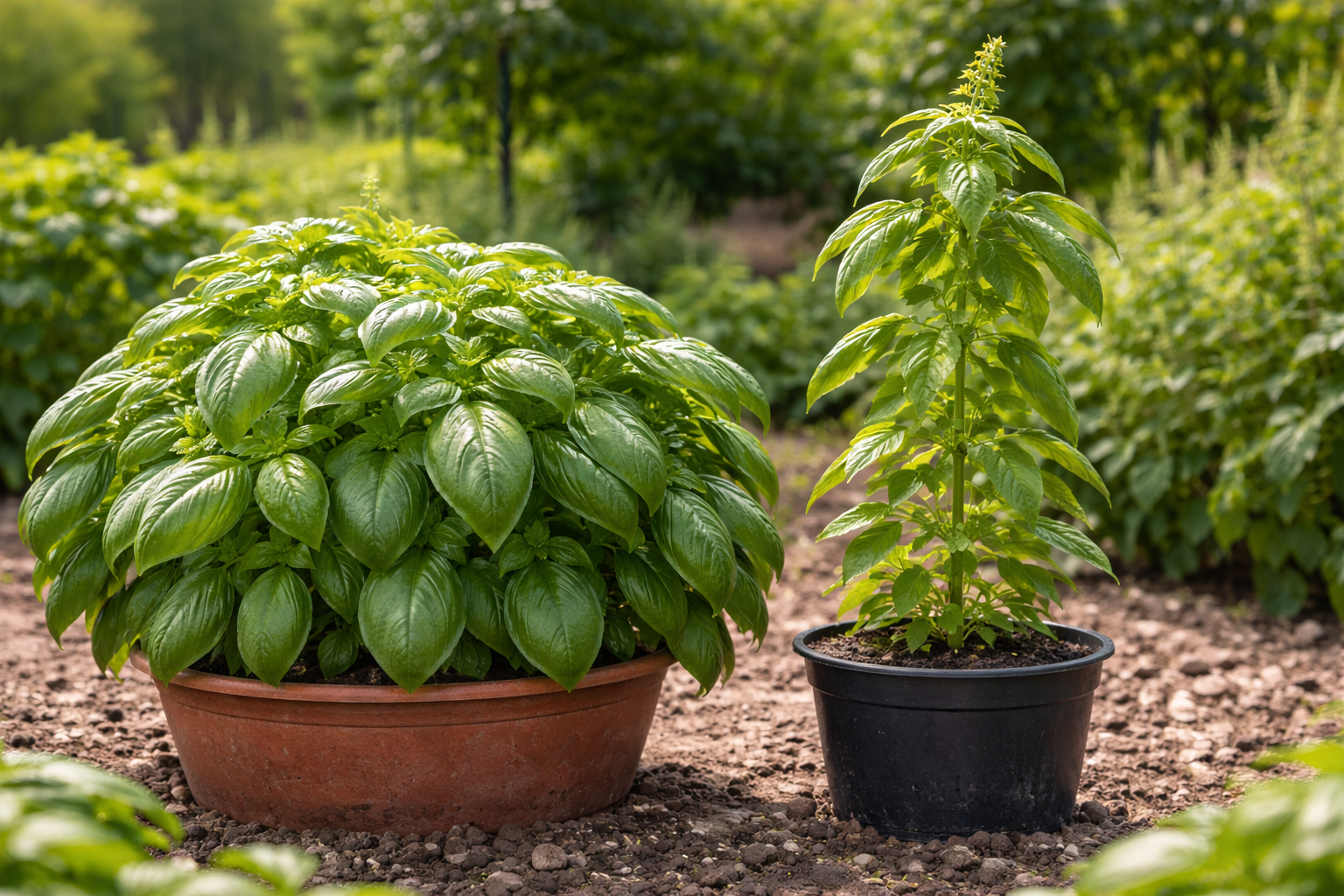
People ask how tall basil grows, but what they’re often trying to figure out is whether the plant is going to fit the pot, crowd nearby herbs, or keep producing. Height answers only part of that.
UC Davis’ basil reference guide groups basil varieties by size and leaf type, and that matters because growth habit changes how the plant uses its space. A broad, leafy basil with short internodes looks “bigger” in a pot long before it reaches full height. A narrow, stretched plant can look tall while producing less.
So read the plant in two directions:
- Height tells you how far the plant has stretched or matured.
- Width tells you how well it is branching and filling out.
For a standard sweet basil plant in good shape, width often lands in the same ballpark as height during active growth. Not exactly, but close enough to be useful. A 14-inch plant that is also 12 inches wide is usually doing its job. A 14-inch plant that’s 4 inches wide and waving around like a fishing rod is telling you something else.
That “something else” is usually one of three things:
- not enough light
- no early pinching
- flowering on the brain
If yours is getting taller without getting fuller, don’t congratulate it yet. Check the shape before the ruler.
Use this 5-factor test to predict how large your basil will get
You can usually predict their size pretty well once you look at five things together. Not in a lab-coat way. In a useful, “what should I change this weekend?” way.
1. Check the variety so you know the ceiling.
A globe basil won’t turn into Genovese no matter how good your compost is. Start there.
2. Check root room so the plant has somewhere to go.
If basil is growing in a cramped nursery pot, it often hits a wall early. Leaves shrink. Watering gets touchy. Growth stalls between flushes.
3. Check light so stems don’t stretch.
Basil wants full sun outdoors. Indoors, weak window light often gives you the classic leggy basil look. Cornell Cooperative Extension notes that basil responds well to warm, sunny conditions and pinching. That tracks with what gardeners see every summer: basil in strong light stays tighter and branches more easily.
4. Check whether you’re pinching early enough to get branching.
If you wait until the plant is tall, the plant has already spent energy chasing upward growth. Pinching early changes the architecture.
5. Check crowding so stems aren’t competing.
This is the supermarket basil problem. One pot often holds many seedlings. It looks generous at first. Then those stems start competing for light, water, and root space, that’s why we wrote this guide on how many seeds per pot we recommend.
Fast decision rules
- If basil is in a tiny pot, expect a smaller mature plant.
- If it gets long hours of direct sun and warm weather, expect faster, fuller growth.
- If you pinch tips early, expect width before height.
- If many stems are packed together, expect short-term fullness and long-term trouble.
A lot of people chase fertilizer first. I get why. It feels active. But problems are more often about light, space, and timing than feeding.
Grow basil in pots without accidentally capping its size
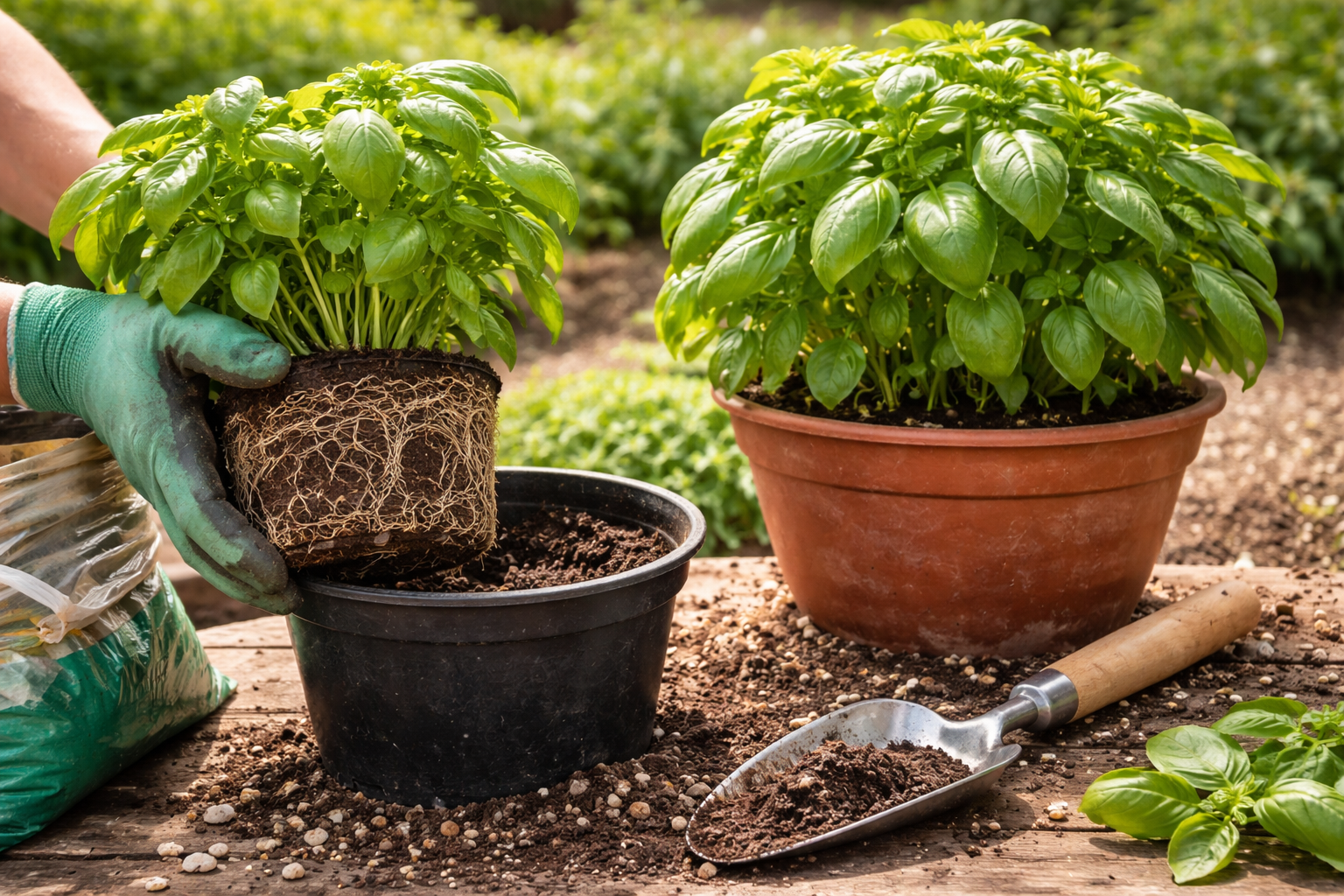
Pot-grown basil can do very well. It just has less margin for error.
That’s the tradeoff.
Clemson Home & Garden Information Center and other university guides treat basil as a warm-season herb that grows best with sun, drainage, and room to develop. In containers, those same rules still hold, but the container makes every mistake show up faster. Small pots dry faster. Roots circle sooner. Crowded stems lean into each other and trap humidity.
If your basil “never gets big in a pot,” the pot is often part of the story. Not always the whole story, but a big part, that’s why we wrote a specific guide to help you pick the right pot for your basil.
Here is what usually goes wrong:
- The original pot is treated like a permanent home.
- Several seedlings stay jammed together.
- Water swings between bone dry and soggy.
- The plant gets bright light for only a small part of the day.
I’ve repotted grocery-store basil enough times to know the pattern by sight. It comes home looking lush because it’s basically a crowd scene. A week or two later, the outer stems droop, the middle turns dense and damp, and the whole thing starts acting fussy. Once you separate or thin it and give the roots breathing room, it behaves like basil again.
Important: In pots, “small but bushy” is fine. “Small, pale, and stalled” is not. Those are different stories.
A healthy pot-grown basil plant often stays a bit smaller than one in the ground. That’s normal. What you want is steady new growth and branching, not max height for its own sake.
Pinch for more leaves, not more height
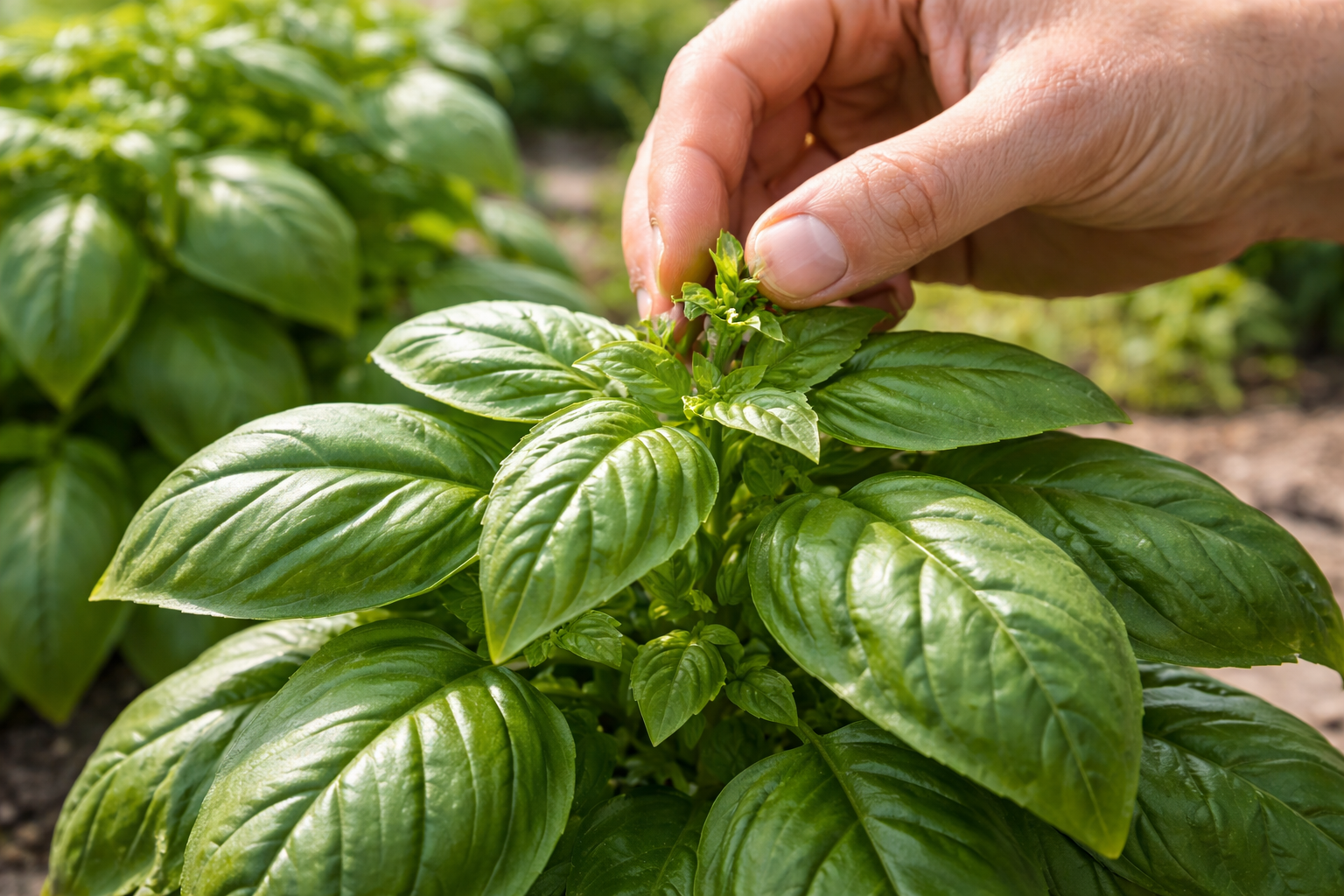
This is where it stops acting like a passive herb and starts acting like a plant you can steer.
Gardeners pinch basil because it works, and the reason it works is pretty simple. The growing tip pushes the plant upward. Remove that tip above a leaf node, and the plant shifts energy into side shoots. You don’t get “more” instantly. You get a shape that can carry more leaves over time.
That is the whole game for culinary basil.
If the plant has enough leaves and is past the seedling stage, start pinching from the top rather than waiting for it to become tall. Many extension and gardening sources place this around the 4 to 8 inch stage, once the plant has several sets of leaves. The exact inch mark matters less than the structure. Cut above a node so two new shoots can take over.
Here’s the difference in plain English:
- No pinching: It goes up first, then gets woody and awkward faster.
- Regular pinching: It spreads, thickens, and keeps giving you usable tips.
This is why two of the same height can perform so differently. One has been trained. The other has just been left alone.
And once flower buds start forming, the plant’s priorities change. The Royal Horticultural Society advises removing flower shoots if you want leaf production to continue. That’s worth doing because flowering basil often gets harsher in flavor and less generous with fresh, tender growth.
Pinch now, wait, or start over?
- Pinch now: plant has several leaf sets and is still leafy at the top
- Wait a bit: tiny seedling with very little top growth yet
- Cut back hard or replace: tall, woody, flowering basil with sparse leaves
If you want a mental shortcut, use this one: bigger basil harvests usually come from earlier cuts, not later ones.
Diagnose whether your basil is healthy, undersized, or just the wrong type
Not every small basil plant has a problem. And not every tall one is doing great. That’s where people waste time.
Use the plant’s shape, color, and pace of growth together.
Short and dense
Usually good news. This is often a dwarf basil, a well-pinched plant, or a younger plant with solid branching. If leaves look clean and the plant keeps making new tips, you’re fine.
Tall and sparse
This is the classic low-light or late-pruning plant. Indoor basil does this a lot. So do crowded pots near a bright window that isn’t actually bright enough for strong basil growth.
Full on top, messy in the center
Often a crowded clump. Grocery-store basil is notorious for this. Many stems, one small container, lots of fast competition.
Stopped growing after a fast start
Check roots and watering rhythm. Basil doesn’t love cold snaps either. Chill damage can stall growth fast, and recovery isn’t always pretty.
Flower buds forming early
The plant is shifting out of leaf mode. You can pinch buds off and buy time, but flavor and structure often start changing once basil commits to flowering.
What not to do: Don’t assume a compact basil is weak before checking the variety. And don’t pump a leggy plant with feed as if food can replace sunlight.
One detail that’s easy to miss: healthy basil has a kind of springy look to it. The stems hold themselves up. The leaves sit with purpose. Sickly basil looks apologetic. You can spot it from three steps away.
Decide when to repot, divide, harvest harder, or simply leave it alone
By this point, the question isn’t just “how tall does basil grow?” It’s “what should I do with the basil I have right now?”
Use these calls:
Leave it alone and keep harvesting
Do this if your basil is bushy, colored well, and making new side growth. A compact, productive plant does not need rescuing just because it isn’t huge.
Repot it
Do this if watering has become a daily drama, roots are packed, or new growth has slowed for no good reason. Basil in a too-small pot often feels fine until it suddenly doesn’t.
Divide or thin it
Do this with crowded clumps, especially supermarket basil. One crowded pot can contain enough stems for several plants. They look nice together at first, but long-term they’re competing for the same shallow space.
Harvest harder
Do this if the plant is healthy but getting taller than fuller. Cut above nodes, take the tips, and redirect growth sideways.
Start over
Do this if the plant is tall, woody, flowering, and patchy. Basil is fast. Sometimes the smarter move is not heroic rehab. It’s a fresh plant at the right time of year.
This is one of those garden calls that gets easier once you’ve made it a few times. Basil looks mysterious until you notice the pattern: crowded roots, late cuts, weak light, or a variety mismatch. That’s usually it. Not magic. Not bad luck. Just basil being basil.
For kitchen use, the best plant is rarely the tallest one in the bunch. It’s the one that stays easy to cut, keeps branching, and gives you leaf after leaf without turning into a stick with opinions.
FAQ
How wide does basil get?
Standard sweet basil often spreads around 10 to 18 inches when it has space and regular pinching. Dwarf basil stays much tighter. Width is one of the best signs that your basil is branching well.
Can indoor basil get as big as outdoor basil?
Sometimes, but usually not without very strong light. Outdoor basil in warm weather often grows faster and fuller. Indoor basil can still do well, but weak window light is a common reason for leggy growth and smaller leaves.
How long does it take basil to reach full size?
Under warm conditions, basil grows fast. Many plants put on usable size in a few weeks, then hit their best leafy stage before flowering. The exact pace changes with variety, temperature, pot size, and how often you cut it.

Michael Rowan is the founder and lead writer at The Garden Playbook. He has spent 10+ years growing plants across a range of settings — from indoor houseplants and container gardens to raised beds and in-ground plots — adapting methods to different light levels, seasons, and growing conditions.
Michael focuses on practical, experience-based guidance grounded in fundamentals: soil health, watering strategy, plant nutrition, pruning and propagation, and integrated pest management (IPM). His work aims to help readers diagnose common problems (such as yellowing leaves, stunted growth, or pest pressure) and apply straightforward solutions that are realistic for home gardeners.
At The Garden Playbook, Michael develops tutorials and plant guides using a consistent process: documenting real outcomes where possible, explaining the “why” behind each step, and verifying higher-risk topics (such as plant toxicity or pest treatment options) against reputable horticultural references.