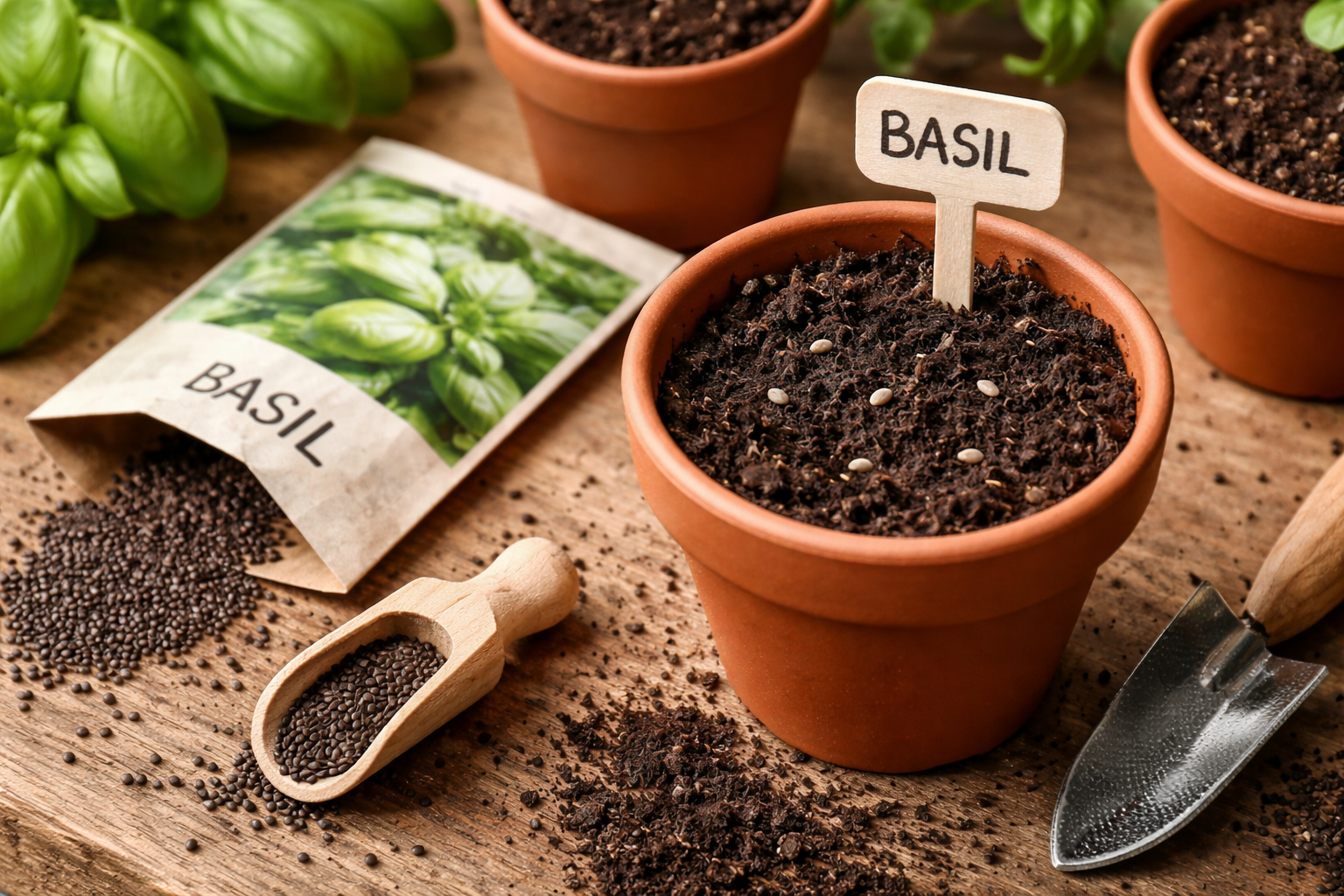
You plant basil seeds once, look away for a week, and suddenly the pot looks like chia pudding with stems. Tiny seeds do that. They trick you into thinking a handful won’t matter. It does.
For most starter pots and seed cells, the right answer is simple: sow 2 to 3 basil seeds per pot, then keep the strongest seedling after the first true leaves show up. That’s the part most articles give you. The part they skip is why that answer changes when you’re sowing into a final container, using older seed, or trying to grow a full kitchen pot instead of one strong basil plant.
That tension is the whole topic. “How many basil seeds per pot” sounds like one question. It’s really two: how many seeds you should sow now, and how many basil plants that pot can actually support later. Mix those up, and you get weak, crowded basil.
Here’s what you’ll get in this guide:
- the fast seed-count rule for starter pots, small containers, and wider herb pots
- how to decide between one big basil plant and a fuller-looking pot
- when to thin seedlings, and when to separate them instead
- how seed age, direct sowing, and indoor growing change the math
- the mistakes that make basil stay skinny, floppy, or frustratingly small
Start Here
| Your setup | Seeds to sow | What to keep later |
|---|---|---|
| Seed cell or 1.5 to 3-inch starter pot | 2 to 3 | 1 strong seedling |
| 4-inch pot | 2 to 4 | 1, or 2 only for a short time before potting up |
| 6-inch final pot | 3 to 4 | 1 strong plant, sometimes 2 if spaced well |
| 8 to 10-inch pot | 4 to 6, spaced apart | 2 to 3 finished plants max |
Fast rule: you can sow more seeds than the pot should hold long term. The thinning step is what keeps the plant healthy.
The fast answer: sow 2 to 3 basil seeds per pot, then thin hard
If you’re starting basil in a seed tray, a small nursery pot, or one of those little plastic cells, sow 2 to 3 basil seeds per pot. That lines up with general seed-starting guidance from the University of Illinois Extension, which explains why gardeners often sow a few seeds in each cell and then thin to the strongest seedling.
That “few seeds, one winner” routine works because basil seeds are small, germination is never perfect, and starting with a tiny bit of insurance is smarter than redoing the tray. I use that rule almost every time I start Genovese basil indoors. Two seeds if the packet is fresh. Three if the packet has been knocking around in a drawer since last year.
What you should not do is scatter a pinch into one small pot and hope the strongest plant somehow sorts itself out. Basil does not politely negotiate for room. It tangles, stretches, and then sulks.
Note: “Seeds per pot” is a sowing question. “Plants per pot” is a spacing question. They are not the same thing.
So yes, the generic answer is 2 to 3 seeds per pot. But that answer is only useful if you pair it with the next move: thin early, and keep fewer finished plants than you first sowed.
Match the seed count to the pot you are actually using
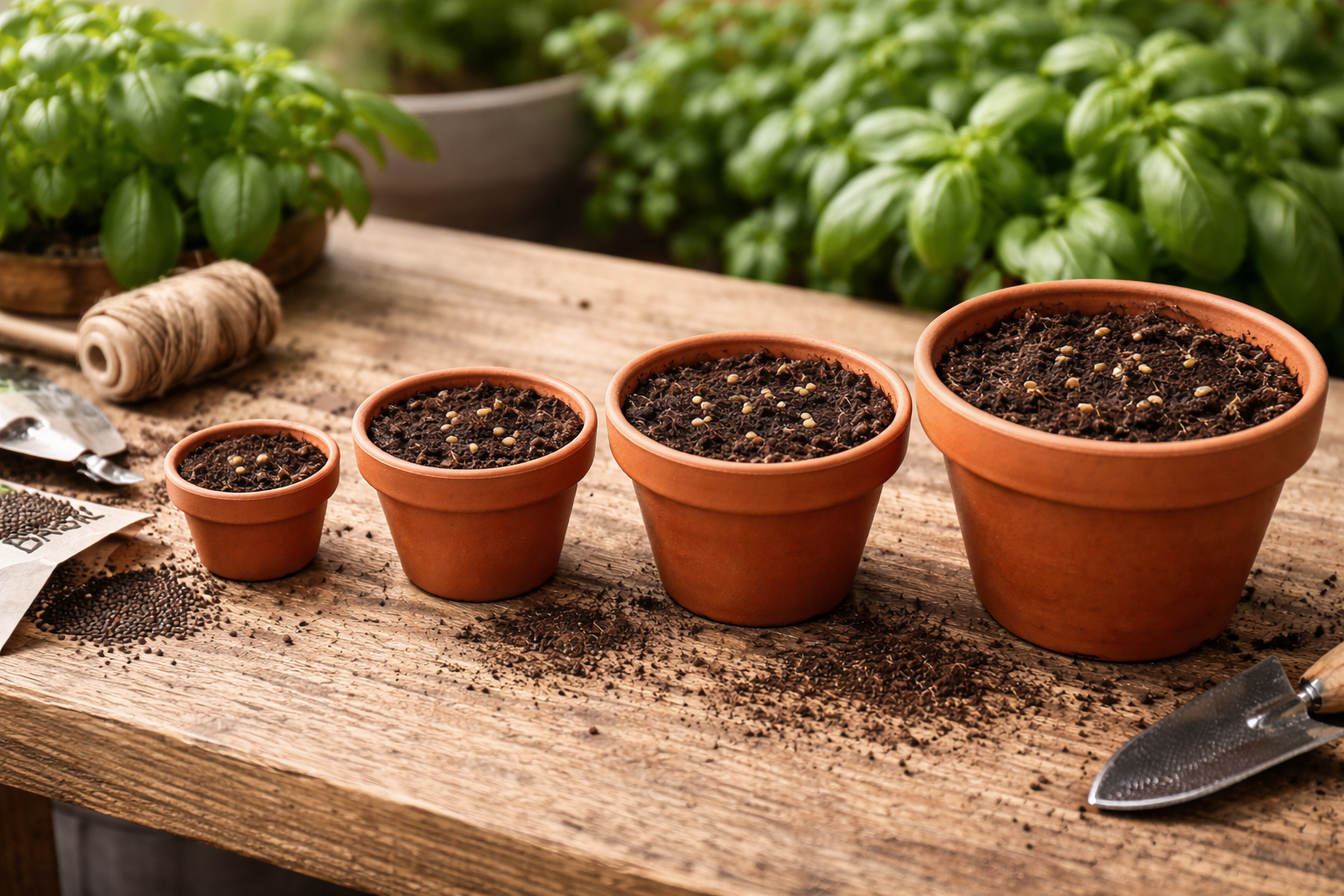
The pot changes the answer more than most seed packets do. A 2-inch starter pot and an 8-inch herb pot aren’t even asking the same question, really.
Use this as your working guide:
| Pot size | How many basil seeds to sow | What to do next |
|---|---|---|
| 1.5 to 3-inch starter pot or cell | 2 to 3 | Thin to 1 seedling |
| 4-inch pot | 2 to 4 | Keep 1, or 2 briefly if you plan to transplant soon |
| 6-inch pot | 3 to 4 | Finish with 1 strong plant, sometimes 2 spaced apart |
| 8 to 10-inch pot | 4 to 6, placed in separate spots | Finish with 2 to 3 plants max |
The key thing is spacing. The Utah State University Extension recommends thinning basil seedlings and gives wider spacing for garden growing. In containers, you can grow a bit tighter than a field row, but you still need breathing room. If stems are almost touching once they start putting on real growth, the pot is too crowded.
Here’s the plain-English version. Sowing extra seeds is like packing spare batteries. Fine. Running every device on those batteries at the same time in one tiny drawer? Bad idea.
If you’re using a small pot only to start seeds, sow 2 to 3 and thin to 1. If you’re sowing straight into a final 8 to 10-inch container, sow 4 to 6 in clearly separated spots and plan to keep only 2 to 3 plants. That’s the difference between “this pot got started” and “this pot will stay productive.”
If you’re still sorting out container size, this guide on the best pot for basil fits right into the next step.
Decide whether you want one big basil plant or a few smaller harvest stems
This is where people quietly choose the wrong setup.
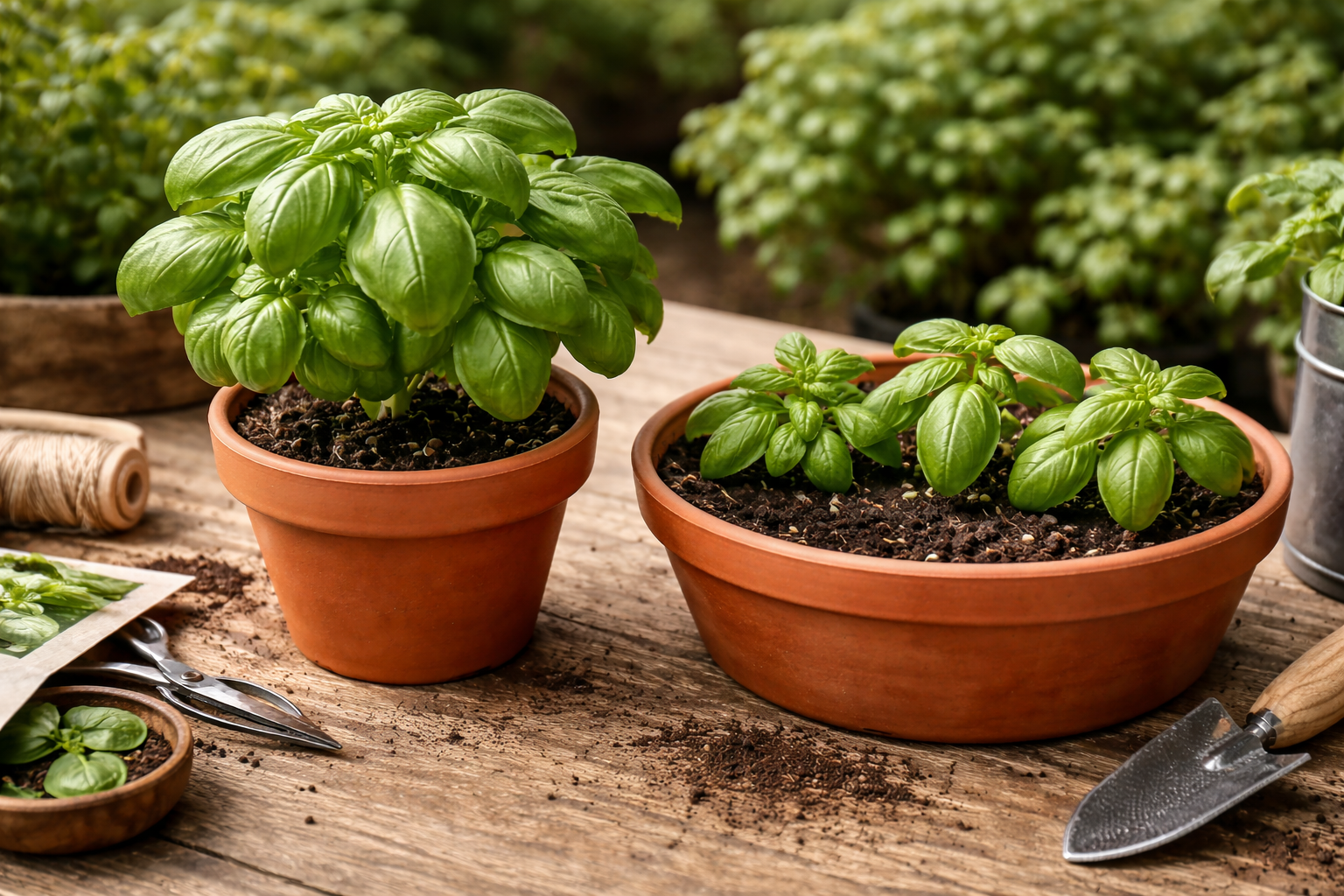
They say they want basil in a pot. What they really want is one of two very different things: a single sturdy plant they can keep pinching for months, or a fuller-looking pot with several stems ready for quick harvests. Those goals do not use the same spacing.
If you want the easiest, strongest, least fussy result, grow one plant in a medium pot. That plant gets more light, more airflow, and a calmer watering rhythm. The roots get room. The stems branch well after pinching. You don’t end up with one side of the pot bone-dry and the middle still soggy.
If you want a fuller container, you can keep 2 to 3 basil plants in a wider pot. But they need room between them. The Royal Horticultural Society notes that basil does well in containers and likes warm, bright conditions, which is exactly why cramped stems become such a pain: all that lush top growth piles up fast in a tight space.
My own bias? One strong basil plant in a 6- to 8-inch pot beats a crowded little bunch almost every time. It looks less dramatic in week two. It looks far better in week eight.
Pro tip: If you want a fuller look without the crowding, sow in a wider pot and place seeds in separate spots near the edges rather than in one central clump.
If you want the quick version, use this:
- Choose one finished plant for the easiest long-term basil.
- Choose two or three finished plants only in a wider pot, and only if you’re ready to pinch and harvest often.
Thin at the right time and your basil gets easier, not harder
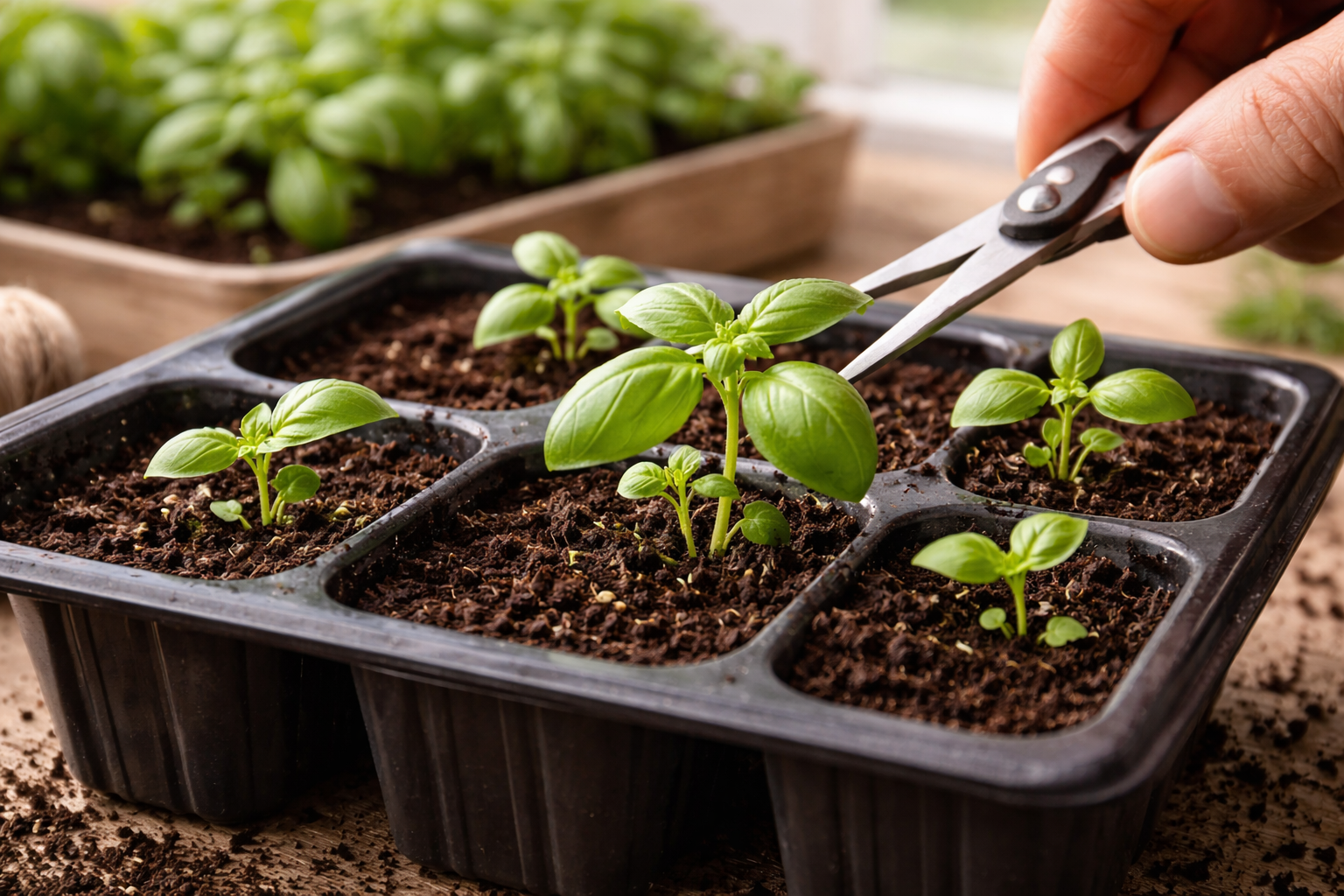
Basil is forgiving when it’s young. Wait too long, and it becomes fiddly fast.
The University of Minnesota Extension advises thinning seedlings after they emerge so the strongest plants have room to grow. For basil, the easiest timing is when the seedlings have their first true leaves. Not the smooth baby leaves. The next set that actually looks like tiny basil leaves.
At that stage, you can see which seedlings are sturdy, upright, and worth keeping. Pick the best one in a small starter cell. Then snip the extras at soil level with clean scissors. Pulling them out sounds faster, but it can jostle the roots of the seedling you’re trying to save.
In a larger pot, you have another option: separate the extras and replant them. I’ve done this with basil when I got carried away sowing into a bowl-shaped container on a windowsill. It worked, but only because I moved the spare seedlings early. Wait until the roots knit together and it turns into surgery.
Use this sequence:
- Sow lightly. Place seeds with a bit of space, even in the same pot.
- Wait for true leaves. That’s your cue, not a random calendar day.
- Choose the strongest seedling. Thick stem, upright posture, best color.
- Snip or separate the rest. Snip in small cells. Separate only if there’s enough room and you’re moving them right away.
If indoor seedlings start stretching before you thin them, weak light is probably part of the mess. This article on the best-facing window for plants is a useful next check if your basil is getting lanky.
Adjust for seed age, germination doubts, and direct sowing outdoors
Fresh basil seed behaves differently from old seed, and a warm indoor tray behaves differently from a cool patio pot. That’s why the same seed count doesn’t always make sense.
University of Minnesota Extension notes that basil likes warm conditions and is sensitive to cold, while Utah State says warm soil helps germination. Put those together and you get a simple rule: in controlled indoor warmth, sow leaner. In rougher outdoor conditions, use a little more insurance.
Here’s a clean way to adjust:
| Scenario | Seed count | Why |
|---|---|---|
| Fresh seed, indoor start | 2 to 3 per small pot | Warmth and moisture are easier to control |
| Older seed, unknown storage | 3 to 4 per small pot | A little extra backup makes sense |
| Direct sowing outside | Sow a bit heavier, then thin | Outdoor swings in temperature and moisture are less forgiving |
Basil usually germinates in about 5 to 10 days in warm conditions, though 14 days is not unusual if the setup is cooler. Seed depth matters too. Basil is usually sown shallowly, around 1/8 to 1/4 inch deep. If your packet says something slightly different, follow the packet. Tiny seeds buried too deep often just sit there and annoy you.
Important: Use extra seeds as insurance, not as a plan to keep everything that sprouts.
That’s the part people skip. They adjust the sowing rate for older seed, which is fine, but then they forget to adjust back once germination happens.
Use the simple basil pot test before you plant too many seeds
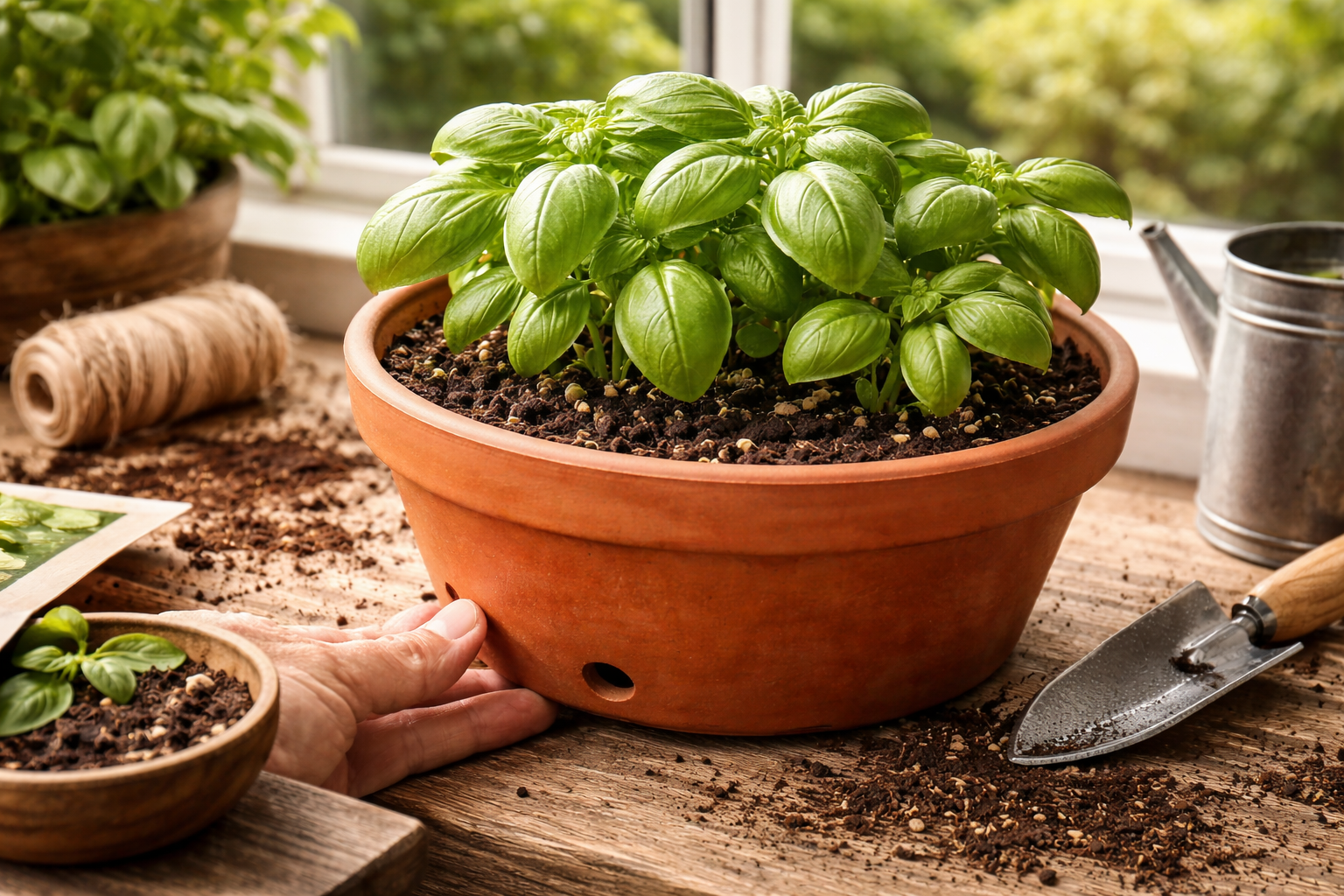
Seed count won’t rescue a bad container. I’ve learned that one the slightly annoying way, after trying to grow basil in a cute ceramic pot with one tiny drainage plug and almost no airflow. It germinated well. Then everything went sideways.
Before you sow, check three things.
Width test: can finished stems sit a few inches apart?
If the answer is no, the pot is only a starter container. Treat it that way. A small crowded pot can raise seedlings. It can’t comfortably hold a dense bunch of mature basil.
Drainage test: does the pot actually drain?
The Royal Horticultural Society recommends free-draining compost for basil in containers. That lines up with real life. Poor drainage turns crowded pots into trouble fast because the root zone stays wet while the top growth still wants warmth and airflow.
Light test: does this spot get strong light for long enough?
Low light changes the spacing question. Basil that reaches for light gets leggier, and crowded seedlings get even weaker because they shade each other. A windowsill that feels bright to you can still be mediocre for basil, especially in cooler months.
If you’re choosing a final container from scratch, I’d start with a pot at least 8 inches wide and deep for one plant, or wider if you want more than one. That’s a calmer setup. Easier watering. Better root room. Less drama.
What to check first
- Small starter pot? Sow 2 to 3 seeds and plan to thin to 1.
- Final pot under 6 inches? Keep it to 1 plant.
- Final pot 8 to 10 inches? 2 to 3 plants is enough.
- No drainage hole? Don’t use it for basil unless it’s acting as an outer cache pot.
- Weak indoor light? Fix the light before blaming the seed count.
Avoid the 5 basil-seed mistakes that quietly ruin the pot
1. Sowing a pinch instead of a count.
Basil seeds are small, so your fingers lie to you. A “small pinch” can mean ten or twenty seeds in a 3-inch pot. Count them, or at least place them deliberately.
2. Never thinning because every seedling feels like a win.
That feeling lasts about four days. Then the stems crowd, the leaves overlap, and the whole pot looks busy but not strong. Thin early and the remaining basil usually takes off.
3. Using the final pot like a seed tray.
This happens a lot with kitchen herb pots. People sow as if they’re raising seedlings, then leave everything in place as if the pot is a mini field. It’s not. Final containers need mature spacing, not germination insurance.
4. Copying grocery-store basil density.
Supermarket basil often comes as a packed clump of many seedlings. It looks lush because it has to sell fast. It is not a model for long-term container growing. If you’ve ever brought one home and watched it collapse in patches, that’s usually why.
5. Blaming the seed count when the real problem is light or soggy soil.
Overcrowding is only one way basil goes wrong. Weak light, cool nights, and poor drainage can produce the same sad, floppy look. Fix the setup, not just the math.
Note: If your basil seedlings are leaning and pale, spacing alone isn’t the whole story. Check light first, then watering, then crowding.
Follow this no-guesswork setup if you just want healthy basil
If you want the easy version, not the hobbyist version, do this.
Step 1. Start small and get clean germination.
Use a seed cell or a 2- to 3-inch starter pot with drainage. Sow 2 to 3 seeds. Cover lightly. Keep the mix evenly damp, not waterlogged.
Step 2. Keep warmth high and stress low.
Basil likes warmth. A chilly windowsill slows germination and makes every later choice worse. Warm room, bright light, steady moisture. That’s the combo.
Step 3. Thin after true leaves show.
Keep the strongest seedling in each small starter pot. Don’t negotiate with the extras. Snip them.
Step 4. Move up before the plant stalls.
Once the seedling is established, transplant it into a proper container. For one plant, an 8-inch pot is a comfortable place to land. For a fuller pot, use a wider container and keep only 2 to 3 plants well spaced apart.
Step 5. Pinch to get branching, not just height.
Once the plant has some size, pinch above a leaf set so it branches. That’s how you get basil that keeps producing instead of racing upward and looking skinny.
That’s pretty much the whole game. Good container, warm start, low seed count, early thinning, then enough room later.
Still in doubt? Here’s a fast guideline to save you some time.
- Small starter pot: sow 2 to 3 basil seeds, keep 1.
- 6-inch final pot: sow 3 to 4 if direct sowing, keep 1 strong plant.
- 8 to 10-inch final pot: sow 4 to 6 in separate spots, keep 2 to 3 plants max.
- Old seed or outdoor direct sowing: add a little insurance, then thin harder.
And if you want the shortest answer after all that: sow fewer than you think, then keep fewer than you sowed. That’s how container basil stays easy.
FAQ
Can I plant basil seeds directly in the final pot?
Yes, if the pot has room and good drainage. Just don’t treat the final pot like a seed tray. In a medium pot, sow a few seeds and keep one strong plant. In a wider pot, sow in separated spots and keep only 2 to 3 plants.
Can I leave multiple basil seedlings together?
You can leave a few together in a wide pot if they have room. In small pots, leaving a tight clump usually leads to weaker growth and trickier watering.
How deep should I plant basil seeds in a pot?
Keep it shallow, usually around 1/8 to 1/4 inch deep. Basil seeds are small. If they go too deep, germination often slows or fails.

Michael Rowan is the founder and lead writer at The Garden Playbook. He has spent 10+ years growing plants across a range of settings — from indoor houseplants and container gardens to raised beds and in-ground plots — adapting methods to different light levels, seasons, and growing conditions.
Michael focuses on practical, experience-based guidance grounded in fundamentals: soil health, watering strategy, plant nutrition, pruning and propagation, and integrated pest management (IPM). His work aims to help readers diagnose common problems (such as yellowing leaves, stunted growth, or pest pressure) and apply straightforward solutions that are realistic for home gardeners.
At The Garden Playbook, Michael develops tutorials and plant guides using a consistent process: documenting real outcomes where possible, explaining the “why” behind each step, and verifying higher-risk topics (such as plant toxicity or pest treatment options) against reputable horticultural references.