
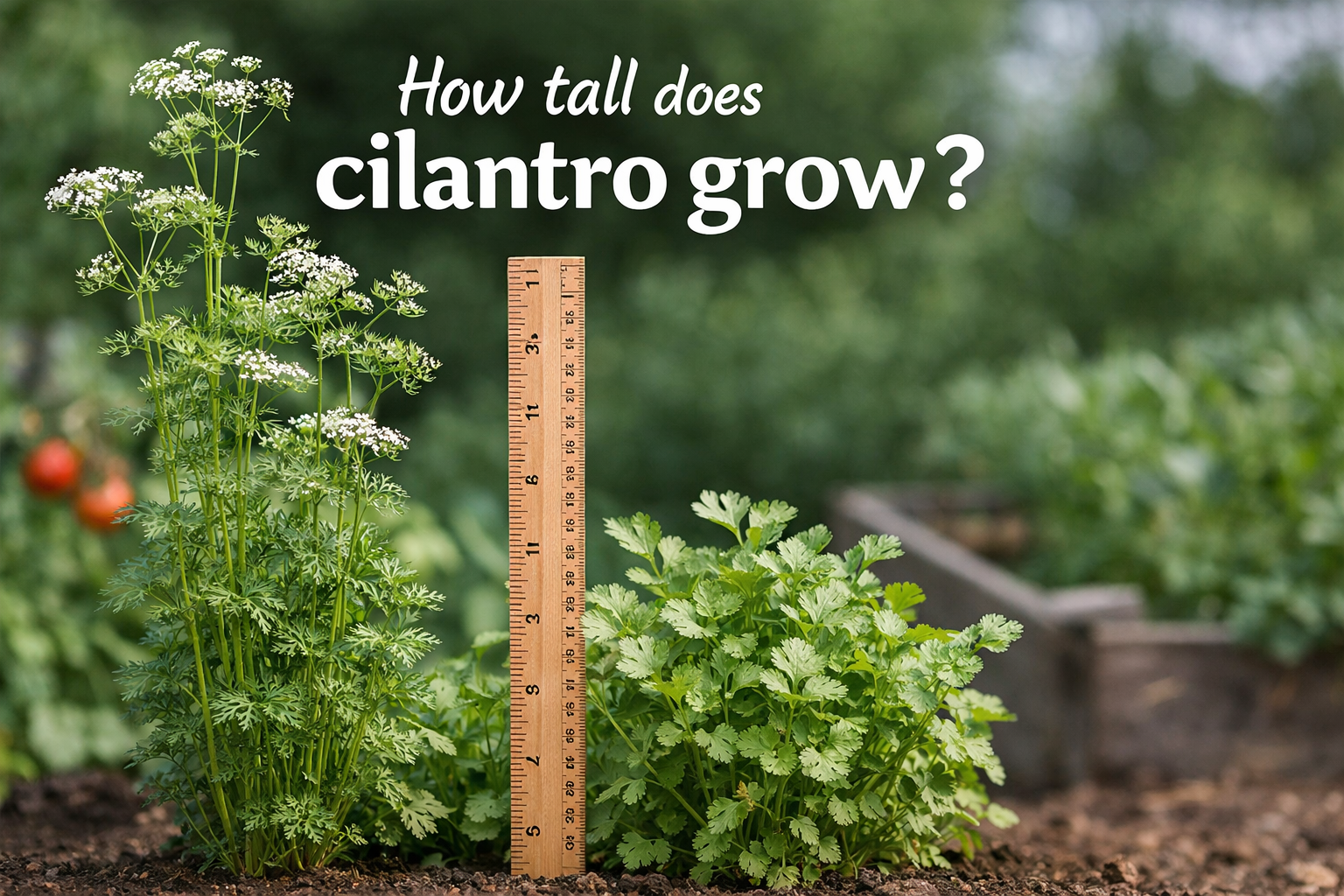
You buy cilantro for tacos, chutney, salsa verde, maybe a big handful for soup. Then one morning the plant looks taller, thinner, and a little… suspicious. The leaves on top have gone all lacy, the stem is reaching, and you start wondering whether the plant is doing great or quietly heading for the exit.
If you typed “how tall does cilantro grow” after seeing that jump, the short answer is this: leafy cilantro usually tops out around 12 to 18 inches, and once it bolts, the flower stems can stretch to 2 to 3 feet. North Carolina State lists the whole plant at roughly 1 to 2 feet tall, which is a good baseline for normal garden growth. The reason those numbers feel slippery is simple: a short, leafy cilantro plant and a tall, flowering cilantro plant are not really the same crop anymore. Wisconsin Horticulture spells out that split clearly, and NC State Extension backs the general mature size.
That is the part generic herb guides usually skip. Height by itself is not the answer. Height plus stage, plus weather, plus what you want from the plant, that is the answer that actually helps.
What you’ll get from this guide
- the normal cilantro height range and why two different numbers can both be right
- how to tell healthy height from bolting, legginess, or crowding
- when to harvest for the best leaf flavor
- how to keep cilantro shorter and leafier for longer
- when a tall plant is still worth keeping for flowers or coriander seed
Quick read: what your cilantro’s height is telling you
| What you see | What it usually means | What to do next |
|---|---|---|
| 4 to 6 inches, broad leaves | Ready for light picking | Start harvesting outer stems |
| 12 to 18 inches, still leafy | Normal mature foliage | Harvest hard before heat pushes bolting |
| Tall stem, lacy top growth | Bolting has started | Pick leaves now, then decide whether to let it flower |
| Tall, pale, thin indoors | Low light or crowding | Increase light, thin seedlings, and sow again if needed |
This is the fast diagnostic I keep coming back to because cilantro changes character quickly.
Give the fast answer so readers know the normal cilantro height
For most home gardens, cilantro foliage lands in the 12 to 18 inch zone. Once the plant shifts into flowering, the stems can push up to 2 to 3 feet. That is not a contradiction. It is a stage change. Wisconsin’s extension guide states it plainly: the young plant makes broad, flat leaves, then the bolting plant throws up lacy foliage and taller flower stems.
If you are growing cilantro for leaves, think of the lower number as the one that matters most. If you leave the plant to finish its life cycle and make coriander seed, the taller number becomes normal. Maryland’s herb profile puts the whole plant at about 2 feet tall, which fits neatly with that garden-center version of the answer.
So yes, cilantro can get tall. But for a cook, “How big does cilantro get?” and “When is cilantro at its best?” are not the same question. A lot of people blur those together, and that is where the frustration starts.
Remember: a taller cilantro plant is not always a better cilantro plant. For leaf harvest, height often means the clock is ticking.
Read the stems and leaves so you know if tall means healthy or bolting
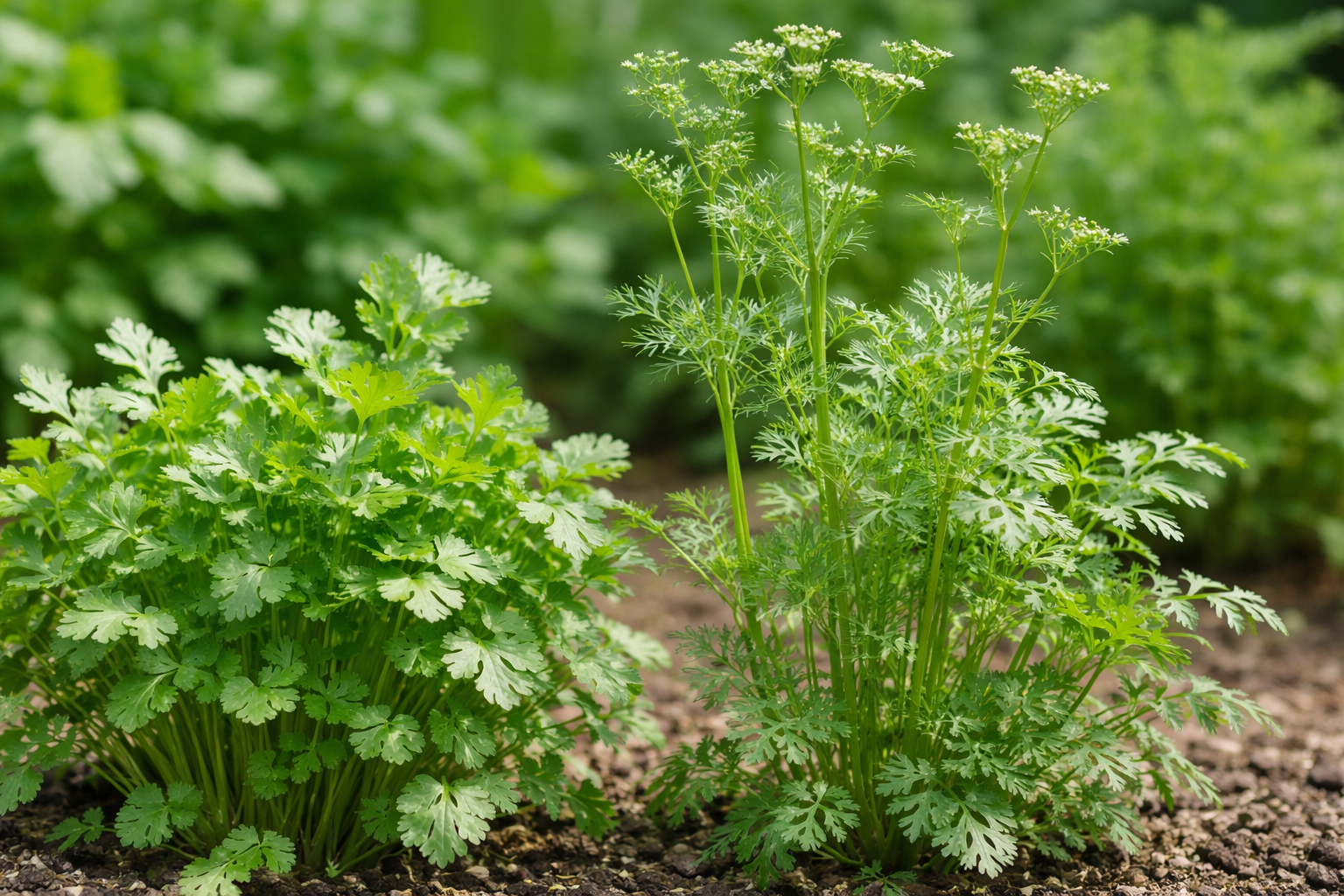
The easiest way to read cilantro is not with a ruler. It is with the leaves.
Lower, younger cilantro leaves look broader and more parsley-like. Wisconsin notes that once the plant begins to bolt, the upper growth turns “lacy and fern-like” along the flower stalk. NC State describes the same split from another angle: upper leaves are fernlike while lower leaves are broadly lobed. Show first, conclude second: when the leaves change shape and the stem starts climbing, the plant is shifting from leaf production to reproduction.
| Stage | What it looks like | What it means for flavor | Best move |
|---|---|---|---|
| Leafy cilantro | Broad leaves, compact stem, lush green top | Best leaf texture and aroma | Harvest outer stems and keep it growing |
| Bolting cilantro | Tall stem, feathery top leaves, flower buds forming | Leaves get sharper, smaller, less tender | Harvest now or let a few plants flower |
| Seed-stage coriander | Umbels of flowers, then drying seed heads | Leaf phase is mostly over | Wait for seeds to brown and dry |
I have had cilantro do this almost overnight after a hot spell. One day it looks like a herb. Two warm afternoons later it looks like it has joined a different family. That fast jump is normal for cilantro, and it is one reason small, repeated sowings work so much better than trying to nurse one heroic planting for months.
Match your goal to the plant so height works for you, not against you
There are really two cilantro games.
Game one: you want leaves for cooking. Game two: you want coriander seed. The care overlaps, but the spacing, patience, and what counts as “success” do not.
Wisconsin advises thinning seedlings to 3 to 6 inches apart for leaf production, then widening that to about 12 inches for seed production. Maryland gives a middle-of-the-road herb-garden range of 7 to 10 inches apart and says to sow every 2 to 3 weeks for a steady supply of fresh leaves. Put those two together and the rule becomes pretty practical: closer spacing is fine when the goal is young foliage, and more elbow room helps when you want larger seed-bearing plants.
If you are growing cilantro for leaves, don’t wait for it to become a monster. That is basil thinking. Cilantro is better when you treat it like a quick cool-season herb and keep reseeding.
Note: “I want cilantro” sounds specific, but it usually is not. Decide whether you want tender leaves, coriander seed, or a bit of both. That one choice changes how much height you should welcome.
Control heat, moisture, and timing to keep cilantro shorter and leafier longer
NC State says cilantro grows best in cool spring and fall weather, in medium-moist, well-drained soil, and in full sun to light shade. Maryland adds a useful twist for actual gardens: place it where it gets light afternoon shade, then sow more seed every 2 to 3 weeks for a season-long leaf supply. That pairing is better than the usual “plant in sun” line because warm-climate readers and cool-climate readers are not dealing with the same plant behavior.
Oregon State’s cilantro guide is blunt in a good way: the plant bolts quickly, so once it reaches about 6 inches, check it daily and harvest. That matches what many gardeners learn the hard way. Cilantro is not a set-it-and-forget-it herb. It is more like lettuce with attitude. Miss the window, and the plant changes jobs. Oregon State Extension says slow-bolt cultivars such as Marino and Santo can buy you some time, but Wisconsin adds the reality check that none hold well under high temperatures and long days.
So what should you actually do?
- Sow in cool weather, not into the teeth of summer.
- Keep the soil evenly moist. Dry swings speed up stress.
- Give afternoon shade when the weather starts heating up.
- Reseed in batches every 2 to 3 weeks instead of clinging to one old plant.
That last one matters most. One big sowing feels tidy on paper. In a garden bed or pot, it usually leaves you with a week of plenty and then a parade of flower stalks.
Harvest early and cut the right stems so height turns into usable leaves
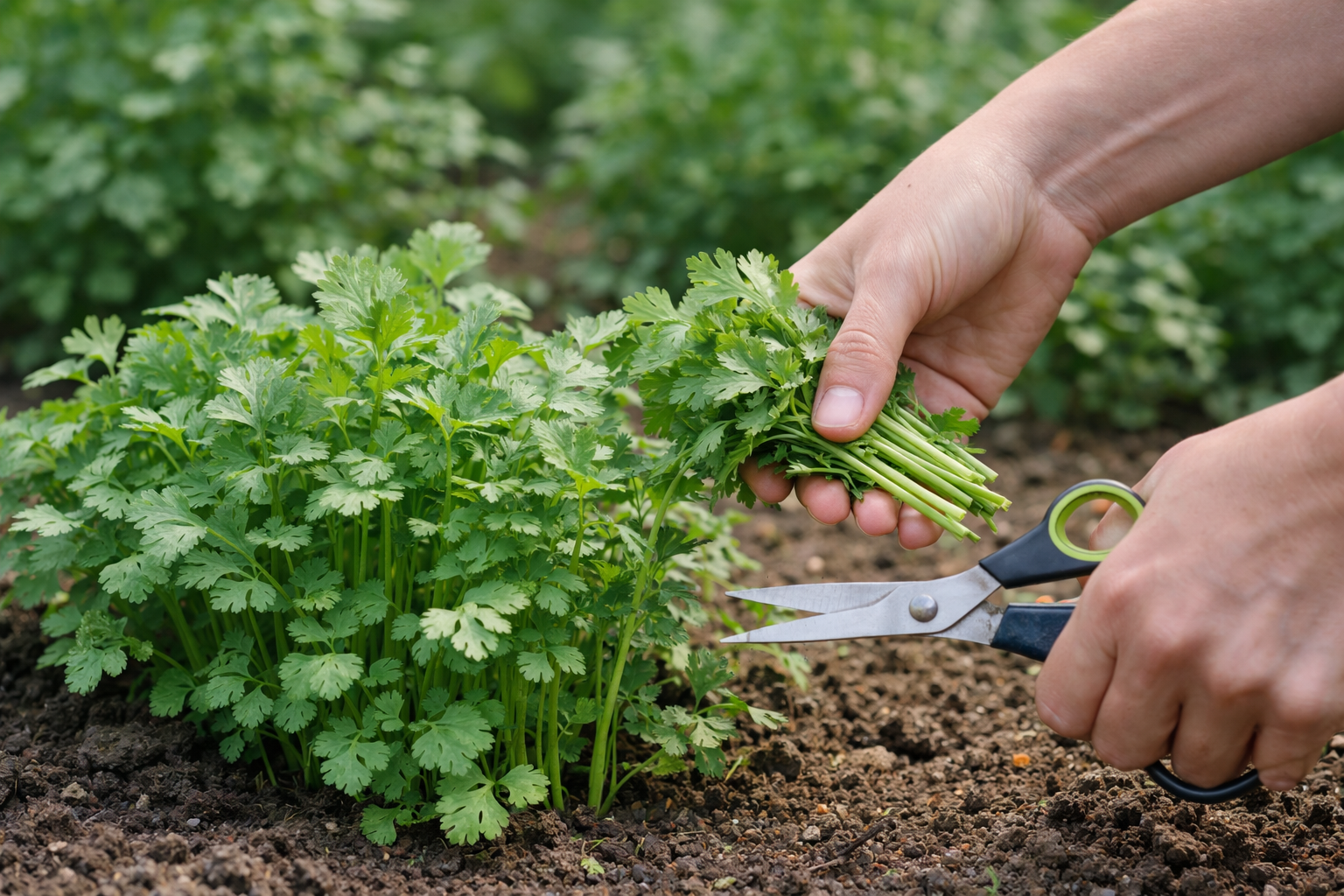
Maryland says you can pick leaves sparingly at 4 to 6 inches and harvest plants once they reach about 6 inches high. Oregon State says much the same thing from a harvest timing angle: once plants are about 6 inches tall, keep checking them daily because cilantro moves fast. That is the kind of specific, grounded advice people actually need. Not “harvest when mature.” Harvest when it still tastes like the plant you meant to grow.
For cut-and-come-again picking, take outer stems first. The University of Minnesota’s herb guide says carrot-family herbs, including cilantro, are best cut by taking each leaf stalk at the base of the plant. That gives you a cleaner harvest and avoids the ragged little stubs that just sit there looking annoyed.
Pinching off flower stems can stretch the leaf phase a bit, and Maryland says that plainly. Still, I would not treat that as a rescue plan. It is more like buying a few extra songs before the party ends. Once cilantro has made up its mind to flower, it rarely becomes the lush leaf machine people are hoping for.
Pro tip: if the plant is broad-leaved and between 4 and 8 inches tall, start cutting. Waiting for a supermarket-bunch look is how a lot of leaf quality gets thrown away.
Diagnose tall, floppy, bitter, or stunted cilantro before you blame the plant
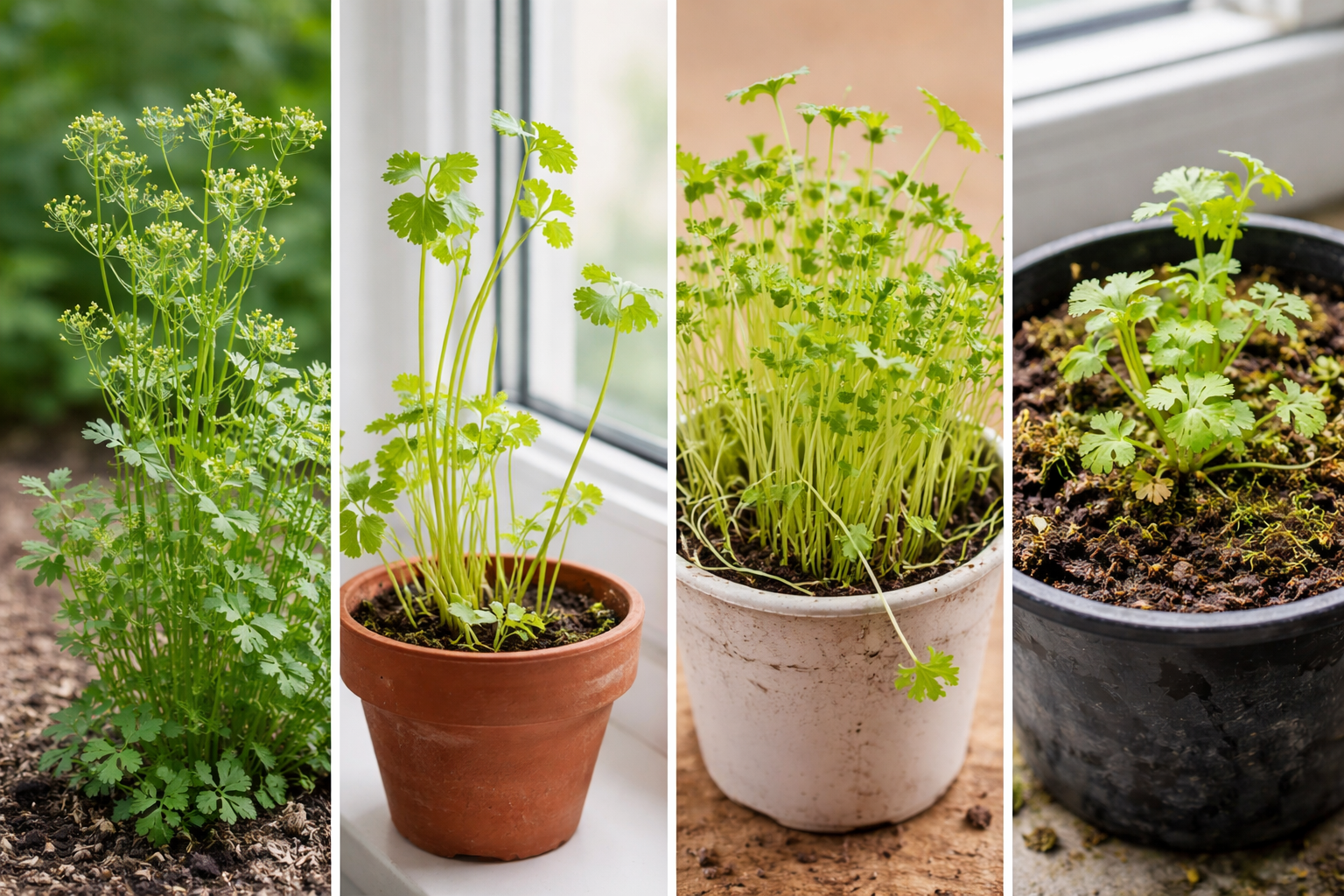
When cilantro looks wrong, height is still useful. It just is not the whole diagnosis.
Tall and feathery outdoors usually means bolting. Tall and pale indoors usually means weak light. The University of Minnesota says most herbs need at least six hours of direct sun outdoors, and indoors they need the best light available. It also says not enough light leads to spindly, thin growth. That is about as clear as plant advice gets. If your indoor cilantro is stretching toward a window and looking washed out, that is not maturity. That is a light complaint. UMN’s indoor lighting guide and its general herb guide line up on that point.
Tall and weak in a crowded pot is another common one. UMN says crowded seedlings become tall and weak, with poorer air flow and more disease pressure. I see this a lot with herb packets that get sprinkled like parsley confetti into a tiny nursery pot. It looks lush for ten days, then everything starts competing for light and root room at once.
Short and stalled can point to bad timing, tight root space, or a soggy mix. Cilantro has a long taproot and does not love transplanting, which is one reason direct sowing wins so often. Wisconsin says that outright. If a plant stays stubby and moody after transplanting, the roots may be sulking more than the leaves are telling you.
If the problem is indoors, two related reads help a lot: Best Facing Window for Plants? for sorting out window strength, and How to Plant Cilantro Indoors (That Actually Lives) for the cilantro-specific routine. Both get closer to the real failure points than generic “bright light” advice.
- Bitter and stringy: harvest came too late, or heat pushed the plant hard.
- Floppy and soft: low light, crowding, or weak stems from chasing light.
- Still tiny after weeks: root stress, poor timing, or a planting that never got cool conditions.
- Suddenly tall after warm weather: classic bolt.
Let some plants flower when the taller growth is actually the harvest you want
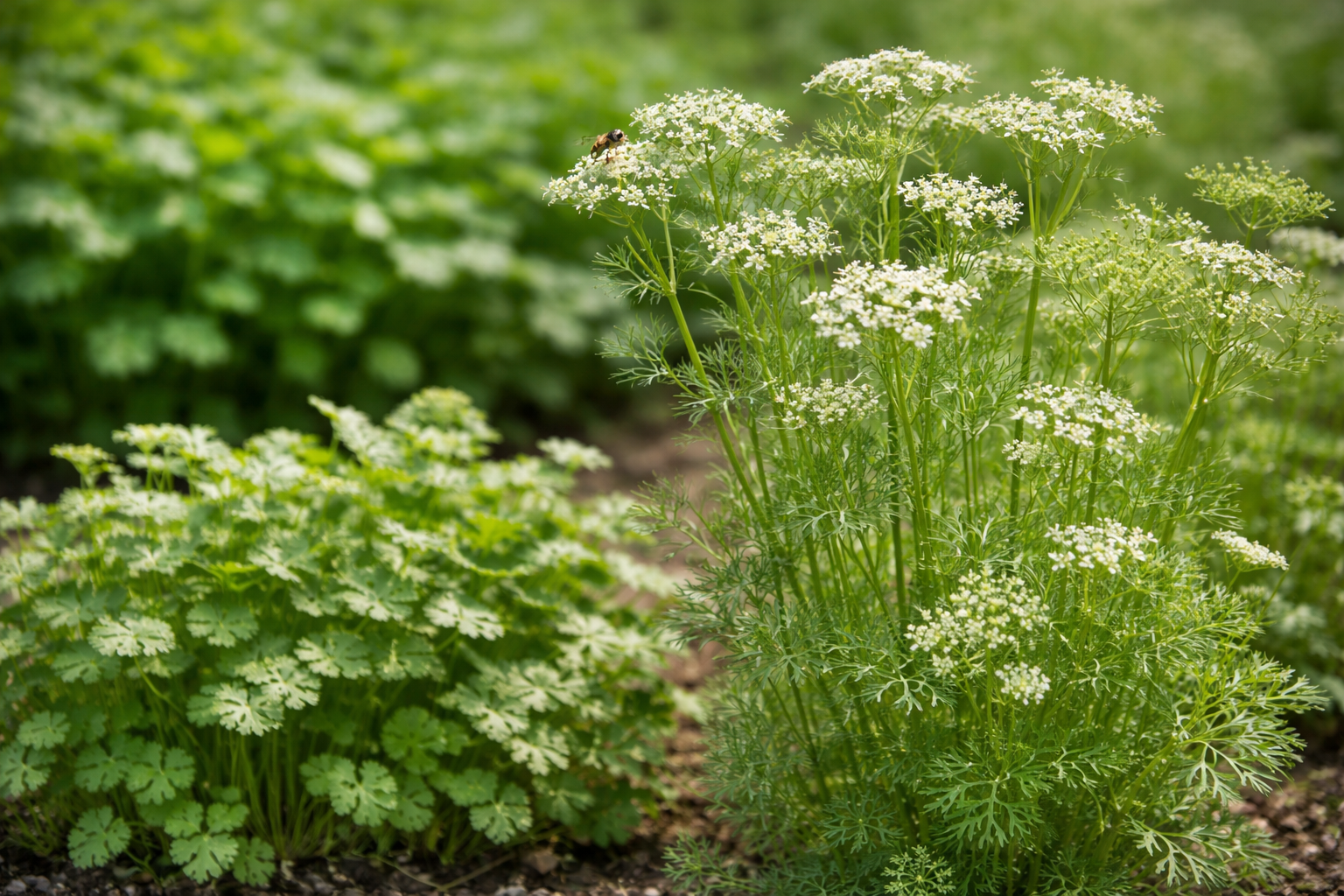
A tall cilantro plant is not always a lost cause. Sometimes it is just changing from “cilantro” to “coriander.”
Wisconsin says the white or pale pink umbels are attractive to small beneficial insects such as adult syrphid flies and parasitic wasps, and NC State lists the plant as useful for butterflies and predatory insects. Wisconsin also notes that a growing season of about 100 days is needed for a seed crop, with foliage ready much earlier at around 45 to 80 days. Put that together and the tradeoff gets pretty clean: once the plant flowers, leaf quality drops, but the flowers and seed heads still have garden value.
If you cook with coriander seed, let a few plants run. Wait until the heads brown and dry, then cut and finish drying them in a paper bag or airy spot. Both Wisconsin and Maryland point you in that direction, and Oregon State notes the seeds store well for planting or cooking.
I like splitting a cilantro patch into two jobs. Harvest the youngest half hard for leaves. Let the oldest half flower. That keeps the season from turning into one all-or-nothing choice, and it saves you from staring at every tall plant like it betrayed you.
If volunteer seedlings show up later, that is not unusual. Cilantro reseeds readily when allowed to mature, which Wisconsin says directly. For the self-seeding angle, Is Cilantro Invasive? is the cleaner next read.
FAQ
How tall does cilantro grow indoors compared with outdoors?
Indoors, cilantro often stays smaller if the light is strong and the room stays cool. But many indoor plants also grow taller and thinner in a bad way because they are stretching for light. Outdoors, taller growth can mean normal maturity or bolting. Indoors, tall and pale usually means the setup is short on light.
Why is my cilantro tall but thin?
The usual causes are low light, crowding, or a plant that is trying to bolt. UMN says crowded herbs become tall and weak, and indoor herbs without enough light turn spindly. Check the leaf shape. Broad leaves plus thin stems points more toward light or spacing. Feathery top growth points toward bolting.
Does slow-bolt cilantro stay shorter?
Not always. Slow-bolt varieties can hold in the leaf stage a bit longer, which is useful, but they are not magic. Oregon State lists Marino and Santo as slower to bolt, and Wisconsin adds that none hold well under high temperatures and long days. So the better read is “leafy for longer,” not “permanently short.”
:

Michael Rowan is the founder and lead writer at The Garden Playbook. He has spent 10+ years growing plants across a range of settings — from indoor houseplants and container gardens to raised beds and in-ground plots — adapting methods to different light levels, seasons, and growing conditions.
Michael focuses on practical, experience-based guidance grounded in fundamentals: soil health, watering strategy, plant nutrition, pruning and propagation, and integrated pest management (IPM). His work aims to help readers diagnose common problems (such as yellowing leaves, stunted growth, or pest pressure) and apply straightforward solutions that are realistic for home gardeners.
At The Garden Playbook, Michael develops tutorials and plant guides using a consistent process: documenting real outcomes where possible, explaining the “why” behind each step, and verifying higher-risk topics (such as plant toxicity or pest treatment options) against reputable horticultural references.