
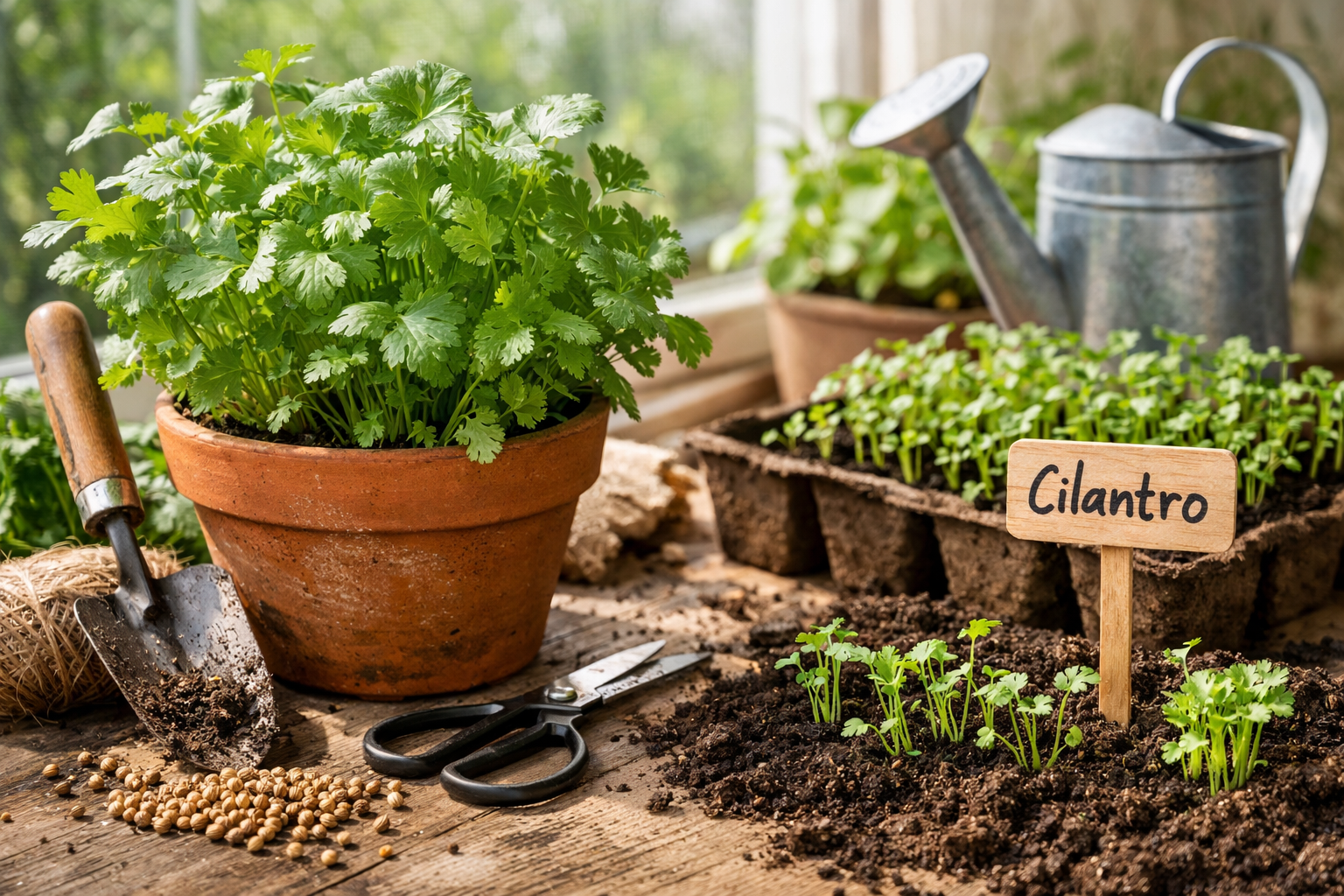
Cilantro is one of those herbs that makes sensible gardeners feel oddly clumsy. You sow it. It comes up fast. You start picturing a long run of salsa, curries, and noodle bowls. Then one warm stretch hits and the plant shoots up, throws flowers, and turns the whole thing into a lesson in broken expectations.
If you want to know how to grow cilantro at home, the short answer is this: direct-sow it in cool weather, keep the soil evenly moist, harvest it young, and reseed in small batches instead of banking on one plant. That gets you the right result far more often than babying a single nursery pot on a hot sill.
I learned that the annoying way. One spring I kept a grocery-store cilantro pot alive just long enough to feel smug about it. Then it bolted almost overnight. The plant was not being difficult. I was asking the wrong job from it.
Cilantro is not basil with a different flavor. It behaves more like a quick, cool-season cut crop. Once that clicks, the rest gets simpler.
What this guide will help you do
- Pick the right cilantro setup for a bed, balcony pot, or indoor space
- Sow seeds in a way that gives a usable harvest instead of a thin little clump
- Keep plants leafy longer before bolting takes over
- Harvest for fresh leaves without wrecking the planting
- Use reseeding and timing to keep cilantro around longer
Quick pick: which cilantro setup fits your home?
| Your situation | Best setup | What to watch |
|---|---|---|
| Cool spring or fall bed with decent sun | Short outdoor rows, direct-sown every few weeks | Do not plant once and call it done |
| Balcony or patio that heats up fast | Deep pot with drainage and some afternoon relief | Tiny pots dry too fast and bolt sooner |
| No outdoor space or weak seasons outside | Bright window or a grow light setup | Weak light gives tall, floppy, disappointing growth |
The theme is simple: match the setup to the heat, light, and how often you can actually check moisture.
The 60-Second Answer: Grow cilantro like a cool-season cut crop
The Royal Horticultural Society tells growers to treat coriander for leaves like a short-term salad crop and sow small batches every month or so. That one piece of advice clears up half the confusion around cilantro.
It means cilantro is happiest when you stop thinking of it as a permanent herb plant and start treating it like a quick, repeat crop. Sow. Snip. Sow again. If you try to get an all-summer performance from one planting, cilantro usually answers with flowers.
There is also the name issue. The leaves are called cilantro. The seeds are coriander. Same plant, different stage. So before you plant anything, decide what you want most: leafy stems for fresh cooking, coriander seed for spice jars, or a bit of both.
For leaves, the best move is dense or moderately dense sowing and early harvest. For seed, give plants more room and more time. That choice changes spacing, light, harvest style, and your level of frustration.
Remember: cilantro is not failing when it bolts. It is finishing its life cycle. Your job is to decide whether to slow that down for leaves or let part of the planting run to seed on purpose.
Choose the setup that matches your home: garden bed, balcony pot, or bright window
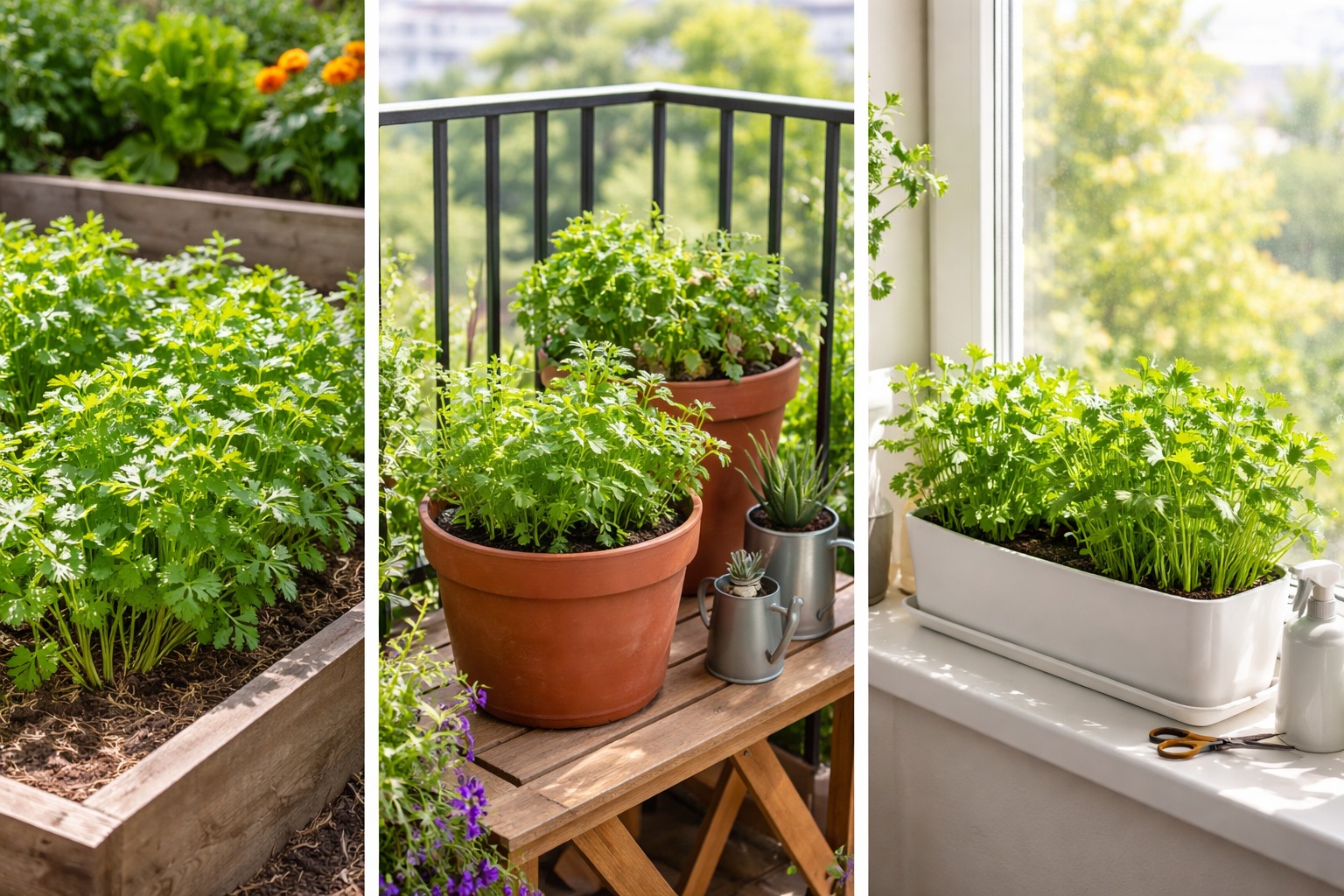
Start with the place, not the seed packet fantasy.
If you have a bed outdoors and your spring or fall is fairly mild, that is the easiest route. Direct sowing is simple, the soil stays steadier than a pot, and reseeding a short row every few weeks is easy enough that you will actually do it.
If your outdoor space is a balcony or patio, containers can work very well. They are also less forgiving. Pots heat up faster, dry out faster, and push cilantro toward bolting sooner if the container is small or dark-colored and sitting in hard afternoon sun. A deeper pot with real drainage buys you more time.
Indoor growing sits in the middle. It can work, but only when the light is real. A bright south- or west-facing exposure is much better than a politely lit kitchen corner. A good guide on the best-facing window for plants can help if the room feels bright to you but plants keep acting unconvinced. When natural light is thin, a proper grow light setup usually does a better job than wishful thinking. A roundup of LED grow lights for indoor gardening is useful if the goal is steady leaf growth through darker months.
Utah State University Extension notes that cilantro can be started indoors, but it also warns to minimize root disturbance when transplanting. That matches what many home gardeners see in practice. Cilantro has a taproot and a bit of a fussy streak about being moved. Direct sowing in the final pot or bed is usually the cleaner play.
One more thing that gets overlooked: hot-climate growers often do better with cilantro in fall, winter, or very early spring. If summer turns lettuce bitter in your yard, cilantro will not be the hero crop that saves the day.
Note: a supermarket cilantro pot is often packed too tightly and grown for quick sale, not for a long container life. It can still be useful, but think of it as a short-use bunch with roots, not a long-haul plant.
Sow seeds directly and get a fuller, faster stand
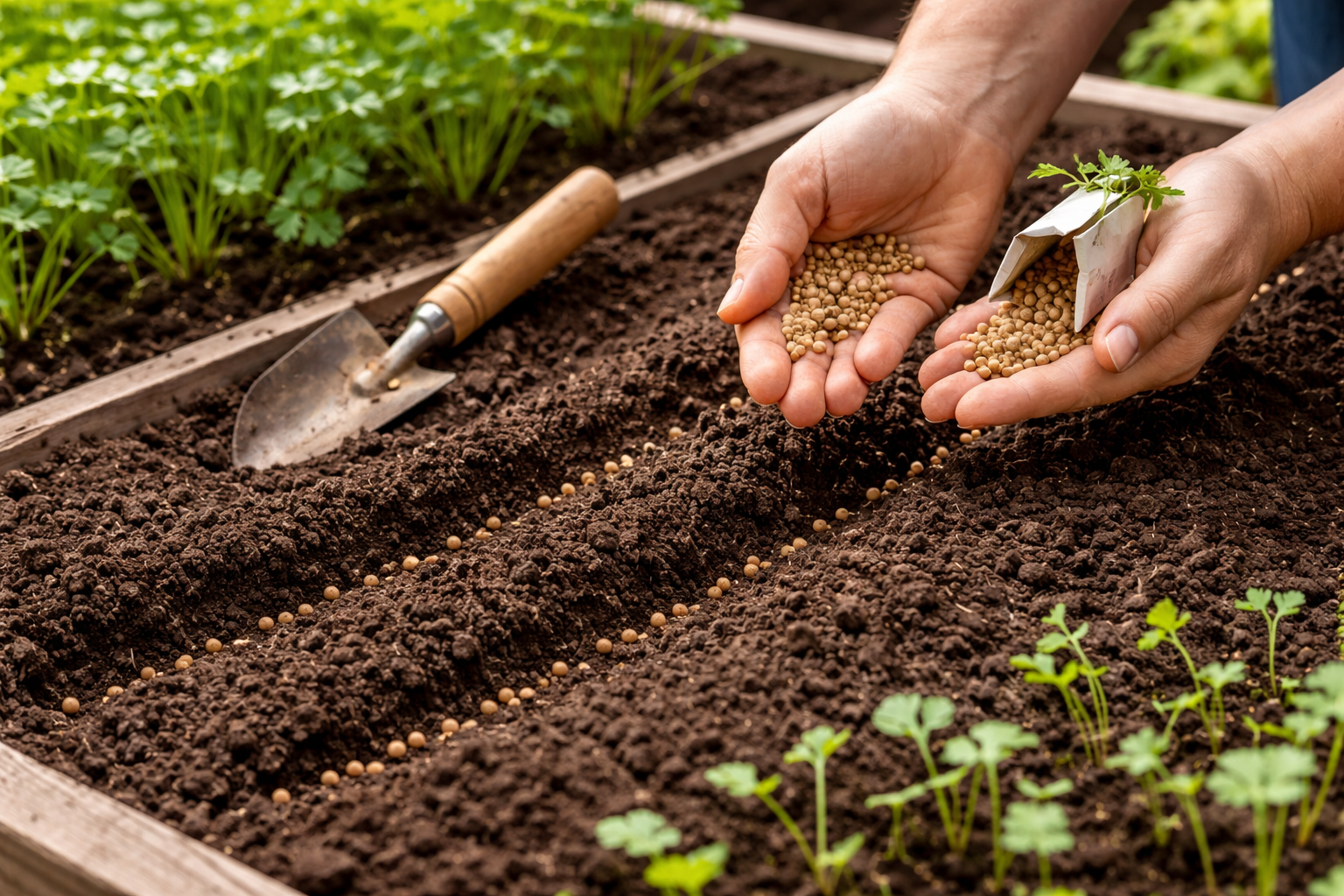
Seed is usually the better starting point. Not because transplants never work. They can. Seed just matches the plant better, costs less, and makes repeated sowing easy.
Utah State recommends sowing cilantro about 1/4 to 1/2 inch deep. For leaf harvest, seedlings can be thinned to roughly 2 inches apart. For coriander seed, the spacing opens up to around 8 to 10 inches. That is a useful rule because it reflects two different crops hiding inside one plant.
If you want kitchen cilantro, sow more generously than feels neat. A thin line of seed in a short row or a broad pinch across a pot often works better than spacing a few lonely plants like they are prized roses. You are trying to harvest stems and leaves young, not raise one grand specimen.
For containers, cover the seed lightly, water gently, and do not let the surface crust over. Germination often takes around one to three weeks, and cooler soil can slow that down. I have had cilantro pop quickly in cool spring beds and then take its sweet time in a pot that looked warm enough but kept drying at the surface.
Some gardeners soak the seeds or gently split the round husks before sowing. That can help a bit. It is not magic. Good contact with moist soil matters more than home-lab seed rituals.
Pro tip: if your aim is fresh leaves, sow a little thicker than the packet’s most formal spacing chart suggests. A dense stand gives you the kind of bunch you actually cook with.
Keep plants leafy longer with cooler roots, steady moisture, and smarter light
Bolting is the big fight here. Heat pushes it. Dry spells push it. A cramped pot pushes it. Waiting too long to harvest can push it too.
The Royal Horticultural Society says plants in the ground often need little routine watering outside long dry stretches, while container-grown coriander should be checked daily and kept just moist rather than soggy. That is a much better rule than watering on a fixed schedule. Soil does not read calendars.
So what should you actually do?
Keep outdoor beds evenly moist in dry weather. Check pots often, sometimes every day once it warms up. Water early if you can. Use a larger container rather than the smallest pot that technically fits. If afternoons are hot, give the plant relief from the harshest sun instead of acting like “full sun” is a religion.
Root temperature matters more than many quick guides admit. A black plastic pot on a reflective patio can turn the root zone into a little oven by late afternoon. A bigger pot, some mulch, or a spot with morning sun and lighter afternoon exposure can stretch the leafy stage more than another round of fertilizer ever will.
And go easy on feeding. Utah State notes that too much nitrogen can weaken flavor. That rings true. Overfed cilantro can look lush for a beat, then taste flatter and still bolt on you anyway.
Indoors, the light question matters just as much as the watering question. The University of Minnesota Extension points out that herbs indoors do not thrive under weak winter conditions and should be watered only when the soil feels dry. In a dim window, cilantro often gets tall, thin, and floppy before it gets generous.
Remember: if the soil swings from dry to swampy and the light swings from gloomy to scorching, cilantro checks out fast. The plant likes steadiness more than pampering.
Harvest early and use the right cutting style for your setup
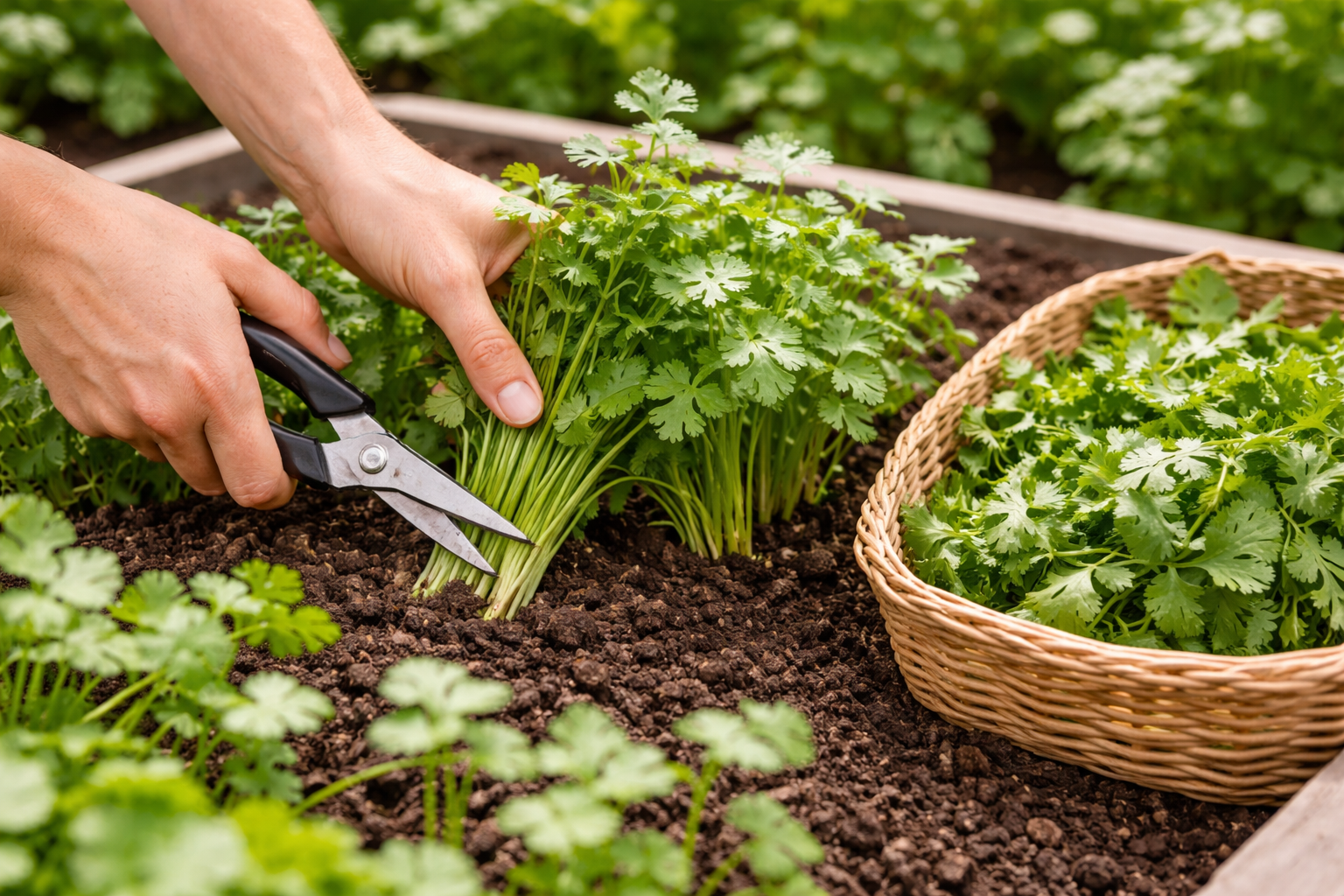
Harvesting late is one of the quiet ways people lose this crop.
Utah State recommends harvesting cilantro leaves when they are about 4 to 6 inches long. The University of Minnesota adds a broader herb rule that is useful here too: many herbs taste best just before flowering. Put those together and the message is simple. Do not wait for cilantro to become huge.
If you are growing individual plants with room around them, cut outer stems first and leave the center growing. That gives you a longer window and keeps the plant from stalling out after one big haircut.
If you sowed densely for leaf production, treat the planting more like baby greens. Take a broad, early harvest while the stems are tender. You might get another cut from the stand, maybe two if the weather stays cool, but do not cling to it. The next sowing is your backup plan.
This is also where “does cilantro regrow after cutting?” needs a straight answer. Yes, sometimes. Not forever. A light harvest from a young plant often regrows. A hard cut from a plant already leaning toward flowering is more of a farewell.
Watch the leaf shape. Once new growth starts turning feathery and thin rather than broad and leafy, the plant is shifting gears. At that point, take what still tastes good and lean on the next batch.
Reseed on purpose so cilantro stays available instead of disappearing
This is the part that actually fixes the problem.
The RHS recommends sowing small batches every month or so for continued harvests. In many home gardens, every 2 to 4 weeks works well, with the tighter end of that range making more sense in warm weather or if you use cilantro a lot. If the household only grabs a few sprigs at a time, monthly sowing can be enough.
Think in overlapping waves. One batch to harvest now. One batch coming on. One batch just sown. That is how cilantro starts feeling easy.
For hot regions, do not force summer just because the calendar says “growing season.” Outdoor cilantro often gets much easier again in fall. In mild climates, winter can be the sweet spot. Indoors under lights, a new pot every few weeks is usually less work than trying to stretch one pot past its natural useful life.
Slow-bolt varieties can help around the edges. Utah State lists options such as Leisure, Delfino, and Slow Bolting. Useful, yes. Magic, no. A slow-bolt type still bolts faster in heat, dry soil, or root stress than a plain variety grown under good timing and better conditions.
And if some plants self-seed, that can be a bonus rather than a problem. A quick guide on whether cilantro is invasive helps sort that out without the usual overreaction. Volunteer seedlings are not the same thing as a plant taking over the neighborhood.
Note: the easiest cilantro growers are rarely the best “plant doctors.” They just keep sowing on time.
Fix bolting, yellow leaves, weak stems, and stalled growth without guessing
The good news is that cilantro problems are often pretty readable. The bad news is that people love to blame mystery pests when the real cause is heat, light, or moisture swings.
| What you see | Most likely cause | What to do next |
|---|---|---|
| Flower stalks early, leaves taste sharper or bitter | Heat, day length, dry stress, or late harvest | Harvest what is usable, reseed, and shift the next batch cooler |
| Yellow leaves in a wet pot | Poor drainage or overwatering | Let the mix dry slightly and check the drainage holes |
| Tall, floppy, pale indoor growth | Not enough light | Move to a brighter window or bring the light source closer |
| Patchy germination | Surface dried out, seeds buried unevenly, or cool soil | Resow shallowly and keep the top layer from drying out |
| Plants look stuck and tiny | Cramped roots, weak light, or lean soil after several cuts | Start a fresh sowing and move to a slightly roomier setup |
If an outdoor plant goes oddly spindly, distorted, or sterile, disease can be involved. Utah State notes that aster yellows carried by leafhoppers can make plants grow tall and odd-looking. That is not the first thing I would assume though. In home cilantro, timing and setup are still the usual suspects.
One useful bias: if the plant is indoors and weak, think light first. If it is outdoors and rushing to flower, think heat and timing first. If it is in a pot and yellowing, think water and drainage first.
Let some plants flower when you want coriander seeds, pollinator flowers, or self-sowing
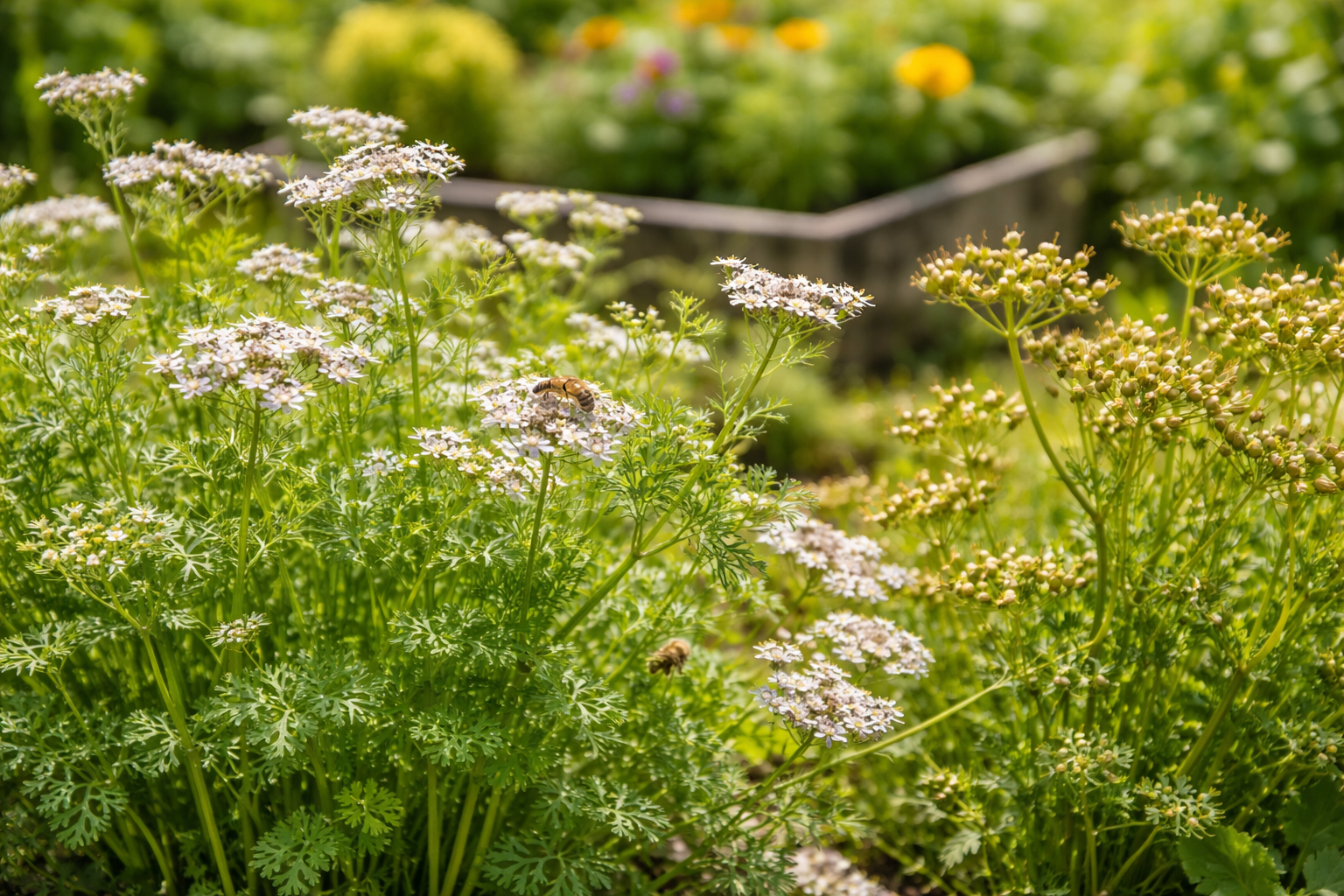
Not every bolting plant is a failure. Sometimes it is phase two.
Penn State Extension points out the basic split clearly: cilantro is the leaf and coriander is the seed of the same plant. Once you stop treating that like trivia and start using it in the garden, cilantro gets a lot more useful.
If you want coriander seed, give those plants more room and more time. Let them flower. Let the seed heads dry. Utah State recommends waiting until the heads turn brown, then drying them further so the seeds fall free. That is a very different endgame from snipping leafy stems for dinner.
The flowers have garden value too. Penn State notes that cilantro flowers provide nectar and pollen for beneficial insects and pollinators. So if you have the room, it is smart to harvest one batch hard for leaves and let another batch bloom. That way the plant can do double duty instead of getting yanked the second it looks less “productive.”
There is a kitchen bonus hiding here as well. The RHS notes that even unripe green coriander seeds can be used in cooking and have a milder flavor. That is a fun little side road if you like the plant and do not need every stem to stay in leaf mode.
A mixed herb container can work too, but only with herbs that like the same rhythm. A guide on what to plant with basil in a container is handy here because cilantro can share space with similarly watered, softer herbs better than it can with dry-loving types like rosemary or thyme.
The nicest cilantro setup I know is staggered: one patch for leaves now, one patch coming on, and one small patch allowed to flower and make seed. That looks a bit messy, sure. It also works.
A few quick cilantro questions
Can you grow cilantro from cuttings?
Not well enough to be worth the bother for most people. Cilantro is much easier from seed, and it matures fast anyway. Cuttings can root in some cases, but they do not solve the real issue, which is that cilantro is a short-lived plant with a built-in urge to flower.
Can cilantro handle a little frost?
A light frost is often less of a problem than sudden heat. In many gardens, cool spring and fall weather is where cilantro shines. Hard freezes are another matter, but mild cold usually bothers it less than a hot patio in late May.
How many seeds should go in one pot?
More than most beginners think. If the pot is meant for leaf harvest, sow enough seed to create a modest little stand, not three isolated plants. Exact counts change with pot width, but the safe idea is this: sow for a bunch, then thin or cut as needed. Do not sow for a museum display.

Michael Rowan is the founder and lead writer at The Garden Playbook. He has spent 10+ years growing plants across a range of settings — from indoor houseplants and container gardens to raised beds and in-ground plots — adapting methods to different light levels, seasons, and growing conditions.
Michael focuses on practical, experience-based guidance grounded in fundamentals: soil health, watering strategy, plant nutrition, pruning and propagation, and integrated pest management (IPM). His work aims to help readers diagnose common problems (such as yellowing leaves, stunted growth, or pest pressure) and apply straightforward solutions that are realistic for home gardeners.
At The Garden Playbook, Michael develops tutorials and plant guides using a consistent process: documenting real outcomes where possible, explaining the “why” behind each step, and verifying higher-risk topics (such as plant toxicity or pest treatment options) against reputable horticultural references.