
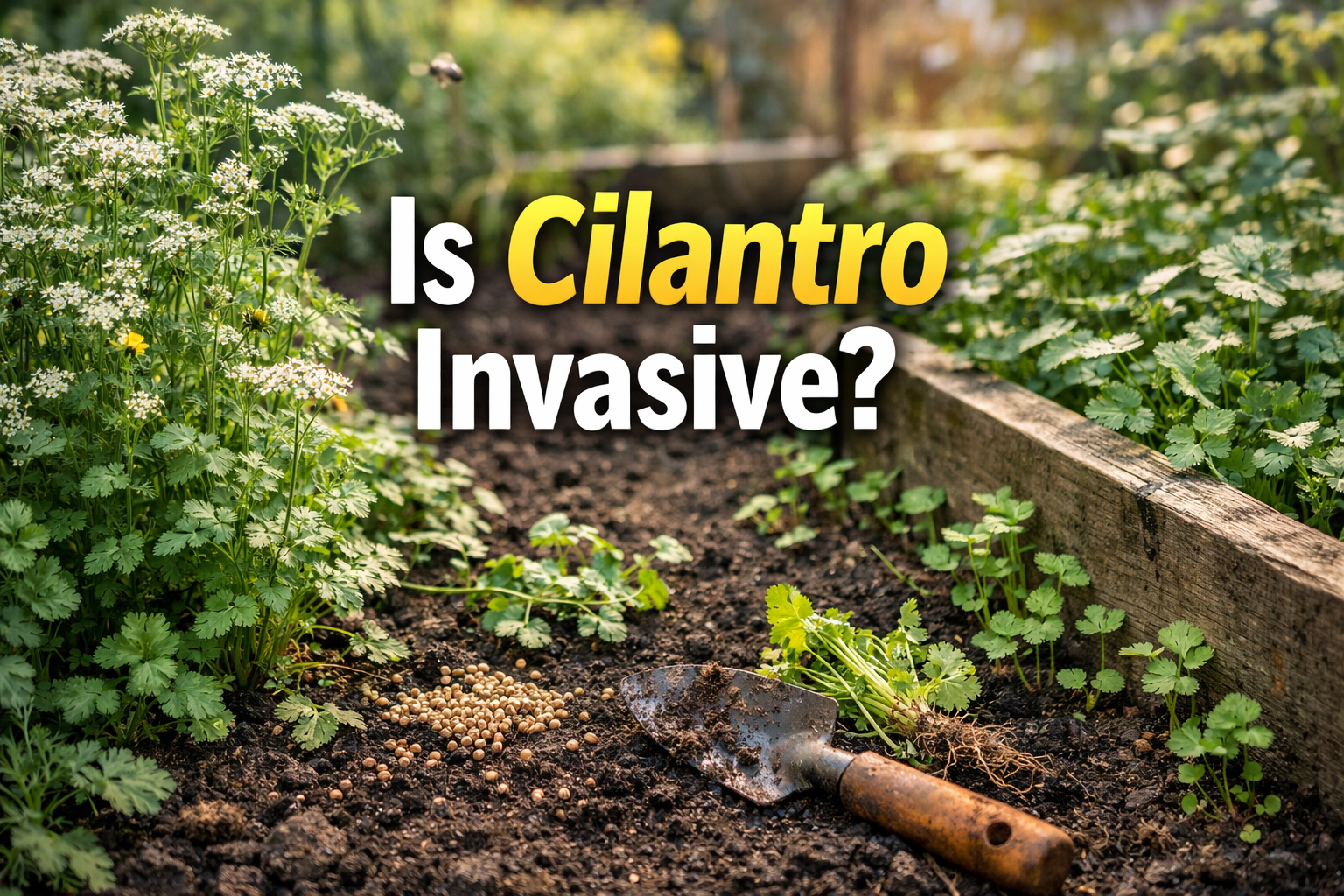
You plant cilantro once, harvest a few handfuls for salsa, forget about it for a week, and then it seems to pull a magic trick. A month or two later, there are feathery little seedlings showing up in the same bed, along the edge of the path, maybe even in the crack by the raised bed corner. That is usually the moment people start wondering whether they accidentally brought home a problem plant.
Here is the direct answer: is cilantro invasive? In most home gardens, no. Cilantro is usually not considered invasive. What it is, quite often, is a fast-bolting, self-seeding annual herb that can make itself unexpectedly comfortable if you let it flower and drop seed.
That common answer is technically correct, but it is also incomplete. If you are pulling volunteer seedlings every season, “not invasive” does not feel very useful. The useful part is knowing the difference between a true invasive plant and an herb that simply reseeds enthusiastically, plus what to do next based on your garden, your climate, and your patience level.
What you’ll learn here
- Why cilantro gets mistaken for an invasive plant
- How self-seeding, bolting, and volunteer seedlings change the answer
- When cilantro is harmless, when it becomes annoying, and when to step in
- A quick test to decide whether to let it reseed or shut it down
- How to control spread without giving up fresh leaves or coriander seed
Is cilantro invasive? The honest answer most gardeners actually need
Cilantro is not typically invasive in the way gardeners mean when they picture a plant taking over beds, creeping under fences, or elbowing out everything around it. It is better described as a cool-season annual that often self-seeds. That distinction matters.
According to the National Invasive Species Information Center, an invasive species is not just a plant that spreads. It is a non-native species whose introduction causes or is likely to cause economic or environmental harm, or harm to human health. That is a much stricter standard than “it came back where I didn’t plant it.”
In a backyard herb bed, cilantro usually behaves more like a short-lived guest who leaves behind a few cousins than a true garden thug. I have had it pop back up in spring vegetable beds after letting a few plants go to seed the previous season, and the seedlings were easy to recognize, easy to pull, and easy to keep if I wanted another round. Annoying sometimes? Yes. Invasive in the usual home-garden sense? No.
Key takeaway:
If cilantro is showing up again, the real question is usually not “Is this invasive?” It is “Do I want volunteer cilantro here next season?”
Why cilantro gets mislabeled as invasive
Most of the confusion comes from the way gardeners use the word “invasive” in everyday conversation. In casual garden talk, people often use it for any plant that returns uninvited. Biologically and practically, that lumps together very different behaviors.
Here is the cleaner way to think about it:
- Annual herb: completes its life cycle in one season, then dies.
- Self-seeding plant: drops seed that can sprout later.
- Volunteer seedlings: new plants that come up from that dropped seed.
- Weedy behavior: shows up where you do not want it and needs managing.
- Invasive plant: a non-native plant causing or likely to cause wider harm.
Cilantro belongs much more comfortably in the self-seeding and occasional weedy-volunteer categories than the invasive one. Calling cilantro invasive because it dropped seed is a little like calling a paper airplane a drone because both move through the air. There is overlap in the broadest sense, but not in the way that matters when you need a useful answer.
This is also why two gardeners can talk past each other on the same plant. One means, “It keeps popping up in my bed.” The other hears, “It is ecologically harmful and should be treated like a serious escape risk.” Those are not the same problem, and they do not call for the same response.
Common mistake: Assuming that any plant that returns without permission is invasive. In herb gardens, it is often just reseeding.
How cilantro actually spreads, and why it feels sneakier than it is
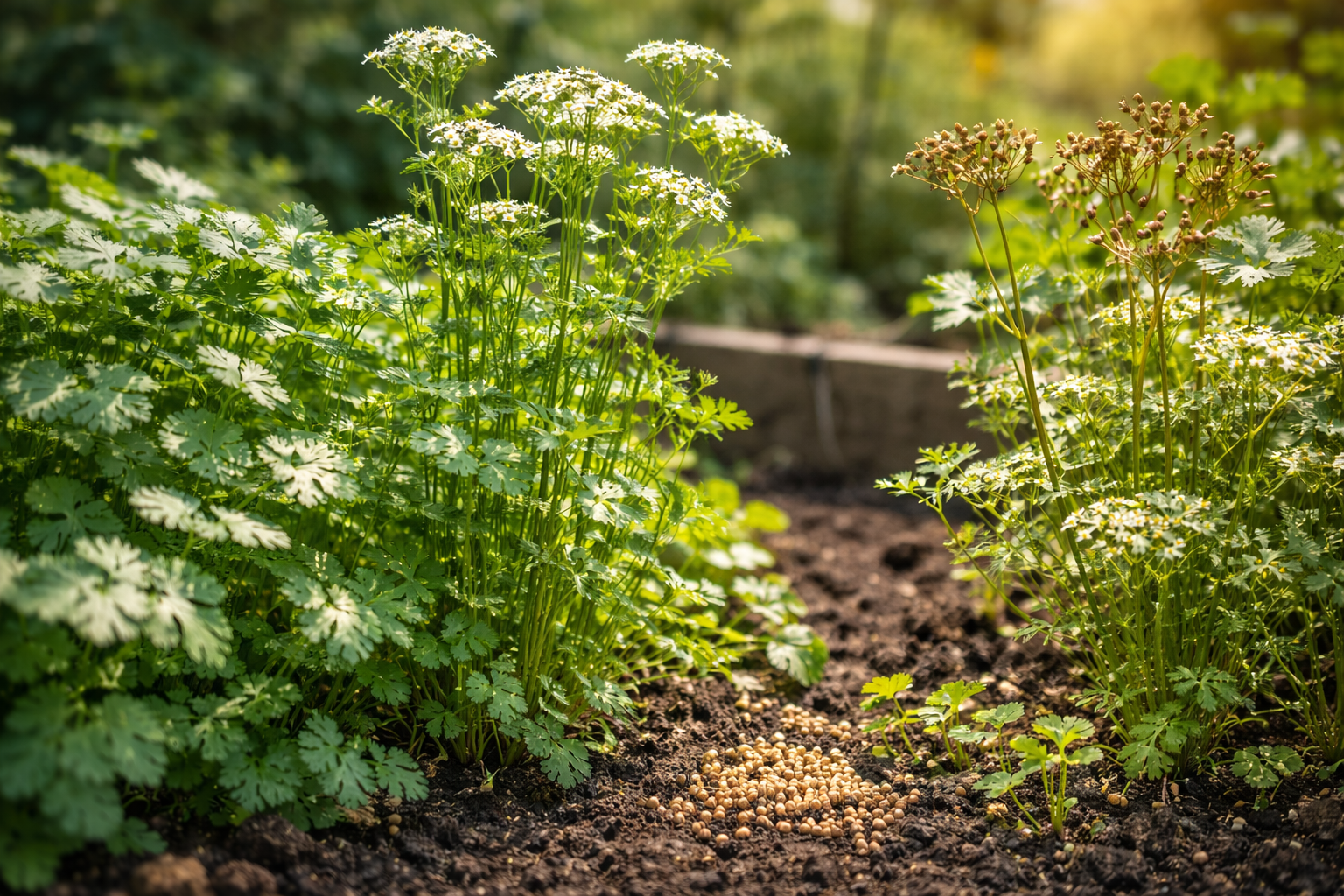
Cilantro spreads mostly by seed. That is the heart of the whole issue.
It starts as a leafy cool-season herb. Then warm weather, longer days, or stress pushes it to bolt. Once it bolts, the plant shifts from leaf production into flower and seed production. The University of Wisconsin Extension notes that cilantro tends to go to seed in hot weather, with leaves often ready in about 45 to 80 days and a seed crop needing at least 100 days. That tracks with what many home gardeners see in real beds: one week you think you still have time, and the next week the plant has gone from lush and useful to all business.
Here is what nobody tells you early enough: the same habit that frustrates you at harvest time is exactly what makes cilantro reappear later. When cilantro bolts, flowers, and dries down, those seeds do not need much imagination to find a new home. A shake from wind, a nudge while harvesting, or one missed cleanup session can do the rest.
That is why cilantro can feel sneakier than it really is. It is not sending runners underground. It is not creeping through the bed by root. It is simply playing the annual-herb game very efficiently.
In practical terms, if you see cilantro show up again in the same general area after flowering season, seed spread is the first explanation to test. That is especially true if the seedlings are clustered near where older plants stood, or in places where dry flower heads might have shattered.
Why this works
Once you know cilantro’s spread is mostly about seed, the control strategy becomes obvious. You do not need a dramatic rescue plan. You need seed management.
When cilantro can become a nuisance in the garden
This is where the technical answer needs some context. Cilantro may not be invasive in the strict sense, but it can absolutely become a nuisance.
That is more likely when a few things line up:
- You garden in a mild-winter climate where dropped seed can sprout easily.
- You let multiple plants flower and dry in place.
- You have open soil, light mulch, or undisturbed bed space.
- You are growing cilantro in a vegetable bed where volunteer seedlings become clutter fast.
The University of Florida IFAS points out that cilantro does best in cooler conditions and, in Florida, is best grown in fall and winter because it quickly flowers and goes to seed as days get longer and warmer. That explains why some gardeners in mild climates report that cilantro seems to come and go with much more enthusiasm than gardeners in colder regions.
In other words, climate changes the amount of reseeding you may see, but it does not automatically change cilantro into a truly invasive plant. What it changes is your management burden.
If seedlings appear once a season and pull up with two fingers, you are dealing with volunteers. If they keep showing up because you let several plants shatter seed year after year, you are dealing with a self-created cilantro factory. Still manageable, but a different level of effort.
Key takeaway: “Nuisance” is the better label than “invasive” for most cilantro problems in home gardens.
The 30-second test: should you let cilantro reseed or shut it down?
If you want a fast decision, use this simple test.
Let cilantro reseed if:
- You like having surprise seedlings in that bed.
- You can easily recognize young cilantro.
- You do not mind a slightly looser, less controlled herb patch.
- You want flowers for beneficial insects and coriander seed later.
Shut it down early if:
- You want leaf production only and hate bolting.
- You already have enough volunteers to manage.
- You need that bed to stay tidy for other crops.
- You keep mistaking seedlings for weeds or vice versa.
One easy rule helps here. If seedlings are easy to spot, easy to pull, and mostly staying where you can tolerate them, reseeding is often a feature. If they are landing in the wrong bed, cluttering crop rows, or making your herb area feel messy, it is time to interrupt the seed cycle.
I tend to think of cilantro like a dinner guest who always brings cousins. That can be generous if you planned for extra chairs. It is less charming when you were hoping for a quiet meal.
If you want a useful comparison point, this is very different from how herbs with stronger spreading reputations behave. For example, mint is easy to grow when you control its roots, light, and moisture, which is a very different management conversation from cilantro’s seed-based comeback habit.
How to stop cilantro from spreading without making gardening harder than it needs to be
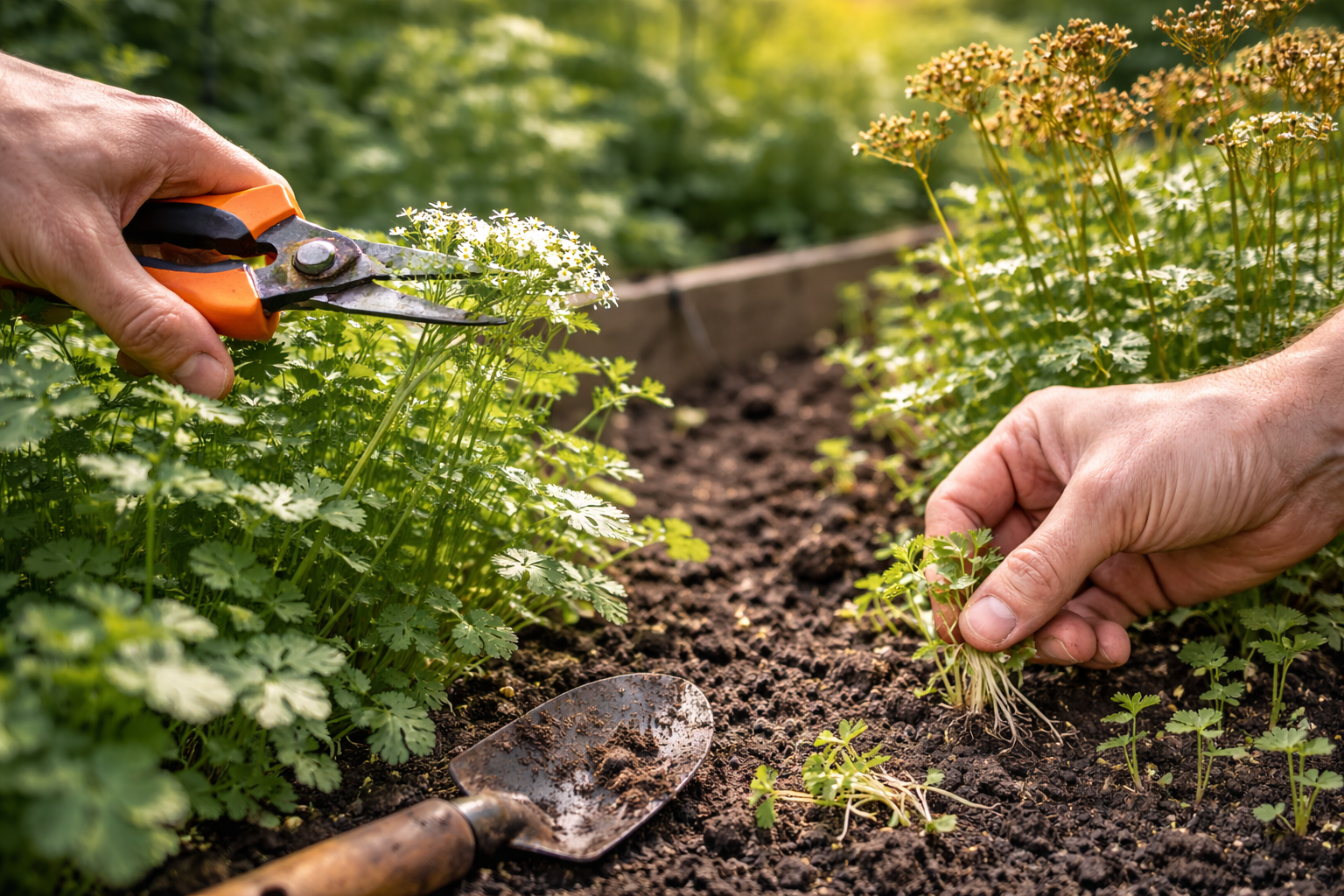
The good news is that cilantro is not hard to control once you stop treating it like a mystery.
These are the tactics that make the biggest difference:
- Cut flower stalks early if your goal is leaf harvest, not seed.
- Remove drying seed heads before they shatter if you missed the early bolting stage.
- Pull volunteer seedlings while small so they do not compete with the crops you actually want.
- Keep one designated seed plant and remove the rest if you want both coriander seed and some control.
- Harvest coriander intentionally instead of letting ripe seed fall where it may.
This is the lever that matters most: seed interruption. If cilantro is spreading by dropped seed, then every step that reduces seed drop reduces next season’s surprise seedlings.
A very practical rule is this: one missed plant is usually no big deal. Several missed plants, left to dry fully and scatter, are what create the “why is it everywhere now?” feeling. That has been true in every herb bed where I have seen cilantro become irritating. It was never one plant. It was a cluster of small missed decisions.
If you are planning to eat volunteer plants, use the same caution you would with any reseeded herb in a mixed garden. Make sure you are confident in the identification, especially if you have other feathery carrot-family plants nearby.
Common mistake
Waiting until seed heads are fully brown and brittle. At that point, a gentle bump can spread more seed than you realize.
Cilantro in beds vs containers vs warm climates
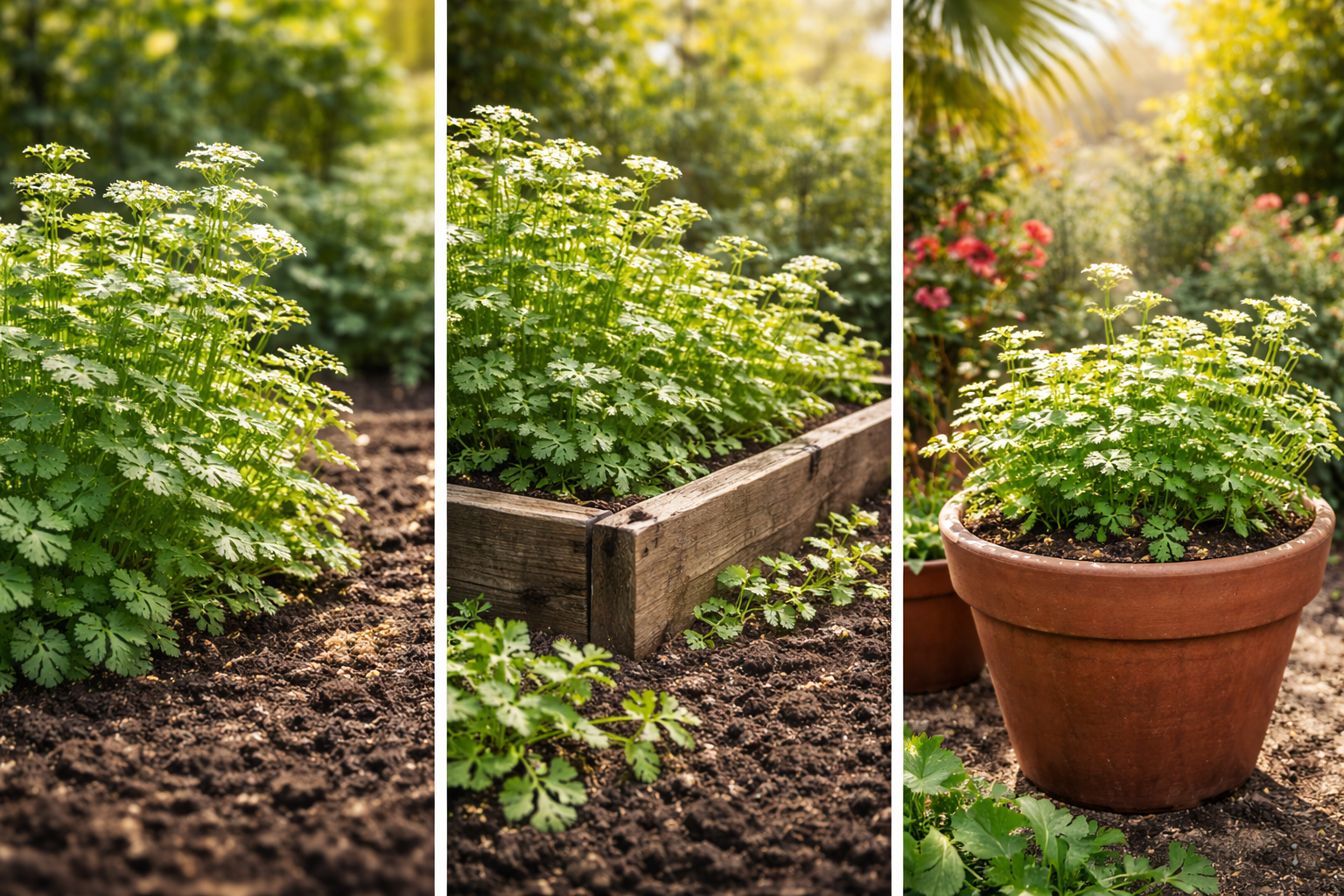
Your setup changes the odds of cilantro becoming a repeat visitor.
In-ground beds: This is the easiest place for cilantro to reseed. Flower heads dry, seeds fall straight into workable soil, and the next weather window does the rest.
Raised beds: These are still easy reseeding zones, especially if the bed stays productive year-round and gets light disturbance. Seed can also collect along wooden edges and corners.
Containers: Containers usually reduce volunteer spread because there is less surface area for seed to settle and fewer nearby open spaces. If your goal is control, this is often the easiest answer. For readers who want that tighter setup, growing cilantro indoors with strong light, steady moisture, and cooler conditions can be a much cleaner way to keep the herb without the outdoor reseeding mess.
Warm climates: Warm regions often speed up bolting, which means faster flowering and faster seed production. That can make cilantro feel “more invasive” even when the behavior is still just reseeding. If you garden where cool windows are short, it often makes more sense to accept cilantro as a seasonal crop, sow small batches, and stop trying to force a long leafy run.
If your main goal is continuous leaves, small sowings every couple of weeks are usually smarter than depending on volunteers. If your main goal is easy repeats, letting one or two healthy plants set seed can work nicely. The difference is intention.
What to plant if you want cilantro flavor without the reseeding headache
Sometimes the best solution is not replacing cilantro. It is growing it in a way that matches what you actually want from it.
If you want fresh cilantro leaves, grow it as a short-run crop. Sow modest amounts, harvest young, and remove flower stalks early. Do not treat it like a set-it-and-forget-it herb unless you are happy with volunteers.
If you want coriander seed, let one plant mature fully and treat it like a planned seed crop. The University of Wisconsin notes that cilantro flowers attract beneficial insects such as syrphid flies and parasitic wasps, which gives one seed-bound plant a little extra value in the garden. One is often enough. Five is how you accidentally create a cleanup project.
If you want flavor with tighter control, containers are usually the easiest pivot. They will not stop bolting, but they do make the aftermath far easier to manage.
The mistake many gardeners make is assuming the plant itself is wrong for them, when the real mismatch is the growing style. A leaf crop, a seed crop, and a pollinator-friendly herb patch are three different jobs. Cilantro can do all three, but not all at once without tradeoffs.
Bottom line: cilantro is usually not invasive, but it can absolutely become too much
Cilantro is usually not invasive in the normal home-garden sense. It is a self-seeding annual herb, and that difference is what makes the whole topic easier to manage.
If it comes back in the same bed after flowering, that is usually volunteer reseeding. If it bolts fast in warm weather, that is normal cilantro behavior. If it starts showing up in places you do not want, that is a management issue, not necessarily an invasive-species issue.
So here is the practical bottom line:
- If you want leaves only, cut flower stalks and sow fresh batches.
- If you want easy repeats, let one plant set seed on purpose.
- If you want control, use containers or remove seed heads before they shatter.
- If you already have too many volunteers, pull them small and break the seed cycle this season.
Cilantro is rarely a takeover plant. It is more like a serial self-inviter. Once you see that clearly, the answer gets a lot less confusing and the garden gets easier to manage.
FAQ
Does cilantro spread by roots or by seed?
Mostly by seed. Cilantro is not known for the kind of aggressive root spread that makes some herbs hard to contain. In most gardens, new plants come from dropped seed after flowering.
Will cilantro come back every year on its own?
Not in the way a perennial does. The original plant is an annual and dies after its life cycle, but new seedlings may come up from seed if conditions are right.
Should I remove cilantro flowers if I do not want it to spread?
Yes. If your goal is leafy harvest and fewer volunteer seedlings, removing flower stalks early is one of the simplest and most effective steps you can take.

Michael Rowan is the founder and lead writer at The Garden Playbook. He has spent 10+ years growing plants across a range of settings — from indoor houseplants and container gardens to raised beds and in-ground plots — adapting methods to different light levels, seasons, and growing conditions.
Michael focuses on practical, experience-based guidance grounded in fundamentals: soil health, watering strategy, plant nutrition, pruning and propagation, and integrated pest management (IPM). His work aims to help readers diagnose common problems (such as yellowing leaves, stunted growth, or pest pressure) and apply straightforward solutions that are realistic for home gardeners.
At The Garden Playbook, Michael develops tutorials and plant guides using a consistent process: documenting real outcomes where possible, explaining the “why” behind each step, and verifying higher-risk topics (such as plant toxicity or pest treatment options) against reputable horticultural references.