
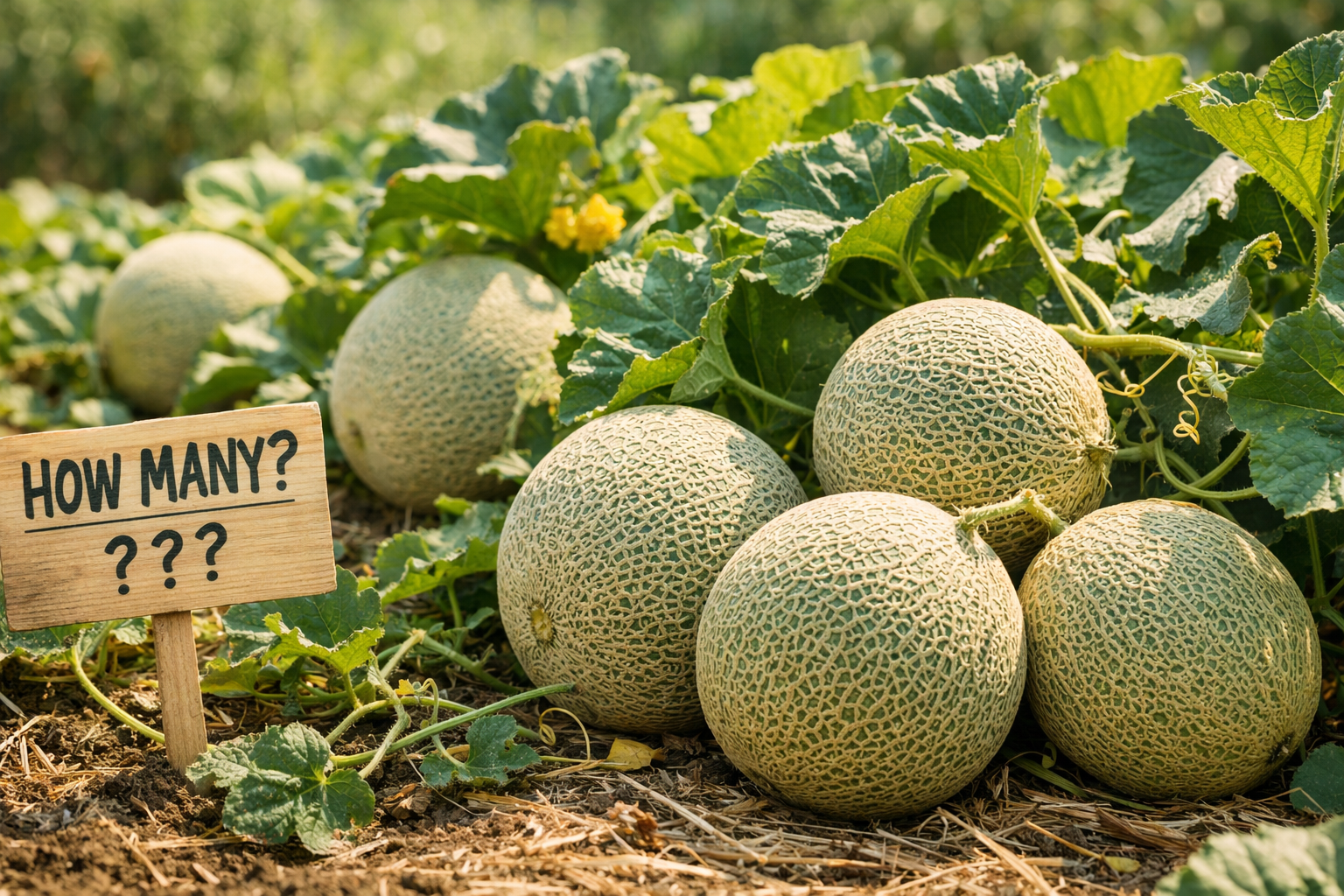
If you’re searching “how many cantaloupe per plant,” the honest home-garden answer is this: most plants finish 2 to 4 good melons. A stressed plant in a pot or a short-season bed often lands at 1 to 2. Under warm, steady conditions with a suitable variety, the upper end can reach 5 to 6.
That last number is where people get burned. A vine can look huge, bloom like mad, and still finish with fewer ripe fruits than you expected. I’ve seen this in backyard beds that looked lush from ten feet away. Up close, the plant was carrying more fruit than its roots, pollination, and calendar could really support. Big vine. Small finish.
So the useful question is not just “how many.” It’s “how many in this setup, and what should you do with that number?”
At a glance
| Setup | Realistic ripe fruit count | What usually explains it |
|---|---|---|
| Large container or cramped space | 1 to 2 | Less root room, faster drying, more stress |
| Average in-ground garden | 2 to 4 | Normal pollination and decent growing weather |
| Long warm season with a good variety | 5 to 6 | Strong plant health, better fruit set, enough time to finish |
- What shifts yield up or down
- When to thin fruit and when to leave it alone
- Why flowers drop or fruit turns wonky
- What containers and trellises change
- How to pick at the right moment
Quick rule: If the plant is in a pot, the season is short, or pollination looks patchy, plan around quality first. A clean 2-melon harvest beats four bland half-finished ones every time.
How Many Cantaloupes Per Plant Can You Actually Expect?
The Royal Horticultural Society notes that one plant can produce five or six ripe melons under suitable growing conditions. That gives you the ceiling, not the baseline. For most home gardens, the working range is lower, and a lot more honest.
Think of a cantaloupe plant like a budget. Each fruit takes sugar, water, leaf energy, and time. When the plant has plenty of all four, it can ripen more fruit. When one of those runs short, the count drops fast.
So here’s the straight answer. In a normal backyard bed, 2 to 4 cantaloupes per plant is a solid result. If you get 1 or 2 from a container plant or from a rough season, that is not failure. It’s garden math. And if a vigorous plant in warm weather finishes 5 or 6, enjoy it, but don’t use that as your default expectation for every vine.
A small but useful distinction: gardeners often say “per vine” and “per plant” like they’re the same thing. In casual talk, they usually are. For planning, stick with per plant. It keeps spacing, container size, and harvest expectations much cleaner.
If you want one sentence to remember, use this one: count on 2 to 4, treat 5 to 6 as the high side, and read 1 to 2 as normal in tougher setups.
Why One Plant Gives 2 Melons in One Garden and 6 in Another
The number swings because yield is tied to a handful of hard limits. Variety matters. Season length matters. Pollination matters. Root room matters. And once fruit sets, the plant has to keep enough healthy leaf area to feed it.
That’s why a seed packet can sound cheerful and your bed can still come up short. A plant can set fruit and still run out of runway.
The University of Minnesota recommends varieties under 90 days to maturity, with 65 to 80 days being a better bet in shorter seasons. That little detail changes the whole game in cooler areas. A bigger late variety may look stronger on paper, but a smaller earlier muskmelon often finishes more ripe fruit before weather turns.
Fruit size shifts the count too. Small “personal size” cantaloupes can give you a higher number per plant. Larger heirloom-style melons often give fewer finished fruits, but each one has more heft. That’s not better or worse. It’s just a trade.
Then there’s root room. A sprawling in-ground plant has access to more moisture and more nutrients. A plant in a grow bag is working from a smaller pantry. You can still get excellent fruit from a pot. You just shouldn’t expect the same count.
Remember: In a short season, pick earliness before bragging rights. A smaller melon that finishes is worth more than a big one that stalls in September.
There’s also a subtle point that gets skipped a lot: a strong plant is not the same thing as a productive plant. Some vines pour energy into growth, then struggle to ripen the fruit load they set. It looks impressive. It doesn’t always end tasty.
The Setup That Gives Cantaloupe Plants a Chance to Carry More Fruit
Cantaloupes are not shy about what they want. They want heat, sun, open space, and soil that drains well. When one of those is off, yield usually slips before you notice the leaves complaining.
Iowa State Extension recommends planting after soil temperatures reach about 60 to 70 degrees Fahrenheit. That matters more than many gardeners think. Melons planted into cold ground sit there, sulk a bit, and lose early momentum. You can spend the next month trying to nurse back time you never get back.
Good spacing matters too. Most plants need roughly 3 to 6 feet, depending on whether you’re growing them in hills, rows, or on a support. Crowding looks efficient on planting day. By midsummer, it turns into tangled leaves, slower drying, and more competition for light.
Soil texture counts. Cantaloupes like loose, well-drained soil and steady moisture. They don’t love wet feet. If your soil is heavy and slow to drain, the plant spends part of the season just coping.
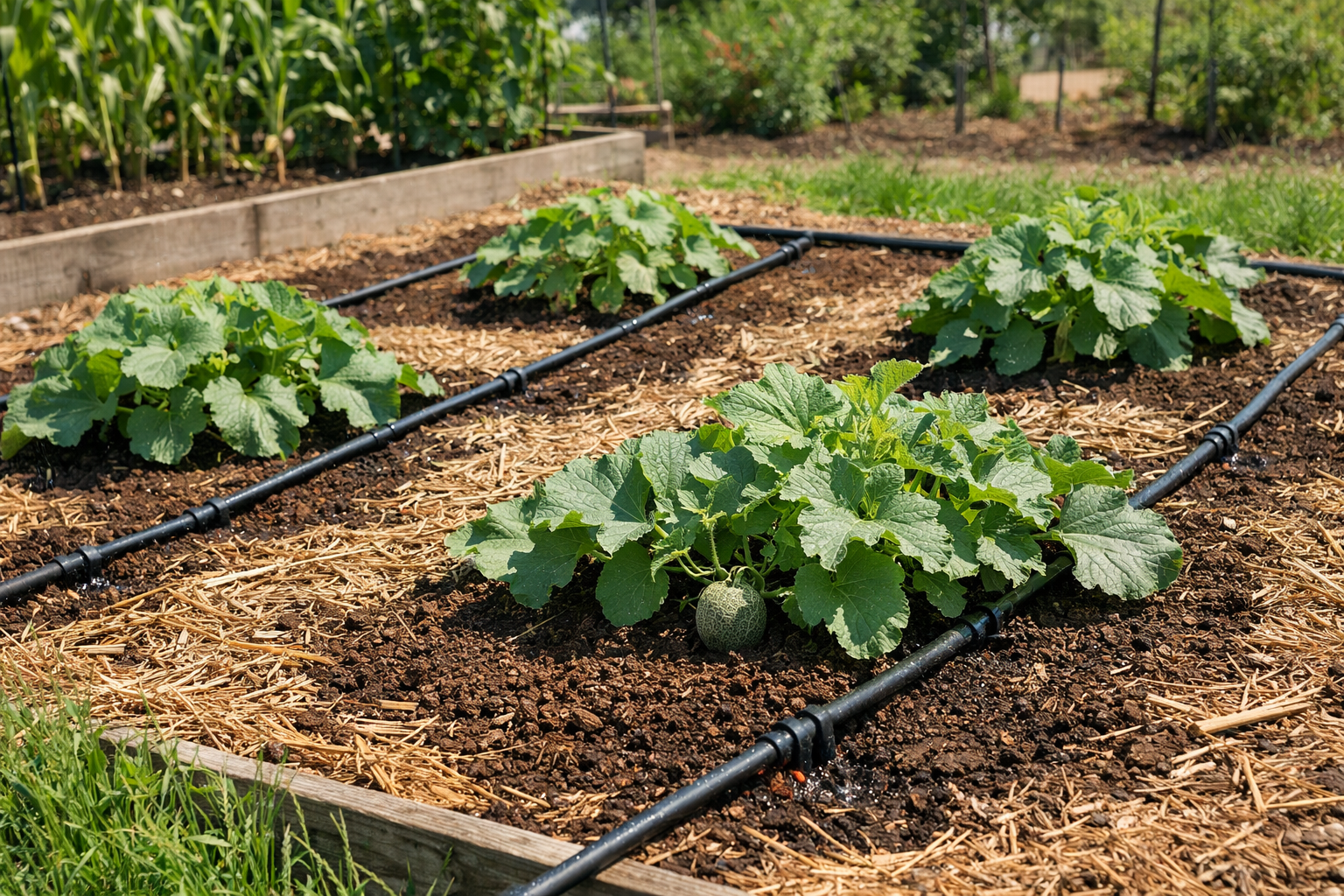
Watering is not about pampering. It’s about consistency. Big swings between dry soil and a soaking flood lead to stress, uneven growth, and poor fruit quality. In raised beds, a simple low-and-slow setup is usually the cleanest fix. This is where drip or soaker-style irrigation for raised beds earns its keep.
And give the plant the sunniest patch you have. Six hours is a bare floor. More is better. Cantaloupes are not lettuce. They don’t do “good enough” shade very gracefully.
Note: If a plant is cold, crowded, or drying out between deep soakings, don’t chase the problem with more feed right away. Fix warmth, spacing, and water rhythm first.
Fruit Set Decides Yield More Than Vine Size Does
Here’s where gardeners get fooled. A plant can have loads of blooms and still give you very little. Flowers are not fruit. Fruit set is fruit.
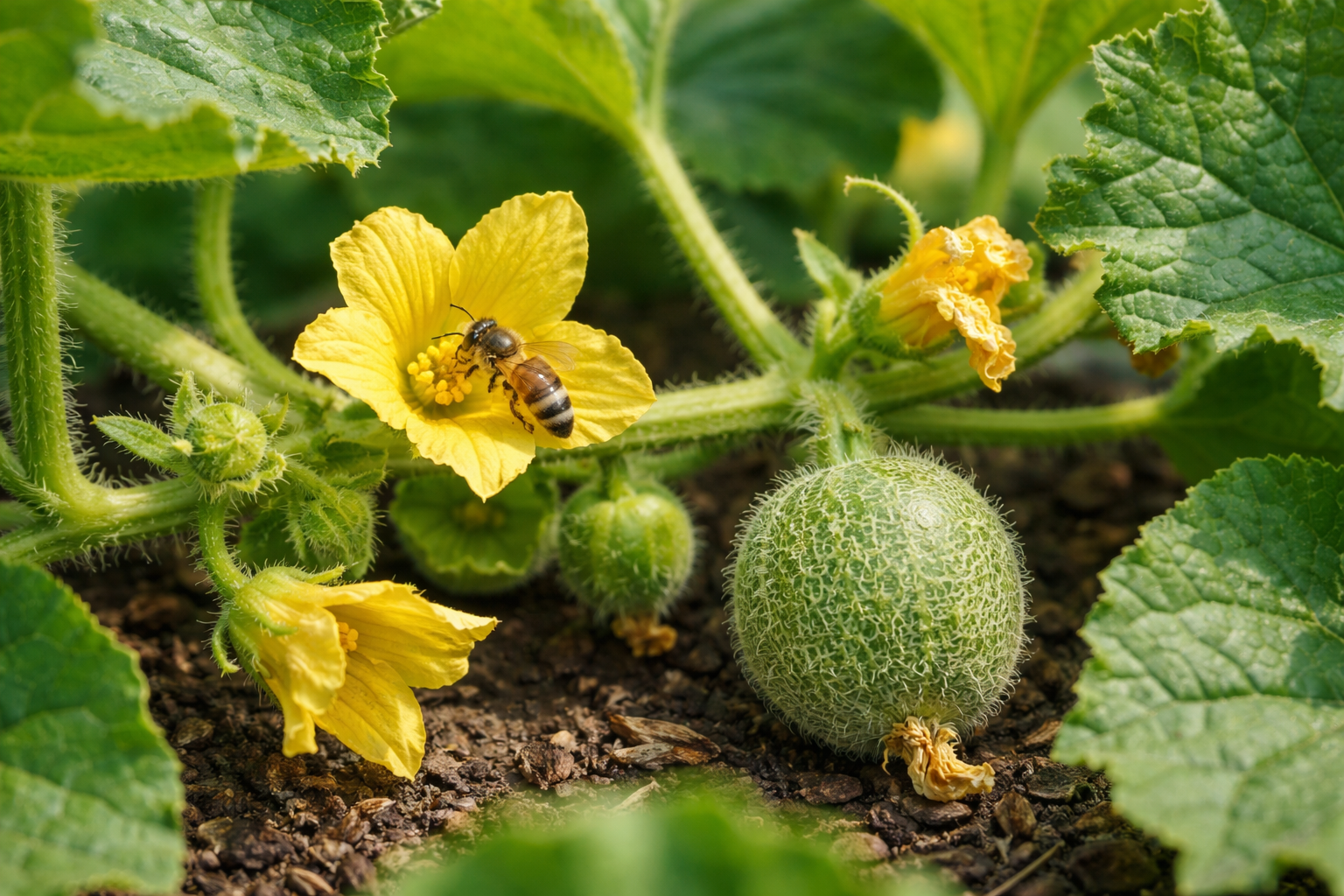
University of Maryland Extension explains that melon flowers are open for just one day and that poor pollination can lead to drops or deformed fruit. That one-day window is why weather and pollinator activity matter so much. A cold, rainy patch during bloom can quietly cut your harvest without leaving a dramatic calling card.
The first flowers you see are often male. They show up early and drop. That’s normal. Then the fruit-bearing flowers arrive. If bees are scarce or the weather is lousy, those flowers may never get properly pollinated. The result is familiar: tiny fruit that yellows, odd-shaped melons, or a plant that looks busy but never really delivers.
If you suspect weak pollination, check flowers early in the day. That’s when bee activity and flower readiness usually line up best. In small gardens or rainy spells, hand pollination can help. It’s fiddly, yes, but it can rescue a fruit set that would otherwise fizzle out.
Small diagnostic test: Lots of blooms plus no swelling baby fruit usually points to pollination first. Not fertilizer. Not pruning. Pollination.
This is why a giant vine doesn’t impress me much on its own. I’d rather see a balanced plant with active pollinators and a sane fruit load.
Bigger Melons or More Melons? Choose the Tradeoff on Purpose
A cantaloupe plant can set more fruit than it should finish. Gardeners often treat that as a blessing. Sometimes it’s really a warning.
When a plant is carrying too many fruits at once, size and sweetness often slip. Ripening slows too. If the season is long and the plant is strong, you can let it carry more. If the season is tight, or the plant is in a container, or the fruits are stacking up late, thinning starts to make sense.
The most practical target for many gardeners is 3 to 4 fruits on a healthy in-ground plant. That’s not a law. It’s a useful cap when you want better odds of full ripening and decent size.
Be careful with pruning advice, though. There’s a myth that cutting back lots of vine growth will force sweetness into the fruit. It sounds tidy. Plants don’t work like that. Leaves are the sugar factory. If you strip too much leaf area, you’ve cut the plant’s engine while asking it to ripen melons. Nice idea. Bad trade.
So if you need to intervene, thin fruit first and leave most of the healthy foliage alone. I learned this the annoying way with a melon bed that looked cleaner after a hard trim and tasted flatter a few weeks later. The plant didn’t need a haircut. It needed fewer mouths to feed.
- If the season is short, thin harder.
- If the plant is in a large container, thin harder.
- If late blossoms appear and frost is not far off, remove the late blossoms.
- If the plant is vigorous and summer is long, you can let it carry more.
A good late-season rule is simple: if a new blossom has no real shot at finishing before cool weather, don’t let the plant waste time on it.
Short version: Thin fruit when time or root room is tight. Don’t scalp the plant and hope for sweeter melons.
Containers, Trellises, and Small Gardens Need a Different Yield Goal
You can grow cantaloupe in a small space. You just have to stop expecting open-ground numbers from a plant living in a bucket-sized apartment.
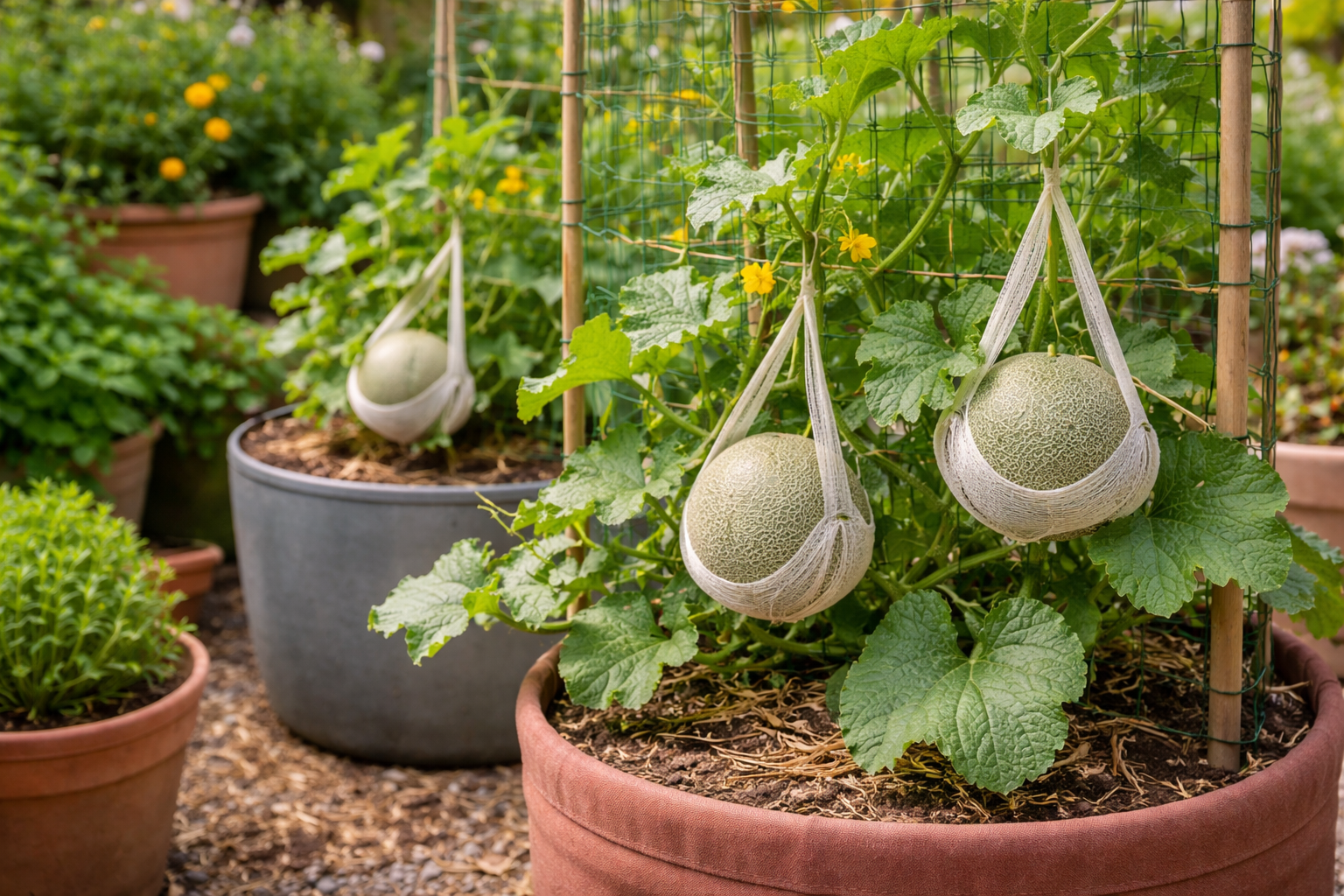
In containers, root room is the first constraint. Water swings are the second. Heat can be the third, especially when the pot bakes from the sides and dries faster than the plant can tolerate. That’s why container cantaloupe often lands at 1 to 2 good fruits. Sometimes more, sure, but 1 to 2 is the number that keeps your expectations sane.
Pick compact or earlier varieties when you can. And go bigger with the container than you think you need. A plant that runs dry every hot afternoon is spending energy on survival, not fruit finish.
Trellising helps with space and airflow. It can also make fruit easier to see before they over-ripen. But once melons start gaining weight, they need support. A simple cloth sling or stretchy support tie does the job. If the plant is already going vertical, the same general support logic used for other cucurbits applies. This guide on supporting cucumber plants for stronger vines and easier harvests covers the kind of framework that works well.
One more thing. Small-space growing often pushes gardeners toward over-helping. Too much feed. Too much pruning. Too many adjustments. In pots, the big wins are boring: enough volume, steady water, and a modest fruit load.
Why a Plant With Flowers Still Ends Up With Tiny, Bland, or Broken Fruit
This is the section that saves the most headaches, because weak harvests usually leave clues.
| Symptom | Likely cause | What to do next |
|---|---|---|
| Lots of flowers, little fruit | Poor pollination | Watch bloom timing, protect pollinators, hand pollinate if needed |
| Tiny or misshapen melons | Weak pollination or moisture swings | Stabilize watering and check flower activity |
| Big vines, bland fruit | Too much nitrogen or too many fruits | Cut back on feed and thin the fruit load |
| Fruit splitting near ripeness | Heavy watering or rain after dry conditions | Keep moisture steadier and ease off late |
| Sudden vine collapse | Pest or disease pressure, sometimes cucumber beetles and wilt | Inspect stems and beetle activity fast |
Bland fruit is often blamed on the variety alone. Sometimes that’s fair. Often it isn’t. A plant that is overfed with nitrogen, overloaded with fruit, or watered hard right before ripening can lose concentration. The fruit gets bigger in all the wrong ways.
Water is the sneaky one. You want steady moisture while fruits are forming and sizing up. Once they start to ripen, backing off a little can help flavor and reduce splitting. Not drought. Just less excess. Gardeners tend to swing between neglect and overcorrection, and cantaloupe really hates the roller coaster.
If the fruit is small, check three things in this order. Pollination. Fruit load. Then water rhythm. Not every problem needs a new fertilizer bag.
Worth checking: A lush green vine with very few melons often means the plant got too much nitrogen early or got poor pollination at the wrong moment. Those two causes are easy to mix up.
Pick at the Right Moment or the Yield Does Not Count
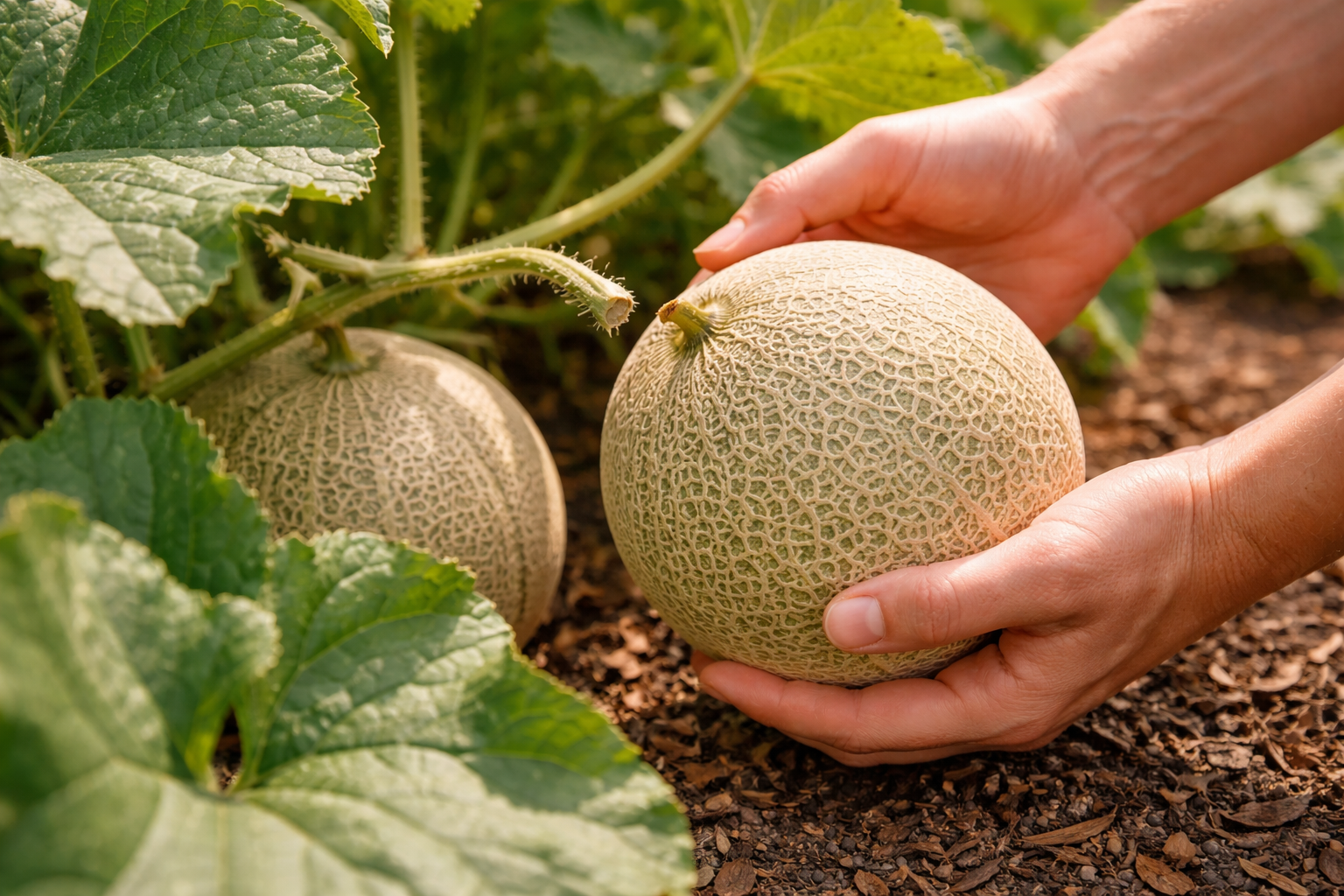
A plant that sets four fruits but only gives you two properly ripe melons is, for practical purposes, a two-melon plant. Harvest timing belongs in the yield conversation.
University of Maryland’s melon guidance points to “full slip” as the right harvest stage for muskmelon. That means the fruit separates cleanly from the vine with gentle pressure. No hard tug. No twisting contest. If you have to wrench it off, it probably isn’t ready.
You can also watch for the softer signs. The rind shifts from greener tones toward a warm beige or tan under the netting. The fruit smells more fragrant. The stem scar looks cleaner. In many gardens, ripe cantaloupes arrive roughly 35 to 45 days after flowering, though weather and variety can nudge that a bit.
Picking too early is a classic own goal. The melon may soften on the counter, but it won’t build the same flavor it would have made on the vine. If you’re chasing sweetness, patience is part of the job.
And wash the rind before cutting. Melons grow low, they collect grit, and the knife can drag whatever is on the surface straight into the flesh. It’s not glamorous advice, but it’s the kind that matters.
Good harvest test: Look for full slip first. Use aroma and rind color as backup, not the other way round.
Frequently asked questions
Do you need two cantaloupe plants to get fruit?
No. One healthy plant can set fruit on its own because melon plants carry both male and fruit-bearing flowers. The real issue is pollination activity, not plant count. If bees are scarce or bloom weather is poor, even several plants can still set badly.
Can one plant keep producing after you pick the first melon?
Yes, if the plant is still healthy and there are younger fruits developing. Cantaloupe harvest often comes in waves rather than all at once. That said, late-set fruit still needs enough warm days to finish, so the calendar matters as much as plant vigor.
How many plants should you grow per person?
For fresh eating, 2 to 3 plants per person is a reasonable starting point in a home garden. That leaves room for a weak plant, a rough pollination stretch, or a couple of melons that never quite make it to peak quality.

Michael Rowan is the founder and lead writer at The Garden Playbook. He has spent 10+ years growing plants across a range of settings — from indoor houseplants and container gardens to raised beds and in-ground plots — adapting methods to different light levels, seasons, and growing conditions.
Michael focuses on practical, experience-based guidance grounded in fundamentals: soil health, watering strategy, plant nutrition, pruning and propagation, and integrated pest management (IPM). His work aims to help readers diagnose common problems (such as yellowing leaves, stunted growth, or pest pressure) and apply straightforward solutions that are realistic for home gardeners.
At The Garden Playbook, Michael develops tutorials and plant guides using a consistent process: documenting real outcomes where possible, explaining the “why” behind each step, and verifying higher-risk topics (such as plant toxicity or pest treatment options) against reputable horticultural references.