
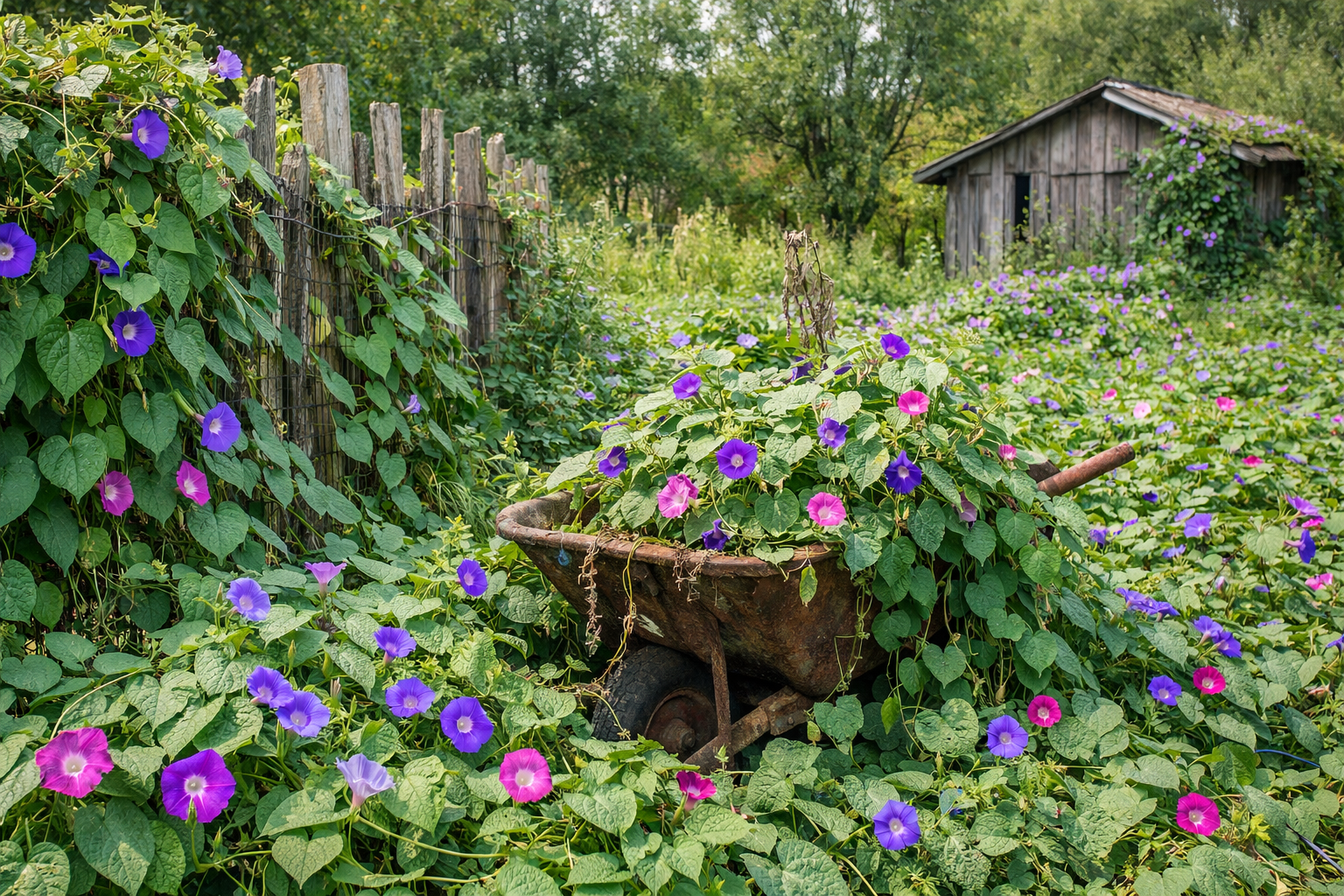
Morning glory is one of those plants that gets forgiven right up until spring cleanup. One summer it races up a fence and looks gorgeous. Then the seedlings start popping up in the path, the herb bed, and the base of the roses, and the mood changes fast.
So, are morning glories invasive? Sometimes. The United States Department of Agriculture defines an invasive species as a non-native species that causes or is likely to cause harm. That matters here because many garden morning glories are better described as aggressive self-seeders, some species are true regional problems, and a lot of gardeners are actually dealing with bindweed instead of a simple annual vine.
If you want the short version, here it is: a seed-packet morning glory in a pot is one thing. A warm-climate planting that drops seed every year is another. And bindweed coming back from deep roots is a whole different headache.
What you’ll learn
- When morning glory is just vigorous and when it crosses into real trouble
- How to tell morning glory from bindweed before you choose a control plan
- Which garden setups make self-seeding much worse
- How to grow it with less regret if you still want the flowers
- When it makes more sense to skip it and plant something else
At a glance
| If this sounds like your plant | What it usually means | Best next move |
|---|---|---|
| Fast summer vine, lots of seedlings next spring | Often an annual morning glory that reseeds hard | Deadhead, remove pods, pull seedlings early |
| Returns from the same roots after pulling | Often bindweed, not a simple annual | Switch to long-term control, not one-off cleanup |
| Growing in a pot on a trellis | Lower spread risk if pods are removed | Keep it contained and check for dropped seed |
| Warm climate, open soil, low-maintenance bed | Higher odds of a repeat problem | Skip it or plant only with a strict cleanup routine |
Are Morning Glories Invasive? The Short Answer Depends on Which Plant You Mean
Words matter here. “Invasive” is not just shorthand for “wow, that grew fast.” By the University of Florida’s IFAS assessment, Ipomoea purpurea is rated “High Invasion Risk” in Florida and is not recommended there. That is a very different statement from saying a common seed-packet vine might self-seed in a backyard bed.
For most home gardeners, the honest answer sits in three buckets. Some morning glories are manageable annuals that bloom hard, drop seed, and show up again if you let pods mature. Some are aggressive reseeders that stop being cute when they move into places you did not pick. Some species, in some regions, are local invasive risks and should be treated like a bad bet from the start.
I think this is where a lot of advice goes fuzzy. A broad “yes” makes people avoid perfectly manageable plants in cooler gardens. A broad “no” gets people burned in warm places or near natural areas. If a state list, extension office, or local nursery warning flags your species, that is the answer to trust.
Quick rule: If the vine is locally listed, skip the debate and skip the plant. If it is not listed, treat it as a maintenance question: how much self-seeding are you willing to babysit?
Morning Glory vs Bindweed: The Identification Split That Changes Everything
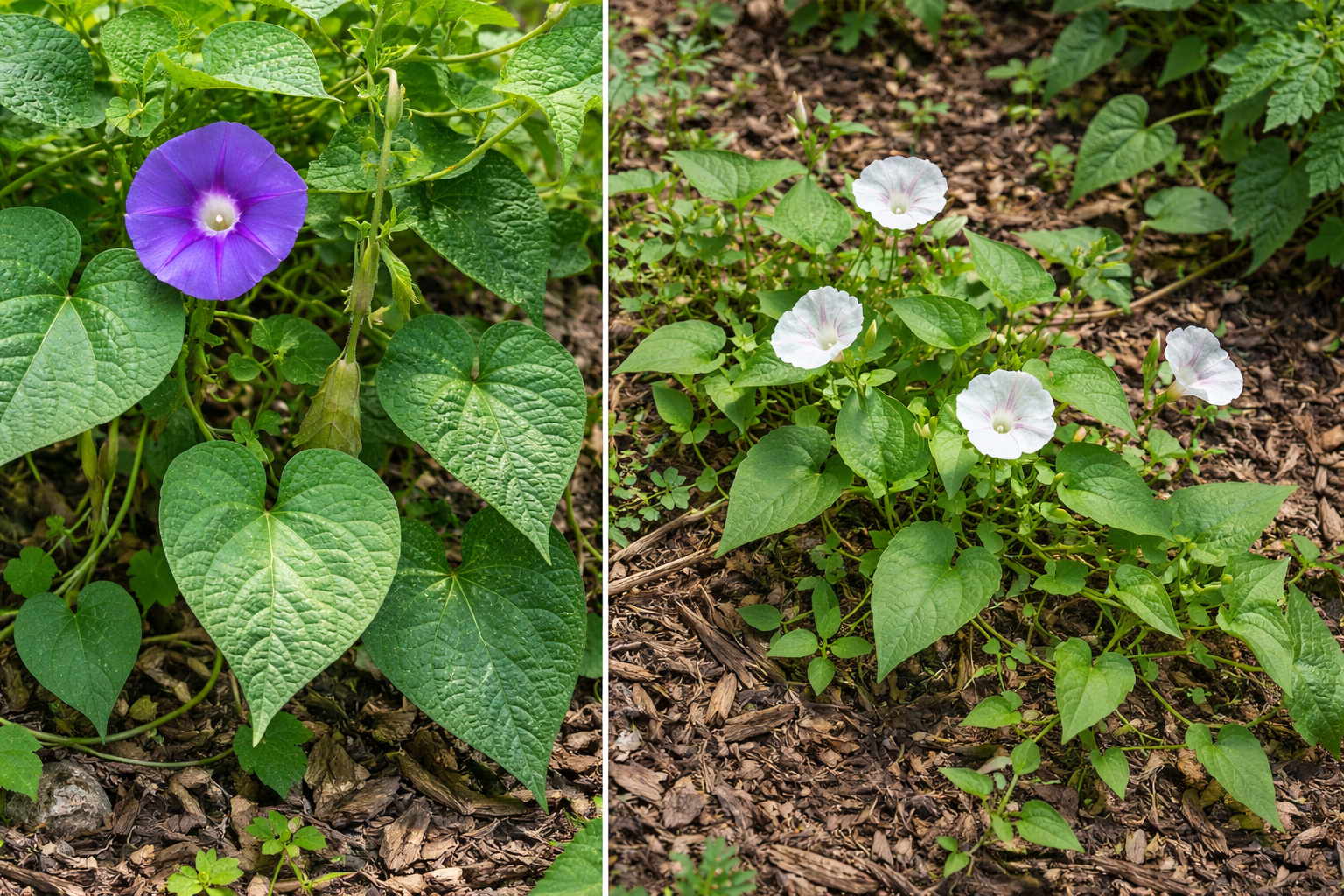
This is the part that saves the most time. In a Missouri Integrated Pest Management comparison, annual morning glory is described with larger heart-shaped leaves while bindweed is a perennial with smaller, lanceolate leaves. If you mix those two up, you end up using the wrong plan and wondering why nothing worked.
Annual morning glory is the plant that tends to act like a flashy summer guest. It grows fast, flowers well, then causes next year’s trouble through seed. Bindweed is the one that keeps coming back from underground parts and turns “I’ll pull it later” into an ongoing relationship.
| Clue | Morning glory | Bindweed |
|---|---|---|
| Life cycle | Often annual in colder areas | Perennial |
| Leaf look | Larger, more heart-shaped leaves | Smaller, narrower, arrow-like leaves |
| Main trouble | Seed drop and volunteer seedlings | Roots, regrowth, and a long seed bank |
| What failed pulling looks like | More seedlings later | Same plant returns from the same spot |
If you pull a vine and it vanishes for the season, that leans morning glory. If you pull it and it behaves like you only annoyed it, that leans bindweed. It sounds almost too simple, but in real gardens that split tells you a lot.
Remember: Same roots, same fight. Reappearing from the same underground network points to a perennial weed problem, not just a reseeding annual.
When Morning Glory Is Manageable and When It Turns Into a Garden Problem
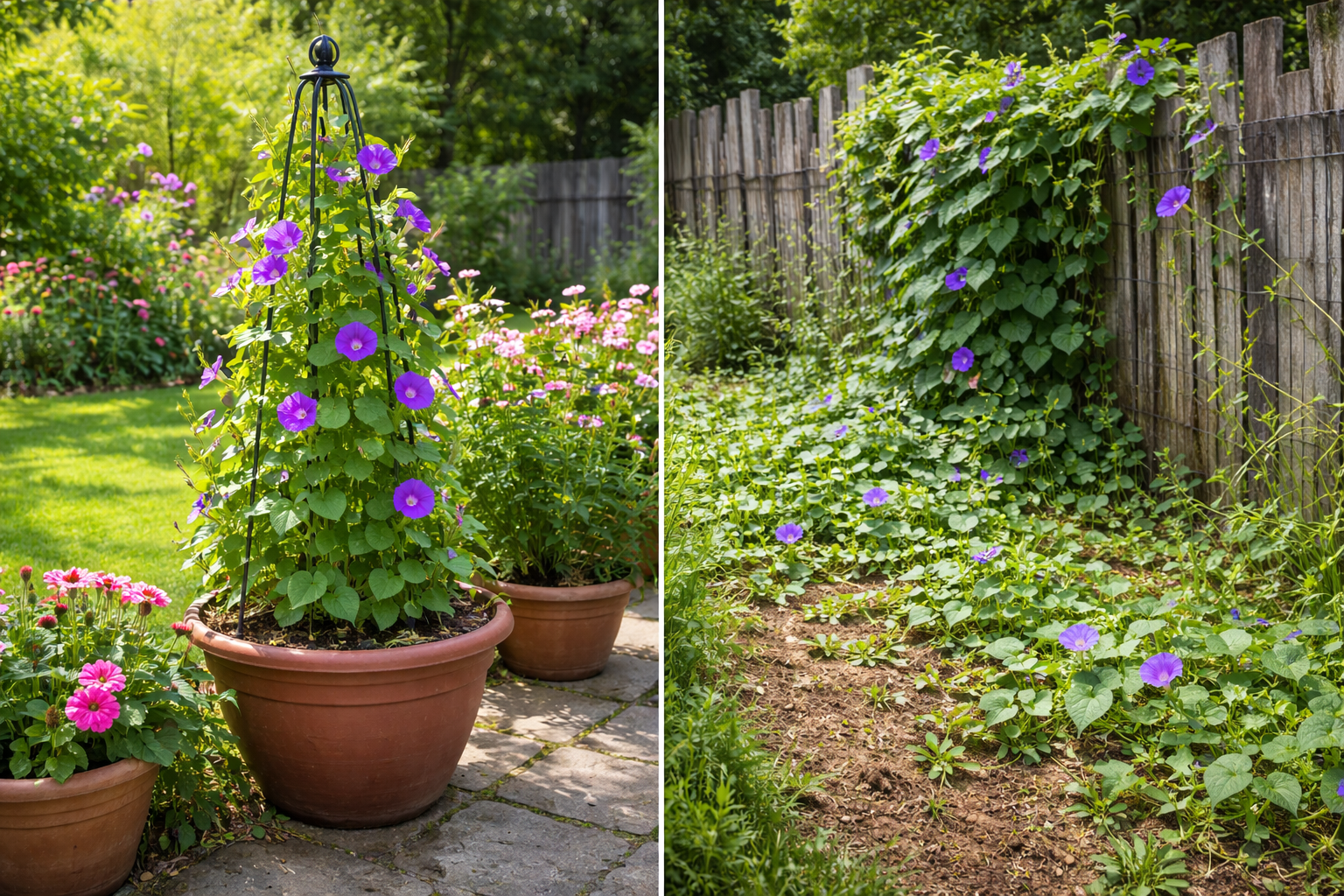
The plant is only half the answer. The other half is where it grows and how much cleanup you will actually do. I have seen seed-packet morning glory behave perfectly well on a balcony trellis, then turn into a spring nuisance on a warm fence line in open soil.
Risk jumps when four things line up: warm climate, open ground, mature seedpods, and a gardener who does not want to patrol seedlings. If one or two of those are missing, the plant is often workable. If all four are present, it gets annoying fast.
Risk by setup
- Lower risk: container, dedicated support, easy visibility, regular deadheading
- Middle risk: ornamental bed with mulch and decent spring cleanup
- Higher risk: open soil near shrubs, fence lines, natural edges, or neglected corners
- Highest regret setup: warm region, loose self-seeding vine, and no interest in follow-up work
If you hate volunteer seedlings on principle, morning glory is often the wrong kind of pretty. If you do not mind ten minutes of cleanup here and there, and the plant is not locally flagged, it can still be a fair trade.
The phrase “aggressive grower” gets tossed around a lot, and sometimes it hides the real question. The better question is this: does this vine stay where you put it, or does it start making decisions for you next year?
How to Grow Morning Glory Without Regretting It Next Year
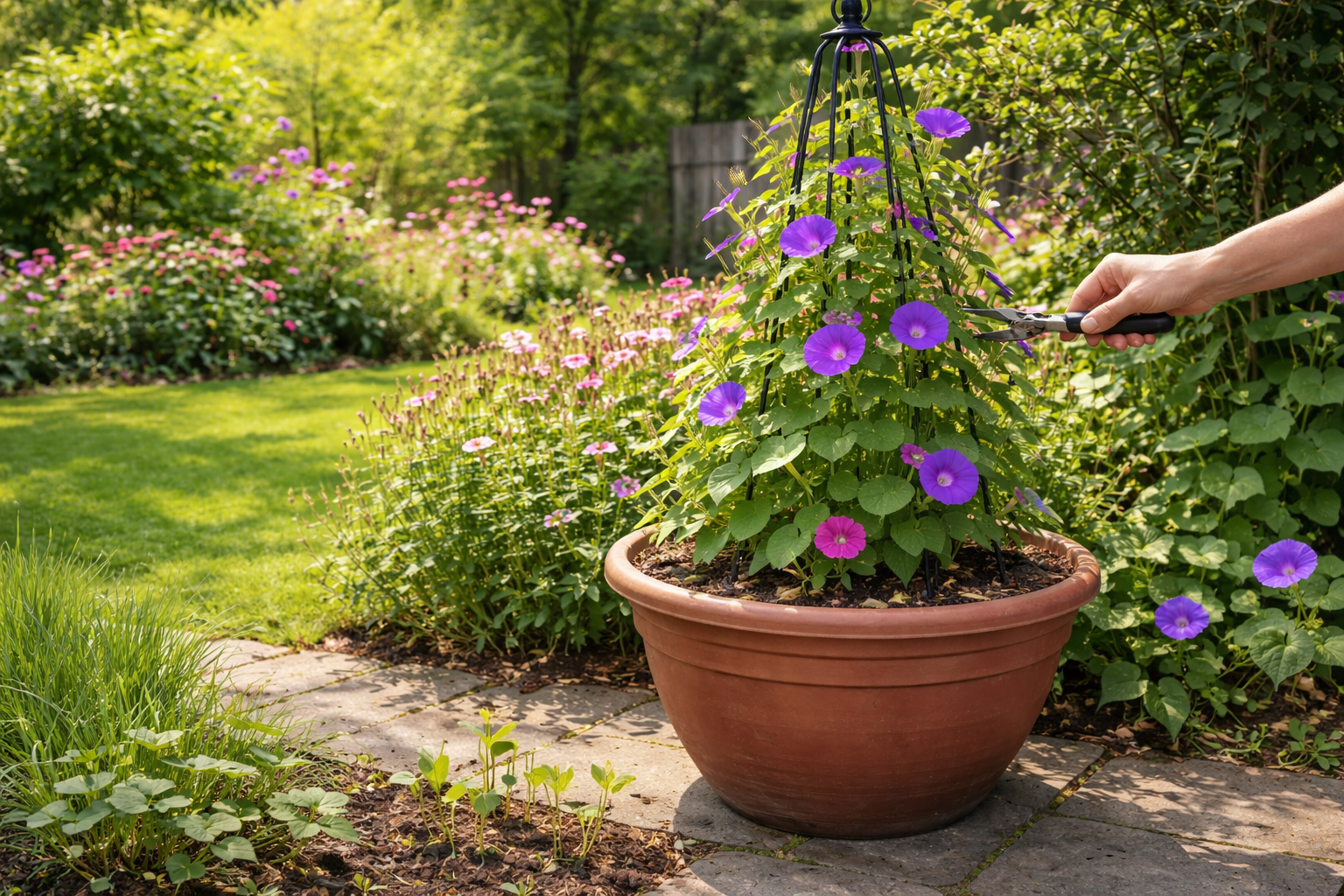
If you still want the flowers, containment is the whole game. The safest setup is a pot, a clear support, and a spot where any dropped seedlings are easy to notice. Morning glory sprawled through a shrub border looks dreamy in July and maddening in April.
Give it a structure that is easy to inspect. An obelisk, tripod, or fence panel works better than letting it wander through mixed planting. You want a vine you can see, not a vine that disappears into other plants and drops seed in secret.
Then stay ahead of seedpods. Deadheading sounds fussy until you have pulled fifty volunteers from a path edge. After that, snipping spent flowers feels like a bargain.
- Grow it where escaped seedlings will be obvious
- Cut off fading flowers and young pods before they ripen
- Keep it off shrubs and groundcovers where cleanup gets messy
- Use containers if self-seeding already makes you twitchy
Note: Support controls shape. It does not control spread. A trellis keeps vines tidy, but it does nothing about dropped seed unless you remove pods.
How to Stop Morning Glory From Spreading Before It Becomes a Bigger Job
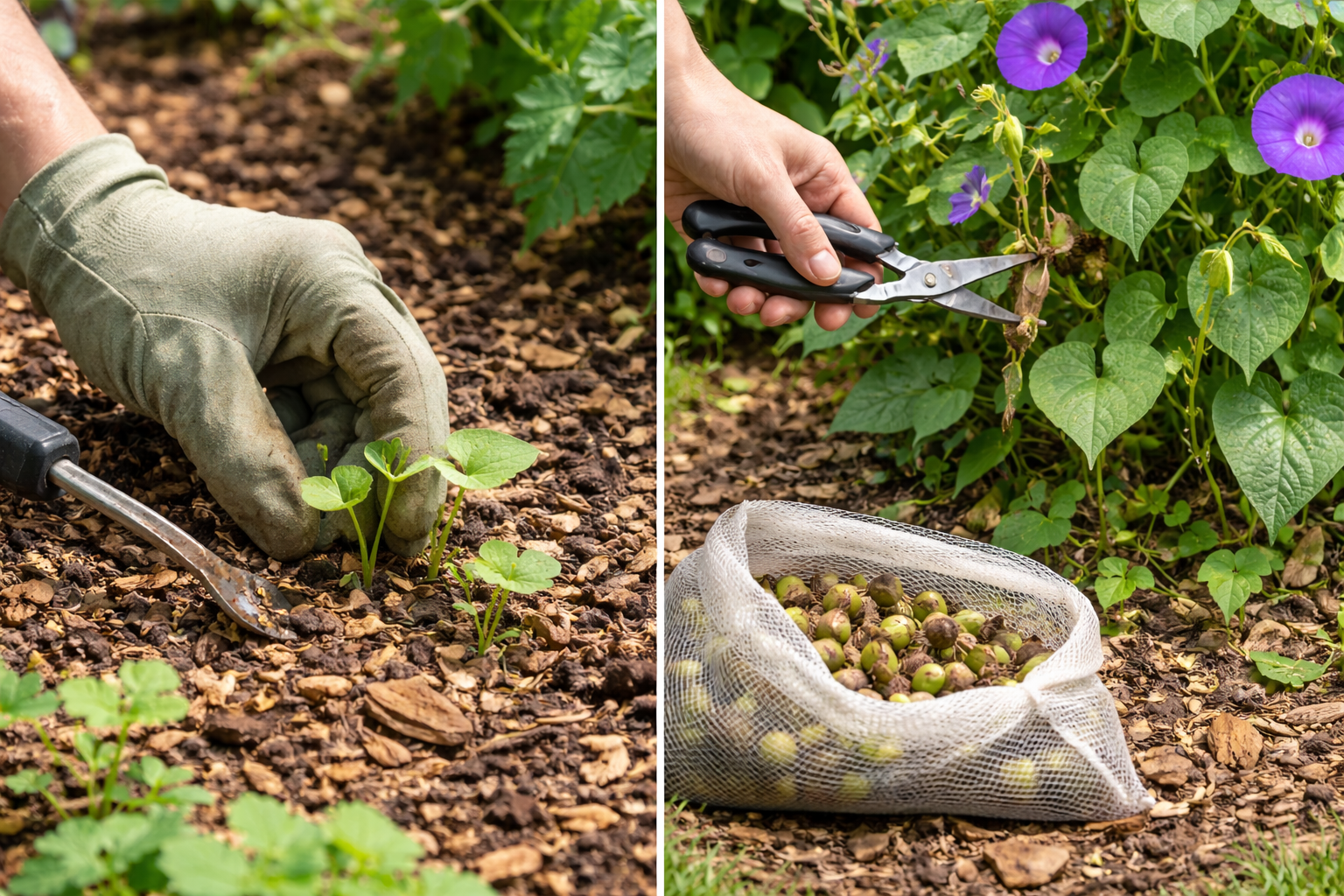
Early action works better than dramatic action. A young seedling with two true leaves is easy. A vine that has twined through basil, beans, and a small shrub is not. That is why spring patrol matters more than heroic midsummer yanking.
For annual morning glory, the main goal is to stop seed set. Pull seedlings while the soil is loose and remove pods before they dry down. If you miss a season, expect a flush next year and deal with it early, not once the vines have grabbed onto everything around them.
Mulch can help by making seedlings easier to spot, but it is not magic. If there is already seed in the soil, mulch becomes part of the control plan, not the whole plan.
A simple sequence that works
- Pull or slice seedlings when they are small
- Untwine vines before they set seed
- Bag pods if they are close to ripening
- Check again a week later while the patch is still manageable
There is a little rule I keep coming back to with annual morning glory: no pods, no sequel. It is not fancy advice. It is the advice that keeps next spring calmer.
How to Remove Morning Glory or Bindweed Without Making the Problem Worse
This is where plant ID pays you back. According to King County’s bindweed guidance, field bindweed can regrow from root or stem fragments and its seeds can stay viable in soil for more than 50 years. That is why one satisfying afternoon of pulling often changes nothing.
For annual morning glory, removal is much simpler. Pull seedlings early. Cut mature vines before pods ripen. Keep the area under watch the next spring. That is a clean, finite job in many gardens.
For bindweed, think in rounds, not in one knockout punch. Repeated cutting or pulling weakens regrowth over time. Letting it wrap around neighboring plants and photosynthesize freely just feeds the underground system you are trying to exhaust.
If vines are only in hardscape cracks, hot water can help on tiny seedlings. It is a narrow-use trick, though. The guide on does boiling water kill weeds fits that exact situation better than a full bed invasion.
Do not make this harder: ripping mature vines and leaving ripe pods in place is the gardening version of cleaning the kitchen counter and leaving the sink full. It looks better for a minute, then the real problem is still there.
What to Know About Morning Glory Seeds, Pets, and Kids
Pretty does not always mean harmless. The ASPCA lists morning glory as toxic to dogs, cats, and horses, and notes vomiting as a clinical sign, with large amounts of seeds carrying extra risk. In practical terms, the seedpods matter more than the flower show.
If pets chew plants or children are at the stage where everything goes in the mouth, that nudges morning glory toward the “skip it” side of the ledger. At minimum, do not leave seed packets around and do not let pods dry out where they can be handled easily.
This is not a reason to panic over every bloom. It is just one more piece of the decision. Some gardens have enough moving parts already.
Better Alternatives When You Want the Look Without the Cleanup
Sometimes the best answer is not tighter control. It is choosing a vine that asks less from you. If what you want is fast color and a relaxed summer feel, nasturtiums can scratch that itch with a lot less long-term baggage, and when to start nasturtium seeds indoors is worth a look if spring timing is the main question.
Black-eyed Susan vine is another common swap when the goal is cheerful color on a support without inviting a future seedling parade. If the garden is near a natural area, a region-suited native twining vine from a good local nursery is the smarter lane.
The tradeoff is simple. Morning glory gives you drama fast. Alternatives often give you less cleanup and fewer surprises. That is a trade I would take in a lot of small gardens, especially busy ones.
A Simple Plant-or-Skip Checklist for Morning Glory
Use this before planting and again before deciding whether to keep an existing vine.
- Is the species locally flagged, discouraged, or listed?
- Is the planting spot open soil rather than a contained pot?
- Will mature seedpods be easy to remove?
- Do seedlings already show up where they were not planted?
- Does the vine return from the same roots after pulling?
- Are pets or children likely to handle seedpods?
- Are you actually willing to do follow-up cleanup next spring?
If most answers lean low-risk, plant it. If the answers land in the middle, plant it, but contain it. If local guidance flags it, seedlings already annoy you, or bindweed is in the picture, skip it and move on.
That last choice is not boring. It is just honest. A good plant is not only about flowers. It is also about whether the job that comes after those flowers still feels worth it.
FAQ
Are morning glories invasive in containers?
Usually the risk is lower in containers because the roots stay contained and stray seedlings are easier to spot. The catch is seed drop. If pods mature and spill into nearby beds, a pot will not save you from volunteer seedlings.
Can pulled morning glory vines go into compost?
Plain green vines without flowers or pods are much less risky than mature seedheads. If pods are present, bag them or dispose of them separately. Tossing ripe seed into a casual compost pile is how a weed problem gets a second address.
Are morning glories illegal or restricted anywhere?
Some species are discouraged or treated as invasive in specific places. That is why local lists matter more than blanket internet advice. A plant that is merely annoying in one garden can be a hard no in another region.

Michael Rowan is the founder and lead writer at The Garden Playbook. He has spent 10+ years growing plants across a range of settings — from indoor houseplants and container gardens to raised beds and in-ground plots — adapting methods to different light levels, seasons, and growing conditions.
Michael focuses on practical, experience-based guidance grounded in fundamentals: soil health, watering strategy, plant nutrition, pruning and propagation, and integrated pest management (IPM). His work aims to help readers diagnose common problems (such as yellowing leaves, stunted growth, or pest pressure) and apply straightforward solutions that are realistic for home gardeners.
At The Garden Playbook, Michael develops tutorials and plant guides using a consistent process: documenting real outcomes where possible, explaining the “why” behind each step, and verifying higher-risk topics (such as plant toxicity or pest treatment options) against reputable horticultural references.