
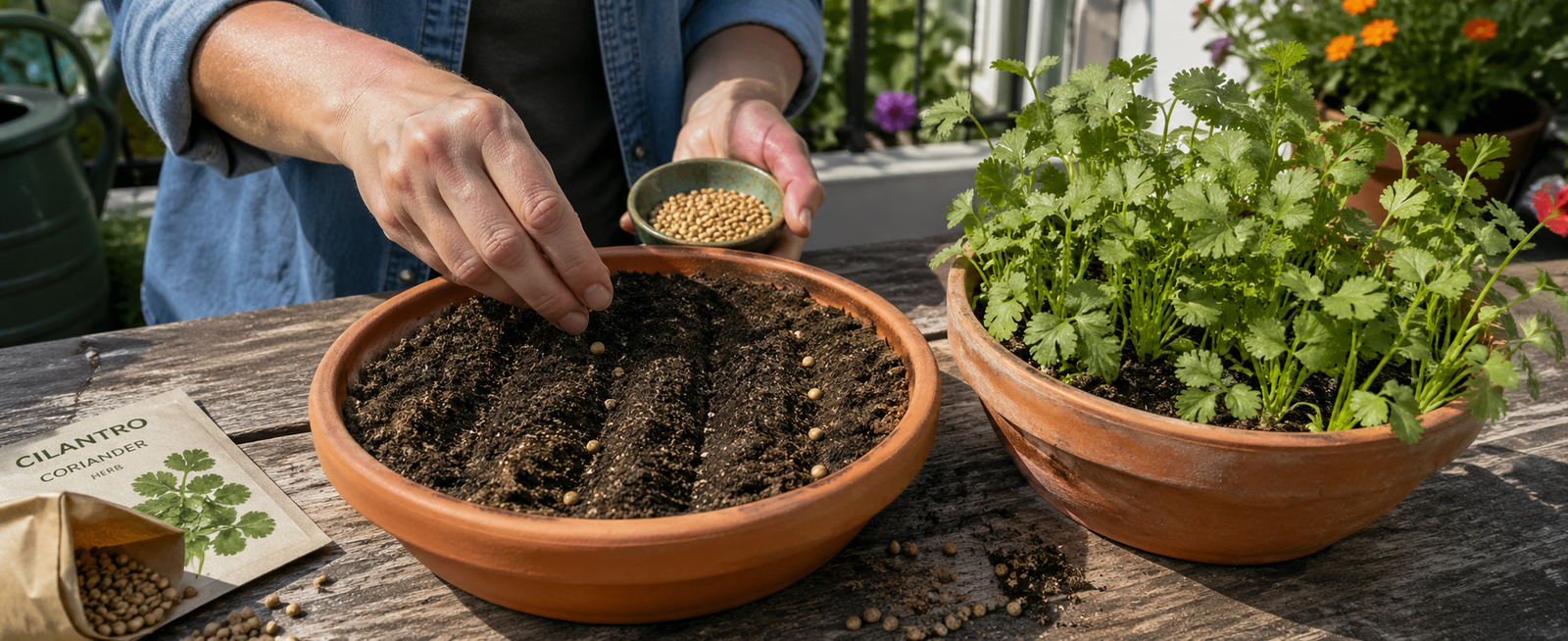
The first tiny cilantro pot always looks promising. A few green loops break the surface, you start imagining salsa, curry, tacos, maybe a smug little kitchen windowsill harvest. Then the seedlings stretch like spaghetti, the soil dries while you are at work, and the plant bolts before it has earned its rent.
Here is the plain answer: how to plant cilantro seeds in pots comes down to a draining container, loose potting mix, shallow sowing, steady moisture, and cool bright light. Plant the seeds about 1/4 to 1/2 inch deep, keep the mix damp until germination, then grow the pot somewhere bright but not baking hot.
The trick is that cilantro is not basil. Basil settles in for the season. Cilantro acts more like a short relay race: sow, grow, cut, resow. Once that clicks, the whole crop makes a lot more sense.
In this guide, you will learn:
- the right seed depth, spacing, and pot size for cilantro in containers
- how to water cilantro seeds without washing them away or drowning them
- why cilantro bolts so fast in warm weather
- how many seeds to plant in an 8-inch, 10-inch, or 12-inch pot
- when to harvest leaves and when to start over
- how to diagnose weak, yellow, leggy, or non-sprouting cilantro seedlings
Cilantro Pot Success Map
| Decision | Best default | Why it matters |
|---|---|---|
| Seed depth | 1/4 to 1/2 inch | Deep enough to stay moist, shallow enough to emerge |
| Pot size | 8 inches wide minimum, wider is easier | Small pots dry fast and give a small harvest |
| Potting mix | Loose container mix | Roots need air as much as water |
| Light | Bright and cool | Heat pushes cilantro into flower mode |
| Harvest plan | Sow every 2 to 4 weeks | One pot rarely stays leafy all season |
How to Plant Cilantro Seeds in Pots, Step by Step
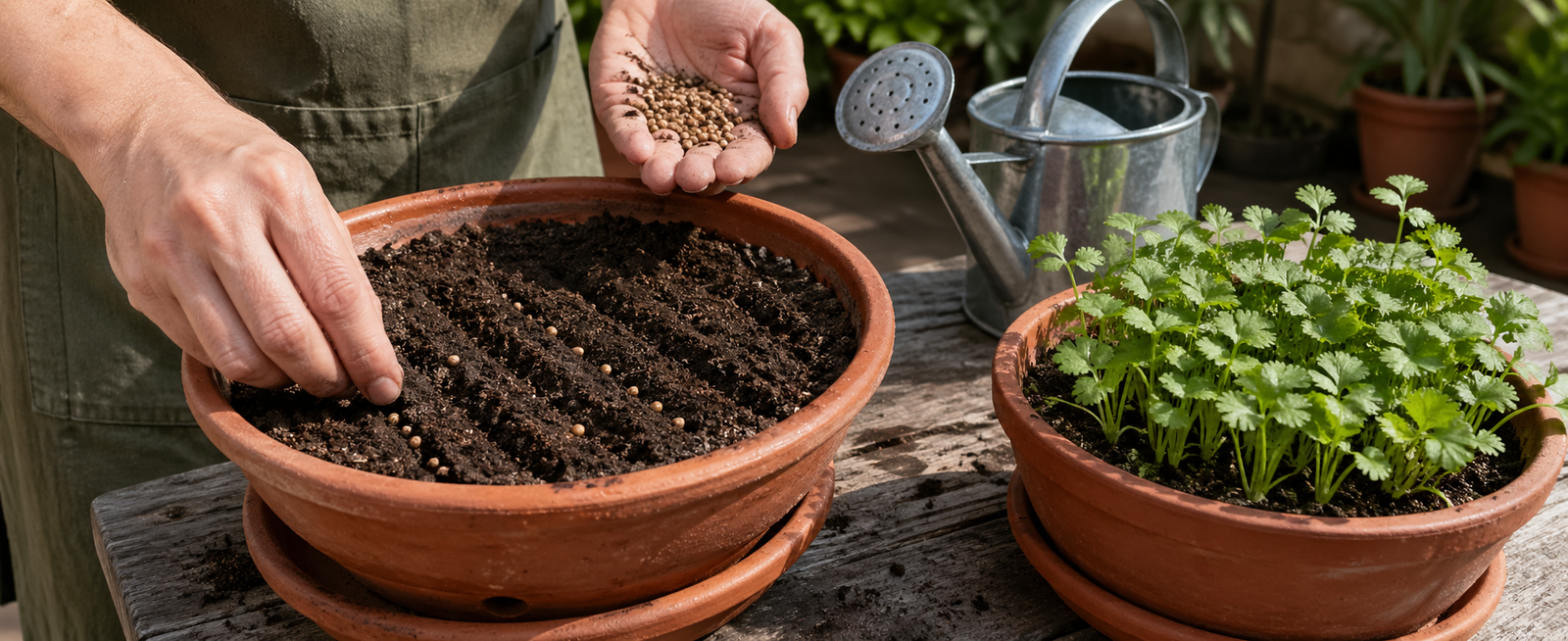
Step 1. Fill a draining pot so the roots can breathe. Use a pot with drainage holes and a loose potting mix. Cilantro hates the swampy bottom of a no-drainage container. I have seen good seed go bad in a pretty ceramic cachepot because the actual growing pot sat in water for two days. Pretty pot, sad roots.
Step 2. Moisten the mix so the seeds stay where you put them. Dry potting mix can repel water at first. If you sow into it and then water hard, the seeds float into corners like tiny boats. Wet the mix first until it feels like a wrung-out sponge, then level it gently.
Step 3. Sow shallow so the seedlings can push through. Cilantro seeds, also sold as coriander seeds, should be covered lightly. Aim for 1/4 inch in heavier mixes and closer to 1/2 inch in fluffy mixes that dry faster.
Step 4. Water gently so the surface stays damp. Use a watering can with a soft rose, a mister, or a slow trickle from the edge of the pot. The goal is even moisture, not a miniature mudslide.
Step 5. Wait for germination without poking the pot every morning. Cilantro often sprouts in about 7 to 21 days. Fresh seed in warmish, moist mix tends to move faster. Old seed, cold mix, or dry crusted soil can drag the process out.
Step 6. Move seedlings into bright, cool light. A dim window makes cilantro stretch. A hot patio makes it rush toward flowers. Cool bright conditions give you the leafy stage you came for.
Note: Cilantro is best sown where it will grow. Wisconsin Horticulture says cilantro does not transplant well because of its long taproot, which is why seed trays often cause more trouble than they solve for a small herb pot.
One more odd little detail: the round “seed” in the packet is technically a fruit that can contain more than one seed. So when one ball gives you two sprouts, that is not a mistake. Just thin later if the pot turns into a crowd scene.
The Best Pot Setup for Cilantro Seeds
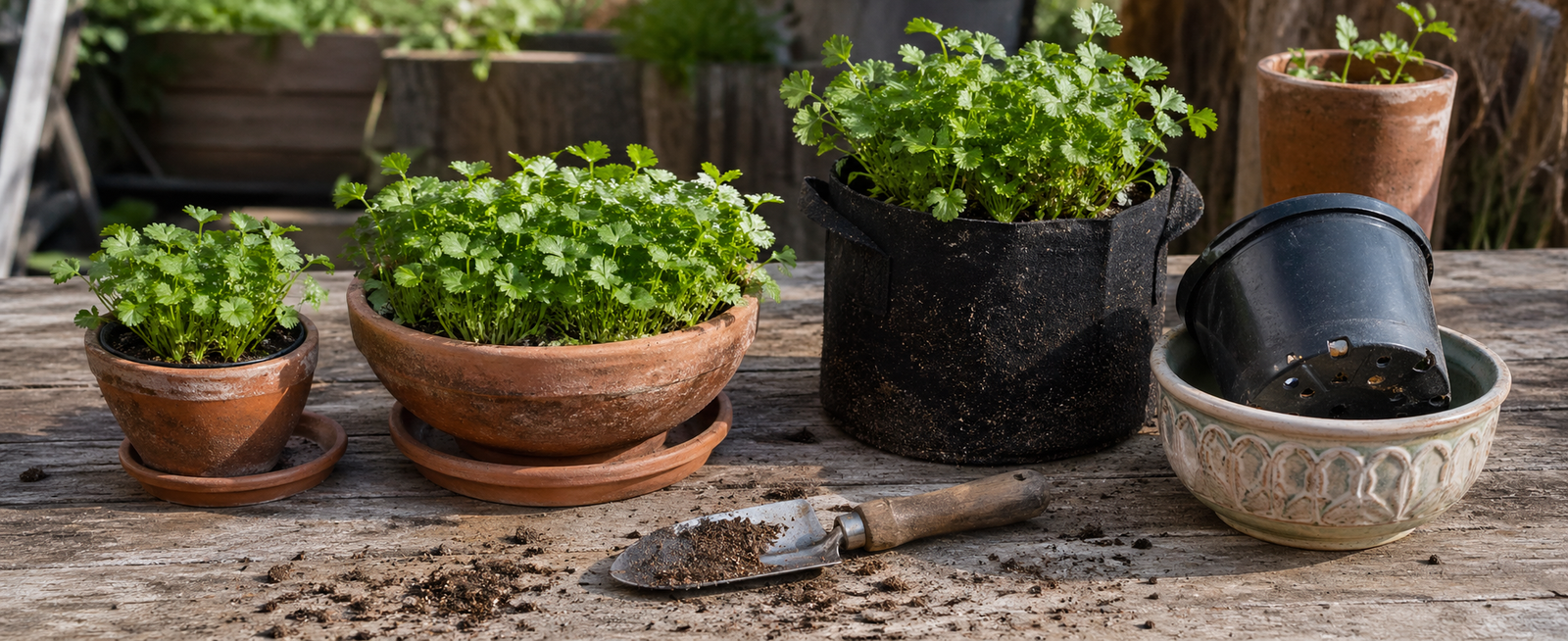
A cilantro plant looks delicate above the soil, but the pot still needs enough depth and width to buffer water swings. Tiny pots are cute until a warm afternoon turns the mix into biscuit crumbs.
For a small windowsill planting, start with a pot at least 8 inches wide and about 6 to 8 inches deep. That can produce a modest handful of leaves. For a fuller cut-and-come-again harvest, a wider 2- to 5-gallon container is easier to manage. University of Maryland Extension lists cilantro among small herbs that fit 2- to 5-gallon pots, which is a good practical range for container gardeners.
| Pot choice | Best use | Watch-out |
|---|---|---|
| 8-inch pot | Small kitchen or windowsill harvest | Dries fast and gives a smaller cut |
| 10- to 12-inch wide pot | Better leaf harvest for most homes | Needs even watering across the surface |
| 2- to 5-gallon container | Succession sowing and patio growing | Can stay too wet if drainage is poor |
| No-drainage decorative pot | Outer cover only | Use a nursery pot inside and empty standing water |
Wide beats narrow for cilantro. A tall, skinny pot gives root depth but not much surface area for seedlings. A bowl-shaped herb planter or squat nursery pot gives you more room to sow a small patch, which is what you want for leaf harvest.
Material changes the watering rhythm too. Terracotta breathes and dries faster. Plastic or resin holds moisture longer. Fabric pots give roots plenty of air but can dry like a towel in sun and wind. None is perfect. Pick the one that matches the place the pot will live.
Common mistake: Putting gravel in the bottom and calling it drainage. A pot needs actual holes. Maryland Extension notes that rocks in the bottom do not improve drainage. They just steal root space.
If reusing a bucket, storage bin, or food container, be picky. Use food-safe plastic and drill drainage holes. Skip anything that once held paint, cleaners, motor oil, or mystery garage liquids. Cilantro is not the crop for questionable archaeology.
Use a Loose Potting Mix That Holds Moisture Without Staying Wet
Cilantro wants the “medium shoes” version of potting mix. Too tight and the roots cannot breathe. Too loose and water runs through before the seed coat has softened. The sweet spot is a light container mix that holds moisture but still has air pockets.
Use potting mix, not straight garden soil. Garden soil can work beautifully in the ground because worms, roots, and weather keep it structured. In a pot, the same soil can compact into a dense brick. Then the surface cracks while the lower half stays wet. That is a strange combo, but pots do strange things.
A good mix for planting cilantro seeds usually includes ingredients like composted bark, coir, peat moss, compost, perlite, or similar airy material. It should crumble in your hand and spring back slightly when damp. If it turns slick and heavy when wet, use something lighter.
Pro tip: Leave about 1/2 inch of space below the rim of the pot. That tiny lip gives water somewhere to pool for a moment instead of carrying cilantro seeds over the edge.
If starting with a seed-starting mix, remember that many are low in nutrients. That is fine for germination. After a few cuts, though, cilantro may need a light feed or a fresh sowing in richer mix. Do not pack the mix down hard. Press it just enough that the seeds touch damp material.
How Many Cilantro Seeds to Plant Per Pot
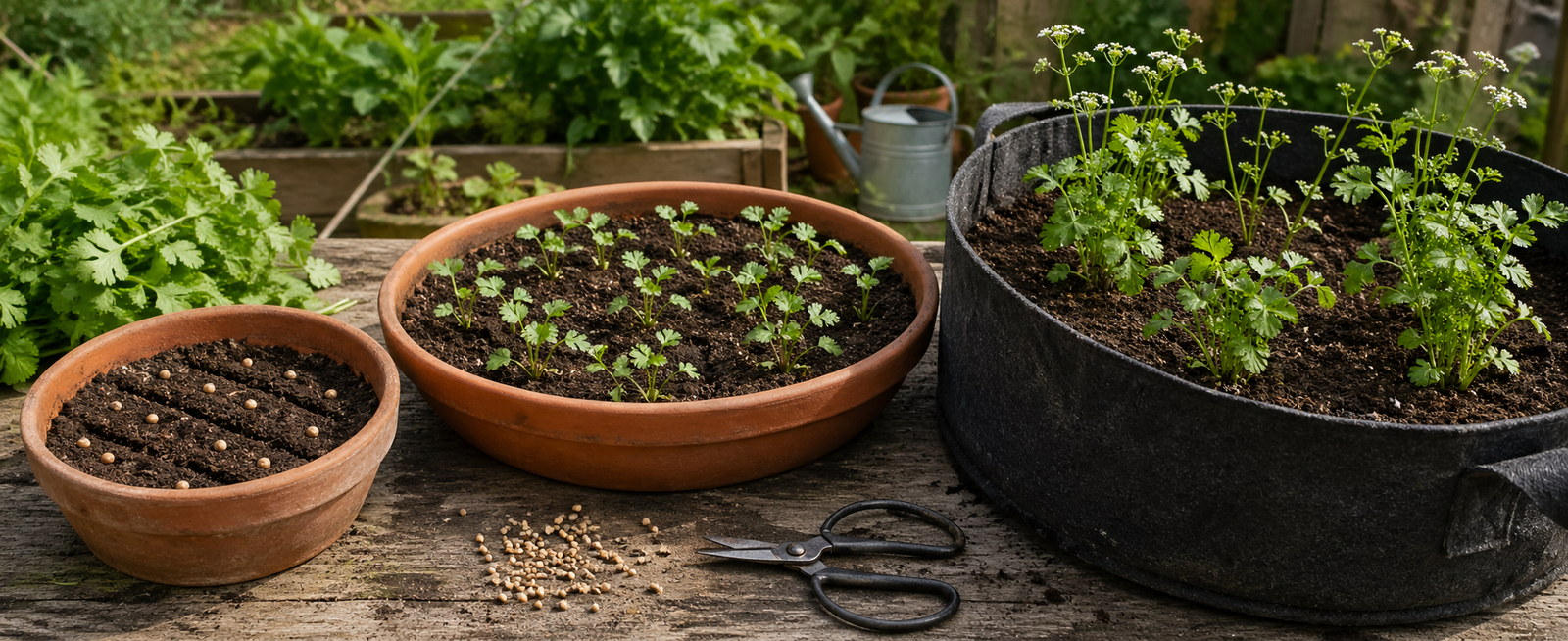
The right number depends on what you want: leafy cilantro or coriander seed. Those are two different games.
For leaves, a little crowding is fine. You are harvesting young stems and cutting often. For coriander seed, plants need more space because they must mature, flower, and form seed heads.
| Goal | Spacing target | Best pot style |
|---|---|---|
| Fresh cilantro leaves | About 1 to 2 inches between seedlings | Wide, shallow-to-medium herb pot |
| Bigger leafy plants | About 3 to 4 inches apart | 10- to 12-inch pot or larger |
| Coriander seed | About 8 to 10 inches apart where space allows | Larger patio container |
In an 8-inch pot, sow 8 to 12 seeds and thin after germination. In a 10- to 12-inch pot, scatter lightly or sow a short row, then thin so the seedlings are not choking each other. If two seedlings sprout from one coriander ball, snip the weaker one rather than tugging at the roots.
Do not be too precious about thinning. The little extras taste good. Toss them over eggs or rice and call it a harvest, because it is.
Simple rule: Grow cilantro closer for leaves and wider for seed. A lonely cilantro plant in a pot often gives a lonely harvest.
Light, Temperature, and Timing That Keep Cilantro From Bolting
Cilantro bolts when it shifts from leaf production to flowering and seed-making. That shift is normal. The problem is timing. If it bolts when the plant is still small, the harvest disappears.
North Carolina Extension describes cilantro as a cool-climate herb that bolts easily in hotter climates. That one fact explains half of the cilantro complaints online.
For outdoor pots, spring and fall are usually the friendly seasons. In warm regions, fall, winter, or early spring may beat summer by a mile. A pot sitting on a hot patio can run warmer than garden soil, so cilantro may bolt faster in containers than it does in a raised bed.
Use this light rule:
- Cool weather: give cilantro full sun or close to it.
- Warm weather: give morning sun and afternoon shade.
- Indoors: place the pot in the brightest window that does not roast the leaves against hot glass.
Aim for around 6 hours of good light where heat is not harsh. If the plant looks pale and stretched, it needs more light. If it wilts every afternoon and throws a flower stem early, it is probably too hot, too dry, or both.
Slow-bolt varieties can help. They are not magic. They buy time, which is still useful, but no seed packet can turn cilantro into a heat-loving summer herb.
For a wider care overview beyond pots, see how to grow cilantro at home.
Remember: Shade does not make old cilantro young again. It only helps young cilantro stay leafy a bit longer when the weather starts pushing it toward flowers.
Water and Feed Potted Cilantro Without Drowning the Roots
The worst watering advice for cilantro is “water every day.” Some pots need that. Many do not. A 6-inch terracotta pot in wind and sun dries wildly faster than a 12-inch plastic pot on a cool kitchen sill.
Use the touch-and-weight test. Press a finger into the top inch of mix. If that layer is drying and the pot feels light, water. If the mix still feels wet and the pot feels heavy, wait. This sounds low-tech because it is. It also works better than a calendar.
During germination, keep the surface evenly damp. Not glossy. Not puddled. Damp. After seedlings appear, water deeply enough that moisture reaches the root zone, then let the extra drain out.
Empty the saucer after watering. Cilantro roots do not enjoy sitting in stale water. Few herbs do, really.
Quick test: Squeeze a handful of moist mix. It should clump lightly, then crumble when touched. If water drips out, it is too wet for sowing.
Feeding should stay light. If the potting mix is fresh and compost-enriched, cilantro may not need much extra fertilizer before the first harvest. If growth slows after repeated cutting or the leaves turn pale in an older pot, use a mild liquid feed at a low rate. Heavy feeding can push soft growth and does not fix heat stress.
Yellow seedlings usually point to one of three things: too much water, weak light, or depleted mix. Check drainage first. Feeding a soggy pot is like giving coffee to someone standing in a flooded basement. Wrong problem.
Keep New Cilantro Coming With Small Succession Sowings
One cilantro pot is a snack. A sowing rhythm is a supply.
Wisconsin Horticulture recommends successive sowings at 2- to 3-week intervals for a longer leaf harvest. In home containers, a 2- to 4-week rhythm is a useful range because weather, pot size, and how much cilantro gets used in the kitchen all change the pace.
Try a two-pot rotation if cilantro gets used often:
- Pot A: ready to harvest now.
- Pot B: seedlings coming along.
- Optional Pot C: newly sown for heavy cilantro households.
This takes the pressure off one plant. Instead of begging old cilantro to stay leafy, you start the next batch before the current one turns wiry. That is the whole secret, or at least the least annoying version of it.
During cool spring and fall weather, sow a small batch every 2 to 4 weeks. In hot summer, pause outdoor sowing or move the next pot into a cooler indoor spot with strong light. If the weather is punishing, waiting is not laziness. It is good timing.
Harvest Potted Cilantro Before It Turns Into Coriander
Start harvesting when the plants are around 6 inches tall and have enough stems that cutting will not scalp the pot. Use clean scissors and cut outer stems or top growth. Leave some young center growth so the plant can keep working.
For repeat harvests, take no more than about one-third of the plant at a time. If you need a huge bunch for a recipe, cut what you need and treat that pot as a nearly finished crop. No guilt. That is what the succession pot is for.
Cilantro leaves and coriander seed come from the same plant, Coriandrum sativum. The leaves and tender stems are cilantro. The mature dried seeds are coriander. Once the plant sends up thin flower stems, leaf quality often drops and the plant starts putting its energy into seed.
If the plant bolts, you have three choices:
- cut the remaining usable leaves right away
- let the flowers mature for coriander seed
- sow a fresh pot for better leaves
If a plant suddenly shoots upward, how tall cilantro grows explains the difference between leafy growth and the flowering stage.
Kitchen rule: Harvest cilantro while it still looks like cilantro. Once it starts looking like lace on a stick, it is already thinking about seed.
Indoor, Patio, and Hot-Weather Pot Adjustments
The same cilantro seed behaves differently on a cool windowsill, a windy balcony, and a July patio. The method stays the same. The adjustments change.
Indoors: place the pot in the brightest window available. South- or west-facing windows often give the strongest light, though hot glass can stress plants in warm weather. Rotate the pot every few days if seedlings lean. If stems stretch and flop, the window is probably too dim.
For weak-window setups, LED grow lights for indoor gardening can help clarify when supplemental light is worth considering.
On a patio: morning sun is your friend. Afternoon sun on concrete can turn a container into a little oven. Raise pots on feet, a plant stand, or a slatted bench if the surface below gets hot. Check moisture more often in wind, since wind dries leaves and mix at the same time.
In hot weather: sow smaller batches in larger pots. That sounds backward, but it works. A larger pot holds moisture steadier, while a smaller sowing lets you harvest quickly before bolting wins.
| Growing spot | Best adjustment | Warning sign |
|---|---|---|
| Bright indoor window | Rotate the pot and keep the mix steady | Long pale stems leaning toward glass |
| Balcony or patio | Use morning sun and afternoon shade | Daily wilting and dry edges |
| Hot summer spot | Sow small and harvest young | Flower stems before a decent leaf harvest |
Cool-season growing is simpler. When temperatures are mild, cilantro usually handles more sun and needs less fuss. That is why a scruffy fall pot often outperforms the neat little midsummer pot that got all the attention. Annoying, but true.
Why Cilantro Seeds Fail in Pots and How to Fix Them
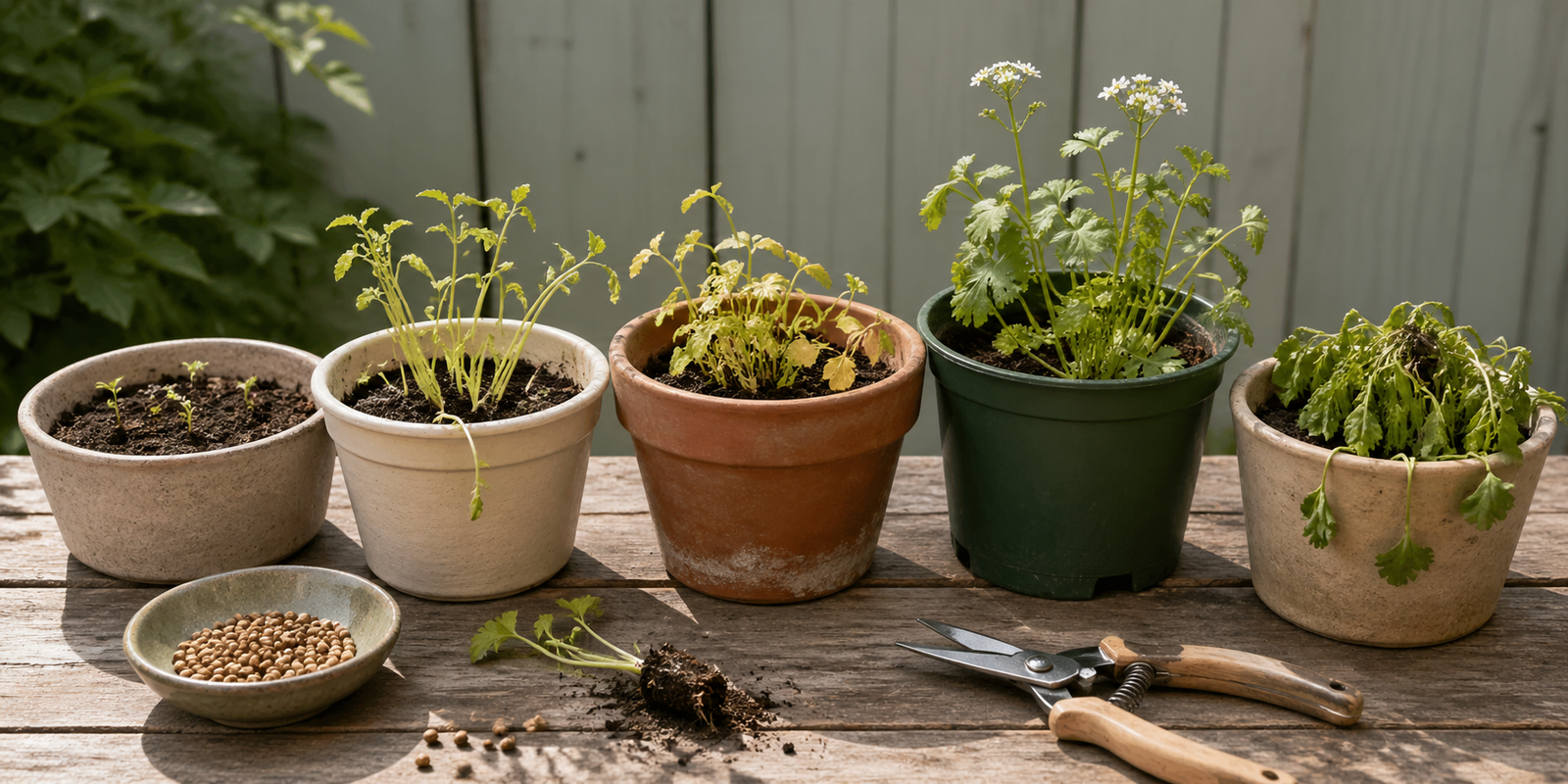
When cilantro fails in a pot, the cause is usually visible if you slow down and read the plant. The seed, the mix, the light, and the watering rhythm all leave clues.
| Symptom | Likely cause | Fix |
|---|---|---|
| Seeds do not sprout | Old seed, dry surface, planted too deep, cold or hot mix | Resow fresh seed at 1/4 to 1/2 inch and keep the surface evenly damp |
| Seedlings are long and floppy | Too little light | Move to brighter cool light or add supplemental light |
| Seedlings turn yellow | Wet mix, poor drainage, or tired potting mix | Check drainage, let the mix breathe, then feed lightly only if growth is established |
| Plants flower too soon | Heat, drought stress, or an older planting | Harvest what you can, move young pots cooler, and sow a new batch |
| Leaves wilt while the mix is wet | Root stress from soggy conditions | Stop watering, empty saucers, and improve drainage |
| Harvest is tiny | Too few seedlings, pot too small, or no succession sowing | Use a wider pot and sow a small new batch every 2 to 4 weeks |
If nothing has sprouted after 14 days, do not panic yet. Check moisture and warmth. If nothing has happened by 21 days and the seed was old or the pot dried out, resowing is usually faster than waiting.
Fresh coriander seed sold for gardening is the safest bet. Whole coriander from a spice jar may sprout, but it is a gamble. It could be old, heat-treated, split, or otherwise poor at germinating. Try it as an experiment, not as the only plan for dinner herbs.
When to start over: If seedlings are moldy, collapsing, or already flowering at baby size, reset the pot. Cilantro grows fast enough that rescue can take longer than a fresh sowing.
That is the quiet advantage of learning how to plant cilantro seeds in pots properly. You stop treating every failed seedling like a mystery. Most problems trace back to one of four things: seed depth, moisture, light, or heat. Fix those, then keep sowing before the old pot ages out.
FAQ
Should I soak cilantro seeds before planting them in pots?
Soaking is optional. If the seed is fresh, you can sow it straight into damp potting mix. If the seed is older or the outer seed coat seems hard, soaking for a few hours may help it take up water. Do not soak and then let the seed dry out again. That stop-start treatment is worse than simple sowing.
Can cilantro grow in a cup, jar, or container without drainage?
Not reliably. A jar or cup can work as a decorative outer container, but the cilantro itself should sit in a pot with drainage holes. Without drainage, the lower mix stays wet and the roots can suffocate before the leaves ever amount to much.
Can I plant cilantro and basil in the same container?
You can, but it is not the cleanest pairing. Basil likes warmer growing conditions, while cilantro prefers cooler weather and bolts faster in heat. For herb-pairing decisions, see what to plant with basil in a container.

Michael Rowan is the founder and lead writer at The Garden Playbook. He has spent 10+ years growing plants across a range of settings — from indoor houseplants and container gardens to raised beds and in-ground plots — adapting methods to different light levels, seasons, and growing conditions.
Michael focuses on practical, experience-based guidance grounded in fundamentals: soil health, watering strategy, plant nutrition, pruning and propagation, and integrated pest management (IPM). His work aims to help readers diagnose common problems (such as yellowing leaves, stunted growth, or pest pressure) and apply straightforward solutions that are realistic for home gardeners.
At The Garden Playbook, Michael develops tutorials and plant guides using a consistent process: documenting real outcomes where possible, explaining the “why” behind each step, and verifying higher-risk topics (such as plant toxicity or pest treatment options) against reputable horticultural references.