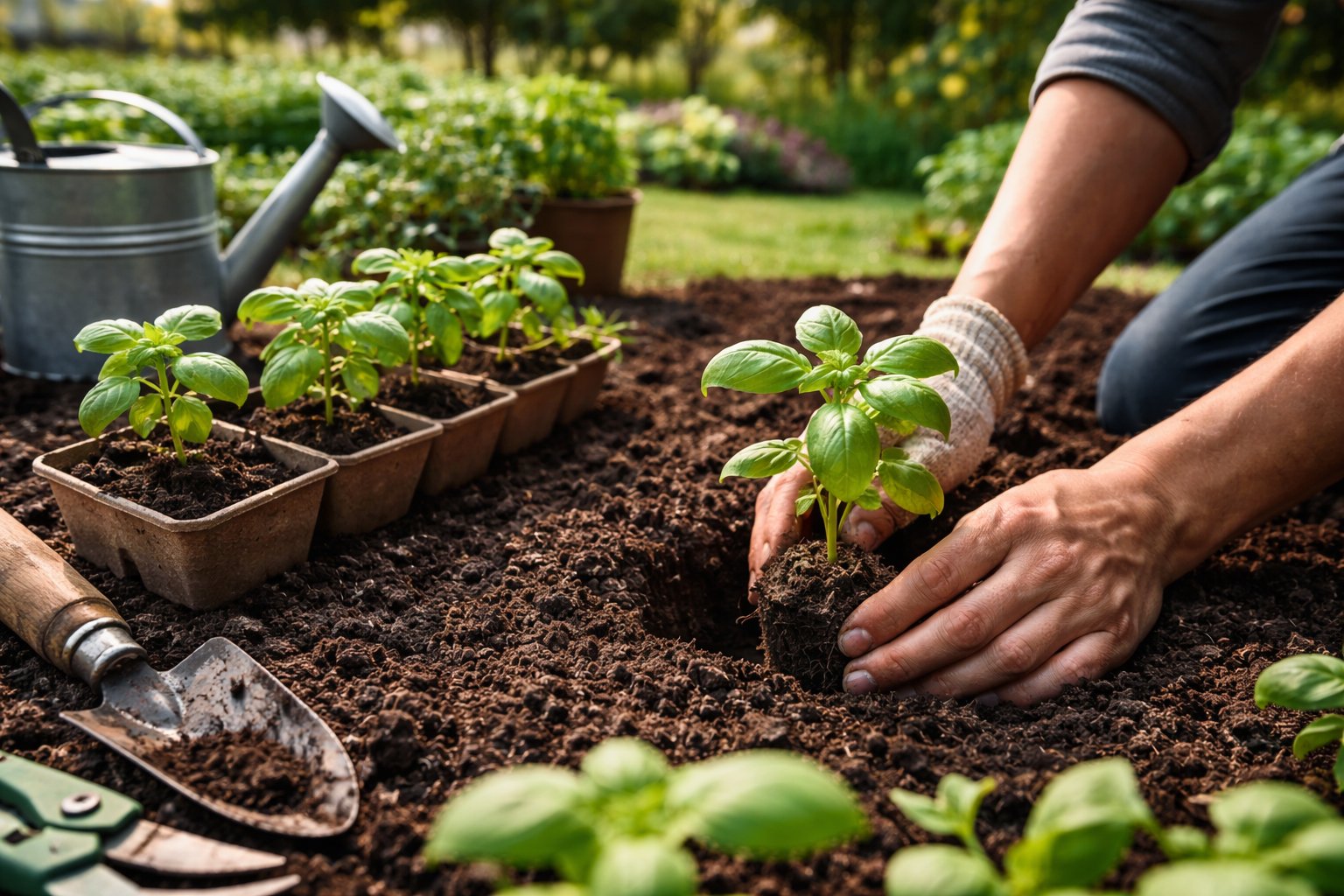
Most basil seedling problems do not start with a bug or a disease. They start with a nice warm windowsill, one optimistic spring afternoon, and a plant that gets shoved outside too fast.
If you’re searching for how to grow basil from seedlings, the short answer is this: wait until frost risk has passed and nights are staying above 50°F, harden the seedlings off, plant them in full sun and well-drained soil, keep moisture even while roots settle in, and start pinching once the plant has enough size to branch. That is the clean answer. The useful answer is a bit sharper, because basil is forgiving about a missed watering here and there, but fussy about cold, crowding, and soggy roots.
I’ve done the lazy version of this more than once. A basil start looked sturdy in a tray, the weather felt “pretty much warm enough,” and by evening the leaves were hanging there like damp paper. Basil rarely dies from drama alone, but it does get sulky fast.
At a glance: the fast call
- Move basil outside only after frost danger has passed and nights are consistently above 50°F.
- Harden seedlings off for about 7 to 14 days. If they came from a cozy windowsill, closer to 2 weeks is safer.
- Give them full sun and well-drained soil. A pot is often the smarter first home when weather is still wobbling.
- Plant at the same depth as the original pot and space most plants about 8 to 12 inches apart.
- Water deeply after transplanting, then water again when the top inch starts to dry.
- Pinch when plants are about 4 to 6 inches tall or have at least 6 to 8 leaves.
What you’ll learn
How to tell when seedlings are ready, whether a pot or bed makes more sense, how to transplant without slowing growth, how to water without babying the plant, when to pinch for bushier basil, and how to tell cold stress from mildew or plain old overwatering.
How to know your basil seedlings are ready to move
Basil is not a plant to plant on vibes. Iowa State University says basil should go out after frost danger has passed and after night temperatures are consistently above 50°F, so the first check is the forecast, not the calendar. A warm day means very little if the next two nights dip into the 40s.
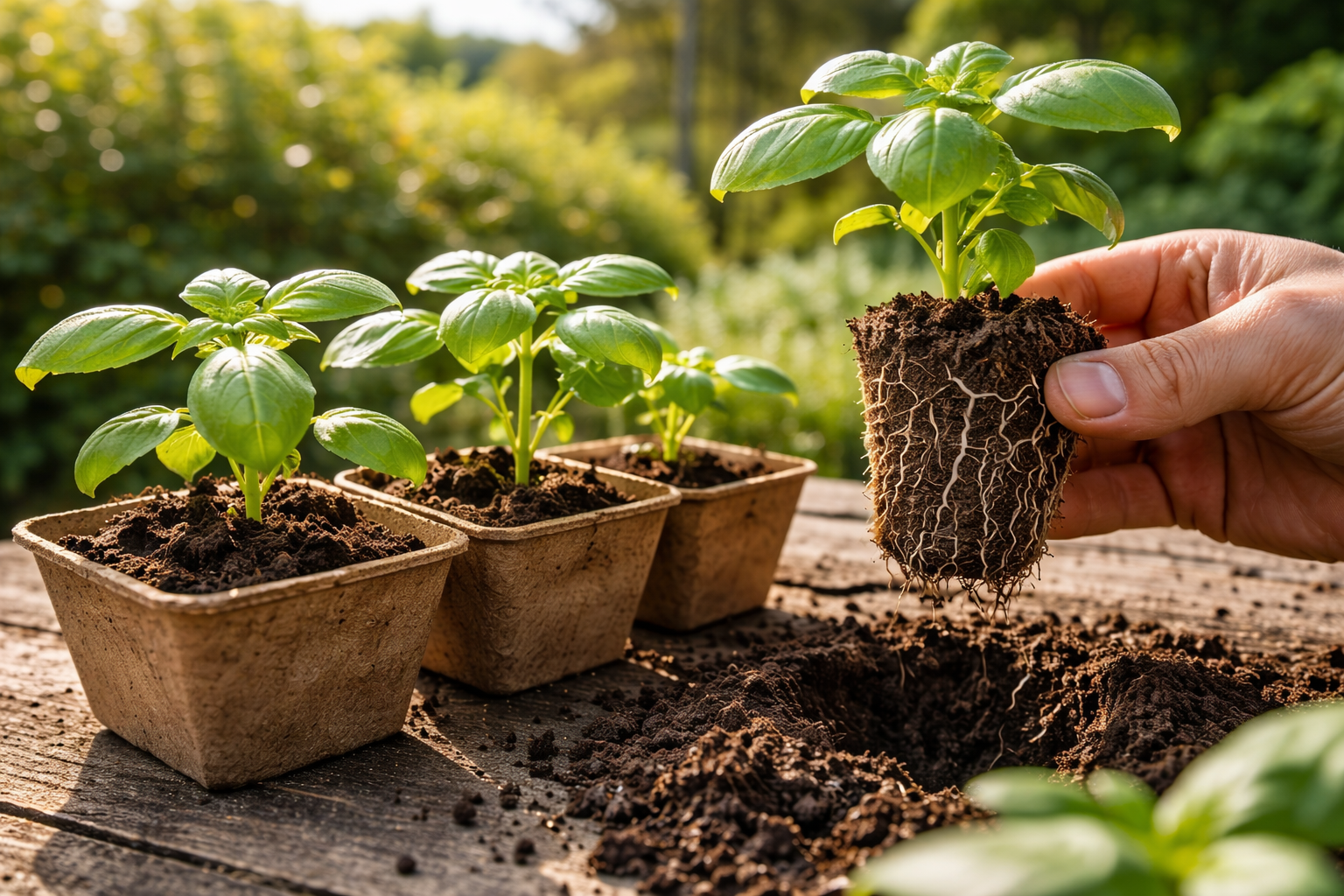
The second check is the seedling itself. You want several true leaves, not just the first pair. You also want roots that hold the plug together when you slide the plant from its cell, but not a root ball packed into a hard spiral. If it falls apart like wet cake batter, it is still too young. If roots are circling thickly, transplant now and handle the roots gently.
The Royal Horticultural Society recommends about two to three weeks to harden off tender plants, because indoor-grown seedlings need time to adjust to cooler air, lower humidity, and moving air. In plain English, basil needs a gradual introduction. One hour of morning sun on day one, a bit more the next day, then longer spells outdoors over the next week or two works far better than a one-day shove into full exposure.
Note
If seedlings came from a greenhouse or sunny porch, hardening off often goes faster. If they came from a still, warm windowsill, give them the full slow rollout. That extra patience saves a lot of limp leaves.
A quick readiness test helps. Plant now if all four are true:
- Night temperatures are staying above 50°F
- The seedling has several true leaves
- The root ball holds together when removed from the pot
- It has already spent several days adjusting to outdoor light and air
If one of those is missing, wait. Basil does not reward impatience.
Choose a warm, bright spot before you plant
University of Minnesota Extension recommends at least six to eight hours of bright light and notes that a soil pH of 6.0 to 7.5 suits basil best, so start with light and drainage. Basil wants sun on its leaves and air around its stems. The plant smells soft and lush, but the growing conditions should be a little leaner and brighter than many beginners expect.
Choose a bed if the spot gets real sun, drains quickly after rain, and warms up early in the day. Choose a container if spring nights are still iffy, the garden is windy, or you want the option to move the plant closer to a wall or under cover for a week. In a lot of climates, a pot is not a compromise. It’s the easier win.
That is why nursery basil often does better on a warm patio than in a cold, open bed that looked fine on paper. Basil likes comfort, just not the soggy kind.
For containers, go a little bigger than the tiny nursery pot and give roots some room to settle. A basil seedling in a small pot dries out so fast that the plant spends half its life recovering. If the plant is headed for a container, this guide on what size pot for basil helps line up pot size with steadier moisture and better root growth.
Soil matters too. Rich, loose soil with compost mixed in is great. Heavy, sticky soil that stays wet after a storm is not. If you squeeze a handful and it turns into a brick, loosen it before planting or use a container instead.
Pro Tip
A warm, sunny spot near a wall often beats a colder “prime bed” out in the open. The wall cuts wind and holds a little heat. Basil notices.
Transplant basil seedlings at the right depth and spacing
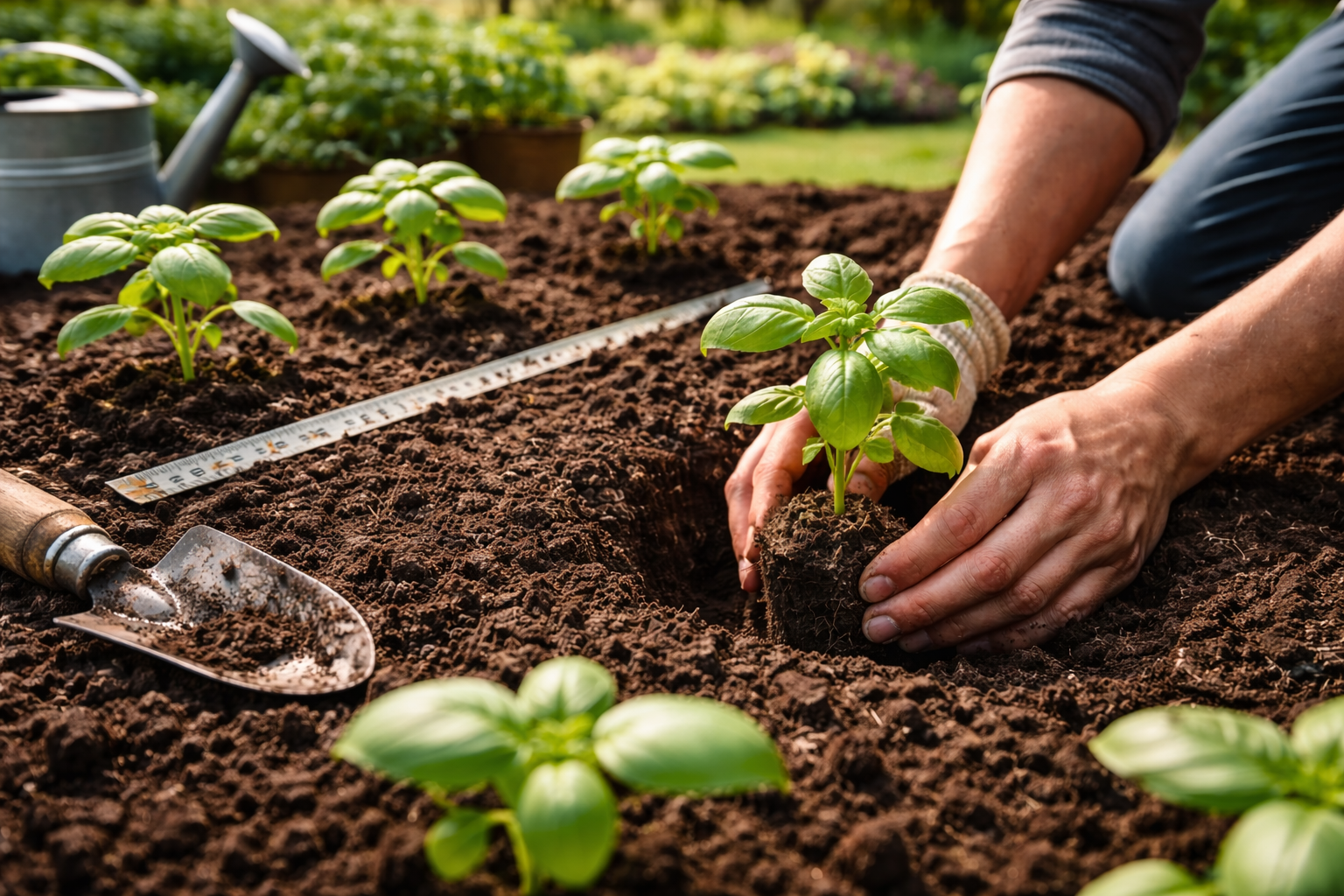
Transplanting basil is not tricky, but sloppy planting slows it down. Water the seedlings a few hours before moving them so the root ball stays together. Then plant in the late afternoon or on an overcast day if you can. Less heat, less wilt, less drama.
Set the seedling at the same depth it was growing in the original pot. Basil is not a tomato. You are not trying to bury extra stem and chase bonus roots. Keep the crown where it was, firm the soil around it gently, and water it in right away.
Spacing is where people get stingy. Most home gardeners do well with 8 to 12 inches between standard sweet basil plants. If the site is humid, airflow is weak, or the variety runs large, go wider. Crowded basil looks lush for about a minute and then starts trapping moisture where you do not want it.
Utah State University Extension thins basil to a final spacing of about 12 inches, and that is a sensible middle ground for many gardens. If you are planting compact Greek basil, you can cheat a little closer. If you are planting big Genovese starts, give them more elbow room.
Grocery-store basil is its own little scam. It often looks like one vigorous plant, but it is usually a crowded clump of many seedlings crammed into one pot for instant fullness. Split that clump into smaller groups before transplanting. If you keep it as one mass, the top looks happy for a week and the roots start fighting underneath.
Water and feed for steady growth, not soft, floppy plants
Right after transplanting, basil wants a deep drink and evenly moist soil while roots start exploring. After that, stop watering by guilt. Check the soil instead.
University of Minnesota says basil in containers dries out faster than basil in garden beds, and Utah State pegs garden water needs at about 1 1/2 inches per week, adjusted for temperature and soil. Those two points tell you most of what you need to know. Garden beds can follow a rough weekly rhythm in normal weather. Pots need checking far more often because sun, wind, and pot size change the game fast.
Here is the practical rule. If the top inch feels dry, water. If the pot feels strangely heavy and the plant still looks droopy, do not add more water yet. That combo often means the roots are sitting too wet, not too dry.
Feeding should be light. Basil is grown for leaf flavor, not brute size. A rich bed with compost often needs little or no extra fertilizer early on. Containers run out of nutrition sooner, so a light liquid feed every few weeks can help after the plant has settled in. More is not better here. Overfed basil gets lush and floppy, and the flavor can go a bit flat.
Raised beds make watering easier when water goes to the soil instead of all over the leaves. For that setup, best irrigation for raised beds is worth a look, mostly because basil hates being crowded and wet at the same time.
Remember
“Keep moist” does not mean “keep soggy.” Basil likes a steady sip, not wet socks.
Pinch early to grow bushy basil and delay flowers
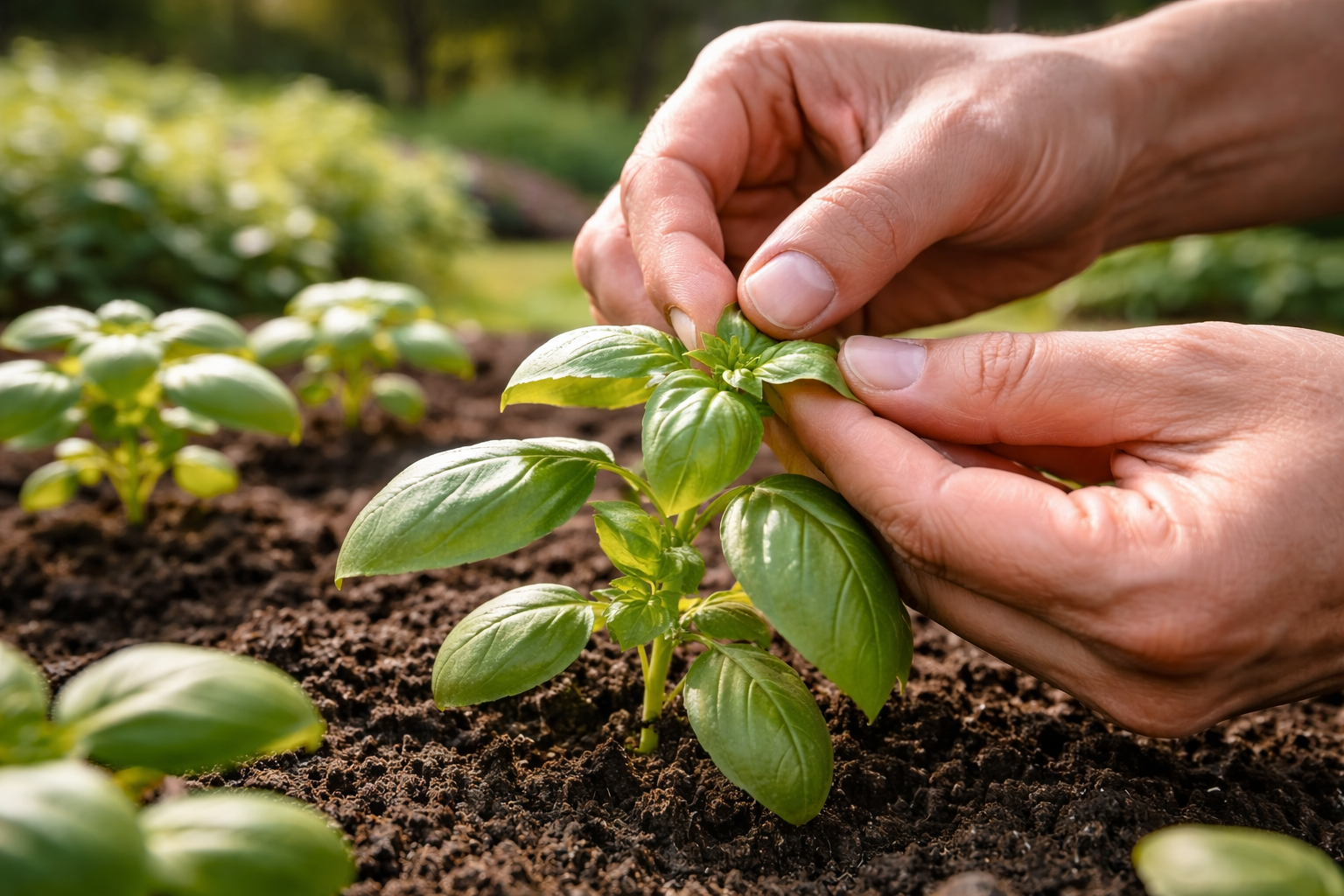
This is the step people skip, and then they wonder why the plant turned into one tall stem with a haircut. Basil gets fuller when you remove the growing tip early enough for side shoots to take over.
Iowa State notes that basil benefits from pinching, and Utah State starts harvest once plants have 6 to 8 leaves. That lines up with what works in a home garden. Once a seedling is about 4 to 6 inches tall or has at least 6 to 8 healthy leaves, pinch or snip just above a leaf pair. Two new stems usually take over from that point.
Do not strip single leaves off the bottom and leave the top growing untouched. That habit keeps the plant tall and stingy. Harvest from the top. Shape from the top. You are training the plant, not just stealing a few leaves for pasta.
Flowers are the next fork in the road. Cornell’s basil disease pages are about mildew, not harvest, but the plant behavior is familiar to anyone who has grown basil through a hot spell: stress and age push it toward flowering. Once flower buds appear, leaf flavor starts to shift. If leaf production is the goal, pinch flower stems out early.
There is one fair exception. If you keep several plants, letting one bloom for bees is a nice trade. Just do not expect that plant to stay peak pesto material for long.
Note
Pinching works on healthy basil. On a cold-stressed, waterlogged seedling, pruning is not a rescue move. Fix the setup first.
Fix droop, yellow leaves, stalled growth, and mildew fast
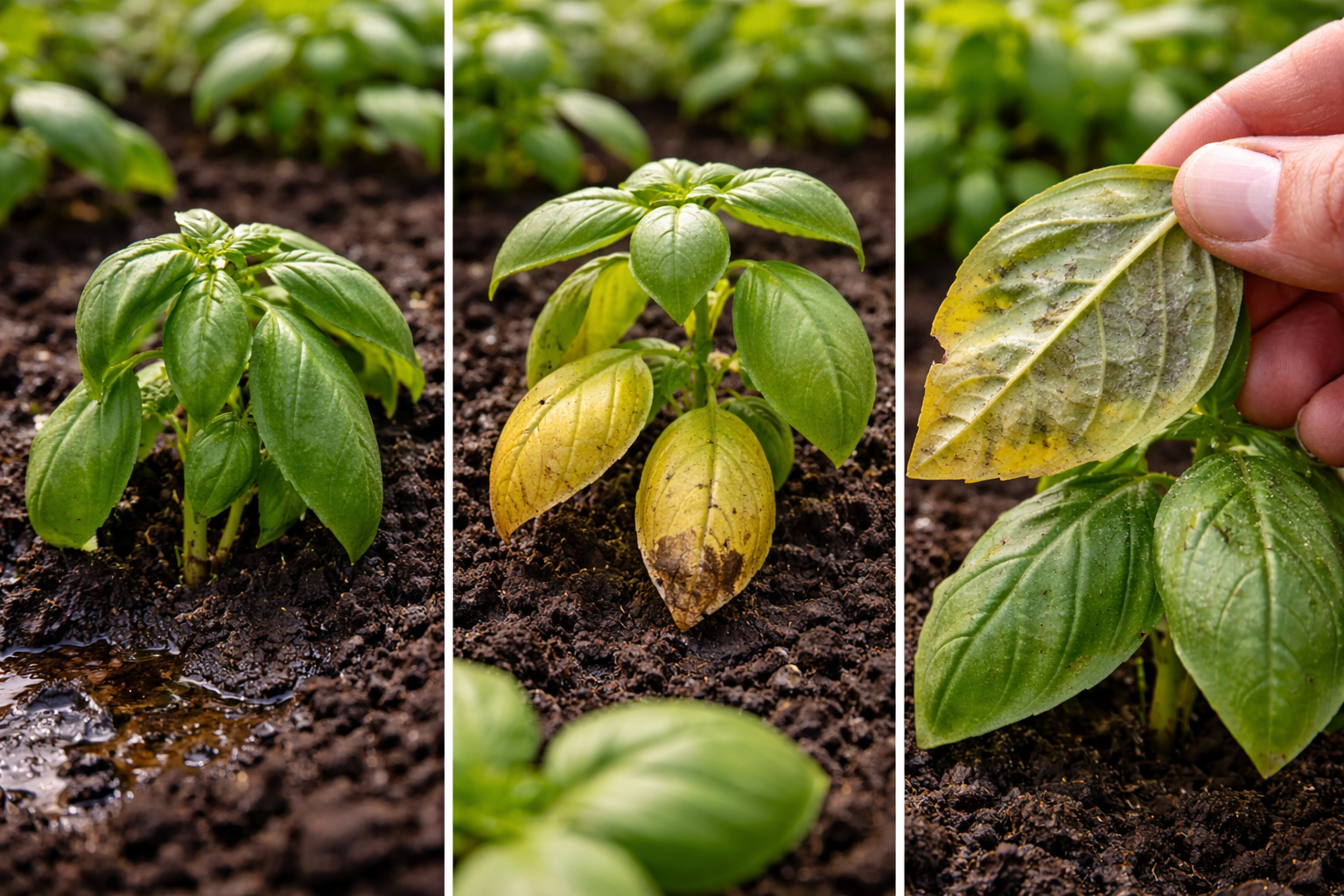
When basil looks bad, the symptom is not the diagnosis. Drooping can mean thirst, cold, root trouble, or simple transplant shock. Yellow leaves can mean old lower growth aging out, but they can also mean wet roots or downy mildew.
Cornell describes basil downy mildew as yellowing on the upper leaf surface with purplish gray spores on the underside. That underside check matters because downy mildew gets mistaken for nutrient issues all the time. Flip the leaf over. If the underside looks dusty or fuzzy, treat it like disease, not hunger.
Spacing and watering habits matter here. Wet leaves, crowded stems, and still air make basil much easier to infect. If your garden gets muggy every summer and mildew keeps showing up, disease-resistant basil is not hype. It is a sane choice.
Iowa State lists DMR varieties such as Amazel and Prospera for better resistance. If basil downy mildew has already shown up in past seasons, those are better bets than standard Genovese. Genovese tastes great, but it is not brave about mildew.
Pro Tip
A cold-damaged basil leaf can blacken fast. A root-rot leaf usually yellows first. That one visual clue saves a lot of wrong watering.
FAQ
Can basil seedlings recover after one cold night outside?
Sometimes, yes. If the night only dipped a bit below the comfort zone, basil can rebound once warm weather returns. If leaves turned black or water-soaked, those damaged leaves will not recover. Leave the plant in a warmer spot for a few days before deciding it is done.
Should I separate basil seedlings before planting them in one larger pot?
If they are packed tightly, yes. A small cluster can work in a roomy container, but one supermarket-style thicket usually turns into a root traffic jam. Splitting the clump gives each plant light, airflow, and root space.
Can basil stay indoors all summer instead of going outside?
Yes, if the light is strong enough. A bright south-facing window can work, but many indoor spots do not deliver enough light for sturdy growth. If indoor basil gets long, pale, and floppy, the plant is telling you the light is weak.

Michael Rowan is the founder and lead writer at The Garden Playbook. He has spent 10+ years growing plants across a range of settings — from indoor houseplants and container gardens to raised beds and in-ground plots — adapting methods to different light levels, seasons, and growing conditions.
Michael focuses on practical, experience-based guidance grounded in fundamentals: soil health, watering strategy, plant nutrition, pruning and propagation, and integrated pest management (IPM). His work aims to help readers diagnose common problems (such as yellowing leaves, stunted growth, or pest pressure) and apply straightforward solutions that are realistic for home gardeners.
At The Garden Playbook, Michael develops tutorials and plant guides using a consistent process: documenting real outcomes where possible, explaining the “why” behind each step, and verifying higher-risk topics (such as plant toxicity or pest treatment options) against reputable horticultural references.