
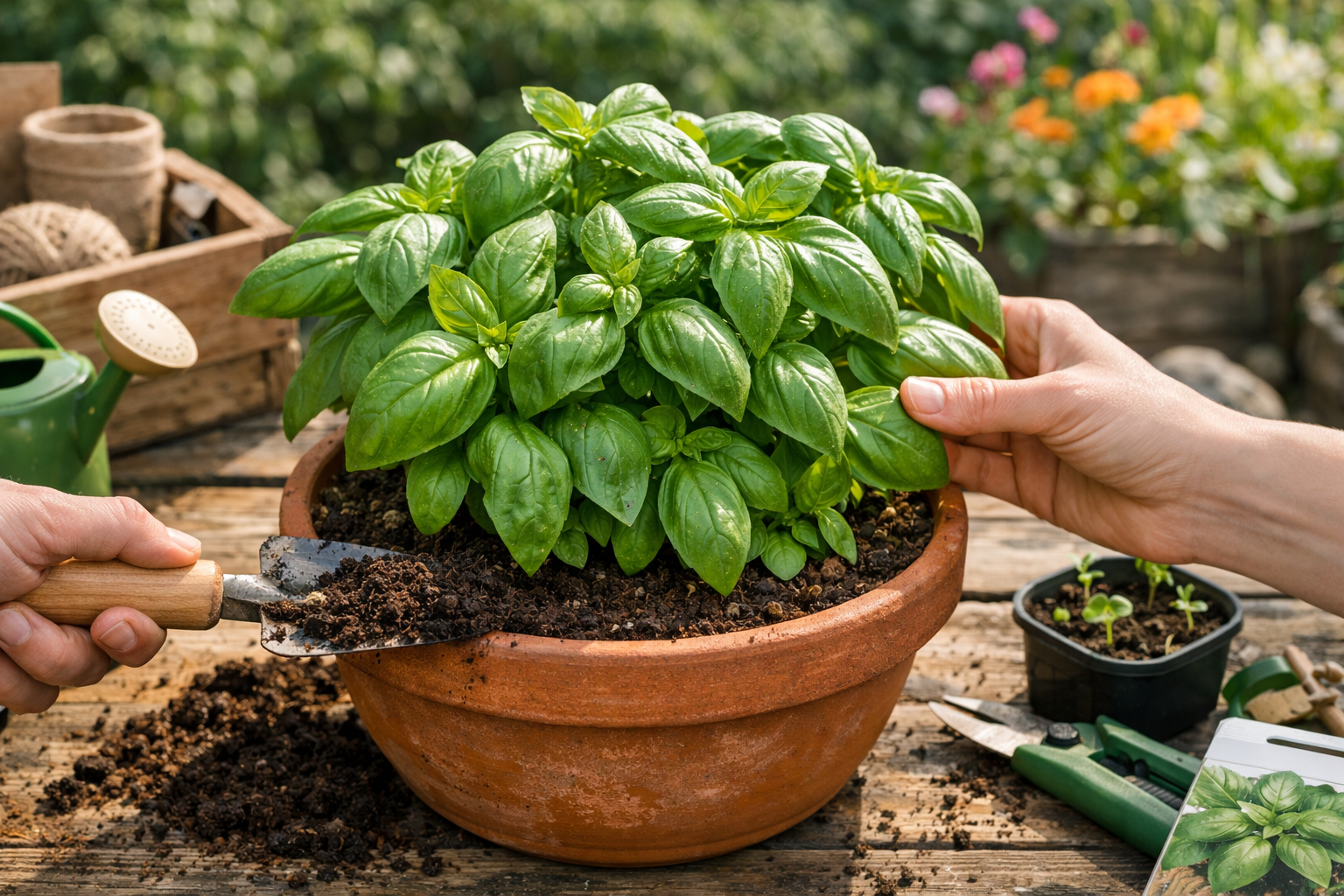
You can grow sweet basil in a pot very well. In fact, for a lot of kitchens, balconies, and patios, it grows better there than it does in the ground. The catch is that the usual advice is too thin to be useful. “Give it sun and water” sounds fine until your basil goes limp in a black plastic pot, stretches toward a weak window, or sits in the original grocery-store clump and stalls out.
If you want to know how to grow sweet basil in a pot, the short answer is this: give it a pot with drainage, a loose potting mix, steady warmth, strong light, and water only when the top layer starts to dry. Then pinch the top growth early so the plant branches instead of turning into one tall stem with a few sad leaves.
That generic answer is true.
It just leaves out the part that actually decides whether your basil looks like a lush little hedge or a tired green straw.
The real variables are pot size, where the pot lives, how crowded the roots are, and whether you’re starting from seed, a nursery plant, or one of those overstuffed supermarket pots. Get those right and basil feels easy. Get them wrong and you end up “watering carefully” while the plant gets worse.
- How to pick a pot size that gives basil room without keeping the roots too wet
- What changes if you’re growing basil indoors, outdoors, from seed, or from a grocery-store plant
- How to water by feel instead of by a schedule that makes no sense for your setup
- How to pinch and harvest so the plant stays bushy
- How to diagnose drooping, yellow leaves, legginess, and early flowers fast
Start Here
| If this sounds like your basil | Most likely cause | Check first |
|---|---|---|
| Droopy by late afternoon | Small pot, hot spot, thirsty roots | Top inch of mix and pot size |
| Droopy while the mix still feels wet | Poor drainage or roots staying too wet | Drainage holes and pot depth |
| Tall, floppy, wide gaps between leaves | Weak light and no pinching | Window exposure or grow light |
| Yellow leaves from the lower half | Too much water, tired potting mix, or disease | Soil feel, airflow, leaf undersides |
| Flowers showing up too early | Heat, age, or missed pruning | Stem tips and harvest habits |
How to grow sweet basil in a pot without making it harder than it is
Sweet basil is not fragile. It is just fast. That speed fools people. A small mismatch in light, water, or root space shows up quickly because basil grows and drinks quickly when it is happy.
The cleanest setup is simple: one healthy sweet basil or Genovese basil plant in an 8- to 10-inch pot, airy container mix, full sun or very bright light, and warm conditions. Then you water when the top inch dries, not because Tuesday showed up, and you pinch the tips once the plant reaches about 4 to 6 inches tall.
That is the no-drama version.
Where people get into trouble is trying to combine basil’s needs with the habits of slower herbs. Rosemary likes things drier. Thyme shrugs off neglect. Basil does not. It wants steady growth, steady warmth, and roots that get air.
Note: The University of Minnesota Extension lists basil as a warm-season herb that does best with plenty of sun and well-drained soil. That’s the baseline. The useful part is learning how those rules shift in a patio pot, a kitchen window, or a crowded nursery container.
I have seen more basil fail from a “nice-looking setup” than from outright neglect. A decorative pot with no drain hole. A crowded grocery plant left packed tight. A bright room that feels sunny to you but is dim to basil. That’s the sort of thing that does it.
Choose the right pot and mix so the roots stay evenly damp, not swampy
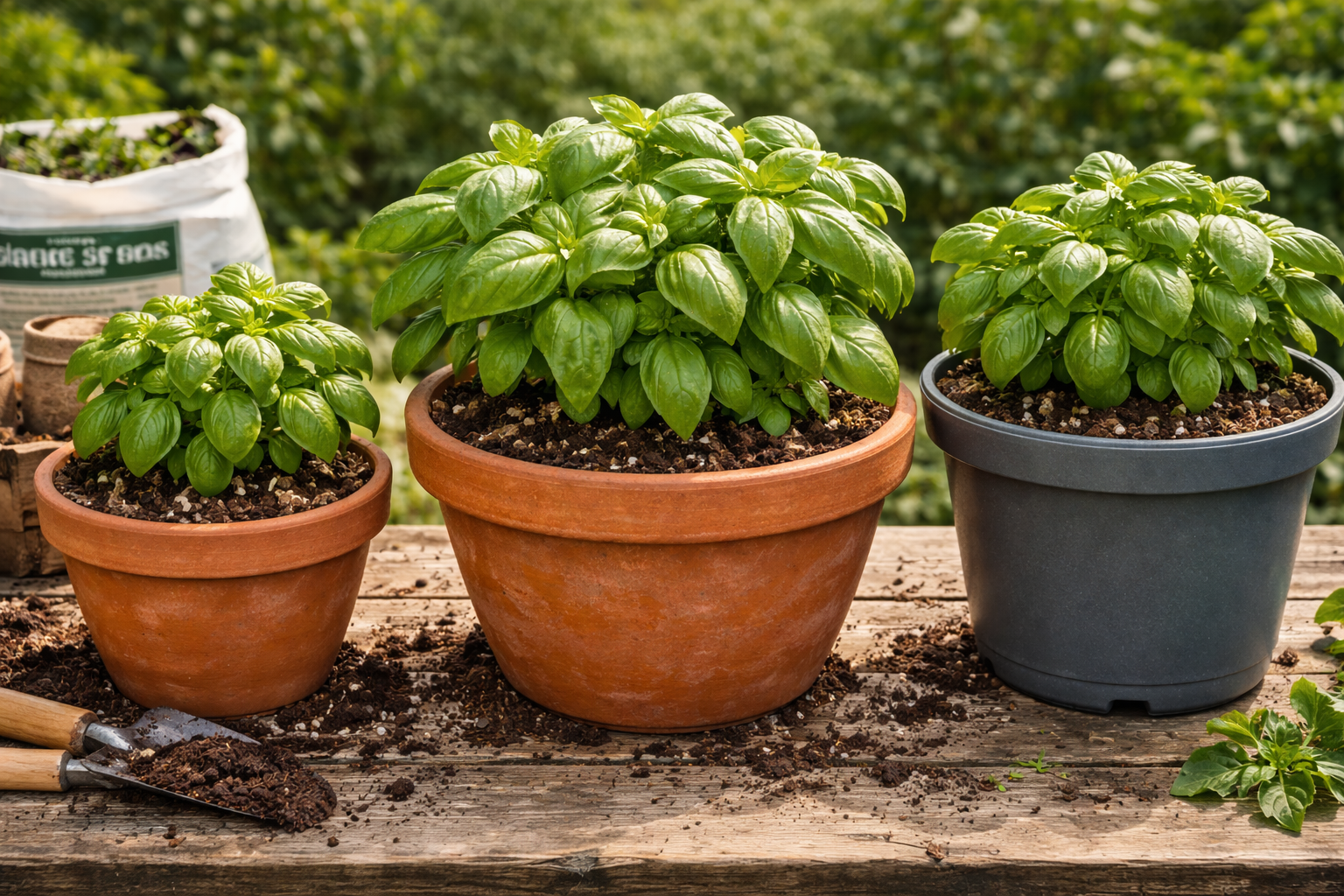
Pot size changes everything. Not in theory. In real, annoying, daily ways.
An undersized pot dries out so fast that basil can swing from happy to droopy in a single warm afternoon. A huge pot indoors can stay wet for too long after watering, which slows the roots and starts the downward spiral people often misread as “it needs more water.”
Pick a pot size that gives you breathing room
For one basil plant, an 8-inch pot is a solid floor. A 10-inch pot is easier. It holds enough mix to buffer heat and missed watering without becoming a bathtub for the roots. Once you go smaller than that, basil becomes less forgiving.
If you’re trying to keep several basil plants in one container, use a wider pot or window box and give them actual space. A pot that looks satisfyingly full on day one can turn into a cramped, low-airflow mess in three weeks.
Match the pot material to your watering habits
Terracotta breathes. It sheds water faster through the sides, so it suits heavy-handed waterers and rainy spots. Plastic holds water longer, which is handy on hot balconies or if you know you miss a day now and then.
Neither is “best” in the abstract. The better choice is the one that matches how fast your spot dries out.
A terracotta pot on a windy balcony in July can drink like crazy. A plastic pot in a cool kitchen window can stay wet for ages. Same plant. Totally different rhythm.
Fill it with container mix, not garden soil
Good basil roots need both water and air. Bagged potting mix is built for that. Garden soil compacts in containers, drains badly, and gets dense in a way basil really doesn’t enjoy. The Royal Horticultural Society advises using peat-free multi-purpose compost for basil in containers, which is the same core idea: loose, free-draining mix made for pots, not dug soil from a bed.
Pro tip: If watering slips your mind, go a bit wider rather than much deeper. Basil spreads a compact root system through the potting mix fast, and a little extra width buys you more stability day to day.
One more thing. Cachepots look nice. They are also great at hiding trapped water. If your basil sits in a nursery pot inside a decorative outer pot, tip the outer pot and check for standing water after every soak.
If pot size still feels fuzzy, this breakdown of how big a pot basil needs gets into the practical ranges, and this guide to the best pot for basil walks through material tradeoffs in a bit more detail.
Start with seeds, nursery plants, or supermarket basil based on the fastest path to success
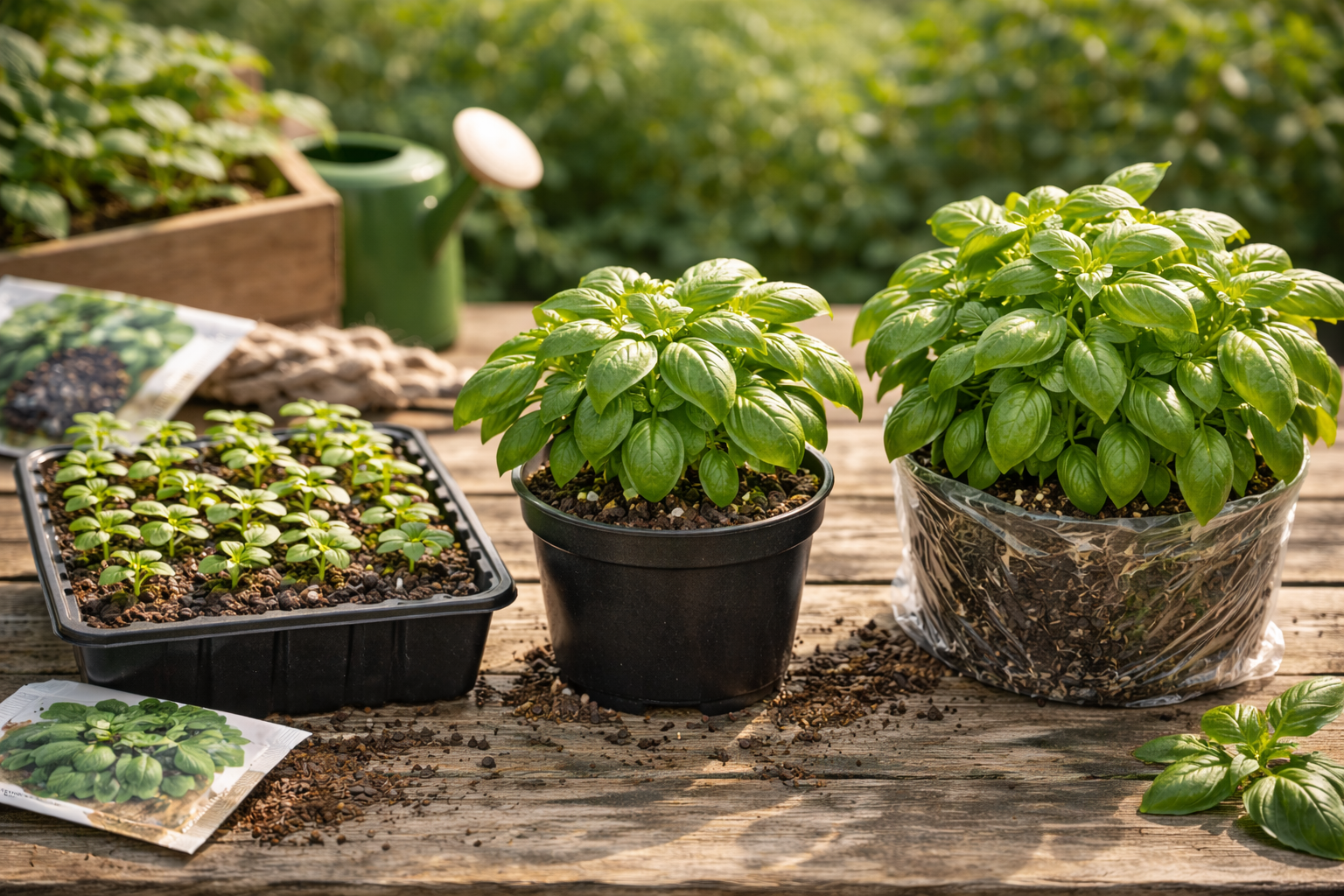
All three work. They just come with different headaches.
Sow seeds for a cheap start
Basil from seed is straightforward. Sow seeds about 1/4 inch deep in a fine seed-starting mix, keep the surface lightly damp, and keep the tray warm. In warm indoor conditions, germination often happens in roughly 5 to 10 days.
The upside is cost, choice, and a plant that grows into its container from the start. The downside is patience. Basil seedlings look delicate at first and they need decent light right away or they stretch.
Transplant a nursery plant for faster harvests
If the goal is quick success, a good nursery plant is the easiest route. Look for a compact plant with several sets of leaves and no pale, stretched stems. Check the drainage holes too. If roots are threading out in a thick mat, the plant is ready to move up fast.
This is often the sweet spot for beginners. You skip the fiddly seedling stage but still get a plant shaped for growth, not for supermarket display.
Thin or split supermarket basil before it stalls
Those grocery-store basil pots are sneaky. They look lush because many seedlings are crammed together to create instant fullness. Left like that, they compete for water, light, and root room. Airflow suffers too.
You have two options. Thin the clump hard and keep just a few sturdy stems in a larger pot. Or divide the root ball into smaller groups and pot them separately. It feels brutal the first time. It also works.
The Spruce notes that basil bought in stores is often overcrowded and benefits from thinning or repotting. That lines up with what growers see all the time: the best-looking grocery basil is often the least sustainable arrangement for the long run.
Important: If the stems are soft and packed shoulder to shoulder, do not just move the whole clump into a bigger pot and hope. That buys time for a week or two, then the crowding catches up.
For seed density, this quick guide on how many basil seeds to sow per pot helps avoid the same crowding problem at the start.
Place the pot where basil gets enough light and heat to grow like basil
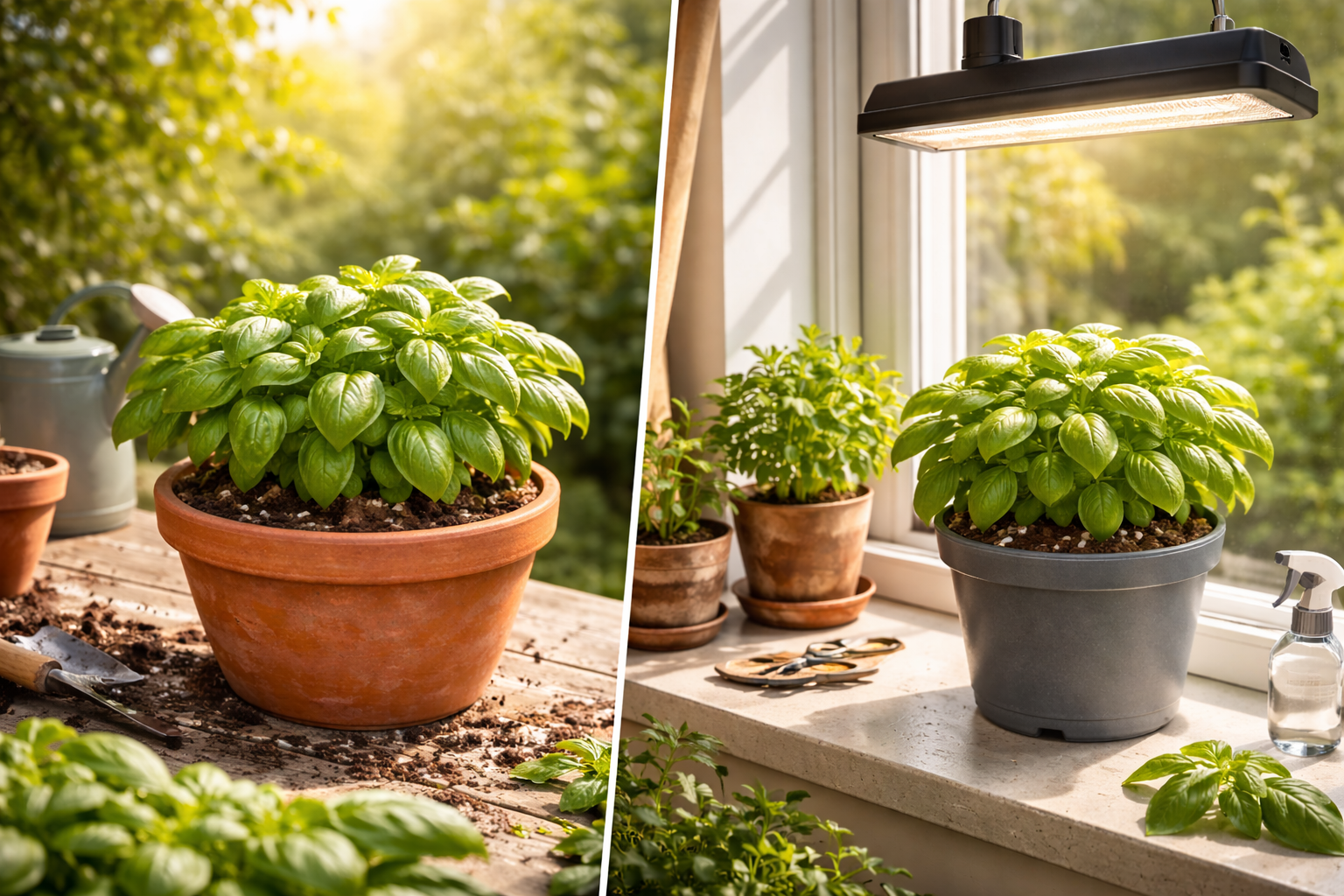
Light is the part people misjudge most.
A room can feel bright and still be weak for basil. The plant tells on that setup fast. It leans. Internodes stretch. The color goes a touch dull. Then people water more because the plant looks unhappy, which only muddies the picture.
Use outdoor sun without cooking the pot
Basil grows best with about 6 to 8 hours of direct sun. That is the standard rule because it works. The University of Maryland Extension gives the same guidance for home gardens, along with well-drained soil and warmth.
But outdoor containers add one twist: root-zone heat. A basil plant in full sun is good. A dark pot radiating heat into the root ball on a reflective patio can push past good into stressful. If you live somewhere hot, morning sun with a bit of protection from the fiercest late-afternoon blast can keep growth steadier.
Use indoor light without settling for weak growth
Indoors, a south-facing window is best. East and west exposures can work too, especially in warm months. North-facing windows are usually a stretch for sweet basil unless the light is unusually open and strong.
If winter light is weak, use a grow light. Iowa State University Extension suggests keeping fluorescent or LED grow lights close to herbs, often around 6 to 12 inches from the foliage, for long daily runs. That detail matters because a grow light hung too high looks impressive and performs badly.
Want the window part explained in plain terms? This guide to the best-facing window for plants is handy when you’re deciding where basil will actually get enough light.
Move basil only when nights stay warm
Sweet basil dislikes cold snaps. If you start plants indoors, wait until frost risk has passed and nights are comfortably warm before moving them out. Hardening off helps too. Give the plant short outdoor sessions at first so the leaves adjust to sun and wind instead of getting shocked all at once.
One little tell I trust: if your basil looks fine indoors but sulks after the move outside, the issue is often not “outdoors.” It is the jump. Too much sun too fast. Too much wind too fast. Basil is quick, but it still wants a short runway.
Water by feel, not by calendar, so basil stays evenly damp
This is the section that saves the most plants.
The mix in a basil pot should not stay soaked, and it should not swing bone-dry over and over. You want the root zone to cycle between watered and lightly drying near the top. Not sloppy. Not desert.
Check the top inch before you water
Push a finger into the top inch of the mix. If it feels dry there, water. If it still feels cool and damp, wait. That one test beats fixed schedules because the pot, weather, material, and plant size all change the drying speed.
A small terracotta pot in outdoor sun may need checking daily. A bigger plastic pot on a bright indoor windowsill may go several days between soakings. That’s why “water twice a week” is nearly useless advice. It sounds tidy, but the plant doesn’t care about tidy.
Water deeply, then let the extra drain
When you do water, give the mix a real soak until water runs out the bottom. Then let the pot drain fully. Little splashes on the surface train roots to stay shallow and often leave the lower half of the pot unevenly wet anyway.
Deep watering also makes it easier to read the plant. If basil perks up within a few hours after a full soak, thirst was probably the issue. If it stays limp while the pot is heavy and wet, the problem is elsewhere.
Adjust for season, pot material, and placement
Heat, wind, root mass, and pot type shift the pace. Once basil fills the pot, it drinks faster. Once summer really kicks in, it drinks faster. Terracotta dries faster. Breezy balconies dry faster. A giant plant in a small pot dries fastest of all.
What to check first
- If the leaves droop and the pot feels light, water deeply.
- If the leaves droop and the pot feels heavy, check drainage and root health.
- If the top dries every day, the pot is likely too small, too porous, or too hot.
- If the mix stays wet for days indoors, the pot is likely too large for the light level, or the drainage is poor.
The one habit that causes more trouble than people expect is the daily splash. Basil usually does better with a proper soak and a short drying phase near the top than with tiny dribbles that keep the surface wet all the time.
Feed lightly and prune early so you get a bushy plant, not a basil flagpole
Basil wants to grow. Your job is to direct the shape.
Start pinching once the plant reaches 4 to 6 inches
Once the plant has a few sets of true leaves and stands around 4 to 6 inches tall, pinch or snip the top just above a pair of leaves. That cut pushes the plant to branch from below the cut. Instead of one main stem racing upward, you get two shoots. Do it again later and two become four.
That is how you turn a basil seedling into a leafy mound instead of a green antenna.
Cut above a leaf pair to trigger branching
Where you cut matters. If you snip a random stretch of bare stem, you waste potential growth points. If you cut right above a healthy leaf pair, the plant responds where you want it to.
Most beginners under-prune because it feels scary. Then they over-harvest lower leaves. That’s backwards. Top pruning is what creates the structure that keeps giving.
Feed lightly once the mix starts running out of gas
Fresh potting mix often carries some nutrition already, so newly potted basil usually does not need feeding right away. After a few weeks of active growth, a mild liquid feed every few weeks can help keep the leaves green and the growth steady, especially in containers that get watered often.
Go easy. Too much feed can push lush, soft growth that tastes weaker and flops more easily. Basil is not a tomato. You are not trying to build a giant fruiting machine.
Note: If basil is pale, growth has slowed, and the potting mix is a month or two old, a light feed makes sense. If the plant is yellowing while the pot stays soggy, feeding is not step one. Fix the watering and drainage first.
And once flower buds appear, pinch them out unless you want seed. Flowering shifts energy away from leaf production and the flavor usually gets rougher.
Harvest for flavor and longevity, not just for tonight’s pasta
Harvesting is part of basil care. Not the prize at the end of it.
Wait until the plant has enough leaf mass to spare, then take the top growth in small, regular cuts. That keeps the plant branching and delays flowering. If you only pluck a leaf here and there from the bottom, the plant keeps climbing and getting lanky.
Start harvesting once the plant is established
If the plant is newly transplanted, let it settle in first. Once it has pushed some fresh growth and looks rooted in, start taking the top tips. A healthy basil plant bounces back fast from this kind of cut.
Take the top growth to hold the shape
Use clean scissors or your fingers and cut just above a leaf pair. That’s the sweet spot for both harvest and structure. If you need a decent handful for cooking, spread the cuts around the plant instead of scalping one side.
A rough rule I use is not taking more than about a third of the plant at once unless I am resetting a very overgrown basil. That leaves enough green behind for quick regrowth.
Know when to replace an aging plant
Indoor basil can get woody or tired after long stretches, especially in weaker seasons. Outdoor basil often peaks beautifully in warm weather, then slows as conditions shift. There is no shame in restarting from seed, taking cuttings, or buying a fresh plant if the old one has turned into a stubborn stick with leaves hanging off the ends.
For a clearer picture of normal size and shape, this guide to how big basil gets is useful because it shows what healthy growth actually looks like in a container.
Fix droopy, yellow, leggy, or flowering basil with a fast diagnosis
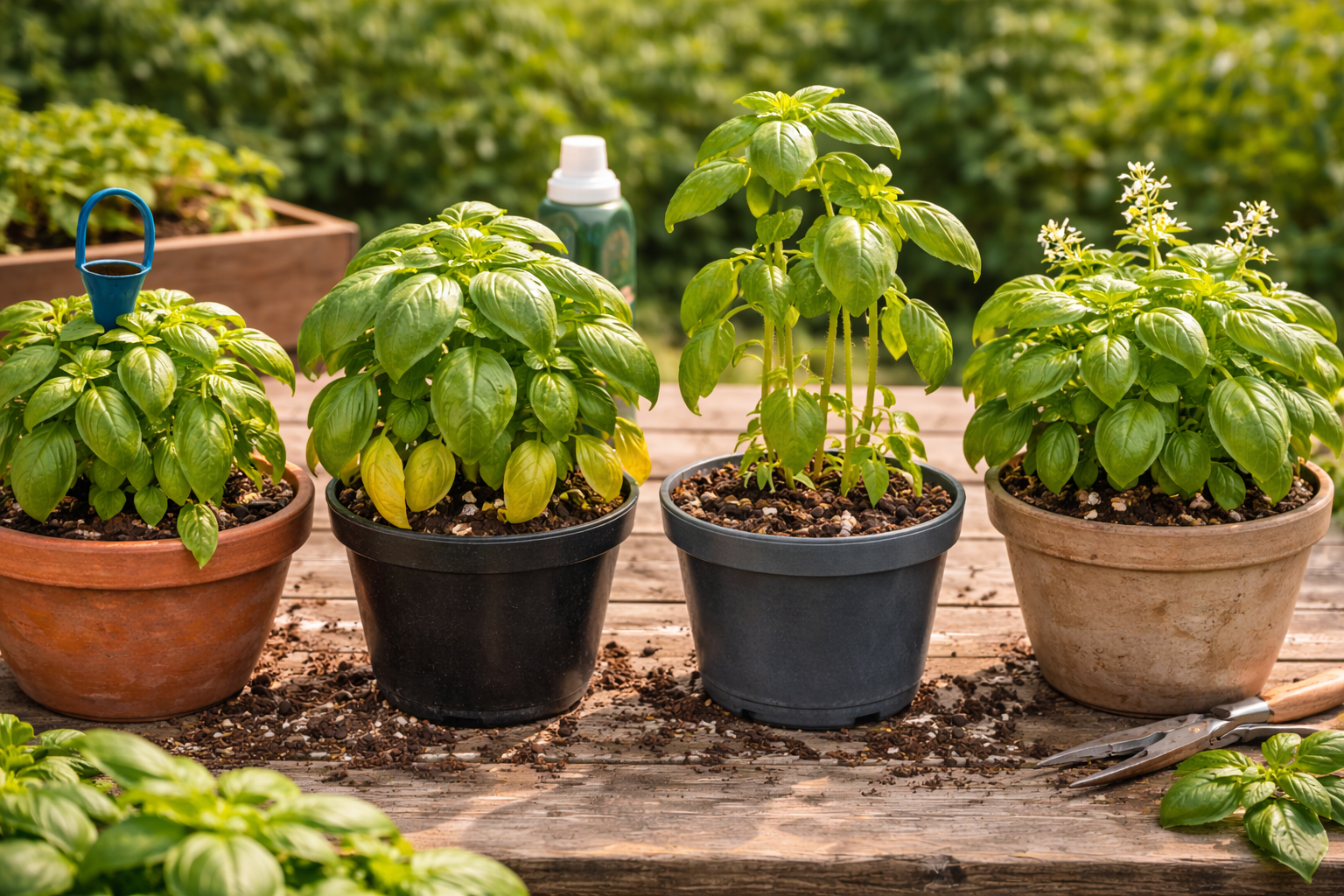
Symptoms lie a little. Or rather, they overlap. Yellow leaves do not always mean hunger. Drooping does not always mean thirst. So the goal is to read the symptom with the setup, not by itself.
If this, check that
| Symptom | Most likely cause | Next move |
|---|---|---|
| Leaves droop and the pot feels light | Underwatering or pot too small | Soak fully, then check drying speed over the next 2 days |
| Leaves droop and the mix is still wet | Poor drainage, root stress, or overpotting indoors | Cut back watering and inspect drainage |
| Tall stems, sparse leaves | Weak light and missed pinching | Increase light and prune above leaf pairs |
| Yellow leaves low on the plant | Too much water or spent mix | Check wetness first, then feed lightly only if growth is active |
| Flowers forming early | Heat, plant age, or lack of topping | Pinch buds and resume top harvesting |
Droopy basil
If the pot feels light and the top inch is dry, the plant is thirsty. That’s the easy case. The trickier case is droopy basil in wet mix. That usually points to roots sitting too wet, cramped roots in a bad mix, or a container that does not drain freely.
I’ve seen people double down on water here because the leaves look limp. That’s exactly when basil often needs less water and more air around the roots.
Yellow leaves
Start with the mix, not the fertilizer bottle. If the pot stays wet too long, older leaves can yellow first. If the plant is growing hard in an older mix and the watering has been sensible, a light feed can help.
There is also disease to think about. UF/IFAS Gardening Solutions notes that sweet basil is prone to downy mildew, which can show up as yellowing on the upper leaf surface with darker growth underneath. If yellowing seems patchy, especially in humid weather, flip the leaves and look underneath before you assume the plant is hungry.
Leggy growth
Leggy basil is almost always a light story, a pruning story, or both. Weak windowsill light stretches the stems. Skipping early pinching lets the main stem run. Crowding makes it worse because stems compete with each other.
The fix is not subtle. Give it stronger light. Cut above leaf pairs. Thin crowded stems. Basil usually answers quickly if the plant still has healthy green growth to work with.
Flowers too soon
Heat can speed flowering, and so can age. Missed harvesting also nudges basil toward reproduction. Pinch flower buds as soon as you see them and take top growth more often. If the plant has already become woody and bloom-happy, start fresh. Some plants are just telling you their season is done.
Handle indoor winters, hot balconies, and crowded containers without losing the plant
The “ideal basil setup” is easy to picture. The real-life one usually comes with a constraint. A dim kitchen. A scorching balcony. A container shared with herbs that do not want the same thing. That’s where a little judgment matters more than another generic care line.
Indoor winter basil
Winter basil indoors often fails from weak light long before anything else goes wrong. The pot stays wet longer because growth slows. Then the leaves soften, yellow, or stall. Smaller pots actually help here sometimes because they dry at a pace that matches the slower plant, as long as you keep an eye on them.
If winter basil matters to you, a grow light is not overkill. It is the difference between maintenance mode and actual growth.
Hot balconies and patios
Balconies create weird little climates. Wind strips water fast. Walls bounce heat. Railings cast odd shadows. A basil pot that was easy in May can become a daily check in July.
If the pot overheats, shield the container, move it where it still gets good sun but less reflected blast, or use a lighter-colored outer pot. That step sounds fussy, but hot roots can make a well-watered basil act thirsty and rough around the edges.
Mixed herb containers
This one catches people all the time. Basil with rosemary in a small shared pot looks cute and acts miserable. Basil likes more frequent watering. Rosemary likes sharper drainage and a drier cycle. Put them together and one of them usually pays for it.
If you’re set on a mixed planter, pair basil with plants that don’t hate the same watering rhythm. If rosemary is in the plan, it does better in its own container. This rosemary-in-a-pot guide explains why that setup works better in practice: how to care for rosemary in a pot.
Humid spots and poor airflow
Basil likes warmth. Humid, stagnant air is another story. Crowded stems, constant leaf wetness, and low airflow invite trouble. If disease shows up often where you live, give each plant more space, water the mix rather than the leaves, and don’t be sentimental about badly infected sweet basil. Replacing one sick plant is better than babysitting a decline that is already set.
Important: Basil can share a sunny zone with other annual herbs, but not every herb wants the same drink schedule. A mixed pot only works when the roots want roughly the same conditions.
Use this no-regret setup if you want the easiest path to a healthy pot of sweet basil
If you want the least fussy path, here it is.
- Start with one healthy sweet basil or Genovese basil plant
- Use an 8- to 10-inch pot with real drainage holes
- Fill it with a loose container mix made for pots
- Place it in full sun outdoors or in the brightest warm spot indoors
- Water when the top inch dries, then let extra water drain away
- Pinch the top once it reaches 4 to 6 inches so it branches early
- Harvest from the top often enough to hold the shape and delay flowering
That’s it. No weird tricks. No mystery tea. No ritual misting.
Just a warm, bright spot, a pot that drains, and a little timing. Once basil gets that, it stops feeling temperamental and starts feeling what it really is: fast, leafy, and generous. A bit thirsty sometimes, yeah, but generous.
FAQ
Can sweet basil grow indoors all year in a pot?
Yes, if light stays strong enough. In warm months, a sunny south-facing window may do the job. In darker months, basil often needs a grow light to keep producing compact, leafy growth instead of stretching and fading.
Should supermarket basil be separated into more than one plant?
Usually, yes. Most grocery-store basil pots are packed with many seedlings. Thin the clump or split it into smaller groups, then repot. Leaving the whole crowd intact looks good for a week or two, then growth often slows and disease risk goes up.
Is an 8-inch pot enough for basil?
For one plant, yes. It is a good minimum. A 10-inch pot is easier because it gives the roots a bit more room and slows down the drying cycle, which makes watering less twitchy.

Michael Rowan is the founder and lead writer at The Garden Playbook. He has spent 10+ years growing plants across a range of settings — from indoor houseplants and container gardens to raised beds and in-ground plots — adapting methods to different light levels, seasons, and growing conditions.
Michael focuses on practical, experience-based guidance grounded in fundamentals: soil health, watering strategy, plant nutrition, pruning and propagation, and integrated pest management (IPM). His work aims to help readers diagnose common problems (such as yellowing leaves, stunted growth, or pest pressure) and apply straightforward solutions that are realistic for home gardeners.
At The Garden Playbook, Michael develops tutorials and plant guides using a consistent process: documenting real outcomes where possible, explaining the “why” behind each step, and verifying higher-risk topics (such as plant toxicity or pest treatment options) against reputable horticultural references.