
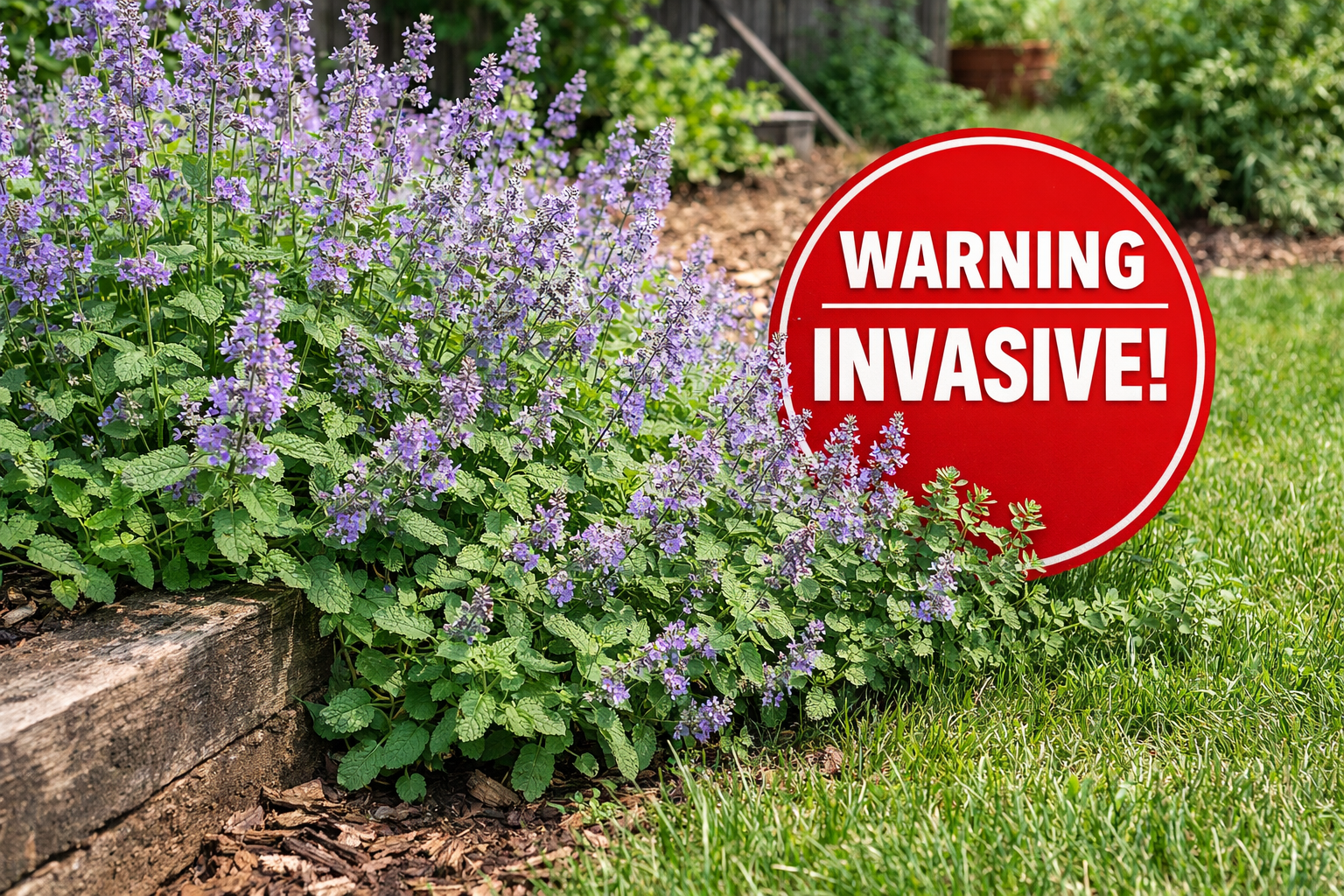
The word “mint” on a plant tag can make sane gardeners back away like they just spotted bamboo in a starter pot. Fair enough. A lot of plants in the mint family are eager, and some are flat-out rude. So, is catmint invasive? Usually no. Most ornamental catmint sold as Nepeta behaves like a clump-forming perennial, not a yard-eating thug. The catch is that “catmint” gets used loosely, and that loose label is where people get burned.
I’ve seen tidy catmint blamed for crimes committed by catnip and true mint more than once. Same family, same fuzzy common-name bucket, very different garden behavior. A plant can spread a bit, drop a few seedlings, or bulk up into a broad mound and still not meet the official definition of an invasive species, which requires harm to the ecosystem, economy, or human health.
If all you wanted was the short answer, here it is: most ornamental catmint is safe for a managed bed or border. If the tag says Nepeta cataria, which is catnip, or the planting sits near a natural area where stray seedlings are a problem, slow down and read the tag like it owes you money.
What this article will clear up
- why “not invasive” is true for many catmints and still incomplete
- how catmint, catnip, and true mint part ways in the garden
- which Nepeta types stay tidy and which ones need watching
- what makes catmint spread more than expected
- how to keep it neat without turning it into a weekly chore
Fast check: the 3-part catmint test
| What to check | Good sign | Pause sign |
|---|---|---|
| Botanical name | Nepeta x faassenii or a named ornamental cultivar | Nepeta cataria or no clear species on the tag |
| How it spreads | Forms a mound or clump | Drops lots of seedlings or sits by open soil |
| Where it goes | Sunny managed border, edging, or container | Near native beds, meadows, or places with zero tolerance for volunteers |
Is Catmint Invasive? Usually No, but the Plant Tag Matters
The clean answer is this: most ornamental catmint is not invasive. That includes many of the blue and lavender-flowered Nepeta varieties used along paths, in dry borders, and around roses. They spread enough to look generous, which is nice, but not in the “why is this in my lawn now?” way gardeners dread.
Where the usual answer falls short is vocabulary. Garden writing gets sloppy here. “Invasive,” “aggressive,” “fast-growing,” and “self-seeding” often get mashed together like they all describe the same headache. They do not. A plant can be vigorous and still be a fine garden plant. A plant can self-seed lightly and still be totally manageable. And a plant can feel too big for a tight bed while still not being invasive in any formal or ecological sense.
Quick rule: If the plant forms a mound where you planted it, that is one issue. If it pops up feet away from where you planted it, that is another. If it escapes into nearby habitat and causes harm, that is the line invasive-status talk is actually about.
That is why the tag matters. North Carolina State’s plant toolbox describes blue catmint, Nepeta x faassenii, as a sterile hybrid that rapidly forms a clump, grows about 18 to 24 inches tall and up to 36 inches wide, and is unlikely to reseed. That is a very different risk profile from a plant sold under the same broad common-name umbrella but grown from fertile seed.
So when a nursery tag says only “catmint,” do not stop at the pretty flower photo. Flip it over. Read the species or cultivar. That tiny line of text is doing most of the work.
Catmint, Catnip, and Mint Are Not the Same Problem
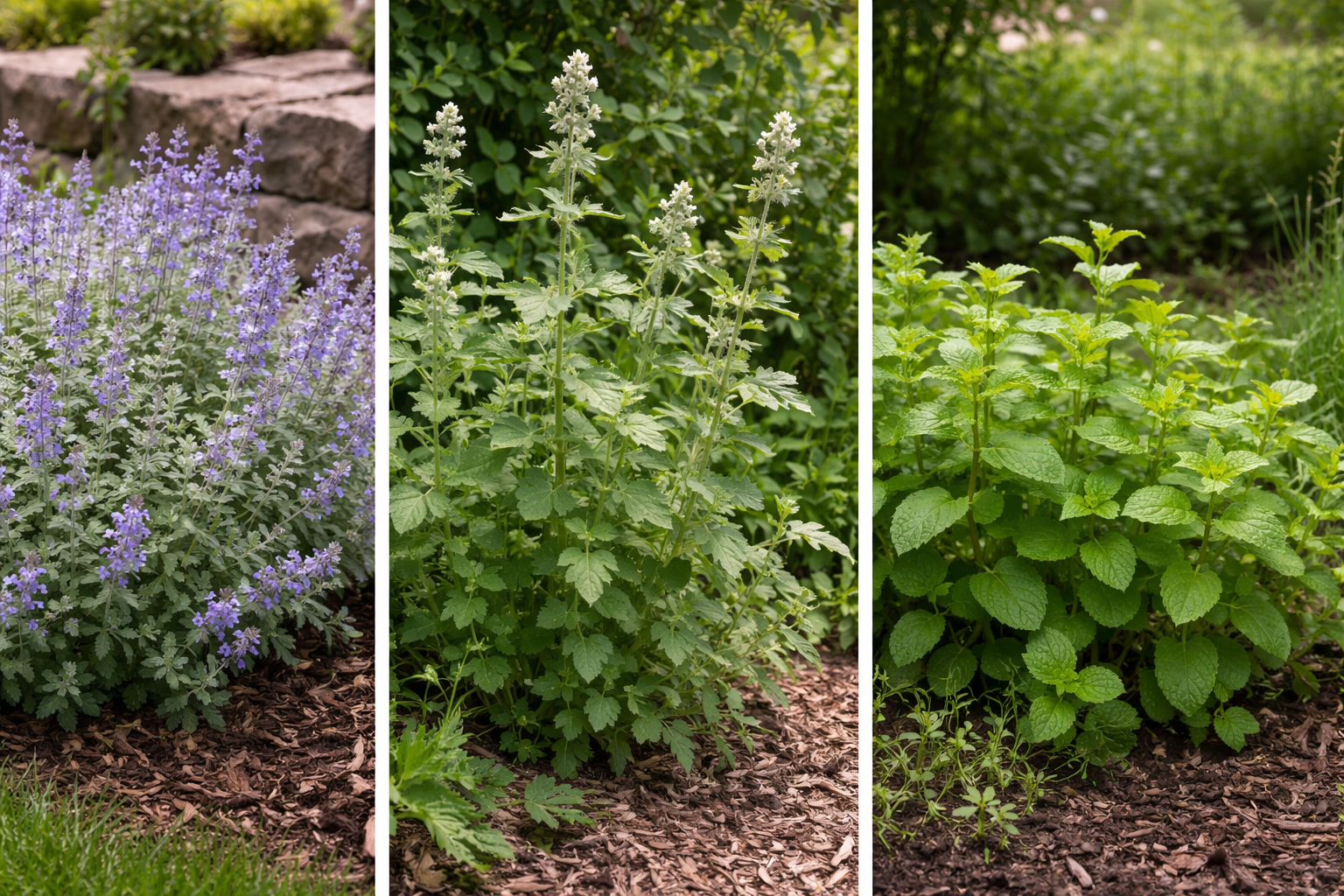
This is where most of the confusion starts. Catmint and catnip are related. Both sit in the Nepeta genus. Both belong to the mint family, Lamiaceae. But that does not make them gardening twins, and it definitely does not mean they behave like peppermint in the ground.
Catnip, Nepeta cataria, is the messier cousin. The University of Wisconsin describes it as a vigorous and weedy herbaceous perennial that is widely naturalized and can grow up to 3 feet tall and wide under ideal conditions. It may also form colonies from short rhizomes. That line matters because it explains why one gardener says, “My catmint was fine,” while another swears the stuff goes wandering.
Ornamental catmint is usually what people mean when they picture those soft blue flower clouds spilling over a path edge. It tends to grow as a mound or broad clump. Catnip is rangier. Looser. More likely to read as herb patch gone a bit feral.
And true mint, like peppermint or spearmint, is a separate issue again. Those are the plants that made the whole family famous for bad behavior. If the goal is to compare catmint with that kind of runner-happy growth, how fast mint really grows is a much better reference point than most catmint guides.
Watch for this: same family, different manners. Treating catmint, catnip, and peppermint like one problem is like judging every dog by one beagle that learned how to open the fridge.
If the tag says Nepeta cataria, assume more reseeding potential and a looser habit. If the tag shows a named ornamental cultivar, you are usually in much safer territory for a front-of-border planting.
Which Nepeta Types Stay Tidy and Which Ones Need Watching
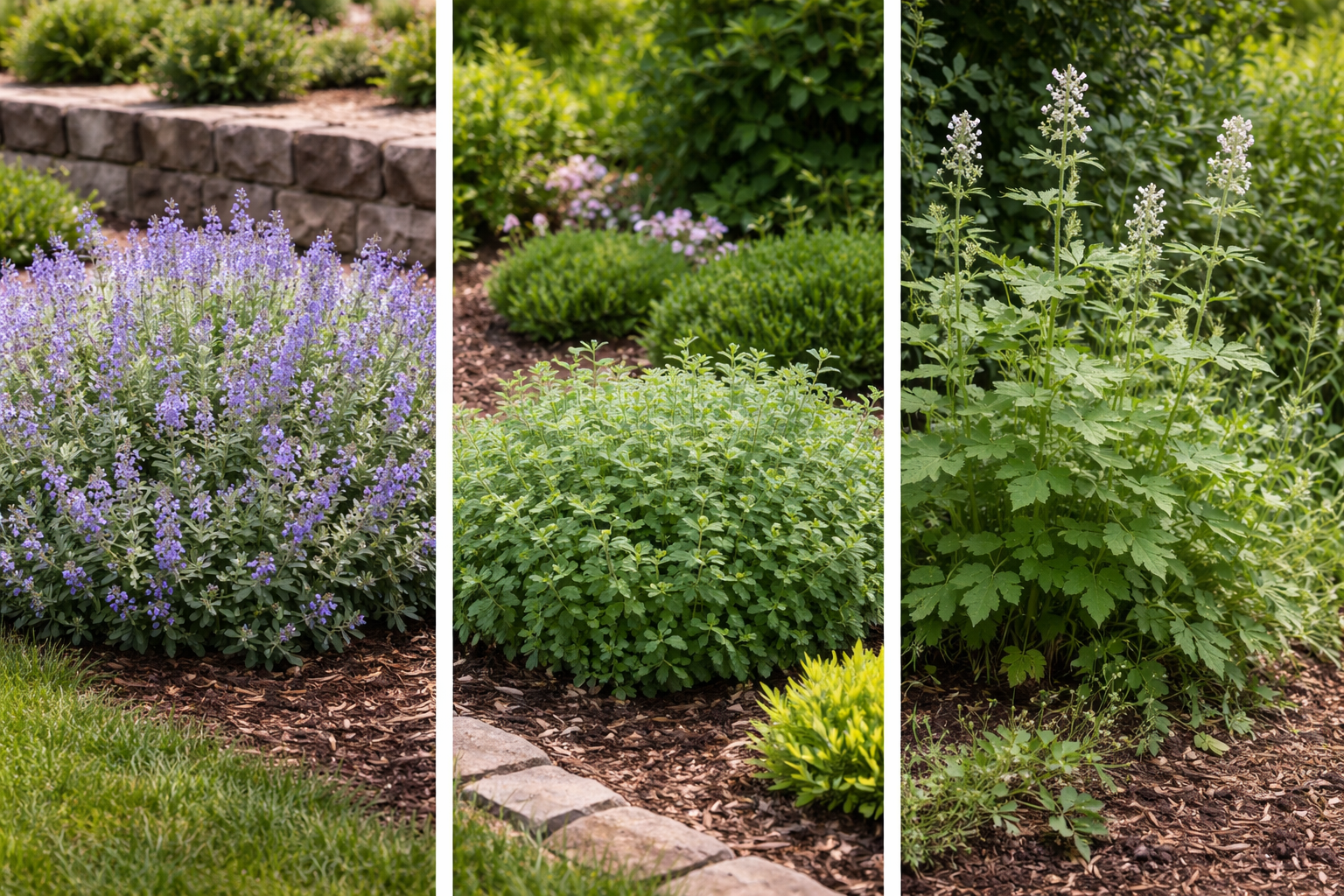
Once you stop relying on the common name, the whole question gets easier. Some Nepeta types are bred for ornamental use and stay pretty civilized. Some are not. Some are sterile, which quietly solves half the problem right there.
| Plant type | Likely behavior | Best use |
|---|---|---|
| Nepeta x faassenii and similar ornamental hybrids | Clump-forming, broad mound, often low reseeding risk | Borders, edging, gravel gardens, sunny beds |
| Named ornamental cultivars such as Walker’s Low | Usually tidy for their size, often sterile or near-sterile | Mass plantings, path edges, mixed perennial borders |
| Nepeta cataria (catnip) | Looser habit, more weedy look, more volunteer potential | Herb patch, cat garden, contained planting, not the neatest border star |
Walker’s Low is the name that comes up again and again for good reason. Missouri Botanical Garden lists Nepeta racemosa ‘Walker’s Low’ as a 2 to 2.5 foot-tall perennial in zones 4 to 8 and notes that it must be propagated by division because its seeds are sterile. That is exactly the kind of detail that calms an invasive-anxiety spiral. Sterile seed means no seedling rain.
That does not mean small. It means predictable. Walker’s Low can still make a broad, handsome mound. It just is not usually sneaking offspring into the next county.
In practice, named ornamental selections such as Walker’s Low, Cat’s Pajamas, Cat’s Meow, and other nursery-bred forms are usually the safest picks for gardeners who want the catmint look without catnip-style wander. If the label is vague or seed-grown annuals are mixed into the display, I get a little suspicious. That is one of those garden-center instincts that saves time later.
When Catmint Starts Acting Pushy in a Garden
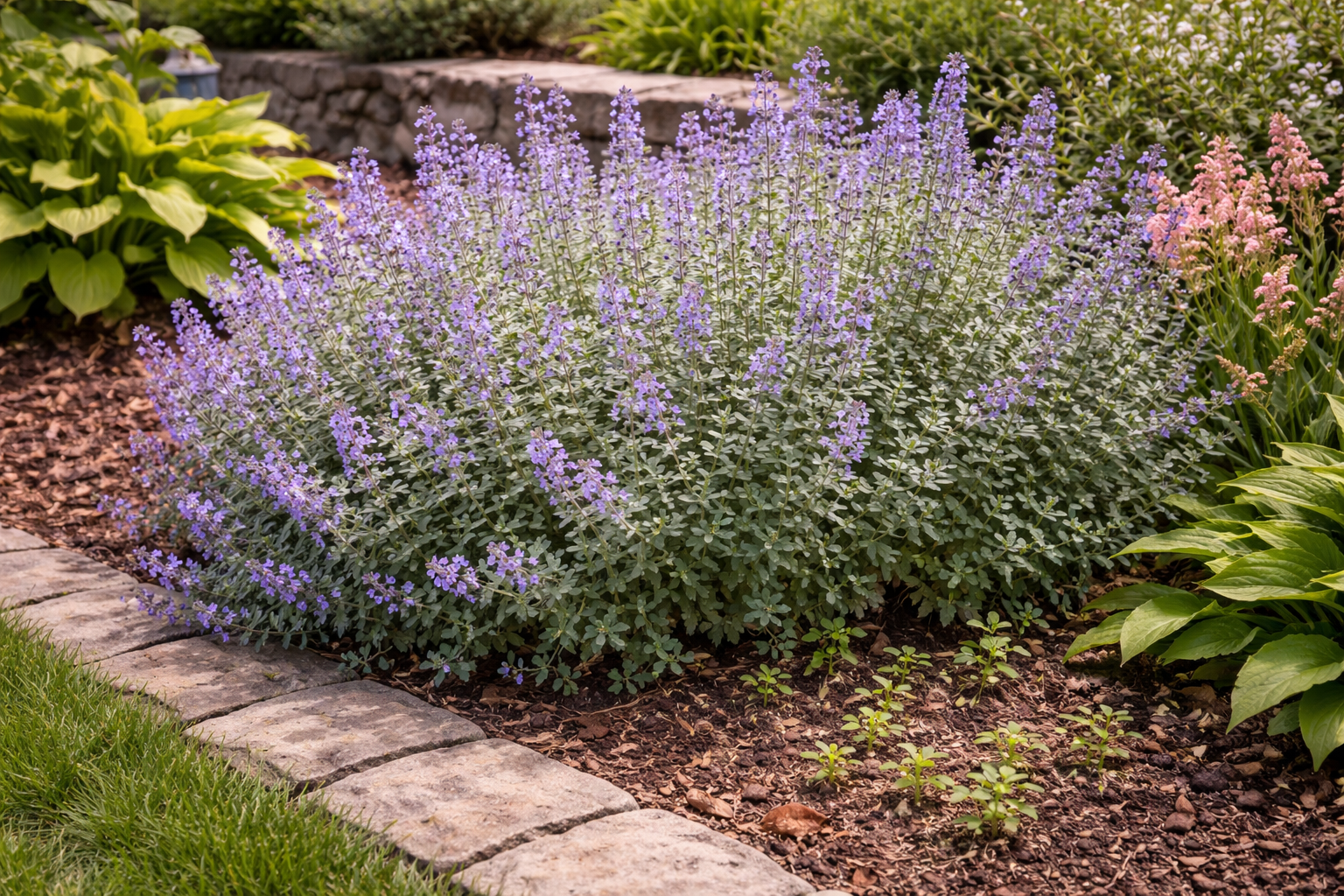
A plant does not have to be invasive to become annoying. That is the subtle part people feel but do not always name well. Catmint can seem pushy for three different reasons, and each one asks for a different fix.
First: the clump gets larger than expected. That is common with healthy ornamental catmint. The plant is doing what it was bred to do, which is make a broad, flowering mound. If you tucked it into a tiny pocket beside slower neighbors, it can look like the problem when the real issue was spacing.
Second: it drops seedlings. This is the bit that makes people mutter “invasive” under their breath. Fertile types, older seed-grown strains, or catnip can all do this more than a sterile hybrid will. Open soil around the base makes it easier for volunteers to settle in.
Third: it lands in the wrong setting. A few stray seedlings in a cottage border are one thing. A few stray seedlings at the edge of a meadow planting or native restoration area are another. The same behavior hits differently when zero spread is the rule.
Fast check: if the issue is width, divide or re-site. If the issue is seedlings, shear or deadhead sooner. If the issue is the location itself, the plant was the wrong pick even if it behaved “normally.”
Site conditions matter too. The Royal Horticultural Society notes that catmints do well in full sun and freely draining soil, and that permanently wet soil can cause plants to rot while deep shade makes them struggle. In a lean, sunny border, catmint often stays neat enough and blooms hard. In richer conditions with open ground around it, it can get looser and a bit more opportunistic. Not villainous. Just… more itself.
This is also why gardeners sometimes talk past each other. One person grew a sterile hybrid in a gravelly border and never saw a volunteer. Another planted catnip beside bare soil and got a small uprising by August. Both stories are true.
How to Keep Catmint Tidy Before It Becomes a Chore
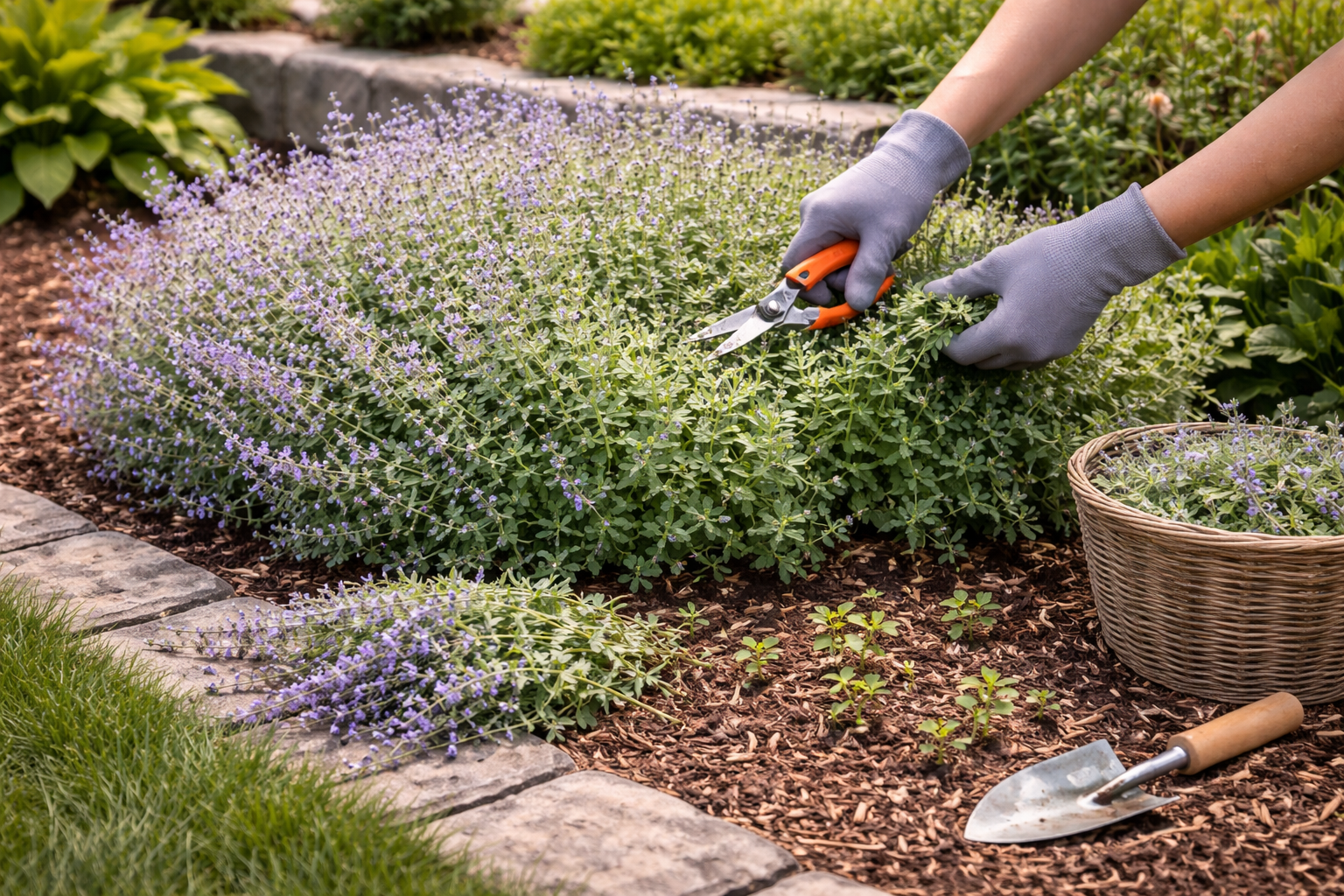
Good catmint maintenance is light-touch. You do not need a military schedule. You just need to get ahead of the two things that make it look unruly, which are spent flowers and overgrown clumps.
Shear after the first flush and you cut down on reseeding. The Royal Horticultural Society says to trim after flowering to neaten plants and encourage further flower production. In plain English, that means giving the plant a haircut once the first big bloom run starts to fade. About one-third off is a useful working rule. It looks blunt for a week, then it fills back in and often reblooms.
Pull volunteers while they are tiny and the job stays easy. This is not glamorous advice, but it works. A thumb and forefinger in spring saves a trowel and bad mood in midsummer.
Divide large clumps when the plant is crowding its lane. Ornamental catmint often spreads by bulk, not by stealth. If the mound is swallowing a path edge or shading out a slower perennial, lifting and dividing it is cleaner than pretending it will learn manners next season.
Use containers when the site is the problem. If the appeal is the color, scent, and pollinator value but the bed itself is too sensitive for any self-seeding risk, a container is the neat answer. For gardeners already thinking in that direction, the rules for grow spearmint in a pot carry over surprisingly well on the control side: real drainage, decent soil volume, and no chance for roots or seedlings to wander into open ground.
Note: if a catmint is already messy by June, skip fertilizer. That often gives you more leaf and flop, not a nicer plant.
The sweet spot is boring in the best way: one haircut after the first bloom, a quick seedling patrol now and then, and division when the clump stops fitting the space. That is it. No drama.
Where Catmint Makes Sense, and Where It Is the Wrong Plant
Catmint shines in places where a wide, aromatic, drought-tolerant perennial is an asset. Sunny borders. Path edges. Gravel gardens. Dry-ish beds near roses or salvia. The plant softens hard lines nicely, and the long bloom season earns its keep. I like it most where a bit of spill is welcome rather than punished.
It also makes sense in deer-prone gardens. North Carolina State notes that blue catmint’s scent deters deer, which lines up with what a lot of gardeners see on the ground too. Deer are not robots, but catmint is rarely first on the buffet.
Where is it the wrong plant? Anywhere the rules are tighter than the plant’s habits. That includes the edge of native meadows, restoration projects, unmanaged slopes, or tiny jewel-box beds where even a few volunteers feel like a nuisance. In those spots, “usually not invasive” is not enough. You need “close to zero trouble,” and those are not the same thing.
Containers make sense here too, not just for patios but for decision-making. If you love the look but do not trust the site yet, try one season in a pot. Watch the plant. See if it behaves. That little trial tells you more than ten vague care sheets.
Remember: a plant can be a great border perennial and still be a poor fit near sensitive habitat. Placement changes the answer.
A Simple Rule for Deciding Whether to Plant Catmint
If you want one rule you can actually use at the nursery, here it is: plant ornamental catmint when you know the species or cultivar, the site is managed, and a broad clump will not bother you. Skip or containerize catnip, vague unlabeled Nepeta, or any catmint headed for a place where stray seedlings are a hard no.
Run through these five questions before you buy:
- Do I know the exact name?
If the tag gives you Nepeta x faassenii or a named cultivar, that is a good sign. If it says only “catmint,” treat it as incomplete information. - Is this ornamental catmint or catnip?
If it is Nepeta cataria, expect a looser habit and more seed potential. - Can this bed handle a broad mound?
If spacing is tight, a perfectly normal catmint can still be the wrong pick. - Am I willing to shear it once after bloom?
If yes, many spreading worries shrink fast. - Is this near a natural area or a no-volunteer planting?
If yes, choose the tidiest sterile ornamental form you can verify, or use a container instead.
That leads to three clean outcomes.
| If this sounds like your plant… | Then do this |
|---|---|
| Named ornamental catmint in a sunny, managed bed | Plant it with confidence |
| Fertile type in open soil where a few seedlings are tolerable | Plant carefully and plan one shear after bloom |
| Nepeta cataria, vague labeling, or a sensitive site | Skip it there or grow it in a container |
That is the whole trick, really. The mint family is not the decision. The exact plant and the exact place are the decision.
A Few Remaining Questions About Catmint
Is Walker’s Low catmint invasive?
Usually no. Walker’s Low is widely treated as a well-behaved ornamental catmint, and Missouri Botanical Garden notes that it is sterile and propagated by division. It can still make a generous mound, so give it room, but it is not known as a classic runaway spreader.
Does catmint spread by roots or mainly by seed?
Most ornamental catmint spreads more by enlarging its clump than by sending long runners. Some types can self-seed, and catnip is more likely to act that way. If seedlings are the worry, deadheading matters more than root barriers.
Can catmint become a problem in some regions?
Yes. A plant that behaves well in a managed border can still be the wrong choice near natural areas or in places with local invasive or noxious-plant rules. Local extension guidance and state lists should overrule broad national garden advice.

Michael Rowan is the founder and lead writer at The Garden Playbook. He has spent 10+ years growing plants across a range of settings — from indoor houseplants and container gardens to raised beds and in-ground plots — adapting methods to different light levels, seasons, and growing conditions.
Michael focuses on practical, experience-based guidance grounded in fundamentals: soil health, watering strategy, plant nutrition, pruning and propagation, and integrated pest management (IPM). His work aims to help readers diagnose common problems (such as yellowing leaves, stunted growth, or pest pressure) and apply straightforward solutions that are realistic for home gardeners.
At The Garden Playbook, Michael develops tutorials and plant guides using a consistent process: documenting real outcomes where possible, explaining the “why” behind each step, and verifying higher-risk topics (such as plant toxicity or pest treatment options) against reputable horticultural references.