
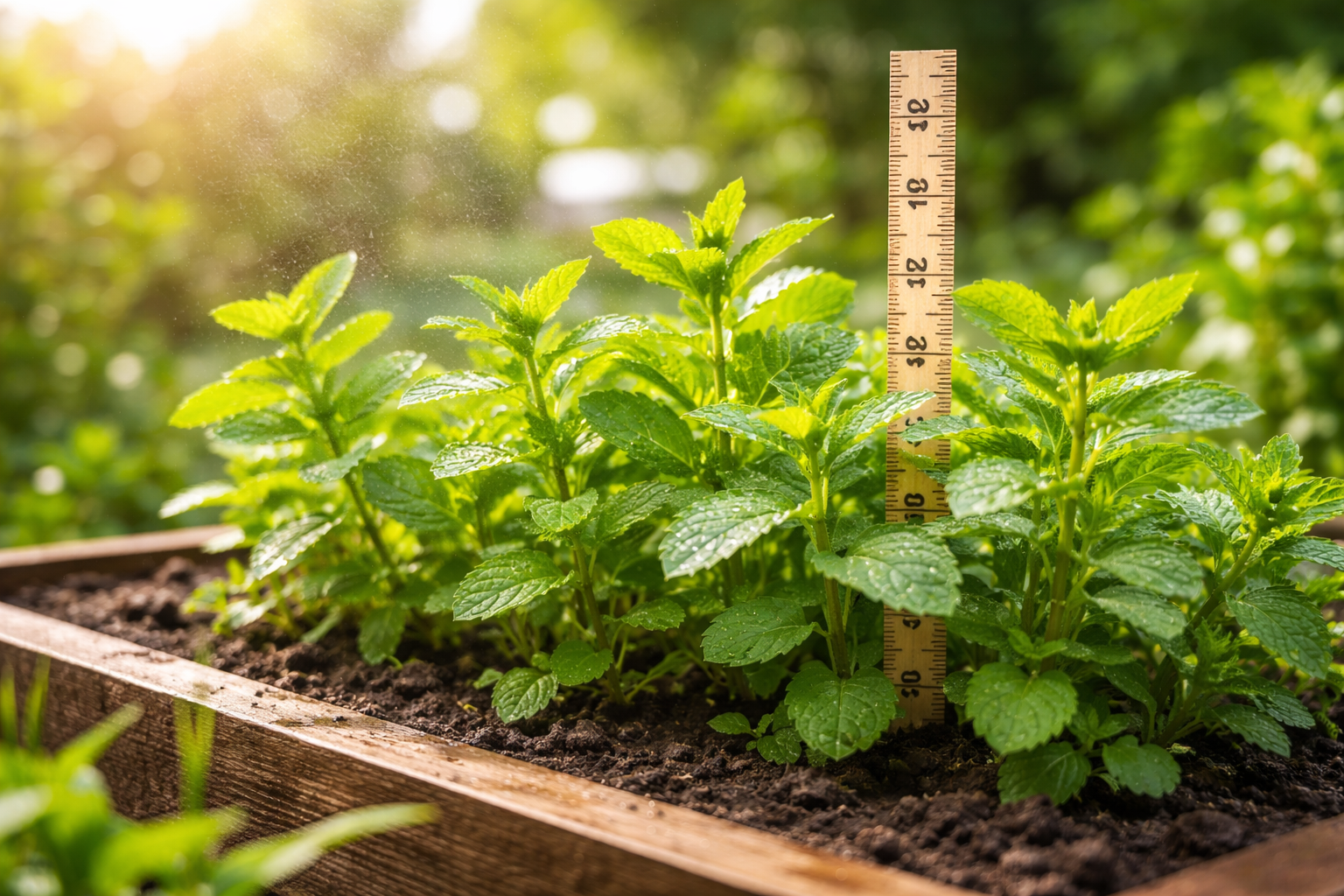
You plant mint because everyone says it grows like it has somewhere to be. Then a week passes, and your pot looks… polite. A few leaves. Not much swagger. That is usually when people ask how fast does mint grow, and the stock answer, “fast,” stops being useful.
Here is the direct answer: mint is quick by herb standards, but the timeline changes a lot based on how you start it. From seed, sprouting usually takes about 10 to 15 days in warm, bright conditions, which matches guidance from the Royal Horticultural Society and the UC Master Gardener Program of Sonoma County. From a cutting, division, or nursery plant, usable growth comes much sooner. And once mint is established, the bigger issue often is not “Will it grow?” but “How do I keep it from spreading into everything else?”
That is the tension behind this whole topic.
You are usually asking one of three things at once: how long mint takes to sprout, how long it takes to become harvestable, or how fast it spreads once it gets comfortable. Mix those up, and mint starts to feel weirdly unpredictable when it really is not.
- How long mint takes from seed, cutting, division, or starter plant
- What “normal” growth looks like in the first few weeks
- How to speed mint up without drowning it or stuffing it with fertilizer
- Why container mint and in-ground mint can behave like two different plants
- What to check when your mint looks stuck
Start Here: Fast guideline for mint growth
| Your setup | Normal speed | What to do next |
|---|---|---|
| Seeds in a warm bright spot | Sprouts in about 10 to 15 days | Wait for several true leaves, then pot up gently |
| New nursery plant or division | Short settling period, then quicker leaf growth | Keep soil evenly damp, give real light, do not overfeed |
| Established mint in active season | Fast rebound after cutting | Harvest often and watch for sideways spread |
| Mint in a tiny pot or dim room | Alive, but slower and stretchier | Give stronger light or a roomier pot before changing anything else |
How fast does mint grow? Here’s the useful timeline
If you want one clean timeline, use this: mint from seed usually sprouts in about 10 to 15 days, then needs a few more weeks before it looks like a plant you actually want to harvest. Mint from a starter plant, rooted cutting, or division skips the baby stage and gets to usable leaves much faster.
The RHS says germination should take about two weeks in bright conditions around 20C. The UC Master Gardener page gives the same 10 to 15 day window. That is the sprouting part. Harvestable is a different milestone.
Note: “Fast-growing” is sloppy shorthand. Seed sprouting, first harvest, and aggressive spread are three different clocks.
For home gardeners, the timeline that matters most is usually this:
| Starting method | What happens first | When it feels “usable” |
|---|---|---|
| Seed | Sprouts in about 10 to 15 days | After it has put on real leafy growth, not just tiny seedlings |
| Stem cutting | Roots fairly quickly in water or potting mix | Usually faster than seed once rooted and potted |
| Division | Already has roots and stored energy | Often the fastest path to a decent harvest |
| Nursery plant | May pause briefly after planting | Usually the quickest route for kitchen use |
That pause after planting throws people. I have had mint starts sit there for a week looking almost offended by the move, then throw fresh side growth all at once. That is normal. If the leaves stay green and the stems stay firm, patience beats fussing.
If you want the bigger beginner picture too, this pairs well with this guide to whether mint is easy to grow. It covers the setup habits that make mint feel simple instead of sneaky.
Start from seed, cutting, or plant? Pick the timeline you actually want
The Utah State University Extension guide points out a detail that matters more than most beginner articles admit: mint can be grown from seed or transplants, but seed-grown plants often fail to come true to type because mints hybridize readily. The guide then leans toward established plants, cuttings, or divisions for named varieties.
That matters because “how long does mint take to grow” is partly a genetics and method question. Seed is slower and less predictable. Division is almost like starting with a head start card in your pocket. A nursery plant is the low-drama option if your real goal is to snip leaves for tea next month, not run a propagation experiment on your windowsill.
Use this rule set:
- If you want the fastest route to harvest, buy a healthy starter plant or divide an established one.
- If you want a cheap, satisfying middle path, root a cutting.
- If you enjoy starting herbs from scratch and do not care about speed, seed is fine.
Quick call: For most gardeners, the fastest method is not “the one that roots first.” It is the one that gets you to usable leafy stems with the least stall time. That is usually a starter plant, division, or cutting.
One more thing. Peppermint adds a wrinkle. The UC Master Gardener source notes that peppermint is a hybrid and is propagated by cuttings rather than seed. So if you are asking how fast does peppermint grow, the better question is often whether you are starting with a rooted piece or a small nursery plant, because that changes the timeline more than the label does.
Watch these stages so you know whether your mint is on track
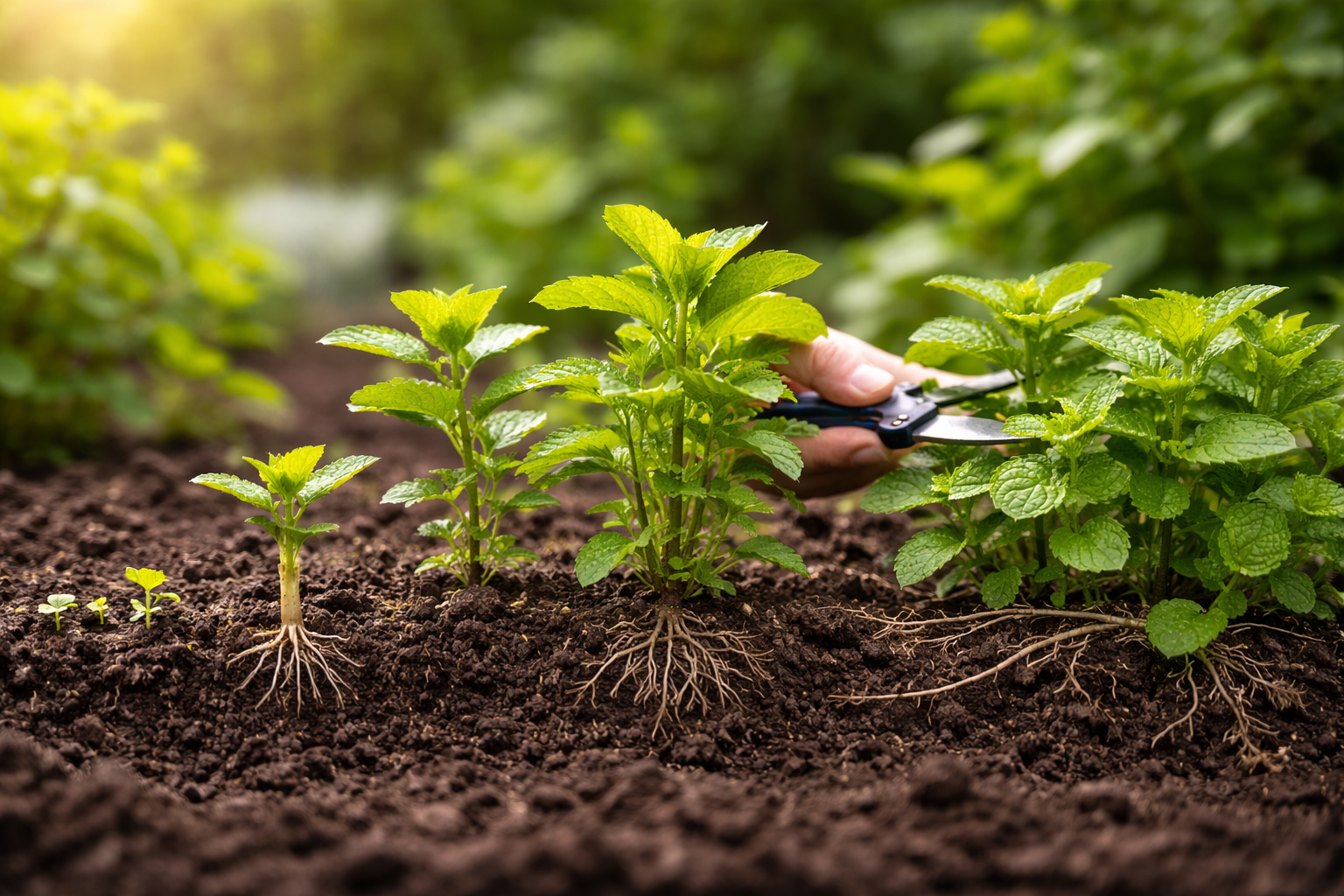
Mint rarely grows in one steady, movie-montage line. It moves in stages. Once you know them, a lot of anxiety drops away.
Stage 1. Sprout or root. Seeds crack and emerge. Cuttings push roots. This part can feel surprisingly quick if the setup is warm and bright.
Stage 2. Settle in. This is the weird quiet phase. A transplant may look unchanged for several days while roots get hold in the new pot or bed. Top growth can slow even though the plant is doing useful work below the soil line.
Stage 3. Push leaves. Once roots are comfortable, mint starts making the kind of growth people expect. New leaf pairs appear faster, and stems lengthen.
Stage 4. Branch after cutting. The University of Minnesota Extension notes that for mint-family herbs, cutting a few inches down the stem just above a set of leaves triggers new growth from buds at that point, which gives you a bushier plant. That is one of the simplest ways to turn “one lanky stem” into “a proper clump.”
Stage 5. Spread sideways. Upward growth is only half the story. Mint also starts creeping by runners or rhizomes. This is where a happy plant stops being cute and starts plotting.
So what is normal, and what is not?
- Normal: a short post-planting pause, green leaves, firm stems, slow but visible new tips
- Not normal: limp stems in cool weather, yellowing that keeps spreading, blackened stems at soil level, sour-smelling soil, or no change at all for weeks in decent light
If your mint looks healthy but boring, that is usually still okay. If it looks stressed and boring, now you have something to diagnose.
Give mint these conditions and growth gets much faster
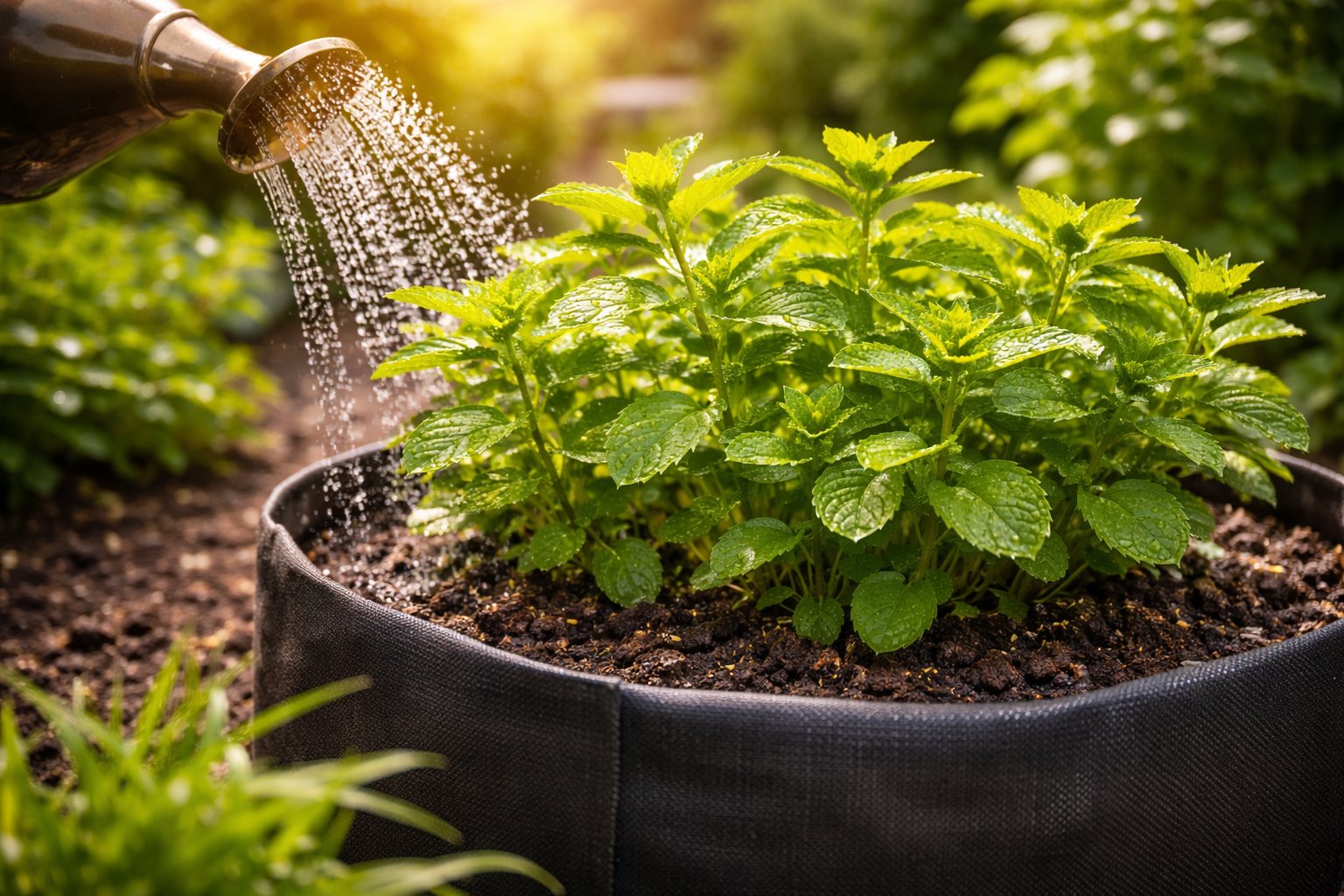
The speed of mint growth is less mysterious than people think. Three factors do most of the work: light, water, and root room.
The University of Minnesota Extension says most herbs need at least six hours of direct sun to grow well, with stronger light building better growth and better flavor. The Utah State University guide says mint grows best in full sun or partial shade. Put those together, and the working rule is pretty clear: mint will tolerate some shade, but good light makes it faster, fuller, and less floppy.
Then there is water. USU recommends supplying up to 1 to 2 inches of water per week during the growing season, while also warning that overwatering pushes disease. That sounds contradictory until you have grown mint in both a garden bed and a black nursery pot in June. In the ground, water can linger. In a pot, the same plant can dry out way faster than you expect.
Practical rule: Keep the root zone evenly damp, not soggy. If the top starts drying and the pot feels light, water. If the soil stays cold and heavy for days, back off.
Soil texture matters too. Mint likes fertile, well-drained growing media. Rich does not mean packed and airless. A potting mix that stays dense and swampy slows roots, and slow roots mean slow everything.
Fertilizer gets overblamed and overused. USU notes that one early spring feeding is enough for many plantings and that overwatering plus overfertilizing can reduce production and feed disease. If your mint is stalled, more feed is rarely the first fix. Light and drainage beat fertilizer nine times out of ten.
If you grow herbs indoors, the light piece gets even more obvious. A weak north window can keep mint alive, but it often will not give you the fast, compact growth people picture. If indoor light is your friction point, this guide to the best-facing window for plants helps sort out what “bright” really means in a house.
Know when fast growth is good and when it means mint is about to take over
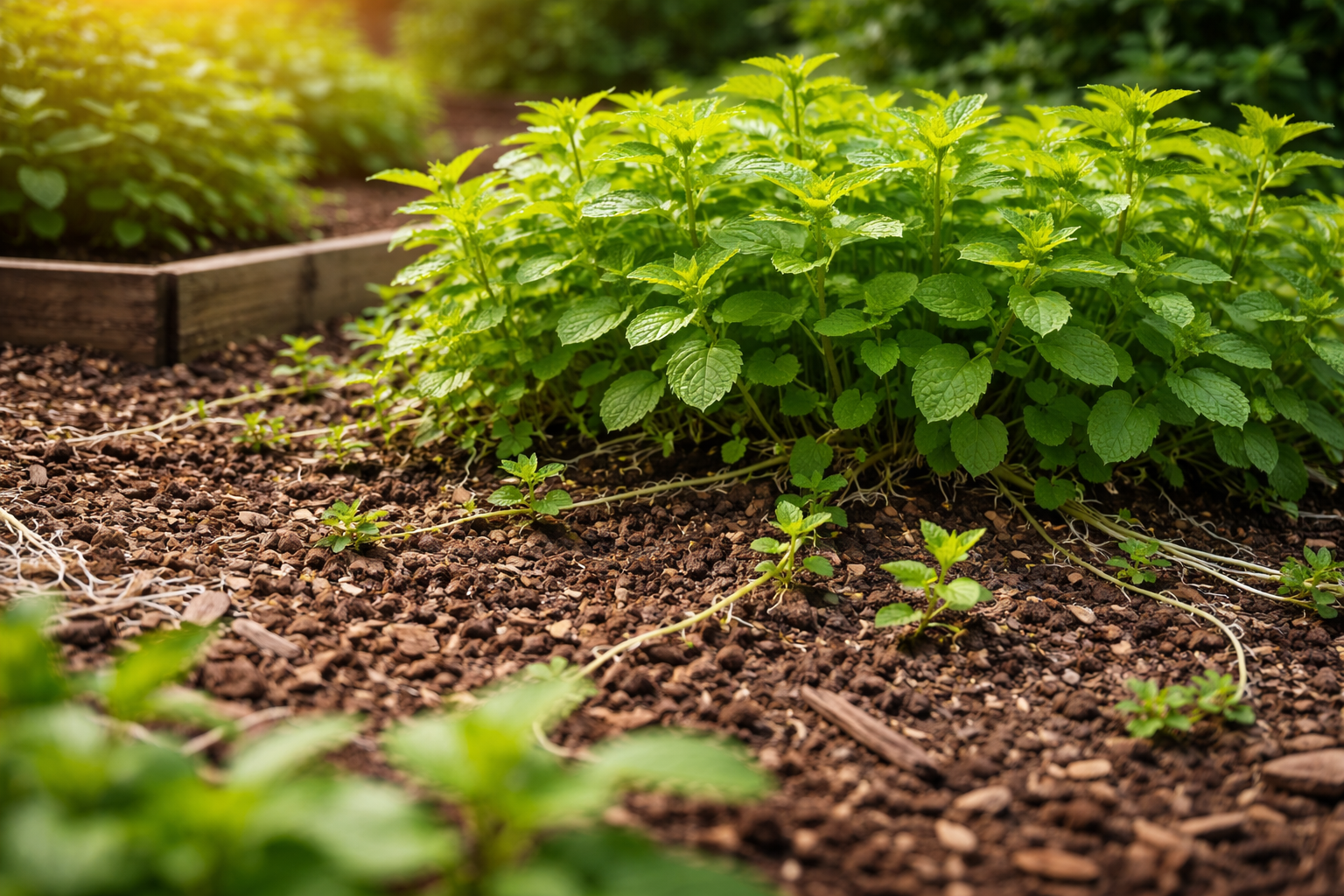
Some readers mean “How fast does mint grow upward?” Others really mean “How fast does mint spread, and am I about to regret this?” Those are not the same thing.
The RHS says many mints are vigorous, spreading plants and are best grown in pots to keep them contained. The UC Master Gardener page is even blunter: planted in the ground, mint’s creeping rhizomes can take over, crowd out other plants, and become very hard to remove.
That matches lived garden reality a little too well. A tiny mint plant in May can look harmless. By late summer, it starts popping up where you never invited it. You are not dealing with one tidy crown anymore. You are dealing with underground ambition.
Here is the useful split:
- Fast leaf growth is good. That means quick harvests and a fuller plant.
- Fast sideways spread is only good if the plant is boxed in and you want a larger patch.
If you want speed without chaos, containers are the cleanest answer. The University of Minnesota Extension even suggests sinking a large pot or bottomless bucket into the ground as a way to contain invasive mints. That gives you some in-ground look without turning the bed into a mint republic.
And if you are thinking past one solo plant, this guide to what to plant with mint in container gardens helps sort out which companions can share space without making the pot a wrestling match.
Harvest early, cut smart, and mint usually comes back stronger
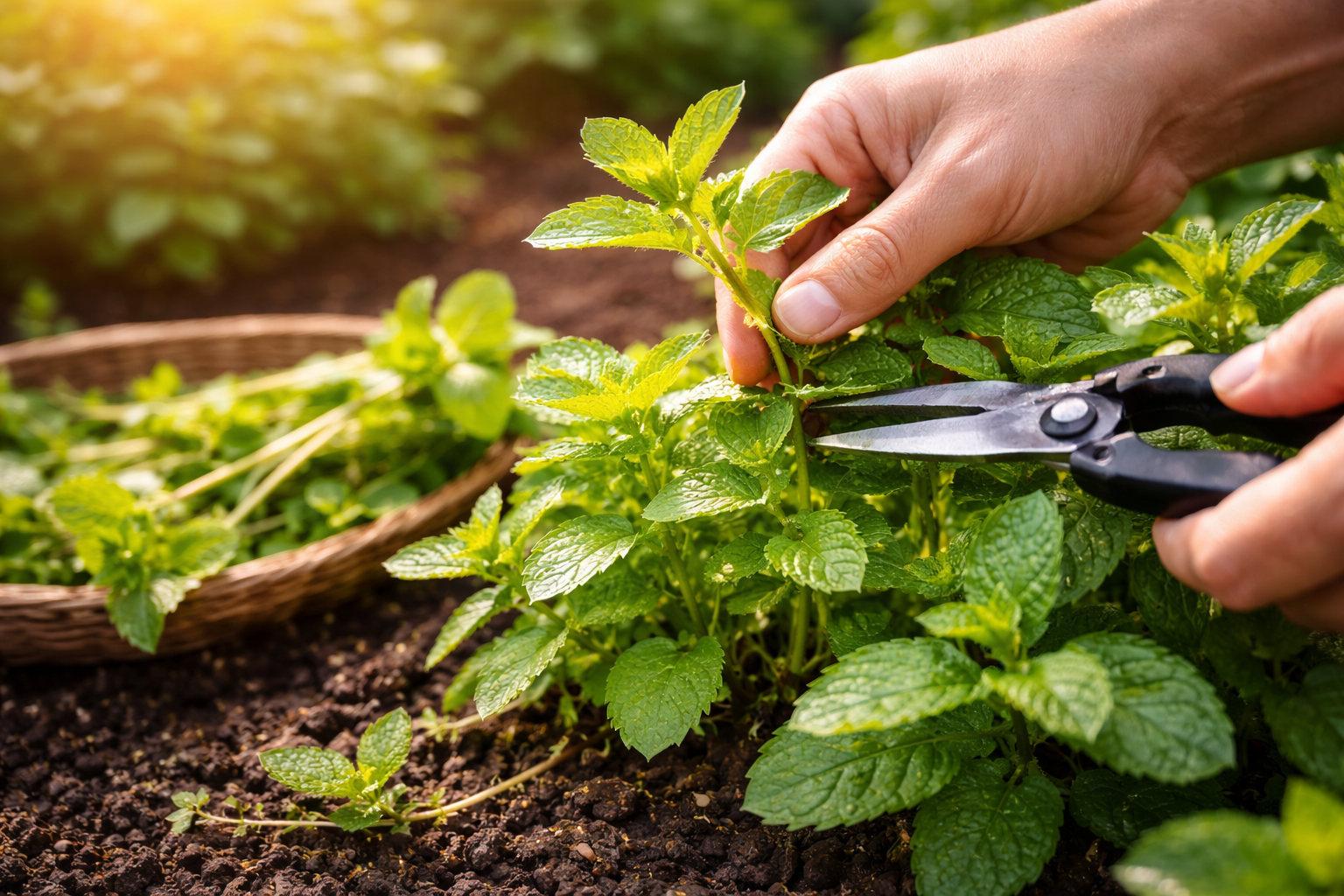
USU says leaves and stems can be harvested throughout the season, and the guide also notes you can cut mint back within an inch of the ground about three times a season just before bloom. That sounds aggressive until you grow mint for a while. Then you realize mint often likes a haircut.
For lighter, more frequent picking, the same general pattern from the University of Minnesota works well: cut just above a set of leaves. New shoots form from that point. More side shoots mean a bushier plant and more harvest points.
This is where a lot of people accidentally make mint slower. They harvest by plucking random top leaves, or they snip one stem all the way down and leave the rest untouched. Both work, sort of. Neither shapes the plant well.
A better rhythm is simple:
- Start with light cuts once the plant has enough leafy growth to spare
- Cut above leaf sets so side growth wakes up
- Use mint often rather than letting it stretch and bloom unchecked
Small but useful detail: The University of Minnesota says many herbs taste best just before flowering, and mid-morning is a good harvest time. If you care about flavor, not just bulk, that timing is worth borrowing.
For kitchen growers, this changes the whole question. You do not need a giant mint plant. You need a plant that keeps making tender new tips. That is a different target, and it is a much easier one to hit.
If your mint is growing slowly, use this quick diagnosis
Slow mint is usually not random. It usually traces back to one of a few boring causes. Boring is good. Boring is fixable.
| What you see | Most likely cause | What to check next |
|---|---|---|
| Long pale stems, small leaves | Not enough light | Move to stronger sun or a brighter window |
| Leaves yellowing, soil staying heavy | Too much water or poor drainage | Check drainage holes and potting mix texture |
| Healthy color but no top growth after planting | Normal root-settling phase | Wait a little longer before changing anything |
| Plant dries out fast every day | Pot too small or weather too hot | Check root crowding and watering rhythm |
| Spots, distortion, or collapsing stems | Disease or pest pressure | Inspect foliage closely and keep leaves dry overnight |
USU specifically warns that excess water leads to disease and names problems such as rust and other leaf or stem issues. The guide also notes that keeping foliage dry helps. So if your mint is slow and ugly, not just slow, back away from the watering can before you reach for fertilizer.
Work through it in this order:
Step 1. Check light and rule out stretch. If stems are reaching and internodes are widening, the plant wants more light.
Step 2. Check drainage and rule out soggy roots. Slow mint in a wet pot often turns yellow before it ever perks up.
Step 3. Check the pot and rule out a crowded root zone. If roots are packed tight and growth has flattened out, a bigger home can restart it.
Step 4. Check timing and rule out panic. A newly transplanted mint that looks healthy may just be settling.
Step 5. Check leaves and stems for actual trouble. Spots, curling, and stunting are clues. Ignore them and you waste time “fixing” the wrong problem.
What not to do: Do not stack fixes. More water, more feed, and a bigger pot all at once just muddies the signal. Change one thing, then watch.
Use these rules of thumb for pots, indoor growing, and shade
Mint in a bed, mint in a patio pot, and mint in a kitchen window are all “mint,” but they do not move at the same pace.
Pots. The UC Master Gardener source notes that containerized mints need regular watering because pots dry faster, and it also says growth can slow when roots fill the container. That squares with what most of us have seen: container mint is easy until it becomes a thirsty little root mat. Then it goes from perky to floppy in one warm afternoon.
Indoors. The University of Minnesota says indoor herbs need the best light available and that weak light leads to thin, spindly growth. So yes, mint can grow inside. No, it does not usually grow indoors with the same speed and density it gets outside in good light. It can still be worth it for small, frequent snips, but the standard needs to change.
Shade. Mint handles partial shade better than many herbs, but “handles” is not the same as “thrives fast.” In lower light, growth usually gets looser, stems run longer, and flavor can soften a bit.
Here are the simple rules that save time:
- If mint in a pot dries out every day, the container may be too small, too dark-colored, or too root-packed.
- If indoor mint is alive but stringy, treat light as the first suspect.
- If mint in shade is growing, but slowly, do not chase speed with extra fertilizer.
- If your goal is lots of quick leafy growth, outdoor containers or controlled in-ground planting usually beat indoor setups.
This is also where the phrase “mint growth rate” starts to make more sense. You are not looking for a textbook average. You are looking for the growth rate in your setup, with your light, in your pot size, during your weather. That is the version that decides what you do next.
The short answer most gardeners actually need
Mint is fast, but not in one neat universal way. From seed, expect sprouting in about 10 to 15 days, then a slower runway to useful harvests. From a cutting, division, or nursery start, expect a shorter stall and faster payoff. Once established, mint often rebounds well after harvest and spreads faster than many beginners expect.
If you want the shortest path to usable leaves, start with a plant or rooted piece.
If you want control, grow it in a pot before it wanders.
If your mint looks stuck, check light, drainage, and root room before you blame the plant.
And if it pauses right after planting but still looks healthy, do less. That is often the move. Mint has a funny way of looking quiet right before it starts acting like mint again.
FAQ
How long does mint take to grow from seed to harvest?
Seeds usually sprout in about 10 to 15 days in warm, bright conditions. Harvest takes longer because the plant needs time to build enough leafy growth. A starter plant or division gets you there much faster.
Does mint grow faster in water or soil?
Mint cuttings root quickly in water, which makes water seem faster at first. For longer-term growth, leaf production, and a fuller plant, potting mix usually gives a better runway once roots have formed.
Will mint grow faster in a pot or in the ground?
In the ground, mint often grows and spreads faster once established. In pots, growth can still be quick, but root crowding and faster drying can slow it unless you stay ahead of watering and repotting.

Michael Rowan is the founder and lead writer at The Garden Playbook. He has spent 10+ years growing plants across a range of settings — from indoor houseplants and container gardens to raised beds and in-ground plots — adapting methods to different light levels, seasons, and growing conditions.
Michael focuses on practical, experience-based guidance grounded in fundamentals: soil health, watering strategy, plant nutrition, pruning and propagation, and integrated pest management (IPM). His work aims to help readers diagnose common problems (such as yellowing leaves, stunted growth, or pest pressure) and apply straightforward solutions that are realistic for home gardeners.
At The Garden Playbook, Michael develops tutorials and plant guides using a consistent process: documenting real outcomes where possible, explaining the “why” behind each step, and verifying higher-risk topics (such as plant toxicity or pest treatment options) against reputable horticultural references.