Mint has a funny way of making people overconfident. You snip a stem, drop it in water, and because everyone says mint is “easy,” you half expect a new plant by the weekend.
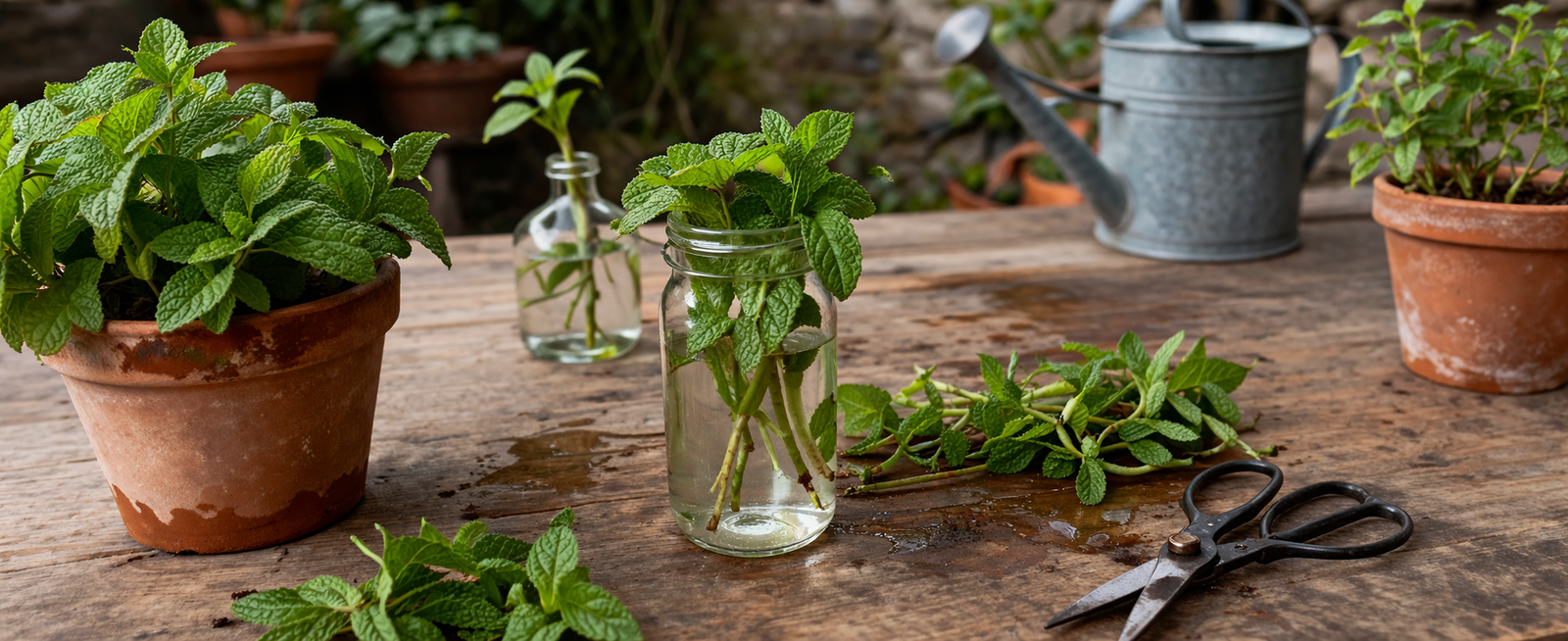
If you’re wondering how to propagate mint, the clean answer is this: take a healthy stem cutting, remove the lower leaves, root it in water or moist potting mix, and move it to a pot once it has a small but usable root system. If the plant is already big and crowded, division is often faster.
That broad answer works. The part that saves time is knowing when a jar of water is the smart move, when division beats it, and when a cutting looks alive but is quietly heading for mush.
- Which mint propagation method fits a grocery-store bunch, a potted plant, or an overgrown clump
- How to choose a stem cutting that roots instead of rots
- When to pot up without causing transplant shock
- Why seed is usually the wrong tool when you want the same mint back
- How to keep fresh mint lush without letting it run all over the place
- What stalled roots, black stems, and wilt actually mean
Mint propagation picker
| What you have | Best method | Why it works | Watch for |
|---|---|---|---|
| Fresh stems or a grocery-store bunch | Water cuttings | You can see roots forming and remove weak stems fast | Leaves in the water, harsh sun, transplanting too early |
| A healthy potted mint plant | Water or soil cuttings | Both are easy and you can take several stems at once | Soft, floppy growth and soggy potting mix |
| A crowded pot or patch with runners | Division | You already have roots, so the new plant starts with a head start | Replanting tiny rootless pieces and calling it division |
Fast rule: fresh stems favor cuttings, crowded roots favor division.
How to propagate mint for the fastest, cleanest win
The best beginner method is still water rooting. The Royal Horticultural Society notes that mint stems root readily in a jar of water, so a healthy cutting on a bright counter is not some gardening hack. It’s a standard, dependable way to start new plants.
If all you have is a handful of fresh stems, use water. If you already have a mature plant with runners or a crowded rootball, division is faster because the new piece starts with roots attached.
I’ve done both. For a grocery-store bunch, water is easier by a mile. For an old pot that looks like a green mop, division is less fussy and gets to a usable plant sooner.
Fast rule: if you can see roots already, split the plant. If you only have stems, root cuttings.
As a rough timeline, mint cuttings often show roots in about 1 to 2 weeks in bright, warm conditions. A cool room or tired stems can stretch that longer, so don’t toss a firm green cutting just because it isn’t moving at internet speed.
For a broader read on day-to-day care once the new plant is settled, is mint easy to grow covers the three things that keep mint simple instead of messy.
Why cuttings and division beat seed for most mint
Utah State Extension points out that mint readily hybridizes and seed-grown plants often fail to stay true to type. That’s the whole reason experienced herb growers lean on cuttings and division when they want the same flavor, scent, and growth habit again.
Say you love a peppermint plant because it has that cold, sharp kick in tea. Seed can give you mint, sure, but not always that mint. A cutting or divided clump gives you a genetic copy of the plant you already liked.
This matters more than people think. “Mint” sounds like one thing until a weak, bland seed-grown plant shows up where a punchy mojito mint was supposed to be.
Seed still has a place if the goal is variety hunting or filling a bed cheaply. It is just not the cleanest tool for cloning a known plant.
Note: if the goal is “more of this exact mint,” use vegetative propagation. Seed is for exploration, not duplication.
Water, soil, or division? Pick the method that matches your setup
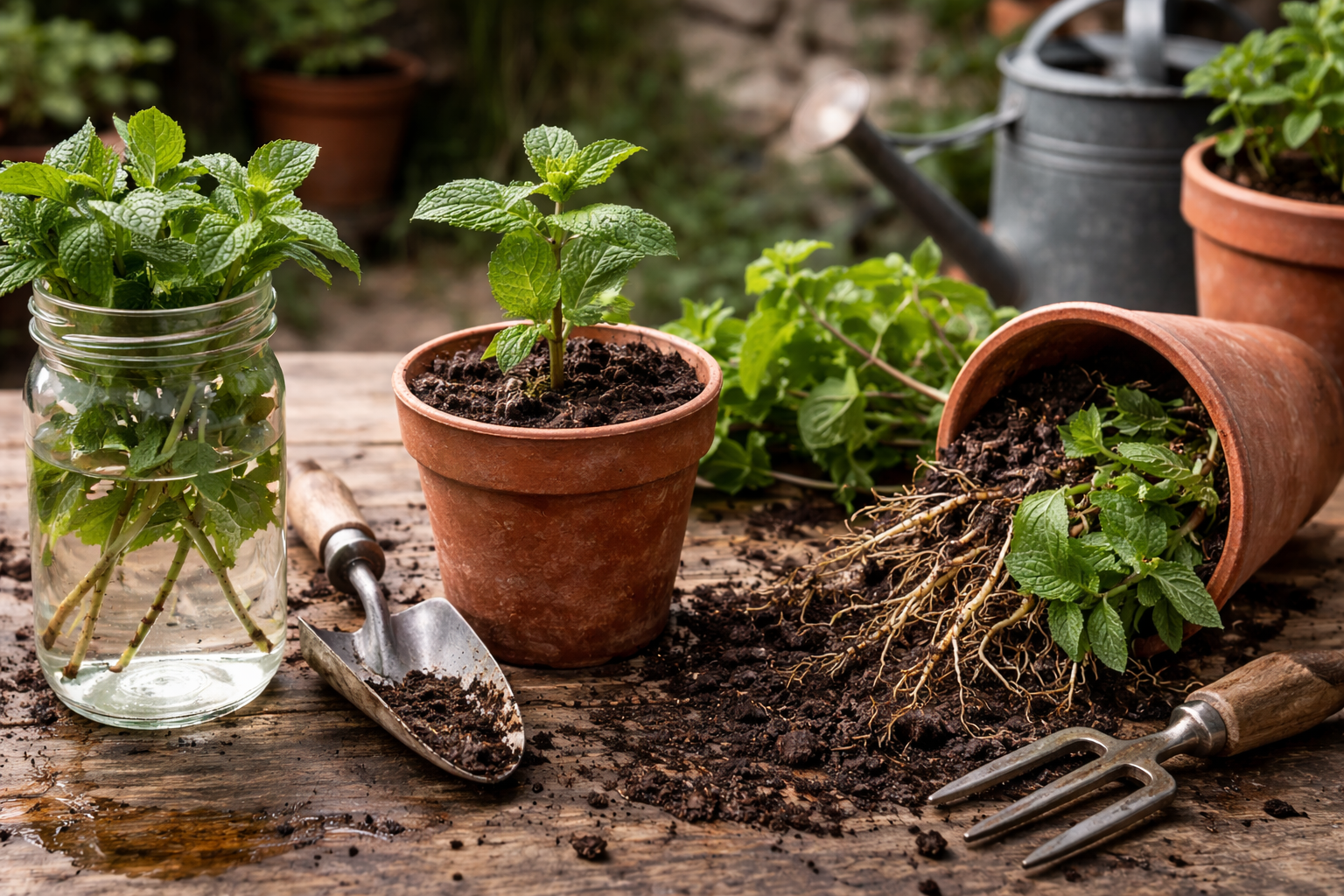
Illinois Extension says mint is propagated by either stem or root cuttings and that simple line is useful because it points to the real choice in front of you: water-root a stem, start a stem in moist mix, or split an established plant.
Use water cuttings when you want visible proof that the stem is still alive. This is the best path for grocery-store mint, a few kitchen stems, or anyone who likes seeing roots before committing potting mix and container space.
Use direct-soil cuttings when you want fewer handoffs. A stem that roots in moist mix skips the awkward jump from water roots to soil roots. The tradeoff is that you lose the visual feedback. A stem can sit there looking innocent while doing absolutely nothing.
Use division when the mint is already established and spreading by runners, stolons, or a crowded root mass. This is the least glamorous method and often the quickest.
Here is the practical way to choose:
- If all you have is a fresh bunch of stems, start with water.
- If the parent plant is healthy and you can keep mix evenly damp, soil cuttings work well.
- If the pot is packed, woody in the center, or throwing runners, divide it.
- If the plant is weak, bruised, or heat-stressed, wait for better material.
The mistake here is forcing one method onto every situation. A jam jar is not always the answer. Neither is a spade.
Take the right mint cutting so it roots instead of rots
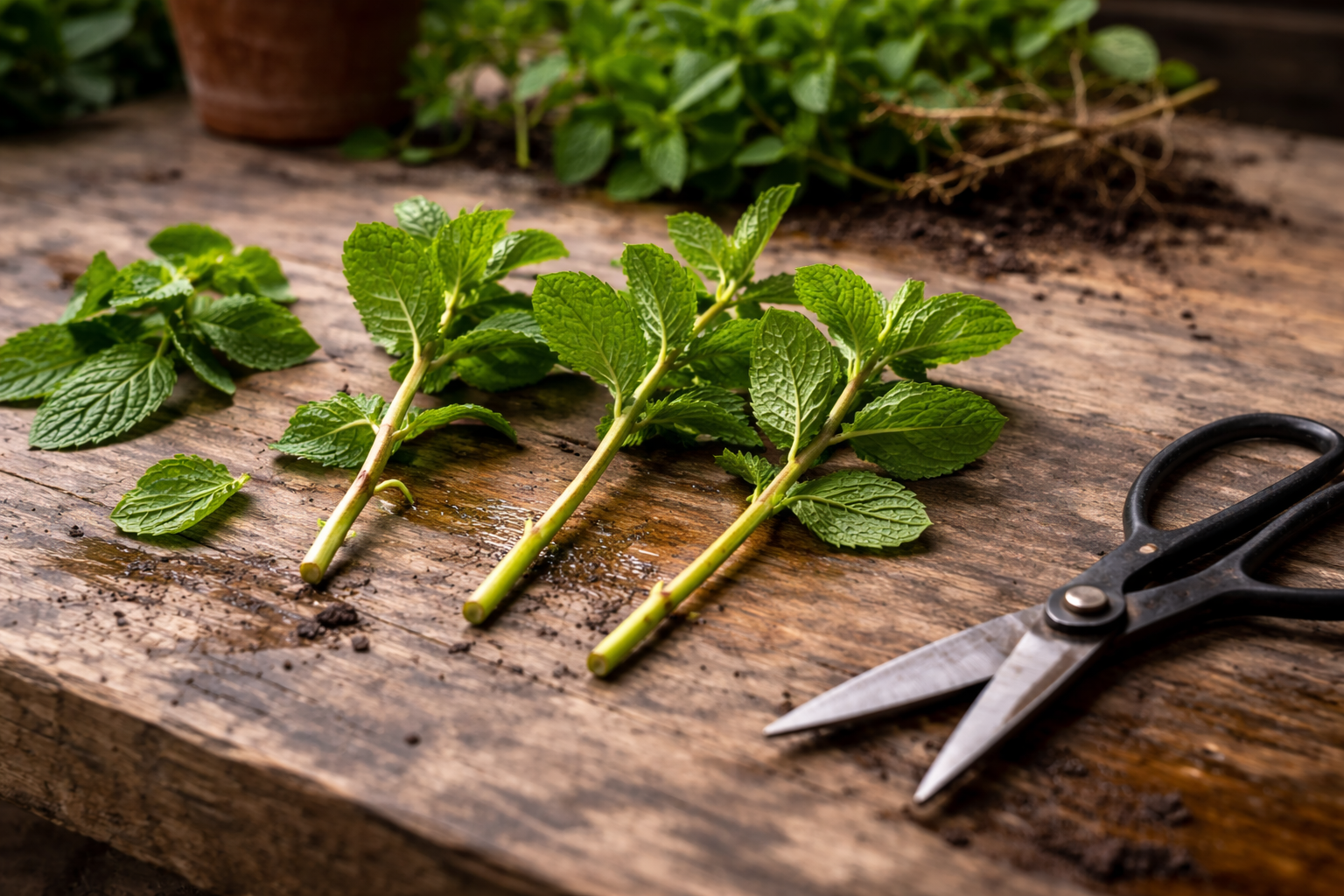
Good propagation starts before the cutting ever hits water. Fresh, green top growth roots better than tired stems that already look like garnish from last night’s iced tea.
Choose fresh top growth so the stem still has energy
Look for healthy stems with clean leaves, good color, and no blackened base. Young growth is usually better than old, stretched growth. On mint, “nice and long” is not the goal. Firm and fresh wins.
Cut near a node so roots have somewhere to start
A node is the point where leaves join the stem. That little junction is where mint likes to throw roots. Cut just below it or very close to it. If the stem has several nodes, even better.
Strip the wet zone so leaves do not rot first
Remove the lower leaves from the part that will sit in water or potting mix. Leaves left below the waterline break down fast and turn a rooting jar into swamp soup. Not elegant.
A cutting around 2 to 6 inches long is easy to handle. I tend to favor the middle of that range because it gives enough stem to work with without turning the top into a floppy flag.
Fast rule: take three cuttings when one would do. Mint is easy but free insurance is still nice.
Store-bought mint can work well here. Pick the freshest bunch, recut the ends, strip the lower leaves, and use the stems with the best turgor first. Limp bunches can still root but the hit rate drops.
Root mint in water without rot, slime, or stalled growth
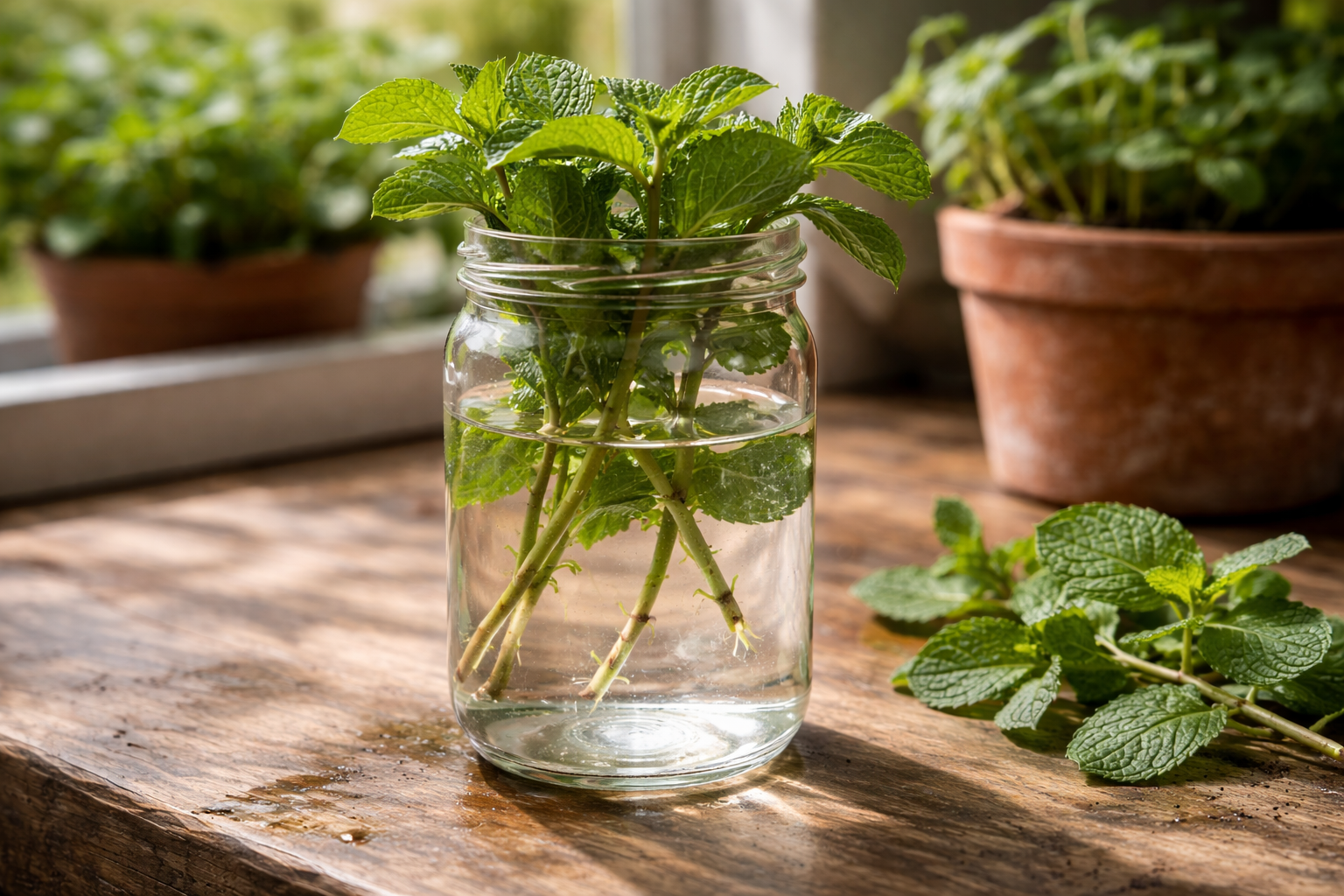
Water propagation is simple enough that people skip the details. Those details are where most of the small failures come from.
Step 1. Set up clean water so the stem stays healthy
Use a small clean jar or glass and add enough water to cover the bare stem section. Keep the leaves above the waterline. If more than one cutting is in the jar, give them some breathing room.
Step 2. Place the jar in bright light so rooting starts
Bright indirect light is the sweet spot. Morning sun can be fine. Hard afternoon sun through glass can cook a tender stem faster than people expect.
Step 3. Refresh the water so rot does not get a head start
If the water clouds up, swap it. If the base looks slick or brown, trim back to healthy tissue and start again with fresh water. I don’t baby mint cuttings much but I also don’t leave them in murky water and hope for the best.
Step 4. Watch for real roots, not just a swollen stem
Mint often pushes out tiny white roots quickly. What you want is more than one lonely thread. Wait for a small cluster that can handle potting up.
In a warm bright room, mint can root fast. In a dim kitchen corner, it can sit there looking alive and doing almost nothing. Same plant, different result.
Can mint stay in water longer? For a while, yes. But a cutting that lives in a jar is not the same as a cutting that is building a sturdy root system for soil. Long stays in water make the next move fussier.
Pot up rooted mint at the moment it can actually handle the move
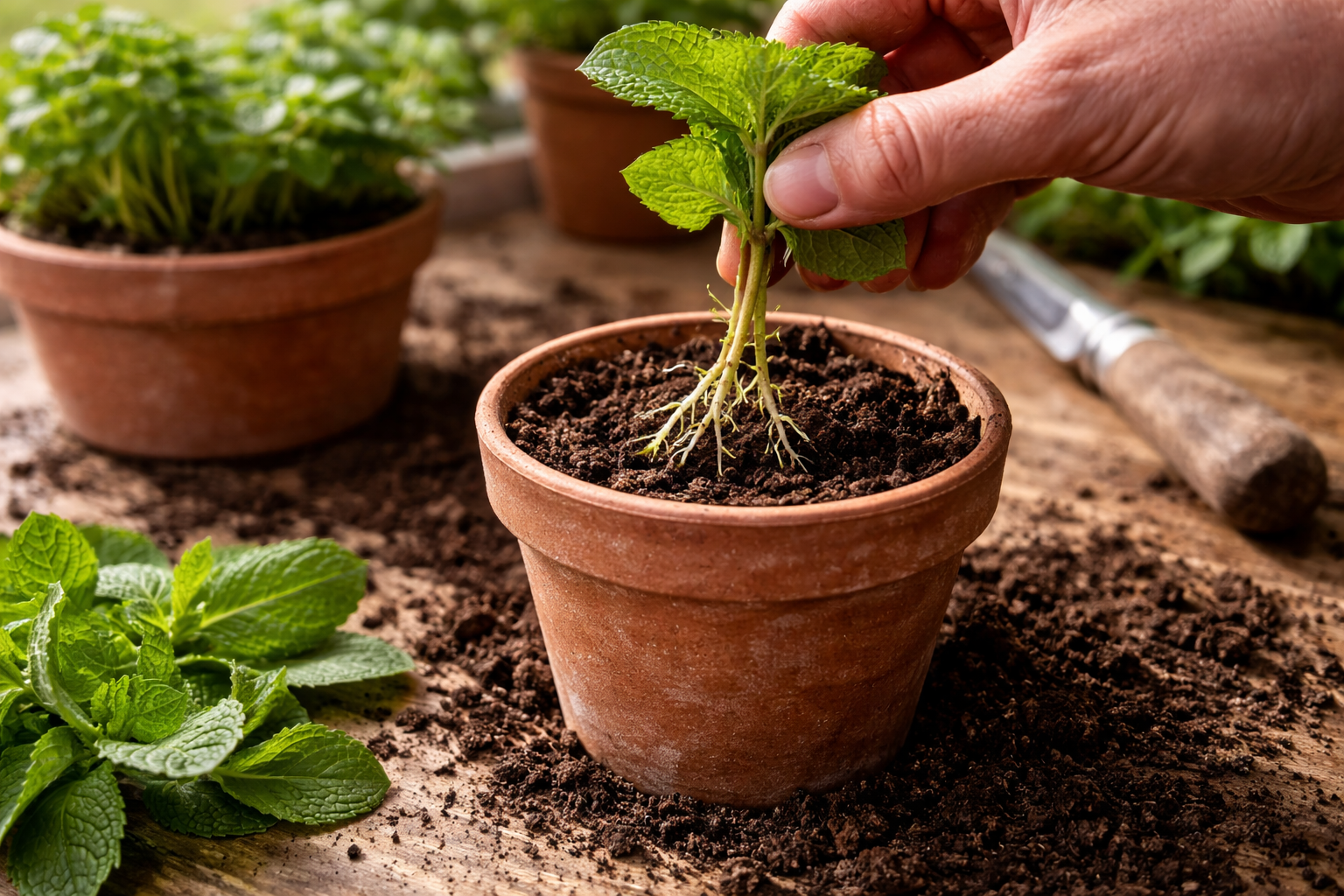
The handoff from water to soil is where people snatch defeat from a perfectly good cutting. The stem rooted. The hard part seemed over. Then it flopped two days after potting up.
Iowa State says rooted cuttings are ready for transplant once the roots reach about 1 inch, and that is a useful floor. In practice, I look for a bit more than length alone. A few branched roots that can anchor the stem matter more than one long noodle.
Use a small pot so moisture stays steady
Choose a container with drainage and a light potting mix that holds moisture without staying soggy. A huge pot looks generous but it holds wet mix longer than a tiny cutting needs.
Plant gently so water roots do not snap
Make a hole first, lower the cutting in, and firm the mix lightly around it. Don’t jam the stem down through dry mix. That bends and breaks the roots you just waited for.
Keep the first week calm so the cutting can switch gears
Water it in, then keep the mix evenly moist for the first stretch. Bright indirect light is usually better than blasting sun right away. Once new top growth starts, the plant has settled.
Remember: tiny roots mean “almost ready,” not “rush it.”
If the cutting looks a bit sulky for a few days, that can be normal. A stem that collapses at the base is not settling in. That is rot or root damage, and it usually means the mix stayed too wet or the move happened too soon.
Divide overgrown mint clumps when cuttings are the slower option
Division is the low-drama method. It doesn’t get the cute jar-on-the-windowsill treatment but when a mint plant is old, crowded, or creeping out of its pot, division is often the smarter call.
Lift the clump so you can see what is worth keeping
Take the plant out of its pot or dig up part of the clump. Healthy mint usually shows a tangle of roots and creeping stems. Older centers can get tired and woody. Those sections are not the prize.
Split rooted sections so each piece starts strong
Pull or cut the plant into smaller pieces with roots and live shoots attached. A decent division is not just a stem. It is a mini plant.
Replant fast so the roots do not dry out
Set the divisions into fresh potting mix or soil right away and water them in. Spring is a great window. Early fall also works when there is still enough growing time for the roots to settle.
This is also the cleanup method for mint that has outgrown its welcome. When a pot is stuffed solid or the center looks tired, division resets the plant instead of asking it to keep performing on cramped roots.
For a quick reality check on post-division pace, how fast mint grows after rooting lays out what strong new growth looks like and when “slow” is actually normal.
Keep new mint lush without letting it take over
University of Maryland Extension recommends growing mint in a container about 12 to 16 inches wide, and that is one of those boring bits of advice that saves a lot of grief later. New mint plants look tiny. Their ambitions are not.
A container gives you control over roots, moisture, and spread. If mint goes into open ground too early, the propagation project quietly turns into a containment project.
Mint likes evenly moist soil more than heroic drought tolerance. Spearmint does well in full sun to part shade. Peppermint can handle sun or shade and often gives the heaviest leaf growth in bright conditions. In very hot spots, a little afternoon protection helps.
Regular clipping keeps mint bushier. Once the plant is settled, harvest often and pinch off flower buds if leafy growth is the goal. That is why a small propagated plant can look fuller than an older neglected one within a few weeks.
For the day-to-day container side, how to grow spearmint in a pot is a good match. For shared planters, what to plant with mint in container gardens helps sort out when mint should stay alone.
Fast rule: the propagation job is not finished until the new plant has a smart home.
Why mint propagation fails and the fixes that actually change the outcome
Most mint failures look mysterious for about a day. Then the pattern shows itself. The stem is black at the base, the roots never formed, or the cutting looked fine in water and keeled over after potting up.
Quick diagnosis chart
| What you see | Most likely cause | What to do next |
|---|---|---|
| Stem turns brown or black at the base | Rot from leaves in water, stale water, or soggy mix | Trim to clean tissue, refresh water, start over if needed |
| No roots after two weeks | Weak cutting, low light, cool room, or old stems | Move to brighter light and take fresher cuttings |
| Roots formed but the plant slumps after potting | Moved too early, roots damaged, or mix too wet | Use smaller pots, gentler handling, and steady moisture |
| Cutting wilts fast in soil | Stem was too soft, thirsty, or placed in harsh sun | Start again with firmer stems and calmer light |
The most common miss is still simple: a weak stem, a wet leaf sitting where it shouldn’t, or a cutting that got moved before it had enough roots to fend for itself.
If the cutting is green and firm, give it a bit more time. If it is dark, mushy, or collapsing, time will not rescue it. Start over with fresher material. Mint is generous that way.
One last rule because it pulls a lot of this together: use healthy stems, keep the wet zone bare, give bright light without scorching heat, and pot up once the roots can actually do a job. That four-part check catches most failures before they start.
FAQ
Can you propagate mint from store-bought mint?
Yes, often quite well. Fresh bunches with firm stems and clean nodes can root in water just like garden stems. Older bruised bunches still can work but the success rate drops and rot shows up faster.
Do mint cuttings need rooting hormone?
Usually no. Mint roots so readily that fresh stems, a clean cut near a node, and good light matter more than added products. Rooting hormone does not hurt when used correctly but it is rarely the thing making or breaking mint.
Can mint stay in water long-term?
It can survive in water for a while but it usually performs better in potting mix once it has rooted. A cutting kept in water too long often gets fussier when moved to soil, and growth tends to stay weaker than a plant that was potted up on time.

Michael Rowan is the founder and lead writer at The Garden Playbook. He has spent 10+ years growing plants across a range of settings — from indoor houseplants and container gardens to raised beds and in-ground plots — adapting methods to different light levels, seasons, and growing conditions.
Michael focuses on practical, experience-based guidance grounded in fundamentals: soil health, watering strategy, plant nutrition, pruning and propagation, and integrated pest management (IPM). His work aims to help readers diagnose common problems (such as yellowing leaves, stunted growth, or pest pressure) and apply straightforward solutions that are realistic for home gardeners.
At The Garden Playbook, Michael develops tutorials and plant guides using a consistent process: documenting real outcomes where possible, explaining the “why” behind each step, and verifying higher-risk topics (such as plant toxicity or pest treatment options) against reputable horticultural references.