
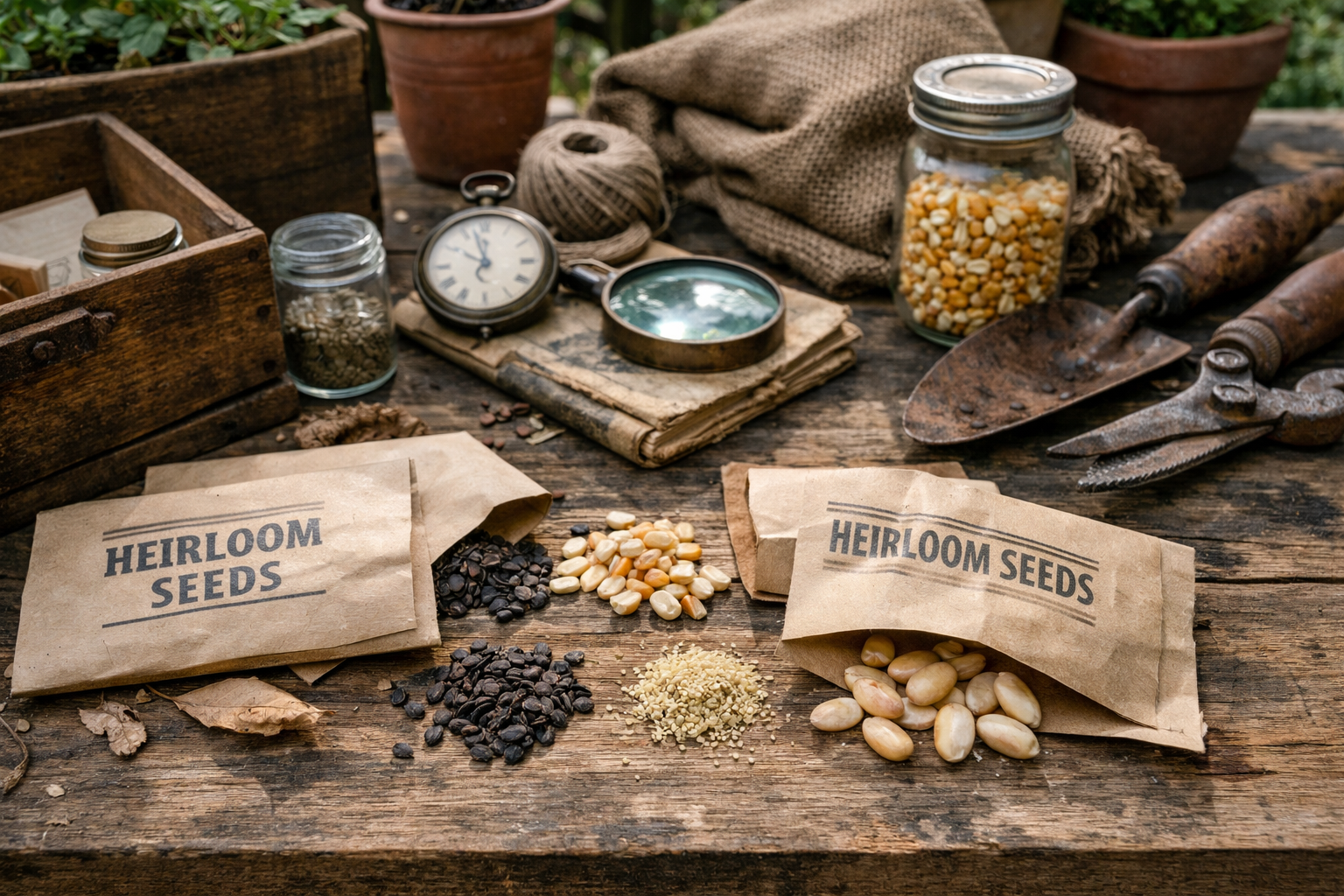
Every seed drawer has a few packets that feel like a dare. I have one tin that always turns up in late winter with half-used envelopes, a Sharpie note from three springs ago, and one packet I was sure was dead until it sprouted like nothing had happened. If you’re wondering how long do heirloom seeds last, the honest answer is this: most stay usable for about 2 to 5 years, some fade in 1 to 2 years, and a few hold on longer when they were stored cool, dry, and dark.
That plain answer is only half useful. The label “heirloom” does not act like a freshness shield. Crop family, storage history, and a quick germination test matter more than the romance of the packet.
You do not need a seed vault or a spreadsheet for this. You need a short list of which seeds fade fast, a solid storage setup, and one simple rule for deciding whether to sow, over-sow, or replace what you have.
- Which heirloom seeds lose viability quickly and which ones are forgiving
- How to store old seed packets without slowly cooking or damping them to death
- How to run a paper towel germination test that gives you a real answer
- When low germination is still workable and when it becomes a waste of bed space
- What changes if the seed was saved at home instead of bought fresh
At a glance: keep, test, or replace?
| Seed group | Usual range in good storage | Best next move |
|---|---|---|
| Onion, parsnip, sweet corn | 1 to 2 years | Use first or test before you trust them |
| Beans, peas, carrots, peppers, tomatoes | 2 to 4 years | Check storage history, then test if older |
| Cucumbers, melons, radishes, many brassicas | 4 to 5 years, sometimes longer | Often worth keeping if they were stored well |
Fast rule: packet age gives you a clue. A germination test gives you the answer.
Note: “Heirloom” usually means an open-pollinated variety that can be saved true-to-type. It does not mean the seed automatically stores longer.
How Long Heirloom Seeds Really Last
Iowa State University Extension lists onions at 1 year, corn and peppers at 2, beans and carrots at 3, tomatoes at 4, and cucumbers at 5 under ideal storage. That one chart explains why the usual blanket answer gets sloppy so fast.
Most heirloom vegetable seeds land in the 2 to 5 year range. That sounds tidy but it hides the part that trips people up. Asking how long heirloom seeds last without naming the crop is a bit like asking how long food lasts without saying whether you mean rice or berries.
The safest way to think about seed longevity is in three buckets. Short-lived seeds such as onion, parsnip, and sweet corn deserve your attention first. Middle-range seeds like beans, peas, carrots, peppers, and tomatoes are still in the game for a few years. Forgiving keepers like cucumber, melon, radish, and a lot of brassicas often stay worth checking even after several seasons.
If the packet is old and the crop is short-lived, do not guess. Test it. If the packet is old and the crop is known to keep well, then the storage story matters almost as much as the date stamped on the envelope.
Why the Heirloom Label Is Not the Whole Story
Utah State University Extension explains that open-pollinated seed usually grows back true-to-type while storage method, warmth, and humidity drive seed deterioration. That is the distinction most quick articles blur.
Heirloom seeds are usually open-pollinated. That matters because you can save them and get plants much like the parent variety next season. It does not mean they age more slowly in a hot shed or in a packet that picked up moisture in August.
What actually decides seed life is more ordinary than the label. Species matters. Dryness matters. Stable cool temperatures matter. Seed maturity matters too. A beautifully named heirloom tomato seed that was saved from under-ripe fruit and dried poorly can fail sooner than a well-handled hybrid tomato seed from a packet.
There is another wrinkle people miss. Viability and vigor are not the same thing. A seed can still sprout and still produce weak, uneven seedlings. You see this most clearly in trays where half the row pops up quickly and the rest dribbles in late like they missed the bus.
Remember: heirloom is a seed-saving trait, not a storage guarantee.
Which Heirloom Seeds Fade Fast and Which Stay Forgiving
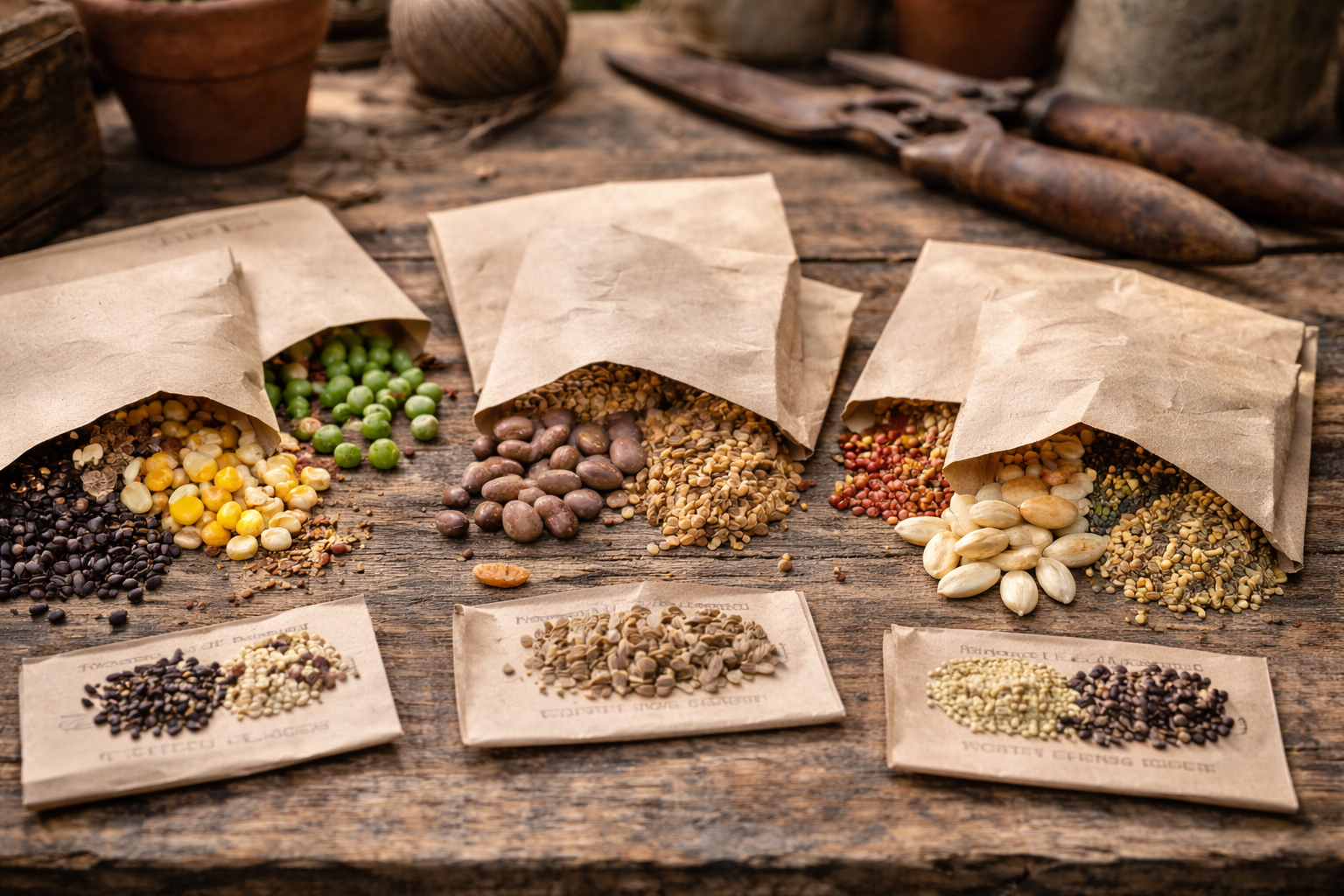
When I sort leftover packets, I do not file them alphabetically. I sort them by how likely they are to disappoint me in spring. That is a much more useful system.
| Priority | Typical crops | What to do |
|---|---|---|
| Use first | Onion, parsnip, sweet corn, many peppers | Plant soon or test before relying on them |
| Usually test after year 2 or 3 | Beans, peas, carrots, tomatoes | Still often usable, but do not assume full germination |
| Often worth keeping | Cucumbers, melons, radishes, many cabbage-family crops | Good candidates for a test instead of an automatic toss |
There is a practical reason this matters more than a generic range. Patchy germination in carrots or direct-sown corn can leave you with blank streaks in a bed. Patchy germination in tomatoes is annoying too but it is easier to fix because you only need a few good plants and you can sow extras in cells.
Lettuce is a funny one. It can last longer than many gardeners expect under good storage, but old lettuce seed can still emerge unevenly when soil is warm. So the packet might not be dead at all. It just may not be the no-fuss packet it once was.
How to Store Heirloom Seeds So They Last Longer
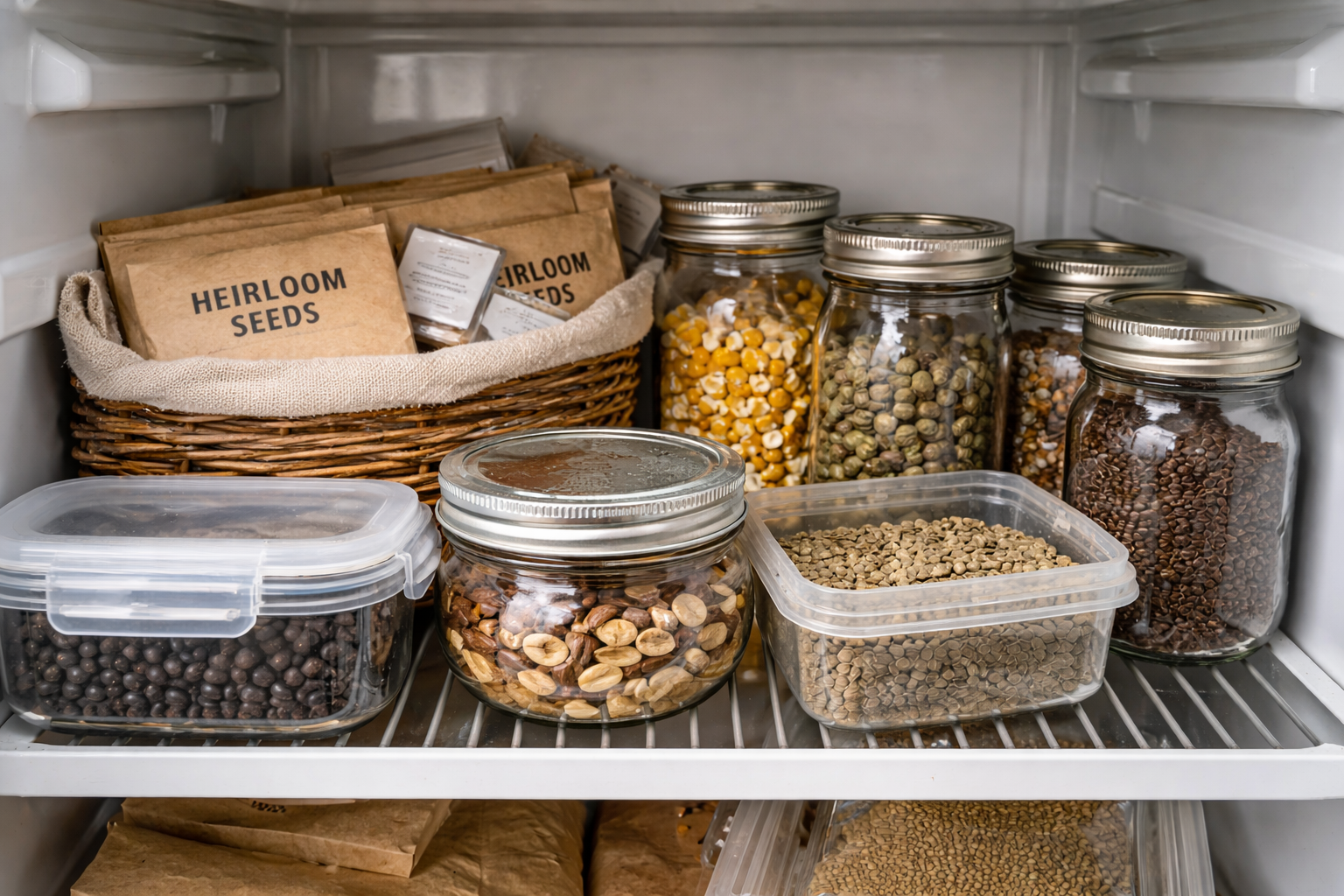
University of Vermont Extension recommends a cool, dark, dry place and says temperatures around 40 degrees Fahrenheit are excellent for storage. South Dakota State University Extension adds that relative humidity below 60% is a smart ceiling and warns that trapped condensation inside a jar is a red flag. Put those two together and you get the home-gardener version of good storage without any fuss.
The easiest upgrade is simple: dry seeds, sealed container, cool steady location. A refrigerator works well because it stays cool year-round. A closet in an air-conditioned house can work too. A garage usually looks harmless in March and quietly ruins seed in July.
Glass jars are good. Small airtight containers are good. A paper packet by itself is fine only for short-term storage in a dry house. Once you move seed into long storage, moisture becomes the enemy that never announces itself.
University of California Agriculture and Natural Resources gives a handy rule of thumb: temperature in degrees Fahrenheit plus relative humidity should stay under 100. That is not magic. It is just a memorable way to think about cool and dry working together.
If you store seeds in the refrigerator or freezer, let the closed container warm to room temperature before you open it. Open a cold jar too soon and room air can condense on the seed coat. That tiny film of water is enough to shorten the life you were trying to protect.
Store here, not there: refrigerator yes, cool closet yes, damp basement maybe, shed no, hot garage no, sunny windowsill absolutely not.
If the seeds were saved at home, dry them fully before sealing them up. That step gets skipped all the time. The jar looks neat and organized and the seeds are quietly rotting in slow motion.
How to Test Old Heirloom Seeds Before You Waste a Bed on Them
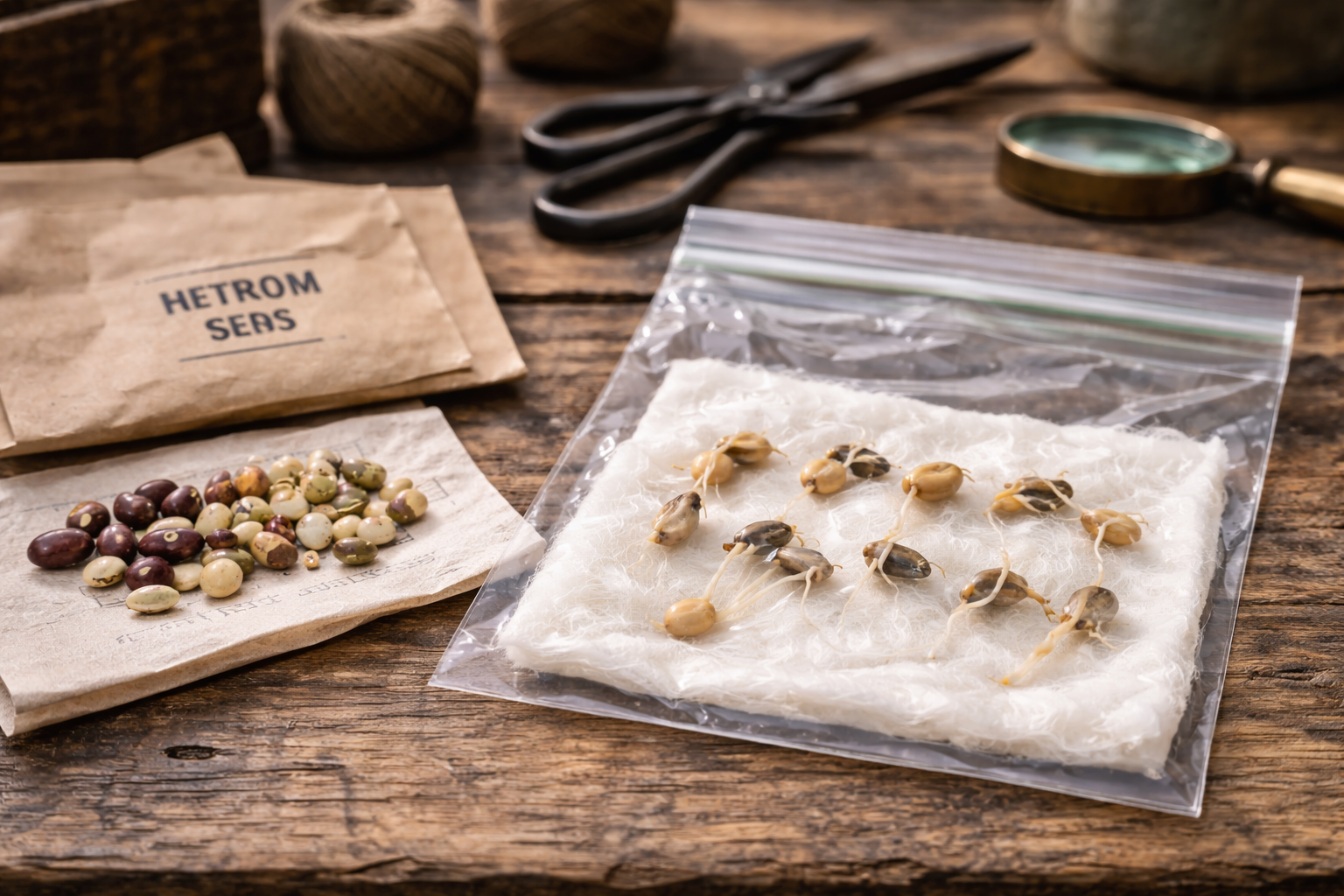
A germination test is the fastest way to stop guessing. It takes a few minutes to set up and it tells you more than packet age ever will.
Step 1. Count a small sample so the math stays easy.
Use 10 seeds if the variety is scarce. Use 20 if you want a cleaner read. Iowa State suggests at least 20 seeds, says 50 is better, and keeps the test warm at 70 to 80 degrees Fahrenheit.
Step 2. Wet the towel and remove the extra water.
You want the paper towel damp, not sopping. If it glistens like a spill, wring it out. A too-wet towel is one of the easiest ways to turn a good test into a mold test.
Step 3. Fold the seeds in and seal them for steady moisture.
Lay the seeds out with space between them, fold the towel over, and slide it into a zip bag or lidded container. Label the bag with the crop and the start date. Future you will forget. Mine always does.
Step 4. Keep the test warm and check at the crop’s normal timing.
Do not use one universal waiting period. Tomatoes and cucumbers move faster than parsley. The packet usually gives a germination window. Follow that.
Step 5. Count only true sprouts so the percentage means something.
A root tip breaking through the seed coat counts. Then divide the number of germinated seeds by the number tested. If 8 out of 10 sprout, you have 80% germination. Clean and simple.
Note: the float test is quick but weak. Seeds can sink and still be poor performers. A germination test takes longer and gives you a real answer.
When to Sow Normally, Sow Extra, or Replace the Packet
This is the part most articles skip. Knowing the percentage is nice. Knowing what to do with it is what saves the season.
| Germination result | What it means | What to do next |
|---|---|---|
| 90% and up | Strong lot for most home use | Sow normally |
| 70% to 89% | Still good, just not perfect | Sow a little thicker, mainly for direct-sown crops |
| 50% to 69% | Usable if the variety matters | Over-sow or start extras in trays |
| Below 50% | Too weak for most routine planting | Replace unless it is rare or sentimental seed |
Iowa State puts the lower line pretty clearly: 50% or less is usually not worth using. That tracks with home-garden reality. You can beat poor germination with extra seed for a while, but at some point you are just paying in time, tray space, and empty gaps in the row.
There is one fair exception. If you have a rare family heirloom bean or a tomato variety that is hard to replace, mediocre germination might still be worth working with. In that case start more than you need in trays, baby the survivors a bit, and do not treat the result like a standard packet from the rack.
Direct-sown crops make poor germination feel worse. A thin stand of carrots is harder to rescue than a tray of tomatoes where you only need six sturdy seedlings. So the same percentage can lead to different choices.
Special Cases That Change the Answer
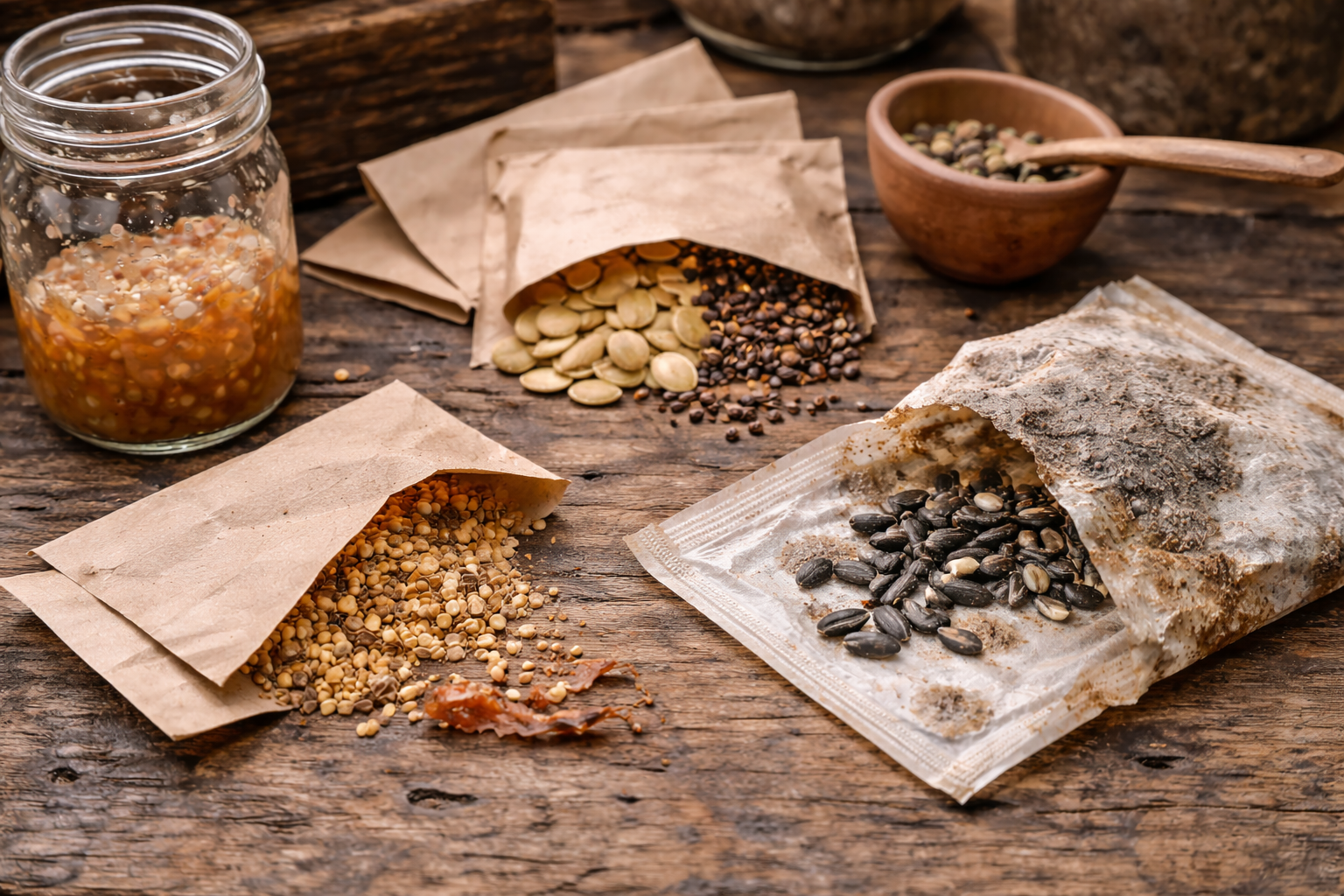
Some old seed does not fail because it is old. It fails because the original seed quality was weak or the storage was rough from day one.
Home-saved seed is the biggest example. Seed saved from fully mature fruit and dried well can last beautifully. Seed saved too early, dried on a humid counter, or sealed up before it was ready can crash fast. That is true even when the packet is only a season old.
Hard-coated seeds are another wrinkle. A soak or light scarification can help water get through the seed coat, but that trick only helps if the embryo inside is still alive. It does not resurrect dead seed. It just removes one barrier for seed that still had a chance.
Cold storage can also fool you. A packet kept in the refrigerator for years may outperform a younger packet that bounced around in a warm shed. The packet date matters, yes, but storage history can beat age by a mile.
If you keep older nasturtium seed and plan to use it, the sowing window still matters once the seed proves viable. Old seed with perfect timing can still outperform fresher seed sown into cold, sulky conditions.
Remember: soaking, scarifying, or chilling can help some live seeds wake up. None of those tricks fixes seed that was cooked, damp, or poorly matured in the first place.
A Simple Rule for Deciding Whether Old Heirloom Seeds Are Worth Planting
If you want one rule to keep in your head, use this three-part check:
- Ask what crop it is. Short-lived crops get less benefit of the doubt.
- Ask where it lived. Cool and dry buys time. Warm and humid steals it.
- Ask what the test says. A germination result beats guesswork every time.
That is really the whole game. Age gives you a clue. Germination gives you the answer.
If the seed is a known short-liver and the storage was poor, skip the optimism and replace it. If the seed is from a forgiving crop and it was stored well, test it before you toss it. And if the variety is rare, bend the rules a little and start more than you need. That is not fancy. It is just sensible gardening.
FAQ
Can you still plant heirloom seeds that are 5 or 10 years old?
Yes, sometimes. A 5-year-old cucumber or tomato packet stored well may still be worth testing. A 5-year-old onion packet is a much riskier bet. At 10 years, the only honest move is to test before planting, and even then you should expect lower vigor.
Is the refrigerator better than the freezer for storing seeds?
For most home gardeners, yes. A refrigerator is simple, steady, and cool enough to extend seed life when the seed is sealed against humidity. Freezing can work for very dry seed in airtight containers, but it adds one more place to make a condensation mistake.
Does soaking old heirloom seeds help?
It can help some live seeds take up water faster, mainly hard-coated kinds. It does not fix poor storage, age-related decline, or dead embryos. Test first, then use soaking as a small assist rather than a rescue plan.

Michael Rowan is the founder and lead writer at The Garden Playbook. He has spent 10+ years growing plants across a range of settings — from indoor houseplants and container gardens to raised beds and in-ground plots — adapting methods to different light levels, seasons, and growing conditions.
Michael focuses on practical, experience-based guidance grounded in fundamentals: soil health, watering strategy, plant nutrition, pruning and propagation, and integrated pest management (IPM). His work aims to help readers diagnose common problems (such as yellowing leaves, stunted growth, or pest pressure) and apply straightforward solutions that are realistic for home gardeners.
At The Garden Playbook, Michael develops tutorials and plant guides using a consistent process: documenting real outcomes where possible, explaining the “why” behind each step, and verifying higher-risk topics (such as plant toxicity or pest treatment options) against reputable horticultural references.