
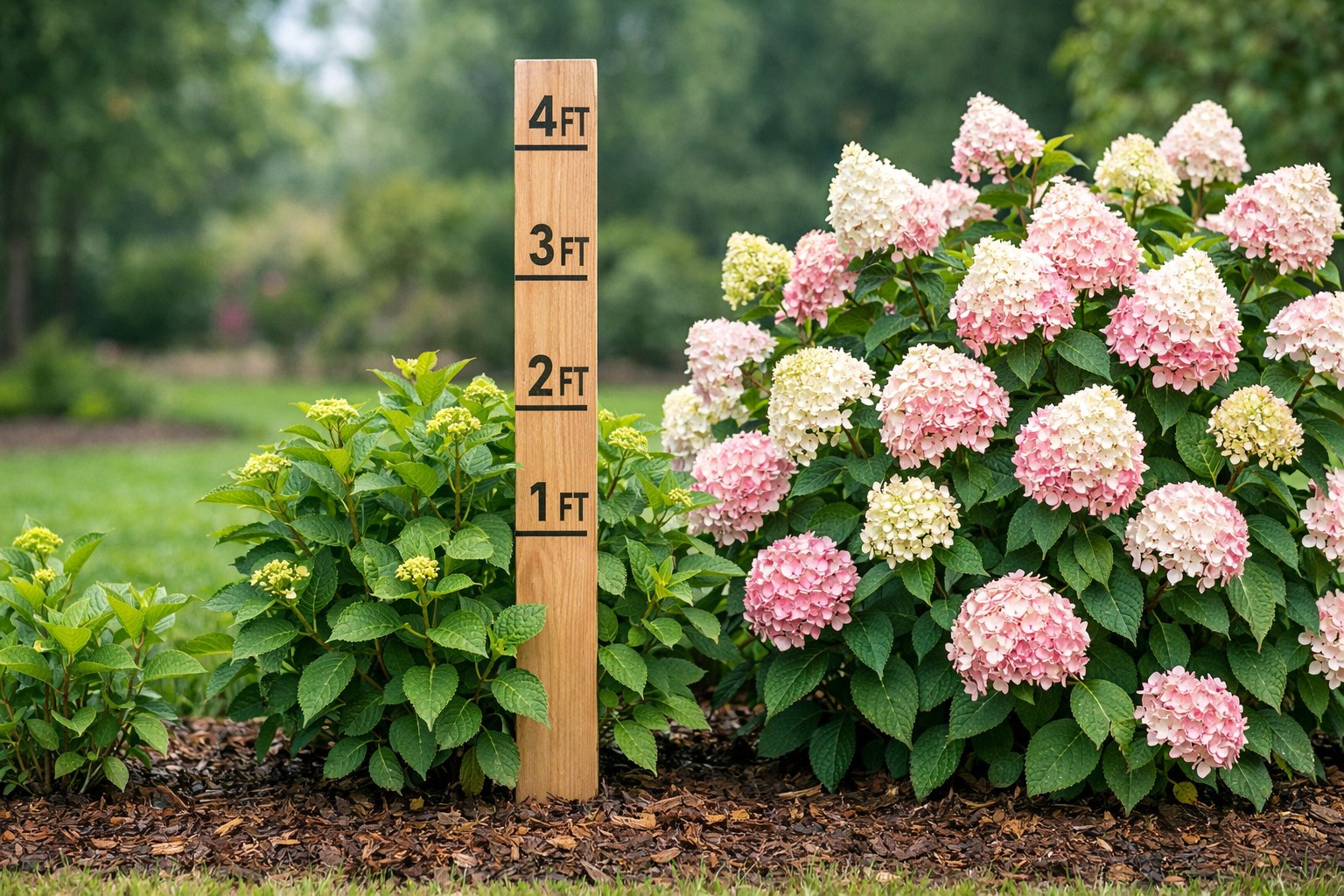
I’ve planted enough small hydrangeas to know the exact moment people get annoyed with them. The leaves look healthy, the tag photo looked huge, and the shrub in front of you still looks like a polite little guest instead of the full summer showpiece you had in mind.
If you’re asking “how fast do hydrangeas grow,” the clean answer is this: most hydrangeas are moderate to fairly fast growers when the site suits them, and a healthy plant can put on about 1 to 2 feet of growth in a strong season. But that headline number hides the part that trips people up. A first-year hydrangea often spends a chunk of its energy settling roots, and many shrubs do not look properly established until the second or third growing season. For a lot of garden varieties, “that finally looks like a hydrangea” lands somewhere in the 2 to 4 year range.
The number is only half the story.
A panicle hydrangea in a bright, well-watered bed is playing a very different game from a bigleaf hydrangea in hot afternoon sun, a dwarf variety in a pot, or a climbing hydrangea that is still deciding whether it likes your wall. Growth rate, mature size, bloom timing, and pruning response all blur together in garden advice. They should not. Once you separate those pieces, the whole topic gets easier.
At a Glance
| Best-case yearly growth | About 1 to 2 feet for vigorous shrubs in the right spot |
| When they start to look settled in | Usually the second growing season |
| When they look close to full presence | Often 2 to 4 years, sometimes longer |
| Fastest-looking types | Panicle first, smooth close behind |
| Slow-burn exception | Climbing hydrangea can be sleepy early, then strong later |
- You’ll see how yearly growth differs from “looks established.”
- You’ll get a type-by-type pace check so you can stop comparing the wrong plants.
- You’ll see what speeds growth up, what makes it stall, and what pruning can quietly mess up.
- You’ll get a simple rule for picking the right hydrangea when speed matters.
How fast hydrangeas grow in real life
The honest answer is not one number. It is three clocks running at once.
First, there is stem growth. That is where the familiar “up to 1 to 2 feet a year” idea comes from. In a good site, that can happen. I have seen panicles and smooth hydrangeas make a proper jump once they are settled. Second, there is visual presence. A shrub can add stems and still not look full from ten feet away. Third, there is mature size. That one almost always takes longer than people expect.
So when a tag or nursery description makes a hydrangea sound fast-growing, treat that as the upper lane, not the average for every yard. A healthy plant that gains 8 to 12 inches in its first full season after planting may still be doing fine. A stronger second or third year is often the point where it starts to earn its space.
Quick rule: If your hydrangea is making new leaves, holding its stems well, and not scorching or collapsing in heat, do not judge it only by height. A plant can be healthy and still look underwhelming for a season.
This is also why two gardeners can both tell the truth and still sound like they are talking about different plants. One planted a 3-gallon panicle into decent soil and got a strong leap by year two. The other planted a compact bigleaf in a decorative pot and got flowers before much size. Same genus, totally different experience.
How long hydrangeas take to look established and reach full size
Most hydrangeas spend year one getting their feet under them. That’s the stage when you water, watch, and try not to overreact. Then year two often brings the first “okay, now we’re getting somewhere” moment. By year three, many shrubs start to look like part of the landscape instead of a recent purchase.
| Season | What you usually see | What it usually means |
|---|---|---|
| Year 1 | Healthy leaves, some new stems, maybe modest bloom | The plant is settling roots and learning the site |
| Year 2 | More noticeable canopy growth and better shape | The shrub is shifting from survival to performance |
| Year 3 and after | Closer to its real habit, stronger seasonal display | This is when mature size charts start to feel believable |
Starting size matters too. A bigger nursery plant buys you a head start in looks, but not a magical shortcut to maturity. A small 1-gallon plant can catch up over time if the site suits it. It just asks for patience up front.
Planting time changes the feel of that first year. Spring and fall usually give hydrangeas the easiest runway because the soil is workable and the weather is not trying to cook a transplant. That is one reason Clemson’s hydrangea guidance points gardeners toward spring or fall planting, morning sun with afternoon shade, moist well-drained soil, and a 2 to 3-inch mulch layer. That combination does not create miracles. It just stacks the odds in your favor.
Which hydrangea types grow fastest and which test your patience
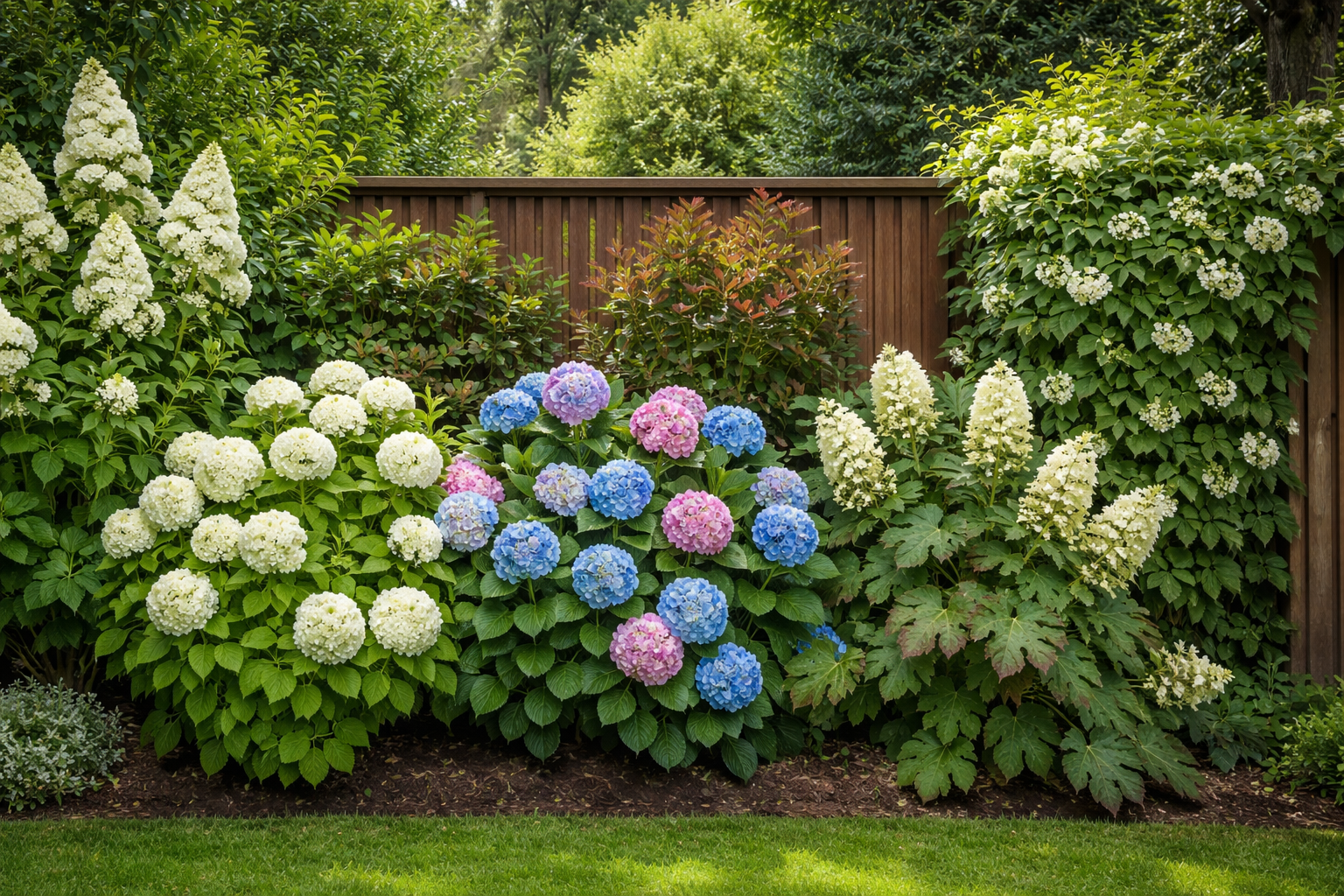
If speed matters, type matters more than almost anything else.
| Type | Typical pace | Best use | Watch-out |
|---|---|---|---|
| Panicle hydrangea | Fast-looking and forgiving | Quick presence, hedges, sunny spots | Needs space if you pick a large cultivar |
| Smooth hydrangea | Vigorous once settled | Easy shrub, strong leaf mass, simple pruning | Not usually the tallest privacy choice |
| Bigleaf and lacecap | Moderate, more site-sensitive | Classic mophead look, color play | Heat, winter bud loss, and pruning errors show fast |
| Oakleaf hydrangea | Steady, not show-off fast | Texture, form, fall interest | Chosen more for habit than raw speed |
| Climbing hydrangea | Slow early, stronger later | Walls, fences, trunks, long game planting | Can test your patience for a while |
For sheer “that got big fast” energy, panicle hydrangeas usually sit at the front of the line. North Carolina State lists panicle hydrangea as rapid-growing and more tolerant of full sun than most hydrangea species, which is why cultivars like ‘Limelight’ and ‘PeeGee’ get used for larger shrubs, hedges, and bigger border anchors. They are often the safest pick when people say they want a hydrangea to do some actual work.
Smooth hydrangeas, including ‘Annabelle’ and its newer cousins, also move with purpose once they settle in. They bloom on new growth, which keeps the care side simpler. They are not always towering plants, but they usually feel cooperative.
Bigleaf hydrangeas are where gardeners fall in love with the flowers and then get blindsided by the fussiness. They can grow well, but they are less forgiving of bad exposure, drought, and winter bud damage. Oakleafs tend to be steady and handsome, but they are not the variety I would pick if the whole job is “fill that gap quickly.”
Then there is climbing hydrangea. Missouri Botanical Garden describes it as “slow to establish, but quite vigorous thereafter”. That sentence explains a lot. If you want instant coverage on a wall, this is not the impatient person’s vine. If you want a long-lived climber that can become impressive, it is a very good bet.
Short version: If you want faster landscape presence, start with panicle. If you want classic mophead flowers, accept a bit more fuss. If you want a vine, expect a slower start.
Give hydrangeas the conditions that speed growth without weak, floppy stems
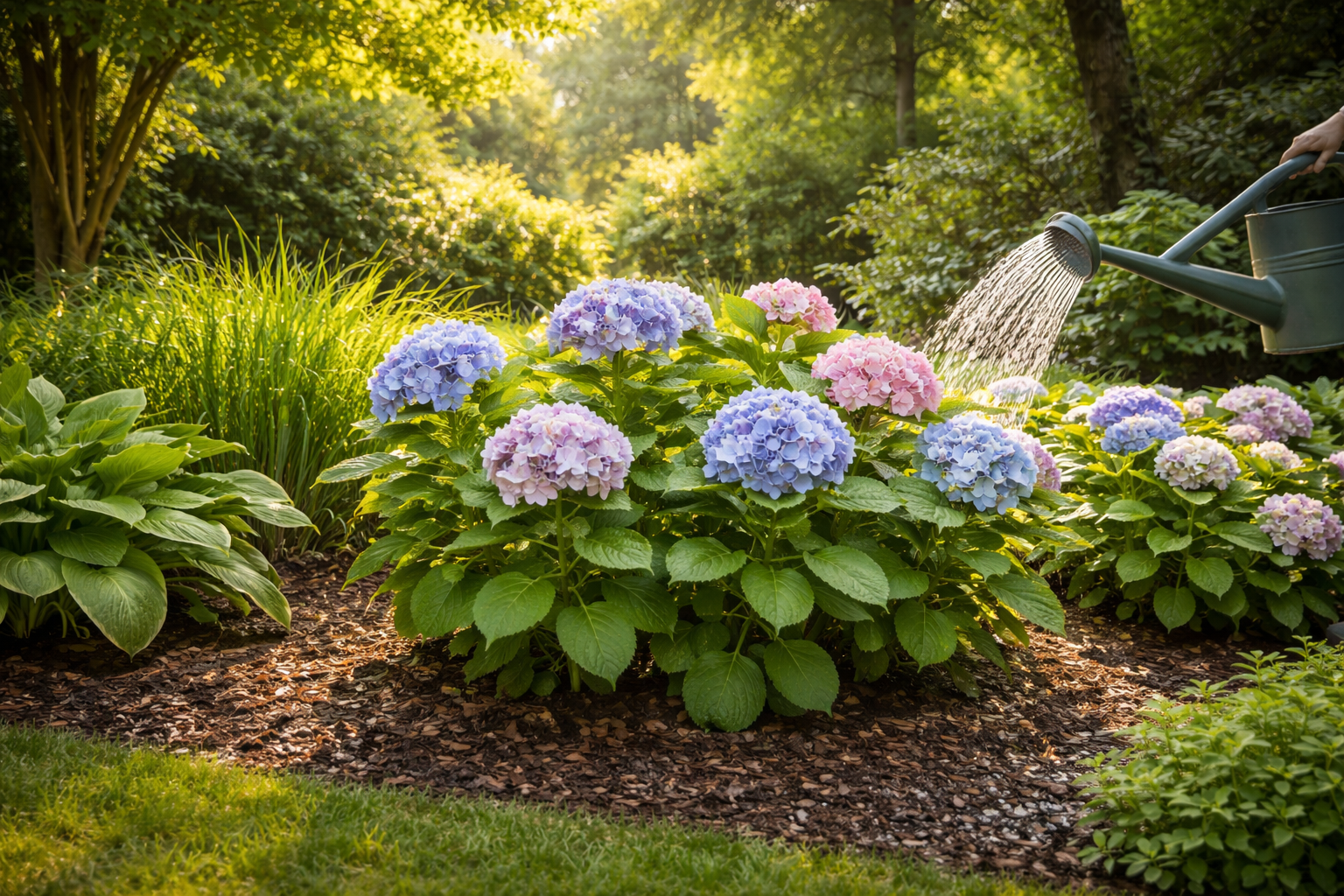
Growth is not just genetics. Site quality can make one plant look punchy and another look sulky even when the labels match.
The winning setup is pretty simple: decent light for the type, soil that stays moist but drains, and a watering rhythm that keeps the plant from swinging between wilted and flooded. For many hydrangeas that means morning sun and some shelter from hard afternoon heat. Panicles can handle more sun. Bigleaf types usually need a gentler seat.
Moisture is the lever people miss most. Hydrangeas have large leaves and they tell on you fast. If the plant spends half the summer dry, it will not make confident growth. If the ground stays soggy, the roots sulk for a different reason. Deep watering beats constant tiny splashes. Mulch helps because it slows the swing between damp and dry.
Too much fertilizer can muddy the picture. A nitrogen-heavy push can buy you soft, oversized leaves and lanky stems when what you wanted was sturdy growth. That is why the best-performing garden hydrangeas often look less “pushed” and more balanced. They are growing at a pace the stems can carry.
If that bed sits in bright shade, hydrangeas often look right at home with hostas for shade or a few well-placed ferns for shade. The combo works because the plants want a similar kind of cool, moisture-holding root zone, not because there is some magic companionship going on.
Fast-growth checklist
- Match the hydrangea type to the light you really have
- Mulch the root zone instead of letting the soil bake bare
- Water deeply on a rhythm, not in panicky little sips
- Give large cultivars enough room to show their actual habit
- Do not prune hard just because the shrub looks small
First-year hydrangeas usually grow roots before they grow drama
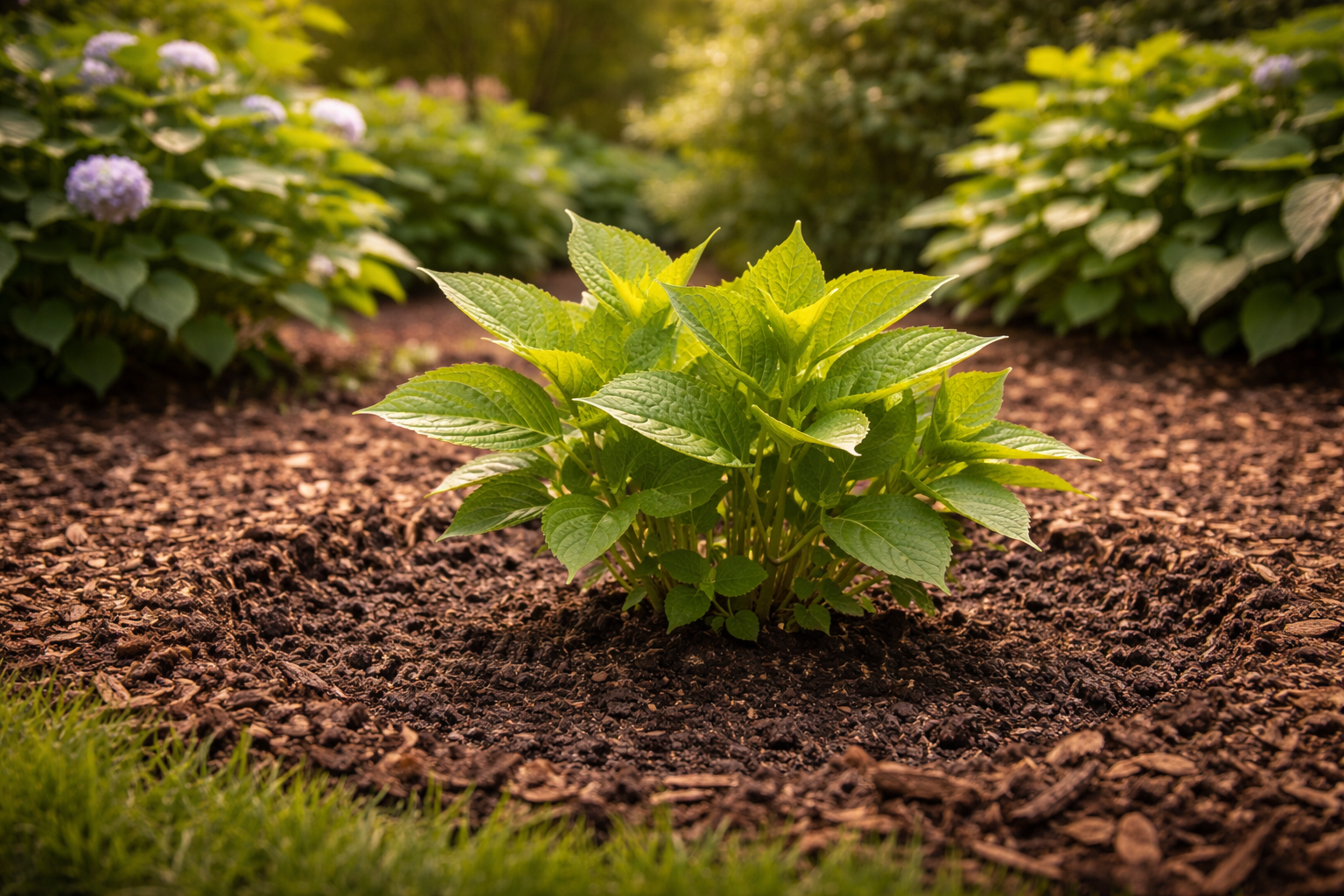
This is the part I wish more plant tags admitted.
A newly planted hydrangea can be healthy, hydrated, and fully on schedule while looking kind of… unchanged. That is normal. Fresh transplants often put more energy into root establishment than flashy top growth. In real gardens, that can look like a shrub that sits there politely for weeks and then surprises you the next season.
What matters in year one is not whether it doubled in size. What matters is whether it is making new leaves, thickening a few stems, and recovering from warm afternoons without turning into a rag. Those are better signs than a height measurement taken every Saturday with growing suspicion.
Where people go wrong is trying to “fix” a normal first year. They prune it because it looks small. They overfeed it because it looks slow. Sometimes they even move it because it did not behave like the catalog photo. That is usually how a reasonable establishment year turns into an actual setback.
Watch these instead of height: new leaf size, stem firmness, bud formation, recovery after heat, and whether the plant looks more settled in month three than it did in week two.
If you planted in late spring or during summer heat, cut yourself some slack. That plant had a tougher runway. A hydrangea put in during cooler weather often has a smoother first season and a better second one.
Slow growth and no blooms are not the same problem
Gardeners mix these up all the time because flowers are how we keep score. No flowers can make a healthy shrub look like a failure even when the plant is building size just fine.
| What you see | What it usually points to |
|---|---|
| Lots of leaves, not many flowers | Pruning at the wrong time, winter bud loss, or too much nitrogen |
| Flowers, but little size increase | Young plant, compact cultivar, or root restriction in a pot |
| Little bloom and little growth | Wrong light, dry soil, transplant stress, or a plant that is simply mismatched to the spot |
Bigleaf hydrangeas create the most confusion here. A plant can leaf out nicely and still bloom poorly if the flower buds formed on old wood and got clipped or winter-killed. That is why some gardeners swear a hydrangea is “not growing” when the real issue is that it grew leaves instead of giving them the show they expected.
Reblooming varieties can soften that problem. Iowa State explains that newer bigleaf cultivars such as Endless Summer, ‘Blushing Bride’, BloomStruck, and parts of the Let’s Dance series can bloom on older wood and on new growth after the plant wakes up. That is useful in colder places because a rough winter can wipe out the early show but still leave you with later blooms on fresh stems.
The practical takeaway is simple: use leaves and stems to judge growth. Use buds and flowers to judge bloom timing. Those are related, but they are not the same report card.
The pruning mistakes that make hydrangeas seem slow
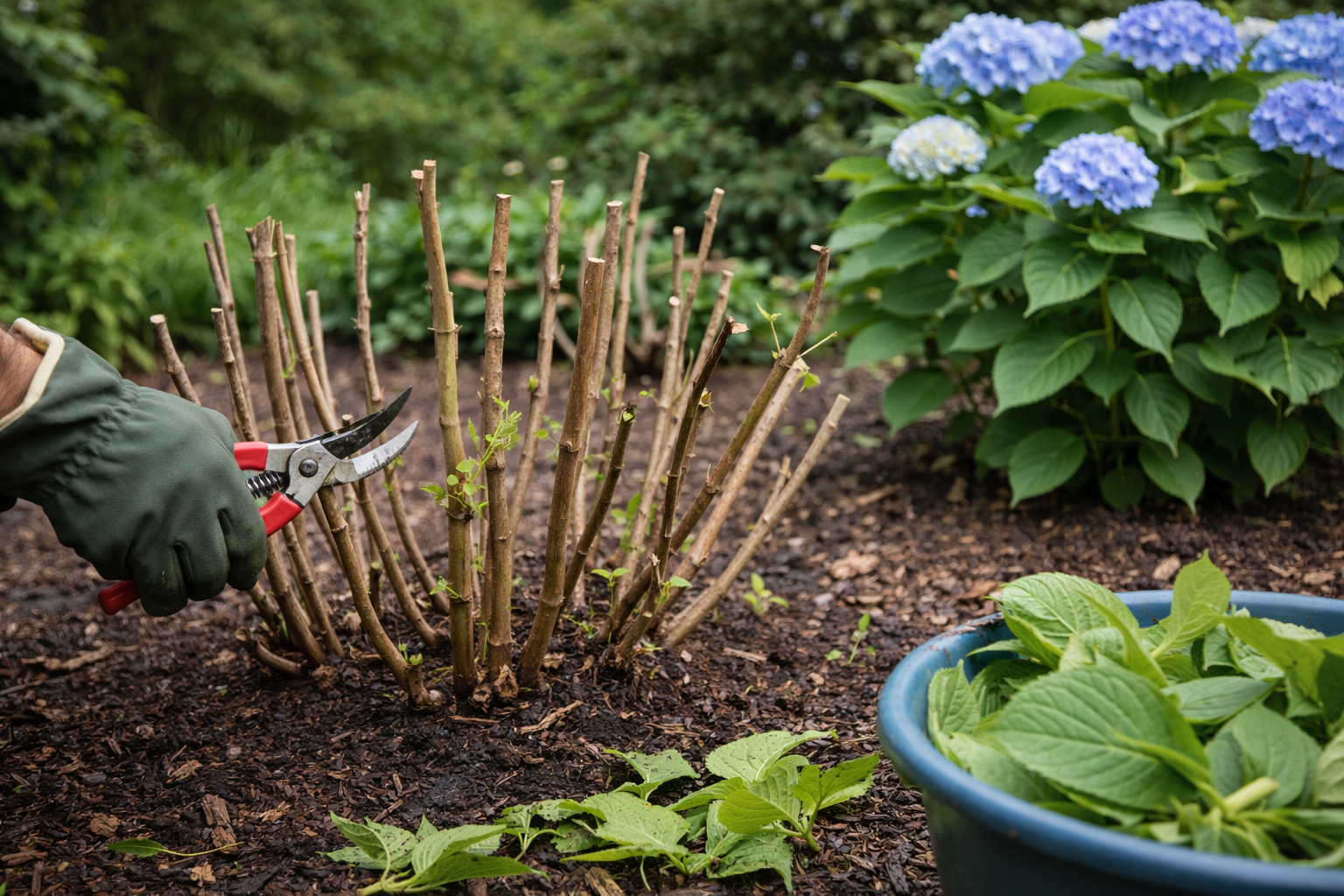
Wrong pruning does not always kill a hydrangea. It does something sneakier. It makes the plant look disappointing right when you expected momentum.
The biggest split is between hydrangeas that flower on new wood and those that carry buds on old wood. Iowa State’s pruning guide lays that out cleanly: smooth and panicle hydrangeas bloom on new growth, so late winter or early spring pruning is usually fine. Oakleaf, climbing, and many older bigleaf types bloom on old wood, so hard pruning at the wrong time can remove the stems that were about to flower.
That matters for growth too. A shrub cut back too hard may respond with new shoots, but it can still look smaller for the season because you reset the framework. This is why a gardener can say, “I pruned it to help it grow,” and then spend the summer staring at a shorter plant with fewer flowers. Been there. Not my finest spring moment.
Panicle hydrangeas are the easy ones here. They handle shaping well and they bloom on fresh growth. Smooth hydrangeas are also forgiving. Bigleafs are where caution pays. If you do not know the type, do not go hacking away just because the plant looks sleepy in early spring.
Pruning shortcut that saves trouble
- Panicle and smooth: prune for shape in late winter or early spring
- Bigleaf, oakleaf, and climbing: prune lightly and mostly after flowering, or remove dead wood only
- Unknown type: wait, watch, and cut less than your itchy hands want to
What to expect in pots, small spaces, and cold-climate gardens
Pots change the math. So do dwarf cultivars. So does climate.
A hydrangea in a container can still grow well, but the root zone is smaller and the moisture swings are sharper. That means growth often feels slower unless the pot is large, the watering is steady, and the cultivar was bred to stay compact anyway. A dwarf hydrangea that stays tidy is not failing. It is doing the job you bought it for.
Cold climates add another twist. A hydrangea can survive winter and still lose the buds that would have given you early flowers. That makes the plant feel sluggish even when the roots and crown are alive and ready to push new growth. Before you blame the shrub, check the USDA Plant Hardiness Zone Map and make sure the type you planted actually fits the winter lows where you garden.
Panicle hydrangeas earn a lot of loyalty here because they are broadly hardy and less likely to leave you with a leafy but flowerless rebound after a rough winter. Bigleaf hydrangeas can still work in colder places, but the site and cultivar choice matter a lot more. A reblooming type can help. A warm wall and some wind shelter can help too. But a zone-mismatched bigleaf in a pot is usually asking for a lot.
If the real goal is privacy or quick screening, pots are almost never the fast lane. Put the plant in the ground if you can, pick a larger-growing type, and give it enough spacing to build a proper frame.
A quick decision rule for choosing the right hydrangea if growth speed matters
If growth speed is high on your list, buy for the job, not the flower photo.
- Want quicker height and a fuller shrub in a sunny to partly sunny spot? Start with panicle hydrangea.
- Want a cooperative shrub with simpler pruning and solid seasonal growth? Smooth hydrangea is a safe bet.
- Want the classic mophead look and are fine with a bit more fuss? Bigleaf hydrangea can be worth it, just do not expect it to behave like a panicle.
- Want a vine on a wall or trunk? Climbing hydrangea is a long game plant. Treat it like one.
- Want a neat plant for a pot or a tight border? Pick a compact cultivar and accept that smaller final size is part of the deal.
Here is the rule I come back to: do not buy a hydrangea for what it looks like in a nursery in bloom. Buy it for what you need it to do in year three.
That one shift clears up most of the frustration around hydrangea growth rate. You stop asking whether the plant is fast “in general” and start asking the better question: fast enough for what, in this spot, with this type?
FAQ
Can hydrangeas grow fast enough for privacy?
Some can. Large panicle hydrangeas are the best bet when you want a seasonal screen with quicker visual fill. Small bigleaf types and most container-grown plants usually do not build privacy fast enough to act like a hedge in the near term.
Does acidic soil make hydrangeas grow faster?
Not in the way people hope. Soil pH affects bloom color in many bigleaf hydrangeas more than raw speed. Growth responds more to light, moisture, root health, temperature, and whether the plant is actually suited to the site.
Will buying a larger nursery hydrangea save a full year?
It can save you visual waiting time, yes. It does not skip establishment. A larger plant can look better sooner, but it still has to settle roots, adapt to the site, and grow into its mature habit on the same basic biological clock.

Michael Rowan is the founder and lead writer at The Garden Playbook. He has spent 10+ years growing plants across a range of settings — from indoor houseplants and container gardens to raised beds and in-ground plots — adapting methods to different light levels, seasons, and growing conditions.
Michael focuses on practical, experience-based guidance grounded in fundamentals: soil health, watering strategy, plant nutrition, pruning and propagation, and integrated pest management (IPM). His work aims to help readers diagnose common problems (such as yellowing leaves, stunted growth, or pest pressure) and apply straightforward solutions that are realistic for home gardeners.
At The Garden Playbook, Michael develops tutorials and plant guides using a consistent process: documenting real outcomes where possible, explaining the “why” behind each step, and verifying higher-risk topics (such as plant toxicity or pest treatment options) against reputable horticultural references.