
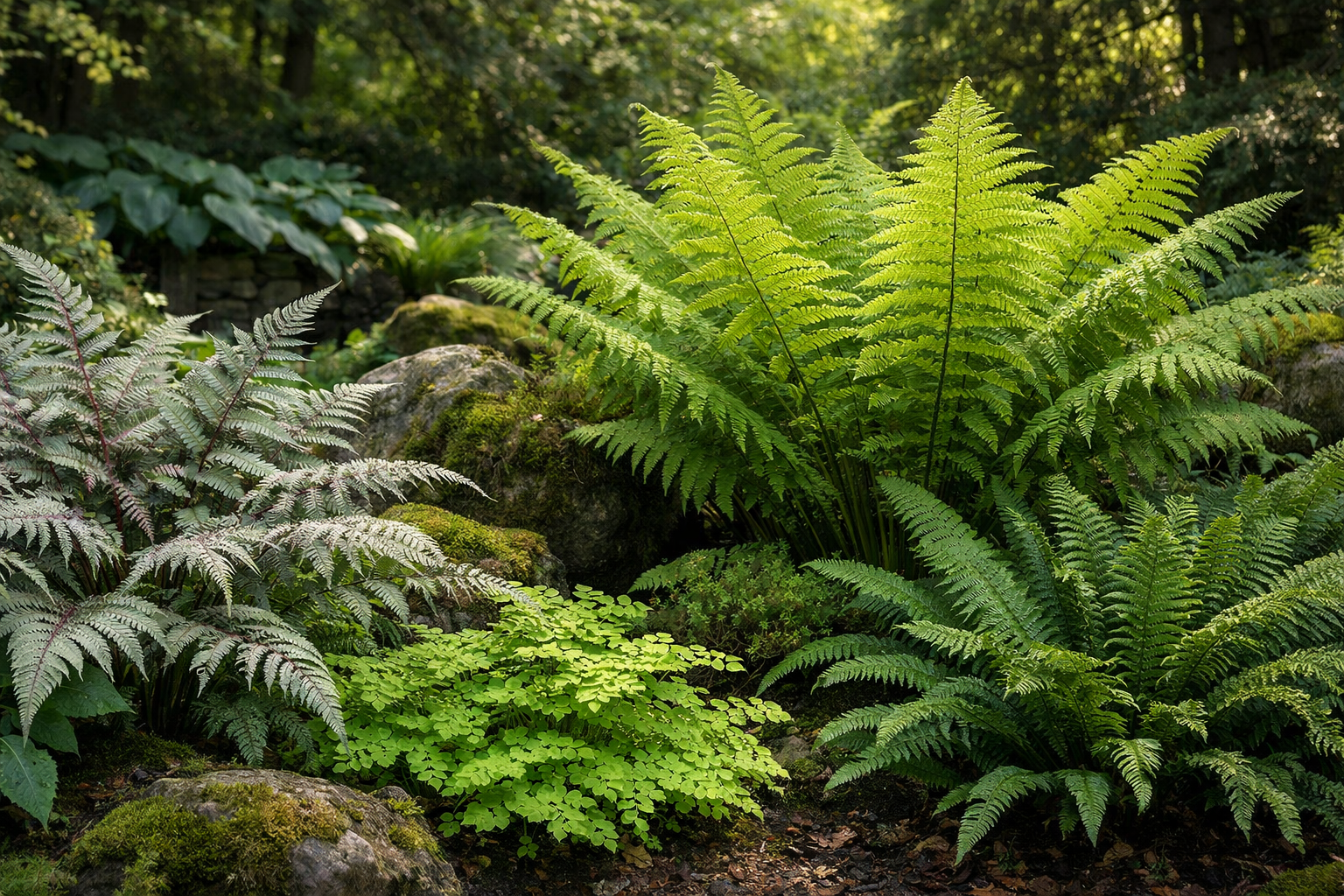
The short answer on the best ferns for shade is this: Christmas fern is the safest all-around pick, Japanese painted fern is the prettiest compact choice, lady fern is the easy airy filler, and ostrich fern is the bold statement plant for cool, moist ground. What changes the answer is not the word “shade.” It is whether that shade is dry under tree roots, evenly moist in a woodland border, or cool and damp near a downspout or pond edge. South Dakota State University Extension makes the same point in practical terms: many ferns want moisture and some moving light, not baking afternoon sun and not bone-dry gloom.
What this guide will help you do
- Pick a fern based on the kind of shade you actually have
- Avoid the classic dry-shade mistake under mature trees
- Choose between clumping, slowly spreading, and colony-forming types
- Decide whether winter green matters in that spot
- Plant and water them in a way that gives them a fair start
At a Glance: quick fern matches for the most common shade problems
| If the site is… | Start with… | Watch for… |
|---|---|---|
| Dry shade under trees | Christmas fern, hard shield fern | Tree-root competition, slow first-year growth |
| Evenly moist woodland shade | Lady fern, Japanese painted fern | Afternoon scorch, letting the soil swing too dry |
| Cool damp spot or rain-garden edge | Ostrich fern | Spreading farther than expected |
| Small shady border that needs winter structure | Christmas fern, tassel fern | Overcrowding with too many broad-leaved companions |
Fast rule: moisture first, then spread habit, then size, then whether you want evergreen fronds in winter.
Best Ferns for Shade: The Quick Picks by Situation
If you want the shortlist without the meandering plant-tag poetry, here it is.
Christmas fern is the safest starter for most shady gardens because it handles part shade to full shade, dry-to-medium moisture, and keeps evergreen fronds through winter. Missouri Botanical Garden lists it at 1 to 2 feet tall and wide, notes that it grows in dry to medium well-drained soil, and points out that although it is rhizomatous, it does not spread into a roaming colony. That is a rare mix of forgiving and tidy. Christmas fern details from Missouri Botanical Garden back up why it is such a good “plant it and stop worrying” choice.
Japanese painted fern is the compact beauty pick. South Dakota State University Extension describes it as a lower-growing fern at about 12 to 18 inches, with silvery fronds that can pick up red tones when it gets enough light, but not hot afternoon sun. In a small border, that size matters more than the silver sheen does. It slips into spaces where bigger ferns look crowded.
Lady fern is the soft-textured filler that works when you want movement and a less rigid look. Extension guidance places mature plants around 3 feet tall and about a foot wide, with better drought tolerance than ostrich fern, though it still prefers moisture. In garden terms, that makes it a flexible middle-ground fern. Not the toughest for dry rooty shade, not the thirstiest either.
Ostrich fern is the big dramatic one for damp shade. Missouri Botanical Garden lists it at 3 to 6 feet tall, 5 to 8 feet spread, and says the soil should never be allowed to dry out. That line alone tells you where it belongs and where it doesn’t. Put it in a cool, moist bed and it can look fantastic. Put it in stingy, root-filled shade and it turns into an expensive lesson. Ostrich fern details from Missouri Botanical Garden spell out the moisture and spread habit plainly.
Remember: when a gardener says a fern “failed in shade,” the fern often failed in dry shade, not shade full stop.
Match Your Shade Type to the Right Fern and Avoid Bad Picks
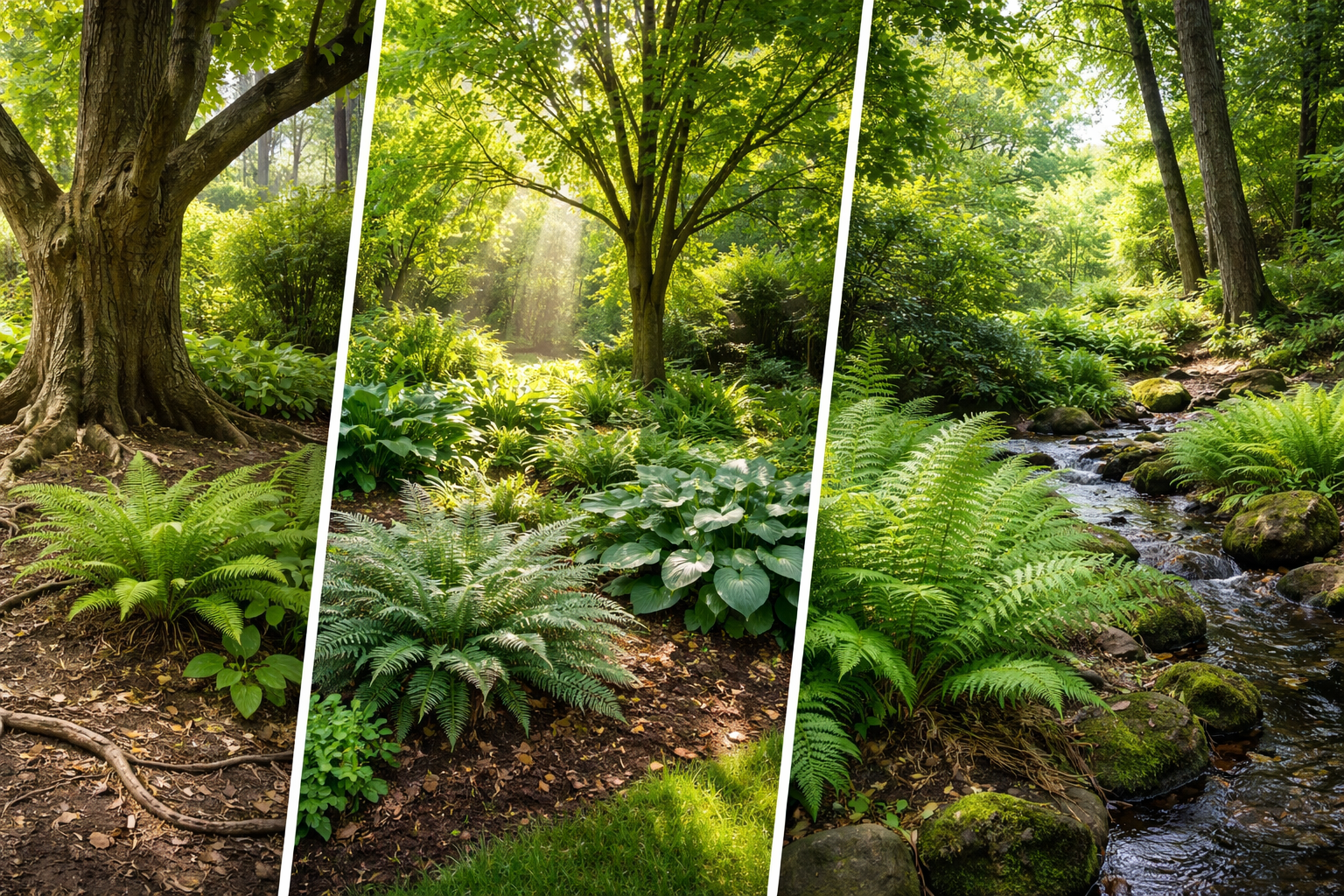
Shade is not one condition. It is a category with attitude.
A north-facing wall, the open shade of a deciduous tree, and the dense dry soil under a mature maple do not behave the same way. The Royal Horticultural Society notes that partial shade commonly turns up near mature trees, sheds, buildings, and walls, and that low light makes plant growth harder unless the plants are adapted to it. That sounds obvious when written down, but this is where a lot of fern shopping goes sideways. RHS fern guidance and their shade advice both push the same idea: right plant, right place beats wishful thinking every time.
Bright shade or dappled shade: this is often the sweet spot. Japanese painted fern and lady fern usually look better here than in dead, heavy shade because they get enough light to keep decent color and shape.
Moist woodland shade: this is classic fern territory. The soil stays cool, there is leaf litter or compost, and the bed does not swing hard from soggy to dusty. Lady fern, Japanese painted fern, Christmas fern, and tassel fern all make sense here.
Dry shade under trees: this is the trap. The light might be gentle, but the roots are greedy and the soil dries faster than many people expect. Christmas fern earns its keep here because Missouri Botanical Garden lists tolerance for dry soil, drought, heavy shade, and shallow rocky soil. Hard shield fern can also cope better than fussier moisture-lovers.
Dense low-light shade: fewer ferns look really good here. Many will survive, but survive is not the same as thrive. If the space gets almost no moving light, keep expectations lower and favor steady green structure over flashy foliage color.
3-question site check
- Does the bed get any morning sun or shifting light through the day?
- After a dry spell, is the soil still cool and faintly damp two inches down?
- After rain, does water sink in or sit around the crown?
If your answer is “no, no, and yes,” do not buy a moisture-loving fern and hope for charm. Buy a tougher one or fix the site first.
Use the Fern Fit Test: Moisture, Spread, Size, and Winter Habit
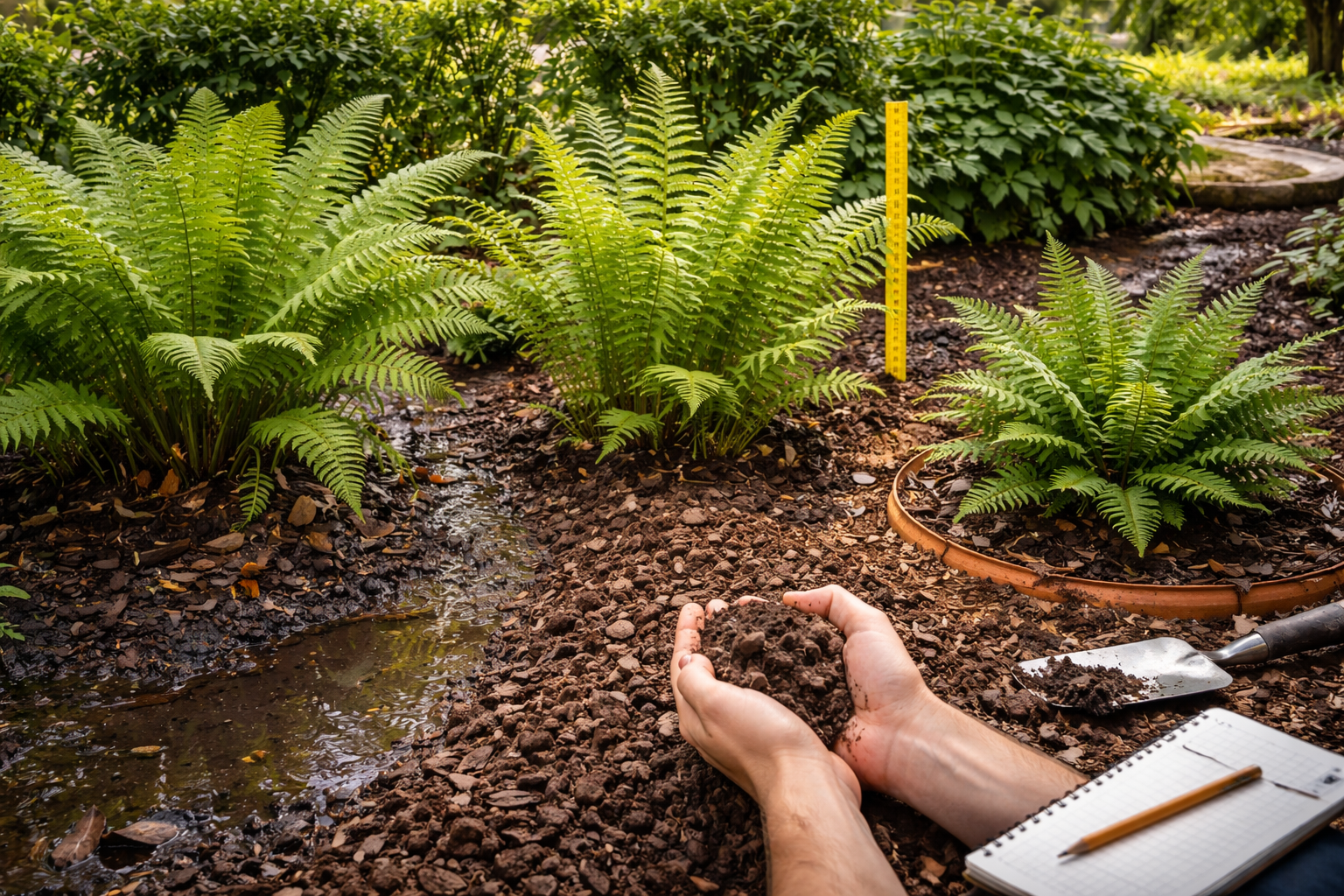
This is the filter that makes fern shopping feel easy again. I use it in this order because each step knocks out the wrong plants fast.
Step 1. Match moisture and avoid the quickest failure
Start here because water stress shows up early. Christmas fern handles dry to medium moisture. Ostrich fern wants medium to wet soil and should never dry out. Lady fern sits in the middle, happier in moist soil but not quite as needy as ostrich fern. If your site dries hard in summer, cross ostrich fern off the list without guilt.
Step 2. Check spread and avoid the “why is this everywhere?” problem
Missouri Botanical Garden notes that Christmas fern grows as a clump and will increase in size over time without naturalizing into a patch. Ostrich fern does the opposite in a good site. It spreads by underground rhizomes and can form dense colonies. That is brilliant in a woodland sweep. It is awful in a neat little border by the front walk.
Step 3. Use size to keep the bed in scale
Roughly speaking, think in three buckets. Under 18 inches is compact and easier near the front. Between 18 and 36 inches fills the middle nicely. Above 3 feet, a fern starts behaving like a statement plant. Japanese painted fern lives in the first bucket. Lady fern usually lands in the middle. Ostrich fern jumps into the big, showy group when the site is moist and cool.
Step 4. Decide whether winter green matters
If the bed looks bleak in January, evergreen matters more than people think in May. Christmas fern keeps leathery green fronds through winter. RHS also highlights evergreen structure in ferns such as tassel fern and hard shield fern. If the spot disappears from view in winter, deciduous ferns are perfectly fine. If you see it every day from a window, evergreen fronds earn their keep.
One useful note on hardiness: the USDA Plant Hardiness Zone Map is based on average annual extreme minimum winter temperature. That helps you avoid cold-damage surprises, but it does not tell you whether your site is dry under a tree or wet by a downspout. Zone fit is the gate. It is not the whole answer.
Fern fit shortcut: if the bed is dry, start with toughness. If the bed is damp, then you can chase drama.
Best Ferns for Shade, Grouped by Real Garden Scenarios
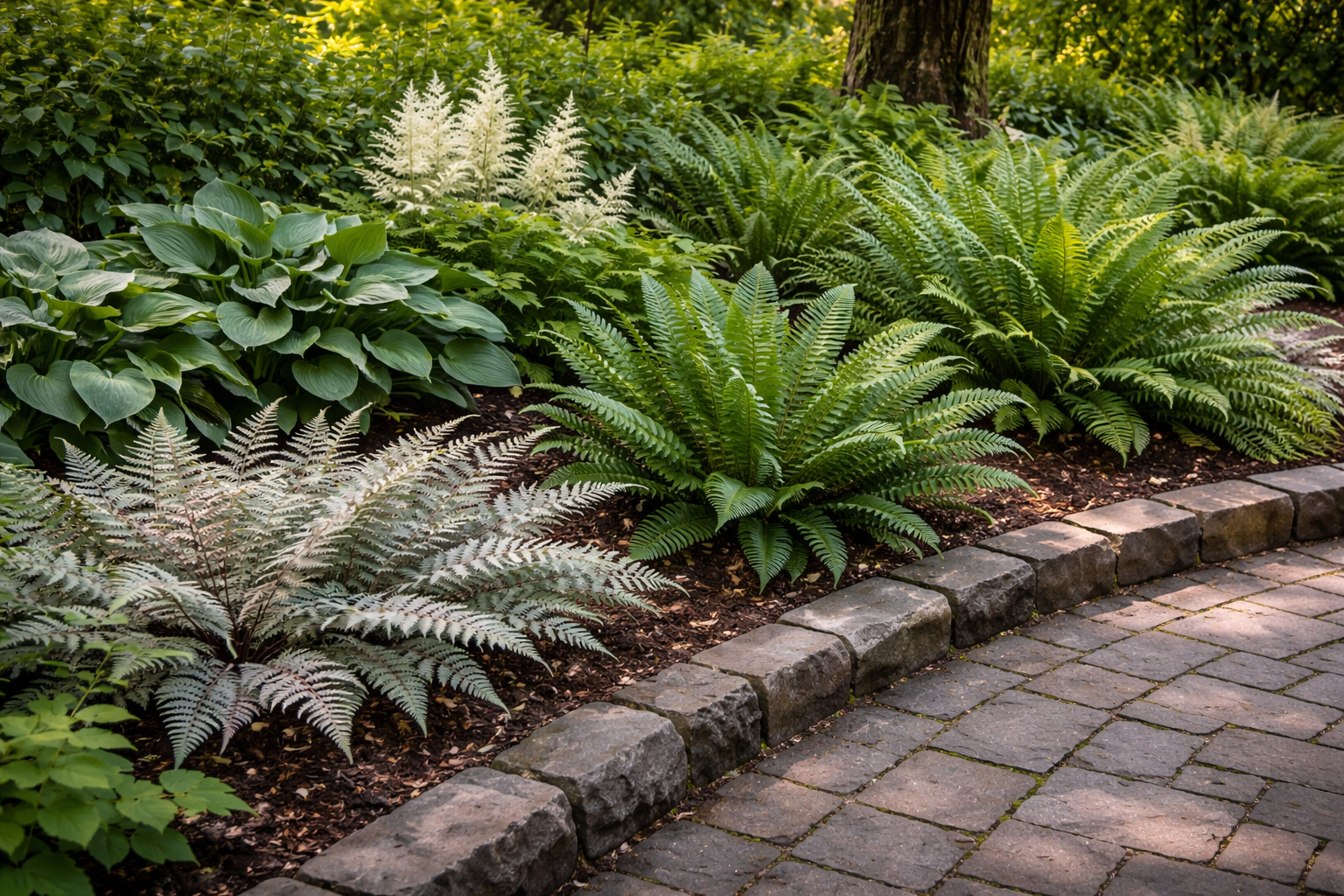
This is where the abstract stuff gets useful. Same plant family, very different jobs.
For small spaces and front-of-border planting
Japanese painted fern is the obvious first look because it stays around 12 to 18 inches tall and gives you silver, grey-green, and burgundy tones without taking over. It is one of those plants that reads fancier than it is. The catch is heat and harsh afternoon sun. Extension notes that it colors best with decent light, but still wants shelter from hot afternoon exposure. Hard shield fern is another good small-space pick. RHS describes it as rarely spreading, usually producing a single crown, with dark green evergreen fronds and a mature height around 16 to 24 inches. That “rarely spreads” line is gold when you are planting close to edging or a path.
Fern fit: choose Japanese painted fern for color and softness. Choose hard shield fern for structure and restraint.
For year-round structure
Christmas fern is still the first name out of my mouth here because it combines evergreen habit with broader site tolerance. If you want a slightly glossier, more deliberate look, tassel fern deserves a spot. RHS describes Polystichum polyblepharum as an evergreen fern with glossy dark green fronds in a neat shuttlecock shape, around 31 inches tall. That shape reads clean and architectural in a shady border, especially when broad-leaved companions start getting floppy by late summer.
Fern fit: Christmas fern for tougher, drier shade. Tassel fern for a richer, moister border where glossy foliage can show off.
For bold height in moist shade
Ostrich fern is the headline act. In cultivation it often sits around 2 to 3 feet, though Missouri Botanical Garden notes it can reach 6 feet in moist cool climates and spread 5 to 8 feet wide over time. That spread is not a footnote. It is the whole decision. If you have room and steady moisture, it looks lush in a way few shade plants do. If you do not, it becomes the garden equivalent of inviting a brass band into a breakfast nook. Lady fern is the softer, easier-to-place alternative. It usually tops out around 3 feet and spreads more slowly, so it gives height without the same territorial instinct.
Fern fit: ostrich fern for a naturalistic sweep. Lady fern for a mixed border that still needs some manners.
For dry shade and under-tree spots
This is where many fern lists get a little too dreamy. Under established trees, the plant is fighting both low light and root theft. Christmas fern stands out because Missouri Botanical Garden lists tolerance for drought, dry soil, heavy shade, and shallow rocky soil. Hard shield fern also stays on the short list because it rarely spreads and keeps evergreen fronds. Both are smarter here than moisture-hungry ferns, even if the latter look better in nursery photos.
Fern fit: if the soil goes dusty under a tree, start with Christmas fern. It is not flashy, but it is the one that still looks composed when the glamorous choice has given up a bit.
For foliage color
Japanese painted fern is the easy answer, and for good reason. South Dakota State University Extension notes the silvery fronds and the red-to-burgundy tones that show better with enough light. Autumn fern is worth a mention too if the site is moist shade and you want warm flushes of coppery new growth. RHS describes Dryopteris erythrosora as evergreen, with pink or red spring growth that matures to glossy green, around 23 inches tall. That spring color is lovely with blue brunnera or pale pulmonaria.
Plant Ferns So They Establish Fast and Stay Lush
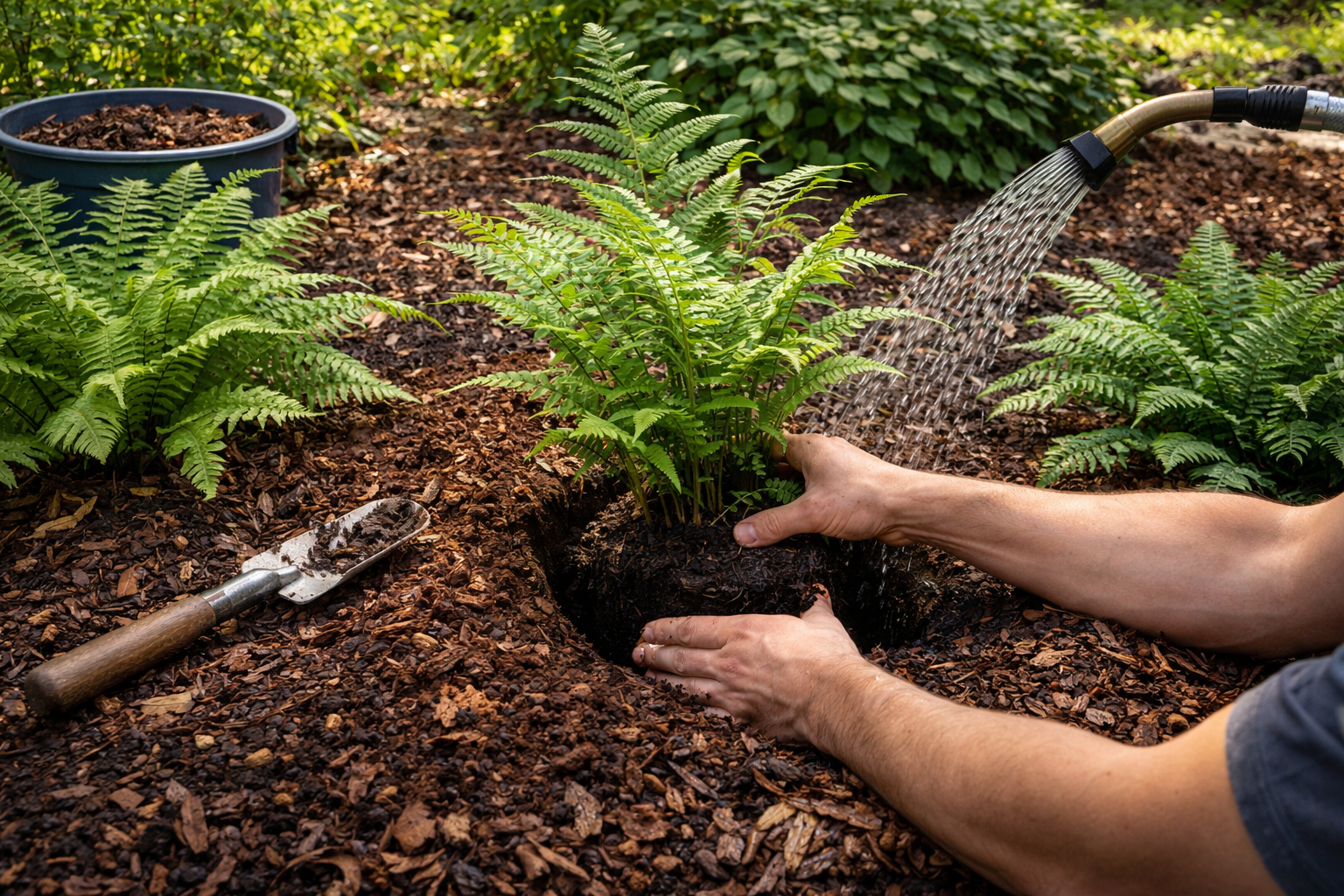
Fern care is not mysterious, but the first season matters more than the plant tag lets on.
Step 1. Build a root-friendly pocket
Most hardy garden ferns like organic matter in the soil. Leaf mould, compost, and old-fashioned woodland-ish soil texture make a visible difference. Missouri Botanical Garden describes Christmas fern as best in organically rich, well-drained soil, and SDSU Extension notes that ostrich fern and lady fern respond well when organic matter and moisture line up. If your site is thin and rooty, dig wider than you think, not just deeper. That wider pocket buys the plant a little breathing room.
Step 2. Water for establishment, not forever babying
Even tougher ferns need steady moisture while they settle in. That usually means checking the bed through the first spring and summer, especially near trees and walls. RHS shade advice says even plants adapted to shade may need careful monitoring and watering through their first season to get established. After that, the right fern in the right place usually becomes pretty low-fuss.
Step 3. Mulch and keep the root zone cool
A soft organic mulch helps in two ways. It slows evaporation and it gradually feeds the soil. In my own shady beds, the difference between mulched and unmulched fern planting is not subtle by midsummer. One stays calm. The other starts looking peevish and flat.
Step 4. Clean up at the right moment
For evergreen and semi-evergreen ferns, old fronds often protect the crown and give the plant a bit of winter presence. Cut them back when new growth starts to move in spring, not just because you feel like tidying in autumn. Japanese painted fern, for instance, is often better left standing until its season is really finished.
Note: “Low maintenance” kicks in after establishment. The first season is the apprenticeship.
Avoid the Mistakes That Turn Shade Ferns Crispy, Floppy, or Pushy
Most fern failures are not dramatic. They are quiet mismatches that add up.
Mistake 1. Treating full shade like a universal fern paradise
Some ferns tolerate heavy shade. Fewer look their best there. If the bed gets no moving light at all, expect slower growth, less color, and a duller overall look. Japanese painted fern is a good example. Too much sun burns it. Too little light can leave the plant looking flatter than it should. :contentReference[oaicite:20]{index=20}
Mistake 2. Planting moisture lovers under thirsty trees
Ostrich fern in dry root-filled shade is the classic mismatch. Missouri Botanical Garden is blunt here: the soil must never be allowed to dry out. Under a mature maple, that is asking for trouble.
Mistake 3. Ignoring spread habit in a tidy border
Some gardeners buy the most handsome fern on the bench, then look stunned when it starts walking. Christmas fern bulks up but stays civilized. Ostrich fern forms colonies. Hard shield fern rarely spreads. Those are three very different maintenance futures.
Mistake 4. Letting drainage slide because “ferns like moisture”
They like moisture, yes. They do not all like sitting wet around the crown in winter. Missouri Botanical Garden notes crown rot can be a problem for Christmas fern in poorly drained soil. Damp is not the same thing as bogged and airless.
Mistake 5. Stuffing too many similar textures together
A fern bed can turn into one green shrug if every plant has the same scale and outline. Pair airy ferns with a leathery evergreen fern, or use one bold broad leaf to break the frond rhythm. This is a design problem, but it changes whether the planting feels thought-through or just… green.
Build a Shade Border That Looks Intentional, Not Like One Green Blur
The best shade borders use contrast, not just survival.
RHS shade planting advice calls out contrasting foliage textures as a simple way to add interest, and that is exactly right with ferns. One evergreen structural fern, one softer deciduous fern, and one companion with a different leaf shape is often enough. Try Christmas fern with brunnera. Or tassel fern with pulmonaria. Or lady fern with a restrained hosta if the slugs are not a circus in that bed.
There is also a spacing issue people miss. If every plant is domed and medium green, the border reads flat from ten feet away. One upright or shuttlecock-shaped fern changes that. One silver-toned fern changes it again. That is why Japanese painted fern earns a place even in beds where it is not the toughest plant there. It breaks the visual monotony.
If a brighter corner of the border can take a flowering climber, this guide to clematis for shade is a sensible companion read. Ferns do the quiet base layer. A clematis can handle the vertical note.
Simple planting recipe: one anchor fern for structure, one lighter fern for movement, one contrasting companion to stop the whole bed from blurring together.
Troubleshoot the Hard Shade Scenarios Before You Buy
Some spots need a tougher answer, not a prettier one.
Under mature trees with heavy root competition
Choose Christmas fern first. It handles dry-to-medium moisture, heavy shade, and dry soil better than most of the glamorous options. Hard shield fern is a good second look if the site is not brutally dry and you want a tidier evergreen clump.
In wet shade or near a rain-garden edge
Ostrich fern starts making sense here. Missouri Botanical Garden even lists rain garden as a suggested use. Just leave room for it. A plant that can run 5 to 8 feet wide over time should not be treated like a polite little filler.
When winter structure matters
Favor evergreen types such as Christmas fern, hard shield fern, and tassel fern. Deciduous ferns can vanish neatly for winter, which is fine in an out-of-the-way bed. It is less fine in a border you stare at from the kitchen every morning.
When deer are part of the problem
Christmas fern gets a helpful mark here too. Missouri Botanical Garden lists deer tolerance for it. That is not a promise of immunity. Hungry deer can make liars out of plant lists. Still, it is a useful tilt in your favor.
When you are gardening near a hardiness edge
Check the zone first, then the site. The USDA map tells you whether winter cold is likely to rule a plant out. Then you still have to match moisture, drainage, and light quality. This two-step check is boring. It also saves money.
If you want the fastest no-regret rule, it is this: dry shade equals Christmas fern first. moist shade equals lady fern or Japanese painted fern. wet cool shade with room to roam equals ostrich fern.
FAQ
Can shade ferns grow in outdoor containers?
Yes, though the container changes the moisture game. A fern that copes in garden soil can dry out fast in a pot, especially in dappled summer heat. Compact picks such as Japanese painted fern, hard shield fern, and tassel fern usually make more sense than ostrich fern in containers. Use a moisture-retentive but free-draining mix and do not let the pot bake.
Do ferns in shade need fertilizer?
Usually not much. A yearly top-dressing of compost or leaf mould does more good in most gardens than chasing lush growth with strong fertilizer. Too much feed can push soft growth that flops or scorches. Better soil and steadier moisture are the bigger wins.
Should fern fronds be cut back in fall or spring?
For evergreen and semi-evergreen ferns, spring is often the cleaner choice. Leave old fronds through winter, then remove tired growth as new fronds begin to unfurl. Deciduous ferns can be tidied once they are fully spent, but many gardeners still leave them standing a bit for crown protection and winter texture.

Michael Rowan is the founder and lead writer at The Garden Playbook. He has spent 10+ years growing plants across a range of settings — from indoor houseplants and container gardens to raised beds and in-ground plots — adapting methods to different light levels, seasons, and growing conditions.
Michael focuses on practical, experience-based guidance grounded in fundamentals: soil health, watering strategy, plant nutrition, pruning and propagation, and integrated pest management (IPM). His work aims to help readers diagnose common problems (such as yellowing leaves, stunted growth, or pest pressure) and apply straightforward solutions that are realistic for home gardeners.
At The Garden Playbook, Michael develops tutorials and plant guides using a consistent process: documenting real outcomes where possible, explaining the “why” behind each step, and verifying higher-risk topics (such as plant toxicity or pest treatment options) against reputable horticultural references.