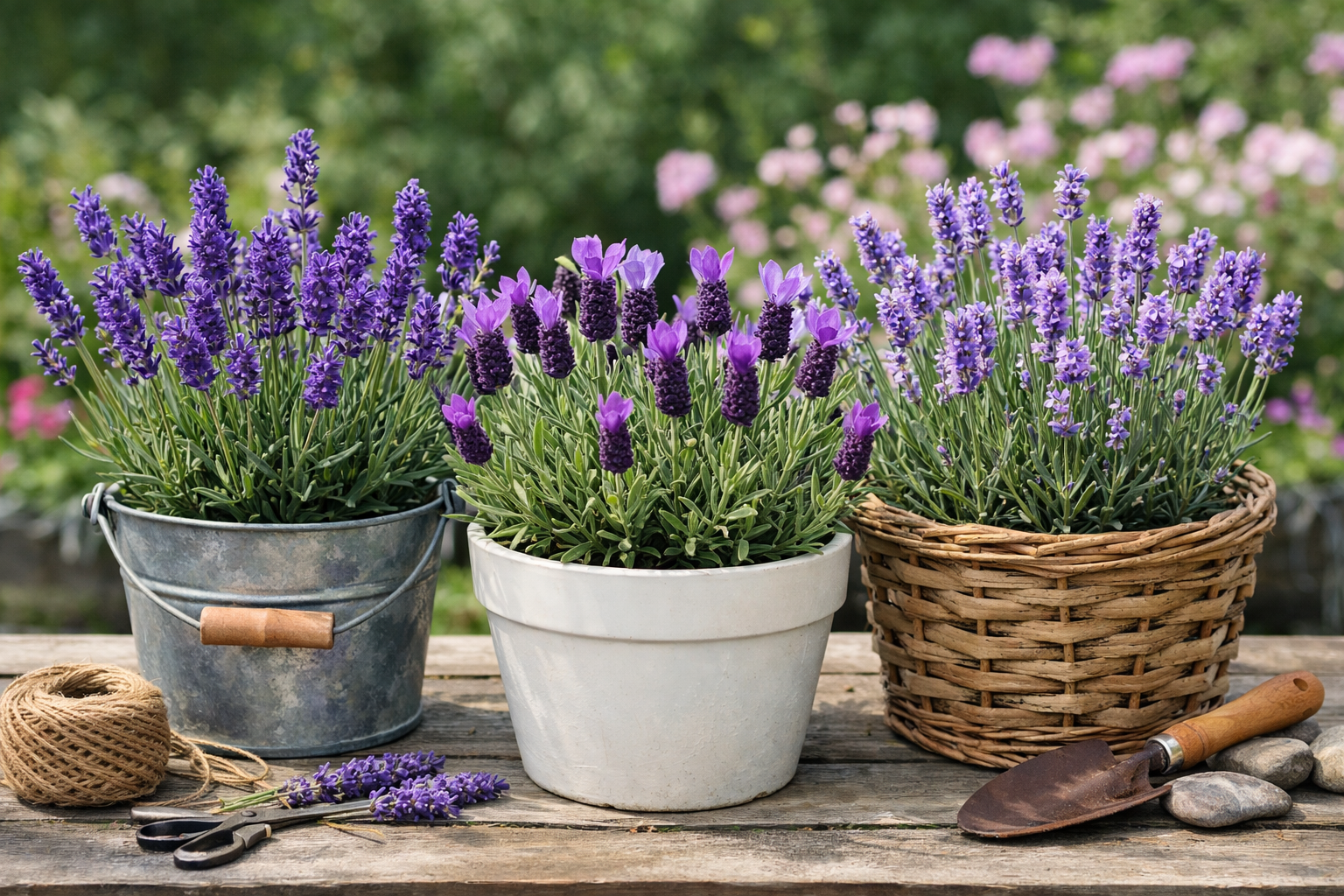
You buy a lavender in full bloom, tuck it into a sunny pot by the front step, and for a few weeks it looks like the easy win of the season. Then the plant goes loose and woody, the center opens up, and the pot stays wet longer than your instincts say it should. That is usually the moment the question changes from “How do I grow lavender?” to “What was I supposed to buy in the first place?”
For most readers searching for the best lavender for containers, the safest first pick is a compact English lavender. Think Munstead, Hidcote, Little Lottie, or Thumbelina Leigh. But that broad answer gets sloppy fast. A cool, dry patio and a hot, sticky balcony are not asking the same thing from the plant, and a 10-inch terracotta pot behaves nothing like a deep glazed urn.
RHS notes that lavender thrives in a sunny spot in free-draining soil or a container, and Illinois Extension points out that dampness and wet soil kill more lavender than cold in many gardens. Put those two facts together and the real job becomes obvious: pick the right lavender type, then give it a pot setup that dries at the right pace.
- Which lavender type is the safest container bet for most gardens
- Which varieties fit small pots, big pots, hot patios, and cold winters
- How to choose a pot and mix that do not turn into a wet sponge
- How to water potted lavender without fussing it to death
- What usually goes wrong, and what to do instead
Lavender quick-pick
| If this sounds like you | Start here | Why it fits |
|---|---|---|
| Small patio pot, cold winter, classic scent | Little Lottie or Thumbelina Leigh | Compact English lavender stays tidy and handles winter better |
| Medium pot, easiest all-around choice | Munstead or Hidcote | Strong fragrance, compact habit, good beginner margin |
| Hotter, stickier summer weather | Spanish lavender such as Bandera Pink or Silver Anouk | Handles warm conditions better than many English types |
| Large statement pot, warm climate | Goodwin Creek Grey or Phenomenal | Bigger plant, stronger presence, better in roomier containers |
The best lavender for containers is usually compact English lavender, but not always
Utah State University Extension describes English lavender as thriving in full sun, well-drained soil, and a pH around 6.5 to 7.5. It also places English lavender across a broad hardiness range. That is why compact English cultivars are the cleanest first answer for pots. They smell like what most people picture when they think “lavender,” they stay dense with light pruning, and they cope with winter better than the tender types.
That said, “English lavender” is not a magic password. I have seen a neat little Hidcote stay handsome in a 12-inch terracotta pot for months while a random unlabeled lavender in a glossy ceramic planter beside it slowly turned into a damp, grey sulk. Same patio. Totally different outcome.
The two big exceptions are climate and scale.
If your summers run hot and muggy, Spanish lavender often makes more sense than the usual English picks. If your goal is a bigger, airier, more dramatic plant in a large container, a lavandin or a warm-climate French type can be a better match than a tidy dwarf English shrub. The tradeoff is that those larger types get unruly faster, and they are less forgiving in cramped pots or exposed cold.
Fast rule: Cold winters or strongest scent? Start with English lavender. Sticky summer air? Start by looking at Spanish lavender. Big decorative pot with room to breathe? Then a larger type can earn its keep.
If you only remember one thing from this section, make it this: the “best” lavender is the one that matches your weather and the pace your pot dries, not the one with the prettiest flower photo on the tag.
Choose by climate first, then by pot size, then by what you want from the plant
Most lavender buying mistakes happen in the wrong order. People see flower color first, then maybe scent, and only later realize the plant was never a fit for that balcony, that windowless stoop, or that oversize glazed pot that stays wet for ages.
Flip the order and the choice gets easier.
Start with climate. North Carolina Extension notes that English lavender likes perfectly drained soil and can be difficult in the Southeast. That tracks with what a lot of gardeners notice the hard way. In cooler or drier places, English lavender behaves like the polite guest you hoped for. In heat with heavy summer humidity, it can get patchy, open-centered, and short-lived.
Then look at pot size. A tiny balcony pot needs a plant that stays naturally compact. A deep, wide patio planter can support a stronger root system and a bigger top. Put a large lavender in a small pot and you will be watering every five minutes in July. Put a tiny dwarf in an enormous, wet-retentive pot and the roots sit in mix that never quite dries.
Then think about your goal:
- Strongest classic fragrance: English lavender, usually Munstead or Hidcote territory
- Smallest footprint: Little Lottie or Thumbelina Leigh
- Long ornamental show in warm weather: Spanish lavender types
- Large statement pot: a more vigorous plant such as Goodwin Creek Grey or Phenomenal
- Culinary use: stay with English lavender cultivars, which are the usual food-friendly choice
A tiny buying filter that saves a lot of grief
- Pick the lavender type for the climate.
- Pick the cultivar for the pot size.
- Pick the flower color last.
The nursery trap is simple. The bigger plant in bloom looks more exciting, so it goes home with you. Six weeks later it is trying to live in a pot the size of a cereal bowl. That never ends well.
These are the container lavender picks that actually fit different situations
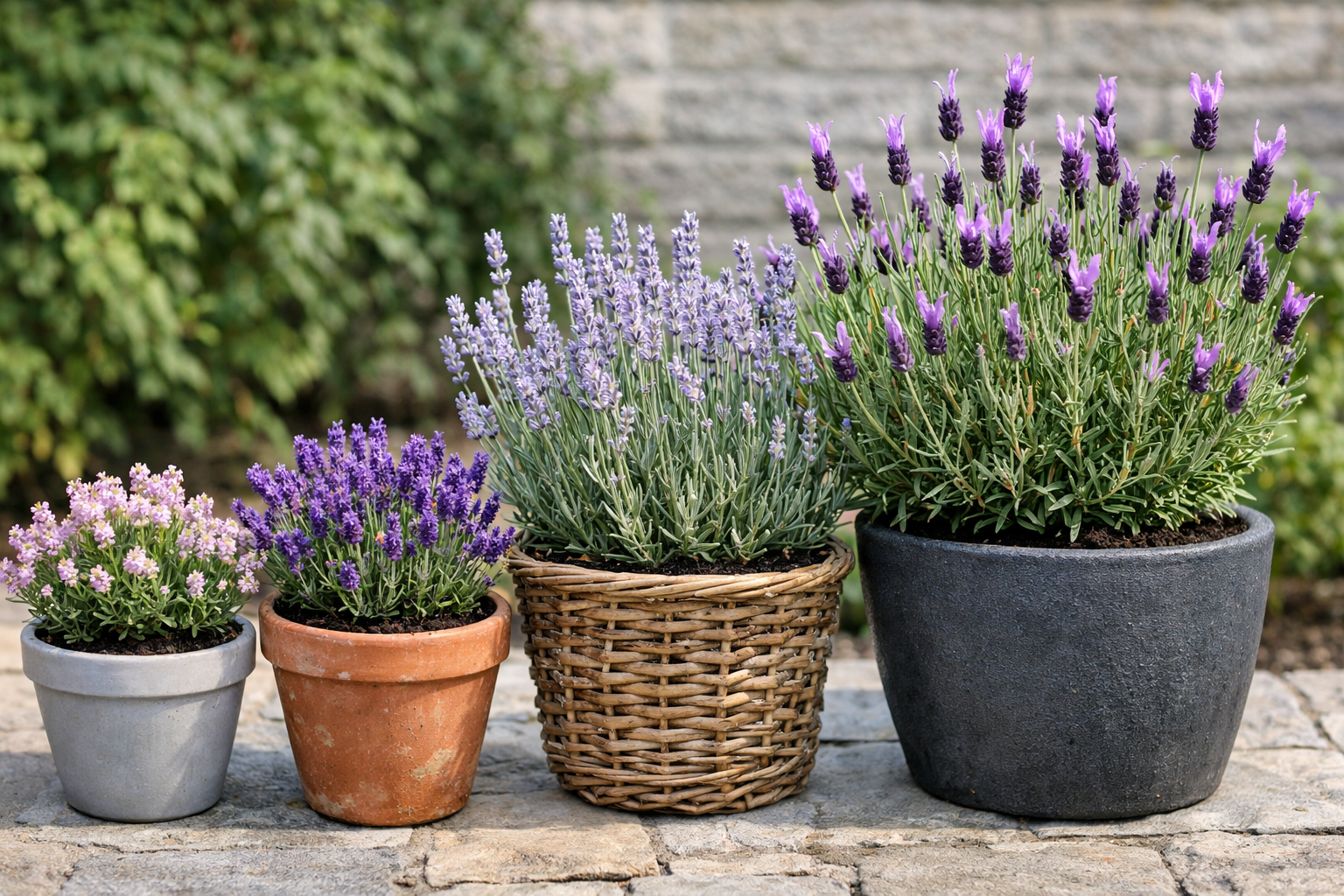
I like judging container lavender through a pretty narrow lens: mature size, shape in a pot, fragrance, climate fit, and how much drama it causes by year two. A plant that looks stunning in a catalog but turns leggy, splits in the middle, or sulks after one wet spell is not a great container pick no matter how pretty the flower heads are.
| Cultivar | Best for | Size feel in a pot | Main tradeoff |
|---|---|---|---|
| Munstead | Best all-around pick | Compact to medium | Less flashy than some warm-climate ornamentals |
| Hidcote | Compact shape and rich color | Compact | Can struggle where summers stay sticky |
| Little Lottie | Small pots | Very compact | Smaller visual impact from a distance |
| Thumbelina Leigh | Neat rounded habit | Small to compact | Usually harder to find than Munstead or Hidcote |
| Bandera Pink / Silver Anouk | Warm-climate ornamental pots | Compact to medium | Less hardy in cold winters |
| Goodwin Creek Grey / Phenomenal | Larger containers | Medium to vigorous | Too big for a small pot long term |
Munstead is the all-arounder I would point most people to first. It has that classic English lavender scent, it looks right in a patio pot, and it does not need a huge container to feel settled. If you want one answer that will be “right enough” in the most gardens, this is often it.
Hidcote is the tighter, moodier cousin. The deeper flower color looks great in terracotta or pale stone pots, and it tends to read as a bit neater. If your patio gets strong sun and the air is not syrupy all summer, Hidcote is a very easy sell.
Little Lottie and Thumbelina Leigh are the smarter plays for smaller containers. They stay compact without looking pinched. That matters. A lot of so-called compact lavender still gets a little too ambitious for a narrow doorstep pot by late summer. These two usually do not.
Bandera Pink and Silver Anouk make more sense when the weather is warm and you want a decorative container plant first and a culinary herb second. Spanish lavender has those showier top bracts that catch the eye from farther away. It is not the strongest “lavender sachet” scent profile, but it often looks fresher in hot weather.
Goodwin Creek Grey and Phenomenal are for readers with room. They can be excellent in a wide planter where a dwarf English type would look a bit lost. But there is no point pretending they are small-pot plants. They are not. Put them in a cramped container and the whole thing starts to feel like medium shoes on a size 11 foot.
What to buy at the nursery: a named cultivar with healthy gray-green growth, tight branching, no yellow lower stems, and a crown that is dry and firm rather than mushy.
Match the pot to the plant so the root zone dries at the right pace
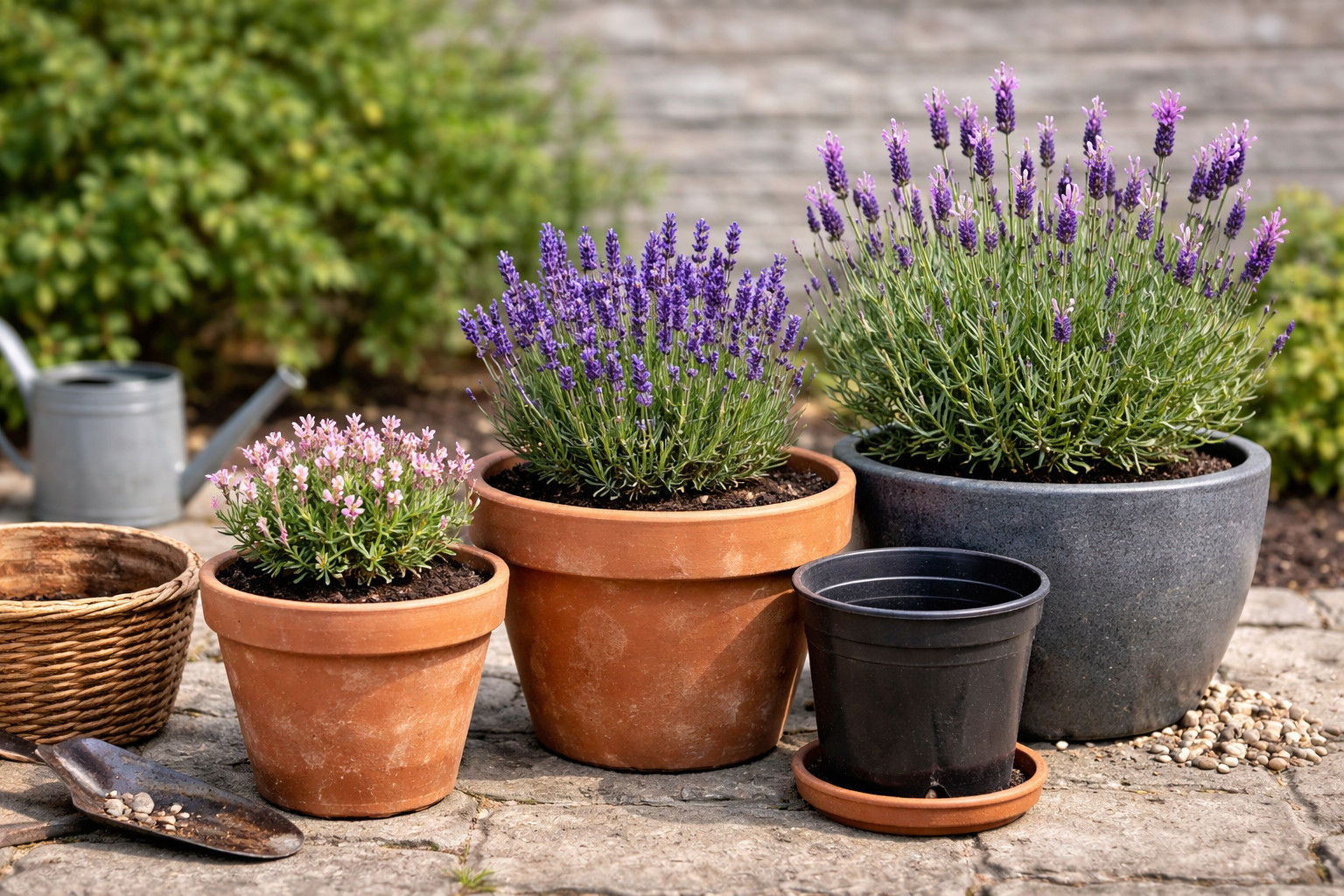
Container lavender fails for a sneaky reason: the pot is often chosen like decor first and a root environment second. Lavender does not care how nice the planter looks. It cares how long the root ball stays damp after watering or rain.
The NC State Extension Gardener Handbook is blunt about drainage holes being necessary in containers, and it also points out that a plant can be double-potted if the outer decorative container does not drain. That is useful because it gives you a way to keep the pretty pot without trapping roots in standing water.
As a working range, these pot sizes usually behave well:
- Dwarf lavender: around 10 to 12 inches wide
- Medium English lavender: around 12 to 16 inches wide
- Vigorous or larger types: 16 to 20 inches wide or more
Those are not laws. They are practical starting points. A windy rooftop, a blazing west-facing patio, or a very porous clay pot can shift the balance. Still, they are far more useful than the usual vague “choose a pot slightly larger than the nursery pot” line.
Terracotta is a good fit for most lavender because it lets moisture leave the pot wall instead of bottling it up. Plastic and glazed ceramic can work too, but the margin for sloppy watering gets smaller. If you already know you tend to overwater, terracotta is your friend.
And skip the giant pot for the tiny plant unless there is a real reason for it. Extra soil volume sounds generous, but for lavender it often means cold, wet mix sitting around the roots with nothing to dry it out fast.
Two small pot details that help more than people think
- Use pot feet if the container sits on stone, decking, or a solid saucer-like surface.
- If the outer pot has no drainage, keep the lavender in a draining nursery pot inside it.
For tall urns and deep planters, How to Fill a Large Plant Container: 7 Smart Rules That Work is worth a look, especially if the container is much deeper than the root zone actually needs.
Build a lean, gritty setup and water by dry-down, not by routine
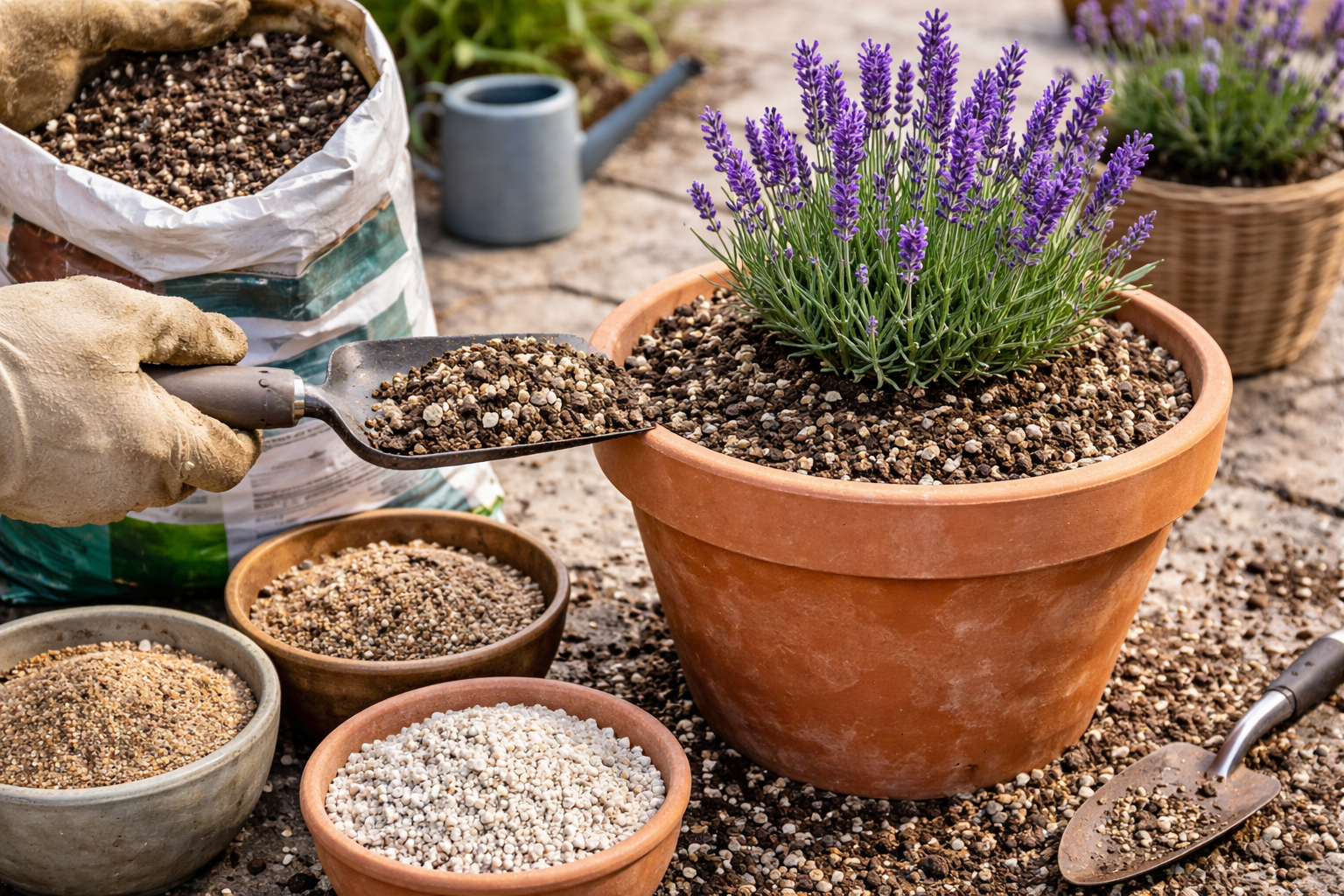
Lavender is one of those plants that punishes kindness when “kindness” means rich mix and frequent watering. The goal is not to starve it. The goal is to keep the root zone airy enough that oxygen sticks around after every soak.
NC State’s Lavandula profile says lavender can be grown in containers and stresses very well-drained soil. Pair that with the Illinois note about wet winter soil and high humidity knocking plants back, and the watering logic gets pretty clear. Your container setup should lean dry, open, and fast-draining.
A good container mix for lavender feels loose in the hand, not heavy and peaty like a bag of wet brownies. A standard potting mix can work if it is airy to begin with. If it is dense and moisture-retentive, cut it with mineral grit, coarse sand made for horticulture, pumice, or perlite. You are trying to build a mix that drains cleanly and then breathes.
Set the crown a touch high rather than burying it low. Lavender hates sitting with its neck in wet mix. That little planting detail gets ignored all the time, and it is one reason young plants rot before they ever settle in.
Then water by dry-down, not by calendar.
That means watering thoroughly, letting the whole root ball drink, and then waiting until the top layer is dry and the pot feels lighter before watering again. On a hot patio in a small terracotta pot, that may be every few days. In cooler weather or in a bigger pot, it may be much longer. The rhythm changes. That is normal.
A simple one-week test: lift the pot right after a full watering, then lift it again each day. By day three or four, you will feel the difference in weight. Once you learn that “dry enough” feel, watering gets a lot less guessy.
For a close cousin on the same Mediterranean-herb watering rhythm, How Often to Water Rosemary in Pots: 7 Smart Rules That Work follows the same cue-based logic. The plants are not identical, but the dry-down habit is very similar.
Full sun still matters here, by the way. Six hours is a fair floor. More is usually better for bloom, tighter shape, and stronger scent.
Overwinter and prune the right way so your container lavender lasts longer
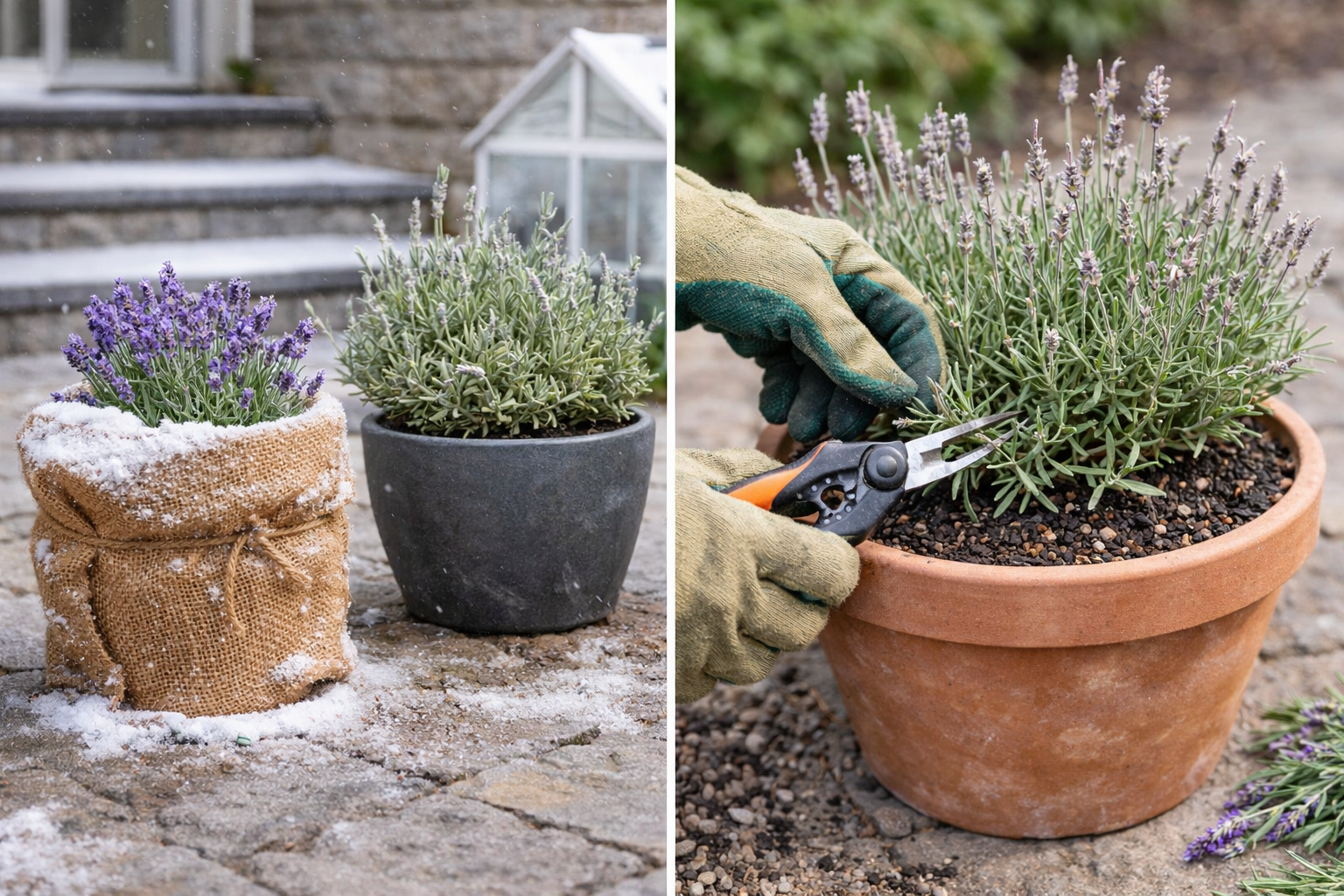
Pots make winter harsher. The roots are more exposed, the mix swings colder and wetter, and a plant that would have shrugged off winter in the ground can stall or rot in a container.
English lavender gives you the best margin here. Spanish and French types are much better treated as movable container plants in colder climates. If you grow those in a place with real winter, the plan should include a bright, airy, frost-free shelter or at least a spot with overhead cover and less freeze-thaw stress.
Water less in winter, but do not turn the root ball to dust. The trick is boring, which is why people skip it. You want the mix lightly dry between light waterings, not wet and cold for weeks.
Pruning is where a lot of promising plants get wrecked. Lavender likes a haircut after flowering, while the plant still has time to stay tidy and push some fresh growth. It does not like being chopped hard into old woody stems with no leafy shoots left. Spanish lavender is touchier still. A light shear after bloom suits it far better than a brutal reset.
I have seen people rescue a floppy summer lavender with one aggressive cut, then wonder why it never really came back. Woody lavender is not boxwood. It does not forgive that kind of panic pruning.
Winter plan by lavender type
- English lavender: best bet for outdoor pots in colder areas, still happier with sharp drainage and some shelter
- Spanish lavender: better as a movable pot plant where winters bite
- French lavender: usually treated much the same as Spanish in cold climates
- Lavandin and larger types: fine in large containers where winters are mild or the pot can be protected
Avoid the mistakes that make potted lavender seem fussier than it is
Lavender gets called fussy a lot. Some of that is fair. Most of it is setup error wearing a fake mustache.
Here are the mistakes that show up over and over:
- Choosing by flower color alone. Pretty matters, but climate fit matters first.
- Using a pot that is too big. The extra mix stays wet, and the roots sit in it.
- Using rich, heavy compost. Lavender is not a thirsty annual. It wants air around the roots.
- Putting it in weak light. Shade makes it floppy, sparse, and less fragrant.
- Burying the crown. That little mistake turns into crown rot faster than people expect.
- Mixing it with thirstier companions. Lavender and basil do not want the same watering pace.
- Watering on schedule. A weekly routine sounds tidy and works terribly.
- Cutting hard into old wood. That is how a rangy plant turns into a dead one.
| What you see | What is usually going on | What to change |
|---|---|---|
| Yellowing with damp mix | Roots staying wet too long | Use a faster-draining setup and stretch watering intervals |
| Few flowers and lots of floppy green growth | Too little sun or too rich a mix | Move to stronger sun and stop pampering the soil |
| Open woody center | Age, weak pruning habits, or low light | Prune lightly after bloom and keep the plant compact early |
| Plant collapses after winter | Cold plus wet plus exposed roots in the pot | Use a hardier type, better drainage, and winter shelter |
A sharp little observation here: a lot of “my lavender hates containers” stories are really “my container behaves like a bucket.” That is not the plant’s fault.
Buy smarter at the garden center or online so the variety on the label matches the job
If the label just says “lavender,” put it back unless the shop staff can tell you exactly what it is. A named cultivar tells you the mature size, hardiness, and general habit. A generic label tells you almost nothing that helps with a container decision.
Look for these things before you buy:
- A named cultivar such as Munstead, Hidcote, Little Lottie, or Bandera Pink
- Healthy gray-green foliage, not yellowed or blackened stems near the crown
- A plant that is compact and branched, not one long woody stem with blooms stuck on top
- A pot that drains freely if the plant is sold as a patio gift plant
- A mature size that matches the pot you actually plan to use
You also do not need the biggest plant on the bench. A smaller, healthy lavender often settles into a container better than an overgrown nursery specimen with circling roots and a tired woody base. Bigger is not always better. Sometimes bigger is just older trouble.
If the exact cultivar you wanted is sold out, match the type and the size class. That is the part that matters most. A compact English lavender can stand in for another compact English lavender much more cleanly than a random French or Spanish type can.
For another dry-loving woody herb with the same “don’t baby it” container rhythm, How to Care for Rosemary in a Pot Without Killing It lines up well with the same kind of pot, light, and watering decisions.
FAQ
Can lavender live indoors year-round in a container?
It can stay alive indoors, but it is rarely where lavender looks its best for long. The plant wants strong sun, moving air, and a root zone that dries properly. A bright window can help, but most indoor spots do not give enough direct light for dense growth and good flowering. Lavender usually does better outdoors in season, then under bright winter protection only when the climate calls for it.
Can two lavender plants share one container?
Only if the container is truly large and the cultivars stay compact. In most home setups, one lavender per pot works better. It keeps airflow cleaner, makes pruning simpler, and stops the center of the planter from turning into a crowded, damp mess by midseason.
Is all lavender edible?
No. Culinary use is usually tied to English lavender, especially named Lavandula angustifolia cultivars. Ornamental types can smell lovely in the garden and still not be the best pick for cooking. If kitchen use matters, buy a cultivar labeled for culinary use rather than guessing from the flower color or the species name alone.

Michael Rowan is the founder and lead writer at The Garden Playbook. He has spent 10+ years growing plants across a range of settings — from indoor houseplants and container gardens to raised beds and in-ground plots — adapting methods to different light levels, seasons, and growing conditions.
Michael focuses on practical, experience-based guidance grounded in fundamentals: soil health, watering strategy, plant nutrition, pruning and propagation, and integrated pest management (IPM). His work aims to help readers diagnose common problems (such as yellowing leaves, stunted growth, or pest pressure) and apply straightforward solutions that are realistic for home gardeners.
At The Garden Playbook, Michael develops tutorials and plant guides using a consistent process: documenting real outcomes where possible, explaining the “why” behind each step, and verifying higher-risk topics (such as plant toxicity or pest treatment options) against reputable horticultural references.