
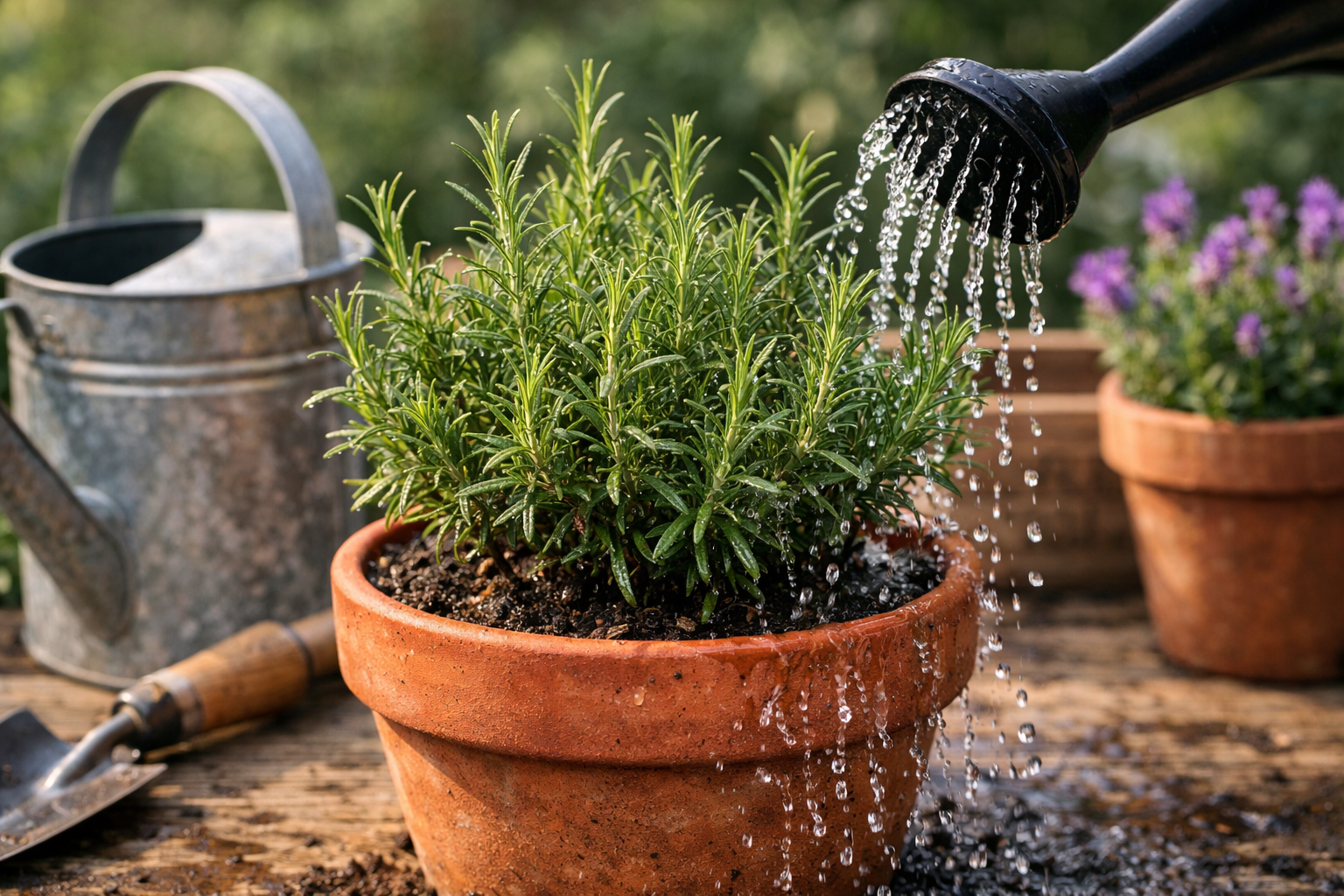
You know this plant. It looks tough, smells amazing, and then somehow starts browning right after you’ve been “good” about watering it. That’s the trap with potted rosemary. The generic advice sounds easy, but the plant doesn’t care what day it is.
For how often to water rosemary in pots, the useful answer is this: water only after the top 1 to 2 inches of potting mix are dry, then soak the root zone fully and let the pot drain. In many homes and patios, that lands somewhere around every 5 to 14 days. A small terracotta pot in hot sun can dry much faster. A larger pot indoors in winter can stay wet a lot longer.
The tension is simple. Rosemary likes dry-down time, but a pot changes the rules. Containers heat up faster, cool down faster, and trap bad habits. So a fixed weekly schedule is where a lot of healthy plants start going wrong.
- How to tell if rosemary needs water today, not “sometime this week”
- Why pot size, pot material, and soil mix change the timing
- How to water deeply without setting up root trouble
- How to tell overwatered rosemary from underwatered rosemary
- What to change if the plant keeps making you guess
Start Here
| If this is true | Most likely cause | What to do next |
|---|---|---|
| Top 1 to 2 inches are dry and the pot feels light | Normal dry-down | Water deeply until excess runs out |
| Soil is still damp after several days and leaves are yellowing | Too much water or slow drainage | Stop watering, check drainage, increase light and airflow |
| Tips are crisp, mix is bone dry, pot feels feather-light | Underwatering | Soak thoroughly and restart with a check-based routine |
| Surface looks dry by afternoon but deeper soil feels cool | Surface-only drying | Wait a day, then check again |
This little check beats a calendar almost every time.
How often to water rosemary in pots? Here’s the useful short answer
The North Dakota State University Extension guide says to water rosemary when the top 1 to 2 inches of soil are dry. The Royal Horticultural Society also points readers toward free-draining soil and careful watering in containers. Put those together, and the practical rule is clear: check the mix, not the calendar.
So the short answer is this. Water potted rosemary when the top 1 to 2 inches are dry, then drench the pot thoroughly and let all extra water drain away. For a plant growing outdoors in warm weather, that often means every 5 to 10 days. Indoors in cooler months, it can stretch to 7 to 14 days or longer.
That range sounds wide because it is. A small pot on a sunny patio and a large pot in a cool room are living in two different worlds.
Note: Rosemary usually suffers faster from being kept too wet than from being left a little dry. That’s why “water weekly” is such a shaky habit for this plant.
I’ve seen this play out with two rosemary plants bought the same weekend. One sat outside in an unglazed clay pot and needed checking every few days in hot weather. The other moved indoors for winter in a glazed pot and stayed damp long enough that watering it “on schedule” started yellowing it. Same plant. Same owner. Very different rhythm.
Use the 4-check test to decide if your rosemary needs water today
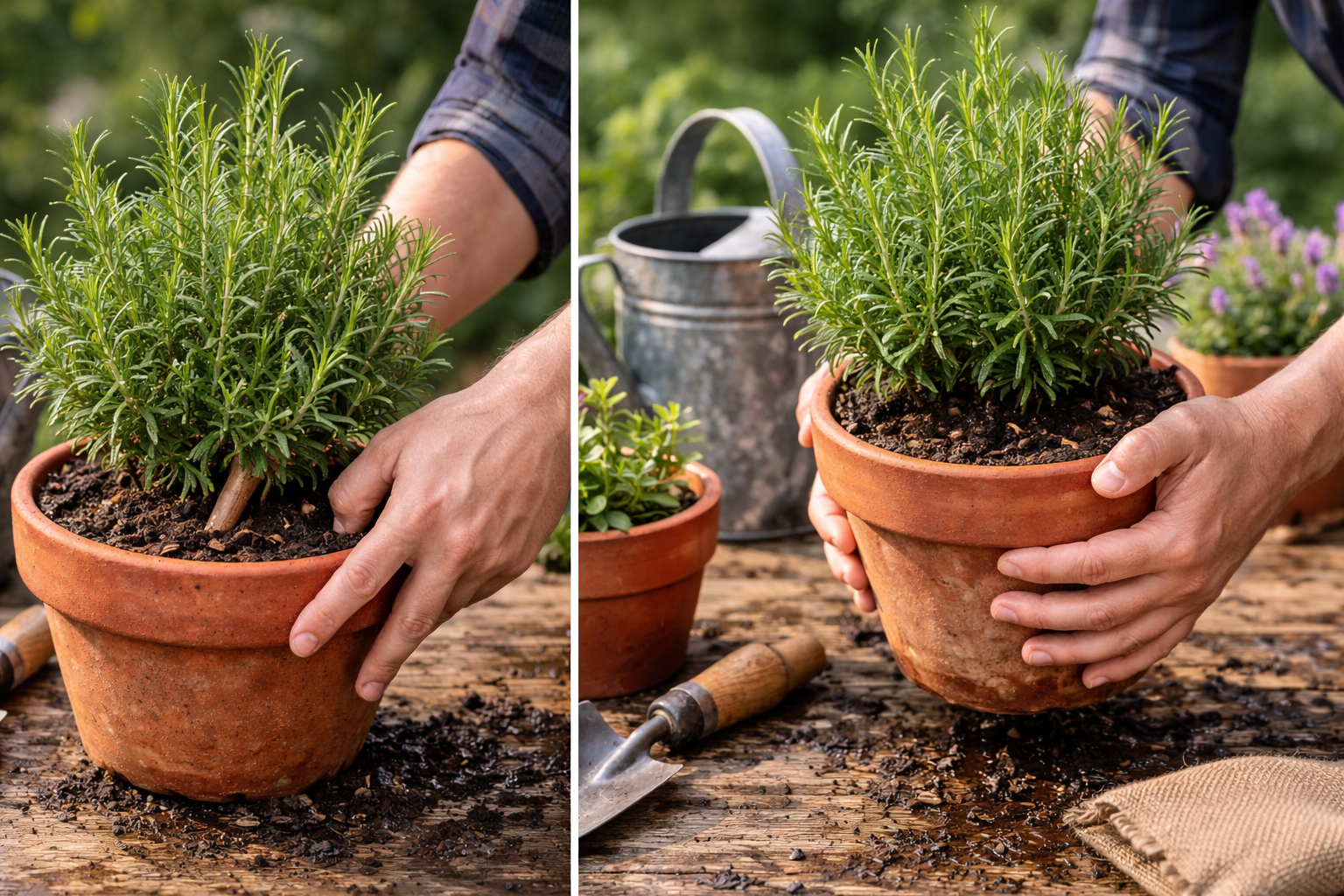
If you want a clean decision, use the same four checks each time. It takes less than a minute, and it stops the guesswork.
Check 1. Feel the mix and catch false dryness.
Push a finger into the potting mix about 1 to 2 inches. If that layer is dry, keep going through the rest of the checks. If it still feels cool and damp under the dusty top layer, leave it alone and recheck in a day or two.
Check 2. Lift the pot and read the weight.
Freshly watered rosemary has a noticeably heavier pot. After a week or so of paying attention, the difference becomes obvious. This is one of the best ways to avoid overwatering small containers.
Check 3. Look at the setup before blaming the plant.
Drainage holes blocked? Decorative outer pot holding runoff? Soil packed too tight? Those details matter more than people think. A “watering problem” is often a drainage problem with better public relations.
Check 4. Match the pot to the weather and season.
If the plant is in hot sun, wind, or a warm windowsill, it will dry faster. If it’s indoors in winter with slower growth, it will use water much more slowly.
Here’s a good analogy. Asking for one potted rosemary watering schedule is like asking how fast shoes dry without saying whether they’re flip-flops on a deck or hiking boots in a damp hallway. Same item, different drying speed.
Pro tip: For one week, jot down the day you water and the day the top 1 to 2 inches turn dry again. That becomes the real baseline for that pot in that spot.
One more thing. Rosemary is not basil. It often won’t flop over in a dramatic way before trouble starts. Waiting for obvious wilt can leave you late.
Read the pot first: size, material, and mix change the watering rhythm
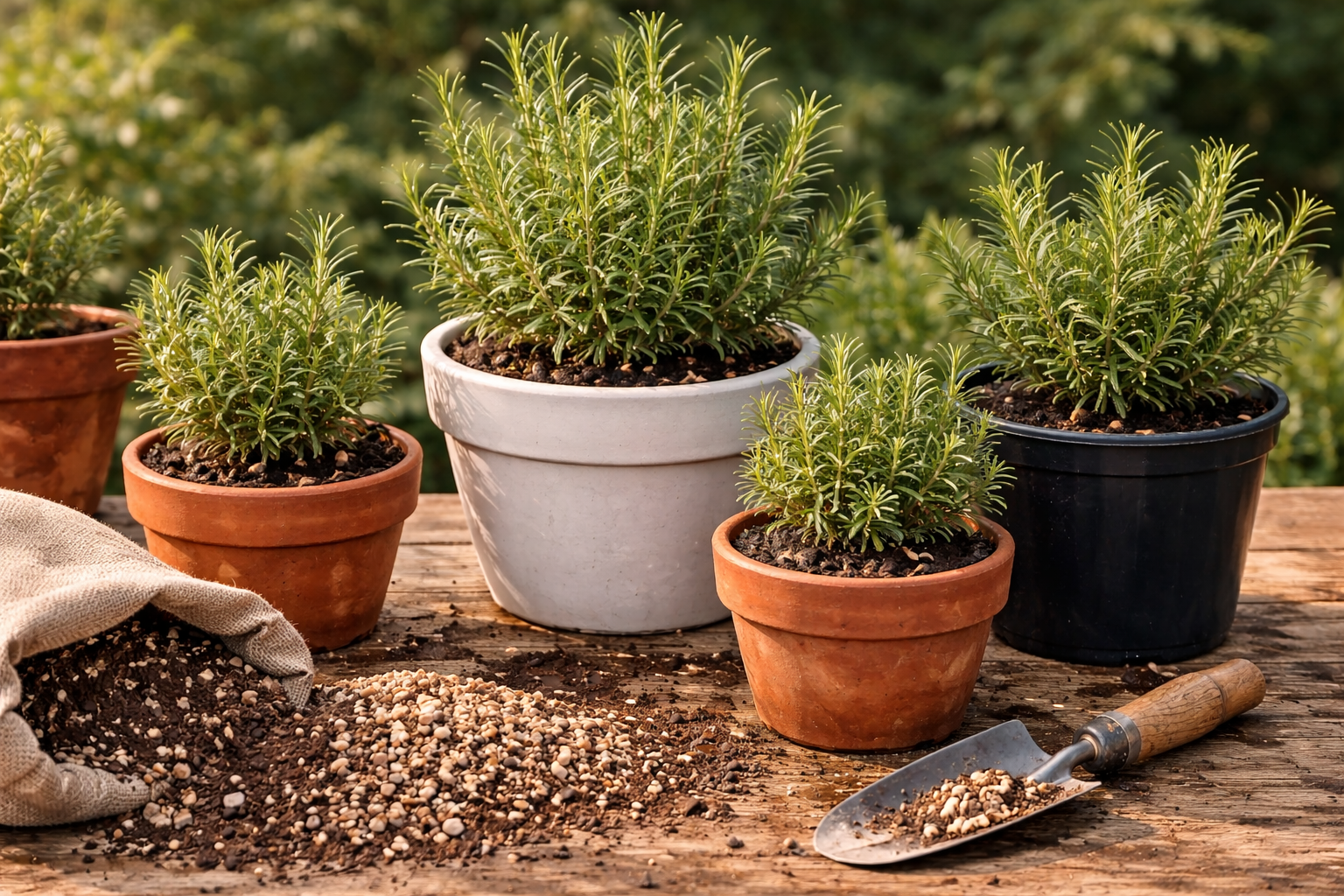
The University of Maryland Extension indoor herb guide warns against moving herbs into containers that are much too large. That’s useful here because a small rosemary in a big pot sits in a big ring of wet soil it can’t use fast enough. The plant isn’t thirsty. It’s surrounded.
Pot size changes speed. Small containers dry fast, sometimes surprisingly fast in summer. Oversized containers dry slowly and can stay wet around the root ball long after the surface looks fine.
Pot material changes the margin for error. Terracotta loses water through the walls, so it dries faster and gives chronic overwaterers a little breathing room. Plastic and glazed pots hold water longer. That’s handy if you forget to check, but rough if the mix is heavy or the light is weak.
The mix matters too. Rosemary likes a well-draining potting mix, not dense garden soil stuffed into a container. Garden soil in a pot often goes flat and airless. Roots hate that.
If you’re seeing a pattern, good. The plant is only half the story. The pot is the other half.
Anyone wrestling with container sizing will find this helpful: What Size Pot for Rosemary? The Simple Pot Rule That Actually Works.
Quick read on pot choice: If you water too often, clay is usually the safer lane. If you forget for long stretches, plastic or glazed ceramic buys more time, but only if the mix drains well and the pot has real drainage holes.
Adjust the schedule by season so you do not overwater in winter or underwater in heat
This is where fixed schedules really fall apart.
Summer patio pot in full sun.
Heat and moving air pull water from the mix fast. A rosemary in a smaller pot can need checking every two or three days, even if it doesn’t need watering each time. If the top layer is dry and the pot feels light, water it.
Spring and fall outdoors.
Growth is still active, but the mix often stays usable longer. Many plants settle into a check-and-water rhythm closer to once a week, sometimes a bit longer.
Indoor winter rosemary.
This catches people. Growth slows. Evaporation slows. The plant uses less water. That’s why the summer habit of watering every few days becomes a problem indoors. The same rosemary may now need a real drink only every 10 to 14 days, sometimes even longer, depending on light and pot size.
Rainy spells.
If a pot sits outside through repeated rain, skip your usual watering check and inspect the root zone. A pot that stays damp too long is headed the wrong way, even if the top looks passable.
Freshly transplanted rosemary.
Right after transplanting, the plant often needs more attention for a week or two while roots settle in. Not constant water. Just closer checking.
A broad rosemary care guide helps connect watering with light, pruning, and winter handling: How to Care for Rosemary in a Pot Without Killing It.
Important: Indoor heating dries the air, but rosemary still usually drinks less in winter because it grows more slowly. Dry room air does not automatically mean “water more.”
Water deeply and get out of the way
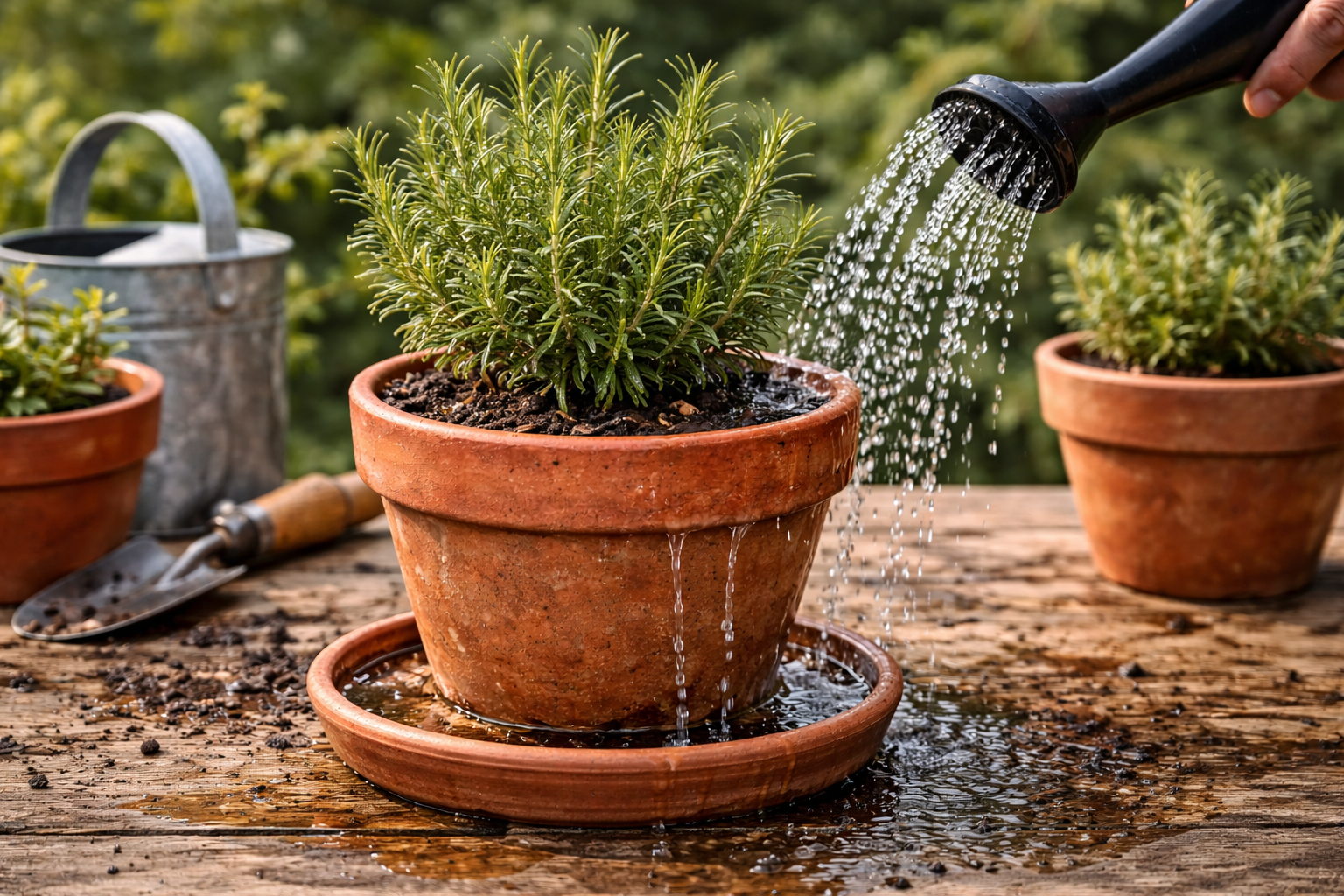
The University of Illinois Extension container herb guide advises watering until liquid runs from the drainage holes. That guidance matters because light splashes create the worst of both worlds. The top gets wet over and over, but the root zone never moves through a healthy wet-to-dry cycle.
Here’s the better pattern.
Step 1. Water slowly and soak the whole root zone.
Pour until you see runoff from the bottom. Pause if needed. Then add a bit more so the entire mix has taken up water.
Step 2. Let the pot drain fully.
Don’t leave the base sitting in runoff. Empty saucers. Check decorative cachepots. That hidden pool is one of the quietest ways to rot rosemary roots.
Step 3. Wait for the plant to use it.
After a thorough watering, don’t “top it up” the next day because the surface looks dry. Check the root zone again instead.
I’ve had a rosemary plant look shabby for weeks until I noticed the inner nursery pot was sitting in a pretty outer pot with half an inch of stale runoff. Once that was fixed, the plant stopped sliding downhill. Annoying? Yep. Common too.
Watch for this: If water rushes down the sides and out the bottom in seconds, the mix may have shrunk away from the pot or the root ball may be packed tight. That’s not a sign to water more often. It’s a sign to soak properly or repot.
Diagnose the problem fast: underwatered rosemary vs overwatered rosemary
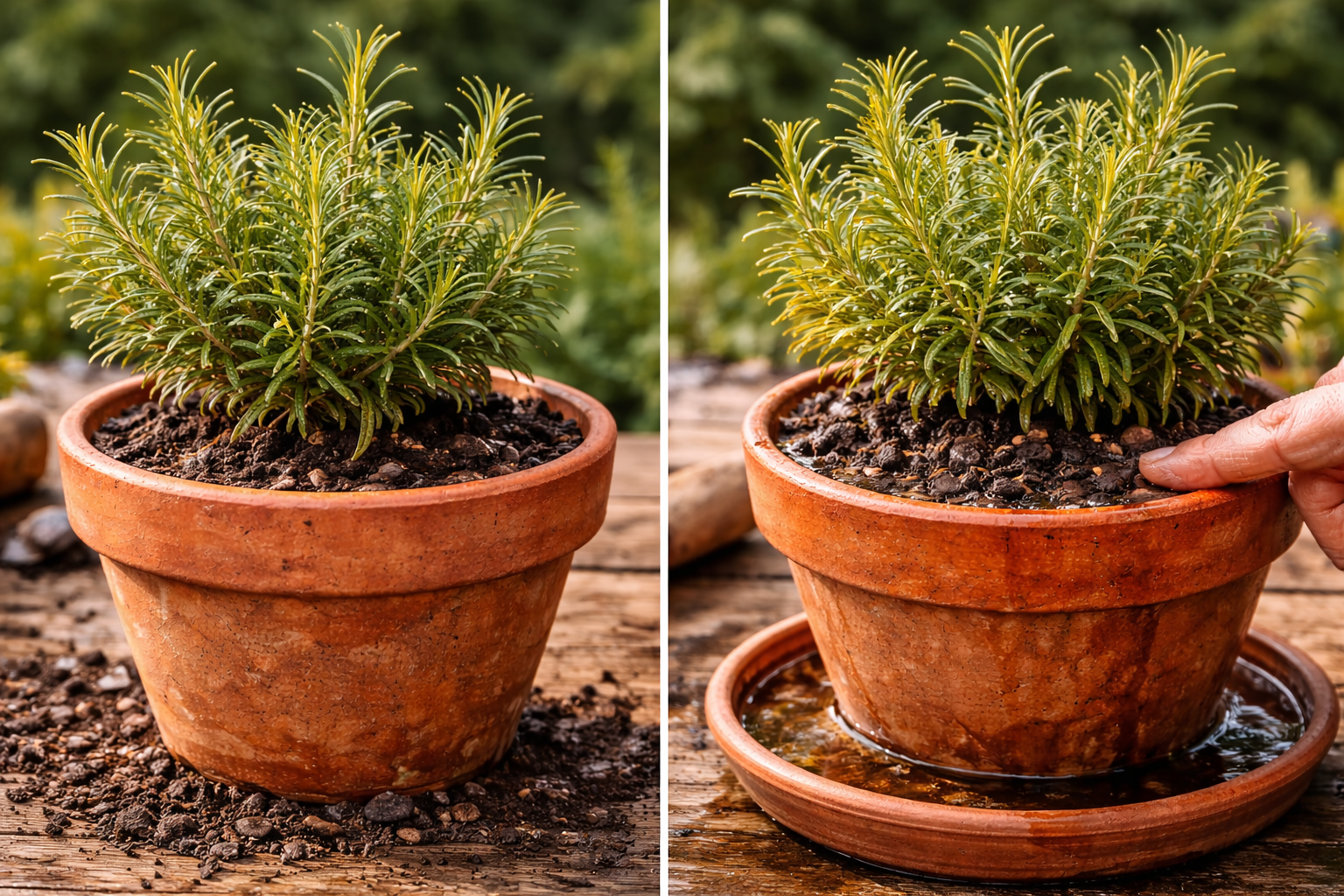
A lot of rosemary damage comes from reading the symptoms backward. A tired-looking plant gets watered again, but the roots were already sitting in wet mix. That second guess can finish the job.
Quick diagnosis of your problem and how to fix it
| What you see | Most likely cause | Next step |
|---|---|---|
| Crisp tips, very dry mix, pot feels light | Underwatering | Water thoroughly and check more often in heat |
| Yellowing leaves, limp growth, damp mix | Overwatering or slow drainage | Pause watering and fix the setup |
| Dark stems near the base, stale smell, soil staying wet for days | Root trouble | Unpot, inspect roots, trim dead parts, repot in fast-draining mix |
| Brown patches after winter indoors, low light, slow drying | Too little light plus too much water | Increase light and reduce watering frequency |
Likely underwatered rosemary:
The mix is very dry. The pot feels light. Needle tips can turn brittle. Growth may stall. The plant can look dull and tired, but the root zone tells the real story.
Likely overwatered rosemary:
The mix stays damp for days. Needles yellow or darken. Growth turns limp even though the pot never seems to dry. In worse cases, the base smells stale and roots look dark instead of pale and firm.
Wilt alone isn’t enough. That’s the part people miss. Rosemary can droop from root stress caused by too much water, not just too little.
If the soil is still staying wet three to five days after a modest watering during active growth, that setup is off. The plant may need more sun, a smaller pot, a grittier mix, or all three.
Fix the setup that keeps making you guess
The University of Minnesota Extension points gardeners toward full sun and unglazed clay containers for herbs that like sharper drainage. That lines up with what goes wrong most often indoors and on shaded patios: slow drying, weak light, and roots sitting too long in a damp mix.
If your rosemary keeps confusing you, don’t keep recalculating the watering schedule. Change the setup.
Repot into a faster-draining mix.
If the pot stays wet too long, the mix is likely too dense. Fresh container mix with better drainage gives roots air again.
Give it stronger light.
Low light slows water use. Then every watering hangs around longer than it should. A bright south-facing window or stronger outdoor sun changes more than people expect. Anyone sorting out indoor light can use Best Facing Window for Plants? The Right Answer by Plant Type.
Use clay if overwatering is your habit.
Unglazed terracotta isn’t magic, but it does widen the safety margin.
Stop using giant decorative pots for small plants.
They look nice. They also keep too much mix wet around too few roots.
Check the hidden stuff.
Blocked holes, compacted mix, trapped runoff, dim corners, and crowded companion plants all pull watering off track.
Small opinion, earned the hard way: If a rosemary plant keeps declining and the soil stays wet, stop trying to “nurse” it with tiny drinks. Fix the container and the light. That’s where the real problem usually is.
Pair rosemary only with plants that like the same dry rhythm
Mixed herb pots look great in garden-center photos. They can be a mess in real life.
Rosemary usually wants more dry-down time than soft, thirsty herbs. So when it’s planted beside something that likes steadier water, one plant gets babied and the other gets buried. Guess which one loses most often.
If you want rosemary in a container mix, pair it with plants that enjoy a similar pace. Dry-loving companions are easier to manage because the whole pot can follow one watering rhythm instead of two conflicting ones.
A tighter guide on that choice lives here: What to Plant With Rosemary in Container Gardens Without Killing It.
Plain rule: If one plant likes regular damp soil and rosemary does not, don’t make them roommates.
Build a simple no-guesswork rosemary watering routine
If you want a routine that actually works, keep it boring and repeatable.
Step 1. Start with a full soak and a full drain.
That resets the pot to a known starting point.
Step 2. Check on a rhythm, not a watering schedule.
In hot active growth, check every two or three days. In cooler weather or indoors, check every few days to once a week. You’re not watering on those days. You’re checking.
Step 3. Water only after the top 1 to 2 inches are dry and the pot feels lighter.
Those two signs together are far better than either one alone.
Step 4. Reset the routine after any big change.
Repotting, heat waves, bringing the plant indoors, shifting it into stronger sun, or pairing it with another plant all change the drying speed.
Step 5. If the plant looks off, inspect before you pour.
That’s the whole game with rosemary in containers.
So if you’re wondering how often to water rosemary in pots, the best answer isn’t a fixed number. It’s a repeatable test: dry top layer, lighter pot, deep watering, full drainage, then wait.
Once you use that rhythm for a week or two, the plant stops feeling fussy. It starts feeling readable.
FAQ
Should rosemary be watered from the top or bottom?
Top watering is usually the better fit for rosemary in pots because it fully wets the root zone and lets you see runoff from the drainage holes. Bottom watering can work for rehydrating a very dry pot, but it should not become the default if the mix tends to stay wet too long.
Why is my rosemary turning brown even though I water it?
Browning does not always mean thirst. Rosemary often browns from wet roots, weak indoor light, trapped runoff, or dense mix that stays wet too long. Check the soil depth, pot weight, light, and drainage before adding more water.
Is terracotta better than plastic for rosemary?
For many growers, yes. Terracotta dries faster and gives rosemary more air around the root zone. Plastic holds water longer, which helps forgetful waterers, but it narrows the margin for error if the mix is dense or the light is weak.

Michael Rowan is the founder and lead writer at The Garden Playbook. He has spent 10+ years growing plants across a range of settings — from indoor houseplants and container gardens to raised beds and in-ground plots — adapting methods to different light levels, seasons, and growing conditions.
Michael focuses on practical, experience-based guidance grounded in fundamentals: soil health, watering strategy, plant nutrition, pruning and propagation, and integrated pest management (IPM). His work aims to help readers diagnose common problems (such as yellowing leaves, stunted growth, or pest pressure) and apply straightforward solutions that are realistic for home gardeners.
At The Garden Playbook, Michael develops tutorials and plant guides using a consistent process: documenting real outcomes where possible, explaining the “why” behind each step, and verifying higher-risk topics (such as plant toxicity or pest treatment options) against reputable horticultural references.