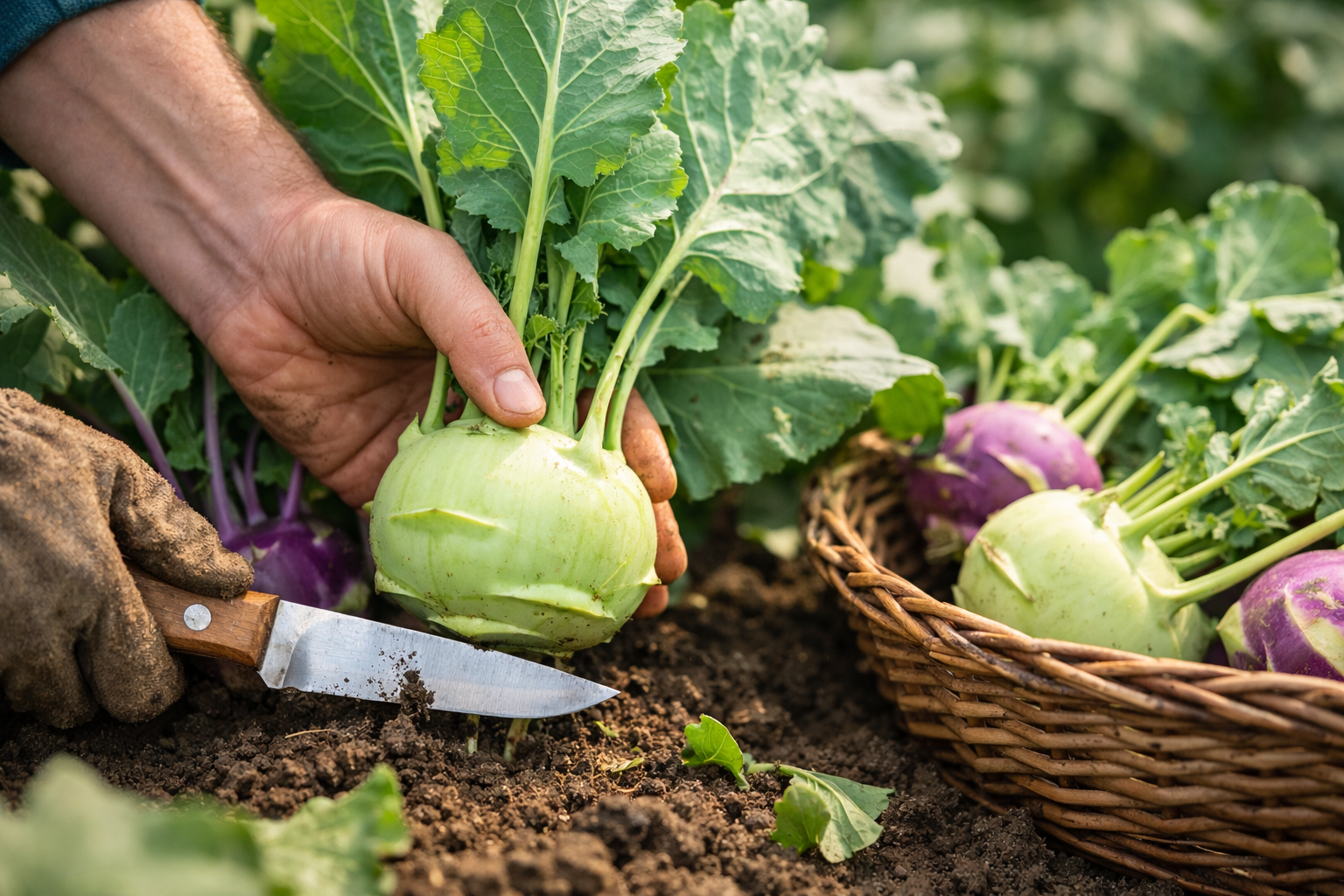
I’ve made this mistake in a spring bed more than once: a kohlrabi looked like it could use “just a few more days,” so I left it alone. It stayed smooth, stayed pretty, and then sliced like a broccoli stem that had gone a bit wooden. If you came here asking how do you harvest kohlrabi, the short answer is simple: pick most standard varieties while the swollen stem is still small and tender, usually around 2 to 3 inches wide, then cut at soil level or pull the whole plant, trim the leaves, and store the bulb cold.
That plain answer is right. It is also incomplete. A fall crop can hang on a little longer than a spring crop heading into heat, and giant varieties play by different rules than ordinary ones.
Here’s what this piece will help you sort out:
- the safest size window for standard kohlrabi
- when bigger is still fine and when it turns into a gamble
- whether to cut the plant or pull it whole
- how to use the leaves instead of tossing them
- what to do with an overgrown bulb
- how to store kohlrabi so it stays crisp
At a glance
| What to check | Best default | What it means |
|---|---|---|
| Bulb size | 2 to 3 inches | Tender sweet spot for most standard varieties |
| Days from sowing | About 50 to 60 days | Good time to start checking size, not a fixed harvest date |
| Harvest method | Cut at soil line | Cleanest choice in most beds |
| Leaves | Keep the young ones | They cook like tender greens |
| Storage | Trim leaves first, refrigerate | Better texture and less moisture loss |
The 15-second kohlrabi check: standard variety, cool weather, swollen stem around 2 to 3 inches, still firm and smooth. Harvest it.
How do you harvest kohlrabi? Start with the 30-second answer
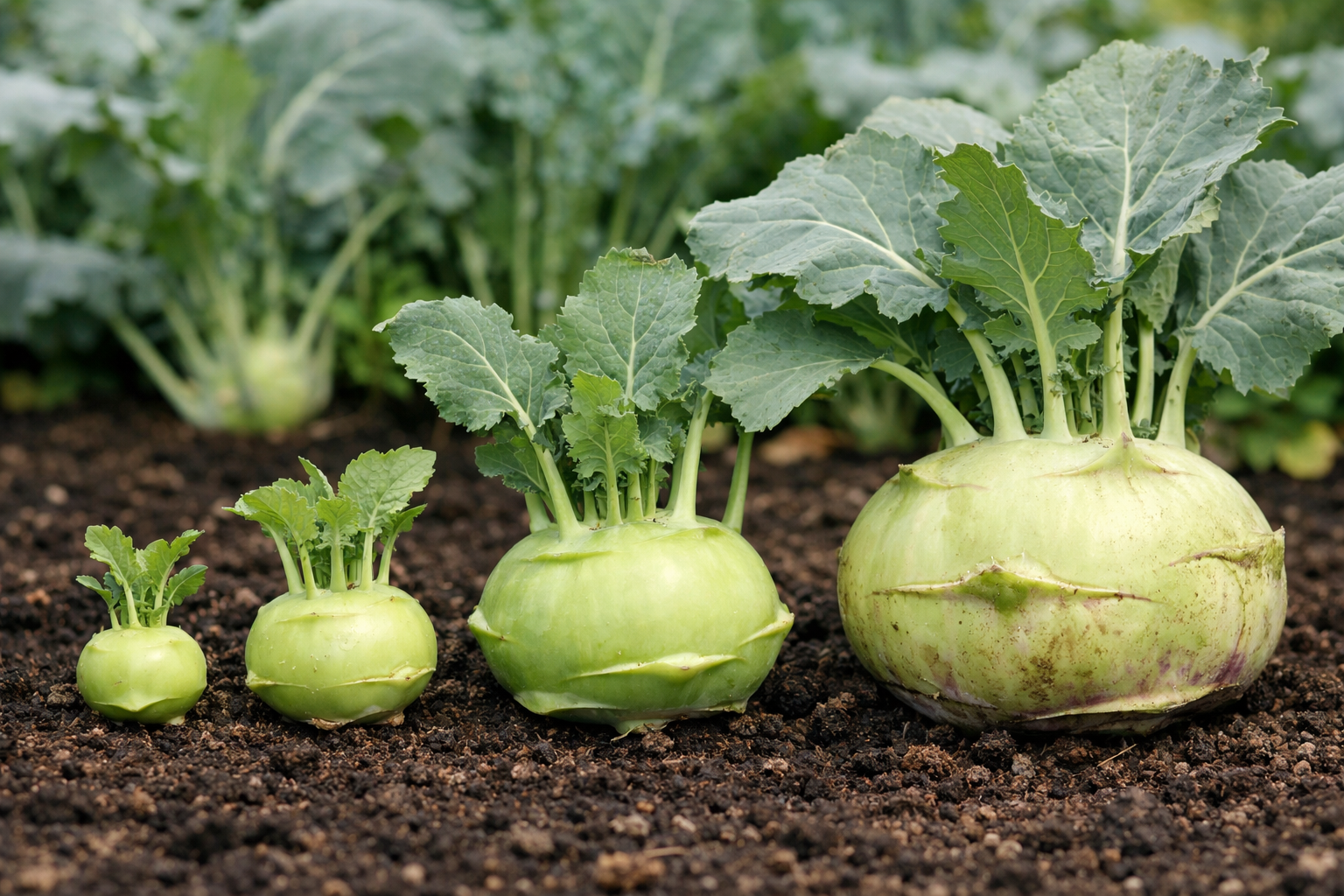
Kohlrabi is harvested for texture, not for bragging rights. The part you eat is the enlarged stem above the soil, and for most standard varieties the best eating window lands before that stem gets big and cocky.
Use this quick rule:
If the swollen stem is about 2 to 3 inches wide, harvest now.
- About 1 inch: very young, very tender, nice for small harvests
- 2 to 3 inches: safest zone for most gardeners
- 3 to 4 inches: still fine for many standard bulbs if they are fresh and not heat-stressed
- Much larger than that: good only if you planted a giant type bred for size
If you like a simple mental picture, think golf ball to small tennis ball, not softball. This is one of those crops where slightly early is usually a better miss than clearly late.
That same logic shows up in other harvest-timing crops too. A quality window matters more than maximum size, and kohlrabi is a textbook case of that.
The biggest trap is waiting because the bulb still looks healthy. Smooth skin does not mean peak quality. It just means the plant hasn’t started looking tired yet.
Check bulb size, season, and variety so you harvest at peak tenderness
Start with size, then use timing and season to sanity-check it. Iowa State says kohlrabi is typically ready 50 to 60 days after sowing, which is useful because it tells you when to start watching. It does not tell you that every plant on day 55 is ready. Some are. Some still need a little room.
Check size and hit the sweet spot
For standard kohlrabi, 2 to 3 inches wide is the clean default. If you are standing there with a ruler in your head and wondering whether 3 1/2 inches is okay, it can be. But once a standard bulb drifts beyond the usual window, you are betting against texture.
Read the season and avoid the silent slide into fiber
This is where the generic advice falls apart. University of Minnesota Extension notes that fall-harvested kohlrabi can grow a bit bigger without losing quality. In cool autumn weather the plant holds tenderness better. Spring kohlrabi that runs into warm weather is touchier. If the forecast has turned warm and dry, tighten your harvest window and lean early.
Match the size rule to the variety
Not every kohlrabi was bred for the same finish line. Ordinary green and purple home-garden varieties are usually best on the small side. Giant types are the exception, and I would not judge them by the same 2 to 3 inch rule. More on those in a minute.
Remember: days from sowing tell you when to start checking. Bulb size tells you when to pick.
Cut at soil line or pull the whole plant and keep the stem intact
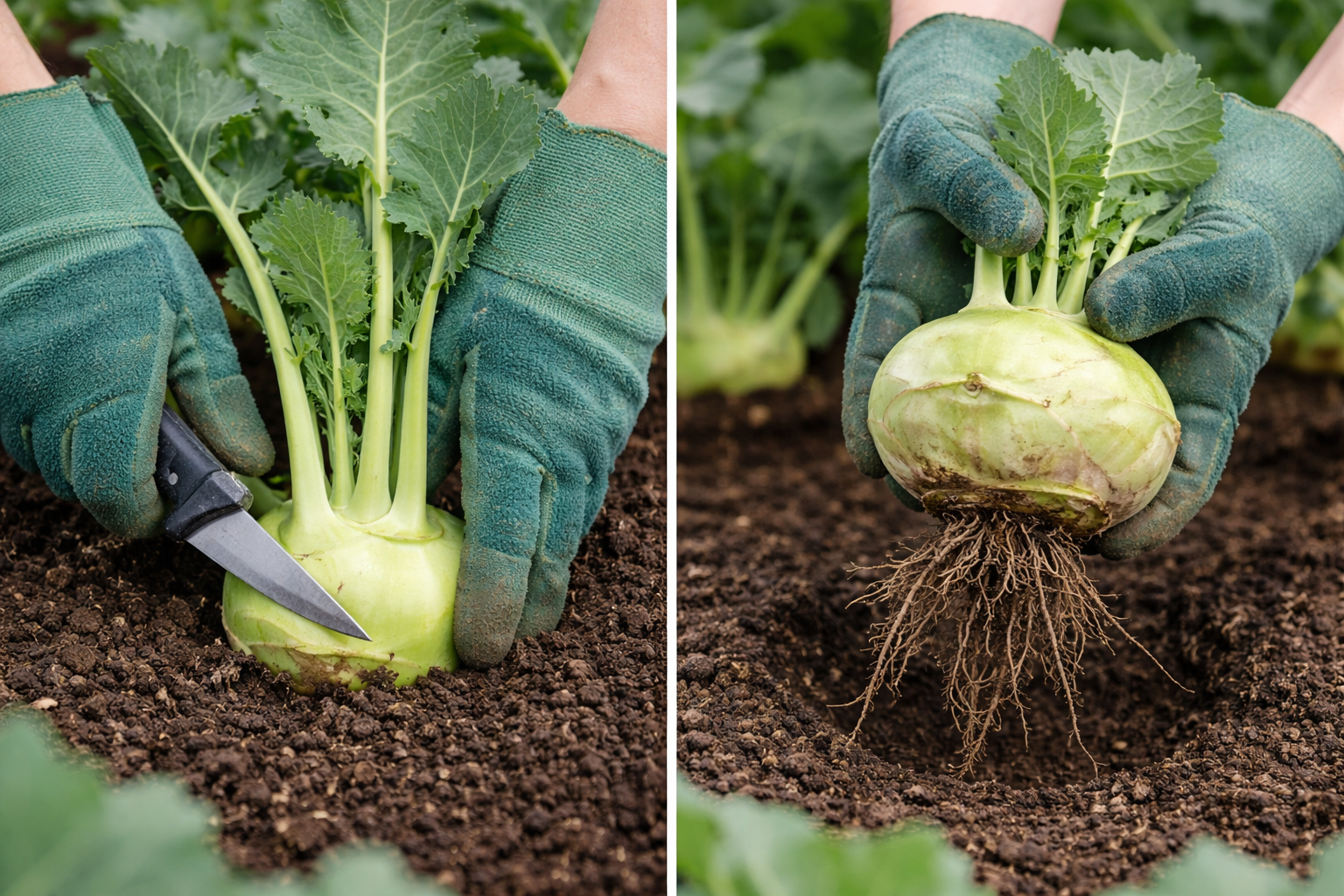
Once the plant is ready, the physical harvest is easy. You have two clean options.
Cut and get a tidy harvest
If the soil is firm or the bulb sits snug in the bed, use a sharp knife or garden pruners and cut at soil level or just below it. This is the method I use most because it is neat and you are less likely to crack the stem while wrestling the plant out.
Pull and finish faster in loose soil
If the bed is loose and the plant lifts without a fight, pulling the whole plant is fine. Hold low on the stem and lift steadily. Don’t yank like you’re pulling a weed that insulted you. A split stem is still edible, but it stores worse and looks rough.
Trim and protect what you just harvested
After the bulb is out, trim off the roots and remove the leaves. Support the bulb while you cut so it does not bang around on the bed edge or patio. Kohlrabi is sturdy, but bruising still makes storage shorter.
Fast rule: cut if the soil is tight, pull if the soil is loose. Either way, keep the swollen stem intact.
Trim, peel, and use the leaves so you waste less of the plant
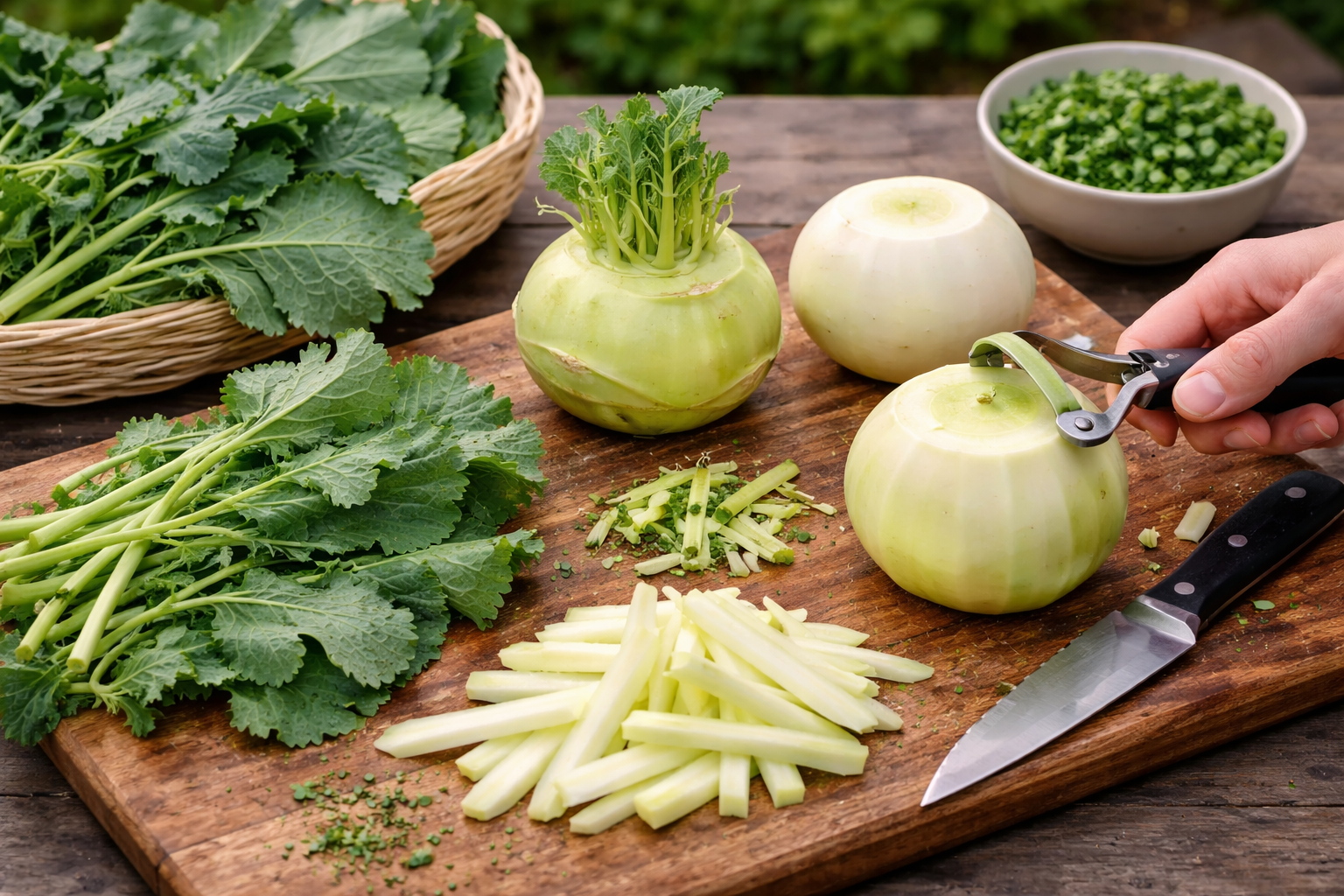
The bulb gets all the attention, but the leaves are worth keeping. Young kohlrabi leaves cook down like tender cabbage greens. Bigger leaves eat more like kale.
Trim leaves and buy yourself better storage
Take the leaves off soon after harvest. Leaving them attached pulls moisture from the bulb, so the part you care about loses crispness faster. If you want the greens, bag them separately and use them first.
Peel the bulb and get to the good part
Small, fresh bulbs have a milder outer layer. Older ones can have a tougher skin and a bit of stringiness near the base. I usually peel standard bulbs once they are past baby size because the interior is cleaner and sweeter. A sharp peeler works on young bulbs. A knife is easier on older ones.
Cook it or keep it raw
The flesh is crisp like a good broccoli stem crossed with an apple, though less juicy and more savory. Raw slices are great in salads and slaws. Roasted wedges turn sweeter. Thin matchsticks disappear into quick sautés.
Note: purple kohlrabi and green kohlrabi are harvested the same way. The color changes the jacket, not the harvest method.
Avoid the mistakes that make kohlrabi woody, bitter, or disappointing
Most bad kohlrabi is not diseased. It is just late.
Stop waiting for maximum size
This is the main mistake. A standard bulb does not get tastier because it sits there longer. It gets tougher. If your plant is already in the usual harvest range and the weather is warming up, pick it.
Don’t use one rule for every variety
Gardeners read “harvest at 2 to 3 inches” and then apply it to every seed packet. That works well for ordinary kohlrabi. It is lousy advice for giant types bred to size up while staying tender.
Watch heat more than looks
A spring bulb can look polished and still be headed toward stringy texture. Warm weather sneaks up on this crop. If you have ever bitten into one that felt juicy at the top and a bit fibrous near the bottom, that was not bad luck. It was the timing window slipping.
Peel older bulbs more aggressively
If a bulb is a little beyond ideal but not fully overgrown, a thick peel can save dinner. People sometimes write off a decent bulb because they treat it like a radish and barely trim it. Kohlrabi is not that forgiving once age starts to show.
Good default: if it is a standard variety and you are unsure whether to leave it another few days, harvest it.
Handle tricky cases: giant varieties, fall crops, overgrown bulbs, and first-frost decisions
This is the section most quick guides skip or rush. It is also the section that saves a harvest.
Spot giant varieties and use a different yardstick
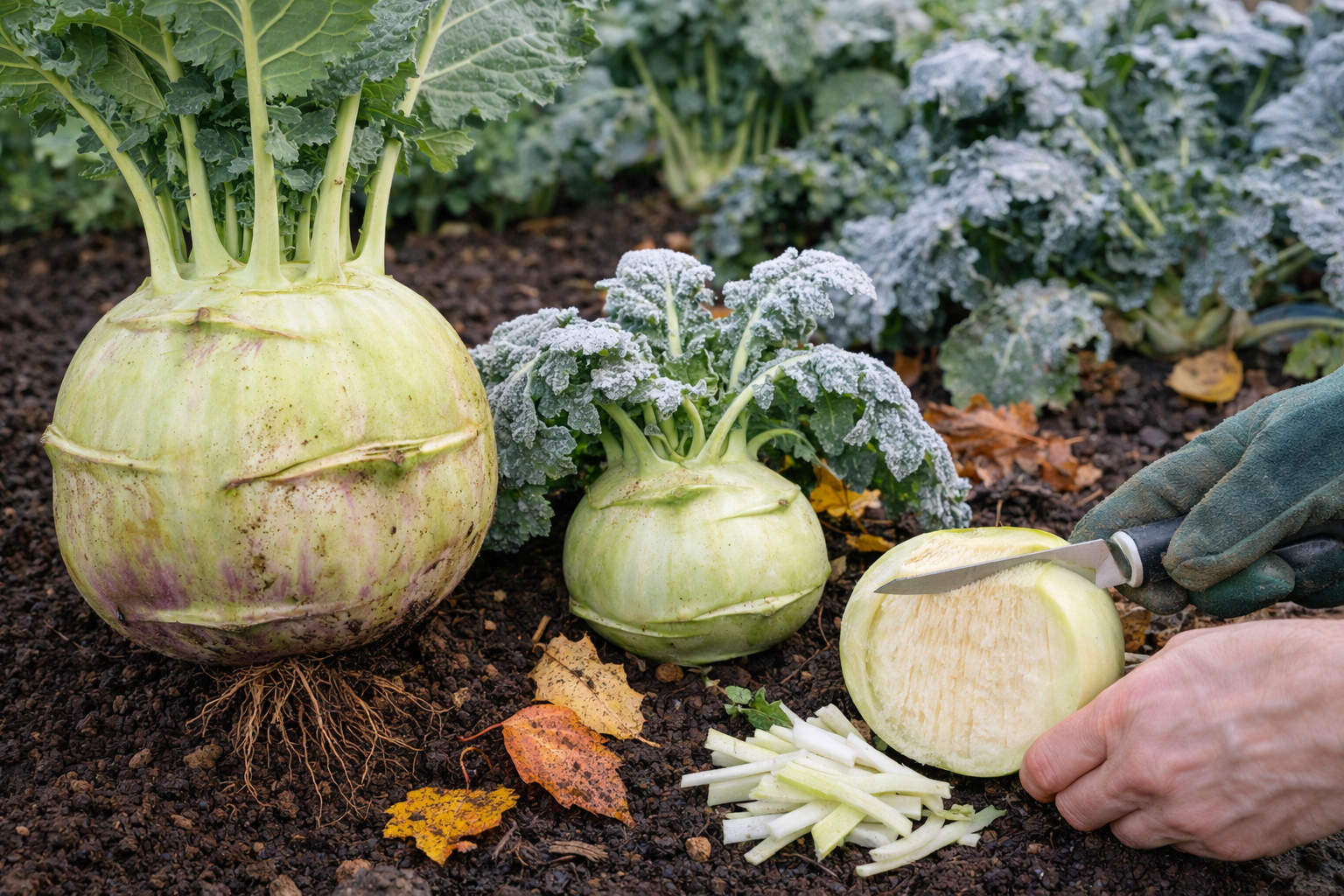
Purdue Extension points out that newer varieties such as “Gigante” and “Kossak” do not become woody as quickly. That means a bulb much larger than the standard 2 to 3 inch advice can still be worth picking and eating. If you planted a giant type, trust the seed description and the variety name before you trust a generic size rule from the internet.
Use cool fall weather to your advantage
Fall kohlrabi is more forgiving. Cool air slows the rush toward coarse texture, so a bulb can hold a better eating quality for longer. That does not mean leave it forever. It means the window is wider and a bit less twitchy.
The 15-second kohlrabi check, tricky-case version
- Standard variety and already above 3 inches: harvest now
- Giant variety and still dense, heavy, and clean inside: size alone is not a problem
- Cool fall bed: you have more breathing room
- Warm spring spell: shorten the window
Salvage an overgrown bulb before you toss it
Illinois Extension notes that the lower part of an overgrown stem develops woody fibers first. That is handy. It means a too-big standard bulb is not always a total write-off. Peel it thickly, cut from top to bottom, and check the texture as you move downward. The top half can still be useful for roasting, soup, or a fine dice.
Take frost seriously, but don’t panic over a light chill
Kohlrabi likes cool weather. A light frost is not usually the end of the story. A hard freeze is different. If a cold snap is coming and your bulbs are in the right range, just harvest them. There is no prize for leaving a ready plant outside to prove a point.
Store kohlrabi the right way so texture lasts
Good harvest timing can still be wasted by lazy storage. Trim the leaves first. Then refrigerate the bulb.
Remove the greens and slow moisture loss
The bulb keeps better on its own. The greens are more delicate, so use them sooner. If you keep both, bag them separately.
Keep the bulb cold and slightly humid
Michigan State advises storing kohlrabi in the refrigerator for several weeks in sealed perforated plastic bags. In a home fridge, that is the right target. You may get a shorter window if the bulb was nicked, warm when stored, or left with a lot of stem attached. You may get a longer one if it went in cold and clean.
Wash before eating, not because the clock says so
Gardeners split on washing before storage. I don’t bother unless the bulb is caked in mud, and even then I dry it well. What matters most is this: trim the leaves, keep the bulb cold, and wash it before prep if you skipped that step earlier.
Remember: leaves first, fridge second, peeling later. That order works.
Use the one-minute harvest checklist and next-step guide
If you are standing in the garden and want the least fussy version of all this, run through this checklist once and make the call.
- Check the variety. Standard kohlrabi and giant kohlrabi do not finish at the same size.
- Measure the swollen stem with your eyes. Around 2 to 3 inches is the safe default for standard bulbs.
- Read the weather. Warm spring conditions push you toward an earlier pick. Cool fall weather gives you a little more room.
- Choose the harvest method. Cut at soil line in tight soil. Pull whole plants from loose beds.
- Trim leaves and roots. Save the greens if you want them.
- Peel based on age. Thin peel for young bulbs, thicker peel for older ones.
- Store the bulb cold. A bag in the fridge is the easy move.
If you want the single best default for most home gardens, here it is: harvest standard kohlrabi at about 2 to 3 inches, cut it cleanly at soil level, trim the leaves off, peel it, and refrigerate it right away.
That is the boring answer. It is also the one that gives you the best odds of crisp, sweet, tender kohlrabi instead of a bulb that looked promising and ate like damp wood.
FAQ
Can you harvest a few kohlrabi leaves early?
Yes. Taking a few outer leaves is usually fine if the plant is growing well, but don’t strip it hard. The bulb still needs leaf area to size up.
Does one kohlrabi plant make more than one bulb?
No. One plant makes one swollen stem. Once you harvest that bulb, that plant is done.
Can an overgrown kohlrabi still be used?
Sometimes, yes. Peel it thickly and test the interior. The top part can still be tender even when the lower section has gone woody.

Michael Rowan is the founder and lead writer at The Garden Playbook. He has spent 10+ years growing plants across a range of settings — from indoor houseplants and container gardens to raised beds and in-ground plots — adapting methods to different light levels, seasons, and growing conditions.
Michael focuses on practical, experience-based guidance grounded in fundamentals: soil health, watering strategy, plant nutrition, pruning and propagation, and integrated pest management (IPM). His work aims to help readers diagnose common problems (such as yellowing leaves, stunted growth, or pest pressure) and apply straightforward solutions that are realistic for home gardeners.
At The Garden Playbook, Michael develops tutorials and plant guides using a consistent process: documenting real outcomes where possible, explaining the “why” behind each step, and verifying higher-risk topics (such as plant toxicity or pest treatment options) against reputable horticultural references.