
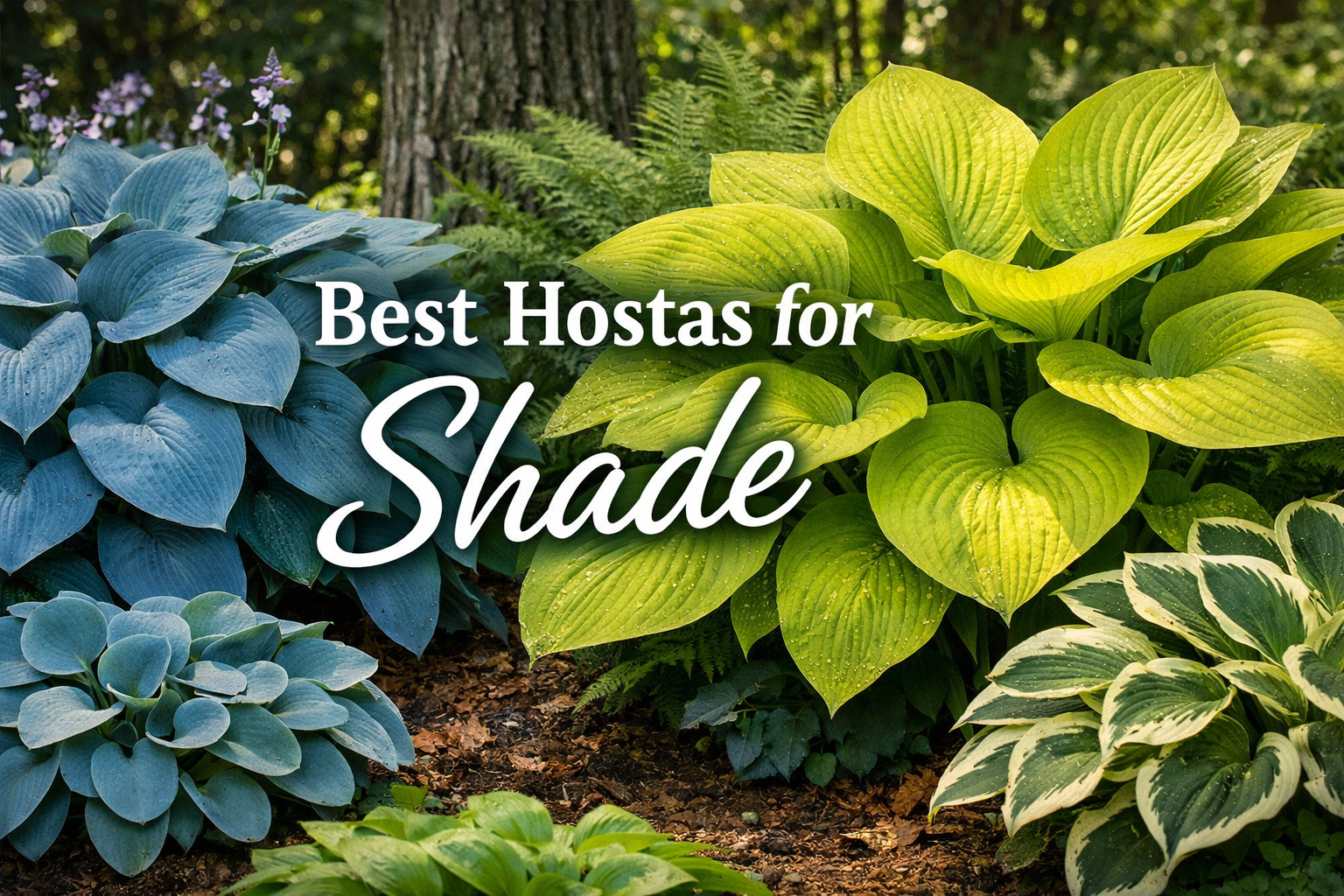
You can put a hosta in a dark corner and keep it alive. That’s not the same thing as liking the result.
For most gardens, the best hostas for shade are not one fixed list. For deep shade, blue and thicker-leaved picks such as ‘Halcyon’, Hosta sieboldiana ‘Elegans’, and ‘Blue Mouse Ears’ are the safest starting point. For brighter shade or a spot with a bit of morning sun, ‘June’, ‘Patriot’, ‘Guacamole’, ‘Fragrant Bouquet’, ‘Royal Standard’, and ‘Sum and Substance’ usually make more sense. If you want one huge anchor plant, ‘Empress Wu’ earns the space.
The catch is simple. “Shade” is too broad to be useful on its own. Deep shade, dappled shade, and dry shade under a thirsty maple are three different jobs. Hostas respond to that difference fast, and a bad match shows up in dull color, scorched edges, thin growth, or leaves that look weirdly underwhelming by July.
In this guide, you’ll get the short list first, then the rules that make the short list useful.
At a glance: match the hosta to the kind of shade
| Garden situation | Best first picks | Why they work |
|---|---|---|
| Deep shade | ‘Halcyon’, ‘Elegans’, ‘Blue Mouse Ears’ | Blue, thicker foliage holds up better with less light |
| Bright shade or morning sun | ‘June’, ‘Patriot’, ‘Guacamole’ | Color stays cleaner with a little more light |
| Small space or container | ‘Blue Mouse Ears’, ‘June’ | Better scale and easier upkeep |
| Big focal point | ‘Empress Wu’, ‘Sum and Substance’ | They read like architecture, not filler |
| Fragrance near a path | ‘Fragrant Bouquet’, ‘Royal Standard’, ‘Guacamole’ | You get foliage and scent, not just leaves |
Fast rule: blue for shadier spots, gold and many variegates for brighter shade, giant forms only where the mature spread won’t bully the bed later.
- Which hostas make sense for deep shade, bright shade, and dappled shade
- How leaf color quietly tells you what light the plant wants
- Which varieties fit a small border and which ones swallow it whole
- What goes wrong under trees
- How to keep foliage cleaner when slugs and deer are part of the deal
Best Hostas for Shade at a Glance
If you want the quick answer and do not feel like reading a hosta encyclopedia, start here.
For deep shade: go with ‘Halcyon’, Hosta sieboldiana ‘Elegans’, or ‘Blue Mouse Ears’. The University of Minnesota notes that hostas can survive in deep shade, defined there as less than 4 hours of sun a day, and that blue hostas need a shadier site to avoid leaf burn and bleaching. That is why these blue and blue-green types are such reliable first picks in darker beds. UMN Extension
For bright shade or morning sun: choose ‘June’, ‘Patriot’, or ‘Guacamole’. UMN also points out that yellow and gold hostas benefit from 2 to 3 hours of morning sun for richer color. That’s the part many plant tags skip, and it matters a lot. Gold and high-contrast variegated leaves can look flat in heavy gloom.
For a giant statement plant: plant ‘Empress Wu’ or ‘Sum and Substance’ only if the bed actually has room. Missouri Extension notes that giant hostas can reach about 48 inches in height and spread. Big hostas are fantastic, but only when they are given specimen-plant space instead of being wedged beside a front walk. MU Extension
For fragrance near a path or patio: try ‘Fragrant Bouquet’, ‘Royal Standard’, or ‘Guacamole’. That gives you a shade plant with another job besides leaf color.
Remember: the best hosta is not the one with the flashiest photo. It is the one that fits your light, your moisture, and the amount of space the plant will occupy in year three.
Match the Hosta to Your Shade Before You Match It to Your Taste
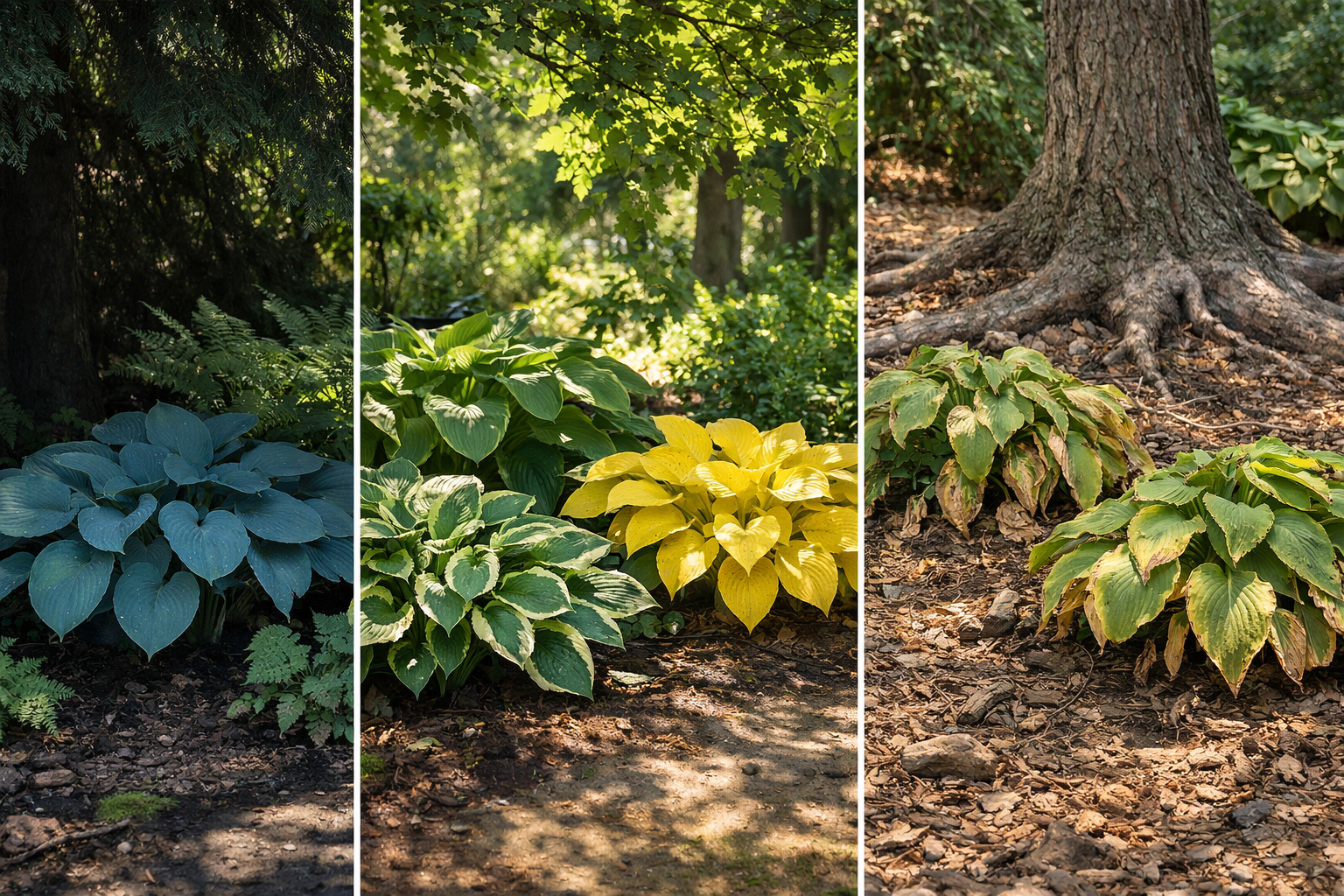
Most bad hosta choices start with one lazy sentence: “It gets shade.” Fine. What kind?
Filtered or dappled shade is usually the sweet spot. The University of Minnesota says hostas thrive where filtered or dappled shade is available for much of the day, and it adds that deep shade slows growth. That tracks with what many gardeners notice the hard way. A plant can survive in a dark corner and still look like it is rationing energy. UMN Extension
Deep shade means less than 4 hours of sun a day. In that setting, blue hostas make the most sense because their waxy bloom and heavier look tend to suit darker placements. UMN says blue hostas require a shadier site to avoid burn and bleaching. NC State makes the same basic point from another angle, noting that blue-leaved forms need deep shade and that green-leaved types accept more partial shade. NC State Extension
Bright shade or morning sun is where gold and many variegated hostas usually earn their keep. UMN says yellow and gold hostas benefit from 2 to 3 hours of morning sun for richer leaf color. That is why a gold hosta in dense gloom can stay alive and still look disappointingly muddy.
Dry shade under trees is the sneaky one. People call it a shade problem, but it is often a water and root-competition problem first. UMN notes that hostas in dry shade or beneath shallow-rooted trees may need extra water. So if the soil is full of maple roots and dries fast, that bed is asking more from a hosta than the light level alone suggests.
Here’s a simple way to sort the site before you buy:
- Check the spot at midday in late spring or early summer.
- See whether the sun is morning sun or harsher afternoon sun.
- Scratch the soil and feel for dryness and root competition.
If the spot stays dim all day, lean blue or blue-green. If it gets a little gentle sun, gold and variegated options open up. If roots are everywhere and the ground goes bone-dry fast, pick smaller, tougher-looking types and lower your expectations a notch.
Choose by Mature Size So the Bed Still Works in Year Three
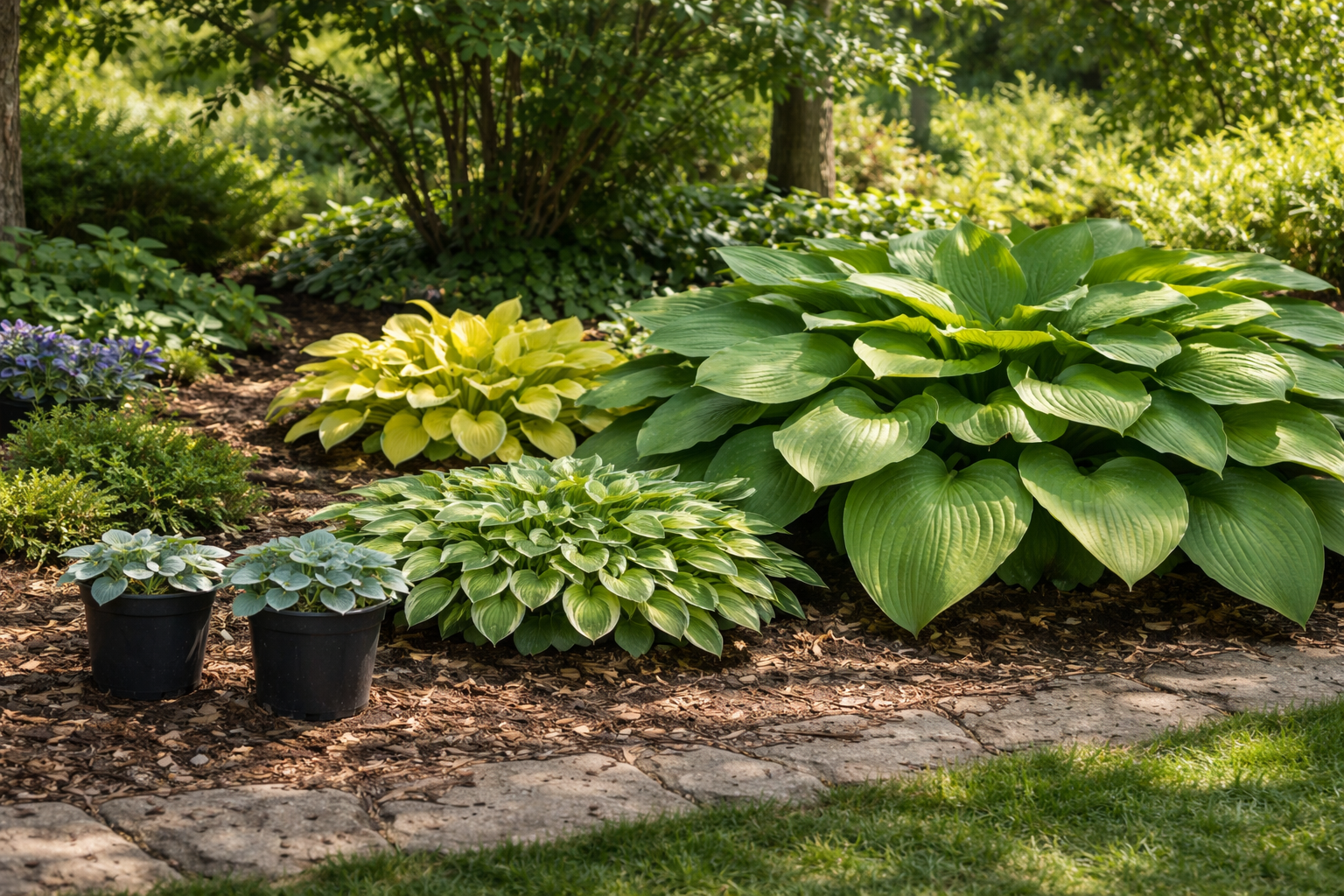
Nursery pots lie. Not on purpose, but they do.
A hosta that looks neat and harmless in a 1-gallon container can turn into a low green sofa if you give it time. NC State uses the American Hosta Society size classes, which run from dwarf and miniature all the way up to giant, defined as more than 28 inches tall. That alone tells you not to shop hostas the way you shop annuals. NC State Extension
Miniature and small hostas work best for edging, containers, troughs, and the front of a border. ‘Blue Mouse Ears’ is the classic example. It stays genuinely small, so it looks intentional rather than cramped.
Medium hostas are the easiest all-rounders. ‘June’, ‘Patriot’, and ‘Fragrant Bouquet’ usually slot neatly into foundation beds, mixed borders, and woodland edges without taking over the postcode.
Large and giant hostas are another category altogether. NC State lists ‘Halcyon’ at about 1 foot 6 inches to 2 feet tall and 2 feet 6 inches to 3 feet wide, which is generous but still manageable. Missouri Botanical Garden lists ‘Elegans’ at about 30 inches tall and 48 inches across, and notes that it is slow to reach mature shape. That slow maturity fools people. They plant a giant hosta like a medium one, then two or three seasons later the whole composition feels crowded. Missouri Botanical Garden
‘Empress Wu’ and ‘Sum and Substance’ are not “tuck one in if there’s room” plants. They are bed anchors. Treat them like shrubs with leaves softer than shrubs.
Quick size cheat sheet
- Small: edging, pots, narrow borders
- Medium: most foundation beds and mixed shade borders
- Large: back of border, mass planting, broad curves
- Giant: specimen use, woodland anchor, focal point
The Best Hosta Varieties by Scenario, Not by Catalog Order
Now for the shortlist that actually answers the question. Not every good hosta belongs in every shady garden, so the cleanest way to pick is by job.
For deep shade, start with ‘Halcyon’. NC State lists it at roughly 18 to 24 inches tall and 30 to 36 inches wide. It has that calm, powdery blue look that reads cool in dark spaces, and the leaves have enough substance to look composed instead of floppy. It is one of the safest choices when the bed stays shady all day.
For large deep-shade texture, use Hosta sieboldiana ‘Elegans’. Missouri Botanical Garden describes it as 30 inches tall and 48 inches in diameter, with thick-textured, heavily corrugated blue-green leaves. That corrugation matters more than it sounds. In a gloomy border, texture is what keeps a big plant from reading like a flat blob.
For small spaces, ‘Blue Mouse Ears’ still deserves the hype. It gives you the blue hosta look in miniature form, and the tighter mound works in containers, along a path, or anywhere a giant would be ridiculous. If you’ve ever tried to edge a narrow shaded walkway with standard hostas, you know how fast they start leaning into the traffic lane.
For bright shade, ‘June’ is hard to beat. It stays more controlled than the monsters, and its color contrast is part of the appeal. In a dim corner it can look muted. In bright shade, the chartreuse center and blue-green margin look clean and alive.
‘Patriot’ is a strong white-edged option for brighter shade. The foliage has crisp contrast, which helps it show up from a distance. It is a good pick when the bed feels visually murky and you want some lift without going neon.
‘Guacamole’ works when you want color and scent. It has broad chartreuse-to-golden tones with darker margins, and it is one of the fragrant hostas people actually remember. This is the kind of plant that earns a place near a path, a seating area, or the shaded side of a patio.
‘Fragrant Bouquet’ and ‘Royal Standard’ are the flower-first choices. They still have useful foliage, of course, but their real trick is giving you a reason to plant hostas where you pass by them often. Tucked into a back corner, that scent advantage goes to waste.
For sheer scale, ‘Sum and Substance’ is the big gold statement. Missouri Extension identifies it as one of the giant hostas. Give it brighter shade, steady moisture, and room. It can look magnificent. Put it in dense gloom or a thirsty strip by a tree and it will never quite cash the cheque the plant tag wrote.
‘Empress Wu’ is for gardeners who mean it. This one is not subtle. Used once, it can give a shade bed structure the way a small ornamental tree would. Used carelessly, it can eat the whole composition.
Avoid the Shade Traps That Make Good Hostas Look Bad
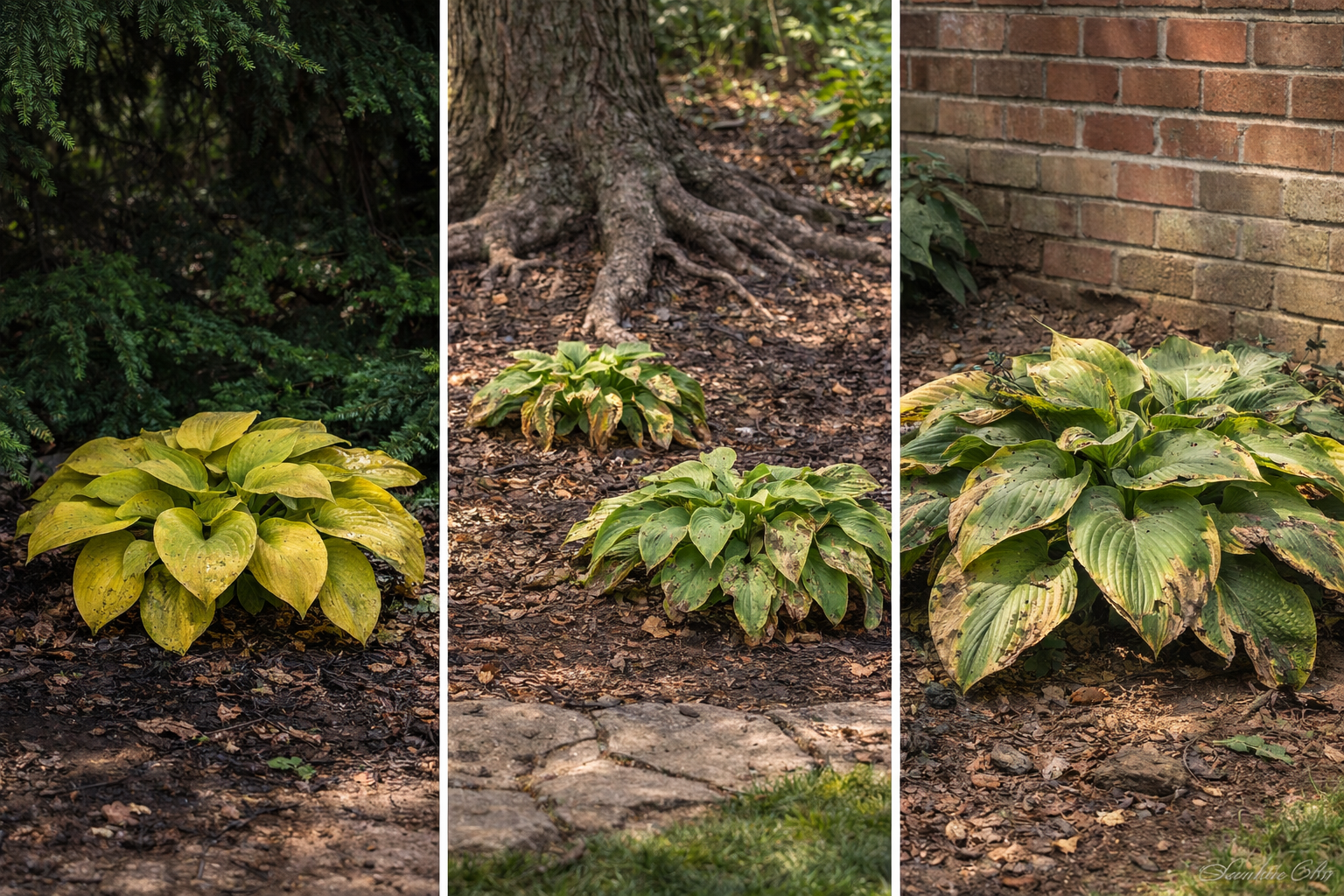
Most hosta disappointments are not failures of the plant. They are mismatches between the plant and the site.
Trap one: planting a gold hosta in heavy gloom. UMN says yellow and gold hostas benefit from 2 to 3 hours of morning sun for richer color. If you skip that, the plant may live just fine, but the color can go muddy and dull.
Trap two: treating dry shade as ordinary shade. A bed under a maple or spruce is not just low light. UMN notes that hostas in dry shade or beneath shallow-rooted trees may need more water. If the plant stays small, limp, or thin there, the problem is often root competition more than light alone.
Trap three: assuming shade means no watering. The Royal Horticultural Society says hostas do best in moist, fertile soil and points out that scorched leaves show up where soils get dry or where there is too much sun. A shaded bed can still dry hard in summer, especially under trees or near a wall. RHS
Trap four: buying for the photo, not the mature spread. This is how giant hostas end up jammed into skinny foundation strips and then start shoving at everything nearby. Pretty common, honestly.
Trap five: putting thin, delicate leaves in a slug-heavy area. If your garden already has a slug problem, heavier leaves are the smarter bet. The RHS notes that thicker-leaved cultivars are generally less eaten by slugs and snails.
Fast symptom check
- Bleached or brown patches: too much sun, heat, or dry soil
- Slow, stingy growth in a dark spot: not enough useful light
- Ragged holes: slugs or snails
- Dull color on gold forms: not enough morning sun
- Droop under trees: root competition and dry soil
One more honest note. In a bed with brutal deer pressure and dry, root-packed shade, hosta may not be the smartest first plant. You can still grow them there, but the fight is harder than most roundups admit.
Plant for Better Color, Full Size, and Less Fuss
Good planting does not make the wrong hosta right. It does make the right hosta look like a better plant.
Plant at the best time. The RHS says spring and autumn are ideal, and UMN says spring is generally the best time to plant. Summer planting can work, but new plants need more water while roots settle in. So if you are planting into a dry bed in July, be ready for extra attention.
Build the soil for moisture and drainage at the same time. UMN says hostas prefer rich, moist soil high in organic matter and well-drained. NC State also notes that they need well-drained soil and dislike soggy winter conditions. That combination sounds contradictory until you see it in the garden. Hostas like a soil that holds moisture like a sponge, not a puddle.
Space by mature width, not the pot you bought. A medium hosta can often sit 2 to 3 feet from its neighbour without feeling lonely. Giant hostas need far more elbow room. If the bed looks too open after planting, that is often a sign you did it right.
Water the root zone deeply. UMN gives a useful benchmark here: about 1 inch of water per week is best for hostas, with deeper and less frequent watering better than constant shallow splashes. That is a decision rule you can use. If the soil stays only damp on the top inch, the plant will tell on you later. Deep watering buys a better moisture buffer.
Containers are fair game, but size them honestly. A small cultivar in a pot can look sculptural and tidy. A giant hosta in a decorative container is often a short-term photo op. Use containers with drainage holes, and go wider than feels necessary. Hostas hate sitting in sealed, wet compost.
Note: if the bed gets morning sun and dries fast, that is not a reason to panic. It is a reason to add organic matter, mulch lightly, and water deeply enough that the soil stays moist below the surface.
Handle Slugs, Deer, and Dry Shade Before They Ruin the Foliage
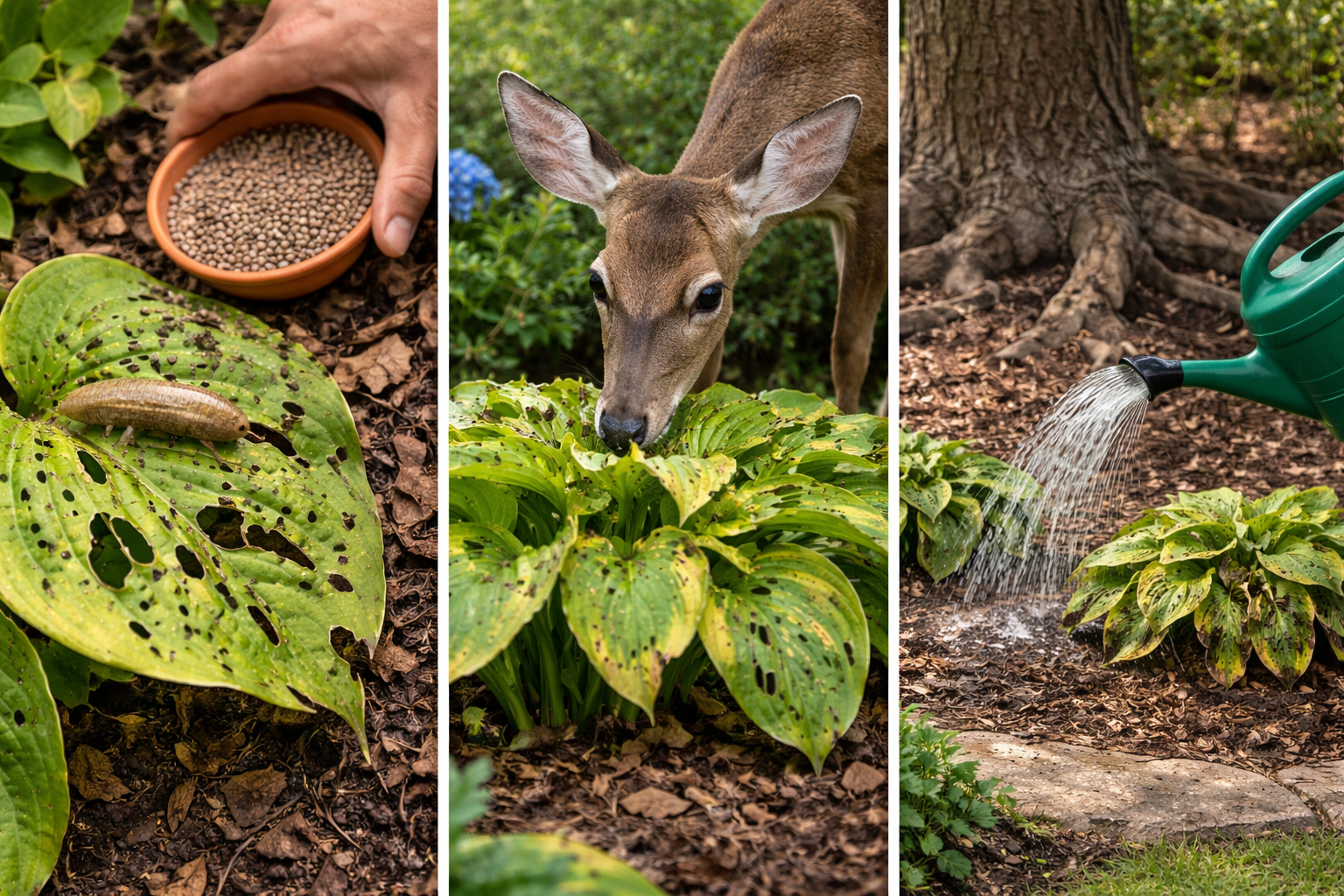
Shade gardeners talk about flowers, but hosta success is really about leaf quality. Once the leaves are chewed, burned, or shredded, the whole point of the plant starts slipping away.
Start with slug pressure. The RHS says hostas are notoriously irresistible to slugs and snails, and it adds that thicker-leaved cultivars are generally less eaten. That does not make a thick-leaved hosta slug-proof. It does make it a better bet. In gardens where slugs are constant, I lean away from delicate thin-leaved forms unless I really want a particular look and know I will manage the problem.
Do the small cultural fixes. Clear damp hiding places near crowns. Water in the morning instead of late evening. Do not let a hosta sit in a messy, permanently soggy halo of decaying debris. Those tweaks sound basic, but they change the nightly slug hotel setup around the plant.
Be realistic about deer. NC State notes that deer and rabbits enjoy the tender foliage. So no, hostas are not a great choice for a bed deer browse every week unless there is some physical protection in play.
Dry shade needs a different mindset. UMN says hostas beneath shallow-rooted trees may need extra water. That means planting a hosta under a mature maple is not just a shade decision. It is a competition decision. Digging a broad planting pocket with compost helps. Planting a little away from the thickest roots helps more. Smaller or heavier-leaved types are usually less frustrating there than giant gold showpieces.
Watch for virus trouble, but do not invent it. NC State says Hosta Virus X can occur and that infected plants should be removed and destroyed. If a plant shows odd mottling that follows veins, a puckered or distorted look that is not normal for the cultivar, or a pattern that seems off rather than pretty, stop dividing it and stop sharing it around.
Pet safety matters too. NC State lists hosta as toxic to cats, dogs, and horses. That’s worth knowing, though it does not need drama.
Use Hostas So the Shade Bed Looks Intentional, Not Just Filled
Hostas are easy to over-scatter. One here, one there, three unrelated variegated kinds jammed together. Then the border starts looking like a collector’s shelf instead of a garden.
Mass one variety when you can. Three or five of the same hosta usually looks calmer than a row of singles. Big leaves repeated across a curve or woodland edge give the bed shape. Mixed one-offs can look busy fast.
Let the size step down naturally. Giant or large hostas go toward the back or as a central anchor. Mediums carry the middle. Small and miniature types belong near paths, edging, or containers.
Use leaf color to pull light through the bed. In brighter shade, gold and cream-variegated hostas can lift the whole planting. In deeper shade, blue and blue-green forms look cooler and steadier. They do not glow, but they do anchor the scene.
Pair them with a different texture. Ferns, fine grasses for shade, or narrow-leaved companions keep all that broad foliage from feeling heavy. And if a shady border or fence needs some vertical flower power nearby, best clematis for shade is one of the few related plant choices that actually belongs in the same conversation.
Do not force every hosta to be a focal point. Some are there to stitch the border together. Others are there to stop traffic. If everything screams, nothing really lands.
FAQ
Can hostas grow in full shade with no direct sun?
Yes, many hostas can survive in full shade, and the University of Minnesota says they can grow in deep shade with less than 4 hours of sun a day. But survival and good looks are not the same thing. Growth is slower there, and gold or bright variegated kinds often look better with some morning sun.
Why do blue hostas turn greener later in summer?
Blue hostas get their color from a waxy coating on the leaf surface. Heat, sun, weather, and normal wear can thin that coating, so the plant reads greener as the season goes on. That shift is normal. Too much sun speeds it up.
What is the best hosta for a small shaded container?
A small, tidy cultivar such as ‘Blue Mouse Ears’ is a smart first pick. It keeps the hosta look in proportion, and it is much easier to water and manage in a container than a medium or giant type that outgrows the pot in a hurry.

Michael Rowan is the founder and lead writer at The Garden Playbook. He has spent 10+ years growing plants across a range of settings — from indoor houseplants and container gardens to raised beds and in-ground plots — adapting methods to different light levels, seasons, and growing conditions.
Michael focuses on practical, experience-based guidance grounded in fundamentals: soil health, watering strategy, plant nutrition, pruning and propagation, and integrated pest management (IPM). His work aims to help readers diagnose common problems (such as yellowing leaves, stunted growth, or pest pressure) and apply straightforward solutions that are realistic for home gardeners.
At The Garden Playbook, Michael develops tutorials and plant guides using a consistent process: documenting real outcomes where possible, explaining the “why” behind each step, and verifying higher-risk topics (such as plant toxicity or pest treatment options) against reputable horticultural references.