
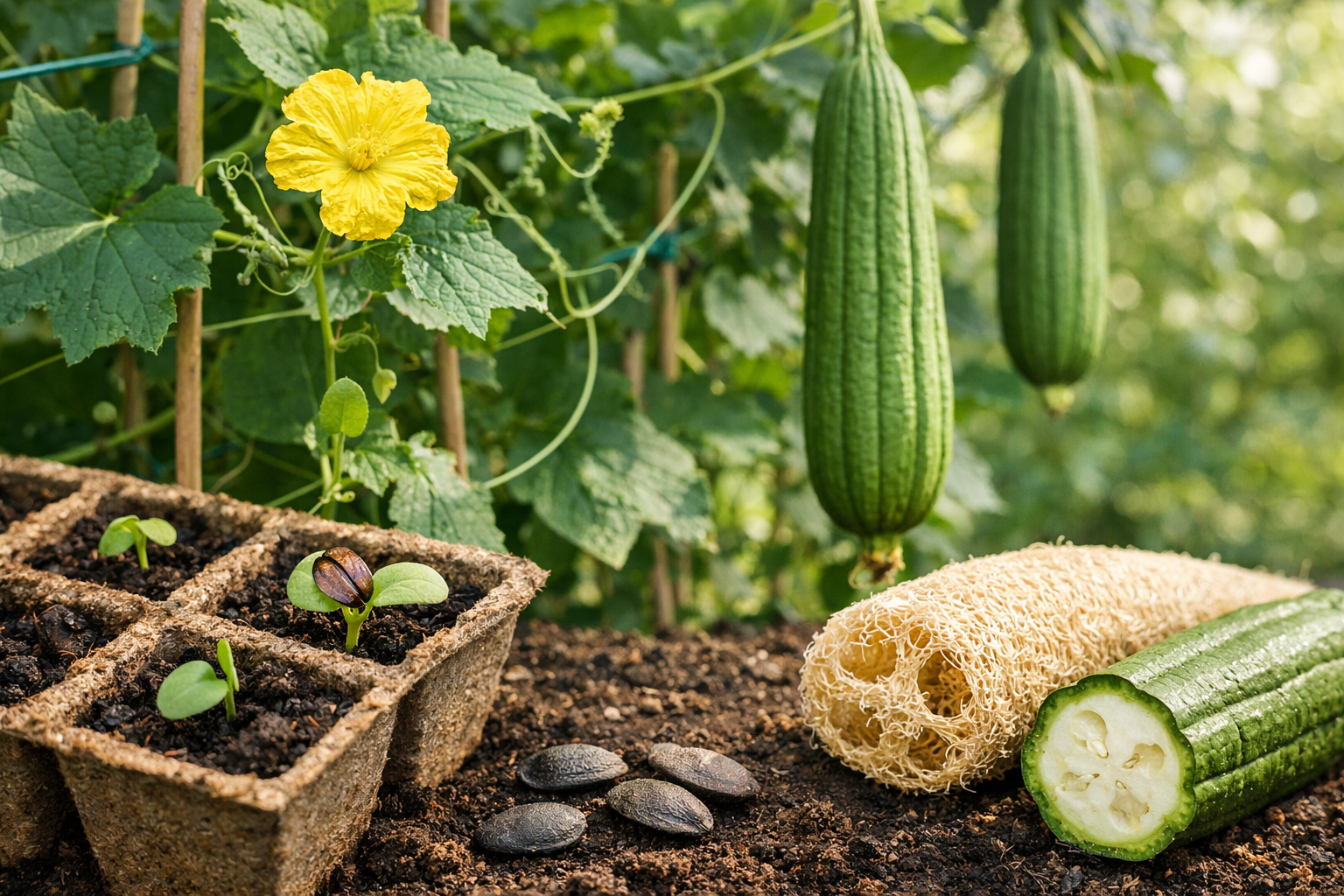
You can absolutely succeed at growing luffa from seed. The catch is that seed starting is the easy part. Finishing the crop is where people get burned.
I learned that the annoying way. One season I had a gorgeous vine, flowers everywhere, and a trellis that looked like it was winning. Then cool weather crept in, the gourds stayed green too long, and the “future sponges” never really became sponges. The plant had grown well. The timing had not.
That is the whole tension with luffa. Generic advice makes it sound like another cucumber. It isn’t. It wants warmth, time, and a support system that can handle a thug of a vine. If you match those three things, luffa seeds germinate just fine and the crop feels pretty straightforward. If you miss one, the season can go sideways fast.
Here’s what this guide will help you sort out:
- Whether your season is long enough for sponge-quality luffa
- When to start luffa seeds indoors and when direct sowing makes more sense
- How warm the seeds need to sprout well
- Why a healthy vine can still fail to produce mature gourds
- How to harvest for eating versus harvest for sponge use
Start Here
| If this sounds like you | Most likely issue | What to do next |
|---|---|---|
| Short summer, first frost arrives early | Not enough warm days to finish sponge gourds | Start indoors early, transplant only into warm conditions, or grow for young edible fruit instead |
| Seeds sit for ages and do nothing | Low root-zone temperature | Raise seed-starting warmth first, then review moisture and seed age |
| Huge vine, lots of leaves, few mature gourds | Late start, too much nitrogen, or weak pollination | Check timing first, then flowers, then feeding |
| Growing in a pot on a patio | Water swings and weak support | Use a large container, steady watering, and a serious trellis |
Growing luffa from seed is simple, but only if your season is long enough
The direct answer is pretty clean: luffa seeds germinate and grow well when you give them warmth, sun, steady water, and something sturdy to climb. What trips people up is not the seed packet step. It is the calendar.
The Royal Horticultural Society lists luffa as a warm-season crop that likes sowing temperatures around 21 to 25 C. The National Trust goes a touch firmer for germination and suggests about 25 C. Those numbers tell you what the seed wants. They do not tell you whether your summer is long enough to turn that seed into a usable sponge.
That second part matters more.
Many gardening guides put luffa maturity somewhere in the broad range of about 120 to 200 days, depending on weather, variety, and what “mature” means in practice. A young edible fruit is one thing. A dry, fibrous loofah sponge is another. If your climate regularly runs out of warm time in early autumn, the plant can look fantastic and still leave you with a lot of green regret hanging from the trellis.
Note: If your goal is kitchen or bath sponges, judge the crop by whether it can finish late in the season, not by whether it sprouts quickly in spring.
A lot of people search “how long does luffa take to grow” after the vine is already in the ground. By then, the answer is mostly academic. The smarter move is to ask first whether the site gets enough frost-free, truly warm weather for the plant to finish what you want from it.
Check your season first so you do not waste a whole summer
Before you soak a seed or fill a pot, run one quick test.
Do you have a long warm season, or are you trying to squeeze a tropical-leaning vine into a short window and hoping it will figure things out?
Luffa is far less forgiving than zucchini in this respect. If summer arrives late where you live, or cool nights show up early, you need a head start and a realistic harvest goal.
Use this grid:
| Your setup | Best move | What that usually leads to |
|---|---|---|
| Long, hot summer and warm soil in late spring | Direct sow or start indoors briefly | Best shot at full sponge maturity |
| Moderate season with decent summer heat | Start indoors, then transplant only after settled warmth | Possible sponge harvest if timing stays on track |
| Short season or early autumn chill | Grow only as an experiment or plan to harvest young | Vigorous vine, weaker odds of mature loofahs |
| Patio pot with limited sun | Pick a different crop unless the site is very warm and bright | Lots of effort for uneven results |
If warm nights arrive late in your area, indoor starting is not optional if you want sponge gourds. If the season is long and hot, direct sowing can be cleaner because the roots are left alone.
The common mistake here is taking “start 4 to 6 weeks before last frost” as a universal rule. It isn’t. It is a compromise. In some gardens, 4 weeks is fine. In others, that still leaves the plant chasing autumn.
Pro tip: Think of luffa as a marathon vine. Fast germination does not cancel out a slow finish.
Start seed the way your climate demands, not the way a generic guide says
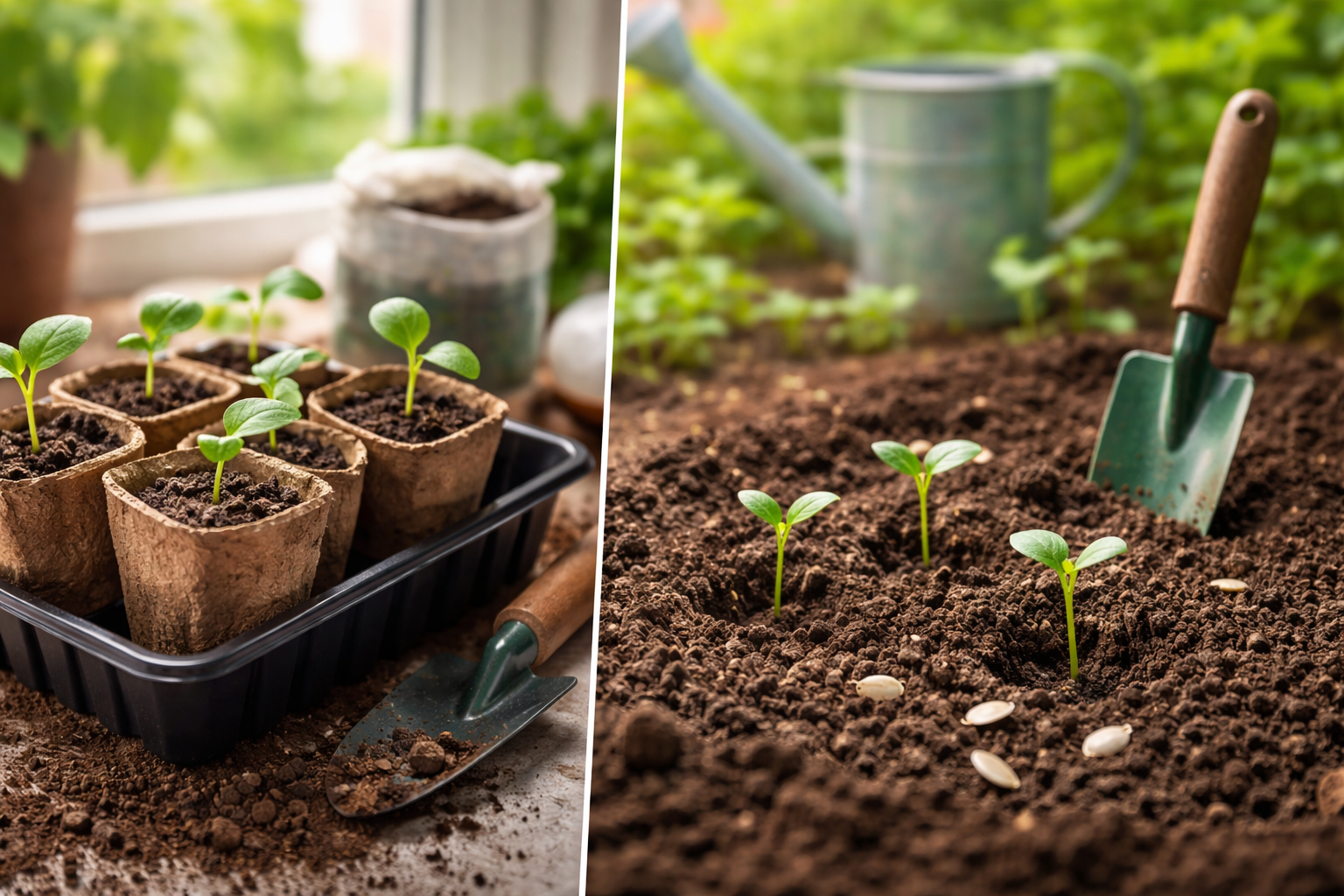
The best seed-starting method depends on what kind of summer you actually get.
Start indoors for a head start
If your spring stays cool or your frost-free window is tight, start luffa seeds indoors about 4 to 6 weeks before your last expected frost date. That timing is widely used because it gives the plant a jump without turning your house into a temporary jungle for two months.
Use individual pots, not shared trays if you can help it. Luffa is a cucurbit, and cucurbits are not thrilled when their roots get messed with. A roomy pot buys you time and makes transplanting less rude.
Direct sow for less transplant stress
If your soil warms early and nights stay comfortably mild, direct sowing is often easier. No root disturbance. No hardening off drama. No seedling that gets leggy on a windowsill and then sulks when moved outside.
That tradeoff is pretty plain: direct sowing lowers transplant stress, but it costs you calendar days. In a short season, that cost can be fatal to sponge production.
Transplant only into real warmth
This is where gardeners get impatient. A frost-free forecast is not enough. The plant wants warm conditions, not just the absence of freezing. If nights are still chilly, the seedling often stalls and just sort of sits there, annoyed.
I have seen luffa seedlings “survive” an early transplant and then spend two or three weeks doing almost nothing. That is enough to wreck the season in cooler zones. Better to wait a bit and move a happy plant than rush out a stressed one.
Indoor start vs direct sow
| Method | Best for | Main risk |
|---|---|---|
| Indoor start | Moderate or short seasons | Root stress if kept too long or transplanted too cold |
| Direct sow | Long, hot seasons with warm soil | Crop starts too late to finish |
If you’re used to easier cucurbits, this feels fussy. Fair enough. Luffa just asks for tighter timing.
Germinate luffa seeds faster with warmth first, soaking second
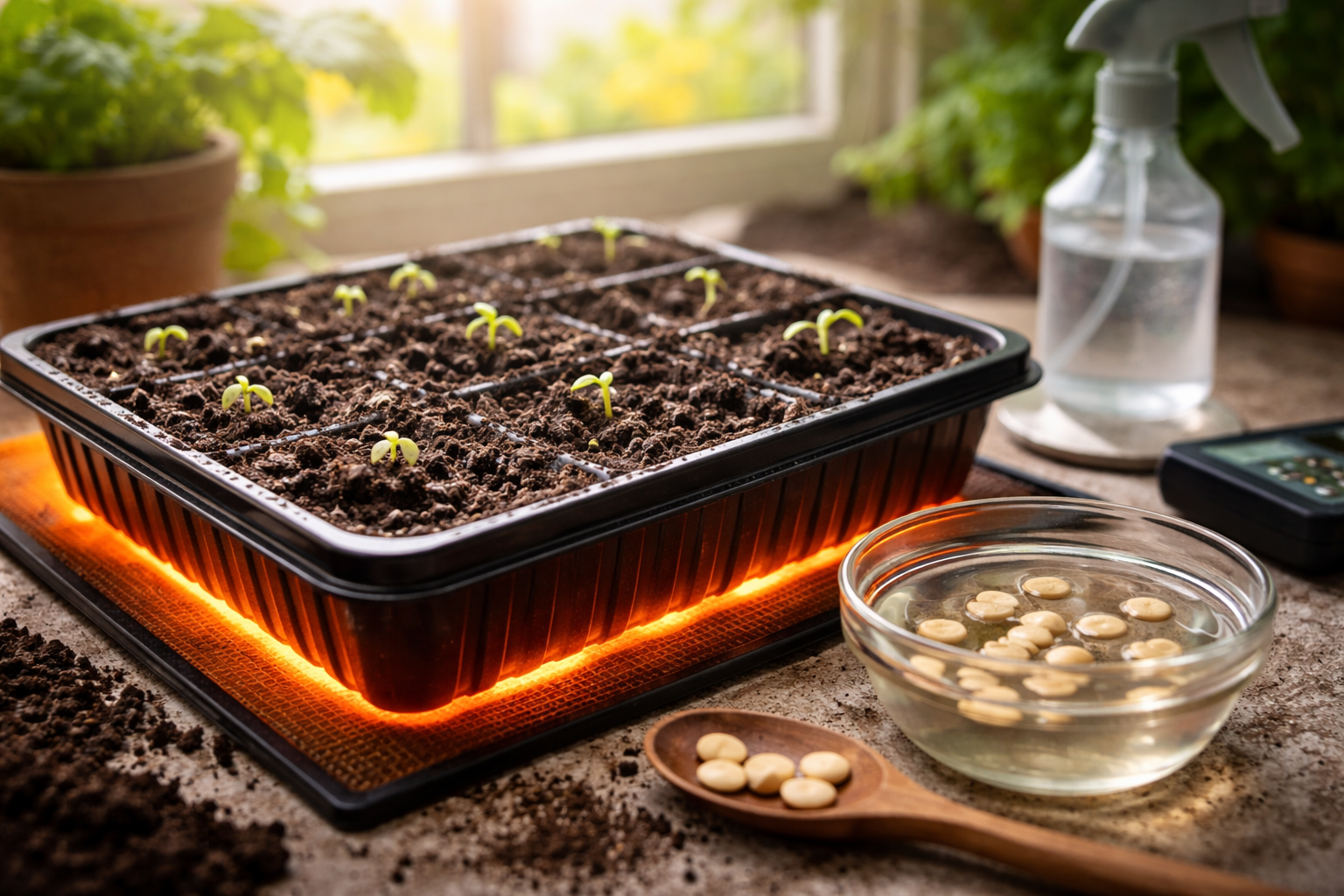
The thing that most often fixes slow or uneven luffa germination is not extra water. It is heat.
The University of Maine Cooperative Extension points to warm seed-starting conditions for luffa, and the general sowing range from the Royal Horticultural Society sits around 21 to 25 C. That lines up with what many gardeners see in practice: at cool indoor temperatures, luffa seeds can sit there like little pebbles. Raise the warmth, and they wake up.
Warm the root zone for faster sprouting
A warm room helps. A warm seed tray helps more. If you have a heated propagation setup, this is a good crop for it. If you do not, the warmest stable spot in the house is better than a bright but chilly windowsill.
Soak seeds when you want to nudge germination
Soaking luffa seeds before planting is common advice, and it can help soften the coat and speed things along. It is useful with older seed or seed that has a reputation for slow starts. It is not magic. If the sowing mix stays cool, soaked seed can still stall.
Scarify lightly, not aggressively
Some gardeners lightly nick or abrade the seed coat. That can help with hard-coated seed, but go easy. You are trying to help water enter, not butcher the seed. A light rub is enough. No need to get weird with it.
Keep the mix damp, not soggy
Luffa seed wants steady dampness while it sprouts. Soggy mix is where rot starts creeping in. This is one of those spots where people solve the wrong problem. They see no sprouts, assume “needs more water,” and make the tray colder and wetter at the same time.
Bad combo.
Important: If seeds will not sprout, check temperature before anything else. Low warmth is the usual culprit. Seed age is the next thing I would look at.
That is also why “should I soak or scarify luffa seeds?” is slightly the wrong beginner question. Warmth has a bigger effect on germination than either trick.
Plant luffa where the vine can actually finish strong
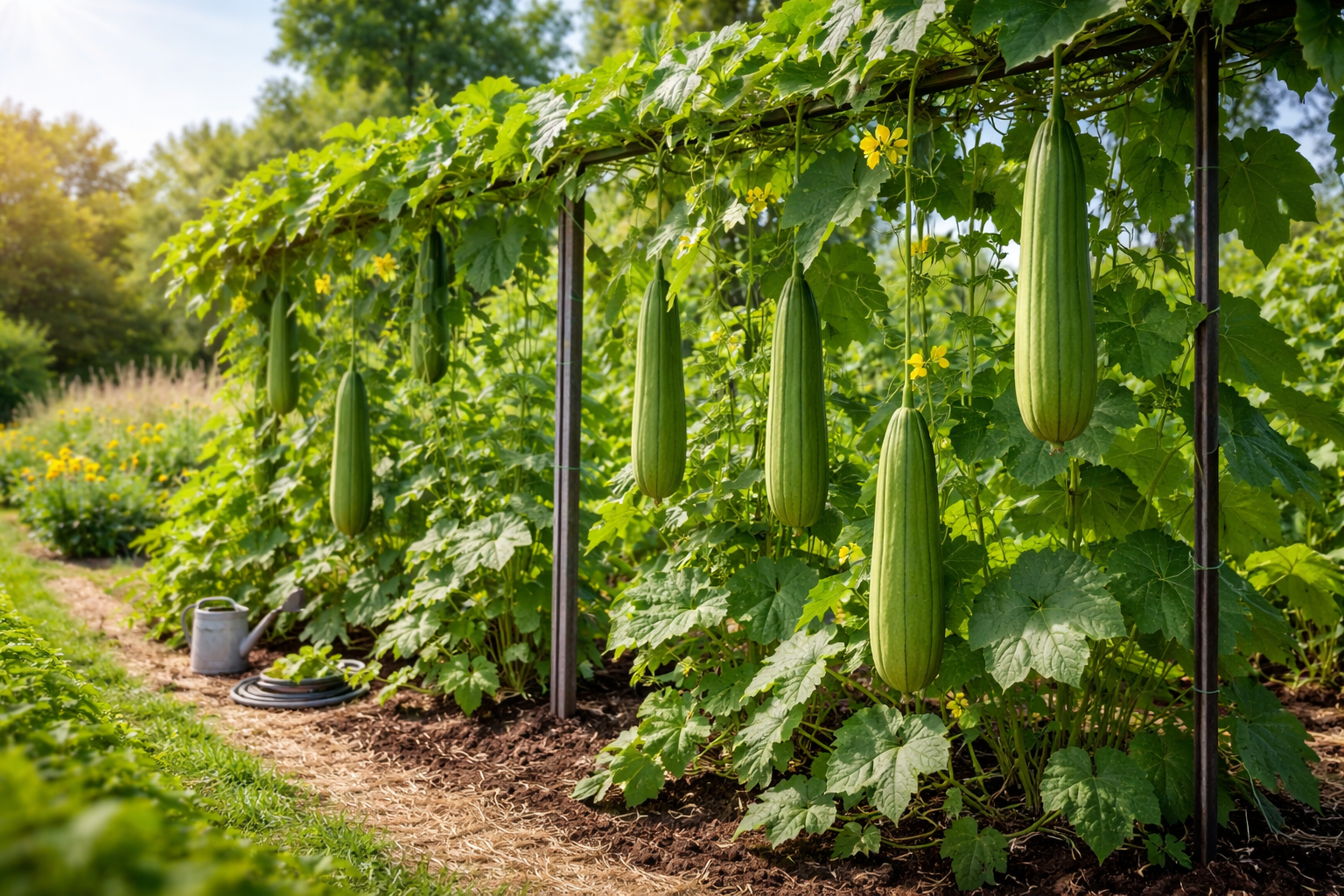
Luffa needs full sun, open air, and a support structure that is not flimsy. A half-day site with a decorative trellis is a nice idea. It is not a luffa plan.
University of Florida IFAS notes that luffa vines can run long and benefit from sturdy support. NC State Extension describes a large annual climber that wants sun and room. That is a polite institutional way of saying the vine gets big and pushes its luck.
Pick a site with long daily sun
Six hours is the bare minimum worth taking seriously. More is better. In cooler climates, that extra sun is not a luxury. It is part of how the crop finishes.
Use soil that drains well
Good drainage matters, but so does steady access to water later on. The sweet spot is a soil that drains cleanly and still holds enough for consistent growth. Bone-dry sand is just a different problem wearing a nicer outfit.
Give the vine room to climb
A strong trellis keeps fruit cleaner, straighter, and easier to find. It also improves airflow around the plant. That matters for a fast-growing cucurbit. If trellising cucumbers has already taught a lesson or two, the same general logic applies here, and this guide on how to support cucumber plants is a useful companion.
Space with the mature vine in mind
Seed packets and guides often suggest spacing around 12 to 18 inches or wider. That can work, but spacing should follow the support system and airflow, not the number alone. A thick wall of tangled vines is one of those things that looks productive from across the yard and annoying up close.
Note: If the trellis feels a little overbuilt while the plant is small, it is probably about right.
Water, feed, and train the vine so it makes gourds, not just leaves
Luffa grows fast once it gets going. That speed can fool you into thinking the plant is happy just because it is large.
Leafy growth is not the same thing as useful growth.
Water steadily so the plant keeps moving
Many broad gardening references use about 1 inch of water per week as a starting point for cucurbit-type crops, and that is fine as a rough guide. But weather, soil, mulch, and container growing change that rhythm a lot. What matters is consistency. If the plant swings from parched to flooded, it loses momentum.
Water near the base. Avoid drenching foliage if you can. A sprawling cucurbit with wet leaves and tight airflow is asking for trouble.
Feed for balance, not for bragging rights
If you load the plant with nitrogen and get a giant green beast with few gourds, you did not win. Early growth matters, yes, but once the vine is established you want balanced feeding, not a contest in leaf size.
This is one of those spots where gardeners accidentally create their own problem. The plant looks hungry because it is growing fast. More feed goes on. Then flowering and fruiting lag behind. The vine turns into a gym bro and forgets the assignment.
Train the vine early
Guide stems onto the support while they are still manageable. Waiting until everything is tangled is like trying to braid spaghetti. Early training also keeps developing fruits from growing into awkward shapes or pressing into a fence in weird ways.
What to check first
- If leaves are huge and fruiting is weak, revisit feeding
- If growth stalls in a pot during hot weather, revisit watering frequency
- If vines are sprawling on the ground, revisit support before problems stack up
None of this is hard. It just needs to be done on time.
Fix the big failure point: flowers show up, but mature luffa never follows
This is the moment where most frustration lives.
You have a healthy-looking plant. It blooms. You start imagining a line of homegrown sponges drying in autumn. Then somehow… not much happens, or the fruits start too late and never finish.
Step 1. Check timing so you catch the real problem first
If flowers and first fruits appear late, the crop may simply be behind schedule. That is often the whole story. The plant is not “failing.” It just started too late for your season. This is why the calendar belongs at the front of the article, not buried in the back.
Step 2. Check pollination so flowers turn into swelling fruit
Luffa has separate male and female flowers. The female flower has a small immature fruit behind it. If those flowers open and drop without swelling, pollination is a likely issue. Weather, low pollinator activity, and uneven plant vigor all play a part.
Hand pollination can help in a pinch. It is not glamorous, but neither is staring at dropped flowers and pretending nature has a plan for your patio vine.
Step 3. Check feeding so the plant stops overbuilding leaves
If you have a wall of foliage and very little fruit progress, excess nitrogen is high on the suspect list. Pull back on the urge to “help” with more fertilizer.
Step 4. Check stress so the plant can keep momentum
Cold nights, dry spells, container heat, and root stress after transplanting can all slow fruit development. Sometimes the plant recovers. Sometimes it loses enough time that mature gourds never happen.
If fruit production issues on cucurbits sound familiar, the diagnostic pattern overlaps with this piece on why cucumbers stop growing properly. Different crop, same family, very similar headaches.
Important: A healthy vine with no mature sponge gourds is often a timing problem first. Pollination and feeding come after that.
That point gets missed a lot. People diagnose late fruit as a nutrient issue when the season clock has already run out.
Grow luffa in containers only if you can manage the tradeoffs
Yes, luffa can grow in a container. No, that does not make it easy.
Container growing is attractive because it feels flexible. Put the plant on a sunny patio, add a trellis, job done. In practice, the pot makes water management and root temperature much twitchier, and the vine still wants the same sun and vertical muscle it would need in the ground.
University of Florida IFAS notes that luffa can be grown in containers, but that advice really works best when the container is large, the site is bright, and the support is not an afterthought.
| Container growing is a fit if… | Container growing is a bad fit if… |
|---|---|
| You have strong sun and a large pot | The patio gets partial sun for much of the day |
| You can water regularly in hot weather | You miss watering often or rely on luck |
| You can anchor a serious trellis | The support is decorative or flimsy |
One thing I would not do is start with container growing if this is your first attempt and your season is already marginal. That stacks one challenge on top of another. In-ground growing with strong support is just less fiddly.
Note: In pots, the plant often suffers from water swings before it shows obvious stress. By the time the leaves look rough, the growth slowdown has already happened.
Harvest at the right stage for food or for sponge, because those are two different crops
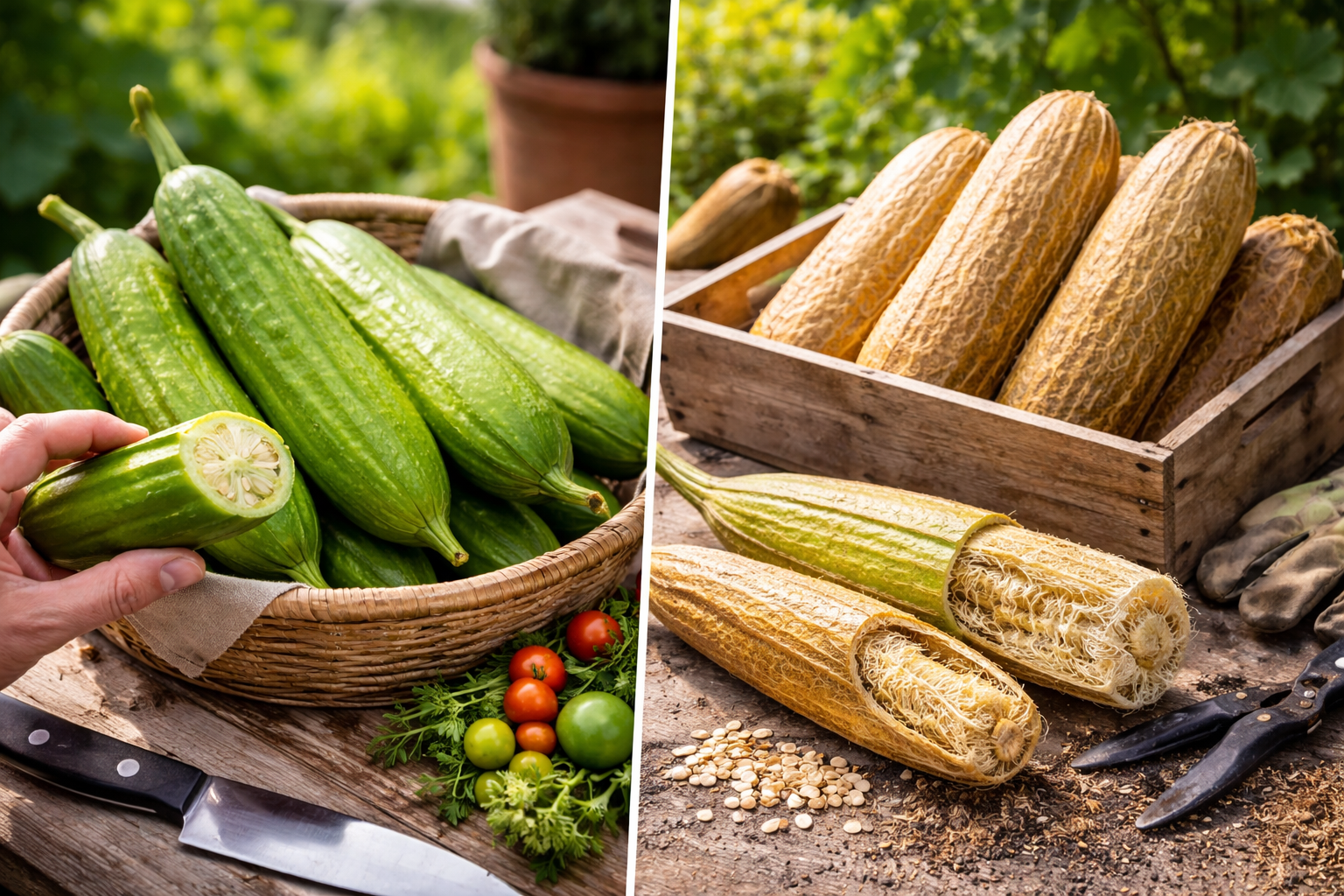
This part is more important than people expect because “harvest time” depends on what you want from the plant.
Pick young fruits if you want to eat them
Young luffa fruits are used like a vegetable in many kitchens. For that goal, you are harvesting before the interior fibers develop. A shorter season can still work for this use because you do not need the fruit to fully dry down.
Leave mature fruits if you want loofah sponges
For sponge use, the fruit needs time to mature, dry, and form that fibrous network inside. NC State Extension describes mature loofah harvest cues as tan, light, dry fruit with seeds that rattle inside. That is the finish line.
Sometimes gardeners hear advice to wait until after a light frost. That can be true for fruits that are already near maturity. It is not a rescue plan for green, immature gourds. Frost does not magically finish them. It usually just ends the conversation.
| Goal | Harvest stage | What matters most |
|---|---|---|
| Eating | Young, tender fruit | Texture and size before fibers toughen |
| Sponge use | Drying, lightweight, mature fruit | Enough late-season warmth to finish properly |
If frost is coming and the fruits are still green and heavy, be honest with yourself. Some are not going to make it. That is disappointing, but it is better than waiting for a miracle and missing the edible stage too.
Avoid these 7 mistakes and luffa gets much easier
Most luffa failures are not mysterious. They are usually the same few errors, just wearing different hats.
- Starting without checking season length. If your area runs short on warm days, the vine can grow well and still fail at sponge production.
- Sowing in cool conditions. Slow germination is often a heat problem, not a water problem.
- Keeping the seed mix too wet. That invites rot and delays sprouting.
- Transplanting too early. A “safe from frost” date is not the same as genuinely warm growing weather.
- Using a weak trellis. Luffa does not stay small. Build for the late-season plant, not the seedling.
- Overfeeding for leaf growth. A giant vine can still disappoint if fruiting gets pushed aside.
- Waiting too long to admit the crop will not finish. In a short season, young edible fruit is sometimes the smarter salvage plan.
Still in doubt? Here’s a fast guideline to save you some time.
- Long hot summer: direct sowing can work well
- Moderate summer: start indoors and protect the calendar
- Short summer: grow luffa only if the experiment sounds fun, or harvest young
- Weak trellis or limited sun: pick another crop
If that sounds a little blunt, good. Luffa rewards honesty more than optimism.
FAQ
How long does it take to grow luffa from seed to sponge?
Usually a long season is needed, often somewhere around 120 to 200 days depending on weather, variety, and when the plant really gets moving. If your season is on the shorter side, you may still grow the vine well but miss the stage where fruits dry into usable sponges.
Should I soak luffa seeds before planting?
Soaking can help, especially with older seed or seed that tends to germinate slowly. Still, warmth has a bigger effect. If seeds are sitting in cool conditions, soaking alone will not fix much.
Can I grow luffa in a pot?
Yes, but it works best with a large container, strong sun, even watering, and a serious support structure. Container growing raises the odds of water stress and stalled growth, so it is less forgiving than planting in the ground.

Michael Rowan is the founder and lead writer at The Garden Playbook. He has spent 10+ years growing plants across a range of settings — from indoor houseplants and container gardens to raised beds and in-ground plots — adapting methods to different light levels, seasons, and growing conditions.
Michael focuses on practical, experience-based guidance grounded in fundamentals: soil health, watering strategy, plant nutrition, pruning and propagation, and integrated pest management (IPM). His work aims to help readers diagnose common problems (such as yellowing leaves, stunted growth, or pest pressure) and apply straightforward solutions that are realistic for home gardeners.
At The Garden Playbook, Michael develops tutorials and plant guides using a consistent process: documenting real outcomes where possible, explaining the “why” behind each step, and verifying higher-risk topics (such as plant toxicity or pest treatment options) against reputable horticultural references.