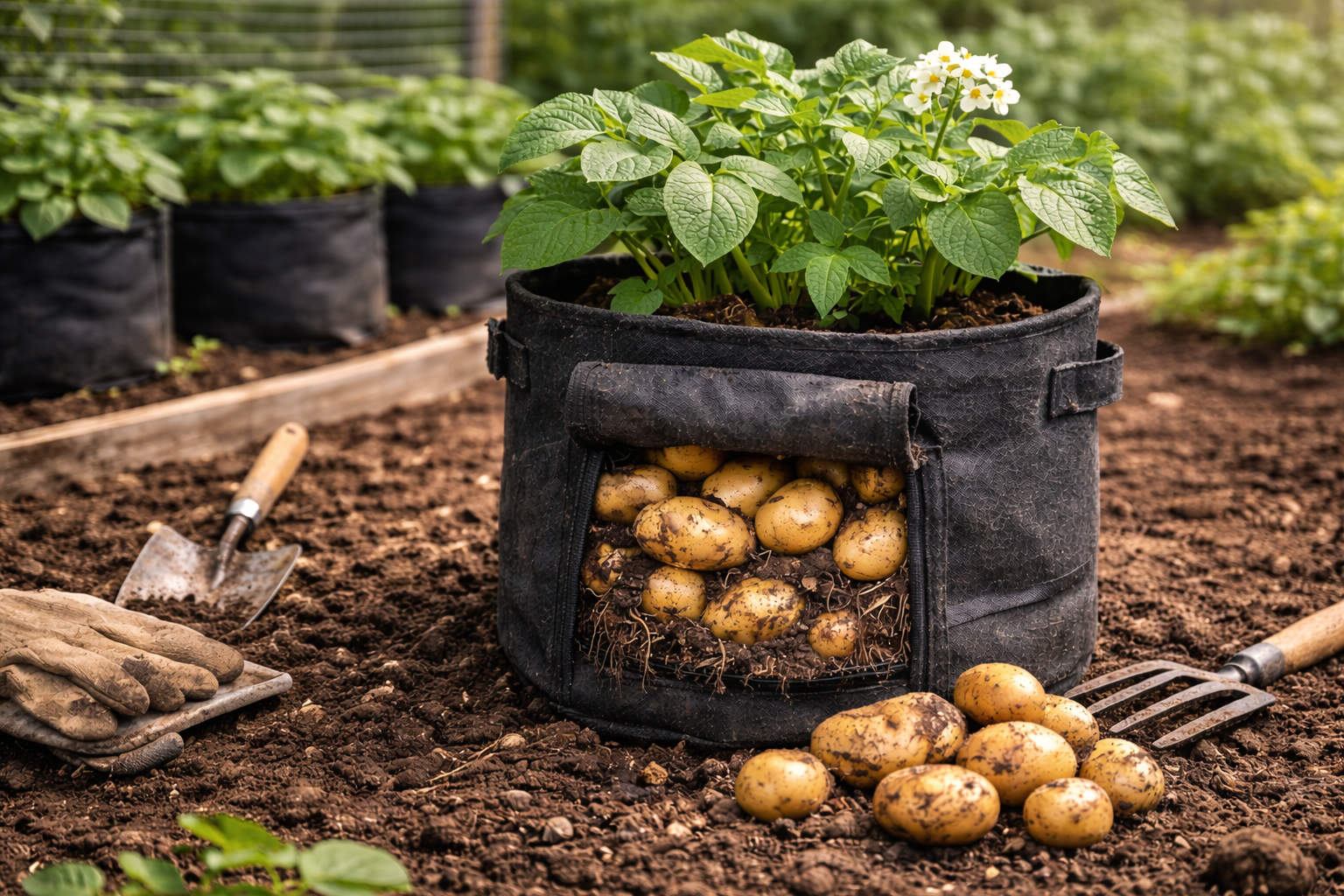
You can absolutely succeed with growing potatoes in a grow bag. The catch is that the usual advice is too tidy. It tells you to plant, hill, water, and harvest, which is fine on paper. In an actual bag on a patio, the crop lives or dies on three quieter choices: how big the bag is, how many seed potatoes you cram into it, and how hot that root zone gets by mid-afternoon.
I learned this the annoying way. One of my first bags gave me gorgeous top growth and a harvest that looked like I had planted marbles. The leaves were lush, the stems looked happy, and the bag still disappointed. The issue was not some mystery disease. I had crowded the bag, watered in bursts instead of steadily, and let the container bake against a warm wall.
So here is the plain answer up front: use certified seed potatoes, plant fewer pieces than most quick tutorials suggest, fill the bag in stages as stems grow, and keep the mix evenly damp without letting it stay cold and soggy. Do that, and grow bags are a very practical way to raise potatoes on a patio, balcony, or small yard.
The generic answer stops there.
This one won’t. Below, you’ll get the parts that actually change the outcome.
- How to match bag size to plant count so you don’t create a root traffic jam
- Which seed potatoes make sense for bags and which ones ask too much
- How to water a fabric bag without bouncing between drought and rot
- Why hilling works, where it stops helping, and how to avoid green tubers
- What to do when you get lots of leaves and a weak harvest
Start Here
| If this sounds like your setup | Most likely cause | What to do next |
|---|---|---|
| Big leafy plants, tiny potatoes | Crowding, heat, or uneven watering | Use fewer seed pieces per bag, keep moisture steady, move bags out of reflected heat |
| Seed pieces rotted before sprouting | Cold, wet mix and weak drainage | Plant later into warmer mix and use a loose container blend |
| Potatoes turned green near the surface | Not enough hilling or shallow planting depth | Add mix in stages and keep tubers fully covered from light |
| Bag dries out by afternoon | Small bag, fabric sides, and hot placement | Check moisture daily, shift to morning sun, use a larger bag next round |
Growing potatoes in a grow bag does work, but the bag setup decides whether it’s easy or annoying
Grow bags make sense for potatoes because they solve two annoying garden problems fast: bad native soil and messy harvests. Instead of trying to fix heavy ground, you start with a loose potting mix. Instead of digging blindly, you tip the bag and sort through the crop. That part is genuinely nice.
Extension gardeners at the University of New Hampshire describe containers as a practical option for potatoes, especially where soil space is tight or ground conditions are poor. That tracks with what home growers see. Bags are clean, manageable, and forgiving about soil quality.
They are not forgiving about neglect.
A grow bag has less buffering than a bed in the ground. It heats up faster. It dries faster. And when you overplant it, the roots and tubers compete in a tight box with nowhere else to go. If your bag gets those basics right, the crop feels easy. If not, the whole thing gets fiddly in a hurry.
Quick rule: If you want potatoes for eating fresh in summer, grow bags are a good fit. If your dream is a huge stash of giant baking potatoes, the method still works, but the bag has to be larger and the watering has to stay much steadier.
So yes, use a grow bag. Just treat it like a controlled little crop system, not a magic sack.
Choose the right bag size and plant count so you do not build a root traffic jam
This is the decision that changes the harvest more than anything else.
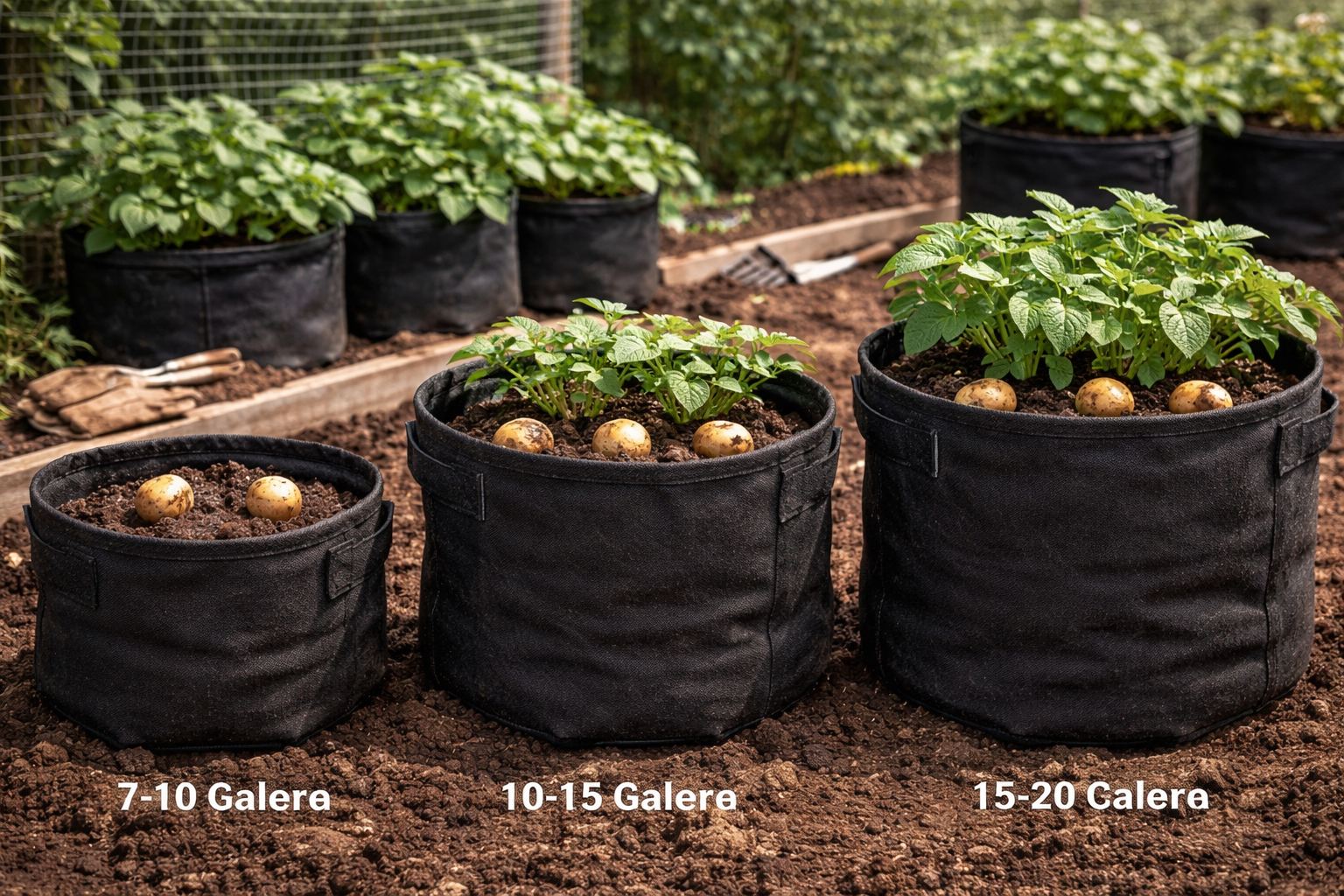
Many beginner guides toss out a loose number like “plant 3 to 5 potatoes per bag” as if bag volume does not matter. It matters a lot. Better Homes & Gardens notes that one potato plant needs about 2.5 gallons of growing space. That’s a much better starting point because it turns guesswork into a usable rule.
Use that rule like this:
| Bag size | Seed potatoes to plant | Best use |
|---|---|---|
| 7 to 10 gallons | 1 to 2 | Bigger tubers, easier moisture control |
| 10 to 15 gallons | 2 to 3 | Balanced yield for most home growers |
| 15 to 20 gallons | 3, sometimes 4 in cooler weather with smaller early varieties | Higher yield without squeezing plants too hard |
If you want bigger potatoes, plant fewer seed pieces. If you want a pile of smaller new potatoes, you can plant a bit tighter. That’s the tradeoff. More plants do not mean a free extra harvest. They often mean more competition and smaller tubers.
Bag shape matters too. A good potato grow bag needs three things: enough depth to hill into, enough width that plants are not stacked on top of each other, and drainage that never stalls out. Handles are nice. A roll-down top is nice. Neither one fixes a bag that is just too small.
If container sizing still feels slippery, this breakdown of pots that hold moisture better helps explain the same basic idea: extra volume smooths out water swings and gives roots more room to work.
What usually goes wrong: A gardener buys a compact bag because it looks manageable, then plants four seed potatoes because the bag still looks roomy at planting time. Six weeks later the top looks full and the harvest looks skimpy. The bag was crowded from day one.
Pick seed potatoes that fit the bag, the season, and what you actually want to eat
The easiest potatoes to grow in bags are not always the ones people picture first.
Gardeners often picture large russet-style storage potatoes. Those can work, but bags usually shine with first earlies, second earlies, and compact varieties that produce nicely before summer heat builds. University of Maryland Extension recommends certified seed potatoes rather than grocery potatoes because grocery tubers can carry disease and are often treated for storage, not planting.
That advice is not just technical fussiness. Certified seed potatoes start cleaner. They also spare you the weird guessing game of whether a supermarket potato is sluggish because it is dormant, old, chemically treated, or just not suited to your season.
Choose your variety by goal, not by habit.
- If you want quick, tender new potatoes, go for early varieties.
- If you want a bigger total crop and have a long, mild season, midseason types can work well.
- If you want large storage potatoes, use a bigger bag and be ready to manage heat and watering more closely.
Chitting helps, especially in cooler climates. That just means letting seed potatoes sprout in bright, cool conditions before planting. It gives the crop a head start. I don’t treat it like sacred ritual, but when spring is slow, it does shave off some dead time at the start.
Practical pick: For a first try, choose certified seed potatoes sold as early or second-early types. They are usually a better match for bags than long-season maincrop potatoes.
Build the soil mix and planting depth so the bag holds moisture without turning swampy
Potatoes like a loose, airy root zone. A bag filled with heavy backyard soil often turns into a dense, wet block near the bottom and a dry crust near the top. That is a rotten combo, literally.
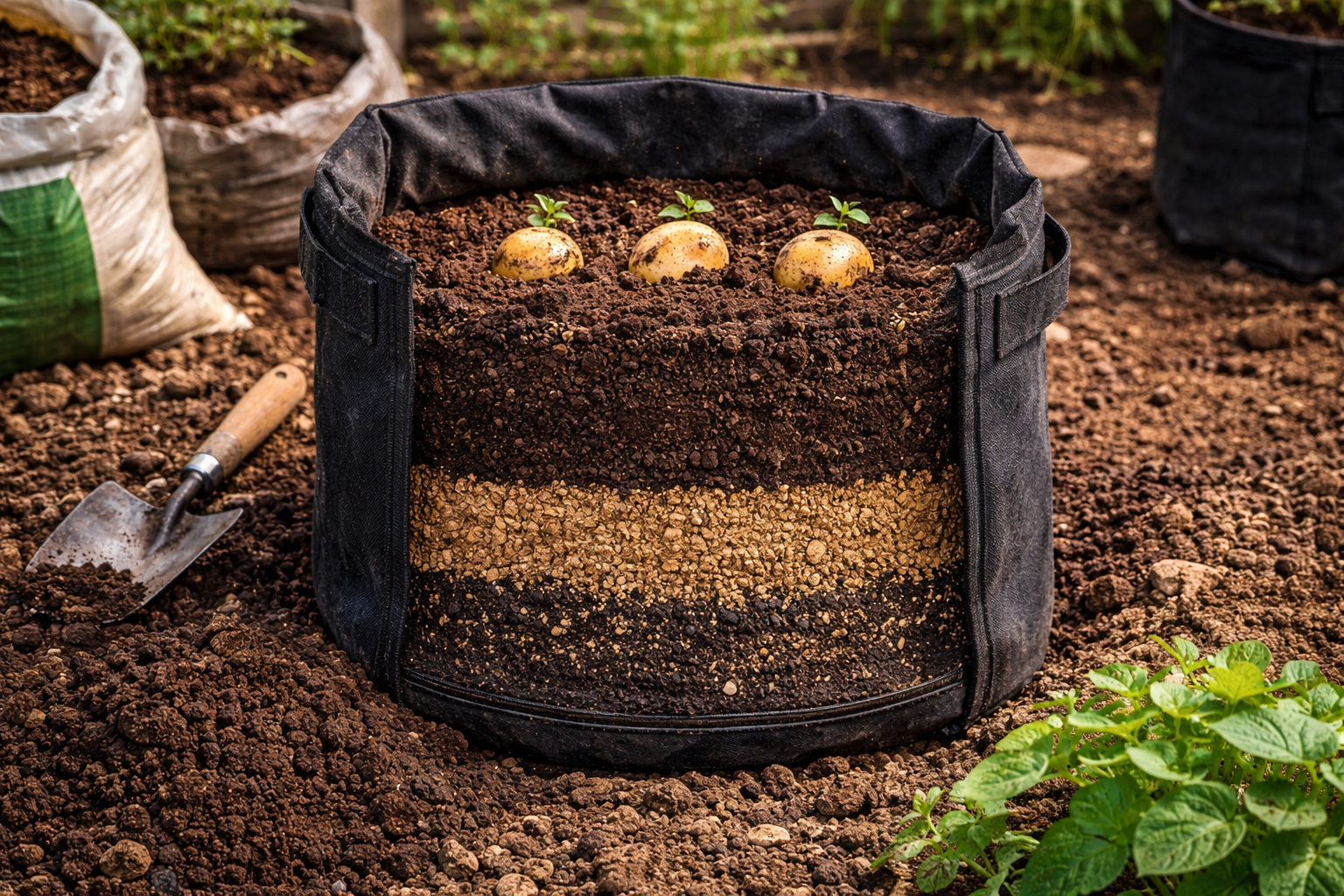
Start with a quality container mix and blend in compost. Not all compost-heavy mixes behave the same, so don’t chase one precious recipe. What matters is the feel. You want a mix that crumbles in your hand, drains well, and still holds enough water that the bag is not bone-dry a few hours after watering.
The planting depth is simple. Put a shallow base layer in the bottom, usually around 3 to 4 inches. Set the seed potatoes on top with the eyes facing up, then cover with another 2 to 4 inches of mix. Leave headroom so you can add more later as the stems rise.
The Royal Horticultural Society advises “earthing up” potatoes as they grow, which only works if you begin low enough in the container to keep adding material. Bags are perfect for this because you can roll the top down at planting time and unroll it as the crop grows.
Potatoes also like slightly acidic conditions. That is one reason they often do better in container mixes than in alkaline backyard soil. Maryland Extension notes that a lower pH can reduce common scab pressure, which is useful if scabby skins have been a recurring problem in the ground.
For the container-mix side of the equation, this guide on potting soil that actually works in containers explains the same moisture-versus-drainage balancing act that matters here too.
Note: Avoid using straight garden soil in a fabric bag. It settles, compacts, and holds water unevenly. Potatoes hate that kind of cramped root zone.
Plant and hill in stages so the stems keep making tubers instead of green surprises
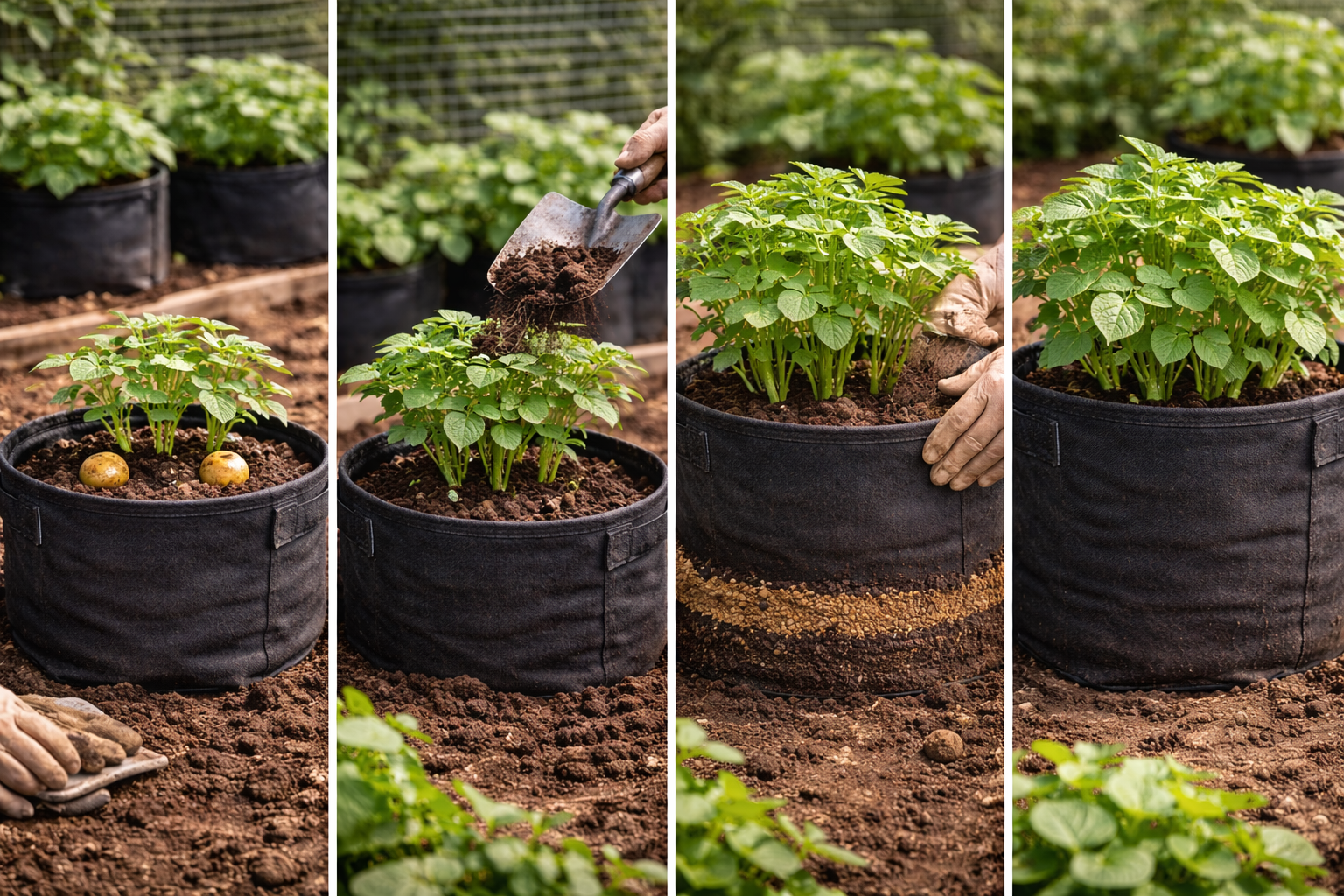
Hilling is one of those gardening jobs that sounds fancier than it is. You are just adding more mix around the stems as they grow.
Here is the clean sequence:
Roll the bag down and start low.
That gives you room to keep adding mix later.
Plant with space around each piece.
Do not cluster them in the middle. Spread them so the stems won’t emerge as one tangled bunch.
Add mix as the shoots rise.
Once stems reach roughly 6 to 9 inches tall, add 3 to 4 inches of mix and leave the upper leaves exposed. Repeat that process until the bag is close to full.
Stop before you bury the whole plant.
You’re trying to cover the lower stem, not smother the crop.
The point of hilling is twofold. It protects developing tubers from light, which prevents greening, and it gives the plant more buried stem where tubers can form. That does help. But some bag-growing claims push this into fantasy, especially the old “potato tower” idea where every added layer is supposed to stack up a huge vertical crop. Maryland Extension says bluntly that potato towers generally do not work as advertised. That’s useful because it clears out a lot of internet fluff.
Light exposure is not just cosmetic. The USDA notes that green potatoes can contain higher levels of glycoalkaloids such as solanine, so any tubers exposed to light and turning green should not be treated as normal eating potatoes.
Small but useful habit: Every time you water, glance at the surface and check whether any tubers are peeking through. Catching exposed potatoes early is easier than sorting out green ones later.
Water and feed for steady growth, because bag-grown potatoes hate drama
This crop dislikes two things at once: long dry spells and waterlogged roots. Bags make both mistakes easy.
Maryland Extension recommends keeping potatoes consistently moist. The Royal Horticultural Society adds a useful detail: container foliage can act like an umbrella, so even rainy weather does not mean the compost underneath is getting what it needs. That’s one of those boring facts that saves crops.
Check the top inch or two with your finger. If it is dry, water. If the top looks dry but the lower mix still feels cool and damp, wait a bit. In warm weather, fabric bags often need checking every day. Not always watering every day, but checking, yes.
Morning is usually the easiest time to stay ahead of trouble. The bag starts the day charged with water, and the foliage dries off fast after any splashing. Afternoon rescue watering works in a pinch, though it often means you’ve already let the crop get stressed.
Feeding matters too because container mixes do not behave like rich garden soil for a whole season. South Dakota State University Extension notes that potatoes in containers need added nutrients over time. You do not need to get weirdly technical here. Just avoid blasting the crop with high nitrogen. That often buys you lovely leaf growth and not much tuber payoff.
Fast moisture check
- Top is dry, bag feels light: water now
- Top is dry, lower mix still cool: check again later
- Leaves droop in heat but recover by evening: heat stress or brief thirst
- Leaves stay limp and mix feels wet: back off watering and check drainage
A light mulch on top of the bag can help. So can pulling the bag slightly away from heat-radiating walls. Little changes like that matter more than people think. A bag on open paving and a bag beside a pale stucco wall can behave like two different climates. Bit daft, but true.
Manage the two big constraints most guides gloss over: heat and bag placement
This is the section many growers need before they need another planting tutorial.
Maryland Extension states that soil temperatures above 80 degrees Fahrenheit can inhibit tuber development. South Dakota State University Extension makes the same point from the container side and advises keeping roots as cool as possible. That explains a very common grow-bag disappointment: healthy-looking tops with a weak crop underneath.
The plant can look fine and still be having a bad season below the surface.
If you garden in a cool or mild climate, full sun is often the right call. If your summers run hot, especially on a balcony or hard patio, all-day blazing sun can be too much for the bag even if the foliage can tolerate it. In that case, morning sun and light afternoon shade often beat heroic all-day exposure.
Placement matters more than the label on the bag. Dark paving, brick walls, black railings, and corners with trapped heat can raise the root-zone temperature much faster than people expect. A bag that sits two feet away in moving air can do better.
If this, check that: If the foliage looks decent but the harvest is poor, check heat before you blame fertilizer. Root-zone heat quietly wrecks tuber set.
If you are gardening through a hot summer, don’t be shy about making the setup less “ideal” on paper and more workable in practice. Slightly less sun with cooler roots is often the better bargain.
Harvest at the right moment for the kind of potatoes you want
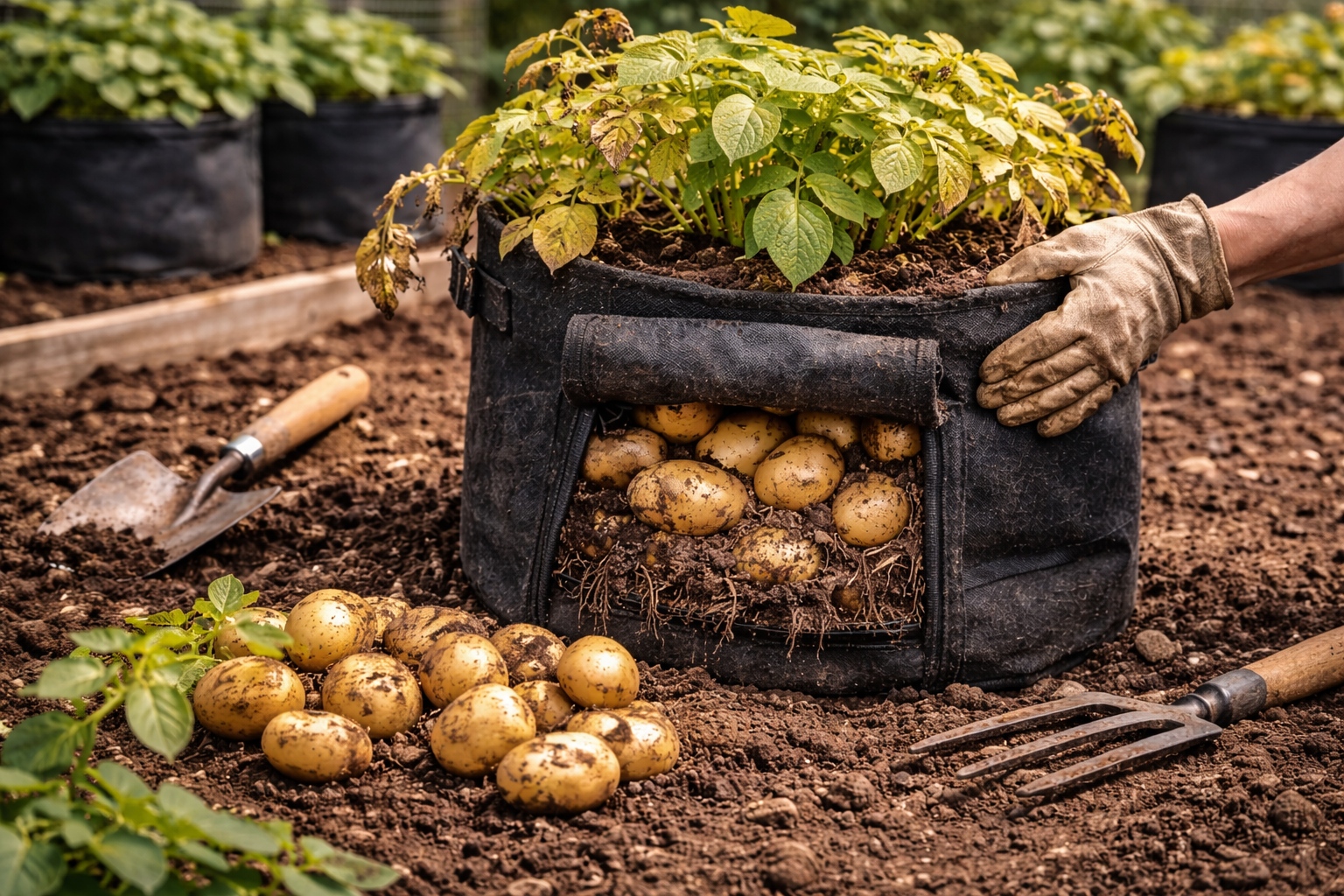
Harvest timing is less about one magic date and more about what sort of potato you want to eat.
If you want small, tender new potatoes, start checking once the plants flower or once the plants are far enough along for the variety’s early window. Maryland Extension notes that “new” potatoes can be ready around 6 to 8 weeks after planting. They will have delicate skins, and that’s part of the point.
If you want mature potatoes for keeping, wait for the tops to yellow and die back. Then give the skins time to firm up before long storage. Grow bags make this especially easy because you can tip the contents out, pick the mature tubers, and sort damaged ones right away.
I like to do one exploratory check before the full harvest. Just dig gently down one edge with your hand. If the potatoes are still tiny and the vines are actively growing, give them more time. If the skins rub off too easily, they are still on the young side for storage.
Do not store green potatoes or badly damaged tubers with the rest. Eat the sound young ones soon. Cure the mature, uninjured potatoes if you plan to keep them for a while.
Harvest guide
- For new potatoes: check early, around flowering or the early harvest window
- For storage potatoes: wait for dieback and firmer skins
- If in doubt: inspect one edge of the bag before dumping the whole thing
Fix the most common grow bag potato problems before you blame your luck
Most bad results in bags are explainable. That’s good news because it means the next round usually improves fast.
Lots of leaves, tiny potatoes.
This is usually crowding, heat, excess nitrogen, or patchy watering. Start by reducing plant count per bag. Then look at placement. A lush top does not mean the tubers were comfortable below.
Seed pieces rotted before they ever got going.
That points to cold, soggy mix or weak drainage. Plant into a warmer setup and use a looser blend next time.
Green potatoes near the surface.
The stems were not hilled enough or the mix settled lower than expected. Add more material earlier next time and check the bag surface after watering.
Cracked or rough potatoes.
Water swings are a common cause. The crop dries down, then gets soaked. Tubers respond unevenly.
The bag dries out every afternoon.
That is often a volume and placement problem, not just a watering problem. A slightly larger bag in a cooler position can be a much cleaner fix than standing over the crop with a watering can twice a day forever.
What not to do
- Don’t crowd a small bag because it looks roomy at planting time
- Don’t use dense backyard soil and expect a loose root run
- Don’t let tubers sit exposed to light
- Don’t read healthy foliage as proof that yield is fine underground
- Don’t treat grocery potatoes as the best planting stock
Once you see those patterns, the whole crop gets easier to manage. Potatoes are not hard in bags. They are just honest. They show you exactly what the setup allowed.
FAQ
Are grow bags better than pots for potatoes?
For many home growers, yes. Fabric grow bags are lighter, easier to store, and simple to tip out at harvest. Pots still work well, especially rigid ones with good volume, but bags usually make hilling and harvesting less awkward.
Can you grow potatoes in a compost bag instead of a fabric grow bag?
Yes, people do it, but drainage has to be sorted out properly and the bag can be flimsier and harder to manage over a full season. A purpose-made fabric bag is usually easier to water, hill, and move.
How often should you water potatoes in a grow bag?
Check daily in warm weather. Water when the top inch or two is dry and the bag feels lighter. Small bags and hot patios dry much faster than larger bags in open air, so the schedule changes with the setup.

Michael Rowan is the founder and lead writer at The Garden Playbook. He has spent 10+ years growing plants across a range of settings — from indoor houseplants and container gardens to raised beds and in-ground plots — adapting methods to different light levels, seasons, and growing conditions.
Michael focuses on practical, experience-based guidance grounded in fundamentals: soil health, watering strategy, plant nutrition, pruning and propagation, and integrated pest management (IPM). His work aims to help readers diagnose common problems (such as yellowing leaves, stunted growth, or pest pressure) and apply straightforward solutions that are realistic for home gardeners.
At The Garden Playbook, Michael develops tutorials and plant guides using a consistent process: documenting real outcomes where possible, explaining the “why” behind each step, and verifying higher-risk topics (such as plant toxicity or pest treatment options) against reputable horticultural references.