You buy a basil plant because it looks easy. Then it lands in a little pot on the patio or kitchen sill, and a week later the leaves are drooping by lunch, the stems are crowded, and the whole thing feels fussier than basil has any right to be.
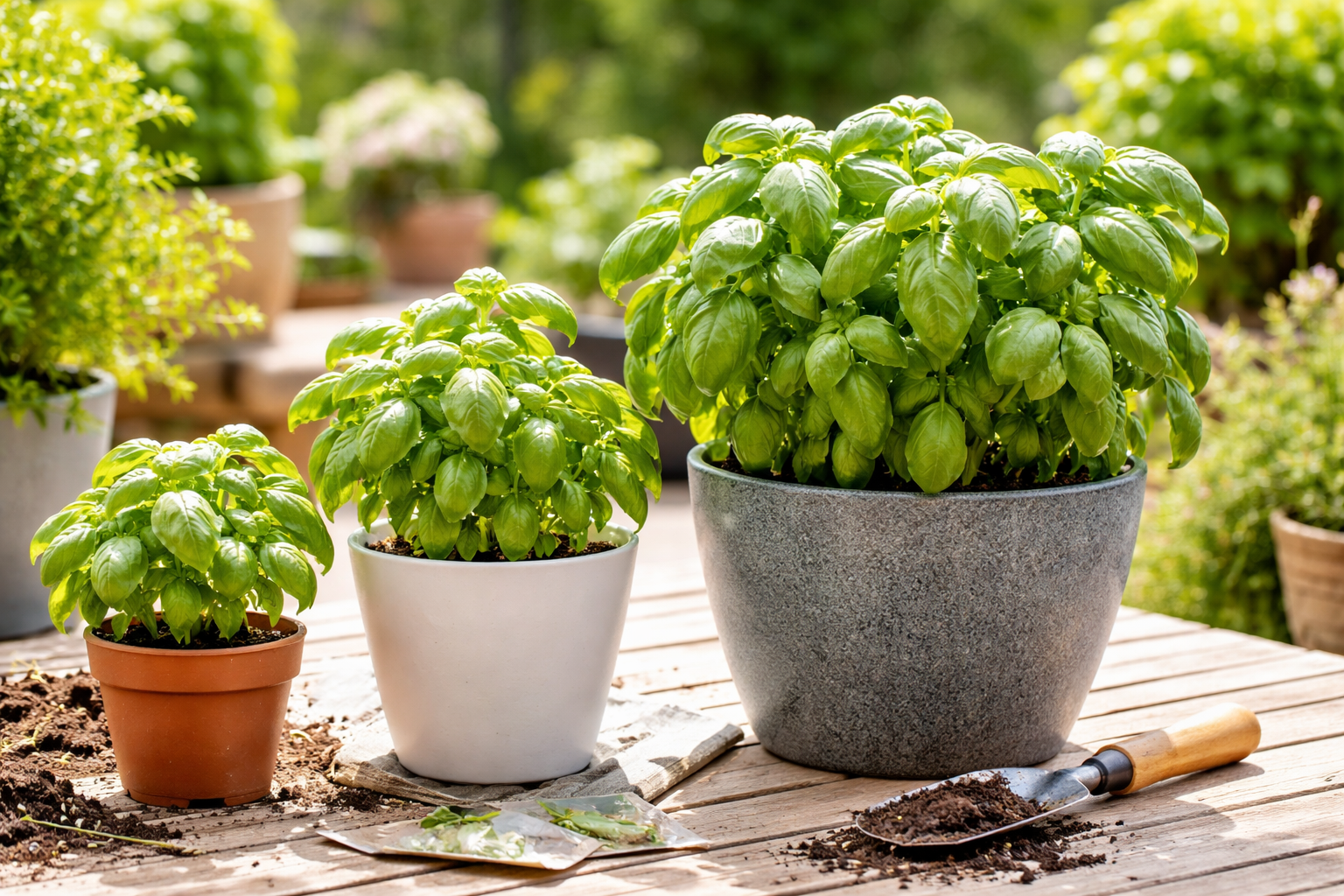
So, how big of a pot does basil need? For one basil plant, an 8-inch pot is a solid working minimum. A 10-inch pot is usually the easier long-term choice because it gives the roots more room and gives you a bigger buffer before the soil swings from dry to soggy.
That second part is what most quick answers skip. A basil plant can live in a smaller pot for a while. That does not mean it is the size you want if you hope for steady growth, fewer watering panics, and enough leaves to actually use.
- How to pick the right basil pot size for one plant, several plants, or an overcrowded grocery-store basil
- Why width usually matters more than people think
- What pot material changes the watering rhythm
- How to spot when basil is cramped, thirsty, or just planted badly
- Which basil setups work on a windowsill, balcony, or hot patio
Start Here
| Your setup | Fast pot rule | What to watch |
|---|---|---|
| One young basil plant | 8 inches wide works | Watering gets touchy in heat |
| One basil plant for a full season | 10 inches wide is easier | Less midday wilt, steadier growth |
| Grocery-store basil clump | Divide it, then repot | Crowding is the usual problem |
| Hot balcony or sunny patio | Lean bigger, not smaller | Tiny pots dry shockingly fast |
| Indoor windowsill basil | 8 inches is often plenty | Light can limit growth before pot size does |
Fast rule: if you want less babysitting, go one pot size up.
The short answer: basil usually does best in an 8- to 10-inch pot
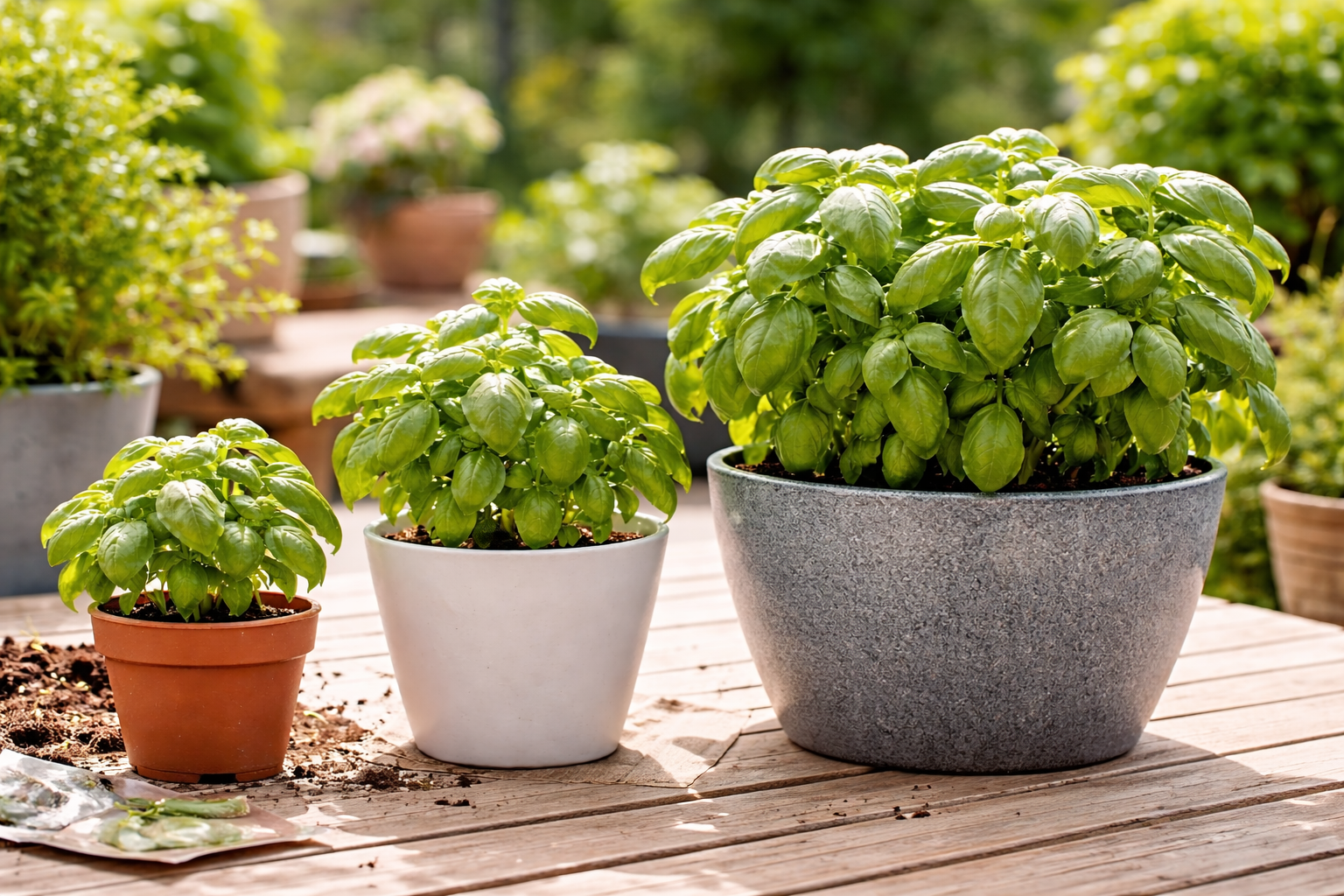
If you want the useful baseline and not the cute-but-annoying version, give one basil plant an 8-inch pot at minimum. If you want a fuller plant that is easier to keep going through warm weather, move up to a 10-inch-wide pot.
That size range lines up with how basil actually grows in containers. University of Maryland Extension notes that container crops need enough room to reach full size, not just enough room to survive. And UF/IFAS points out that basil grows well in containers in warm conditions, which is exactly where undersized pots start acting like troublemakers.
Here’s the plain breakdown:
- 4-inch pot: starter only
- 6-inch pot: short-term, compact basil, or indoor stopgap
- 8-inch pot: workable for one basil plant
- 10-inch pot: better for a season-long plant with steadier watering
I have kept basil in an 8-inch pot and had it do fine. I have also watched that same size get a bit twitchy in midsummer, especially in terracotta. A 10-inch pot usually feels less like walking a tightrope.
Note: “Big enough to live in” and “big enough to grow happily in” are not the same thing. Basil exposes that difference fast.
Match the pot to the basil you actually have
A lot of pot-size advice goes sideways because people are not talking about the same basil plant.
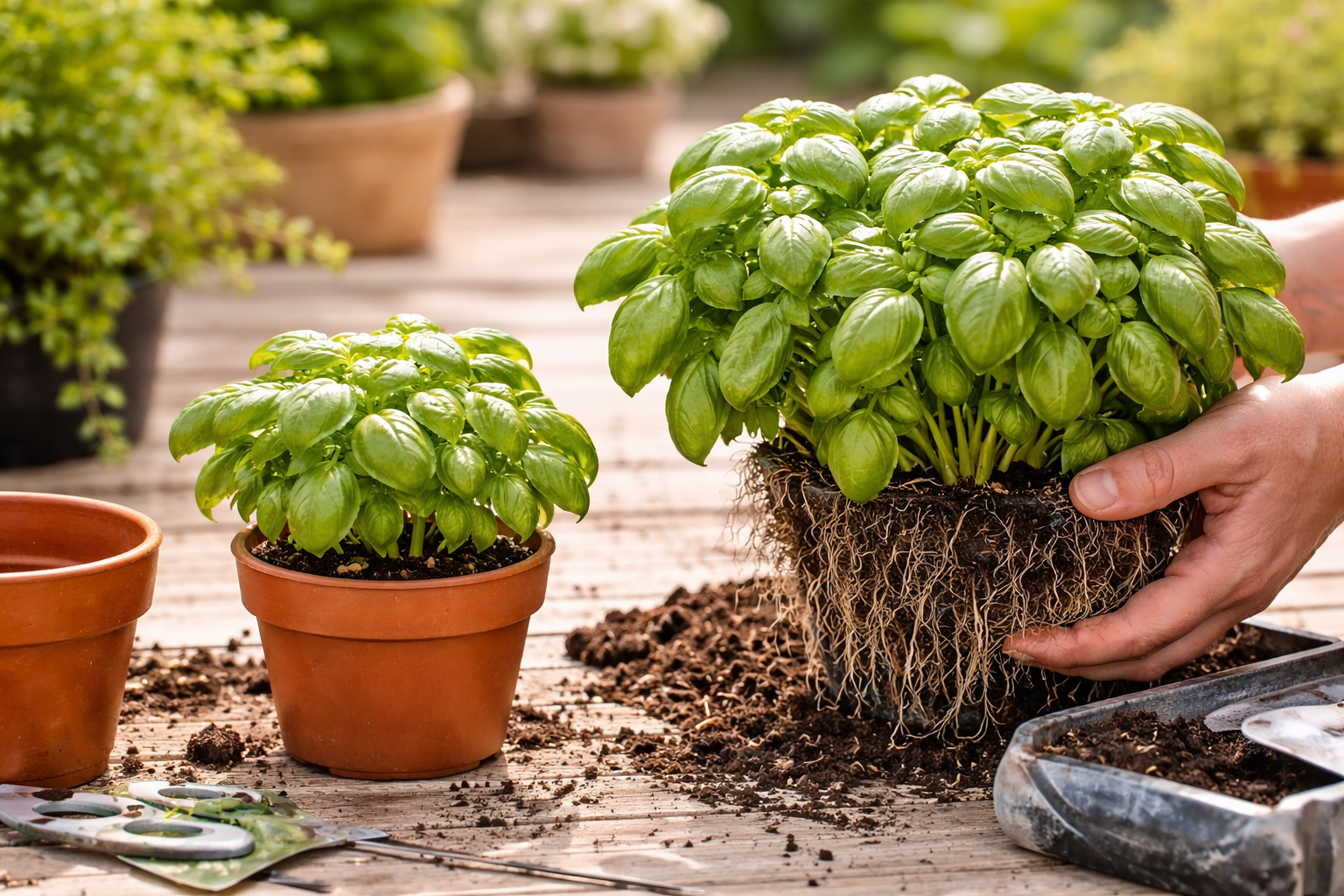
A single nursery basil in a small starter pot is one thing. A grocery-store basil is often several seedlings jammed together so it looks lush on the shelf. Those stems are competing for root space, light, water, and air from day one.
That is why the same “8-inch pot” answer can feel right for one reader and laughably wrong for another.
Use these quick fits:
- One nursery basil plant: 8 to 10 inches wide
- Seed-grown single plant: 8 inches is a fair target, then judge growth and watering
- Compact globe basil: 6 to 8 inches can work longer
- Large Genovese basil: 10 inches makes life easier
- Grocery-store basil clump: divide into smaller groups or give a much wider planter and honest spacing
University of Minnesota Extension says basil needs six to eight hours of bright light and well-drained soil. That sounds like light advice, but it matters here too. Crowded basil blocks its own airflow and light, so a packed root zone quickly turns into weak, floppy top growth.
If you bought supermarket basil, do not assume more stems means a bushier plant. It often means several hungry plants sharing one lunch.
If you want a related read on mature size, this basil size guide is the right next step.
Use this fit test to choose the right pot size fast
You do not need a formula. You need a few good if/then rules.
If you are growing one basil plant for regular cooking and you are pretty good about checking water, start with an 8-inch pot. If you want fewer watering emergencies, more leaf production, or you grow on a bright patio that gets hot and breezy, jump to 10 inches.
If you miss a day now and then, go bigger. If the pot sits in blazing afternoon sun, go bigger. If you want enough basil for pesto instead of a garnish here and there, go bigger.
That is the pattern.
- If you want a simple indoor herb: 8 inches is usually enough
- If you want an outdoor basil that stays productive: 10 inches is the safer pick
- If you want two or more plants together: use a wider planter and keep real spacing between plants
- If you are growing in summer heat: pot size becomes a watering decision, not just a root-space decision
Container gardening guides from Maryland Extension also make the general point that plants in containers dry faster than those in the ground, and smaller containers dry fastest of all. That is not basil-specific trivia. That is the reason a pot that looked perfectly fine in spring starts feeling mean by July.
Still in doubt? Here’s a fast guideline to save you some time.
- If basil is for looks and light snipping, 8 inches is fine.
- If basil is for regular harvests, 10 inches is smarter.
- If your weather runs hot or windy, the smallest workable pot is rarely the best pot.
Choose width, depth, and material without making basil harder to manage
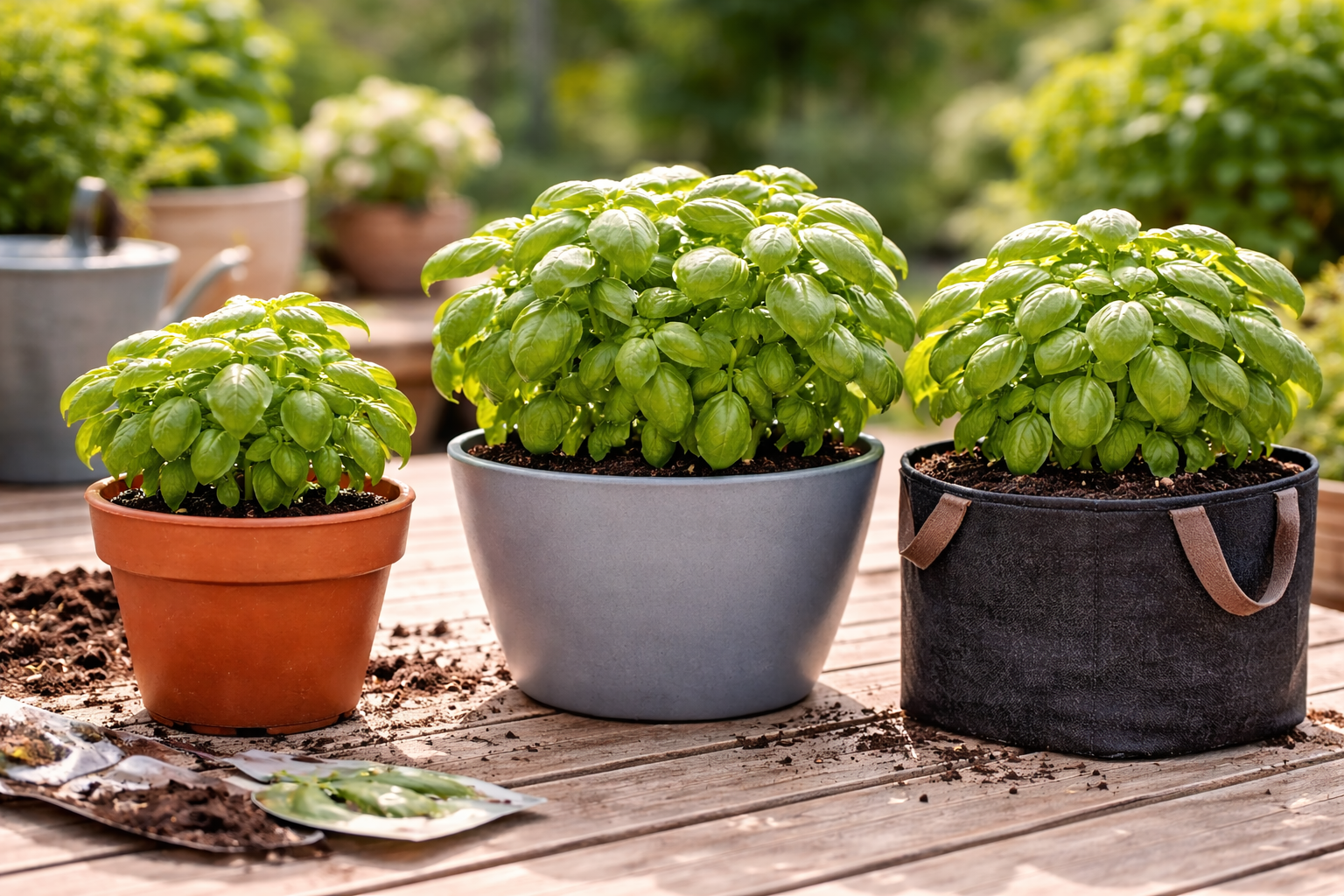
People fixate on depth, but basil is often happier when you also respect width. A wider pot holds a broader root zone and a steadier pocket of soil. That usually means less violent drying between waterings.
For one basil plant, around 6 to 8 inches of depth is usually enough. Width is where the real comfort margin shows up. An 8-inch-wide pot works. A 10-inch-wide pot often feels calmer.
Then there is pot material, which changes the rhythm more than most care guides let on.
- Terracotta: breathes well and looks nice, but it dries out faster
- Plastic or resin: holds water longer, which is handy for basil
- Fabric grow bags: drain well, but they can dry fast in heat and wind
Unglazed clay pots are often suggested for herbs in general. University of Minnesota’s herb guidance mentions clay pots for home herb growing, and they can work beautifully. But basil is not rosemary. Basil likes even soil moisture far more than droughty swings, so tiny clay pots in strong summer sun can get irritating in a hurry.
If you tend to forget a watering, plastic is usually easier. If you grow indoors in bright light and hate soggy soil, terracotta can be a good fit. If you use a decorative outer pot, make sure the inner pot still has real drainage holes. That part is not negotiable.
Pro tip: If the container looks like it belongs to a succulent collection and you want enough basil for pasta night, it is probably too small.
If you want a deeper breakdown of materials and setup, this guide to the best pot for basil goes into the tradeoffs.
Plant basil the right way so the pot size actually works
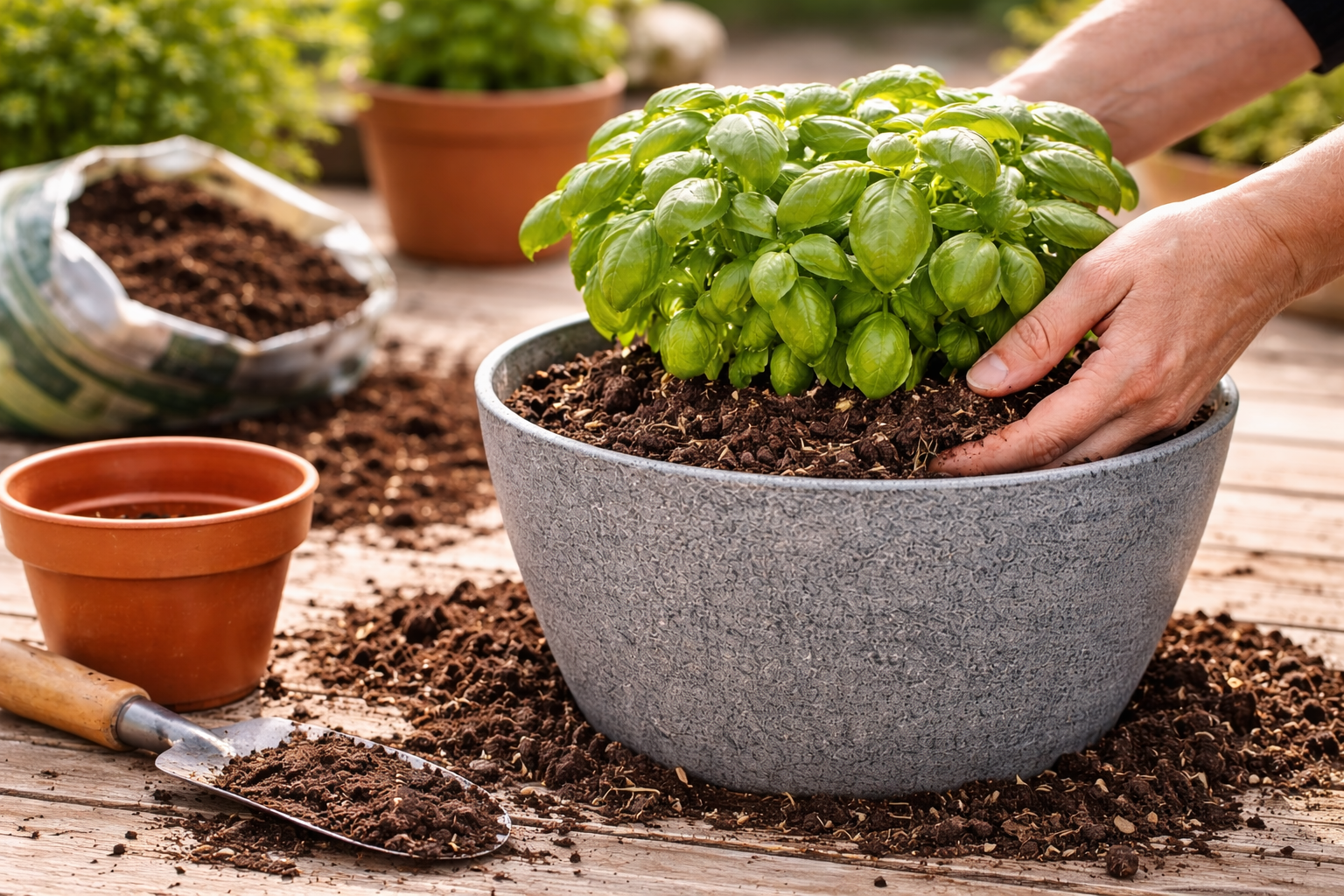
A good pot can still fail if the setup is sloppy. I have seen basil sit in the “right” size pot and still sulk because the root ball stayed dry in the center or the soil packed down like wet cake.
Use a container potting mix, not garden soil. The container mix should drain well but still hold enough water that the plant is not bone dry a few hours later. Then plant basil at the same depth it was already growing. Burying stems too deep invites rot, and planting too high leaves roots exposed.
Here is the clean setup sequence:
- Pick drainage that works. One or more open drainage holes at the bottom.
- Fill with potting mix that stays airy. Do not pack it down hard.
- Set the plant at the same soil line. Match the original depth.
- Water thoroughly. Wet the whole root ball, not just the surface.
- Recheck after a day or two. Fresh potting mix and root balls sometimes dry unevenly at first.
Maryland Extension’s container planting guidance also warns against cramming media too tightly into the pot. That small detail matters more than it sounds like it should. Basil roots want air as much as they want water.
If you are transplanting grocery-store basil, separate it gently into smaller groups first. Trying to preserve the crowded grocery-store root mass as one giant clump usually gives you a cramped pot again, just in a prettier container.
What to check first: After transplanting, poke a finger below the top layer the next day. Basil often looks watered because the surface is dark, while the old root plug underneath is still dry. Sneaky little problem.
Water and prune for a full plant, not a floppy one
Basil likes evenly damp soil, not a swamp and not a desert. That sounds simple. In a pot, it is where most of the drama starts.
University of Minnesota’s container watering guidance explains that repeated watering and potting media type change how containers behave through the season. For basil, the practical takeaway is this: small pots need checking far more often, and a fast-draining setup in hot weather can push you into daily watering.
If your basil droops by late afternoon and perks back up after watering, the pot may be undersized, the material may be drying too fast, or the plant may simply have outgrown the setup. If the soil stays wet for ages and lower leaves yellow, the issue is usually poor drainage, overwatering, or a potting mix that holds too much water.
Then there is pruning. Basil gets fuller when you pinch or harvest from the top, above a pair of leaves. Letting one stem race upward gives you a lanky plant that looks bigger than it is. It is all stem, not much dinner.
| What you see | Most likely cause | Next move |
|---|---|---|
| Wilts by afternoon | Small pot, heat, or fast-drying material | Water deeply and consider a larger pot |
| Lower leaves yellow | Waterlogged root zone | Check drainage and soil texture |
| Tall, sparse growth | Not enough pinching or weak light | Harvest tips and improve light |
| Plant stays small | Crowded roots or crowded stems | Repot or divide plants |
Avoid the 5 basil pot mistakes that quietly wreck growth
Most basil problems in containers are not mysterious. They are a stack of small choices that went bad together.
1. Keeping basil in the nursery pot too long.
That little starter pot is for transport and early growth. Leave basil there too long and watering turns into a daily guessing game.
2. Treating grocery-store basil like one plant.
It looks generous in the store because several seedlings are packed together. In a home setup, that same crowding usually means weak stems and constant thirst.
3. Using a pot with no drainage.
Basil likes well-drained soil. UF/IFAS says so plainly, and container culture makes it even more obvious. Decorative pots without drainage are how roots end up sitting wet.
4. Mixing basil with the wrong companions in a small planter.
A mixed herb container can work. Stuffing basil in with dry-loving herbs in a tight pot usually does not. Basil wants more regular water than rosemary and many Mediterranean herbs.
5. Choosing the smallest possible pot because it looks tidy.
This is the big one. Small pots fit windowsills and tabletops nicely, but they often make basil harder than it needs to be.
Small correction that saves headaches: If basil looks thirsty all the time, do not rush to fertilizer first. Check pot size, crowding, and drainage before you add food.
Pick the right pot for these common basil scenarios
This is where the answer gets practical.
Windowsill basil for light harvesting
An 8-inch pot is often enough indoors. The bigger limit inside is often light, not root room. If your window is weak, a giant pot will not fix stretched growth. If you are not sure your spot gets enough light, this window guide helps sort that out quickly.
Patio basil in summer heat
Go to 10 inches. Hot patios and balconies turn small pots into fast-drying little ovens. A bigger container buys you time, and time is half the battle with basil in midsummer.
Basil for pesto, not just garnish
Pick a 10-inch pot, keep one strong plant in it, and prune often. If you want frequent harvests, the goal is not bare-minimum survival. The goal is steady regrowth.
Mixed herb planter
Use caution. Basil pairs better with herbs that do not hate regular watering. In cramped containers, mixed herb planters often look better on day one than day forty.
Compact basil varieties
Small globe basil and other compact forms can stay comfortable in a smaller pot for longer. A 6- to 8-inch pot can be enough if light is good and you keep the watering steady.
The tradeoff is simple. Smaller pots fit better. Larger pots forgive more.
Know when to repot and when to just start fresh
Basil grows fast, and it is an annual. That changes the repotting math.
If the plant is healthy but drying out too quickly, roots are circling hard, or several stems are competing in one cramped pot, repotting makes sense. Go up one size, not three. A giant jump can leave too much cold, wet mix around a modest root system.
If the plant is old, woody, patchy, or clearly disease-prone, it is often smarter to start over. Basil is cheap from seed, quick from cuttings, and not a plant you need to drag through a miserable setup out of loyalty.
Maryland Extension’s home basil guidance notes that basil can run into disease trouble, including downy mildew. If the plant is badly affected, tossing it and restarting is often the cleaner move than trying to “save” a tired plant that is already on the slide.
Use this simple repot rule:
- Repot if the plant is healthy and obviously constrained
- Restart if the plant is old, weak, or already going downhill for reasons a bigger pot will not fix
That is the useful line. Not every struggling basil needs a larger container. Some basil just needs a fresh start.
FAQ
Can basil grow well in a 6-inch pot?
Yes, for a while. It is workable for a young plant, a compact variety, or a small indoor setup. For a fuller plant that stays easier to manage, 8 to 10 inches is better.
How many basil plants can I grow in one container?
One plant per 8- to 10-inch pot is the cleanest rule. If you grow several together, use a wider planter and give them real spacing. Crowding is where a lot of container basil goes wrong.
Does basil do better in terracotta or plastic?
Plastic is usually easier if you want steadier watering. Terracotta works, but it dries faster. In hot sun, that can turn a fine basil setup into a fussy one.

Michael Rowan is the founder and lead writer at The Garden Playbook. He has spent 10+ years growing plants across a range of settings — from indoor houseplants and container gardens to raised beds and in-ground plots — adapting methods to different light levels, seasons, and growing conditions.
Michael focuses on practical, experience-based guidance grounded in fundamentals: soil health, watering strategy, plant nutrition, pruning and propagation, and integrated pest management (IPM). His work aims to help readers diagnose common problems (such as yellowing leaves, stunted growth, or pest pressure) and apply straightforward solutions that are realistic for home gardeners.
At The Garden Playbook, Michael develops tutorials and plant guides using a consistent process: documenting real outcomes where possible, explaining the “why” behind each step, and verifying higher-risk topics (such as plant toxicity or pest treatment options) against reputable horticultural references.