
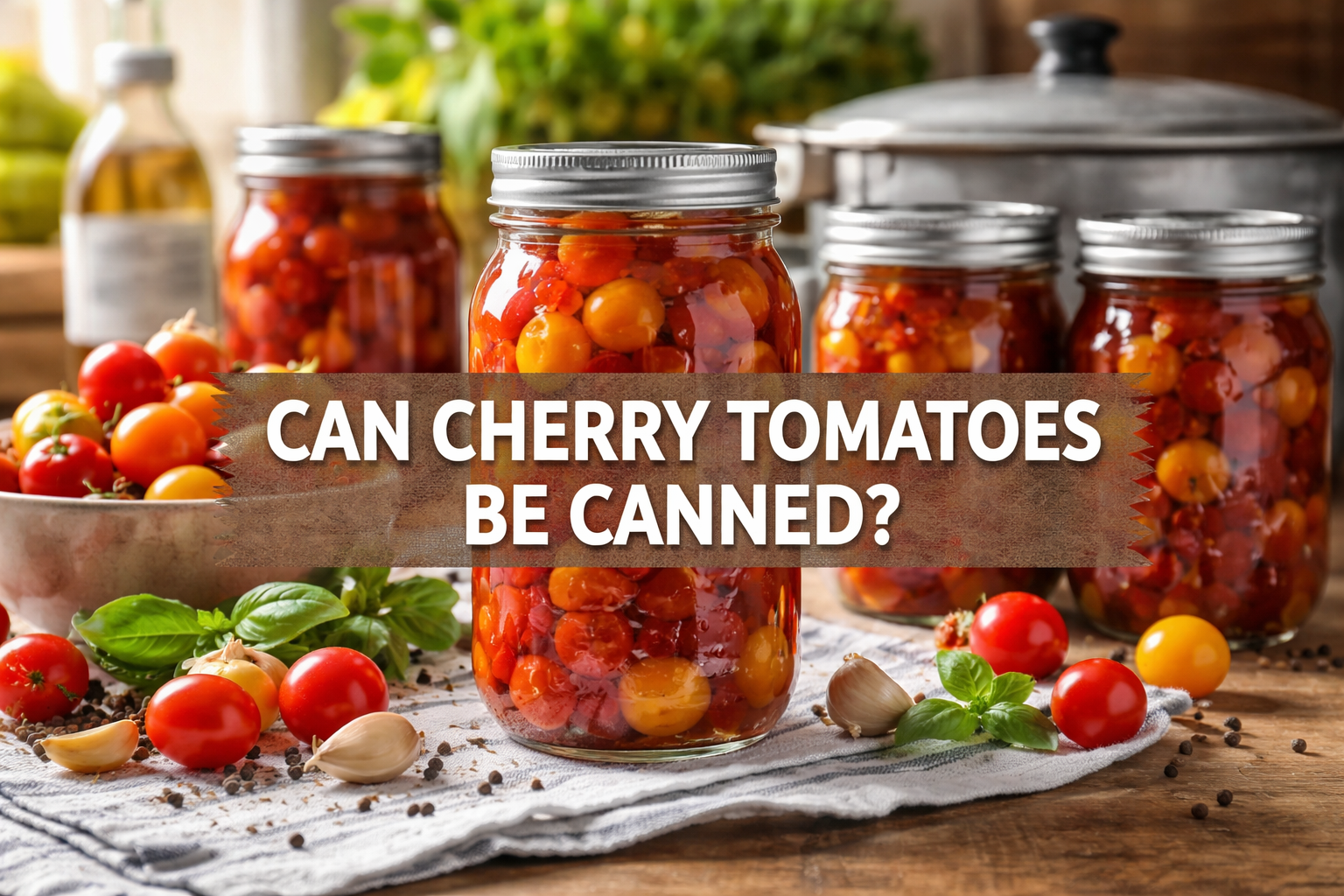
You pick a bowl in the morning. Then another at lunch. By dinner, the counter looks like a red marble spill and you are typing the same question everyone eventually types when cherry tomato season gets a little smug: can cherry tomatoes be canned?
Yes. They can. But that tidy answer leaves out the part that actually matters when you are standing in the kitchen with five pounds of fruit and a canner on the stove. Cherry tomatoes are safe to can only when you follow a tested tomato-canning method and acidify them properly. And even when they are safe, they are not always the best tomatoes to can whole.
That is the part people discover too late. The jars seal. The tomatoes are technically fine. Then you open one in January and remember that tiny tomatoes have a lot of skin for their size, and soft canned skins are not charming in every dish.
Here is what this article will help you sort out:
- whether cherry tomatoes are actually safe to can at home
- when canning makes sense and when freezing is the smarter move
- why the skin issue matters more than most recipes admit
- how to choose between raw pack and hot pack
- which mistakes cause the most regret later
Can Cherry Tomatoes Be Canned? Yes, but the Useful Answer Is More Specific
Cherry tomatoes can be canned, but the useful answer is this: they are best canned only when you use a tested tomato method, add the required acid, and go in with the right expectations about texture.
That last part matters. A lot. Large paste tomatoes can hold themselves together in a fairly predictable way. Cherry tomatoes are a different animal. They are sweeter, often juicier, and the skin-to-flesh ratio is much higher. That means the result in the jar can be soft, slippery, a little collapsed, and sometimes more skin-forward than people expect.
I have had seasons where canning them made perfect sense. Firm fruit. Dry weather. Too many to eat fresh. I have also had seasons where the better move was obvious after the first tray hit the oven: roast and freeze them, skip the jars, and keep my future self from fishing curls of skin out of pasta sauce.
Key takeaway
Safe to can does not automatically mean best to can. The real question is not just “can I?” It is “will I like the result enough to do this again?”
If you grow tomatoes in pots, this is one reason small-fruited plants can surprise people. The productive patio types people love for snacking can turn into a flood of fruit fast. Choosing from the best tomato varieties for containers is partly about flavor and plant size, but it is also about what kind of harvest you actually want to manage later.
The Safety Rule That Matters Most: Acidification Is Not Optional
This is the non-negotiable part.
According to the National Center for Home Food Preservation, home-canned tomatoes should be acidified to ensure safe acidity. That applies to whole, crushed, and juiced tomatoes, and it still applies even if the tested procedure also gives a pressure-canning option. In other words, acidification is not a nice extra. It is part of the process.
The practical rule is simple:
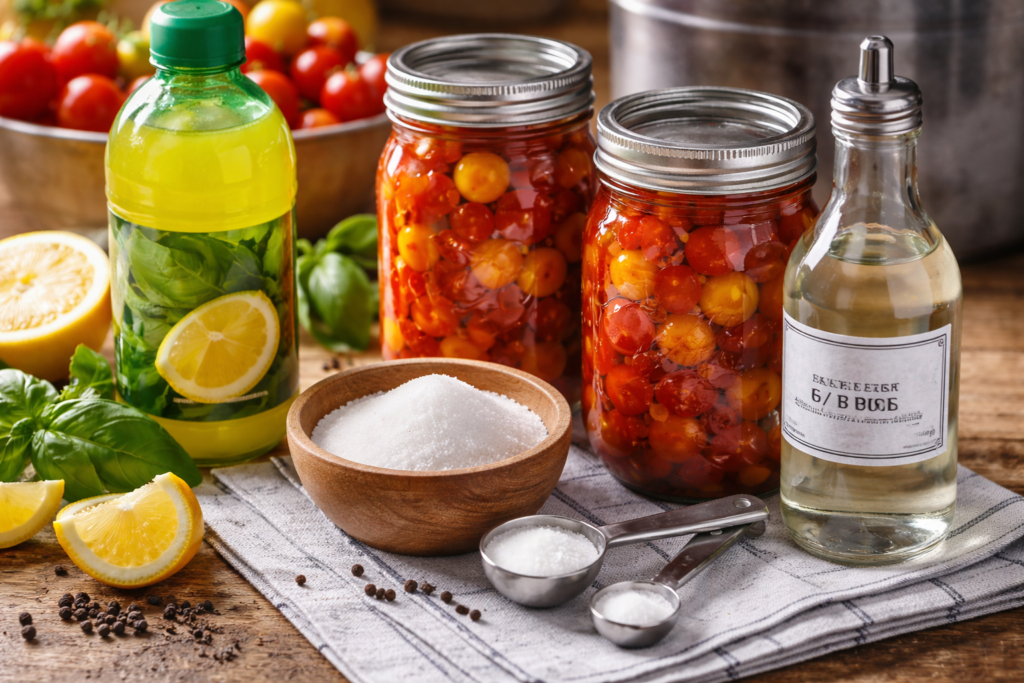
- For pints, add 1 tablespoon bottled lemon juice or 1/4 teaspoon citric acid.
- For quarts, add 2 tablespoons bottled lemon juice or 1/2 teaspoon citric acid.
- If using 5% acidity vinegar instead, use 2 tablespoons per pint or 4 tablespoons per quart, knowing it can affect flavor more noticeably.
Bottled lemon juice matters here because its acidity is standardized. Fresh lemon juice is not. That is one of those irritating little kitchen truths people try to outsmart. Don’t. This is not the place for improvisation.
If the sharpness worries you, add a little sugar for taste after opening the jar or when cooking with the tomatoes. Sugar changes flavor. It does not replace acidification.
Common mistake
Using fresh lemon juice because it feels more natural. Natural is not the target here. Predictable acidity is.
Should You Can Cherry Tomatoes Whole, Peel Them, or Choose Another Form?
This is where the conversation gets muddy online.
Some recipes treat cherry tomatoes as if they are exempt from the usual skin conversation. They are not. Many tested whole-tomato methods are built around peeled tomatoes. Meanwhile, a lot of informal recipes leave cherry tomato skins on because peeling dozens or hundreds of tiny tomatoes is the kind of project that makes a person question all their life choices.
That tension is real. It is also why you should not patch together a method from three recipe blogs and vague memory. Use one tested process and follow it exactly.
The skin issue is not mostly about beauty. It is about eating quality. Cherry tomatoes have proportionally more skin than a big slicing tomato, so once canned, that skin can become the dominant texture. If you are dreaming of neat little whole tomatoes to toss into a salad later, stop there. That is not the best use. If you want a sweet, cooked tomato for sauce, soup, braises, or skillet dishes, then whole canned cherry tomatoes become much more appealing.
A simple way to decide:
- If you want shelf-stable tomatoes for cooked dishes and you do not mind softer texture, can them.
- If you want a smoother result later, cook them down and preserve them as a sauce or crushed-style product instead.
- If you want the least amount of fuss, freeze them.
Key takeaway
The smaller the tomato, the less forgiving the skin becomes after processing. That one detail changes whether canning feels rewarding or annoying.
Raw Pack vs Hot Pack: The Fast Choice vs the Better-Filled Jar
If you decide to can, your next decision is not glamorous, but it matters: raw pack or hot pack.
Raw pack is the quick path. You fill the jars with prepared tomatoes, add the required acid, cover as directed by the tested method, and process them. It saves time. It also tends to give you more shrinkage in the jar. Cherry tomatoes release juice, soften, and settle. Later you look at the shelf and wonder why the jar looks oddly underfilled even though it sealed just fine.
Hot pack takes more effort up front because the tomatoes are heated before jarring. That usually gives you a better fill, fewer air pockets, and less of that “how did the jar suddenly lose a third of its contents?” feeling after processing.
The decision rule is straightforward:
- If you care most about speed, choose raw pack.
- If you care more about yield, jar appearance, and fewer surprises, choose hot pack.
That sounds almost too simple, but that is really the tradeoff. Fast now, or neater later.
In practice, raw-packed cherry tomatoes can look a little dramatic after processing because the fruit collapses more than beginners expect. It does not automatically mean failure. It often just means you picked the faster method and got the normal consequence.
Common mistake
Seeing a shrunken jar and assuming something went wrong. Sometimes nothing went wrong. Raw pack just behaves like raw pack.
Water Bath or Pressure Canner? Here’s the Simpler Decision
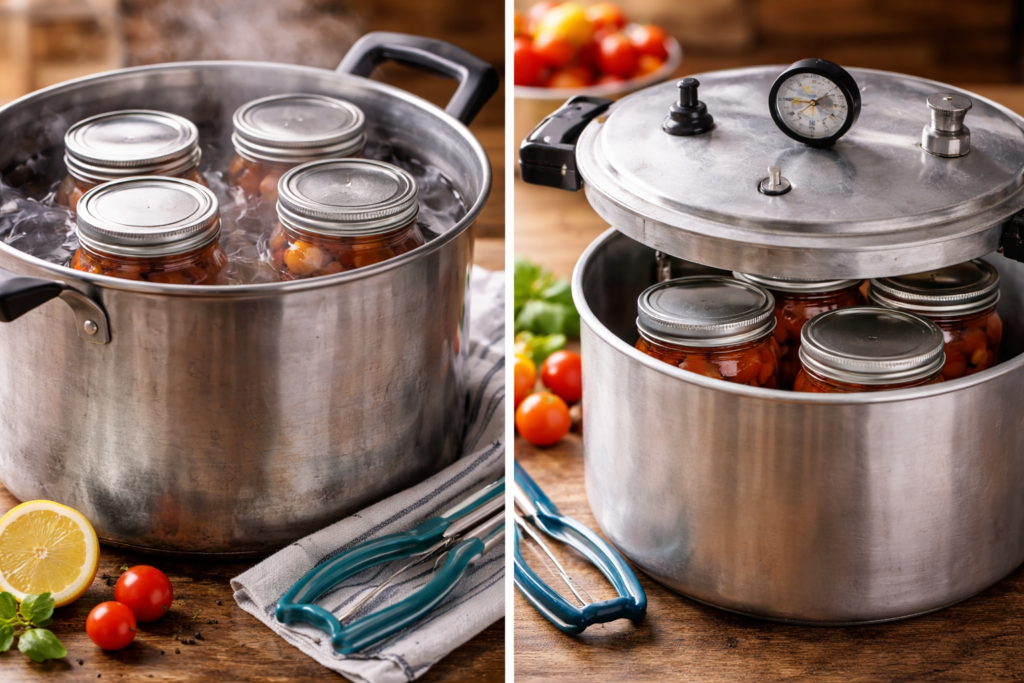
A lot of readers come into this question assuming the main puzzle is equipment. It usually is not. The bigger issue is whether you are following a tested tomato procedure exactly as written.
For tomato products, some tested methods allow boiling-water canning and some also provide pressure-canning options. What you should not do is borrow a time from one tomato recipe, a jar size from another, and a prep style from a third. That is how people create homemade methods with homemade logic.
Think of it like shoe sizing. “Medium” means nothing if one brand uses a different last and another changes the width. Canning times work the same way. They only mean something inside the method they belong to.
So the decision is really this:
- If you are using a tested whole or halved tomato method with the required acidification, a boiling-water canner may be entirely appropriate.
- If you are using a different tomato preparation, follow the tested instructions for that exact product.
- If you are adjusting ingredients, adding low-acid vegetables, or winging it, stop. Find a tested recipe instead.
Altitude matters too. Process times are not one-size-fits-all when elevation changes how water boils. That sounds fussy until you remember that the whole point of canning is controlled predictability.
Key takeaway
Do not ask, “What is the time for cherry tomatoes?” Ask, “What is the time for the exact tested tomato method I am using, at my altitude, in my jar size?”
When Cherry Tomatoes Are a Bad Canning Candidate
Sometimes the answer is yes, but the wise answer is no.
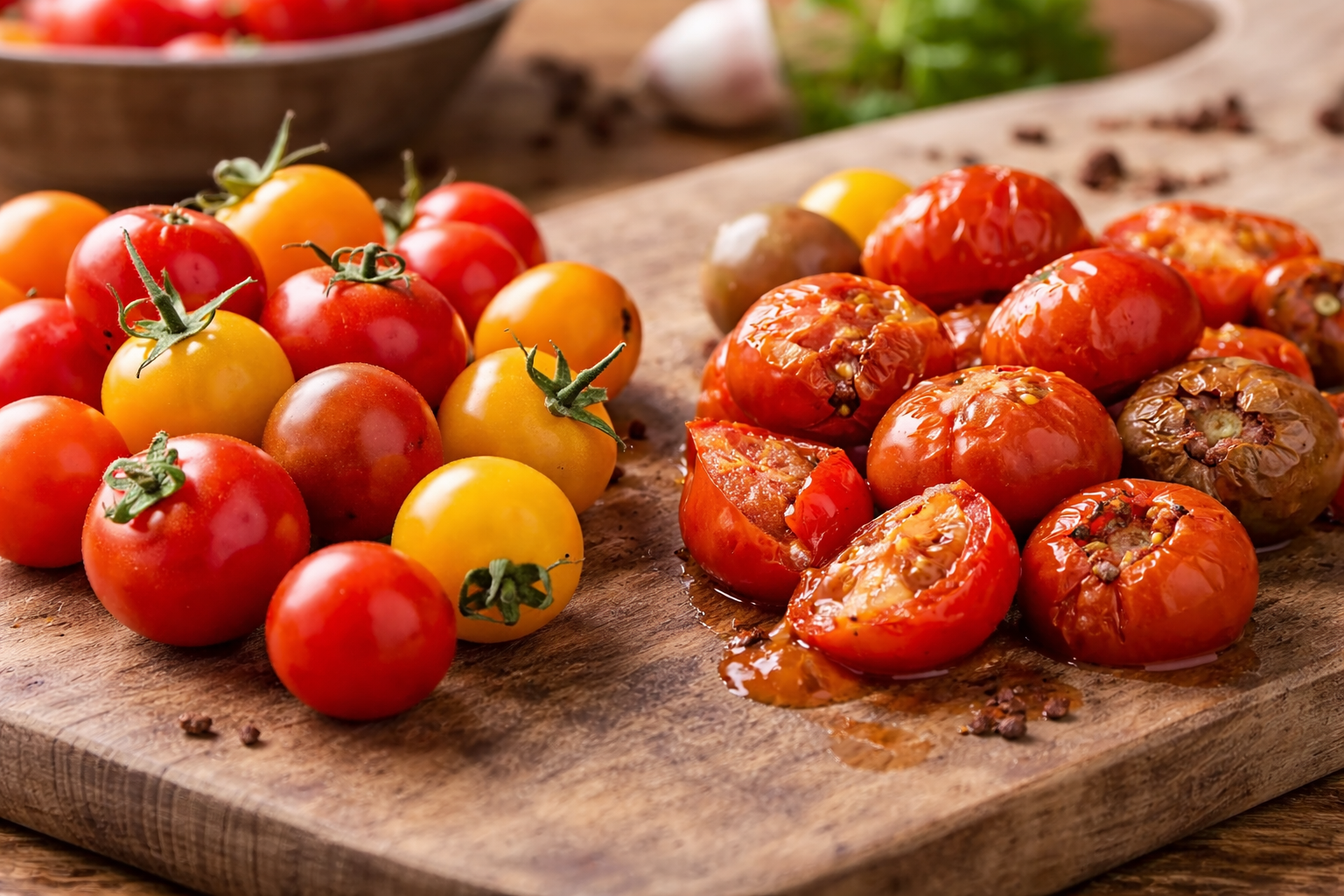
Cherry tomatoes are poor canning candidates when they are overripe, badly split, soft, damaged, or picked from dead or frost-killed vines. The Illinois Extension tomato preservation guidance also points people toward better uses for cherry and grape tomatoes such as roasting and freezing, which tells you something important even without a flashing warning sign: not every tomato is equally worth the jar space.
That is the nuance that tends to get flattened online. “Can be canned” is not the same as “good idea to can today.”
Use this quick filter:
- Firm and sound fruit with no major splitting? Good candidate.
- Very ripe, soft, or leaking? Better for immediate cooking, roasting, or sauce.
- Fruit from stressed plants after frost or vine death? Do not can it.
- A batch you already know has thick, annoying skins? Pick another preservation method.
There is a practical reason experienced preservers get picky here. Canning does not rescue mediocre produce. It memorializes it. If the tomatoes are on the edge now, they will not become more elegant in a jar.
Common mistake
Trying to save a tired harvest by canning it whole. Whole canning rewards good fruit and punishes wishful thinking.
Better Options for Many Batches: Freeze, Roast, Dry, or Pickle
This is the section I wish more articles led with. Not because canning is wrong, but because cherry tomatoes often shine brightest in other preservation methods.
If your main goal is easy preservation, freezing usually wins. Wash them, prep according to the method you are using, and freeze for future cooked dishes. Texture softens, yes, but it softens in the same general direction canning does. The difference is that freezing often asks less of you in the moment.
If your tomatoes are especially sweet, roasting is hard to beat. Roasted cherry tomatoes collapse, concentrate, and turn jammy in a way canning rarely matches. This is my default move for trays of fruit that are just slightly too ripe for ideal canning but still full of flavor.
Drying is another strong option, especially for small tomatoes with good sugar content. And if you want a bright, punchy result rather than a pantry tomato for winter cooking, pickling may be the better answer entirely.
A simple if/then framework:
- If you want pantry-stable storage, can them.
- If you want the easiest preservation method, freeze them.
- If you want concentrated flavor, roast first and freeze.
- If you want something snacky or garnish-friendly, pickle them.
- If you want a smoother cooking ingredient, make sauce or a crushed tomato product instead of canning them whole.
How you grow your tomatoes shapes this choice too. If you are dealing with a bigger, more uneven late-season flush from in-ground plants, preserving by form rather than by perfection often makes more sense. That is one reason a solid harvest starts before preservation day, with plant setup, support, and watering habits that reduce splitting in the first place. If that is your next problem, this guide on how to grow heirloom tomato plants for a bigger, better harvest gets into the plant side of it.
Key takeaway
Choose the preservation method based on how you want to cook with the tomatoes later, not based on which method sounds most traditional.
The 7 Mistakes That Cause Most Cherry Tomato Canning Regret
Some mistakes are safety mistakes. Some are quality mistakes. Both matter.
1. Using fresh lemon juice.
It is the classic shortcut that is not a shortcut. Use bottled lemon juice or citric acid so the acidity is predictable.
2. Starting with damaged fruit.
Mushy, split, bruised, or frost-affected tomatoes do not become better because they went through a processing time.
3. Treating all tomatoes as interchangeable.
Cherry tomatoes are not just mini standard tomatoes. Their skins and structure behave differently.
4. Borrowing times from random recipes.
A process time belongs to a full method, not just to an ingredient name. Jar size, pack style, added liquid, and altitude all matter.
5. Ignoring altitude.
This one is easy to skip because it feels abstract. It is not abstract if it changes the safety margin of the process.
6. Expecting fresh-tomato texture later.
Whole canned cherry tomatoes are for cooked dishes. They are not a winter substitute for a summer salad tomato.
7. Forcing canning when another method clearly fits better.
Sometimes the best preserving decision is the one that admits a jar is not the prize.
The non-obvious part is that quality mistakes often lead people to think canning itself was the problem. It usually was not. The problem was choosing the wrong form for the fruit in front of them.
What Canned Cherry Tomatoes Are Actually Good For
This is where canned cherry tomatoes earn their keep.
They are excellent in fast cooked dishes where sweetness is welcome and structure is not the star. Toss them into a skillet with garlic and olive oil. Add them to soup. Simmer them into a quick pasta sauce. Drop them into braises. Crush them into beans. Spoon them over toast after warming them through with a little butter or olive oil and black pepper.
They also work beautifully in weeknight cooking because they are already portioned by the jar. Open, pour, cook. No peeling. No sad supermarket tomatoes in February pretending to be tomatoes.
What they are not ideal for is anything that depends on fresh snap and clean skinless texture. You can use them there if you insist. You probably will not do it twice.
There is a reason some people adore canned cherry tomatoes and others swear them off. They are often imagining different end uses. The fan is making sauce. The skeptic is picturing salad. Both reactions make sense.
Key takeaway
Can them for flavor and convenience in cooked dishes, not for neat fresh-tomato texture.
FAQ
Can you can cherry tomatoes with basil, garlic, or onions in the jar?
Not unless you are following a tested recipe that specifically includes those ingredients in that exact form and amount. Adding low-acid ingredients changes the safety equation, so this is not a place to improvise.
Is it better to freeze cherry tomatoes instead of canning them?
Often, yes. If your priority is speed, ease, or preserving a batch that is slightly too soft for ideal canning, freezing is usually the more forgiving choice. If your priority is shelf-stable storage, canning wins.
Can grape tomatoes be canned the same way?
They raise the same basic issues: safe method, proper acidification, and texture tradeoffs. The small size and skin ratio still matter, so the same caution applies. Use a tested tomato-canning method and decide honestly whether whole canning is the best form for that batch.

Michael Rowan is the founder and lead writer at The Garden Playbook. He has spent 10+ years growing plants across a range of settings — from indoor houseplants and container gardens to raised beds and in-ground plots — adapting methods to different light levels, seasons, and growing conditions.
Michael focuses on practical, experience-based guidance grounded in fundamentals: soil health, watering strategy, plant nutrition, pruning and propagation, and integrated pest management (IPM). His work aims to help readers diagnose common problems (such as yellowing leaves, stunted growth, or pest pressure) and apply straightforward solutions that are realistic for home gardeners.
At The Garden Playbook, Michael develops tutorials and plant guides using a consistent process: documenting real outcomes where possible, explaining the “why” behind each step, and verifying higher-risk topics (such as plant toxicity or pest treatment options) against reputable horticultural references.