
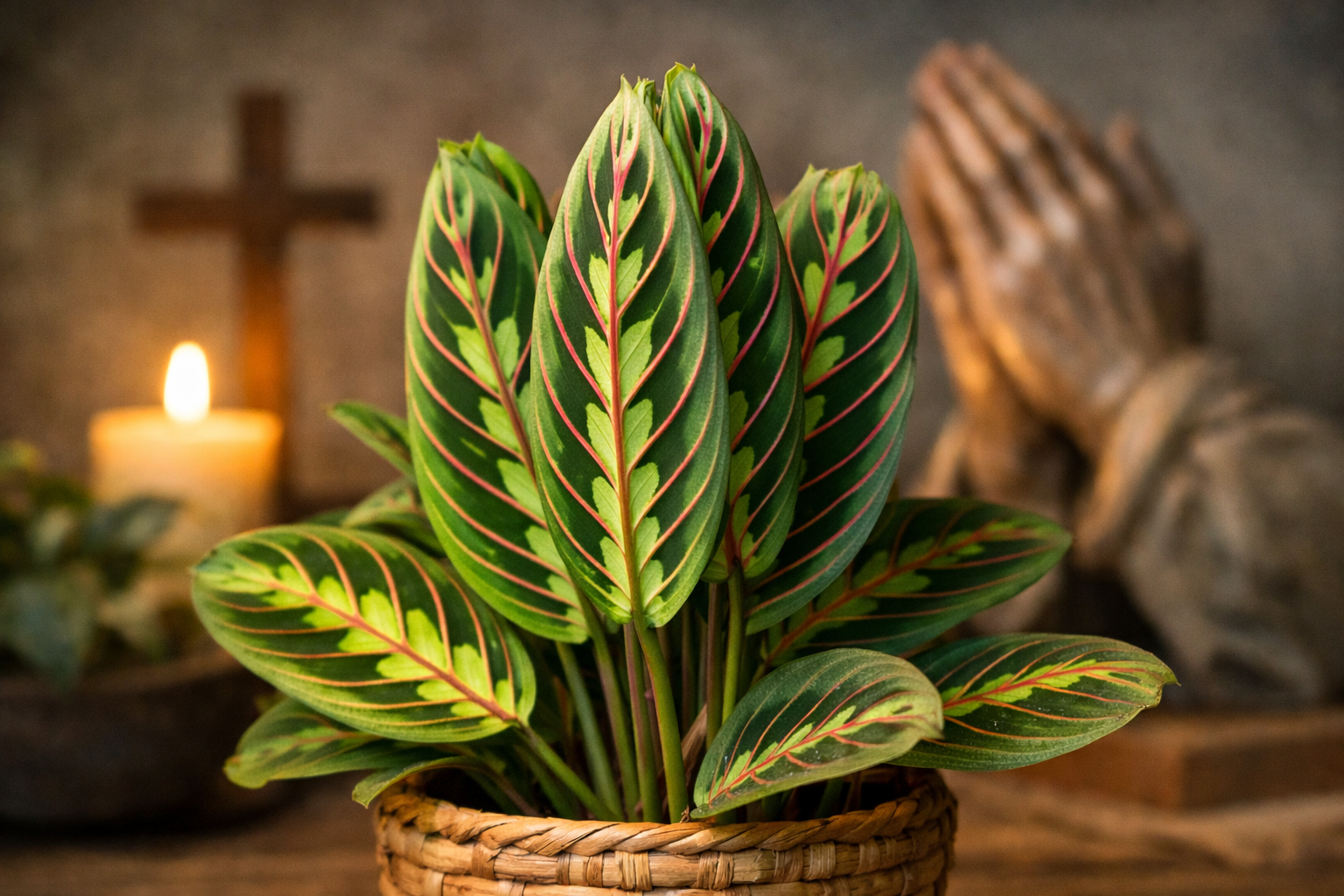
You notice it at dusk, usually by accident. A plant that looked flat and relaxed all afternoon is suddenly holding its leaves upright, like it is trying to tuck itself in for the night. That tiny shift is the whole reason people fall into this search.
If you searched “why is it called a prayer plant,” the short answer is this: the leaves lift and fold upward in the evening, and that posture looks a bit like hands held in prayer. The Royal Horticultural Society describes Maranta leuconeura as a plant that folds its leaves at night, and Missouri Botanical Garden notes that the leaves close upward like praying hands. That’s the direct answer.
The useful answer goes one step further. “Prayer plant” is a common nickname, not a tidy botanical label, so people end up mixing Maranta, Calathea, Goeppertia, and a few other relatives into one blurry bucket. I’ve done that myself while standing in front of a nursery bench, looking at three labels that all seemed half-right.
At a Glance
- The name comes from leaves that rise at night and resemble praying hands.
- The best-known prayer plant is Maranta leuconeura.
- The movement has a botanical name: nyctinasty.
- Related Marantaceae plants move too, which is why labels get messy.
- A plant that barely moves is not always unhealthy. Light, stress, humidity, and variety all change how dramatic the motion looks.
Here’s what this piece will clear up:
- why the nickname stuck
- what the plant is actually doing at night
- which plants count as prayer plants and which ones only get called that loosely
- why the label says Maranta
- what to check if your plant seems oddly still
Why Is It Called a Prayer Plant? The Clear Answer Up Front
The common name comes from movement, not from flowers, folklore, or some hidden spiritual trick. When evening rolls in, the leaves tilt upward. By daytime, they flatten out again. That daily change is what people saw and named.
North Carolina Extension describes the leaves as folding at night to resemble praying hands, and that wording gets very close to what you see in real life. On a healthy plant, especially a well-settled maranta in steady indoor conditions, the shift is obvious enough that the nickname feels earned.
The part that usually gets skipped is this: the nickname answers only one question. It does not tell you what movement is happening, whether all prayer plants are Marantas, or why some plants sold under the same umbrella barely “pray” at all.
Remember: “Prayer plant” is a common name. It is useful, but it is loose. When precision matters, the plant’s genus matters more.
The Name Comes From a Nightly Leaf Movement That Looks Like Prayer
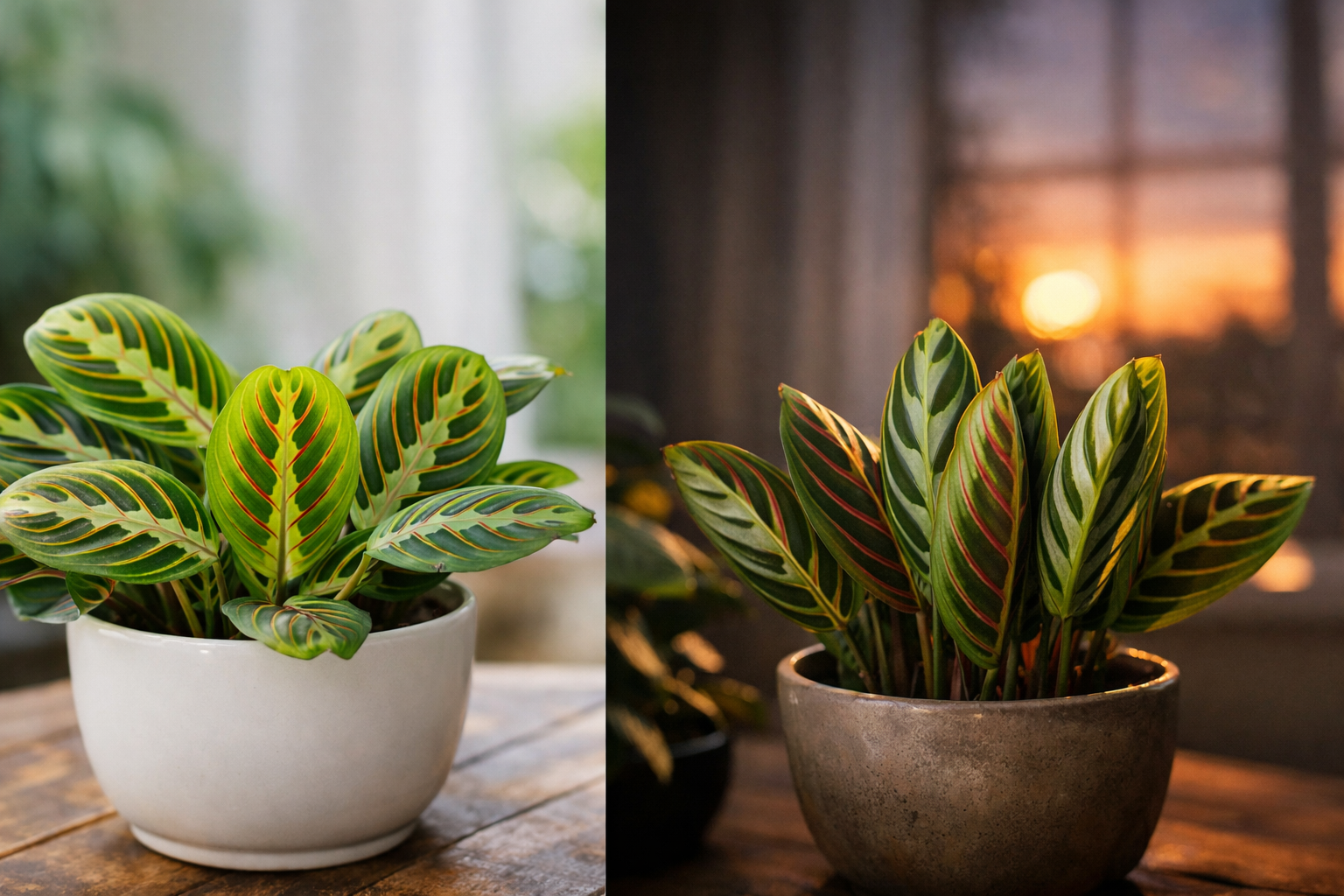
Britannica says the spreading leaves turn upward toward evening, and that simple image explains why the nickname works so well. You do not need a time-lapse video to get it. One evening glance is often enough.
The motion is gentle. It is less like a dramatic clap and more like a slow hinge closing. During the day, many Maranta leaves sit more open or closer to horizontal. As light fades, the petioles and blades shift so the leaves stand more upright.
That visual is what people are naming. Not religion, not symbolism, not a special kind of bloom. Just a habit of leaf posture that happens often enough to be part of the plant’s personality.
Some houseplants get nicknames for a color pattern. The herringbone plant nickname, for example, points to the veining. Prayer plant is different. It points to behavior.
Note: The movement can be subtle. A prayer plant does not have to snap upright every night to “count.” Think dimmer switch, not light switch.
What Makes a Prayer Plant Move at Night
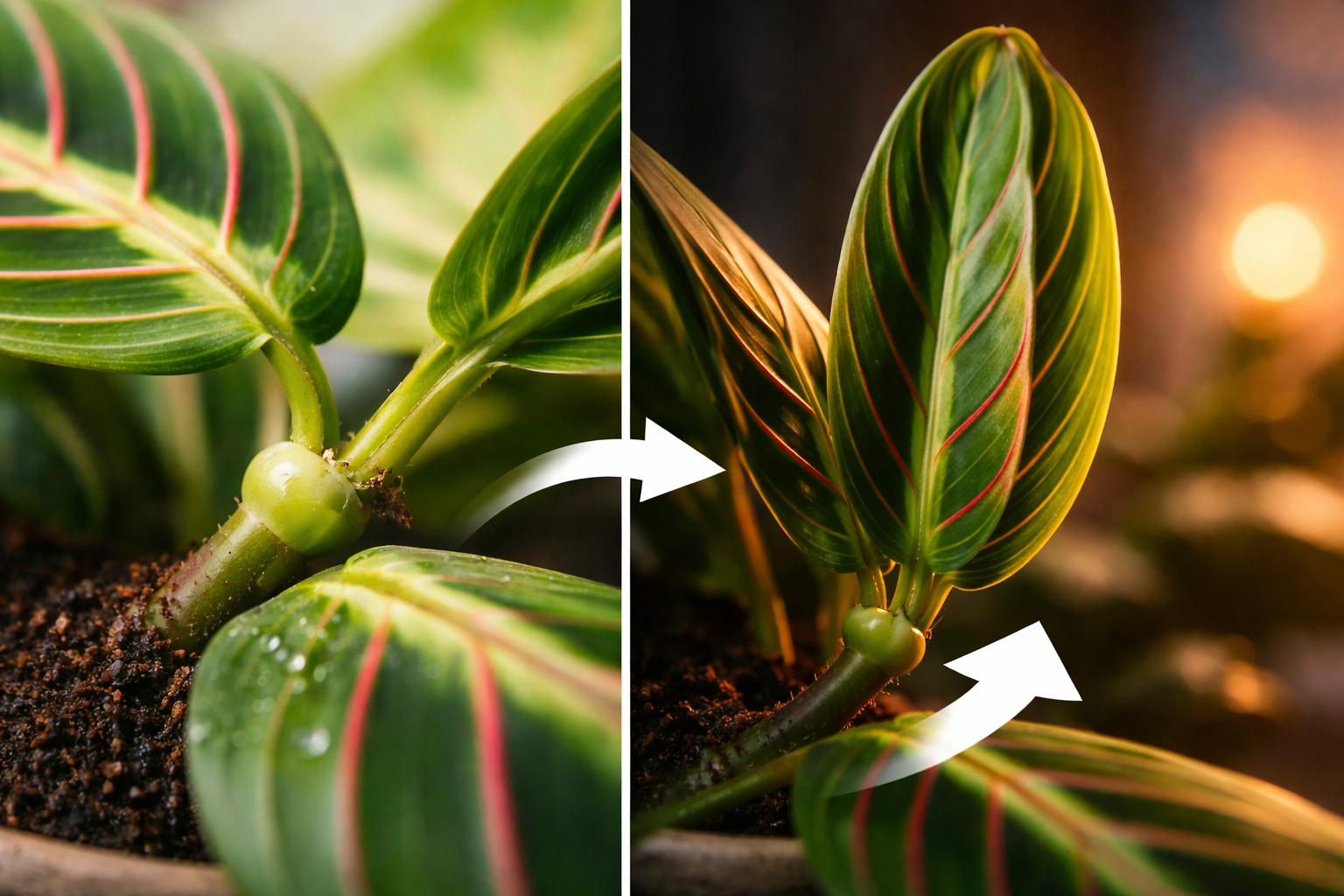
The movement has a real botanical name, and it is worth knowing because it turns a cute nickname into a clear explanation. Brooklyn Botanic Garden explains that these plants show nyctinasty, which is a daily leaf movement tied to light, darkness, and the plant’s internal rhythm.
That same source points to the pulvinus, the joint-like thickened area where the leaf meets the stalk. As water pressure shifts in that little hinge, the leaf changes position. Britannica also identifies the pulvinus as the structure responsible for the leaf’s movement. Show that first, then the conclusion becomes easy: the plant is not wilting, and it is not performing a random trick. It is doing what plants in this family are built to do.
There is one place where a lot of articles get a bit too neat. The movement itself is well documented. The exact payoff in nature gets phrased with more confidence than the evidence usually supports. You will see ideas about dew collection, light tracking, and protection, and some may well play a part, but the cleanest thing to say is that the behavior is established while the full adaptive story is still argued over.
For you as a grower, the useful bit is much simpler. When the plant shifts from a flatter daytime pose to a more upright nighttime pose, that is normal. It is a sign of living leaf movement, not a symptom by itself.
Quick translation
- Nyctinasty = leaves change position on a day-night rhythm.
- Pulvinus = the little hinge-like swelling that helps the leaf move.
Which Plants Are Actually Called Prayer Plants
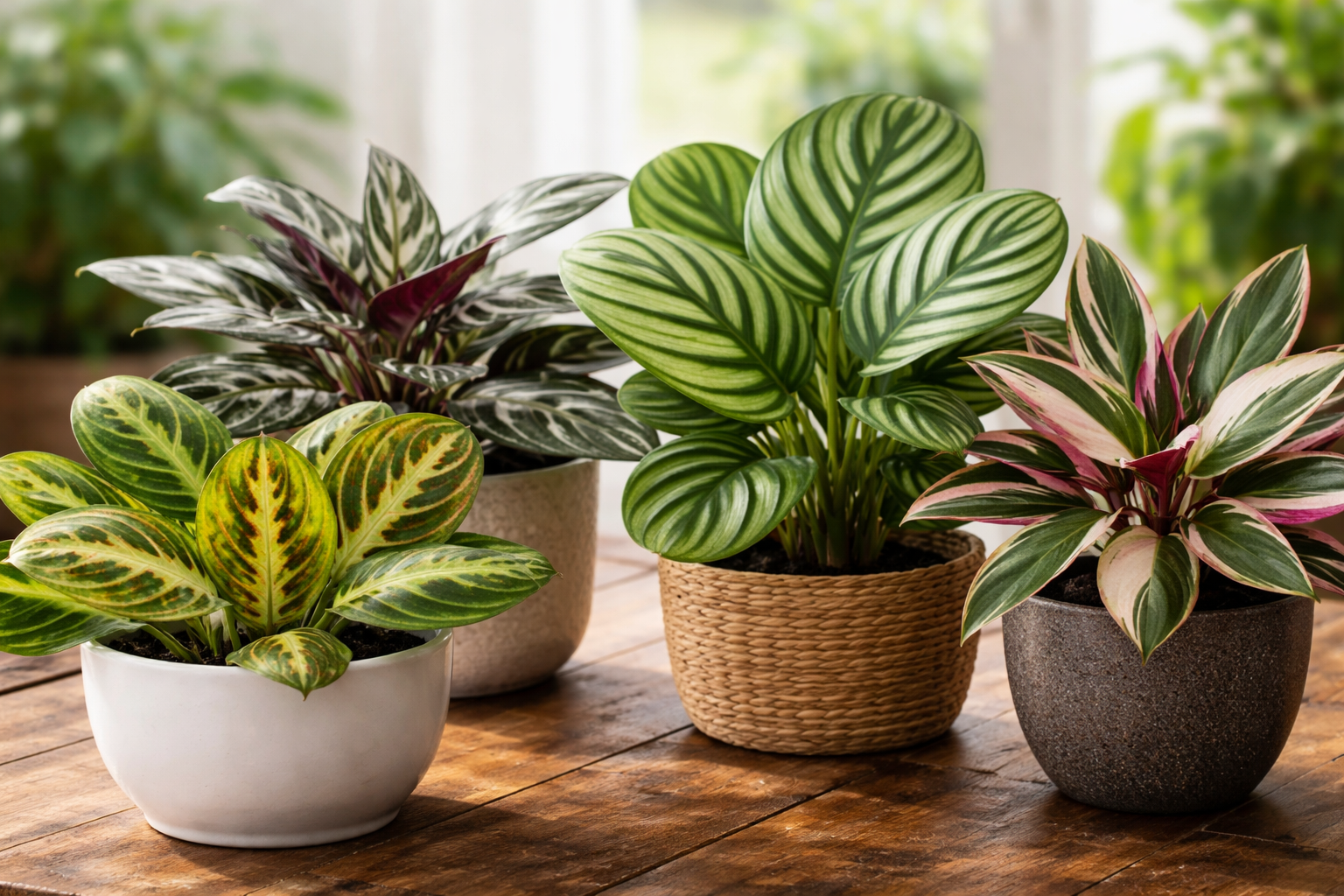
The clean answer is narrower than many labels make it seem. The classic houseplant most people mean is Maranta leuconeura. That is the one most closely tied to the nickname.
Then the category gets fuzzy. Brooklyn Botanic Garden notes that the entire Marantaceae family is known for nyctinasty, and it adds that plants in the Maranta genus are the most athletic movers. That is why Calathea, Goeppertia, Ctenanthe, and Stromanthe often get pulled into the same conversational bucket.
Still, there is a difference between “related and similar” and “the exact same thing.” When you want to be precise, call Maranta leuconeura a prayer plant first. Mention the others as close relatives that are sometimes sold under the same nickname.
| Plant group | How the name is usually used | What matters in practice |
|---|---|---|
| Maranta leuconeura | The most literal and safest fit for “prayer plant” | If you want naming accuracy, start here |
| Calathea / Goeppertia | Often called prayer plants in shops and casual writing | Related family, similar movement, broader leaf-shape range |
| Ctenanthe and Stromanthe | Sometimes included because they move in similar ways | Fine in casual speech, less tidy in formal plant ID |
NC State lists Maranta leuconeura in the arrowroot family, Marantaceae, and places its origin in Brazil. That tropical background also explains something practical. These plants evolved under canopy light, so the same conditions that support steady growth indoors, bright indirect light, warmth, and decent humidity, also tend to make their movement easier to see.
Common-name trap: A nursery tag that says “prayer plant” is helpful, but it is not a full ID. Check the genus if you want to know what care quirks or leaf shape to expect.
Why You Also See the Name Maranta
This is where the confusion doubles back on itself. “Prayer plant” is the nickname tied to movement. “Maranta” is the genus name tied to taxonomy.
Missouri Botanical Garden notes that the genus name honors Bartolomeo Maranti, a Venetian physician and botanist. That is a separate naming story from the common nickname. So when a plant label says Maranta leuconeura, it is not contradicting “prayer plant.” It is telling you the plant’s formal identity.
The species name can help too. Missouri Botanical Garden explains that leuconeura points to the white leaf veins. Once you know that, those labels stop feeling random. They start reading like a quick description.
This is also why “Maranta” and “prayer plant” are not perfect substitutes in every sentence. All Marantas are not automatically the same thing as every plant sold under the prayer plant nickname. One label is botanical. The other is conversational.
What It Means If Your Prayer Plant Hardly Moves
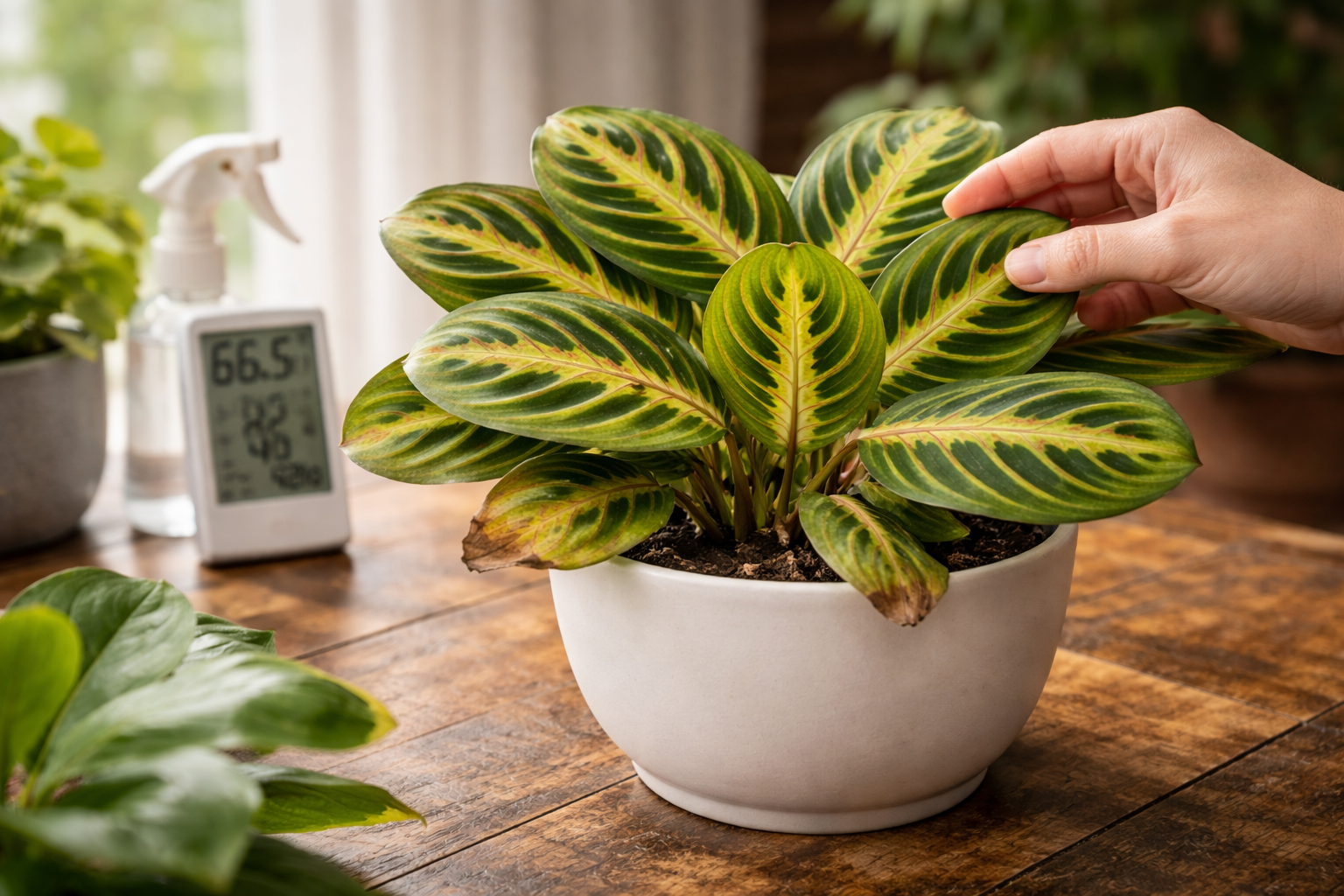
A still-ish plant does not always mean trouble. I have had marantas that performed like tiny theater kids in one room and then barely twitched for a week after a move across the house. Same plant. Different setup.
NC State says the leaves are held parallel to the ground by day and move to a perpendicular prayer position at night, but the degree of that movement changes. Brooklyn Botanic Garden says the amount of movement varies by variety. That is the first thing to keep in mind before you start panic-watering.
Then check the basics in this order:
Fast diagnostic
- Check light and get clearer movement. Too little light can make the day-night change harder to spot. A brighter spot can help, especially one matched to the light pattern in best-facing window for plants.
- Check stress and let the plant settle. A recent repot, move, cold draft, or rough watering rhythm can flatten the performance for a while.
- Check air moisture and leaf condition. Crispy edges often show up before dramatic movement returns.
- Check timing and variety. Some marantas move more than others, and you are most likely to notice it near evening or early morning.
Missouri Botanical Garden recommends bright indoor light without strong direct sun, while the same source says the plant prefers temperatures that do not dip below 60 degrees Fahrenheit. That gives you a plain rule: if the plant is cold, draft-hit, or marooned in dim light, do not expect its leaf choreography to look its best.
If the room is simply too dim, a modest shelf setup with one of these LED grow lights for indoor gardening can make the leaves hold their pattern and posture better. The goal is not spotlight intensity. It is steady, usable light.
Do not do this: see weak movement, add extra water, then wonder why the pot stays wet and the leaves look worse. Prayer-plant motion is not a simple moisture gauge.
Common Mix-Ups That Make the Name More Confusing Than It Needs to Be
The first mix-up is treating “prayer plant” and “Maranta” as if they were two unrelated names. They are not. One is the nickname. One is the genus.
The second mix-up is acting like every Calathea is automatically the same thing as a Maranta. They are close relatives, and many move in similar ways, but they are not identical plants with identical labeling. That matters when you are reading care advice, trying to identify a plant from a tag, or just wanting to sound less muddled than most garden-center signs.
The third mix-up is assuming the nickname has to be used with microscope-level precision in casual speech. It doesn’t. If you are chatting with another houseplant person and you point at a Marantaceae plant that raises its leaves at night, “prayer plant” will usually land just fine. If you are writing, diagnosing, or buying, the genus is the safer anchor.
And one more thing. The nickname is not a health grade. A plant that “prays” dramatically is not always happier than one that moves a little less. Growth, leaf color, firmness, and the absence of crisp damage tell you more.
FAQ
Do prayer plants close every night?
Most healthy ones shift their leaves on a daily rhythm, but not all do it with the same drama. Variety, light level, recent stress, and timing all change how obvious the movement looks.
Is a Calathea the same thing as a prayer plant?
Not quite. Calathea and Goeppertia are close relatives in the same family and often get sold under the prayer-plant umbrella because their leaves move too. The most exact fit for the nickname is still Maranta leuconeura.
Why does my prayer plant barely move?
Low light, recent stress, dry air, cold drafts, and simple variety differences can all tone the motion down. Check the plant’s overall condition before reading too much into the leaf angle alone.
So yes, the name is a visual one. A prayer plant is called that because its leaves rise at night in a pose that looks like prayer. Once you separate the nickname from the botany, the whole thing gets much less murky.

Michael Rowan is the founder and lead writer at The Garden Playbook. He has spent 10+ years growing plants across a range of settings — from indoor houseplants and container gardens to raised beds and in-ground plots — adapting methods to different light levels, seasons, and growing conditions.
Michael focuses on practical, experience-based guidance grounded in fundamentals: soil health, watering strategy, plant nutrition, pruning and propagation, and integrated pest management (IPM). His work aims to help readers diagnose common problems (such as yellowing leaves, stunted growth, or pest pressure) and apply straightforward solutions that are realistic for home gardeners.
At The Garden Playbook, Michael develops tutorials and plant guides using a consistent process: documenting real outcomes where possible, explaining the “why” behind each step, and verifying higher-risk topics (such as plant toxicity or pest treatment options) against reputable horticultural references.