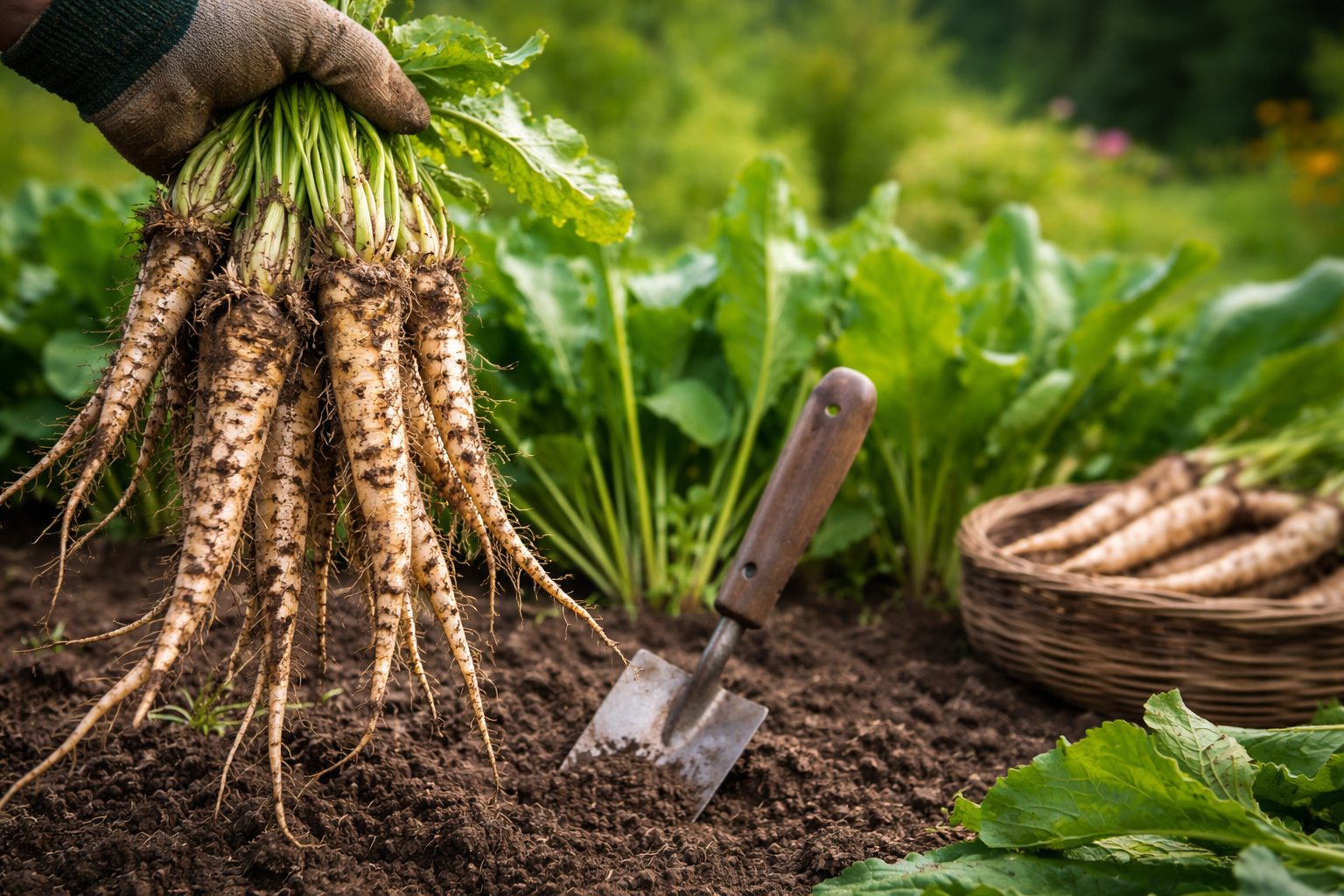
Horseradish has a funny way of making gardeners hesitate. The leaves are still standing there looking busy, the root is out of sight, and you start thinking, “Maybe one more week.” I’ve done that. More than once. The plant looked strong, I waited, and the root got bigger but not better.
If you’re wondering when is horseradish ready to harvest, the short answer is this: harvest after one full growing season, usually in late fall to early winter, once cold weather has arrived and the plant is slipping into dormancy. If fall gets away from you, early spring before new growth starts is the other good window.
That generic answer is only half-useful, though. A first-year plant is not the same as an old patch. A mild winter does not give you the same clues as a hard frost. And a giant root is not always the one you wanted.
- How to tell if the plant is ready now, not just “sometime in fall”
- When fall beats spring and when spring is the smarter save
- Why first-year plants and older clumps give different results
- How to dig without snapping the nicest roots
- What causes mild, woody, or runaway horseradish patches
At a glance: use this quick harvest check
| What you see | Best move | Why |
|---|---|---|
| Plant has had one full season, weather is cold, leaves are fading | Harvest now | This is the sweet spot for flavor and root maturity |
| First-year plant is still small and lush late in the season | Test dig one root or wait | Early digging often buys you a smaller, milder root |
| You missed fall and the ground is workable in early spring | Harvest before new growth starts | Spring is the clean backup window |
| Ground is about to freeze solid | Dig now or commit to early spring | Half-waiting usually makes the job harder |
When Is Horseradish Ready to Harvest? The Direct Answer
University of Minnesota Extension recommends harvesting in late October or early November, or just before the ground freezes. That advice is practical because it matches what the root is doing underground. Horseradish bulks up through the season and usually tastes better once the weather cools.
The Royal Horticultural Society says horseradish develops a stronger flavour after frost. So for most home gardens, late fall into early winter is the main harvest window. Not summer. Not early fall because the leaves look dramatic. Late fall, when the plant has done its work.
If the plant went in this spring and put on strong growth, a fall harvest can be fine. If it sulked through the season or stayed thin, I would not dig the whole thing just to satisfy the calendar. Lift one root and check. If it feels underwhelming, leave it for early spring or the following fall.
Quick rule: One full season plus cold weather plus a plant that looks like it’s winding down usually means the root is ready.
Use These 4 Readiness Cues Instead of Guessing by Date
Dates help, but cues decide it.
The cleanest way to judge horseradish is to stack four clues together. When three or four line up, you can stop guessing.
Check plant age and get maturity on your side
A plant that has had one full growing season is usually in range. That does not mean every first-year plant is worth digging. It means you are allowed to check seriously.
Watch the foliage and catch dormancy starting
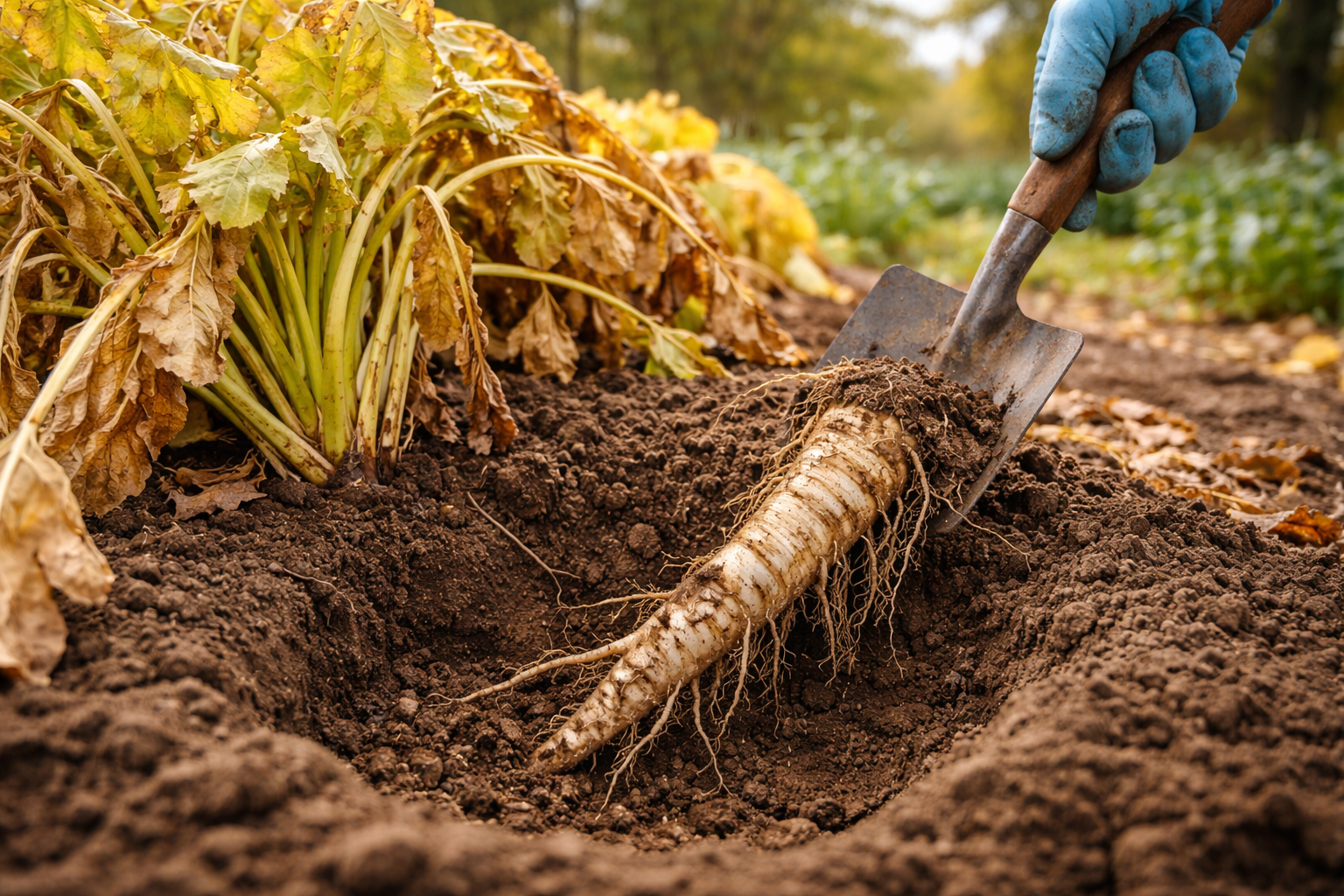
Kansas State’s Meadowlark guidance says to wait until the leaves have died back, which shows the plant is going dormant for the season. That cue matters a lot in places where frost is patchy or late. If the top growth is still charging ahead, the plant is still spending energy above ground.
Use frost or steady cold as a flavor cue
You do not need a theatrical hard freeze. A shift into real fall weather is enough to put harvest on the table. In colder regions, that often means late October into November. In milder regions, it means reading the plant more than reading a date chart.
Test dig one root and remove the last bit of doubt
This is the quiet trick that saves a lot of disappointment. Loosen soil beside one plant, lift a side root, and look at what you’re working with. If it is pencil-thin and unimpressive, wait. If it looks full and firm, go ahead.
Use this checklist
- At least one full growing season
- Leaves fading, flopping, or dying back
- Cold weather has settled in
- Test root looks full enough to bother with
One green-leaf caveat: if the roots are mature and winter is right there, bright foliage does not always mean “not ready.” Horseradish can stay surprisingly lively up top. That’s where the test dig earns its keep.
Fall vs Spring Harvest: Which Timing Makes the Most Sense for You?
Fall is the default. Spring is the rescue plan that is better than many people think.
When the Oregon State Extension preserving guide notes that several frosts help improve flavor, that lines up with what gardeners notice in the kitchen. Fall-dug roots usually have more punch. They also fit well if you want to lift the crop, sort replanting pieces, and store the rest.
Spring harvest still works. The catch is timing. You want the ground workable and the plant not yet pushing strong new growth. Miss that window and the root starts spending energy upward again.
| Timing | Best for | Watch out for |
|---|---|---|
| Late fall to early winter | Peak flavor, main harvest, easier patch control | Frozen ground can close the window fast |
| Early spring before regrowth | Missed fall harvests, poor winter storage setup | Wait too long and the root starts moving energy into new growth |
If you want the strongest flavor, lean fall. If you missed fall cleanly and the soil opens up in spring, harvest then and don’t beat yourself up about it. What hurts most is the half-measure: waiting too long in fall, then missing the clean spring window too.
First-Year Plants, Second-Year Plants, and Older Patches Do Not Follow the Same Rules
This is where a lot of flat advice goes wrong. “Harvest after a year” sounds tidy. Gardens are not that tidy.
Wisconsin Horticulture points out that year-old roots have the most flavor. That is a useful north star. A strong year-old plant is usually where flavor, texture, and manageability line up best.
Older patches are trickier. Yes, roots can get larger. They can also get woody, stringy, or a bit hollow in places. That’s not a good trade if your whole goal is a clean, hot root for grating and storing. Bigger can look impressive on the shovel. It can be a letdown on the cutting board.
Here’s the practical split:
- Strong first-year plant: test dig in late fall and harvest if roots look full
- Weak first-year plant: wait rather than forcing a mediocre harvest
- Older established patch: don’t assume more time means more quality
I’ve found that gardeners get seduced by size here. Horseradish is a bit like overwaiting on a baguette. At first you’re chasing more body. Then suddenly you’ve traded tenderness for toughness.
How to Harvest Horseradish Without Snapping the Best Roots
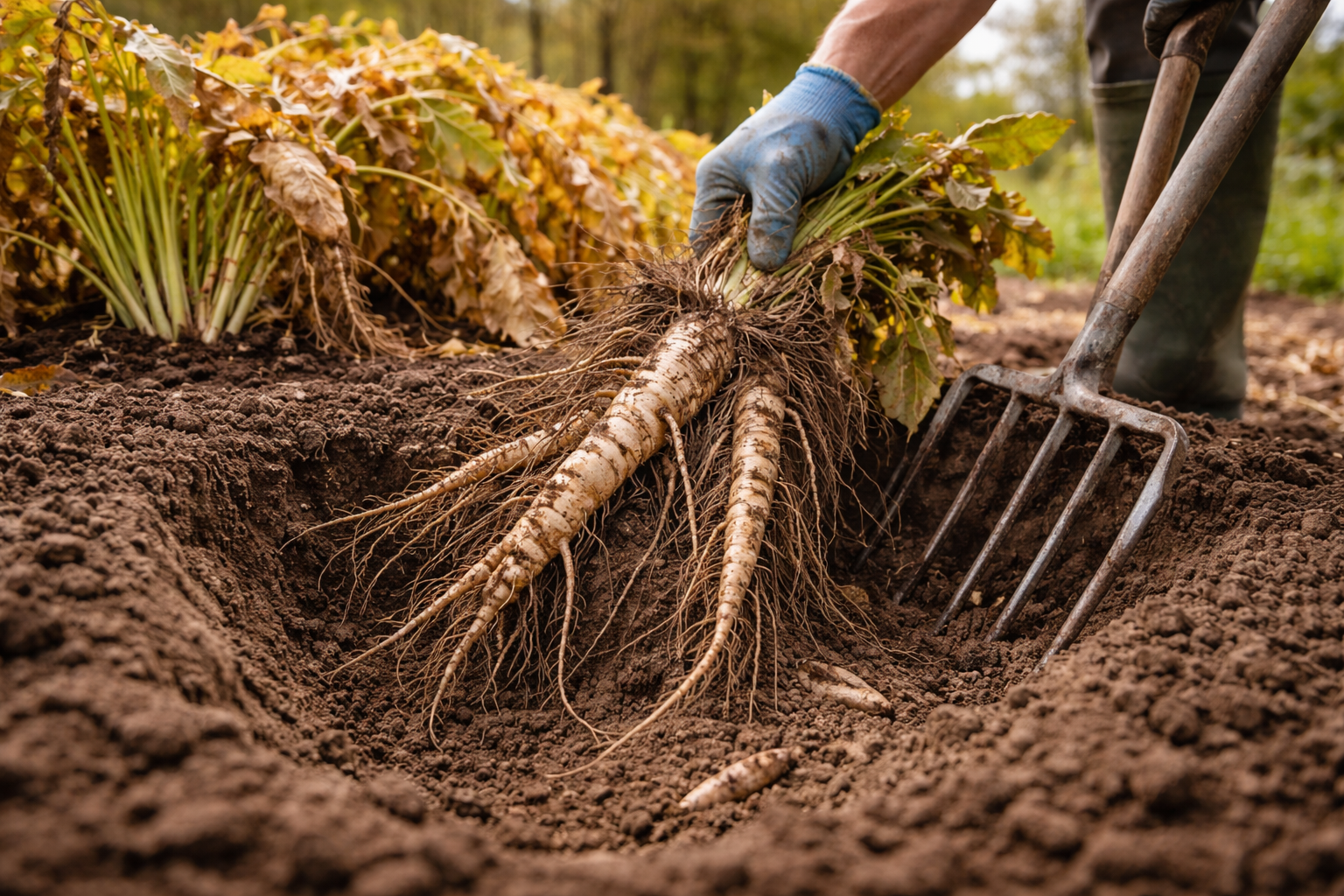
Do not pull first. Loosen first.
Horseradish roots do not grow like carrots in a brochure. They branch, angle, and hide the nicest sections just far enough from the crown to fool you. A hard tug usually snaps the good part and leaves side roots behind.
Step 1. Loosen wide and give the root room to come free
Use a digging fork or spade and start farther out than feels necessary. In row culture, a shallow trench along one side makes life easier. The goal is to loosen the soil around the root, not spear the root and hope for the best.
Step 2. Lift instead of yanking and save the cleanest sections
Work the fork under the plant, pry gently, and follow the root as it releases. Separate thicker eating roots from the smaller side roots you might replant. If the plant is container-grown, this part is much easier. Dumping the pot can feel almost suspiciously easy.
Step 3. Collect fragments and stop next year’s surprise patch
Horseradish is generous in the same way mint is generous. Leave chunks behind and you may get more than you bargained for. Go back through the loosened soil and remove stray pieces if you want control.
Memorable rule: Lift, don’t tug. The harvest method is also the spread-control method.
Special Cases That Change the Answer: Mild Climates, Containers, Frozen Ground, and Partial Harvests
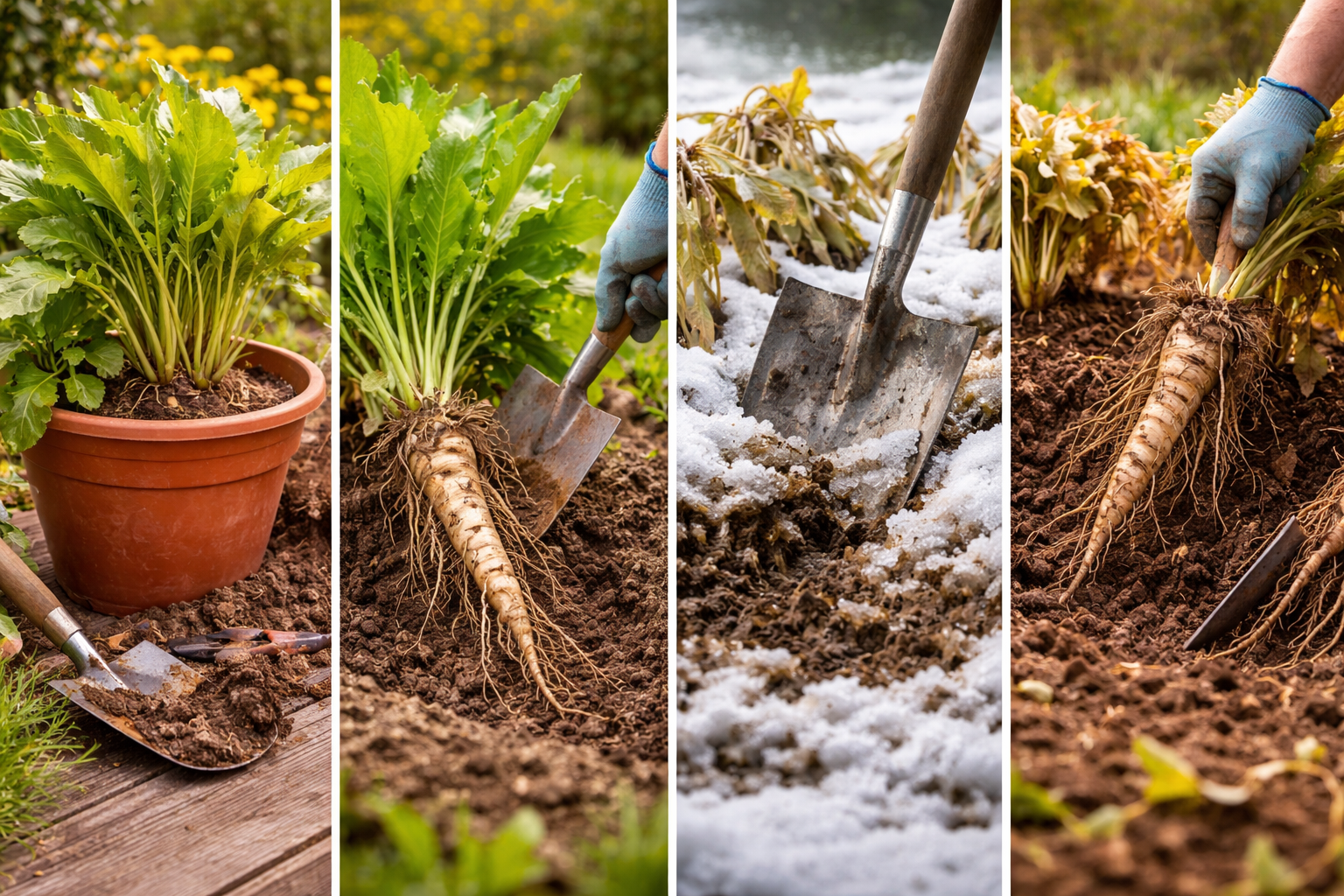
Not every garden gets a clean first frost and a nice neat countdown to harvest. Some gardens barely get frost. Some go from “fine” to “shovel hits concrete” in a hurry.
Mild climates
Do not wait around for a textbook frost if your winters barely bother to frost the windshield. Use leaf decline, slower top growth, and a test dig. In those gardens, the plant’s posture tells you more than a date stamp.
Containers
Container horseradish is easier to read and easier to manage. You can often do a partial harvest, keep a healthy piece for regrowth, and avoid turning a bed into a permanent horseradish district. If you want a cleaner, lower-drama setup, pots are hard to argue with.
Frozen ground
If the soil is on the edge of freezing solid, make a clean choice. Dig now or wait for early spring. Hovering in the middle usually means a worse job later.
Partial harvests
You do not have to reset the whole patch every time. If all you need is kitchen quantity, lift one plant or take part of the container root mass and leave the rest. That works best when the patch is young and still orderly.
The same basic judgment shows up with other crops too. Waiting for “just a little bigger” often backfires, which is easy to see in how to harvest kohlrabi once bulbs move past their best texture.
The Mistakes That Make Horseradish Mild, Woody, or Harder to Control
Most horseradish disappointments come from a short list of mistakes. None of them are exotic.
| Mistake | What happens | Better move |
|---|---|---|
| Harvesting too early | Smaller, milder roots | Wait for cold weather and dormancy cues |
| Leaving roots too long | Woodier texture and less pleasant prep | Favor strong year-old roots over old brutes |
| Pulling instead of digging | Broken roots and wasted harvest | Loosen wide, then lift |
| Leaving side roots behind | Patch spreads where you did not plan it | Sort replant pieces on purpose and remove strays |
The biggest mental trap is this: “I’ll wait because it can only get better.” No. Horseradish is not one of those crops where extra time is always a gift. There is a sweet spot and then there is a slog.
The second trap is treating a giant root like a trophy. Sometimes the best root in the pile is the one that looks less dramatic and cuts cleaner. That’s the one you remember when you grate it.
Store, Replant, and Prep the Roots While the Flavor Is Still at Its Best
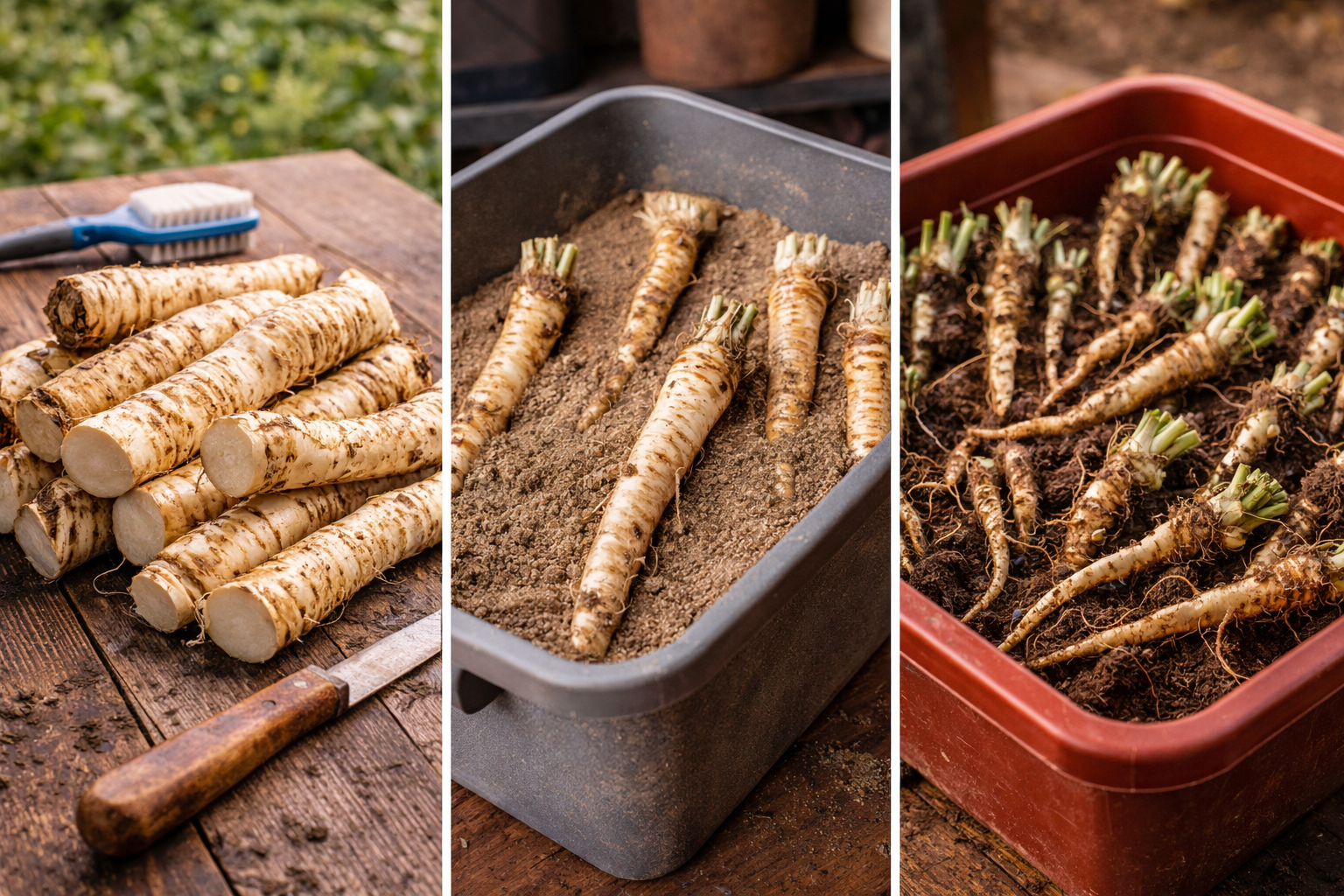
Once the roots are out of the ground, sort them right away. Thick, clean roots go into the kitchen or storage pile. Smaller side roots can become next year’s planting stock if you actually want another round.
For storage, keep the roots intact if you can. The Oregon State guide says intact roots can hold their flavor for up to about three months when stored properly. Cold and dark works. A refrigerator is fine for shorter holding. Damp sand in a cool spot works well if you have the setup.
When you trim and prep, leave the drama to the plant, not the kitchen. Freshly grated horseradish can hit hard. Good ventilation helps. So does a little humility.
If you’re making prepared horseradish, work in small batches. Freshly cut root has the best kick and that volatile heat fades. So the smart move is not a giant weekend production line unless you really need one.
Simple finish-line plan
- Sort eating roots from replanting roots
- Brush off loose soil and trim tops
- Store intact roots cold and dark
- Replant only the pieces you actually want next year
If you want one rule to hang onto, use this: harvest for flavor in late fall, rescue with early spring if needed, and never leave every fragment in the ground unless you want horseradish popping up where it has no business being.
FAQ
What if the leaves are still green in late fall?
Green leaves do not always mean the root is immature. If the plant has had a full season and cold weather has settled in, do a small test dig. In mild climates, that test is often more useful than waiting for dramatic dieback.
Can I harvest horseradish after the ground freezes?
If the ground is lightly frozen on top, you might still manage it. If it is freezing solid, the cleaner move is to wait for early spring and dig before new growth starts. Fighting frozen ground rarely feels worth it.
Why did my horseradish come back after I harvested it?
Horseradish regrows from root pieces left in the soil. Even small side roots can restart the patch. Digging more carefully and sorting replanting pieces on purpose cuts down on surprise regrowth.

Michael Rowan is the founder and lead writer at The Garden Playbook. He has spent 10+ years growing plants across a range of settings — from indoor houseplants and container gardens to raised beds and in-ground plots — adapting methods to different light levels, seasons, and growing conditions.
Michael focuses on practical, experience-based guidance grounded in fundamentals: soil health, watering strategy, plant nutrition, pruning and propagation, and integrated pest management (IPM). His work aims to help readers diagnose common problems (such as yellowing leaves, stunted growth, or pest pressure) and apply straightforward solutions that are realistic for home gardeners.
At The Garden Playbook, Michael develops tutorials and plant guides using a consistent process: documenting real outcomes where possible, explaining the “why” behind each step, and verifying higher-risk topics (such as plant toxicity or pest treatment options) against reputable horticultural references.