
I still remember the first rosemary I bought for my patio. It was one of those healthy-looking nursery plants that makes you think, “This will be easy.” I slipped it into a pretty pot that looked generous enough, watered it carefully, and then watched it sulk for weeks. The mistake was not sunlight. It was not feeding. It was that I treated rosemary like a thirsty annual instead of a woody Mediterranean herb that hates wet feet.
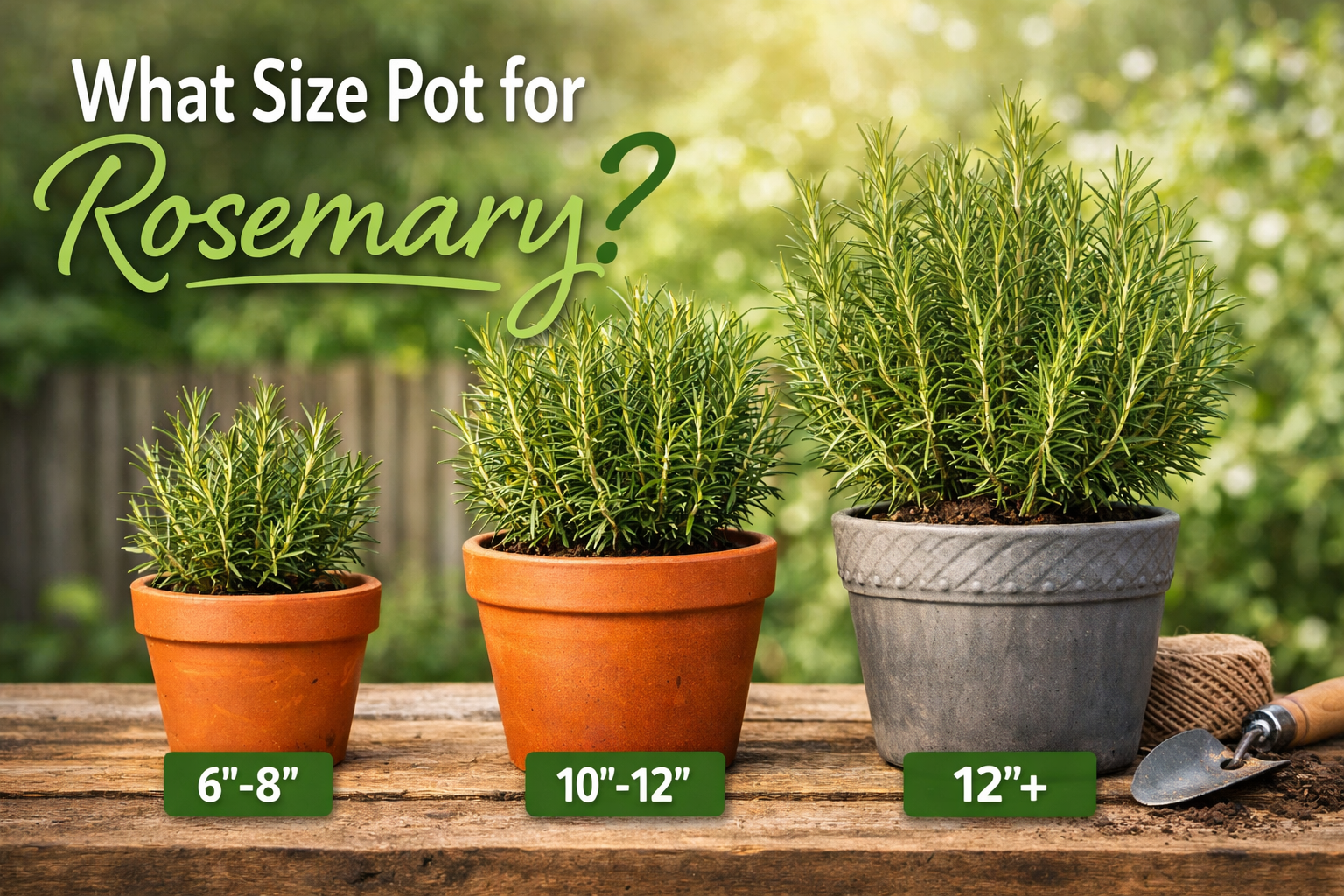
If you are here for the direct answer to what size pot for rosemary, this is it: start small plants in a pot about 6 to 8 inches wide, move established plants into roughly 10 to 12 inches, and plan on at least a 12-inch-wide and 12-inch-deep container for a rosemary you want to keep growing well long term. That is the useful baseline. The part that actually keeps the plant alive is knowing when not to go bigger, what pot material changes the watering rhythm, and how your climate changes the right choice.
- How big a rosemary pot should be for starter plants, established plants, and mature container shrubs
- Why a bigger pot can help or quietly create root-rot problems
- How width, depth, and drainage holes work together
- Which pot materials make rosemary easier or harder to keep healthy
- How to tell if your current container is too small, too big, or just right
Key takeaway
For most home gardeners, a 12-inch pot is the sweet spot for an established rosemary plant. Smaller plants should start smaller, and drainage matters more than chasing the biggest container you can find.
What Size Pot for Rosemary? Here’s the Straight Answer
The short answer is simple. A young rosemary start usually does best in a 6 to 8 inch pot. A more established plant is usually happier in a 10 to 12 inch pot. If you are growing rosemary as a long-term container herb or small patio shrub, aim for a container that is at least 12 inches wide and 12 inches deep.
That lines up well with guidance from the Royal Horticultural Society, which recommends a pot at least 30 cm, or about 1 foot, wide and deep for rosemary in a container. That is the “technically correct” answer most people need. What makes it actually useful is matching that number to the plant in front of you.
If the rosemary is still in a tiny nursery pot and the root ball is compact, jumping straight into a very large planter is usually a mistake. Rosemary likes room to grow, but it does not like sitting in a wide ring of damp, unused potting mix. In practical terms, that means most people should size up in stages instead of treating rosemary like a tomato that wants a fast jump into a big container.
Common mistake
Buying a decorative planter first and assuming the plant will “grow into it.” With rosemary, too much wet soil around a small root ball is often worse than being slightly snug.
The Pot Size Rule That Actually Works: Match the Pot to the Plant Stage
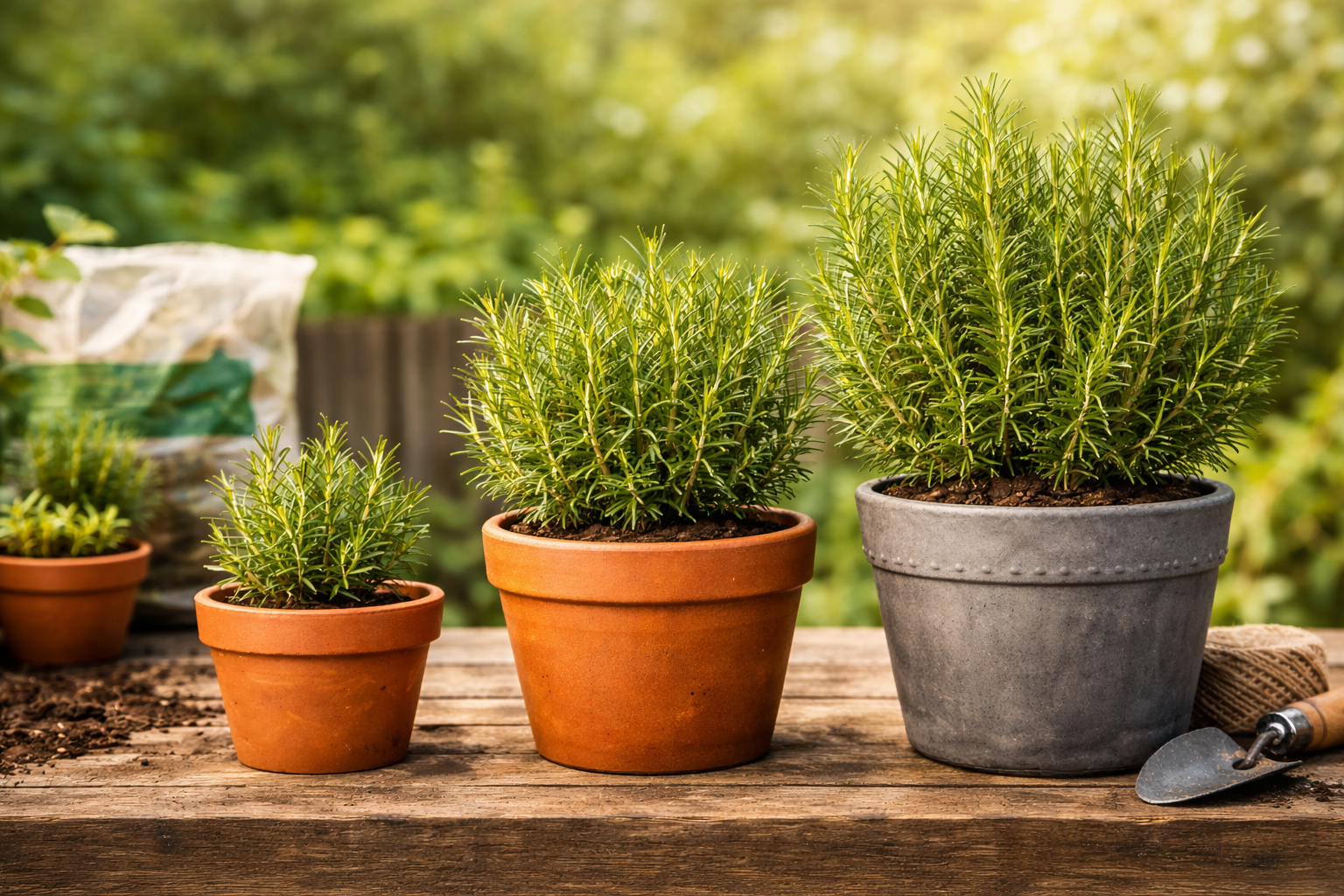
The easiest way to choose the right rosemary container size is to stop thinking in terms of one final number and start thinking in stages.
For a small nursery rosemary: use a 6 to 8 inch pot. This gives the roots enough room to expand without surrounding them with too much wet mix.
For an established young plant: move up to about 10 to 12 inches. At this stage, the plant usually has enough top growth and root mass to use the extra space well.
For a mature rosemary in a pot: aim for about 12 to 14 inches, sometimes more if you are keeping an upright variety for several seasons and you can manage the watering correctly.
The rule I use at home is simple: when repotting, leave a modest ring of fresh mix around the root ball, not a moat. If the new pot looks dramatically bigger than the current root mass, it is probably too big for now. Rosemary generally tolerates being a little snug far better than being left in cool, soggy compost.
This is especially true if you are growing it indoors, in a rainy climate, or on a shaded balcony where containers dry slowly. In those situations, a cautious size increase is safer than an ambitious one.
Decision rule
If the plant is small, size up one step. If the plant is already filling its pot and drying quickly, move toward the 12-inch range. If the plant is tiny and your conditions stay damp, resist the urge to overpot.
Bigger Is Not Always Better: When a Large Pot Helps and When It Hurts
A lot of gardeners hear “rosemary likes big pots” and interpret that as “the largest pot is the safest bet.” That sounds logical, but with rosemary it often causes the exact problem you were trying to avoid.
A larger pot helps when the plant is already well rooted, when summer heat is intense, or when your container dries so fast that you are watering constantly. In that case, more soil volume acts like a buffer. It holds moisture a bit longer and keeps the root zone from swinging between bone dry and soaked every afternoon.
A larger pot hurts when the plant is still small, when the weather is cool or humid, or when the rosemary is growing indoors and evaporation is slow. Then the extra compost stays wet too long. Rosemary roots want oxygen as much as they want water. If they sit in a slow-drying mix for days, the plant can yellow, stall, or develop root problems.
I have learned to watch the drying rhythm more than the tape measure. If a rosemary in a small pot is wilting quickly and the mix is drying in a day, that tells me it probably needs more root room. If the mix in a larger container still feels damp several days later, the plant did not need more size. It needed better drainage or less water.
Think of it like shoes. A little room is comfortable. Shoes three sizes too big do not make walking easier. They just make the fit sloppy.
Here’s what nobody tells you
A “too big” rosemary pot rarely looks wrong at first. It looks generous and tidy. The problem shows up later when the plant sits in damp compost it cannot use fast enough.
Width, Depth, and Drainage: What Actually Matters Most
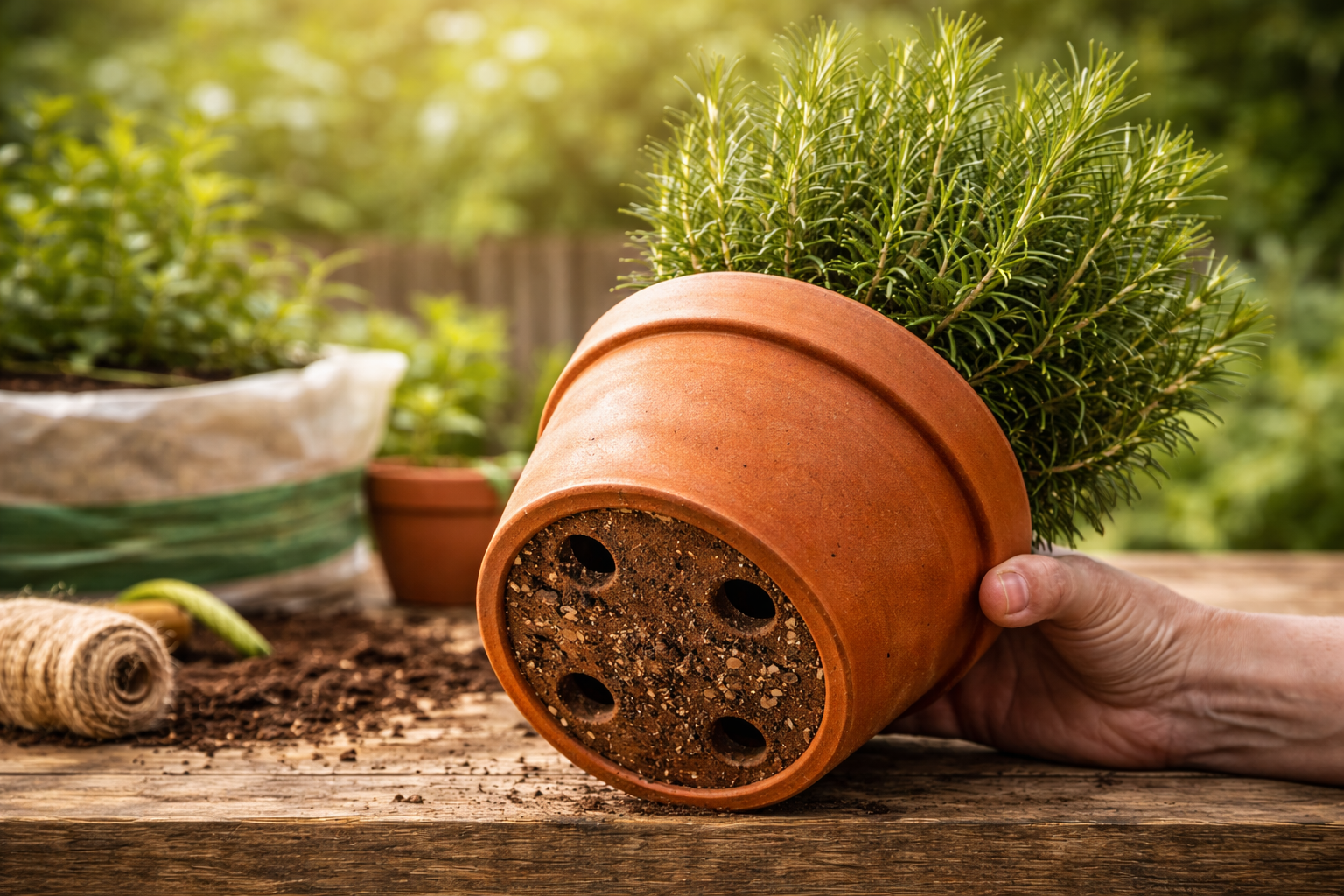
When people ask how big should a rosemary pot be, they usually focus on width. Width matters, but it is not the whole story. Rosemary does better when the pot has enough depth for stable root development and enough width for steady growth, but the real non-negotiable is drainage.
That is why the RHS does not just recommend a pot at least 30 cm wide and deep. It also stresses that there should be plenty of drainage holes in the base. That second part is the real deal-breaker. A slightly smaller pot with excellent drainage is usually safer than a perfectly sized pot that traps water.
As a working rule, a 12-inch-wide and 12-inch-deep pot is a strong target for an established rosemary. Deeper is fine if the mix drains quickly and the plant is large enough to use it. Wider is fine if you are not creating a broad, wet ring of compost around a small root ball.
Do not ignore the base of the container, either. One tiny hole in a heavy decorative pot is not ideal. Michigan State University Extension notes that sufficient drainage holes are one of the most important parts of container selection. That matters even more with rosemary because wet roots are one of the fastest ways to make a healthy plant struggle.
If you use a saucer under the pot, empty it after watering. Letting rosemary sit in a shallow pool is like putting a dry-loving shrub in a permanent puddle.
Common mistake
Planting rosemary directly into a pot with no drainage holes because it “looks outdoor-safe.” If the pot cannot shed extra water, the exact inch measurement stops mattering.
Best Pot Material for Rosemary: Clay vs Plastic vs Glazed Pots
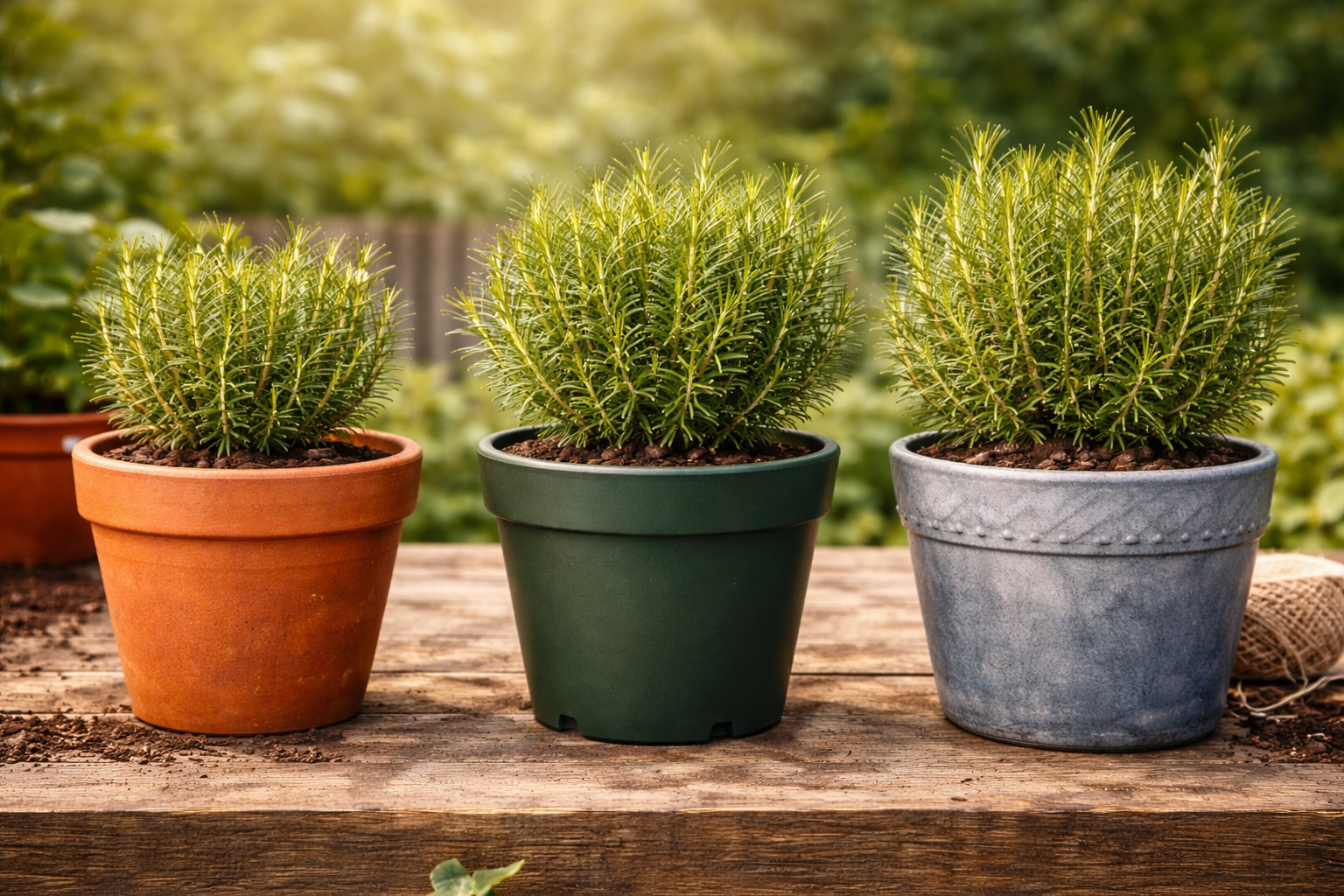
Pot material changes how a rosemary pot behaves, sometimes more than people expect.
Terracotta or unglazed clay is usually the easiest choice for rosemary. It is breathable, it loses some moisture through the walls, and it helps the root zone dry between waterings. If you tend to water a little too often, clay gives you a margin for error.
Plastic or resin holds moisture longer. That can actually be helpful in hot, dry weather or on a sunny patio where pots dry quickly. The tradeoff is that you need a more careful watering hand, especially in cooler weather.
Glazed ceramic sits somewhere in the middle depending on thickness, exposure, and the shape of the pot. It can work beautifully, but the drainage has to be right and the watering needs to match the slower dry-down.
Michigan State University Extension points out that solid-walled containers usually hold moisture longer, while terra cotta loses some moisture through the unglazed clay. That is exactly why the same 12-inch rosemary pot can behave very differently depending on what it is made from.
My own bias is simple. If I am helping someone who has already killed rosemary once, I usually steer them toward terracotta first. Not because it is magic, but because it makes overwatering a little harder. If someone gardens in brutal summer heat and misses waterings, plastic becomes easier to live with.
Best choice by condition
Humid or rainy area: lean toward terracotta. Hot, dry area: plastic or glazed pots can work well. Forgetful waterer: slightly less breathable pots may be easier. Heavy-handed waterer: terracotta is your friend.
Potting Mix and Sunlight Matter Almost as Much as Pot Size
A surprising number of rosemary “pot size” problems are really potting mix problems. The container gets blamed, but the real issue is that the root zone stays too wet, too dense, or too dark.
Rosemary wants a free-draining setup. That means a container mix that drains quickly and does not stay heavy after watering. The RHS recommends a soil-based compost mixed with horticultural grit to improve drainage for rosemary in containers. You do not need to obsess over a complicated formula, but you do need a mix that feels open rather than soggy.
Sunlight matters just as much. Rosemary is a sun-loving herb. If it is growing in weak light, especially indoors, the plant uses water more slowly and the mix stays damp longer. That is one reason rosemary often does better outdoors in a bright, airy spot than on a dim kitchen sill.
If you are planning a mixed herb planter, be careful. Rosemary plays best with other dry-loving, full-sun herbs, and even then only if the pot is large enough and drains fast. If you want a fuller guide, this breakdown of what to plant with rosemary in container gardens helps sort out when rosemary should share a pot and when it is better off alone.
Here is the practical version. If your mix stays wet and heavy, fix that before blaming the pot size. If your rosemary gets weak light, size up more cautiously because the plant will not use the extra moisture as fast.
Why this works
Rosemary evolved for bright, lean, fast-draining conditions. The closer your container setup feels to that, the less picky the plant becomes about the exact pot you chose.
When to Repot Rosemary, and How Much Bigger to Go
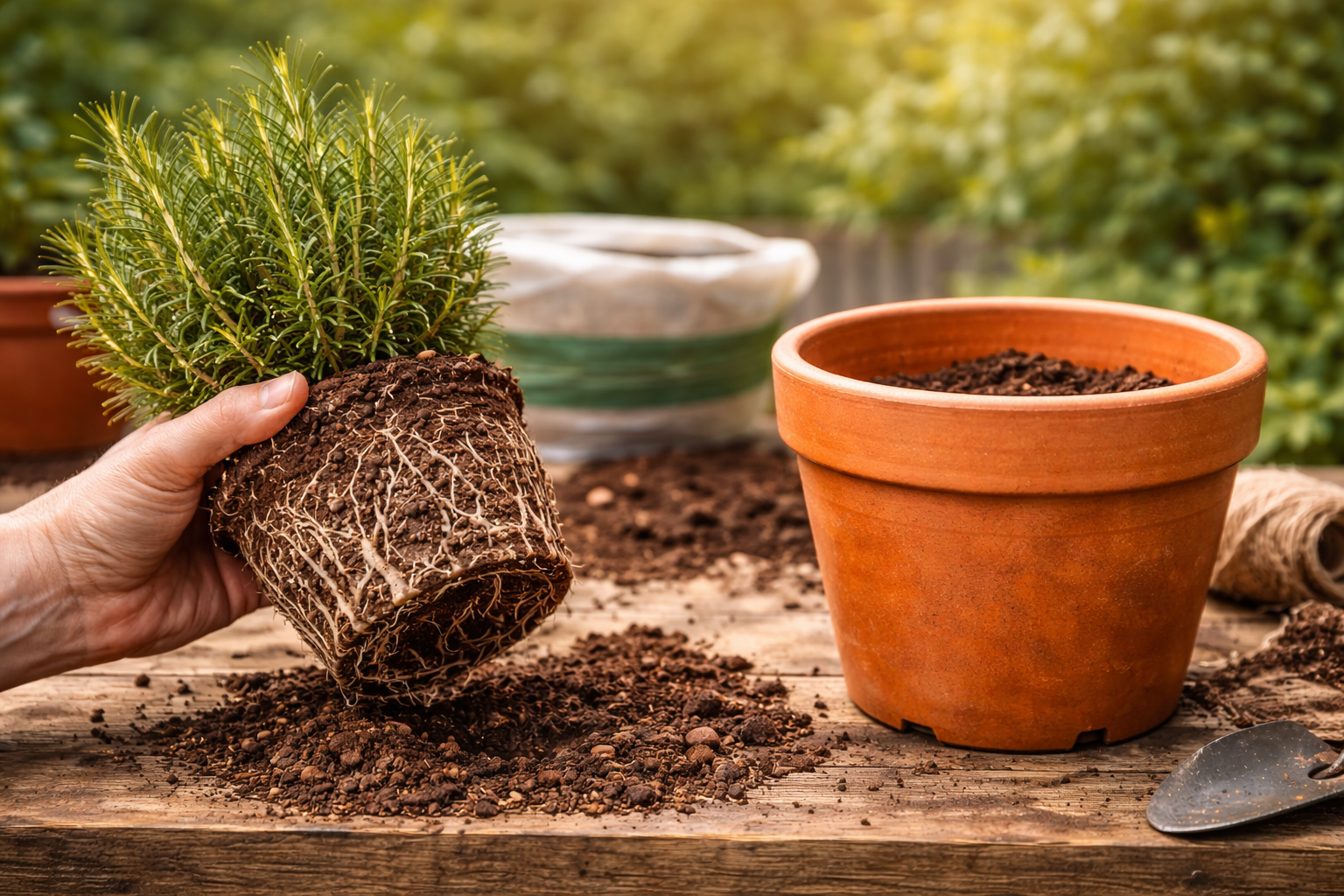
Repotting rosemary is less about the calendar and more about what the plant is telling you.
It is usually time to repot when roots are circling heavily, roots are poking out of the drainage holes, water rushes through the pot unusually fast, or the plant dries out much faster than it used to. Another sign is when the top growth starts looking oversized compared with the container and the plant becomes top-heavy.
When that happens, go up one sensible step. Not three. If the plant is in a 6-inch pot, move to something around 8 inches. If it is already established in a smaller container, moving toward 10 or 12 inches makes sense. If it is already thriving in a 12-inch pot, do not assume it needs a larger one just because another season has passed.
Spring is usually the easiest time to repot because the plant is about to enter a period of active growth. The roots recover more quickly, and the plant has a season of warmth and light ahead of it.
The best quick test is to slide the root ball out and actually look. If the roots lightly hold the soil together and there is still some room to grow, wait. If the roots are packed, circling, and the mix is exhausted, that is your sign to move up.
I have also found that gardeners often repot when the plant looks tired, even though the real problem is overwatering or lack of light. So before repotting, ask two simple questions. Is the plant using water quickly? And is the root ball actually crowded? If the answer is no, a bigger pot may solve nothing.
Key takeaway
Repot rosemary when the plant has earned the space, not when the pot looks small to your eye.
Indoor Rosemary vs Outdoor Rosemary: The Pot Size Changes Slightly
Indoor rosemary and outdoor rosemary do not use containers the same way, even when the pots are identical.
Outdoors, especially in a bright, hot location, a slightly larger pot can make life easier. The mix dries faster outdoors, airflow is stronger, and the plant can use the extra root room and moisture buffer more efficiently.
Indoors, the same pot can stay damp much longer. Light is usually weaker, air movement is lower, and growth is slower. That means indoor rosemary often benefits from a more conservative pot size and a more careful watering pattern.
If you live where winters are cold, portability matters too. A giant, handsome container is not so helpful if you cannot move it before a hard frost. That is one of the reasons I like to stop at a practical size for container rosemary rather than treating it like a permanent landscape shrub.
The useful rule here is simple. Outdoors in strong sun, a rosemary plant can often handle the upper end of the size range more easily. Indoors, err on the side of slightly smaller, faster-draining, and easier to manage.
If your container gardening habits overlap with vegetables as well, this guide to the best soil for growing tomatoes in pots is a helpful reminder that container mix structure changes how water behaves far more than most gardeners think. The crops are different, but the container logic is similar.
Signs Your Rosemary Pot Is Too Small, Too Big, or Just Right
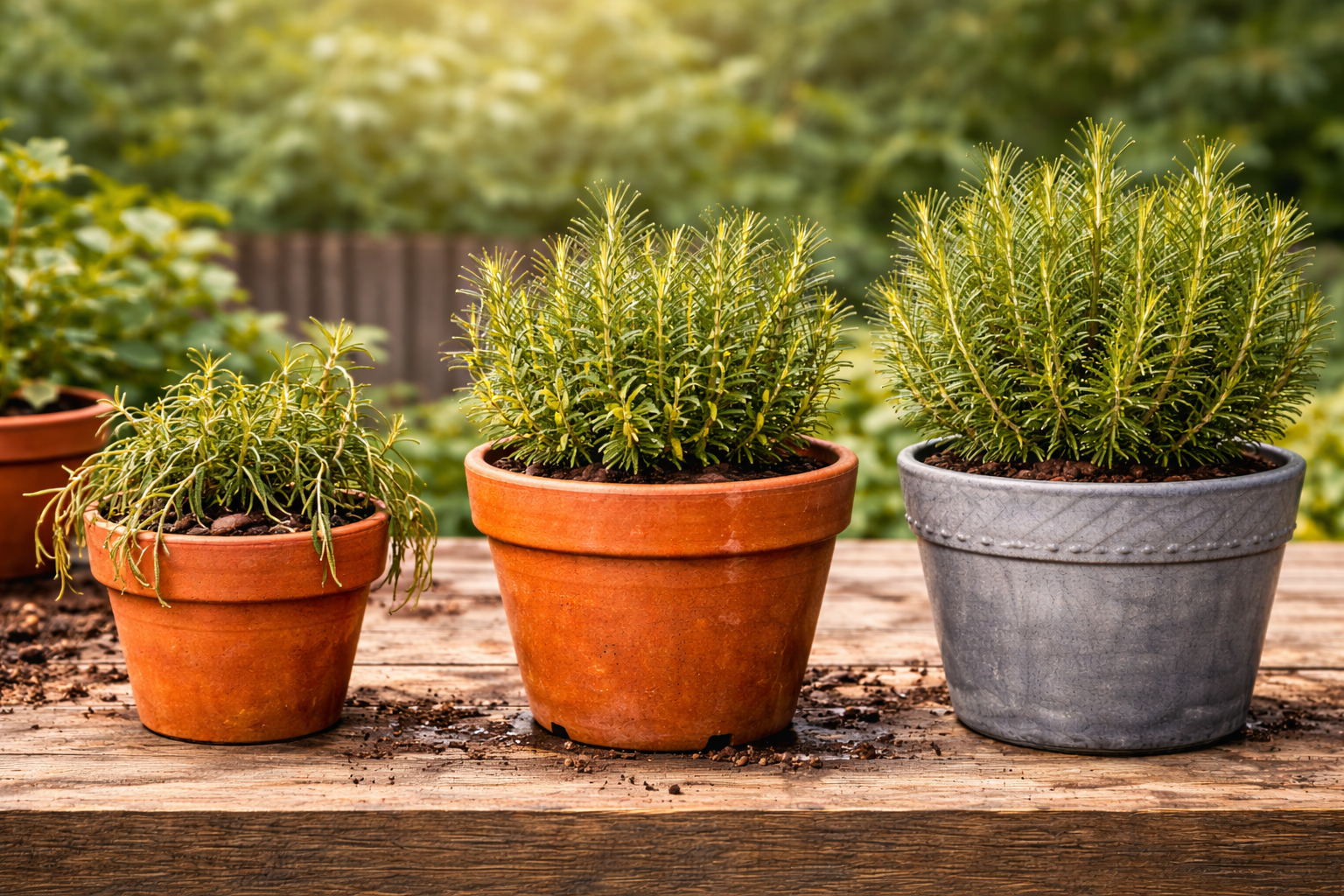
Once you know what to watch for, rosemary makes container problems fairly obvious.
Your pot is probably too small if:
- the plant dries out very quickly, especially in warm weather
- roots are packed tightly and circling
- growth feels stalled even though light is good
- the plant wilts fast and rebounds only briefly after watering
Your pot is probably too big if:
- the mix stays damp for several days after watering
- the plant turns yellow without a clear nutrient issue
- growth slows after repotting instead of improving
- the root zone smells sour or stale
Your pot is probably just right if:
- the plant grows steadily without stretching or sulking
- the mix dries on a sensible rhythm for your weather
- the foliage stays fragrant and firm
- the plant feels stable in the container and does not topple easily
One more point matters here. Pot size is not the same as pot success. A perfectly sized container cannot compensate for poor drainage, weak light, or soil that stays heavy and soggy. At the same time, rosemary is not as fussy as it is sometimes made out to be. Once the light is strong, the drainage is good, and the size is sensible, it usually settles down and acts like the easy herb people promised you it would be.
Final decision rule
Start small plants in 6 to 8 inches. Move established plants toward 10 to 12 inches. Keep mature container rosemary in at least a 12-inch pot with excellent drainage, and only go larger when the plant and your conditions clearly justify it.
FAQ
Can rosemary stay in its nursery pot for a while?
Yes, if the plant is healthy and not root-bound. A small rosemary does not need immediate repotting just because you brought it home. If the mix drains well and the roots are not packed, it can stay put for a while.
Is a deeper pot better than a wider pot for rosemary?
Not automatically. Rosemary likes enough depth for stable roots, but depth without drainage is not helpful. For most home growers, a pot that is both reasonably wide and reasonably deep works better than chasing one dimension alone.
Can a mature rosemary live long term in a container?
Yes. With enough sun, fast drainage, occasional pruning, and sensible repotting, rosemary can live for years in a container. The key is treating it like a woody, dry-loving herb rather than a thirsty soft-stemmed annual.

Michael Rowan is the founder and lead writer at The Garden Playbook. He has spent 10+ years growing plants across a range of settings — from indoor houseplants and container gardens to raised beds and in-ground plots — adapting methods to different light levels, seasons, and growing conditions.
Michael focuses on practical, experience-based guidance grounded in fundamentals: soil health, watering strategy, plant nutrition, pruning and propagation, and integrated pest management (IPM). His work aims to help readers diagnose common problems (such as yellowing leaves, stunted growth, or pest pressure) and apply straightforward solutions that are realistic for home gardeners.
At The Garden Playbook, Michael develops tutorials and plant guides using a consistent process: documenting real outcomes where possible, explaining the “why” behind each step, and verifying higher-risk topics (such as plant toxicity or pest treatment options) against reputable horticultural references.