
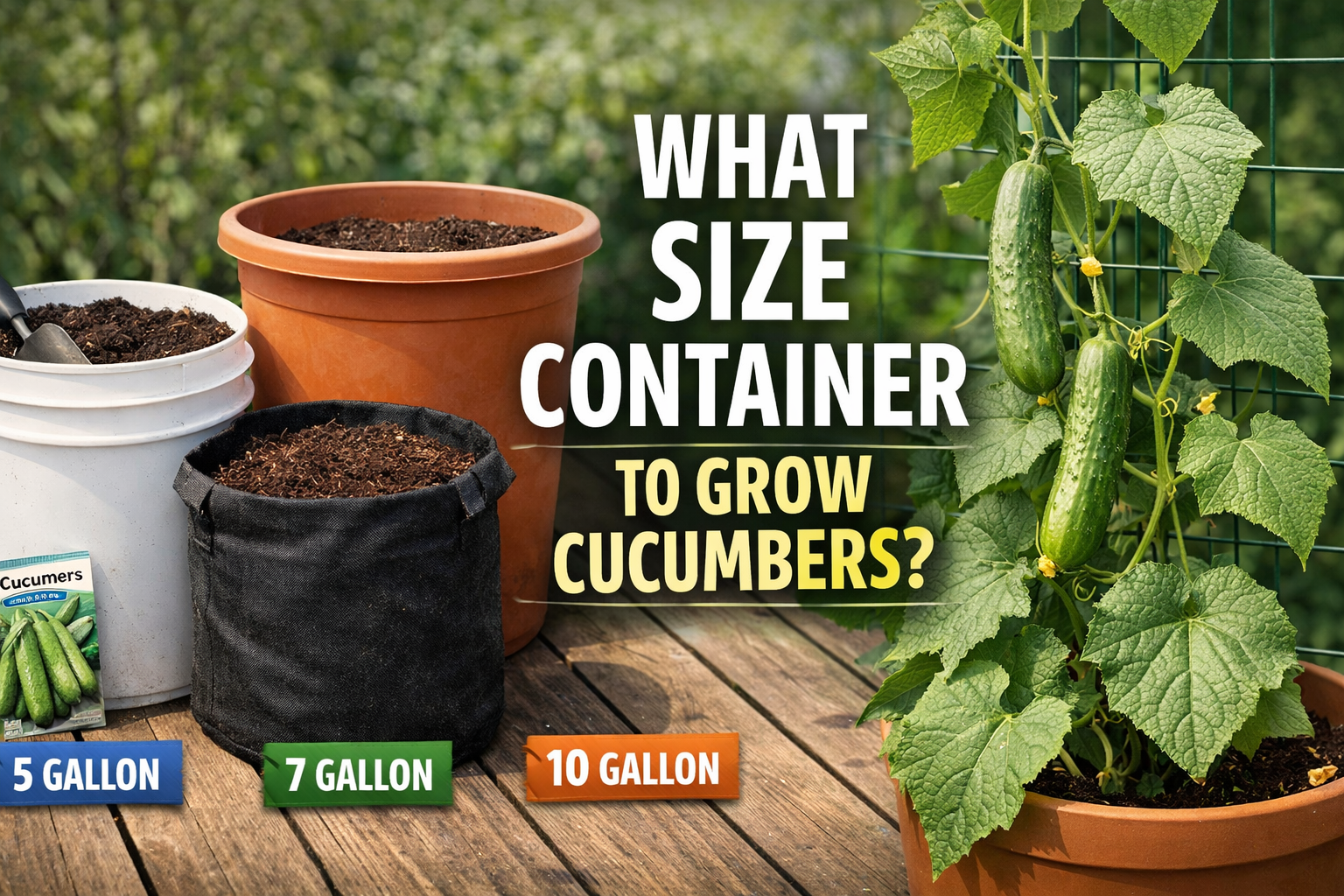
You read three different articles, stare at a stack of pots, and somehow end up more confused than when you started. One says a 5-gallon bucket is enough. Another tells you to buy the biggest planter you can lift. Then the seed packet starts talking about “compact” and “vining” types as if that clears everything up.
So, what size container to grow cucumbers? The short answer is this: one cucumber plant needs at least a 5-gallon container, but a 7 to 10-gallon container is usually the smarter choice for easier watering, steadier growth, and better fruit set. That is the direct answer most people came for. The useful part is knowing when 5 gallons is genuinely enough, when it is only the bare minimum, and when a bigger container saves you a season of limp leaves and disappointing harvests.
I have grown cucumbers in nursery pots, buckets, and fabric grow bags, and the pattern has been consistent. A “just big enough” pot can keep a plant alive. A comfortably sized pot makes the plant easier to manage when summer heat, wind, and fast growth hit all at once. Cucumbers grow quickly, drink heavily, and punish small mistakes faster than a lot of beginner crops.
- When a 5-gallon container works and when it does not
- Why bush cucumbers and vining cucumbers should not be treated the same way
- How pot depth, width, and material change the result
- How many cucumber plants fit in one container without crowding
- What to do if you already planted into a pot that is too small
Key takeaway:
Minimum works. Comfortable grows better. For most home gardeners, one cucumber plant in a 7 to 10-gallon container with support is the safest no-regret setup.
What Size Container to Grow Cucumbers? Here’s the Straight Answer First
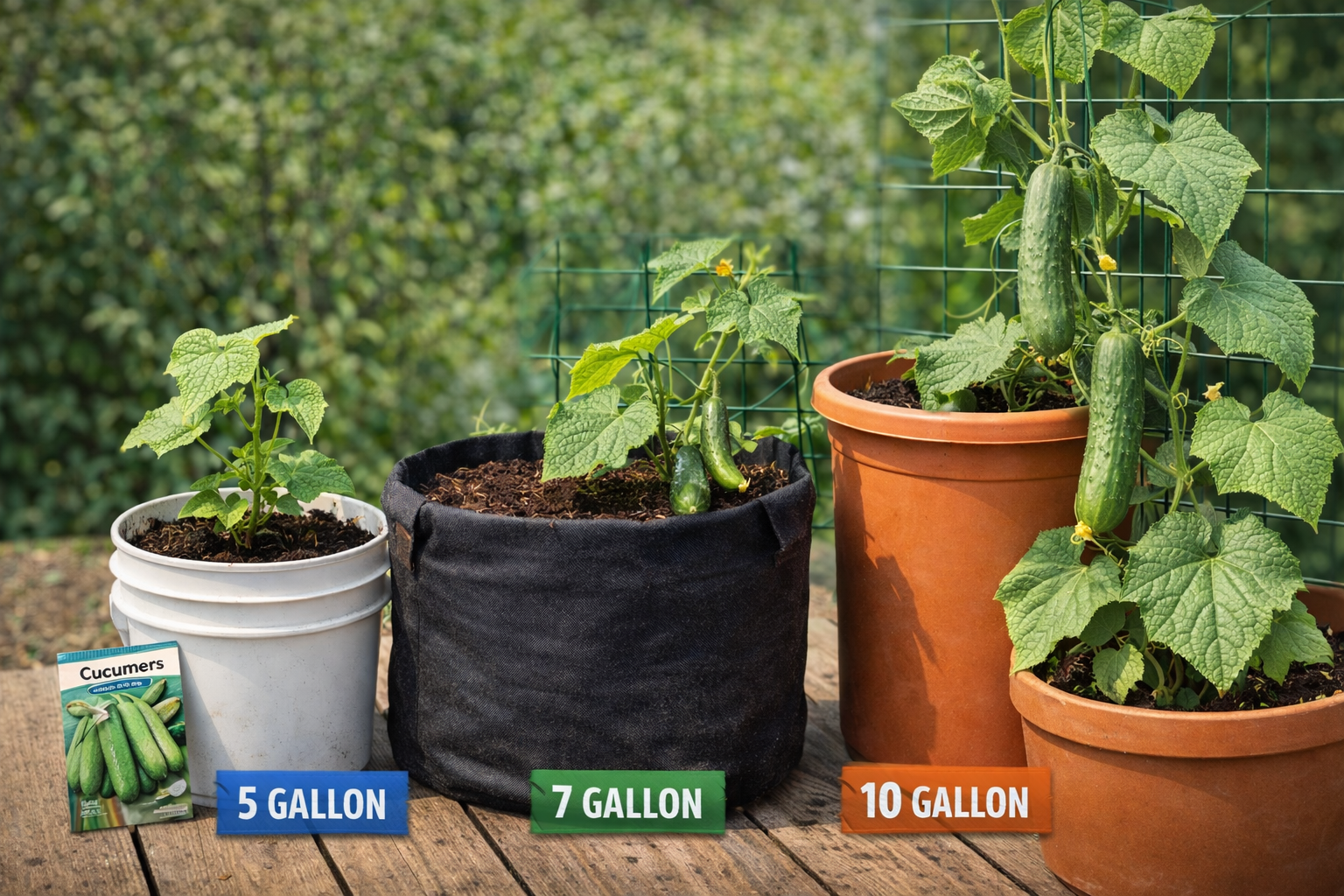
If you want the simplest rule, use one container per plant and start at 5 gallons. That is the floor, not the sweet spot. For most gardeners, especially anyone growing a standard slicing cucumber, a planter in the 7 to 10-gallon range is the more forgiving choice.
Here is how that breaks down in practice:
- 5 gallons: workable minimum for one compact or bush cucumber, or one standard plant if you stay on top of watering
- 7 to 10 gallons: better for one standard vining cucumber and much easier to manage through hot weather
- More than 10 gallons: useful if you want extra moisture buffering, a self-watering setup, or a larger trough-style planter
The reason the internet keeps throwing out one number is that a minimum number is easy to publish. The problem is that cucumbers do not live in theory. A compact patio variety on a partly sheltered deck is not the same as a vigorous vining plant on a blazing balcony with reflective heat and wind. The same 5-gallon container that looks perfectly fine in May can feel tiny by late July.
According to the University of Wisconsin Extension, larger vegetable crops such as cucumbers need a minimum container volume of five gallons and a depth of 12 to 18 inches. That is a sound baseline. In my experience, though, “minimum” is where many readers get tripped up. Minimum answers the survival question. It does not always answer the “will this be easy enough to enjoy?” question.
Common mistake: treating “can grow in a 5-gallon pot” and “should grow in a 5-gallon pot” like they mean the same thing.
The Simple Pot Size Rule That Actually Helps You Choose
Here is the rule that makes this decision easier:
- If you are growing one compact bush cucumber and can water consistently, a 5-gallon container can work.
- If you are growing one standard vining cucumber, aim for 7 to 10 gallons.
- If your setup is hot, windy, full sun, or prone to missed waterings, size up one level.
- If you are using a fabric grow bag, lean larger because it dries faster than plastic.
- If you are using a self-watering planter, a smaller size may be more manageable because the reservoir helps buffer dry spells.
Think of container size like shoe size. “Medium” might technically fit, but if your foot is jammed into the front all day, you are going to feel it. Cucumbers react the same way below the soil line. Root room, soil volume, and moisture buffering all affect how steady the plant stays once it starts climbing and fruiting.
If you prefer metric measurements, the same rule translates roughly like this:
- 5 gallons is about 19 to 20 liters
- 7 gallons is about 26 to 27 liters
- 10 gallons is about 38 liters
That is why I rarely tell a beginner to hunt for the absolute minimum pot. If your goal is to make growing cucumbers feel less fussy, bigger is usually buying you time. More soil means more stable moisture, a slower dry-down, and fewer emergency waterings on hot afternoons.
Here’s what nobody tells you:
A bigger cucumber container is not just about root space. It is a water reservoir in disguise. That is often the difference between a plant that keeps producing and one that sulks every time the weather turns hot.
Bush vs Vining Cucumbers Changes the Answer More Than Most People Realize
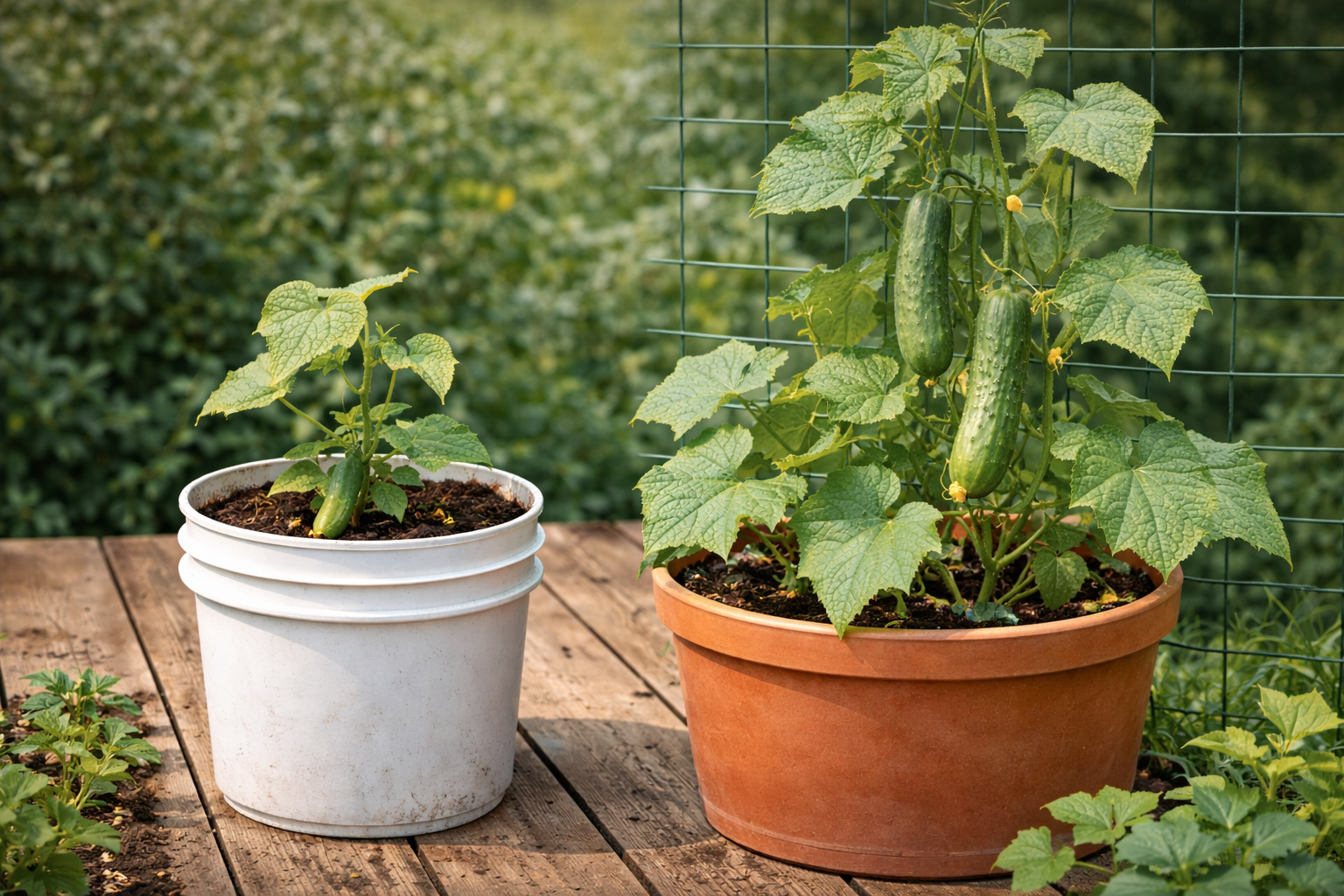
One reason pot-size advice gets messy is that “cucumber” is too broad. Bush cucumbers, patio cucumbers, compact hybrids, pickling types, and long vining slicers do not all behave the same way. If you ignore that, you end up with advice that sounds simple but is only half useful.
Bush and patio cucumbers are the easiest fit for containers. They stay more compact, need less support, and are the best candidates for the 5-gallon minimum. If you have a tight balcony or want a tidy plant that stays closer to its pot, start here.
Vining cucumbers are where gardeners get into trouble. They grow fast, pull more water, and become much more manageable when the container is bigger and the support is in place from the beginning. These are the plants that make a 7 to 10-gallon pot feel far more sensible than a 5-gallon pot.
The NC State Extension Plant Toolbox notes that cucumber plants can spread 3 to 8 feet wide and have high water needs, with vertically grown plants losing moisture more easily. That last point matters more than it first appears to. Once you start training a cucumber upward, you are asking the plant to move a lot of water through a lot of growth quickly. A larger soil reservoir makes that easier.
My own rule is simple: choose the plant first, then size the pot. If the variety description includes words like “bush,” “compact,” or “patio,” the minimum size becomes more realistic. If it looks like a vigorous slicer meant to run, treat the minimum as backup advice, not the ideal plan.
Key takeaway: Bush cucumbers can tolerate tighter quarters. Standard vining cucumbers usually reward you for sizing up.
Container Shape, Material, and Drainage: Why Two Pots With the Same Volume Don’t Behave the Same
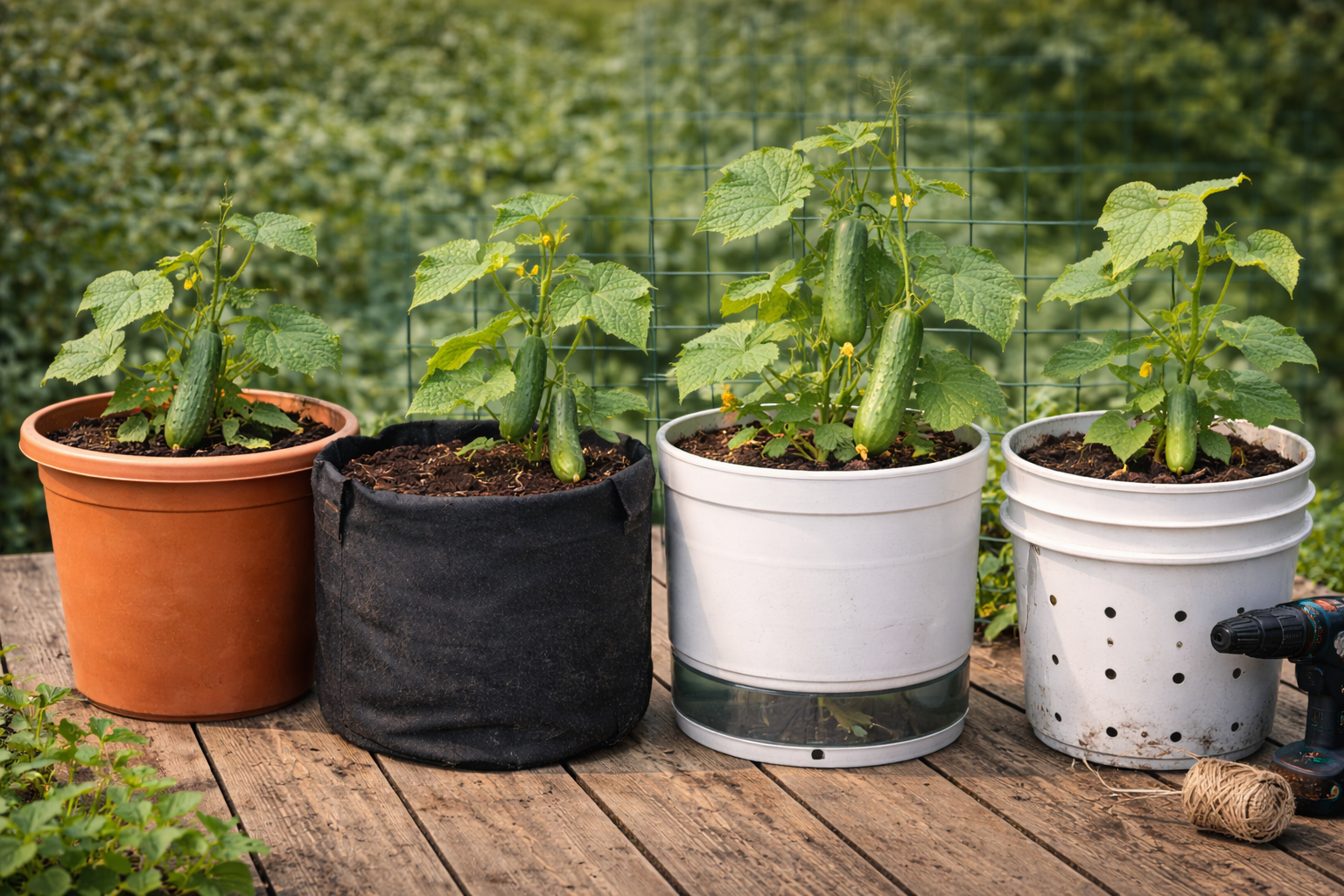
Volume matters most, but shape and material still change the result.
A tall, narrow pot and a wider, more stable pot may hold a similar amount of mix, yet they do not perform exactly the same way for cucumbers. Wide containers are often easier to manage because they anchor a trellis better and resist tipping once the vines gain weight. Adequate depth still matters, though, which is why that 12 to 18-inch depth guidance is a useful checkpoint.
Here is how the most common container types tend to behave:
- Plastic pots: usually the easiest choice for moisture retention and beginner-friendly management
- Fabric grow bags: good aeration, but they dry out faster, especially in sun and wind
- Self-watering planters: especially helpful for thirsty crops like cucumbers
- Repurposed buckets: workable if they have proper drainage holes and enough room for support
Drainage is not optional. Cucumbers want steady moisture, but they do not want stagnant, airless roots. If you are repurposing a bucket or storage tote, make sure it drains freely. Also, skip the old trick of putting rocks in the bottom. The University of Wisconsin Extension specifically advises against layering rocks or pot shards in the base because research shows it impedes drainage rather than improving it.
I have had the best luck with plain plastic nursery pots and sturdy plastic planters because they stay more evenly moist and are less punishing if I miss a watering window. Fabric bags can grow good cucumbers, but they ask more from you, especially in midsummer.
What to look for in a cucumber container:
- At least 5 gallons, with 7 to 10 gallons preferred for standard vining plants
- Roughly 12 to 18 inches deep
- Real drainage holes, not decorative dimples
- A stable shape that can handle a trellis
- A material that matches your watering habits and summer heat
How Many Cucumber Plants Per Container? The Safe Rule and the Exceptions
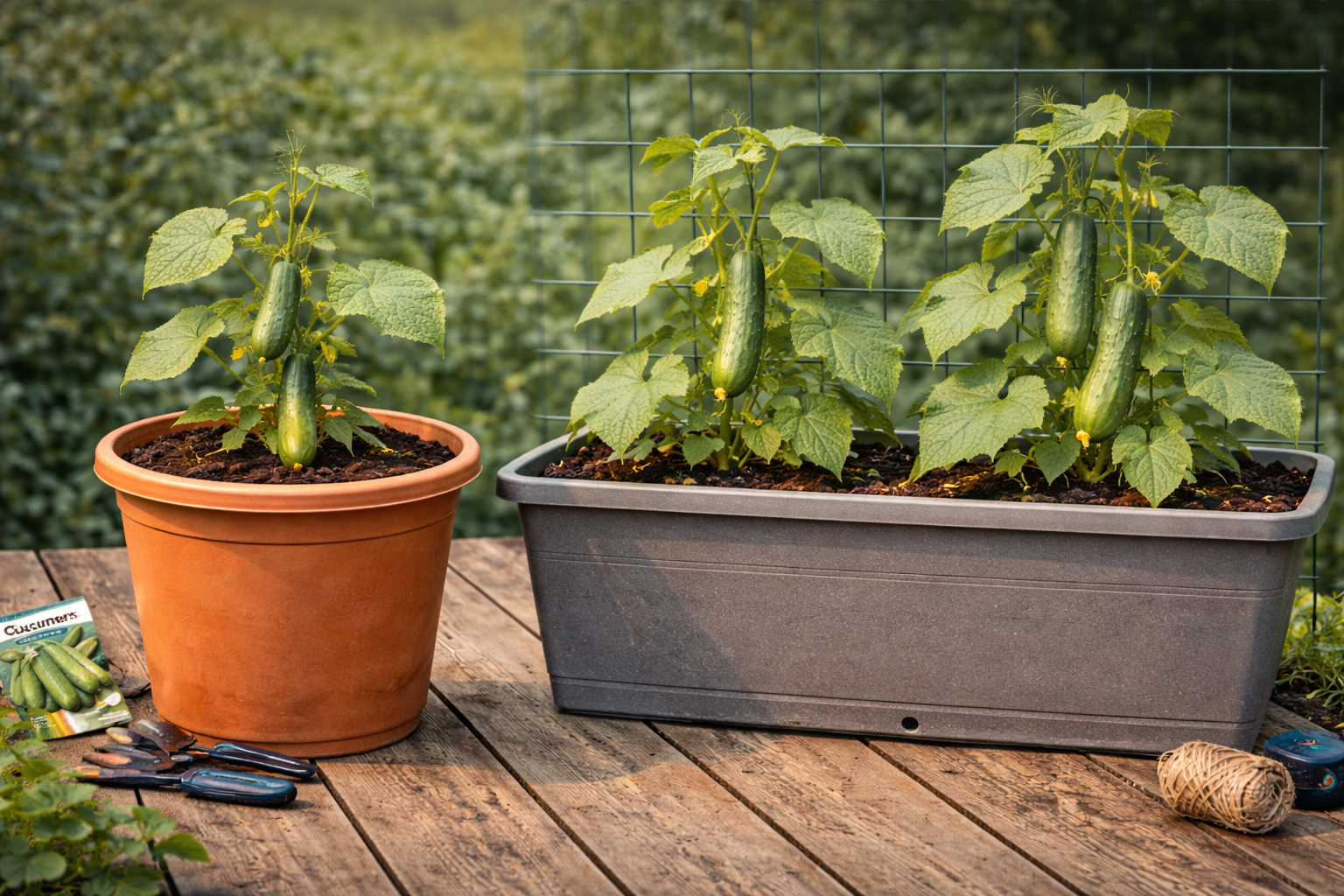
The safe rule is one cucumber plant per container.
That may feel conservative when the pot looks roomy on planting day, but cucumbers are fast growers. Once the roots fill in and the top growth takes off, crowding starts to show up as dry soil, tangled vines, weaker airflow, and more competition than most small-space gardeners expect.
For a standard 5 to 10-gallon container, one plant is the recommendation that causes the fewest problems. If you are using a long trough or a much larger planter, you may be able to grow two compact plants with proper spacing and support, but that is the exception, not the starting point.
If plant count is the part you are still sorting out, this guide on how many cucumber plants per container breaks down when the one-plant rule changes and when squeezing in extra seedlings quietly costs you yield.
The temptation to plant two or three seedlings often comes from not wanting to thin them out. I understand that. I still hate pulling healthy extras. But with cucumbers, that early restraint usually pays you back later in stronger vines and easier care.
Common mistake: planting for how empty the pot looks in week one instead of how full it will look in week eight.
The Hidden Variable Is Heat: Why the Right Pot Size in Spring Can Feel Too Small by Summer
This is the part that explains why so many gardeners say, “It was doing great, and then suddenly it wasn’t.”
Cucumbers are thirsty plants to begin with. In containers, heat multiplies that demand. A black pot on a bright patio, a windy balcony rail, and a vertical vine all increase how quickly the mix dries. That same pot size that looked generous in mild weather can turn into a daily rescue mission once the plant is flowering and setting fruit.
NC State Extension notes that cucumbers have high water needs, require consistent moisture for proper growth, and that vertically grown plants lose moisture more easily. I have seen this firsthand with container cucumbers trained up a trellis. The growth looks great, the plant feels tidy, and then hot weather exposes how small the root-zone water reserve really is.
Use this rule when heat enters the picture:
- Hot, sunny, windy location: size up
- Fabric grow bag in full sun: size up or be ready to water more often
- Self-watering planter: minimum sizes become more realistic
- Compact bush type in a slightly sheltered spot: minimum sizes are easier to get away with
When container cucumbers get repeatedly dry, you often see the same cluster of symptoms. Leaves wilt fast. Fruit growth slows. Cucumbers may turn bitter or come out uneven. Gardeners often assume they need more fertilizer, but the real issue is often moisture swing, not feeding.
Key takeaway:
If your setup runs hot or dries quickly, container size is not just a space decision. It is a stress-management decision.
A Quick Setup That Makes Smallish Containers Work Better
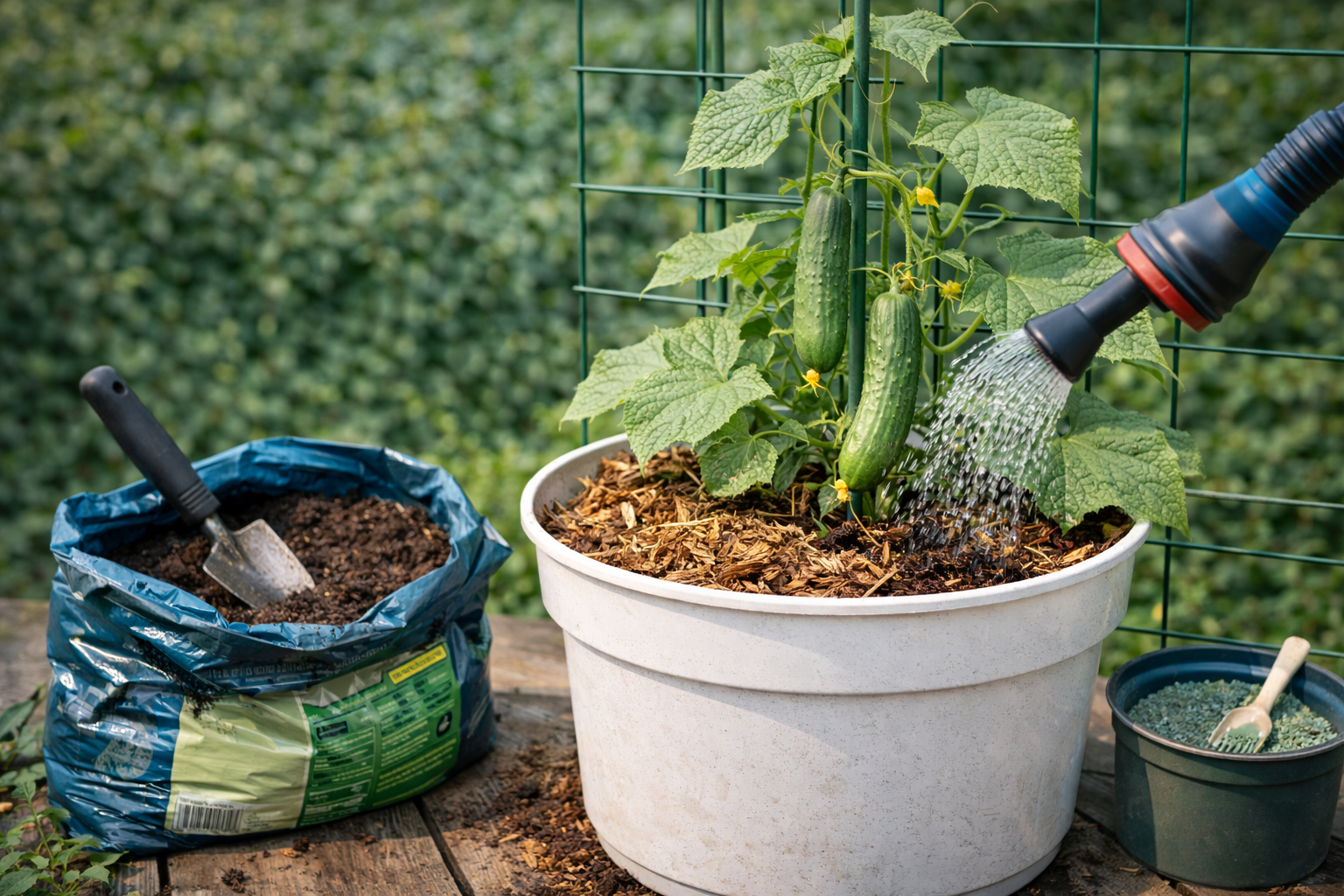
Sometimes the pot is already bought, filled, and planted. If that is your situation, you can still improve the odds.
Start with a quality potting mix, not garden soil. Cucumbers need a loose, well-drained mix that still holds moisture. The University of Wisconsin Extension recommends commercial potting mixes for container vegetables and also notes that full sun and easy access to water matter because fruiting vegetables such as cucumbers may need daily watering as plants get larger.
Then stack the small advantages:
- Mulch the surface lightly to slow evaporation
- Install support at planting time so roots are not disturbed later
- Water deeply instead of splashing shallowly
- Feed regularly according to the fertilizer label once the plant is growing hard
- Check moisture earlier in the day during heat waves
One simple trick I use is the lift test on smaller containers. After a thorough watering, notice how heavy the pot feels. A day later, lift again. You quickly learn the difference between “still comfortably moist” and “already too dry.” For large fixed planters, a finger check a couple of inches below the surface is more practical.
If you know your container is on the smaller side, think like someone trying to make a small fuel tank last longer. Shade the root zone lightly if the pot overheats. Keep the surface covered with mulch. Do not let the plant sprawl unsupported. Those small management choices buy you stability.
Here’s what works: A slightly undersized cucumber container is much easier to manage when the mix is good, the vine is supported, and the watering is steady.
Common Pot Size Mistakes That Quietly Cut Your Harvest
Most container cucumber failures are not dramatic. They are cumulative. A plant survives, even fruits a little, but never really gets into a strong, steady rhythm.
These are the mistakes that cause that slow disappointment:
Choosing by diameter only.
A pot can look wide enough and still not hold enough soil volume overall.
Planting too many seedlings.
The pot looks generous at first, then turns into a traffic jam below and above the soil.
Using fabric without adjusting your watering routine.
Fabric bags are not wrong. They are just less forgiving in hot weather.
Skipping support.
A supported cucumber is easier to harvest and often cleaner, but it also means the plant is moving water through a lot of top growth. Your watering and pot size need to match that growth.
Using dense soil.
Garden soil in a pot usually compacts, drains poorly, and makes root problems more likely.
Treating all cucumber varieties the same.
A patio bush cucumber and a vigorous slicer do not belong in the same planning category.
Stopping at the minimum size in a hard location.
A windy balcony and a protected patio should not get the same recommendation.
I have made the “technically big enough” mistake more than once. The plant did not die. That was the problem. It stayed just healthy enough to keep me second-guessing everything except the pot size.
Best Container Size by Scenario So You Don’t Have to Guess
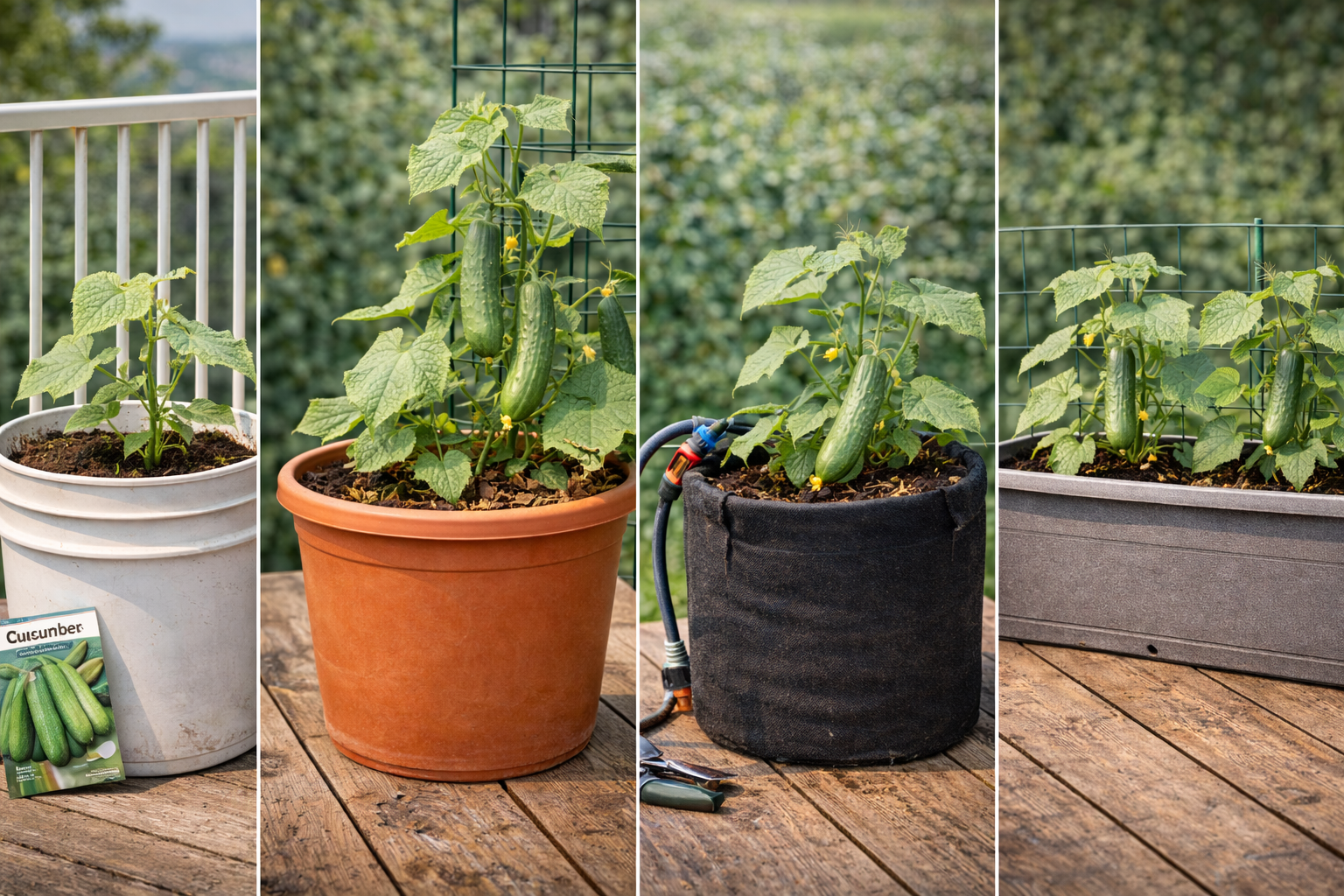
If you want the quick chooser, use this:
You are growing one compact patio or bush cucumber on a balcony or deck.
Use a 5-gallon container at minimum. If you want easier moisture management, move up to 7 gallons.
You are growing one standard slicing or vining cucumber with a trellis.
Use 7 to 10 gallons. This is the setup I would recommend most often because it gives you breathing room once the plant starts moving fast.
You are using a fabric grow bag.
Treat 5 gallons as the bare floor and lean toward 7 to 10 gallons if summer heat is serious where you live.
You are using a self-watering planter.
A smaller stated volume can work better than it would in a regular pot because the reservoir reduces moisture swings. Even so, one plant per container is still the safest rule.
You want to grow two plants together.
Do it only in a larger, longer container with proper spacing, and only if you are intentionally choosing compact varieties. For most readers, one plant per container is still the cleaner answer.
You already planted into a pot that is too small.
If the plant is still young, transplant it up. If it is established and you do not want to disturb it, improve the setup instead: mulch, support, steady feeding, earlier watering, and close monitoring during heat.
If you want a parallel read while planning a small-space edible setup, the article on best tomato varieties for containers follows a similar fit-first approach and helps when you are pairing crops on the same patio or deck.
Final recommendation:
For most home gardeners, the best answer is one cucumber plant in a 7 to 10-gallon container, about 12 to 18 inches deep, with drainage and support in place from day one.
FAQ
Is a 5-gallon bucket big enough for cucumbers?
Yes, for one cucumber plant it can be enough, especially for a compact or bush variety. But it is usually the minimum, not the most forgiving choice. If you are growing a standard vining cucumber or gardening in heat, a larger container is easier to manage.
Do cucumbers need a deep pot or just a wide one?
They need enough total volume first, then a useful shape. A pot around 12 to 18 inches deep is a good target, but a stable wider container is often easier to support and less likely to tip once the vine starts climbing.
What should I do if my cucumber plant is already in a pot that is too small?
If it is still early, transplant it into a larger container. If it is already established, focus on damage control: mulch the surface, support the vine, water deeply and consistently, and do not let the mix swing from soaked to bone dry.

Michael Rowan is the founder and lead writer at The Garden Playbook. He has spent 10+ years growing plants across a range of settings — from indoor houseplants and container gardens to raised beds and in-ground plots — adapting methods to different light levels, seasons, and growing conditions.
Michael focuses on practical, experience-based guidance grounded in fundamentals: soil health, watering strategy, plant nutrition, pruning and propagation, and integrated pest management (IPM). His work aims to help readers diagnose common problems (such as yellowing leaves, stunted growth, or pest pressure) and apply straightforward solutions that are realistic for home gardeners.
At The Garden Playbook, Michael develops tutorials and plant guides using a consistent process: documenting real outcomes where possible, explaining the “why” behind each step, and verifying higher-risk topics (such as plant toxicity or pest treatment options) against reputable horticultural references.