
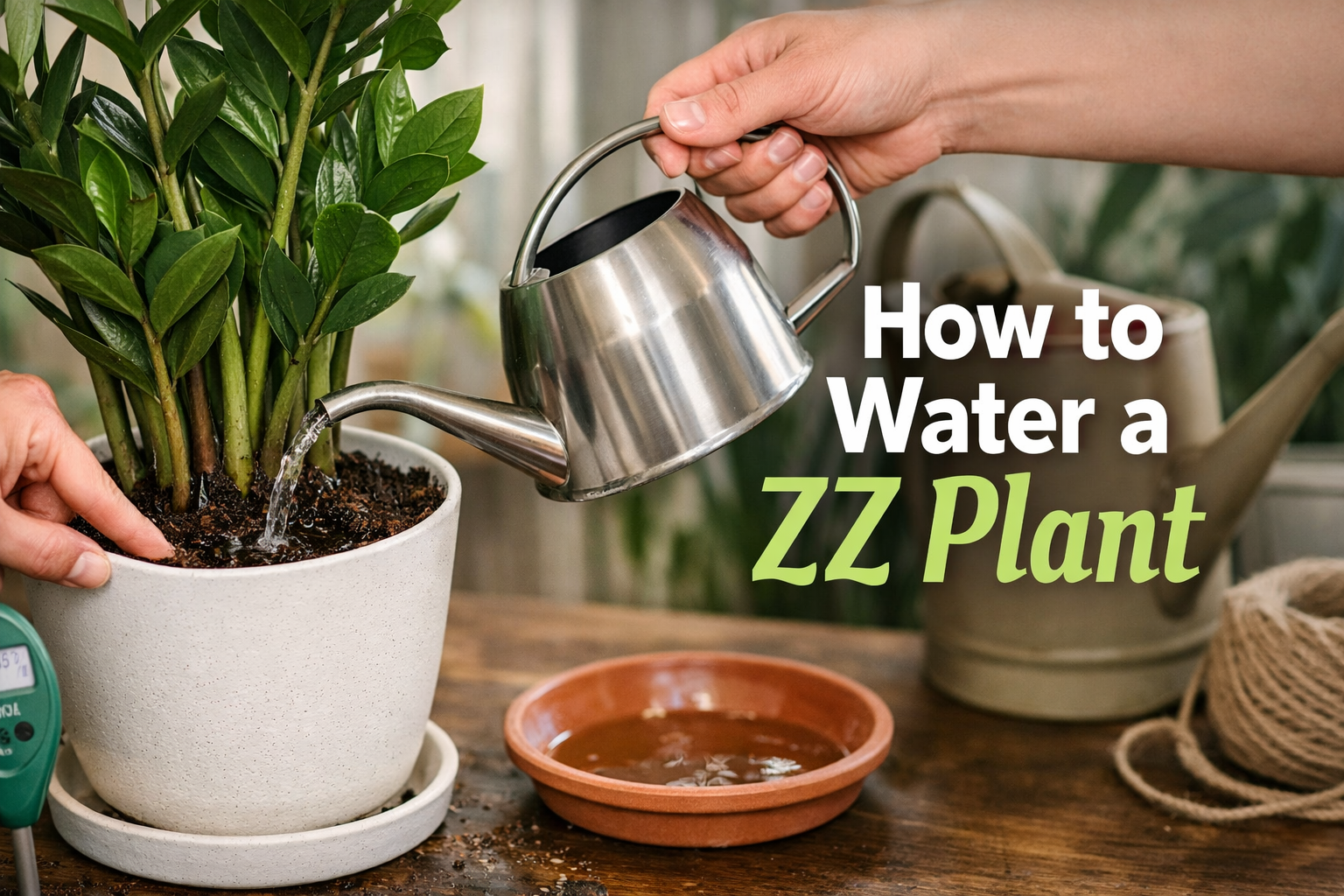
A ZZ plant can look perfectly fine for weeks and then, right after one well-meant watering, start throwing yellow leaves. That’s the trap. If you’re wondering how to water a ZZ plant, the short answer is this: wait until the potting mix has dried well below the surface, then water deeply until excess runs out and let the pot drain all the way.
In a bright room that often means every 2 to 4 weeks. In low light, in winter, or in a pot that dries slowly, it can stretch to 4 to 6 weeks or longer. The soil check matters more than the calendar.
I’ve kept ZZ plants in a sunny room that dried fast and in a dim office corner that stayed damp forever. Same plant type, totally different rhythm. That’s why the generic “water once a month” advice feels tidy but falls apart the moment your light, pot, or soil changes.
What you’ll learn
- How dry a ZZ plant should be before you water it
- How to water deeply without creating root rot
- What yellow leaves, drooping, and wrinkling usually mean
- How light, pot size, soil, and season change the timing
- What to do after overwatering or underwatering
At a glance: the ZZ watering rule
| Situation | What to check | Likely move |
|---|---|---|
| Bright indirect light, smaller pot | Mix is dry at least 2 inches down and pot feels lighter | Water thoroughly, often around every 2 to 4 weeks |
| Average room, medium pot | Lower root zone is no longer cool or damp | Water, then drain fully |
| Low light, winter, or oversized pot | Don’t trust the dry crust on top, check deeper | Wait longer, often 4 to 6 weeks or more |
| Yellow leaves and wet soil | Pot still heavy, mix smells sour, roots may be soft | Stop watering and inspect the setup before giving more |
A quick safety note: ZZ plants are not pet- or kid-friendly snack material. NC State Extension notes the plant can irritate people and is a problem if cats or dogs chew it, so wash your hands after pruning and keep it out of nibbling range.
How Often to Water a ZZ Plant, the Short Answer First
The best answer is not “every Sunday” or “once a month.” It is: water when the root zone has dried out, then water deeply and let the pot drain.
That advice is not random. The Missouri Botanical Garden describes ZZ plants as growing from rhizomes, and the Royal Horticultural Society also points to their large water-storing rhizomes. Those swollen underground structures act like a reserve tank. So a ZZ plant handles dry spells far better than soggy soil.
For most homes, a useful starting range is every 2 to 4 weeks in brighter active growth and 4 to 6 weeks or longer in low light or winter. But treat that as a starting lane, not law. A ZZ in a small nursery pot near a bright east window can dry much faster than one in a big plastic pot tucked five feet from a north-facing window.
Simple rule: If the mix still feels damp down in the pot, don’t water. If it has dried through and the pot feels lighter, water until runoff appears and then stop.
There’s one more nuance worth keeping. A ZZ plant can survive on very infrequent watering and still look decent for a while. Growth is a different story. If you want fuller stems and steady new growth, you still need to water properly once the plant has used what it has.
Check the Root Zone, Not Just the Topsoil
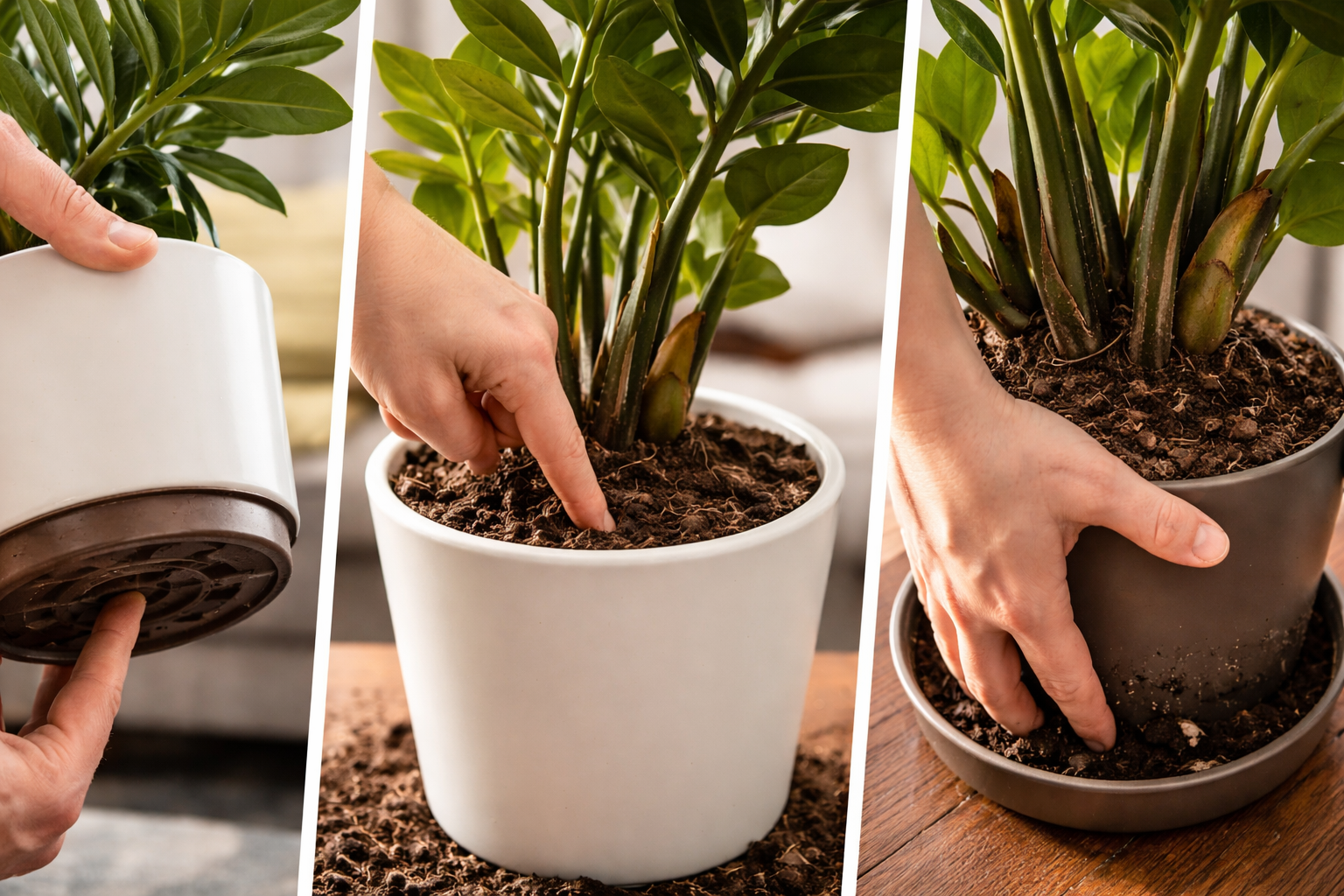
This is where most watering mistakes begin. The top half-inch of soil can look bone dry while the bottom half of the pot is still cool and damp. If you water at that point, you’re not helping the plant. You’re stacking wet on top of wet.
For a small pot, stick a finger about 2 inches down. For a larger pot, use two checks: feel lower through the drainage hole if you can and lift the pot. A recently watered ZZ feels noticeably heavier. After a real dry-down, it lightens up. That weight check sounds almost too simple, but it is one of the most useful habits you can build.
I like using a three-part check when a plant is in that annoying maybe-maybe-not stage:
- Touch: Is the mix dry below the surface or only crusty on top?
- Weight: Does the pot still have that damp, heavy feel?
- Drainage-hole peek: If the bottom feels cool or damp, wait.
If you’re stuck between “I think it’s dry” and “I might just be impatient,” waiting a couple more days is usually the safer move. ZZ plants forgive that. Wet roots do not forgive much.
Remember: Surface dryness is not the goal. A dry root ball is the goal.
One thing that trips people up is decorative cachepots. You lift the leafy top, the surface looks dry, and you water. Meanwhile the nursery pot inside has been sitting in trapped runoff. That’s not a thirsty plant. That’s a swamp in nice shoes.
Water Deeply So the Whole Root Ball Gets What It Needs
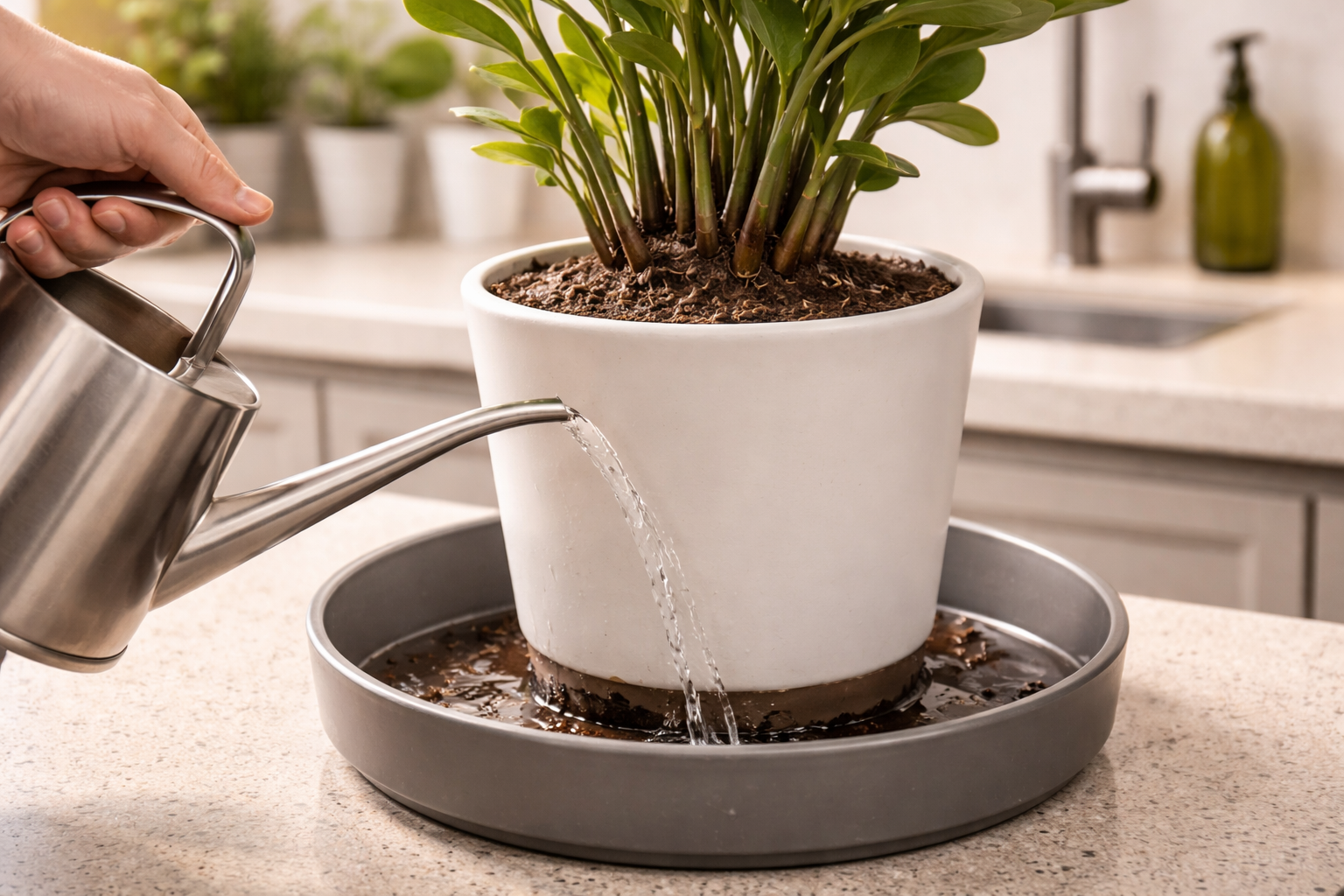
Once the mix is actually dry enough, don’t baby it with a splash. Water slowly and evenly over the soil until excess starts running from the drainage holes. Then let the pot drain fully before it goes back into its saucer or outer pot.
Deep watering works better than repeated tiny drinks because dry potting mix can form pockets. A light splash wets the top and leaves the lower roots patchy and thirsty. One proper soak rehydrates the whole root ball.
Here’s the easiest routine:
- Move the pot to a sink or tray. This keeps runoff from becoming a mess.
- Water evenly across the surface. Don’t dump it in one spot.
- Keep going until runoff appears. That tells you the mix is wet through.
- Wait for full drainage. Give it a minute or two.
- Empty the saucer or outer pot. Never leave the roots sitting in water.
The University of Minnesota Extension recommends houseplants be grown in a container with a drainage hole, and that sounds basic because it is. Still, lots of ZZ problems start when that one detail gets ignored.
Pro tip: A thorough soak followed by a real dry spell is a better fit for ZZ plants than frequent little sips.
Top watering is the default method I’d stick with. Bottom watering can work for a very dry pot that has become hard to re-wet, but it is a rescue tool more than a routine. If you bottom-water every time and forget to monitor dry-down, the plant can end up staying damp longer than you realize.
Adjust the Timing for Light, Pot Size, Soil, and Season
A ZZ watering schedule changes because the setup changes. Light is the biggest lever, then pot size, then soil, then season.
Light: More light usually means the plant is growing more and using water faster. Less light means slower growth and slower drying. Bloomscape’s broader ZZ care guidance leans the same way by placing the plant in bright indirect light for better growth, even though it tolerates lower light just fine. If the plant is parked in a genuinely dim room, the soil can stay wet much longer than you’d guess from the top layer alone.
Pot size: A larger pot holds more mix, and more mix holds more moisture. That’s handy only when the plant has enough roots and light to use it. A small ZZ in an oversized pot is one of the most common ways people drift into overwatering without realizing it.
Soil: Chunkier, faster-draining mix dries sooner once watered. Dense soil hangs on longer. Dense soil hangs on longer. The goal is not a bone-dry cactus bed with zero moisture retention. The goal is a mix that drains cleanly and re-wets without turning gummy.
Season: Winter often slows dry-down indoors because the days are shorter and growth eases off. Yes, indoor heat can dry air out, but a ZZ plant’s water use is tied more to growth and light than to your skin feeling dry near the radiator.
If you like rules that actually help, use these:
- If the plant moved to lower light, lengthen the gap before the next watering.
- If you repotted into a larger pot, expect the mix to stay wet longer.
- If the plant sits near a brighter window, check sooner, not automatically water sooner.
- If winter cut the light in half, the old summer rhythm is probably too frequent now.
For window placement, a guide on the best-facing window for plants is a handy companion because window direction quietly changes how fast a ZZ uses water.
Spot an Overwatered ZZ Plant Before Root Rot Gets Worse
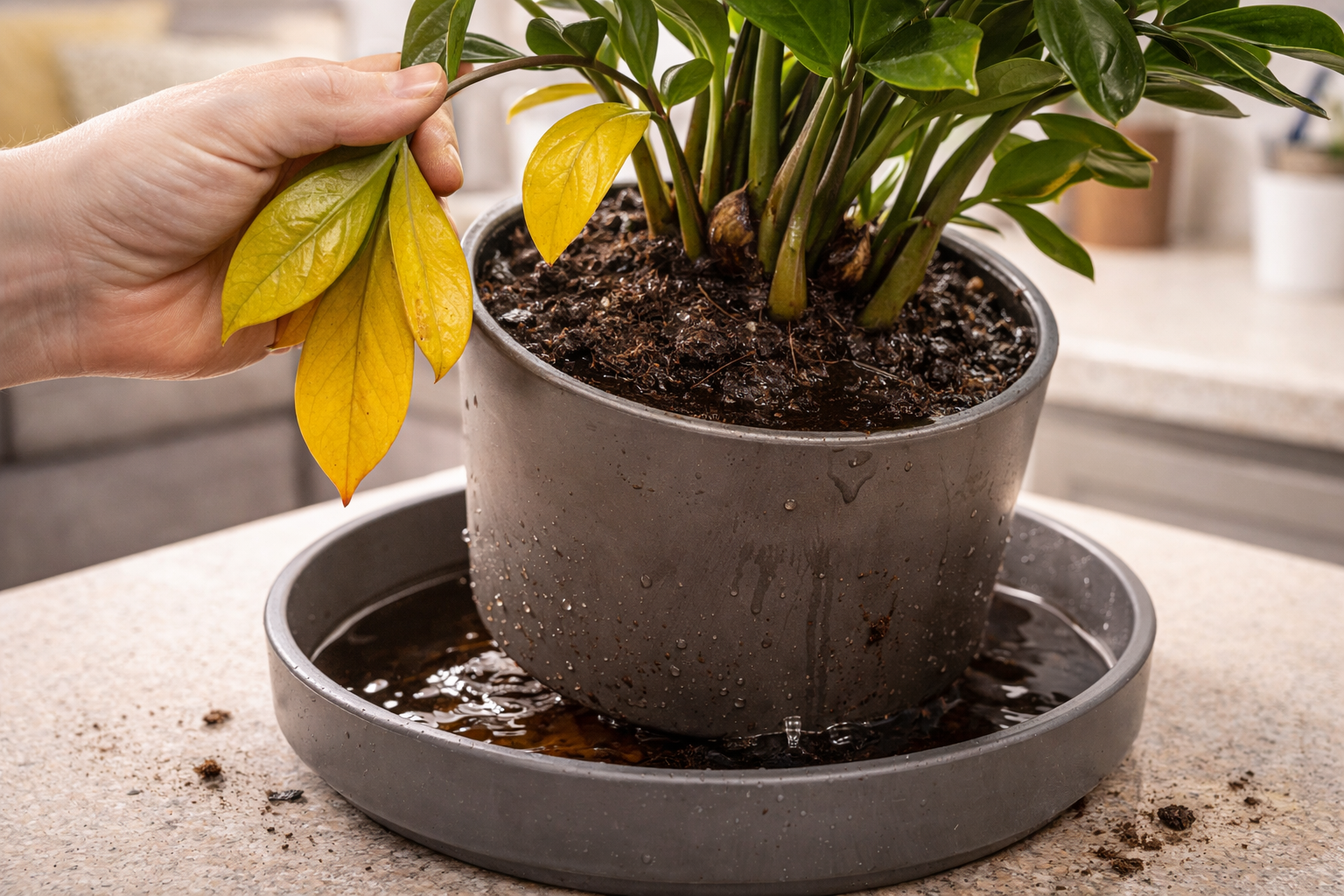
Yellow leaves scare people into doing the wrong thing. They see yellow and think dry. With ZZ plants, yellow leaves plus wet soil often point the other way.
The blunt version comes from a reliable place: the UConn Home and Garden Education Center says overwatering is just about the main reason ZZ plants fail indoors. That’s why a good diagnosis starts with the soil and pot, not the leaf color alone.
| What you see | What to check next | Most likely read |
|---|---|---|
| Yellow leaves and wet mix | Lift pot, smell soil, feel the lower root zone | Overwatering or slow-drying setup |
| Soft stems near the base | Inspect roots and rhizomes if severe | Root damage is possible |
| Sour smell or fungus gnats | Look for trapped water in cachepot or saucer | Mix is staying wet too long |
| Drooping with wet soil | Don’t add water, check roots first | Stress from damaged roots, not thirst |
If the plant is only mildly overwatered, stop watering and let the mix dry farther than usual before the next round. If the pot stays wet for what feels like forever, slide the plant out and inspect the roots. Healthy roots are firm. Rotten roots are dark, mushy, or foul-smelling.
Then fix the setup, not just the schedule. That might mean trimming dead roots, repotting into a more open mix, or moving the plant out of a pot that is simply too big for its root system right now.
Important: Yellow leaves on a ZZ plant are not a green light to water. Check the soil first every single time.
Bring Back an Underwatered ZZ Plant Without Overcorrecting
Underwatering happens too, just less often. A thirsty ZZ can droop a bit, wrinkle through the stems, stall out, or start crisping at the tips. The trick is not to swing from “too dry” to “constantly wet” in a panic.
Start with the same first step: check the soil. If the mix is dry through the pot and the plant looks a bit deflated, give it one deep watering until runoff appears. Let it drain and then go back to the normal dry-down cycle.
ZZ plants are surprisingly forgiving here because those rhizomes hold reserves. That’s the good news. The less good news is that old damaged leaves won’t always plump back up into perfect showroom leaves. Recovery often shows up in the next flush of growth, not in the ugliest leaf suddenly turning glamorous.
One thing I’d avoid is the “little drink every few days” rescue plan. It feels caring and it often creates a soggy middle layer while the lower root ball still hasn’t been properly rehydrated. Give the plant one proper drink and then back off.
If the soil has become hard and shrunk from the pot edge, water slowly in passes. Let the first round soak in, then water again. Dry peat-heavy mixes can get a bit stubborn like that.
Use a Pot and Soil Setup That Makes Watering Easier
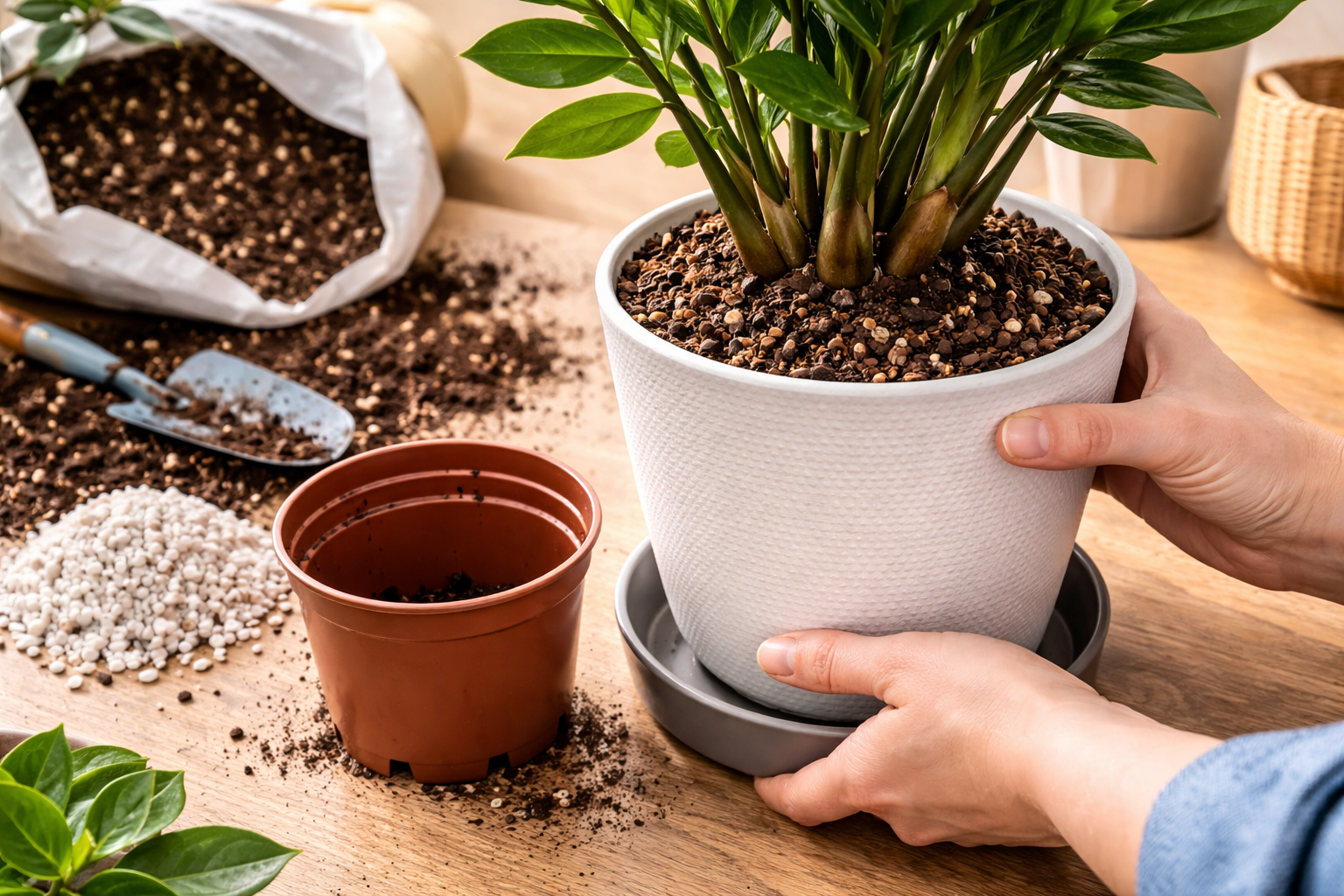
A good setup makes correct watering almost boring, and that’s what you want.
Drainage holes are non-negotiable. Not “nice to have.” Not “fine if I’m careful.” A ZZ in a pot with no escape for excess water asks you to judge moisture perfectly every time. That’s not plant care. That’s a wager.
Pot size matters nearly as much. When repotting, go only about 1 to 2 inches wider than the current pot. A modest step up gives the roots room without surrounding them with a moat of damp soil they can’t use yet.
For potting mix, regular indoor plant soil can work if it drains well and doesn’t stay gluey. If it feels heavy or compacted, cut it with coarse perlite or use a houseplant mix that dries a bit quicker. You don’t need to obsess over brand names. You do need a mix that drains, re-wets evenly, and doesn’t stay cold and soggy for ages.
Outer decorative pots are fine only when the plant stays in a real nursery pot inside them and you dump the runoff after watering. A cachepot can make a room look polished. It can also hide a puddle for a week. That’s the catch.
For broader care beyond watering, a guide on how to care for a ZZ plant indoors fits naturally here because light, potting mix, and room placement all feed back into watering rhythm.
Handle Winter, Low-Light Rooms, Repotting, and Outdoor Time Without Guesswork
Special cases are where people get weirdly generous with water. That’s when a ZZ tends to get into trouble.
Winter: Check the pot less often. Water less often too. Shorter days usually slow growth, and the plant just isn’t burning through moisture at the same pace.
Low-light rooms: A ZZ plant can tolerate low light, but “tolerate” is doing a lot of work there. In a dim office or hallway, the soil can stay damp much longer. If the room is truly dark for most of the day, growth will slow to a crawl. In that case a piece on LED grow lights for indoor gardening can help if you want the plant to do more than merely hang on.
After repotting: Water the plant in, then monitor the new mix carefully. Don’t assume the old schedule still fits. Fresh mix often holds and releases water differently, and a slightly larger pot usually dries slower.
Outdoor time in warm weather: A ZZ can spend time outside in the right conditions, but the drying pattern changes fast. Breezes and brighter light can speed things up. Heavy summer rain can push the plant the other way. A guide on whether a ZZ plant can live outside helps sort that out before the pot goes onto a patio.
Bottom watering and self-watering pots: Both can work in the right hands. Neither is my first pick for ZZ plants. A self-watering pot is built around steady moisture, and a ZZ is built around drying out between drinks. Those ideas don’t line up neatly.
One rule worth keeping: anytime light, pot size, soil, or location changes, reset your watering expectations and re-check the soil instead of following the old routine.
FAQ
Can you use tap water for a ZZ plant?
Usually, yes. Most ZZ plants handle ordinary tap water without drama. If your tap water is very hard or heavily softened, mineral buildup can show up over time. In that case, flushing the pot well during watering or switching to filtered water once in a while is a reasonable fix.
Should you mist a ZZ plant?
No real need. ZZ plants are not humidity divas, and misting does little for the roots where the watering problem actually lives. Focus on soil moisture, not leaf spritzing.
Does a Raven ZZ need a different watering routine?
Not in any major way. A Raven ZZ follows the same dry-then-soak pattern as the standard green form. The main variables are still light, pot size, soil, and season, not leaf color.

Michael Rowan is the founder and lead writer at The Garden Playbook. He has spent 10+ years growing plants across a range of settings — from indoor houseplants and container gardens to raised beds and in-ground plots — adapting methods to different light levels, seasons, and growing conditions.
Michael focuses on practical, experience-based guidance grounded in fundamentals: soil health, watering strategy, plant nutrition, pruning and propagation, and integrated pest management (IPM). His work aims to help readers diagnose common problems (such as yellowing leaves, stunted growth, or pest pressure) and apply straightforward solutions that are realistic for home gardeners.
At The Garden Playbook, Michael develops tutorials and plant guides using a consistent process: documenting real outcomes where possible, explaining the “why” behind each step, and verifying higher-risk topics (such as plant toxicity or pest treatment options) against reputable horticultural references.