
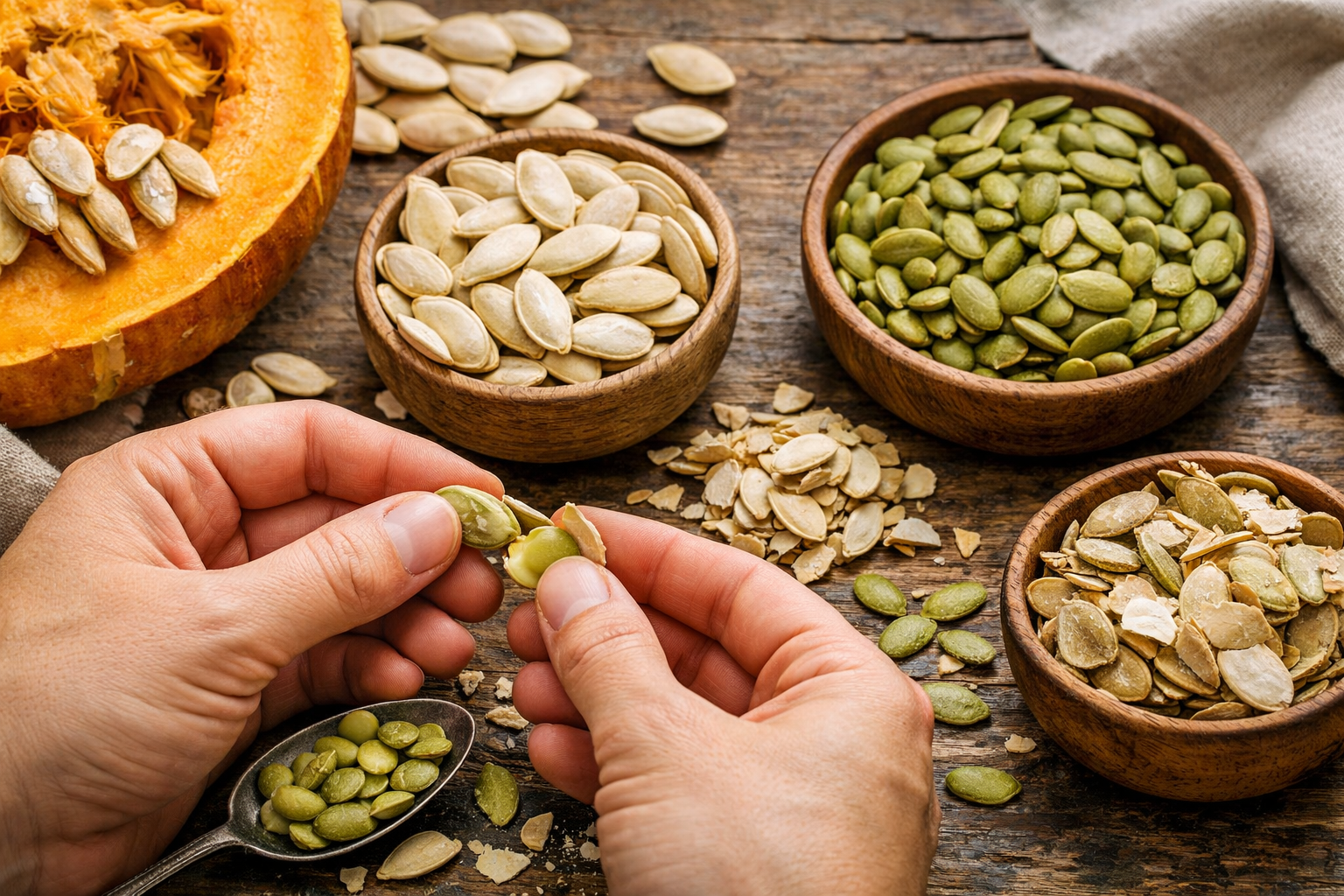
The annoying part is not scooping the seeds out of a pumpkin. It is getting halfway through the job and realizing the shell does not peel off like a sunflower seed.
If you want to know how to shell pumpkin seeds, the short answer is this: clean them, dry them a bit, crack the hull gently, then separate the loosened shells from the kernels by hand or in water. That works. What the quick answer leaves out is the part that matters most in a home kitchen: some seeds are worth shelling, some are not, and standard carving-pumpkin seeds often give you a lot more fuss than payoff.
I’ve done this both ways. A small bowl for soup garnish feels satisfying. A full tray from a Halloween pumpkin can feel like volunteering for a tiny, slippery office job.
Here is what this article will help you sort out:
- the fastest home method that actually works
- when shelling is worth the trouble and when it is not
- why home-shelled seeds often do not look like store-bought pepitas
- how to stop crushing the kernel while trying to crack the shell
- how to roast and store the finished seeds so they stay crisp
At a glance: pick the right path before you start
| What you want | Best move | Why |
|---|---|---|
| A small handful of kernels for topping soup, oatmeal, or salad | Shell them | The payoff is decent when the batch is small |
| A big post-carving bowl of seeds | Roast them whole | You skip the most tedious step and still get a good snack |
| Tender green kernels like the kind used in granola or pesto | Use pepitas or grow a hull-less pumpkin | Standard carving seeds rarely give that same texture |
Quick rule: if you have not tested 10 seeds yet, do that before committing to the whole bowl.
How to shell pumpkin seeds at home without crushing the kernels
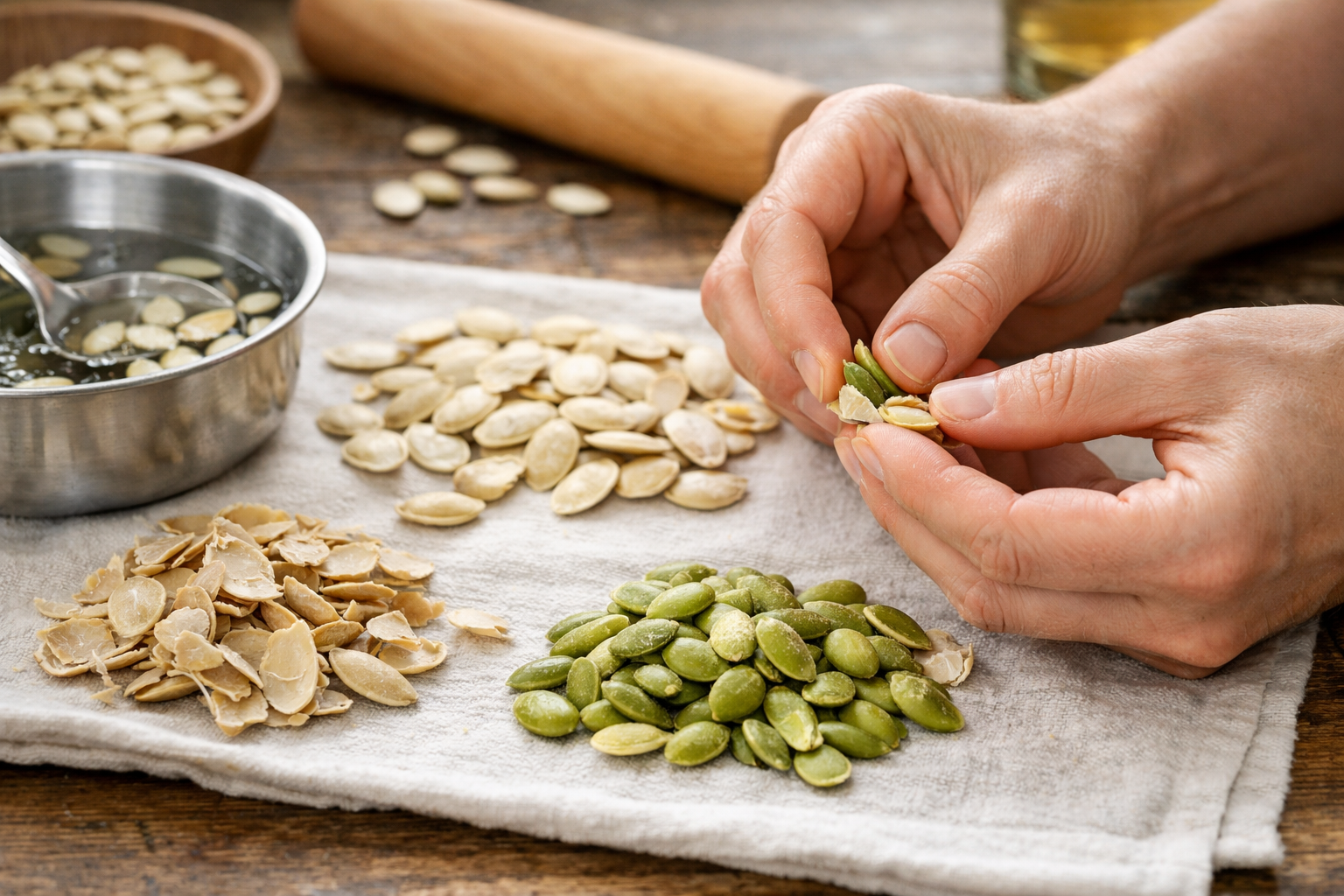
Shell pumpkin seeds at home with light cracking and simple separation
If you only need one dependable method, use this one. It is the best middle ground for a modest batch because it gives the hull a chance to open without turning the kernel into crumbs.
-
Clean the seeds so the shell is not slippery
Rinse off the stringy pumpkin pulp and pat the seeds dry. They do not need to be bone dry yet. You just do not want them slimy.
-
Dry them a bit so the hull cracks instead of bends
Spread the seeds in a single layer and let them air-dry, or warm them in a low oven at about 250 F for 10 to 15 minutes. You are drying the surface, not roasting them for a snack.
-
Crack the hull gently so the seam opens
Lay the seeds between towels or sheets of parchment in a loose single layer. Roll over them with a rolling pin using light pressure. Think “open envelopes,” not “flatten crackers.”
-
Loosen and separate the shell so the kernel comes free
Tip the cracked seeds into simmering water for about 5 minutes. Stir them, skim off the floating shell pieces, then drain and pick out the kernels that remain. Dry the kernels again before roasting or storing them.
Note: One light pass usually works better than several heavy ones. More force feels productive. It usually is not.
If the shells are barely cracked after one pass, add a touch more pressure and try again. If the kernels come out broken, back off. That is the whole game.
When shelling pumpkin seeds is worth the effort, and when it is not
This is the fork in the road most quick guides skip.
You can remove the shells from fresh pumpkin seeds at home. That does not mean you always should. The smart move depends on what you want at the end.
If you need a tablespoon or two of kernels for a salad, a loaf of bread, or a soup topping, shelling makes sense. If you have a big bowl from a jack-o’-lantern and want a snack, roast them whole. That is usually the better trade.
The Alaska Cooperative Extension Service notes that pumpkin seed hulls are edible but can be tough to chew. That is the key detail. If the shell texture does not bother you, roasting them whole saves a pile of time.
There is also the pepita problem. A lot of people are not actually trying to shell random pumpkin seeds. They are trying to get those flat green kernels sold as pepitas. That is where frustration sneaks in. Home-shelled seeds from a standard carving pumpkin are often smaller, paler, and more delicate than the pepitas people picture.
Use this decision rule
- Shell them when you need a modest amount of kernels for a recipe.
- Roast them whole when the batch is large and you just want a snack.
- Start with pepitas when the recipe depends on tender, shell-free seeds in quantity.
The biggest mistake here is assuming technique can fix the wrong seed. It can’t. Technique matters, yes, but seed type and batch size matter more.
Start with the right seeds so the hull cracks cleanly
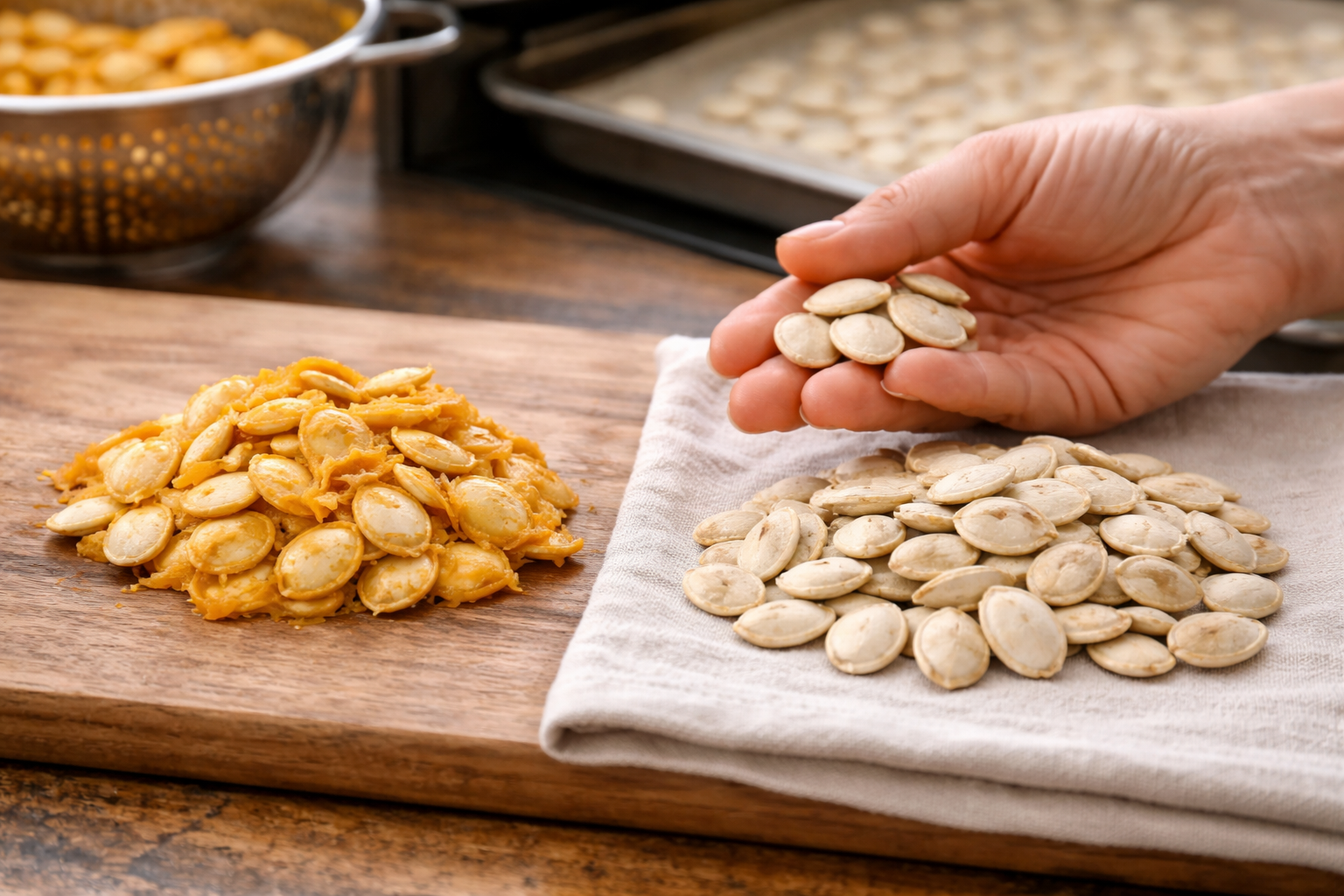
Good shelling starts before the rolling pin comes out.
Fresh seeds that are still coated in pulp are slick and rubbery. They slide, they bend, and they fight you. Clean them first, then dry them enough that the hull feels papery rather than gummy.
A low oven helps. Ten to fifteen minutes at about 250 F is a good starting point. If the shells still feel damp, give them a bit longer. If the seeds already feel dry from air-drying on the counter, skip the oven and move on.
Pick the fuller seeds if you can. Big, mature seeds are easier to crack cleanly and more likely to give you a kernel worth keeping. Tiny, flat seeds often break apart or turn out to be all shell and very little reward.
Important: Mississippi State Extension warns that seeds sold for planting may be chemically treated. Those are for the garden, not the kitchen.
One more small test saves a lot of annoyance: crack 10 seeds before you commit to the batch. If the kernels are tiny, pale, or fragile, stop there and roast the rest whole. That tiny test tells you more than any tip list on the internet.
Use the rolling-pin-and-water method for the best home yield
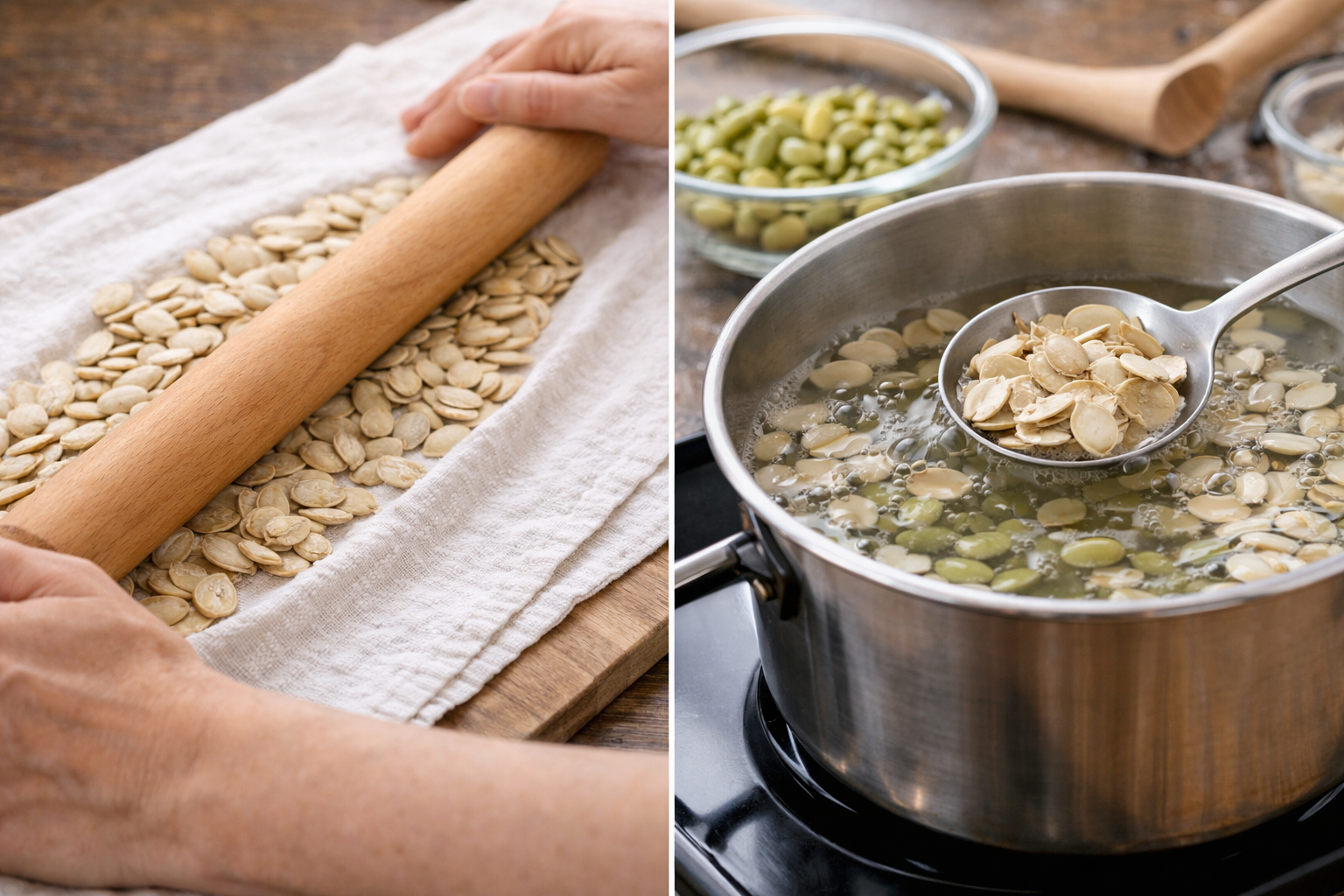
This is the method I come back to when I want a medium batch and do not feel like babysitting every seed one by one.
Step 1. Spread the seeds so each one can crack.
A crowded pile is where yield goes to die. Put the seeds in a single loose layer between towels or parchment. If they overlap too much, some stay uncracked while others get smashed.
Step 2. Roll lightly so the seam opens.
Use a rolling pin and steady light pressure. You are not pressing down like you are crushing garlic. A gentle pass opens enough seams to make the next step work.
Step 3. Simmer briefly so the hull loosens.
Drop the cracked seeds into simmering water for around 5 minutes. Short is the point. If they sit too long, the kernels can get soft and annoying to handle.
Step 4. Separate by movement, not by force.
Stir the pot and skim off the floating shell pieces. Some kernels sink, some stay mixed in. Drain the lot, then pull out the kernels with your fingers. It is still hands-on, but much less fiddly than dry shelling alone.
| If this happens | It usually means | Do this next |
|---|---|---|
| Kernels are crushed | Too much pressure while rolling | Use one lighter pass and a looser layer |
| Shells stay closed | Seeds were too damp or not cracked enough | Dry the next batch a bit longer and roll again gently |
| Kernels feel mushy | They simmered too long | Cut the water step short next time and dry them well |
This method is not magic. It is just the best balance of speed and control for a home kitchen.
Crack individual pumpkin seeds when you only need a small handful
If you only want a garnish-sized amount, the fussy little method is often the better one.
A few lightly dried seeds can be cracked one at a time with your fingers, your thumbnail, or a nutcracker. This sounds slow, and for a large batch it is. For 20 or 30 seeds, though, it can be quicker than setting up the rolling-pin method, simmering water, draining, and sorting.
The trick is to dry the seeds first so the shell snaps rather than squishes. You can also toast them very lightly before cracking. That little bit of drying makes a noticeable difference in how the seam behaves.
I use this method when I want kernels for one bowl of soup or a little sprinkle over yogurt. It feels almost silly to say that, but the tiny-batch route is where a lot of people overcomplicate things.
Remember: Choose this method when you need a handful, not a cereal bowl full. Past that point, the job gets old fast.
Fix the shelling problems that waste time and ruin yield
Most failed batches come down to one of four things: the seeds were too wet, the pressure was too hard, the seeds were the wrong type, or the batch was too big for the method.
Here is how those failures usually look in real life.
| Problem | What is going on | Best fix |
|---|---|---|
| The shells will not come off | The hull never cracked enough, or the seeds were still rubbery | Dry the next batch longer and use lighter, more even pressure |
| The kernels break apart | Too much force, or very thin seeds from a poor candidate pumpkin | Test a small sample first and stop if the yield looks weak |
| The finished kernels are tiny and disappointing | You expected pepitas from seeds that were never going to behave like pepitas | Roast the rest whole or use pepitas for recipes that need bulk |
| The whole job feels absurdly slow | The batch is too large for hand shelling | Switch to roasting shell-on, or shell only what you need |
One honest observation helps here: shelling pumpkin seeds is less like shelling pistachios and more like opening tiny padded envelopes without tearing the note inside. Once you think of it that way, the right amount of pressure makes more sense.
The biggest trap is trying to force a bad batch into becoming a good one. If the first 10 seeds are flimsy and stubborn, that is not a sign to work harder. It is your cue to change plans.
Roast and store shelled pumpkin seeds so they stay crisp, not chewy
Once the kernels are free, the rest is easier.
Dry them well first. USDA WIC Works advises drying pumpkin seeds thoroughly before roasting, and that matters even more when you have already simmered or rinsed them. Wet kernels steam. Dry kernels toast.
For shelled seeds, a moderate oven works better than a hot blast. Start around 300 F and check them early. If they were very dry going in, they may be ready in 8 minutes. If they still held moisture, they may need closer to 12 or 15. Pull them when they smell nutty and look lightly golden. Do not wait for deep browning. By then, the line between toasted and bitter gets thin.
Let them cool before storing. Warm seeds trapped in a container lose their crispness in a hurry. Once cool, keep them in an airtight jar. A few days on the counter is fine. Longer than that, the fridge is the safer bet. The freezer works too if you made more than you planned, which happens.
And if you are feeding little kids, keep the texture in mind. USDA WIC Works notes that whole seeds can be a choking risk for children under five. Shelled kernels are the friendlier choice there.
Pro tip: Salt and oil are fine, but keep seasoning light on shelled kernels. They are small, so heavy seasoning can bury their flavor pretty quick.
Once they are roasted, use them where a little crunch matters: on soup, in granola, over oatmeal, in bread dough, or scattered on a simple salad.
Pepitas, hull-less pumpkins, and the shortcut most people actually want
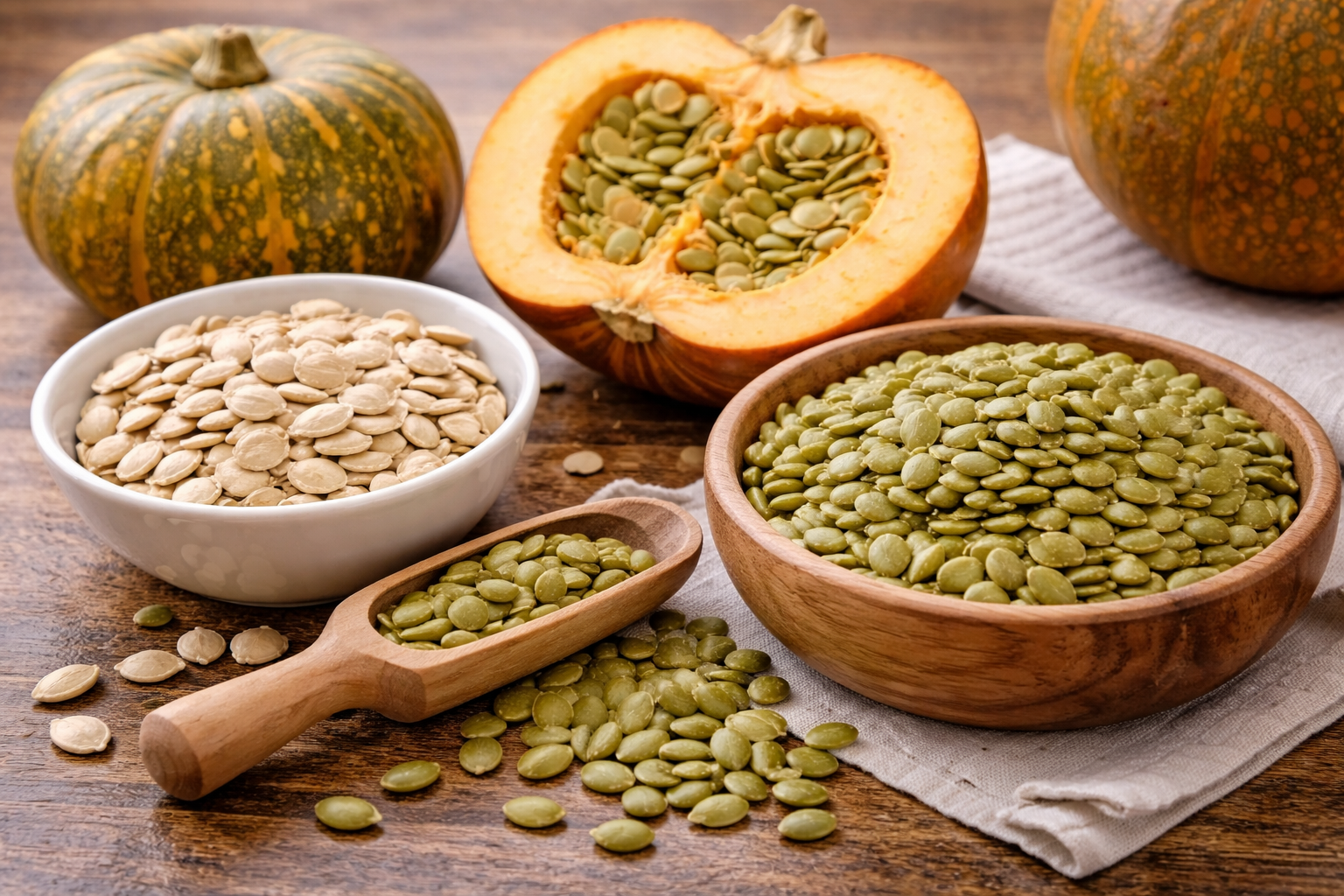
This is the part that clears up most of the disappointment.
People often use “pumpkin seeds” and “pepitas” as if they mean the same thing. In kitchen use, they overlap. In practice, they do not always behave the same way. USDA FoodData Central lists pumpkin seed kernels and other pumpkin seed products separately, which is a quiet hint that the texture and use are not identical.
Pepitas are the shell-free green kernels you usually buy ready to use. You can make something similar by shelling fresh pumpkin seeds at home, but the result from a standard carving pumpkin is often thinner and less uniform than what people expect.
If what you really want is a big supply of tender kernels, the shortcut is not better shelling technique. The shortcut is starting with the right pumpkin. Nebraska Extension points to hull-less pumpkins with seeds that do not need to be hulled, including varieties such as “Naked Bear,” “Pepitas,” and “Triple Treat.” Those are grown for edible seeds first. That changes the whole experience.
So if you found this article after wrestling with carving-pumpkin seeds and wondering why the payoff felt thin, there is your answer. You were not doing it wrong. You were asking a jack-o’-lantern to act like a seed pumpkin.
FAQ
Can you shell pumpkin seeds after roasting them?
Yes, but lightly dried or lightly toasted seeds are easier to crack than fully roasted ones. Once they are deeply roasted, the kernel can get brittle and the shell can shatter into little sharp flakes.
Do you need to boil pumpkin seeds before shelling them?
Not always. For a tiny batch, dry cracking by hand can be enough. For a medium batch, a short simmer after cracking helps loosen the hull and makes separation less tedious.
Why do home-shelled pumpkin seeds not look like store-bought pepitas?
Store-bought pepitas often come from hull-less seed varieties grown for that purpose. Seeds from a standard carving pumpkin can be smaller, paler, and more fragile, so the finished kernels look different even when you shell them carefully.

Michael Rowan is the founder and lead writer at The Garden Playbook. He has spent 10+ years growing plants across a range of settings — from indoor houseplants and container gardens to raised beds and in-ground plots — adapting methods to different light levels, seasons, and growing conditions.
Michael focuses on practical, experience-based guidance grounded in fundamentals: soil health, watering strategy, plant nutrition, pruning and propagation, and integrated pest management (IPM). His work aims to help readers diagnose common problems (such as yellowing leaves, stunted growth, or pest pressure) and apply straightforward solutions that are realistic for home gardeners.
At The Garden Playbook, Michael develops tutorials and plant guides using a consistent process: documenting real outcomes where possible, explaining the “why” behind each step, and verifying higher-risk topics (such as plant toxicity or pest treatment options) against reputable horticultural references.