
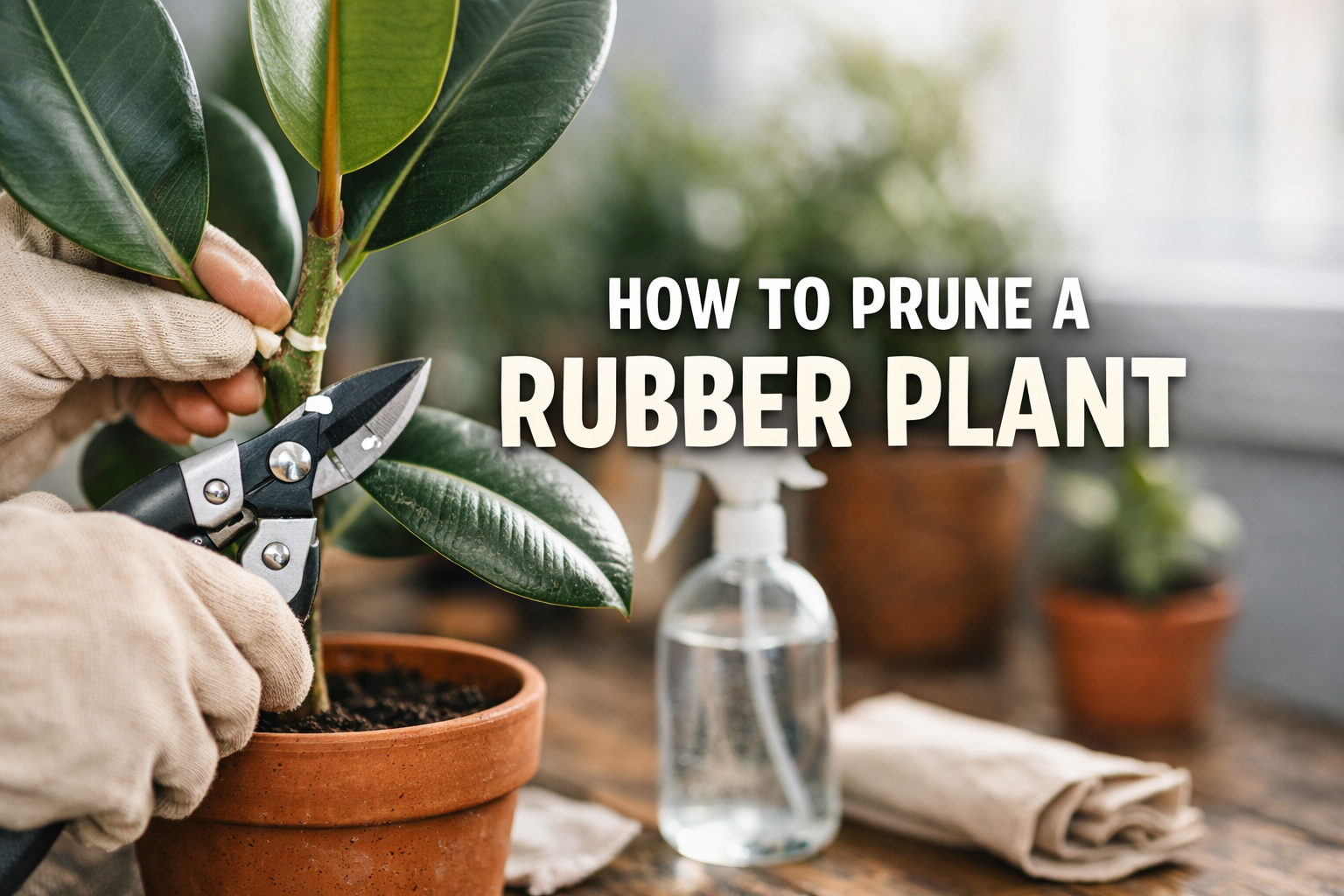
A rubber plant gets awkward in a very specific way. It looks polished and easy for months, then one day the top is leaning at the window, the stem looks longer than you remembered, and suddenly you are staring at the pruners like they owe you an explanation.
If you’re here for how to prune a rubber plant, the safe default is simple: use a clean sharp pruner, find the node just below the height or branch point you want, cut just above that node, keep the prune modest, and put the plant back in bright indirect light. That broad answer works. The useful answer starts one step later, because the best cut changes when the goal is “shorter,” “bushier,” “less top-heavy,” or “please stop looking like a green fishing rod.”
I learned that on a lanky Ficus elastica that I topped a little too high. The cut was fine. The plant lived. It just pushed new growth in the wrong spot, which is a very polite way for a houseplant to tell you the haircut was not the plan.
What you’ll get from this guide
- Where to cut for a shorter plant versus a fuller one
- How to spot the node that actually matters
- When to do a hard prune and when a light tidy-up is enough
- How much you can take off without turning recovery into a slog
- What to do with the top cutting if it is worth saving
- How to stop a leggy rubber tree from slipping right back into the same shape
At a Glance: Rubber Plant Cut Map
| Goal | Where to cut | Likely result |
|---|---|---|
| Make it shorter | Just above the node below your target height | Lower top, fresh growth below the cut |
| Make it bushier | Lower on the main stem or on a long bare branch | Branching closer to the pot, fuller shape |
| Tidy damage | Remove dead leaves at the base or shorten one awkward branch | Cleaner outline without a full reshape |
| Save the top | Take a healthy top cutting with a node, or air layer a woody top first | New plant potential and less pruning panic |
How to prune a rubber plant without shocking it
The safest method is not complicated. Rubber plants usually handle pruning well when the plant is growing, the cut is clean, and you leave enough foliage behind for recovery.
-
Step 1. Pick the finish line.
Decide whether you want a shorter plant, a fuller plant, or just cleaner structure. That choice decides where the cut goes. -
Step 2. Find the node that will guide new growth.
Look for the point where a leaf joins the stem or where a leaf used to sit. That is the spot that gives you the best shot at new shoots in the right place. -
Step 3. Make one clean cut just above the node.
Keep the cut close. Do not leave a long naked stub above it. -
Step 4. Keep heavy pruning modest.
For most houseplants, about one-third in one session is a sensible ceiling. If the plant is huge and awkward, you can shape in two rounds instead of one dramatic chop. -
Step 5. Put recovery conditions in place.
Wipe the sap, return the plant to bright indirect light, and go back to steady normal care rather than fussing over it every hour.
Missouri Botanical Garden notes that stems pruned above a leaf or growth bud develop one or more new tips. That is the whole reason this works. The cut removes the dominant tip, then the buds below it get their chance.
Quick rule: Cut for the shape you want next month, not the shape you dislike today.
One small thing that gets skipped a lot: try to leave some healthy leaves on the remaining plant whenever you can. A rubber plant can recover from harder pruning, but a plant with a little canopy left has a much easier job than a bare stick in a pot.
Choose the right cut for height, bushiness, or simple cleanup
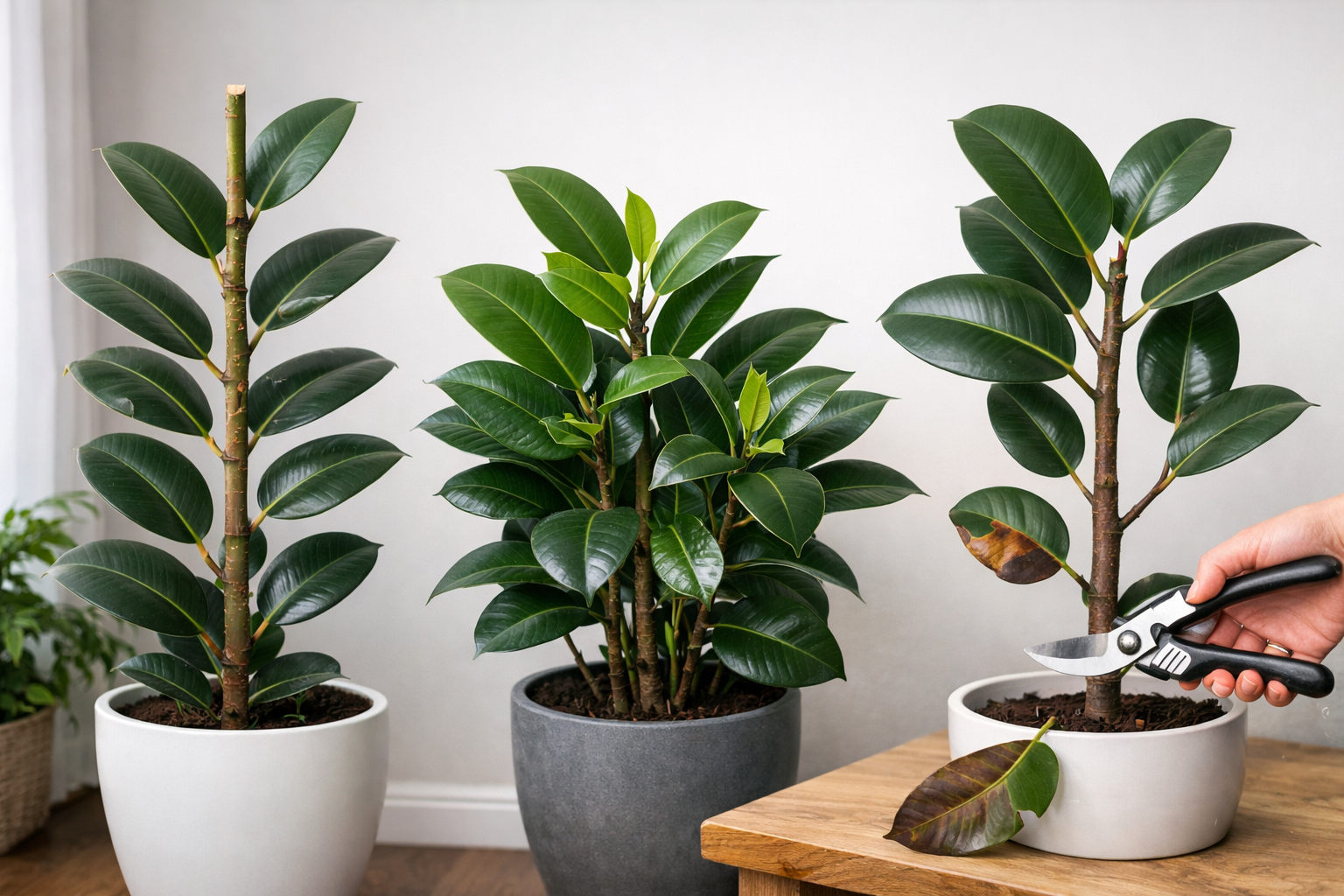
This is where most people freeze. They know they need to cut. They do not know which cut creates which result.
For height control, take the top off just above the node below your desired final height. If the plant is brushing the ceiling, do not cut right at ceiling level. Leave a little margin so the new growth has somewhere to go.
For a bushier rubber plant, cut lower than you think. New growth forms below the cut, so a high cut often gives you a shorter plant that still looks like a tall pole. A lower cut pushes the branching closer to the pot, which is what makes the plant look full instead of merely shorter.
For a messy plant with one bad branch, you do not need to top the whole thing. Shorten the problem branch above a node and leave the rest alone. That one move can fix the silhouette without turning the whole plant into a project.
For dead or damaged leaves, remove the whole leaf where its stem meets the main stem. Trimming brown patches off a rubber plant leaf rarely looks clean for long. A full removal is neater.
North Carolina Extension sums up the shape choice well: prune main branches for a bushier habit, or leave them unpruned for a taller, more tree-like form. That is a nice simple split. Shorter and bushier are not always the same job.
What usually works best
- Cut high when the plant is mostly good and just too tall
- Cut lower when the stem is bare and the whole plant looks leggy
- Thin one branch at a time when only one side looks wrong
A top-heavy rubber tree is worth handling in stages. I would rather take one good cut, wait for the shape to settle, and cut again later than hack half the crown off in one go and pretend that was confidence.
Cut just above a node so the plant branches where you want it
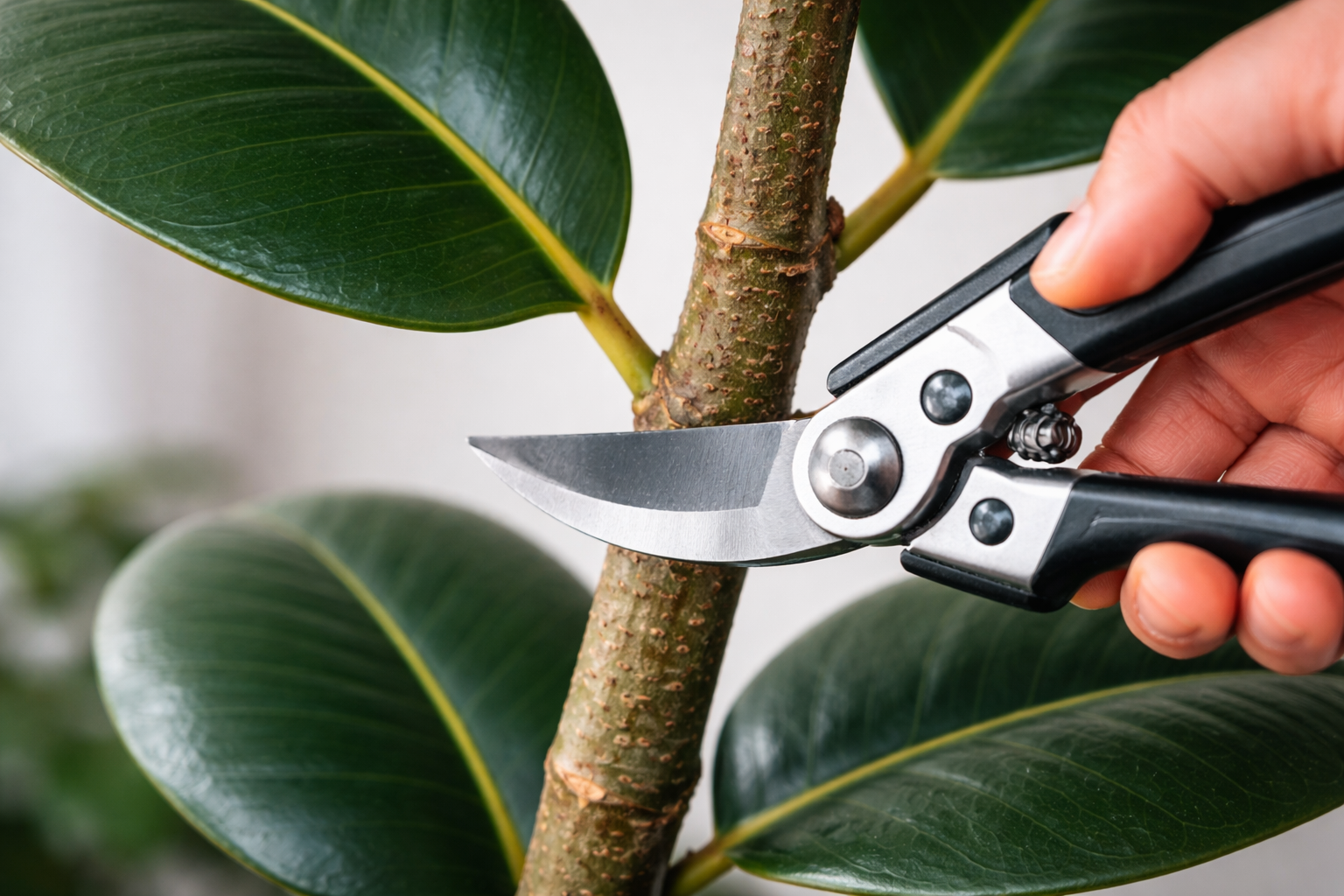
A node is not mysterious. On a rubber plant, it is the point where a leaf attaches to the stem, or the scar left behind when an older leaf dropped. It often looks like a small ring, bump, or change in texture on the stem.
Think of the node as the plant’s exit ramp. New growth has a place to start there. If you cut too far above it, you leave a dead little stalk that does nothing. If you cut below it, you remove the point that would have helped guide the next flush of growth.
The sweet spot is close. Not on the node. Not two inches above it. Just above it.
This is also why a random leaf is not a rubber plant propagation trick. A leaf can sit in water and look alive for quite a while, but without a node it does not have the stem tissue needed to build a new plant. A cutting needs a node. That part matters more than the leaf count.
And no, every cut does not give the same branching display. Some rubber plants push one strong new tip. Some push two. A happy plant in good light during active growth often gives more to work with than a tired plant in a dim corner. The node sets the direction. The plant’s vigor still decides how enthusiastically it plays along.
Remember: “Above a node” means close above it. A long bare stub is not a precision cut. It is just a future ugly stub.
Choose the best timing for heavy cuts, light cleanup, and propagation
Timing changes how fast the plant bounces back. It also changes how messy the whole job feels.
Light cleanup, like removing a dead leaf or one damaged branch, can happen whenever you notice it. That sort of pruning is housekeeping.
Heavy shaping is best in late spring or early summer when the plant is actively growing. That is the window where a rubber plant has the most energy to push new buds and leaves, so the wait between the cut and the comeback feels shorter.
Winter pruning is still on the table, but it is a tradeoff. You may see less sap and less immediate mess. You will also usually get slower regrowth. So winter is fine for a tidy correction or a necessary size cut. It is not the season I would pick when the whole point is fast bushy recovery.
Propagation follows the same logic. Soft top cuttings and air layering both tend to move better when the plant is in active growth. A tired plant in cold-season low light can still survive the process. It just takes longer and feels less cooperative.
Simple timing guide
- Dead leaf or broken branch: anytime
- Main height cut: spring to early summer is easiest
- Bushiness push: active growth season gives the best odds
- Woody top to propagate: active growth season makes life easier
One thing I would not stack on top of a big prune: a recent move, a cold draft, or a plant that is already sulking from overwatering. A rubber plant can handle a haircut. It does not need three other insults on the same weekend.
Set up for a cleaner job, from sterilized shears to sticky sap control
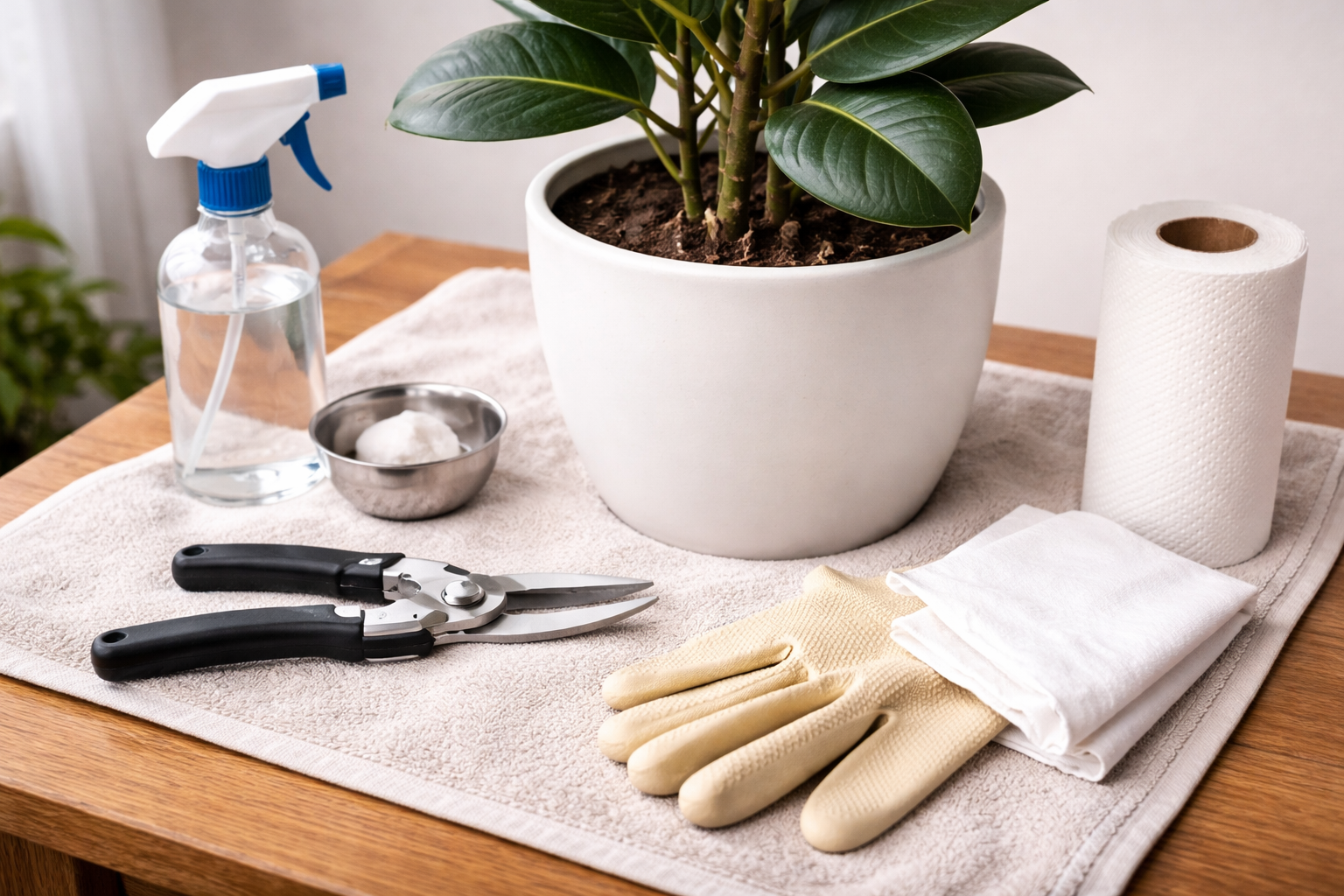
Rubber plant sap is the part people remember. It is milky, sticky, and mildly annoying in a way that can turn a two-minute prune into a kitchen-floor cleanup.
University of California Agriculture and Natural Resources lists Ficus among plants associated with irritant dermatitis, so gloves are worth using if skin runs sensitive. Even if your skin does not care, a towel under the pot and a damp cloth next to you save a surprising amount of muttering.
Use clean sharp shears or a sharp knife. Dull blades crush tissue and leave ragged wounds. I also like moving the plant somewhere easy to wipe down before cutting. The first time sap lands on a wood floor, you start planning ahead very quickly.
Keep these four things close:
- a sharp pruner or knife
- rubbing alcohol or hot soapy water for cleanup
- a cloth or paper towel for sap
- something to protect the surface under the pot
If the cut keeps oozing, blot it and move on. You do not need a fancy wound dressing. Clean tools, a clean cut, and a calm hand get the job done.
Help the plant recover with better light, steady moisture, and patience
This is the part that decides whether pruning solved the problem or just rearranged it.
RHS growing advice for ornamental figs puts them in bright indirect light, and that lines up with what rubber plants show at home. Give them enough light after pruning and they push new growth with much more conviction. Leave them in dim light and the plant often stays slow, stretched, or tilted toward the window all over again.
A leggy rubber plant is often a light problem wearing a pruning problem costume. The haircut helps. The light fixes the cause.
Water normally. That means steady moisture, not soggy soil and not a panic-drench every time you pass the pot. Let the top layer start to dry, then water thoroughly. Do not start feeding hard right after the cut either. In active growth, a regular balanced routine is fine. Right after pruning, stable conditions matter more than pushing the plant.
After-pruning checklist
- Move the plant back to bright indirect light
- Rotate it every so often so new growth does not chase one window
- Water when the mix starts drying near the top, not on a rigid calendar
- Wait and watch before making another major cut
For window placement, this guide to the best facing window for plants helps sort out which exposure gives a rubber plant a fair shot. And when the room is just plain dim, one of these LED grow lights for indoor gardening makes more sense than another round of pruning.
Patience matters here. New growth can show up pretty fast in a vigorous plant during the growing season, or it can take a while. That is normal. No one gets bonus points for poking the stem every afternoon to “check progress.”
Use the top cutting for propagation, or air layer woody stems first
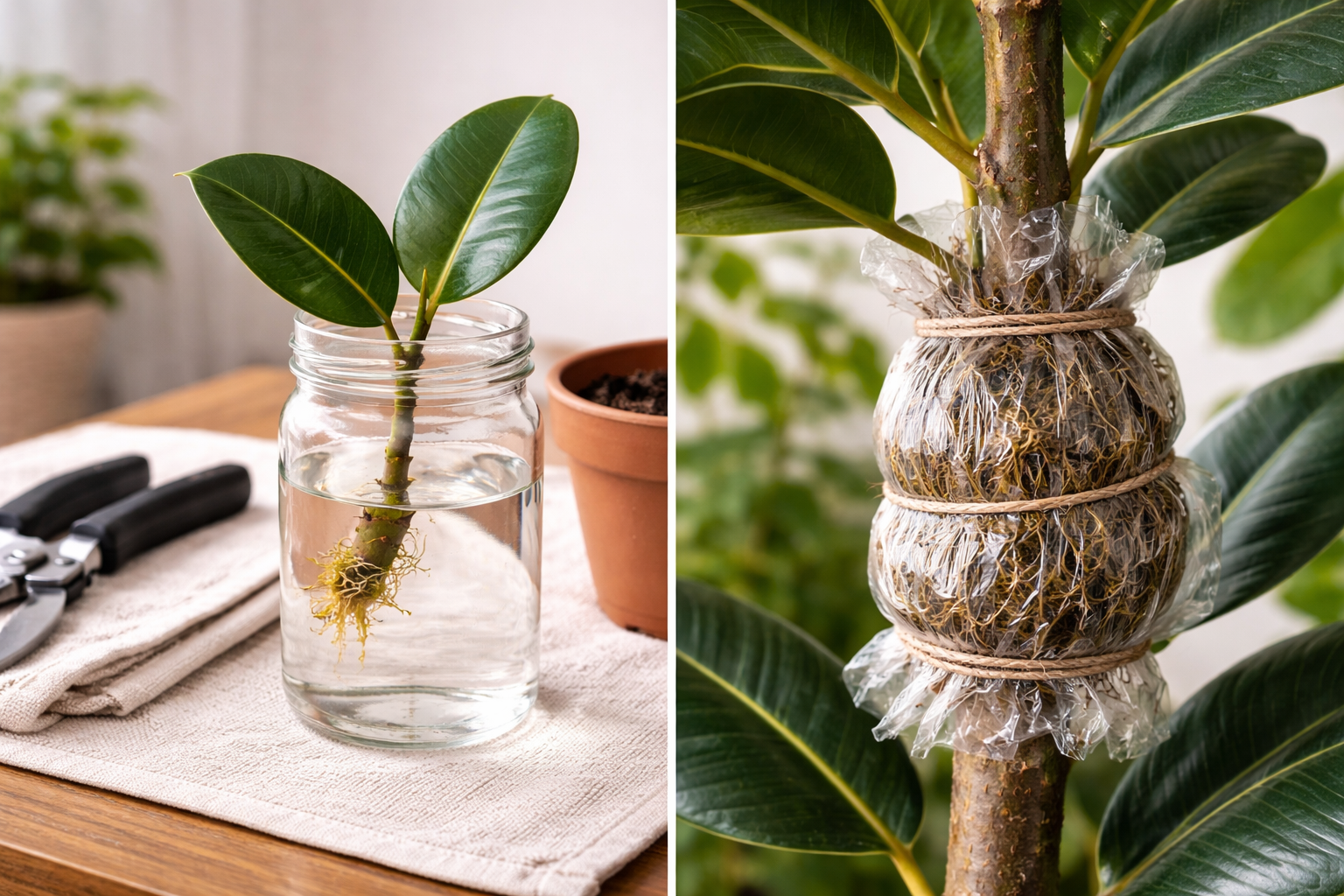
Once you know the top does not have to go in the bin, pruning gets a lot less stressful.
A healthy top cutting with a node can often root in water or in a loose potting mix. This works best with softer or semi-woody growth. Keep the cutting warm, bright, and out of harsh direct sun. A cutting with one or two leaves and a node is far more promising than a big leaf with no node attached.
Woody tops are different. They can root, but they are often fussier and slower. In that case, air layering is the cleaner move. Missouri Botanical Garden shows how an above-ground section can form roots while still attached to the plant, which is exactly why air layering suits a thick rubber plant stem so well. You root first and cut later.
That is especially handy when the plant is tall, woody, and still otherwise healthy. You get to reduce the height without gambling the whole top on a difficult rooting job.
For many indoor growers, the split is simple:
- soft top = try a cutting
- thick woody top = air layer first
It is not the flashiest bit of houseplant care, but it is one of the most useful. A saved top turns an anxious pruning day into a two-plant day.
Rubber plant pruning mistakes that leave plants bare, stalled, or lopsided
The most common mistake is cutting before deciding what the finished shape should be. That is how people end up with a shorter plant that still looks leggy, or a full plant that is suddenly wider than the spot it lives in.
The second big one is bad cut placement. Too far above the node leaves a dead stub. Too low removes the point that would have given you the next flush of growth where you wanted it.
Then there is the classic “I fixed the shape but ignored the light” problem. If the plant became lanky because it was stretching toward a dim window, pruning alone will not stop that pattern. It only resets it.
A few others are worth keeping on your radar:
- taking too much at once from a plant that is already stressed
- using dull or dirty tools
- expecting every cut to throw two perfect branches
- treating one damaged leaf like a reason to rebuild the whole plant
- repotting, moving rooms, and hard pruning all at once
The rule worth keeping: choose the shape first, then cut for it.
That one sentence stops a lot of bad pruning. It keeps you from reacting to the tallest leaf in the room and starts you thinking about the plant you actually want to live with after the sap dries.
FAQ
Will a rubber plant always make two new branches after I cut it?
No. It may push one strong new tip, two, or more than that. Light, season, plant vigor, and where you cut all change the response. The right expectation is “new growth below the cut,” not “the same branch count every time.”
Can I prune a rubber plant that only has one stem?
Yes. In fact, topping a single-stem rubber plant is one of the best ways to encourage branching. Just cut above a node at the height where you want the plant to start filling out.
Should I repot before or after pruning?
If both jobs need doing, spacing them out is usually easier on the plant. Prune first if the main issue is size and shape. Repot first if the plant is badly rootbound and drying out too fast. Doing both on the same day is not my favorite unless the plant is very vigorous and the work is light.

Michael Rowan is the founder and lead writer at The Garden Playbook. He has spent 10+ years growing plants across a range of settings — from indoor houseplants and container gardens to raised beds and in-ground plots — adapting methods to different light levels, seasons, and growing conditions.
Michael focuses on practical, experience-based guidance grounded in fundamentals: soil health, watering strategy, plant nutrition, pruning and propagation, and integrated pest management (IPM). His work aims to help readers diagnose common problems (such as yellowing leaves, stunted growth, or pest pressure) and apply straightforward solutions that are realistic for home gardeners.
At The Garden Playbook, Michael develops tutorials and plant guides using a consistent process: documenting real outcomes where possible, explaining the “why” behind each step, and verifying higher-risk topics (such as plant toxicity or pest treatment options) against reputable horticultural references.