
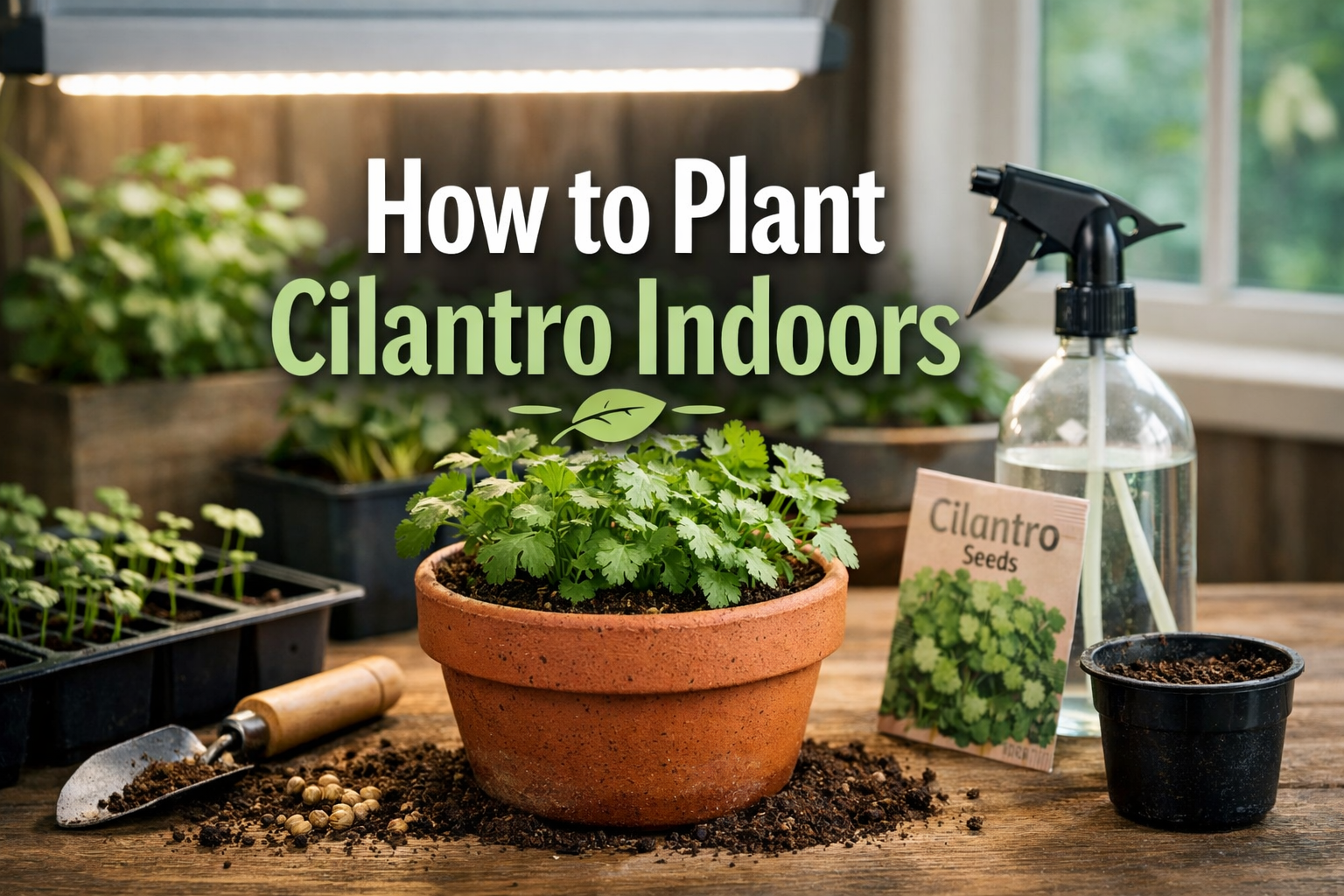
The first time I tried growing cilantro indoors, I did the classic move: a tiny pot on a “bright” kitchen windowsill, a little water whenever I remembered, and big expectations. Two weeks later it was a pale, leaning mess that smelled more like disappointment than salsa.
Here’s the correct answer right up front: to succeed with how to plant cilantro indoors, sow seeds in a pot with real drainage, keep the soil evenly moist (not wet), give it strong light, and keep it cooler than most kitchen herbs. That advice is technically true, but it becomes useful only when you match it to your home’s two indoor realities: weak light and sneaky heat.
- Choose the right indoor method (full plants, microgreens, sprouts, or hydroponic).
- Set up a pot and soil that prevents root stress and fungus problems.
- Use simple light rules so seedlings do not stretch and flop.
- Keep cilantro leafy longer by preventing heat-triggered bolting.
- Harvest in a way that keeps it producing instead of collapsing.
- Troubleshoot fast using symptoms, not guesswork.
The Quick Answer (And the Context Everyone Skips)
If you only do four things, do these:
- Use a container with drainage holes and a pot that is roughly 8 inches deep so roots have room and the soil does not stay swampy.
- Sow cilantro seeds shallow, about 1/8 to 1/4 inch deep, and keep the top layer consistently damp until germination.
- Give stronger light than you think you need. “Bright room” light often grows disappointment, not herbs.
- Keep it cooler than basil and away from heat vents, radiators, and hot afternoon glass.
Key takeaway: indoors, cilantro fails for boring reasons you can fix. It usually is not “bad seed” or “no green thumb.” It is light that is too weak, heat that is too high, or water that swings from dry to drenched.
Pick Your Goal First (Full Plants vs Microgreens vs Sprouts vs Hydroponic)
Cilantro indoors gets easy when you choose the job you actually need it to do.
If you want handfuls of leaves for cooking
Grow full plants from seed in a wider pot. This is the classic “cilantro like the grocery bunch” goal. It needs the best light of the options.
If you want fast cilantro flavor for garnish and bowls
Grow cilantro microgreens. They are quick, forgiving, and you can harvest with scissors like you are snipping a fresh topping bar into existence.
If you want the fastest possible turnaround
Grow sprouts. They are fast and do not need strong light, but they demand careful hygiene and are not a fit for everyone (more on that later).
If you want a tidy, consistent routine
A countertop hydroponic herb setup can work well, especially if your windows are dark or your home runs warm. Think of it like training wheels for light and watering.
Common mistake: forcing full-size cilantro in weak winter light when microgreens would deliver the same “fresh cilantro hit” with fewer headaches.
The Indoor Cilantro Setup That Actually Works (Container, Soil, Drainage)
Cilantro wants moisture, but it hates stagnation. Indoors, that means drainage is not optional.
Container rules that prevent 80% of indoor failures
- Drainage holes are mandatory. If the pot cannot drain, roots sit in low-oxygen soup.
- Aim for about 8 inches deep so the root zone stays more stable and less prone to drying out in a day.
- Wider beats skinny for most kitchens. A wider pot lets you grow a small cluster, which harvests better than one lonely plant.
Soil choice: keep it light and breathable
Use a quality potting mix that drains well. Avoid digging soil from outside. Garden soil compacts indoors and holds water like a sponge you cannot wring out.
A quick “grab test” you can do in the bag
Squeeze a handful of slightly moist mix. It should clump briefly, then crumble when you poke it. If it smears like mud, it is too heavy for indoor herbs.
If you want a practical baseline for indoor herb conditions, Penn State Extension’s guidance on growing herbs indoors aligns with the core idea: maximize light, use proper containers, and avoid waterlogged soil.
Key takeaway: your pot and soil are the “foundation.” If the foundation traps water, no amount of light advice will save the plant.
Seed Sowing That Prevents Weak, Spindly Cilantro
Cilantro seed is often sold as “coriander seed.” Same plant, same seed. The little round seed you see is commonly a husk that can split, which is normal.
How deep to plant
Sow about 1/8 to 1/4 inch deep. If you bury seeds too deep, germination slows and seedlings emerge weak. If you leave them on the surface, they dry out.
How many seeds to sow
Plant more than you think. A single cilantro plant does not give much harvest indoors. I get far better results sowing a small cluster, then letting the strongest seedlings take over.
Moisture during germination
- Keep the top layer consistently damp, like a wrung-out sponge.
- Water gently so you do not excavate the seeds.
- If the surface dries repeatedly, germination becomes uneven.
Do you need to soak seeds?
Sometimes soaking helps if seeds are old or extremely dry, but it is not a magic step. If your setup holds even moisture, soaking is usually optional.
Common mistake: planting too sparsely, then harvesting too aggressively because you “only have a few stems,” which weakens the plant immediately.
Light Rules (Windowsill vs Grow Light) Without the Guesswork
Light is where indoor cilantro succeeds or fails. Most homes are dim compared to what a leafy herb wants. Think of it like trying to read a recipe by the glow of the fridge light. Technically possible, but you are going to struggle.
Windowsill success rules
- Use your brightest window, and rotate the pot regularly so growth stays even.
- Watch for heat traps: sunny glass can turn the leaf zone hot, especially in afternoon sun.
- If your window is bright only for a short time, expect slower growth and plan to use microgreens as backup.
Grow light rules that keep seedlings stocky
- Run a consistent schedule. A long day under a lamp often works better than “whenever I remember.” Many indoor herb guides use roughly 12 to 14 hours when sunlight is limited.
- Keep the light close enough to matter. If seedlings stretch, the light is too weak or too far away.
- Use a timer so your results do not depend on your mood or calendar.
If/then decisions (use these instead of guessing)
- If seedlings are tall, thin, and leaning, increase light first (stronger light or closer light), before changing watering or fertilizer.
- If leaves look scorched or curled, reduce heat stress (move away from hot glass, vents, appliances) and check that the plant is not drying out too quickly.
Key takeaway: for cilantro indoors, “bright” is not a feeling. It is what the plant shows you. Stretching means not enough usable light.
Keep It Cool to Keep It Leafy (The Bolt-Prevention Playbook)
Cilantro is a cool-season herb. Indoors, bolting often happens because the plant feels stressed, especially by heat. When cilantro bolts, it shifts from making the leaves you want to making flowers and seed. The flavor often turns sharper and the leaf production slows.
Where heat sneaks in (even when the room feels fine)
- Above radiators or near heating vents.
- Next to ovens, dishwashers, and warm appliance exhaust.
- Pressed against hot afternoon window glass.
Keep it leafy longer using “stress control”
- Keep moisture consistent. Big swings from dry to drenched push the plant toward survival mode.
- Use strong light without cooking it. More light is good, but more heat is not.
- Plan on succession sowing so bolting does not end your cilantro supply.
Common mistake: treating cilantro like basil and giving it the warmest, sunniest, driest spot in the kitchen.
Watering and Feeding Indoors (So You Do Not Invite Fungus Gnats)
Indoor watering is about rhythm, not volume. You want the root zone consistently moist with plenty of air.
The simplest moisture check
Touch the surface. If the top layer feels dry, water thoroughly and let excess drain. If it still feels damp, wait. This keeps you out of the daily “tiny sip” trap that can encourage pests.
Bottom watering: when it helps
If you get moldy soil surfaces or fungus gnats, bottom watering can help by keeping the top layer drier. Set the pot in a shallow tray of water for a short time, then remove it and let it drain. The goal is moisture in the root zone, not a permanently wet saucer.
Feeding: less is usually more
Cilantro generally does not need heavy feeding indoors. If growth is pale and slow and your light is already strong, a light, balanced feed can help. If your light is weak, fertilizer often just grows weak stems faster.
Oregon State University Extension’s overview on growing herbs indoors reinforces the practical indoor basics: containers, drainage, light, and sensible watering habits matter more than overcomplicating the process.
Key takeaway: if your cilantro looks sad, fix light and watering consistency before you reach for fertilizer.
Harvest Like a Chef, Not Like a Lawn Mower (Extend the Plant’s Life)
Harvesting is where many indoor cilantro plants “mysteriously” die. They do not die from cutting. They die from being stripped.
When to start harvesting
Wait until you have enough leaf mass that the plant can recover. If you only have a few delicate stems, give it time or move it to stronger light.
How to cut so it keeps growing
- Snip outer stems and leaves first.
- Leave the center growth active so it can keep producing new foliage.
- Avoid taking too much at once. A practical rule is to stay under about one-third of the plant in a single harvest.
Key takeaway: harvesting is steering. You are guiding the plant to keep producing, not emptying it in one go.
The “Never Run Out” Routine (Succession Sowing That Fits Real Life)
Cilantro is not a “plant once, harvest forever” herb. The most reliable indoor strategy is staggered planting. This is what finally made indoor cilantro feel easy for me: I stopped trying to make one pot perform like a perpetual grocery store.
A simple two-pot system
- Pot A is your current harvest pot.
- Pot B is your next pot, started later and growing up behind it.
- When Pot A starts bolting or declining, Pot B takes over.
How often to reseed
Many home growers reseed about monthly for full plants indoors, adjusting based on how fast their plants grow and how much they use. If your home is warm or your light is limited, you may need a tighter schedule or to rely more on microgreens.
Common mistake: planting once, harvesting hard, and being surprised when cilantro completes its natural lifecycle.
Troubleshooting by Symptom (Fast Fixes You Can Do Today)
Use symptoms like a dashboard. Fix the environment first.
Leggy, leaning seedlings
- Increase light intensity or move the grow light closer.
- Rotate the pot if using a window.
- Reduce heat stress near vents or hot glass.
Yellowing leaves
- Check drainage. If the pot stays wet, roots struggle.
- Let the top layer dry slightly between waterings.
- If light is strong and watering is correct, consider a light feed.
Limp leaves
- If soil is dry, water thoroughly and let drain.
- If soil is wet, improve airflow and reduce watering frequency.
- Move away from heat sources that accelerate wilting.
Fuzzy soil, seedling collapse (damping off)
- Reduce surface wetness and avoid constant misting after sprouting.
- Increase airflow around the pot.
- Do not crowd seedlings.
Tall flower stalks, bitter leaves
- Bolting has begun. Harvest what is still good.
- Start the next pot immediately.
- Lower heat stress and keep moisture consistent for the next round.
Indoor pests (aphids, spider mites)
- Isolate the plant.
- Rinse leaves gently and improve airflow.
- Keep the plant from drying out excessively, which can worsen mite issues.
Key takeaway: if you change only one thing, change light first. Most indoor cilantro problems trace back to not enough usable light.
Optional Fast Tracks: Microgreens and Sprouts (When You Want Cilantro Flavor Now)
If your goal is “fresh cilantro taste this week,” microgreens often beat full plants indoors. You get a quick harvest without waiting for a mature plant.
Microgreens: fast, forgiving, and great for small spaces
- Sow densely in a shallow tray with drainage.
- Keep evenly moist until sprouted, then give bright light.
- Harvest with scissors when the stems are sturdy and leaves are well formed.
Sprouts: fastest, but handle with care
Sprouts grow in warm, moist conditions, which is also a friendly environment for harmful bacteria if contamination occurs. If anyone in your household is at higher risk for foodborne illness, consider skipping raw sprouts and use microgreens instead, or cook sprouts before eating.
For a clear, practical overview of sprout safety, Colorado State University provides consumer guidance on sprouts and food safety.
Key takeaway: microgreens deliver the cilantro “pop” with less risk and fewer environmental demands than sprouts.
Mini “Why This Works” (Proof Without the Lecture)
Cilantro stays leafy when it can photosynthesize strongly (light) without feeling stressed (heat and moisture swings). Indoors, weak light forces it to stretch. Heat pushes it toward flowering. Erratic watering adds stress on top.
A simple two-week test that makes results obvious
- Week 1: change only light. Move to the brightest window spot or add a grow light and timer.
- Week 2: keep light constant, then tighten watering rhythm using the “dry top layer” check.
What “winning” looks like
- Shorter stems, sturdier growth.
- Steady new leaves from the center.
- Slower push toward tall stalks and flowers.
Key takeaway: you are not guessing. You are adjusting inputs and watching the plant respond.
FAQ
Do I need to split or crush coriander seeds before planting?
No. Some people lightly split the seed husk to speed germination, but it is not required. A stable moisture environment and correct sowing depth usually matter more. If germination is slow, the most common culprits are dry soil surface, old seed, or cool temperatures.
Can I grow cilantro indoors from grocery store cuttings?
Usually, no. Grocery store cilantro is typically harvested stems, not rooted plants. Cilantro is far more reliable from seed indoors. If you find a living potted cilantro plant sold with roots, you can maintain it temporarily, but it still benefits from succession sowing.

Michael Rowan is the founder and lead writer at The Garden Playbook. He has spent 10+ years growing plants across a range of settings — from indoor houseplants and container gardens to raised beds and in-ground plots — adapting methods to different light levels, seasons, and growing conditions.
Michael focuses on practical, experience-based guidance grounded in fundamentals: soil health, watering strategy, plant nutrition, pruning and propagation, and integrated pest management (IPM). His work aims to help readers diagnose common problems (such as yellowing leaves, stunted growth, or pest pressure) and apply straightforward solutions that are realistic for home gardeners.
At The Garden Playbook, Michael develops tutorials and plant guides using a consistent process: documenting real outcomes where possible, explaining the “why” behind each step, and verifying higher-risk topics (such as plant toxicity or pest treatment options) against reputable horticultural references.