
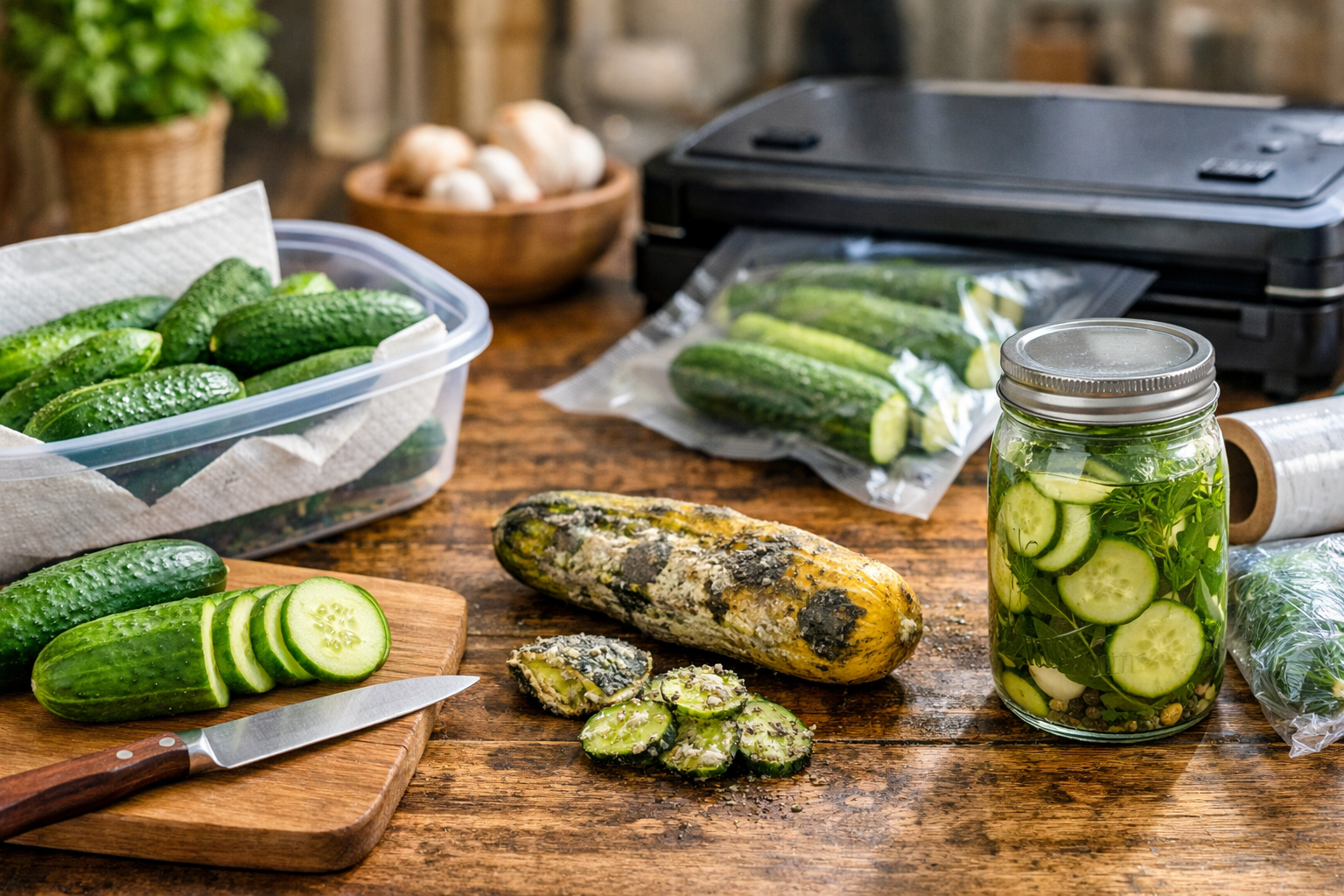
You buy cucumbers with good intentions. Two days later, one is limp in the crisper, one is sweating inside a bag, and the sliced half in the fridge has gone slick and sad.
So here’s the straight answer to how to keep cucumbers from going bad: store them whole, dry, wrapped loosely, and cool but not in the coldest part of the fridge. Keep them away from tomatoes, apples, bananas, and melons. Don’t wash them before storage unless you plan to use them right away. Once they’re cut, the clock speeds up fast.
That’s the useful version. The common version, “just put them in the fridge,” is true in a narrow sense, but it skips the part that trips people up. Cucumbers like cool storage, yet standard fridges often run colder than cucumbers prefer. That is why one cucumber stays crisp for days while another turns rubbery or slimy even though both were “stored in the fridge.”
What you’ll learn here
- Where cucumbers last longest in a real home kitchen
- Why whole and cut cucumbers need different treatment
- Which mistakes turn crisp cucumbers limp, slick, or yellow
- How storage changes for English, Persian, mini, and garden cucumbers
- What spoilage signs mean “use soon” and what signs mean “throw it out”
How to keep cucumbers from going bad: the short answer that actually helps
If you want the quick version, use this:
- Using them in 1 to 2 days: keep them whole and dry. A cool counter can work if your kitchen is not warm, but the fridge is still the safer bet for most homes.
- Using them in 4 to 6 days: wrap each cucumber loosely in a paper towel or clean dry cloth, place it in a partially open bag, and store it on a shelf toward the front of the fridge.
- Already cut: store in a sealed container lined with a dry paper towel and eat within 1 to 3 days.
The reason this works is simple. Cucumbers lose water fast, but trapped condensation speeds decay. So you are trying to thread a needle: protect them from drying out without sealing them up like leftovers in a sauna.
Key takeaway: Don’t chase “coldest possible.” The sweet spot is cool, dry on the surface, and lightly protected.
A good reality check helps here. The USDA FoodKeeper guidance puts whole cucumbers at about 4 to 6 days in the refrigerator. That lines up with what most people see at home. Fresh, firm cucumbers can stretch a bit longer. Older store stock often won’t.
Why cucumbers go bad so fast in the first place
Cucumbers are mostly water, and they behave like it.
They go downhill for three main reasons. First, they lose water through the skin, which leads to wrinkling and soft ends. Second, water sitting on the surface can feed slime and decay. Third, cucumbers are sensitive to both cold stress and ethylene gas, which is the ripening gas given off by produce like apples, melons, bananas, and tomatoes.
That mix is why cucumbers feel fussy. Too dry and they shrivel. Too wet and they rot. Too cold and they can get pitted or watery. Too close to the wrong fruit and they age before their time.
I’ve seen this in the laziest version of fridge storage: cucumbers tossed, unwrapped, into a packed crisper beside tomatoes. They come out with soft ends and a slick film, and it feels random. It isn’t random. It is a bad mix of trapped humidity, rough handling, and the wrong neighbors.
The postharvest team at UC Davis notes that cucumbers do best around 50 to 55°F and are prone to chilling injury below that range. Most home fridges run colder than that, so placement matters. You are not trying to recreate a commercial produce room. You are just trying to avoid the coldest, wettest corner of your fridge.
Common mistake: washing cucumbers and putting them away damp. A little leftover water on the skin is enough to start the slide.
The best way to store whole cucumbers, based on how soon you’ll use them
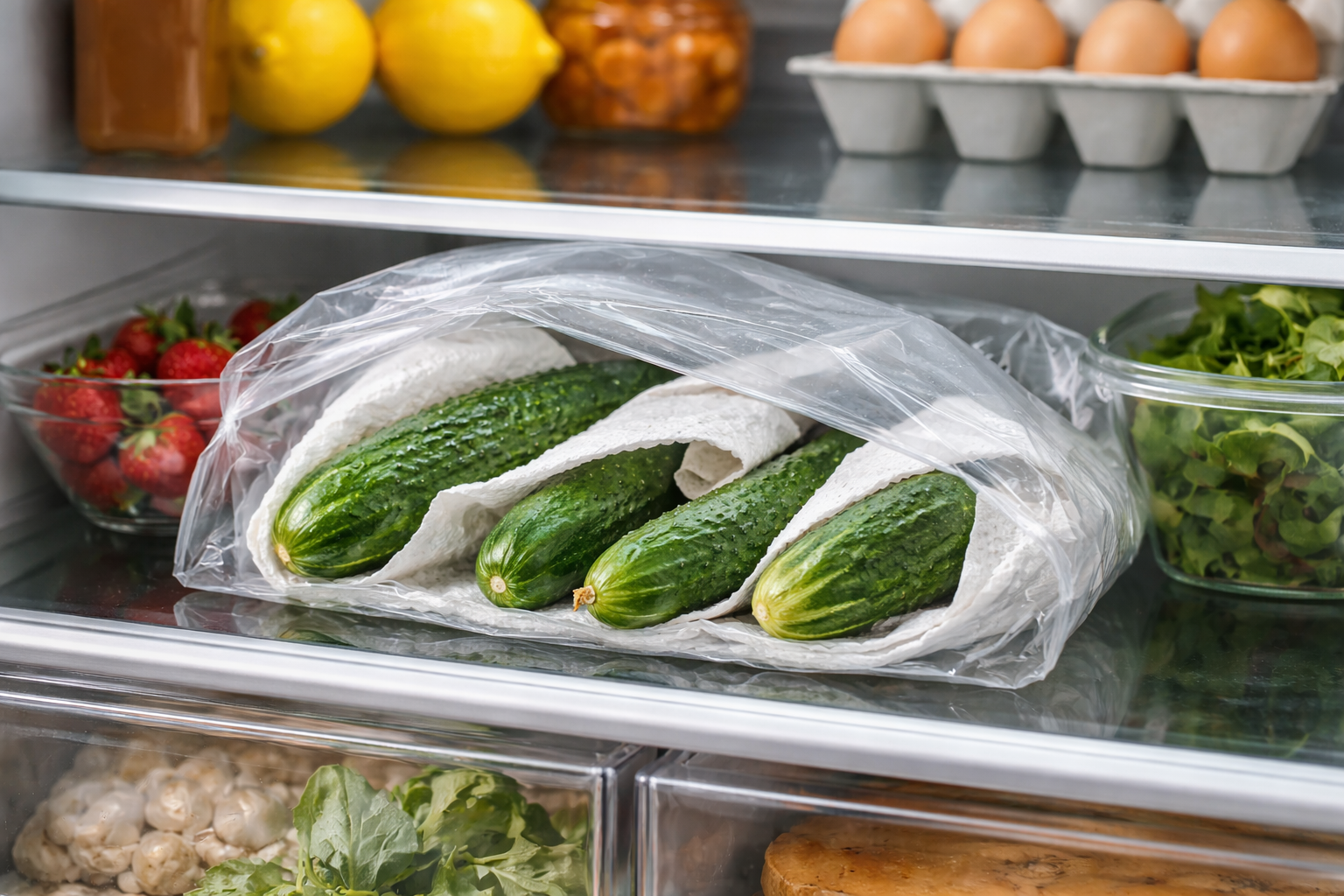
Whole cucumbers last longer because the skin is doing its job. The moment you slice into one, you have opened the gate.
For whole cucumbers, this is the home-kitchen method that works best most of the time:
- Leave them unwashed.
- If they are dirty, wipe them with a dry or barely damp cloth and dry them well.
- Wrap each one loosely in a paper towel or clean kitchen towel.
- Slide it into a bag that is not tightly sealed.
- Store it on a regular fridge shelf toward the front, not pressed against the icy back wall.
That paper layer does two jobs at once. It softens temperature swings a little, and it catches stray condensation before it sits on the skin.
Use these rules by timing:
- If you’ll use them tomorrow: keep them whole and cool. No need to overthink it.
- If you want them through the workweek: wrap and refrigerate them the day you bring them home.
- If you bought extra because they looked great at the store: sort them by firmness and use the oldest-looking ones first. The soft-ended cucumber never wins that race.
The crisper drawer confuses people for a reason. Some crispers are fine. Some run cold and damp enough to speed problems. If your crisper turns cucumbers slick or glassy, stop using it for cucumbers. The regular shelf is often better.
Key takeaway: Whole beats sliced every time. The skin is the cucumber’s built-in storage wrap.
Fridge or counter? Here’s the rule most articles leave fuzzy
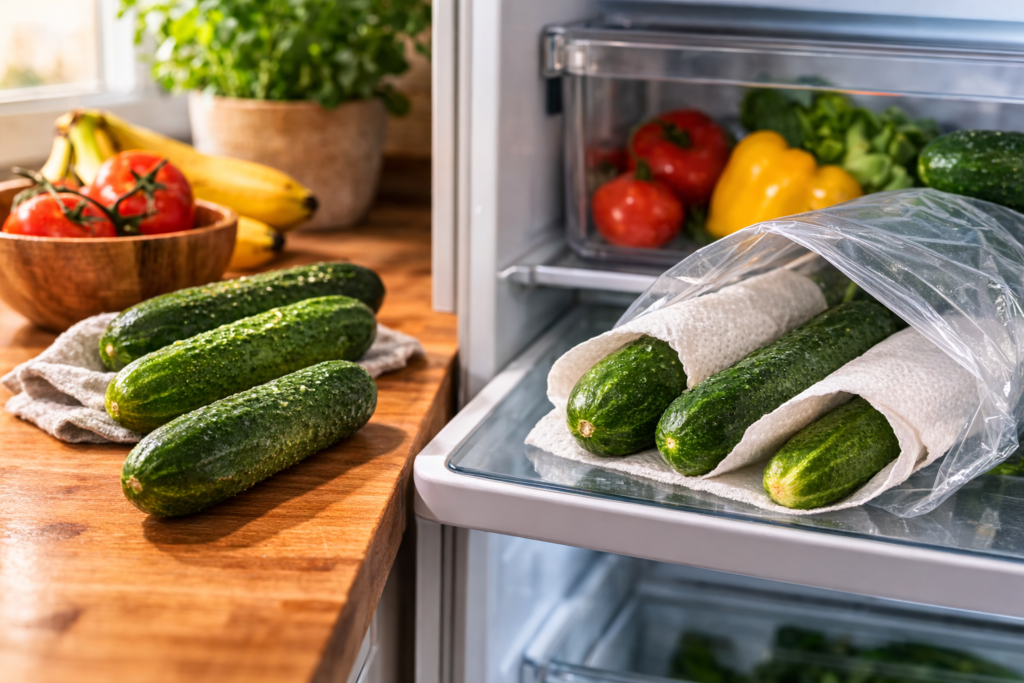
This is the part people keep running into, because both answers show up online and both sound right.
The clean rule is this: use the counter for short holding in a cool kitchen, and use the fridge for multi-day storage in most homes.
Counter storage has one nice advantage. It avoids the cold stress that cucumbers dislike. Still, the tradeoff is shelf life. In a warm kitchen, whole cucumbers can lose their snap fast. So if your kitchen runs warm, or if the cucumbers were not very fresh at purchase, the counter is a gamble.
The fridge usually wins for practical life. Still, not every part of the fridge is equal. The back wall is often too cold. A drawer crowded with wet produce can be a mess. A shelf near the front is often the calm middle ground.
Use this quick comparison:
- Best for same-day or next-day use: cool counter, especially in colder months
- Best for meal prep households: fridge shelf, wrapped, away from ethylene-producing produce
- Best for thin-skinned cucumbers: fridge shelf with a light wrap, because they lose water faster
Here’s the part nobody tells you: “counter vs fridge” is often really a question about your kitchen. A cool old house in early spring and a hot apartment in July are two different storage worlds.
Common mistake: treating counter storage like a freshness hack in a warm kitchen. It is not. Heat wins that fight.
How to store cut cucumbers without turning them limp or slimy
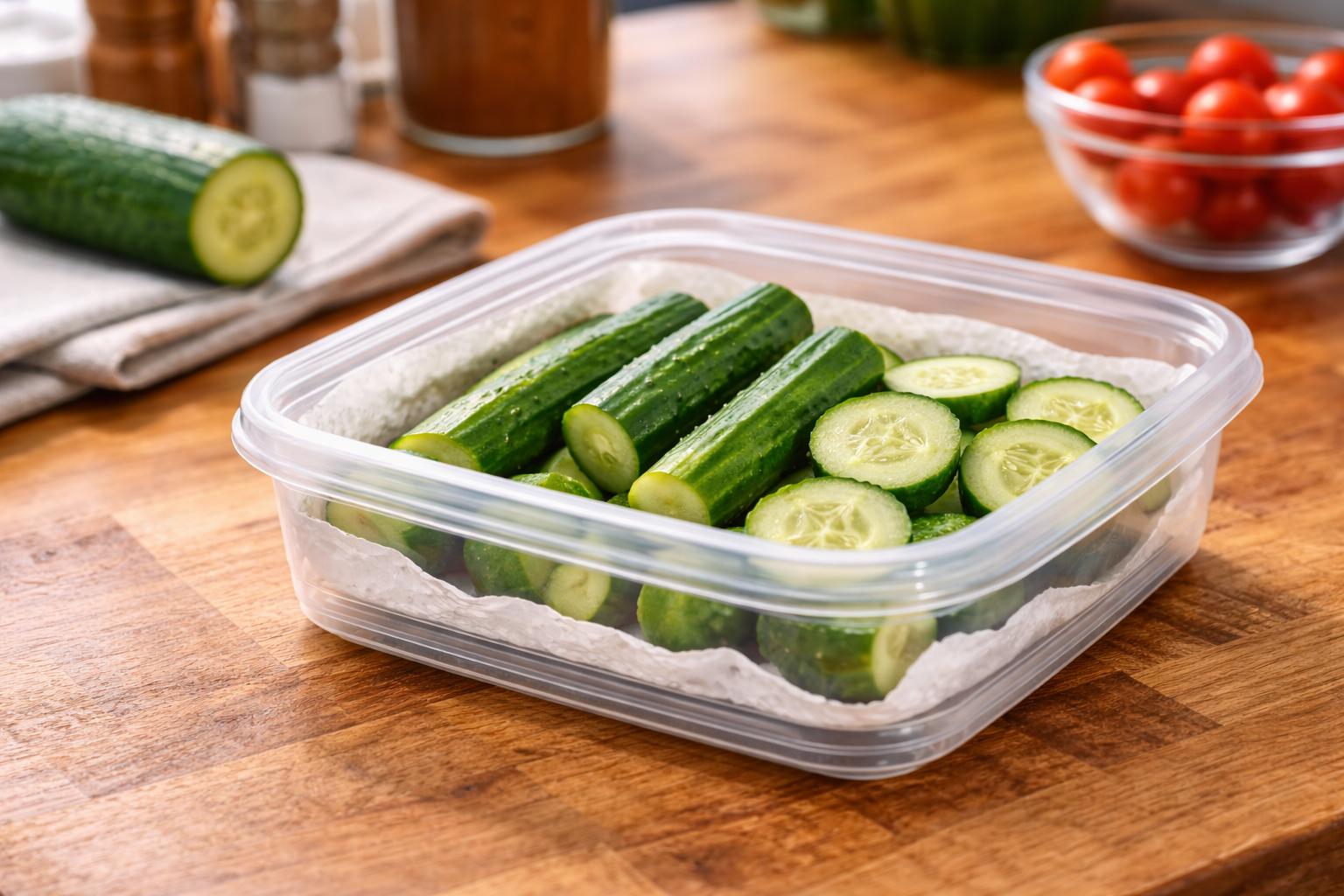
Cut cucumbers are convenient. They are also a classic trap.
Once cut, cucumbers lose water faster and pick up that slick, tired texture fast. If you have only trimmed one end, leave the rest of the cucumber whole and cover the cut side. If you have slices, coins, or spears, move them into a sealed container lined with a dry paper towel.
That paper towel is not there for decoration. It catches condensation before that water sits against the cut flesh.
The shape matters too:
- Thick spears: hold up a bit better
- Rounds: dry out and soften faster
- Peeled slices: fastest drop in quality
If you prep cucumbers for lunches, keep the cut pieces as large as you can. Big chunks stay crisp longer than thin slices. That one change makes more difference than fancy containers do.
A practical rule I like: if you know the cucumbers are for salads in two or three days, don’t slice them now. Wash and cut them right before eating. Meal prep is great, but cucumbers are not loyal leftovers.
Key takeaway: Pre-slicing cucumbers is like opening a fizzy drink early. It is still usable later, but it will not be at its best.
English, Persian, mini, and garden cucumbers do not all store the same way
This matters more than most storage guides admit.
Regular slicing cucumbers from the grocery store often have thicker skin and sometimes a light protective wax. They usually hold up best.
English cucumbers are longer, thinner-skinned, and often sold in shrink wrap. That wrap is not pointless packaging. It slows water loss. If you remove it, you take away some of that protection. If the wrap is intact, leave it on until you are ready to use the cucumber.
Persian and mini cucumbers are great for snacking and lunch boxes, but their smaller size and thin skin mean they can lose quality faster. Wrap them lightly and use them sooner.
Homegrown cucumbers are the wild card. They often taste better, and they often store worse. They usually lack the waxy coating and shipping-friendly toughness of store produce. They bruise more easily too. If you grow cucumbers in containers, that is one more reason to harvest only what you can use soon. If you are setting up your plants, this guide on growing cucumbers in containers can help you avoid ending up with a sudden pile of fruit all at once.
Garden cucumbers also pick up tiny skin injuries during harvest. A small scrape that you barely notice can shorten storage in a hurry. Cut them from the vine rather than twisting or yanking them off.
Common mistake: treating a just-picked garden cucumber like a waxed supermarket slicer. They are not built the same.
What not to do if you want cucumbers to stay crisp
Bad cucumber storage is usually not dramatic. It is just a string of small bad calls.
- Don’t store them wet. Dry skin keeps surface breakdown slower.
- Don’t pack them beside tomatoes, apples, bananas, or melons. Ethylene gas speeds aging.
- Don’t seal them so tightly that condensation builds up. A slightly open bag beats a sweaty little chamber.
- Don’t push them against the back wall of the fridge. That is often the coldest spot.
- Don’t slice them days ahead unless you accept the tradeoff. Convenience costs texture here.
- Don’t buy a giant pile just because cucumbers looked cheap. They are not a buy-now-use-someday vegetable.
The other mistake starts before you even get home. Pick cucumbers that feel firm from end to end. Soft tips, wrinkles, yellowing, and damaged skin mean the storage clock has already been ticking for a while.
I always check the blossom end first. A cucumber can look glossy and fresh in the middle while quietly going soft at the ends. That is the one that fools people.
Is this cucumber still good? A quick symptom-by-symptom guide
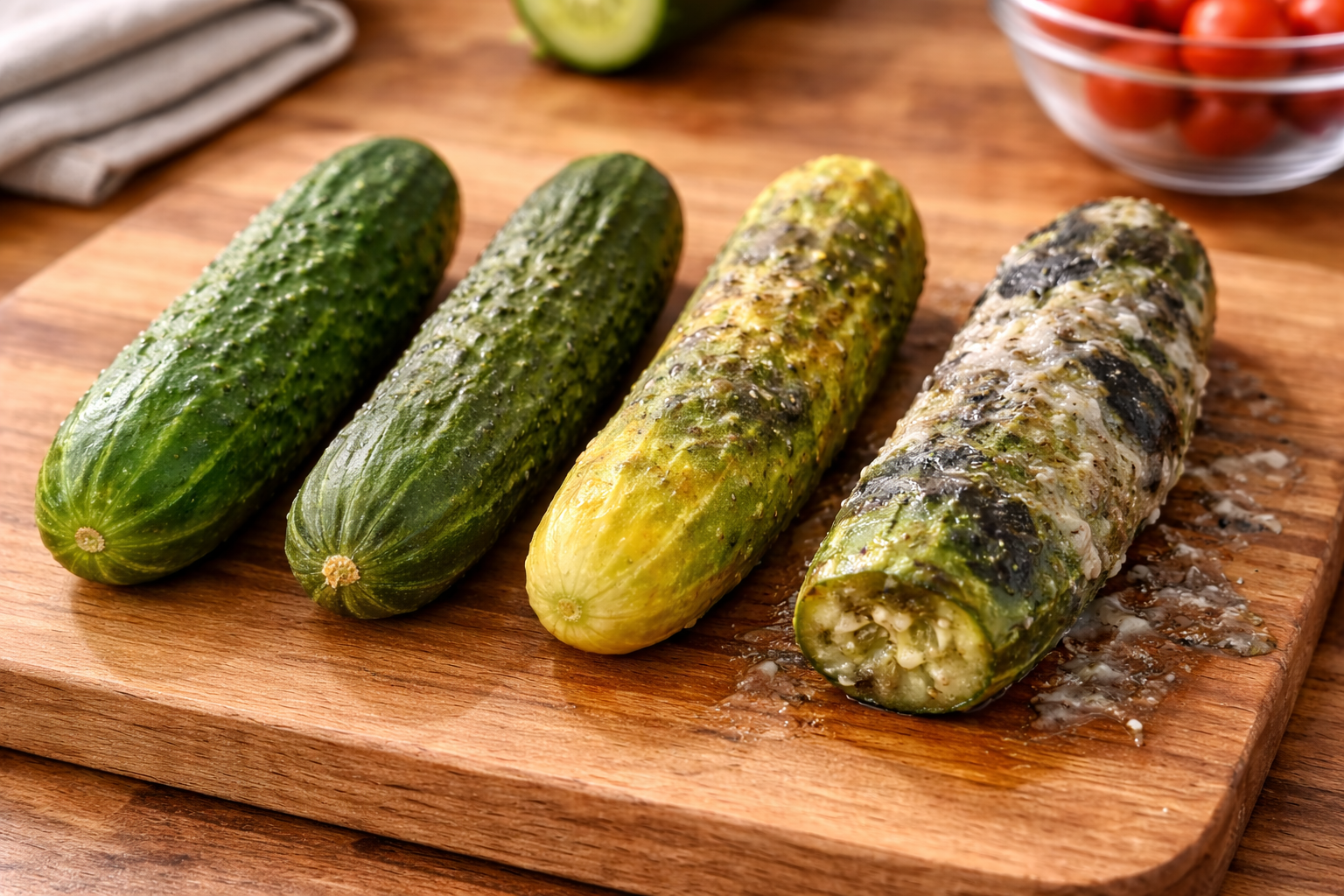
Not every ugly cucumber is spoiled. Some are just old. That distinction saves waste.
- Wrinkled but still firm enough: this is usually water loss. It is not at peak quality, but it is often fine to use soon in salad, tzatziki, or a chopped dish.
- Soft ends: aging and dehydration. Trim and check the rest. If the middle is still crisp, use it now.
- Yellowing: overmature or pushed along by poor storage. Flavor and texture are usually fading fast.
- Slick or slimy surface: throw it out.
- Mold, sour smell, or leaking spots: throw it out.
- Watery, translucent, or pitted patches: often a sign of cold injury or decay. Not worth saving.
The line to remember is simple. Drying out is a quality problem. Slime, mold, and bad smell are discard signals.
For a food-safety backstop, the guidance here on slimy cucumbers gets the point right: rinsing off slime does not bring a cucumber back.
Common mistake: seeing a little slickness, giving it a rinse, and hoping for the best. If it feels slimy, that cucumber is done.
When fresh storage is not enough: freezing, pickling, and fast use-up options
Sometimes the right move is not better storage. It is changing the plan.
If you have too many cucumbers and they are still crisp, quick pickling is usually the smartest save. It keeps the texture more appealing than freezing does, and it gives you something you will actually want to eat later.
Freezing works, but only for the right jobs. Frozen cucumbers lose their crisp bite after thawing. So they make sense for smoothies, cold soups, and blended sauces. They do not make sense if you are hoping for fresh salad texture later.
Here is a clean rule set:
- Too many whole, crisp cucumbers: pickle them
- Too many sliced cucumbers: use them the same day in salad, sandwiches, or a yogurt sauce
- Garden glut: pickle first and freeze only if texture does not matter
If you want a trustworthy preservation method, the National Center for Home Food Preservation has solid guidance for cucumber pickles.
That is the funny thing about cucumbers. They are wonderful fresh, and they are a little unforgiving. Once they start slipping, there is usually a short window where a fast use-up move beats another storage trick.
FAQ
Should cucumbers go in the crisper drawer?
Only if your crisper does not run too cold and damp. If cucumbers keep turning slick or glassy in there, move them to a regular shelf near the front of the fridge.
How long do cut cucumbers last in the fridge?
Plan on 1 to 3 days. Bigger pieces hold up better than thin slices. Keep them in a sealed container with a dry paper towel.
Do English cucumbers last longer than regular cucumbers?
Not always. Their wrap helps, but the cucumber itself is thinner-skinned. Regular slicing cucumbers often hold up longer once both are out of their packaging and stored the same way.

Michael Rowan is the founder and lead writer at The Garden Playbook. He has spent 10+ years growing plants across a range of settings — from indoor houseplants and container gardens to raised beds and in-ground plots — adapting methods to different light levels, seasons, and growing conditions.
Michael focuses on practical, experience-based guidance grounded in fundamentals: soil health, watering strategy, plant nutrition, pruning and propagation, and integrated pest management (IPM). His work aims to help readers diagnose common problems (such as yellowing leaves, stunted growth, or pest pressure) and apply straightforward solutions that are realistic for home gardeners.
At The Garden Playbook, Michael develops tutorials and plant guides using a consistent process: documenting real outcomes where possible, explaining the “why” behind each step, and verifying higher-risk topics (such as plant toxicity or pest treatment options) against reputable horticultural references.