
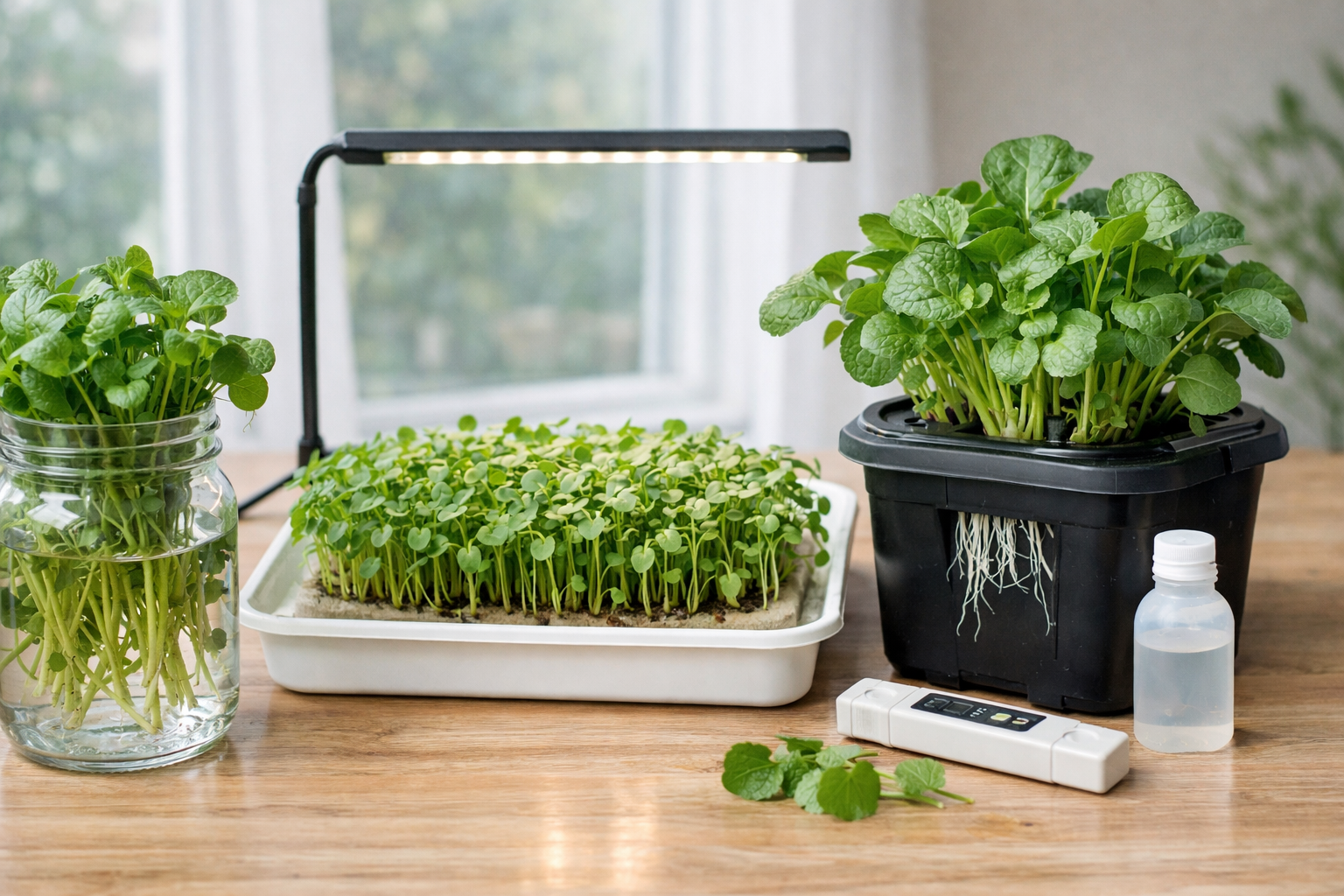
You can make watercress root in a glass of water so fast that it feels like cheating. That is the part people remember. The part they don’t remember is day six, when the water turns murky, the stems stretch, and the plant starts looking alive in the most technical sense only.
If you want to know how to grow watercress without soil, the short answer is yes: root cuttings in water for a quick start, grow it as a microgreen on a moist mat for the fastest harvest, or use a small hydroponic setup if you want a plant that keeps producing. Those are three different jobs, though. A jar can start roots. It usually does a poor job of carrying a mature plant for long.
I have left grocery-store stems in a sunny glass longer than I should have because the roots looked so promising. That is the trap. Roots are not the finish line.
- Which no-soil method fits the result you actually want
- How to start from cuttings or seed without losing the first week
- What light, temperature, and feeding keep watercress tender
- How to stop algae, brown roots, and stalled regrowth
- When raw homegrown watercress is fine and when caution matters
Fast call
Pick the method by harvest goal, not by how pretty the setup looks on a windowsill.
| Method | Best for | Harvest pace | Watch out for |
|---|---|---|---|
| Stem cuttings in water | Quick rooting and a short trial run | Roots in about 1 week | Stagnant water and weak long-term growth |
| Microgreens on a moist mat | Fastest edible crop indoors | About 10 to 15 days | Dense sowing and hygiene slipups |
| Small hydroponic setup | Repeat harvests from full plants | Slower start, better long run | Low light, algae, and no feeding plan |
Can You Grow Watercress Without Soil? Yes, but Not Every Method Gives the Same Result
Watercress is unusually well suited to soilless growing because it likes constant moisture and cool conditions. Utah State University Extension describes watercress as a cool, wet crop, which is exactly why a no-soil setup can work so well indoors or on a shaded patio. So yes, you can grow it without potting mix.
The useful answer is narrower. There are really three ways people mean “without soil.”
First, you can root cuttings in plain water. That is the easiest entry point and a good way to start stems from a bunch you bought at the store.
Second, you can sow seed thickly on a moist mat and harvest it young as watercress microgreens. That is a quick crop, not a permanent planting.
Third, you can grow full plants in a simple hydroponic container with water, support for the roots, light, and some feeding. That is the route for repeat harvests.
The confusion starts when those methods get lumped together. A stem with roots in a glass is propagation. A plant that keeps replacing what you cut is production. Those are not the same thing, and a lot of disappointing watercress setups come from treating them like they are.
Note: If you want a handful of leaves next week, plain water can get you there. If you want a tidy little crop that keeps going, roots need oxygen, the plant needs more light than most windowsills suggest, and water alone starts running out of gas.
The Best Soil-Free Method Depends on Whether You Want Cuttings, Microgreens, or Full Plants
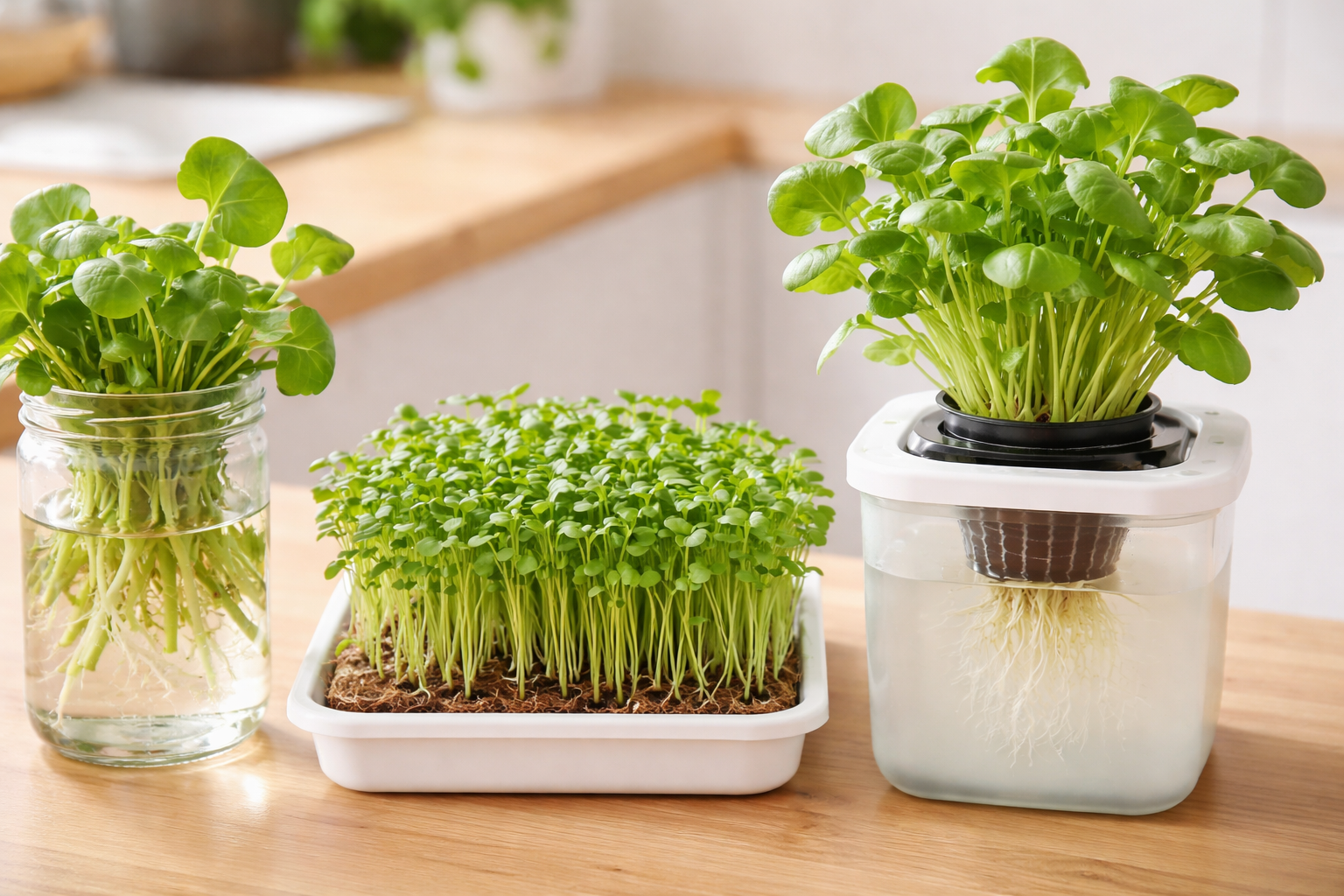
This is the decision that makes the rest easy.
If you only want to keep a fresh bunch alive, root a few stems in water. It is cheap, low-commitment, and forgiving for a week or two. I like this method for testing whether the bunch is fresh enough to bother with.
If you want fast edible greens, sow seed densely and treat the crop like microgreens. You get a quick cut, little waiting, and not much equipment. The tradeoff is that you harvest once or twice, then start over.
If you want a standing crop that behaves more like a leafy herb, use a small hydroponic setup. That can be as plain as a net cup or small support pot over an opaque reservoir. It is not fancy. It is just steadier. A jar looks cute for a minute. A shaded, opaque container is easier to keep clean.
Here is the simple rule:
- Choose cuttings in water if you want a low-risk start and do not mind moving the plant later.
- Choose microgreens if speed matters more than regrowth.
- Choose hydroponics if you want the plant to keep paying rent.
That last option asks for a little more at the front end, but it saves you from the endless cycle of “why does it look worse even though it has roots?”
Start Watercress From Cuttings or Seed Without Losing the First Week
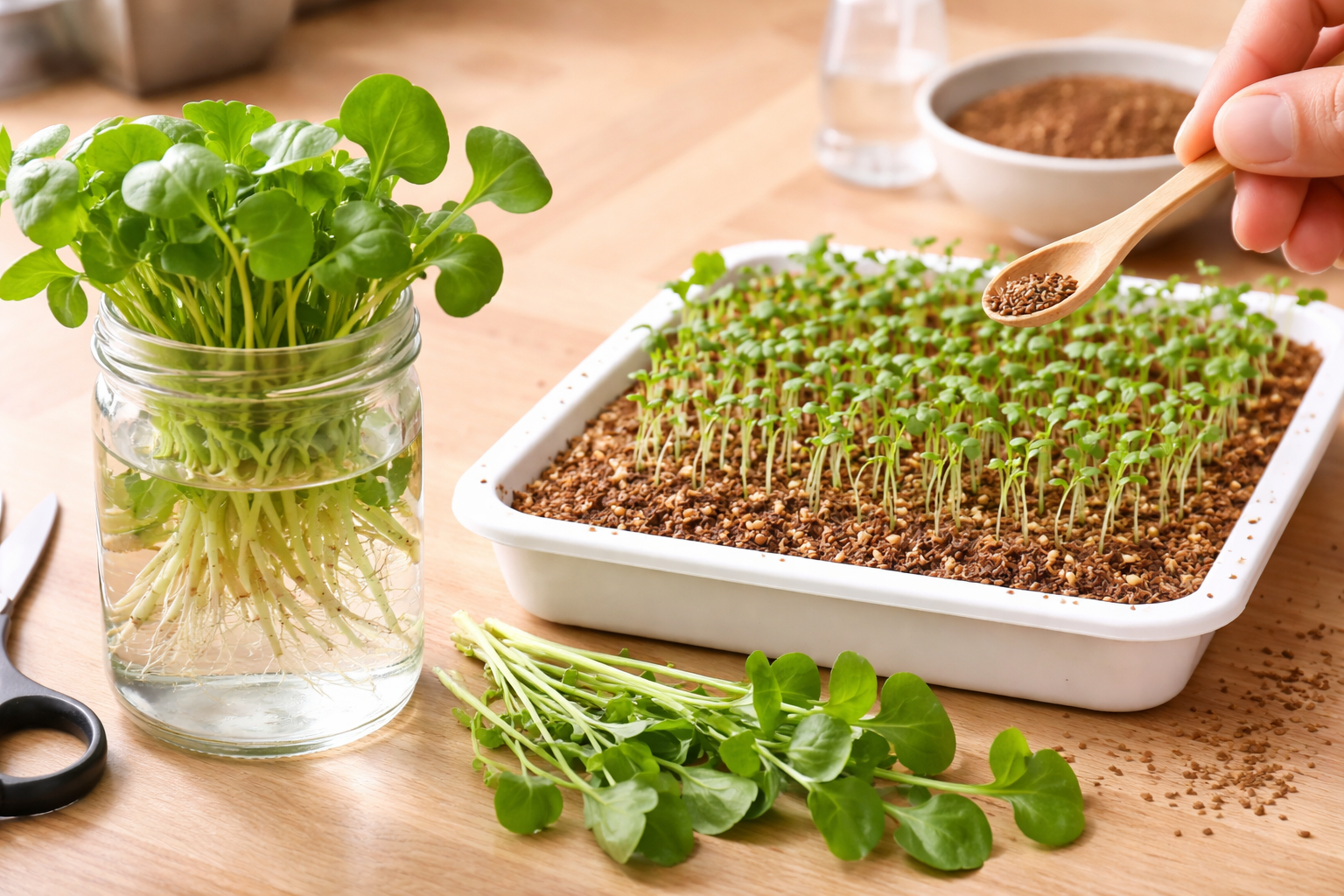
Cuttings are the easier starting point. Pick fresh stems with firm leaves and healthy nodes. If the store bunch still has roots attached, even better. Strip the lower leaves, stand the bare nodes in clean water, and keep the leaves above the waterline. You do not need a deep vase. A shallow glass or jar works fine at this stage.
New roots often show in about a week under cool conditions. That is the moment to think ahead, not congratulate yourself too hard. Once the roots are visible, move the plant toward its long-term setup before the old water starts getting funky and the top growth goes limp.
Seed works too, but the method is different. Watercress seed is better started on a moist support, not dropped into open water and left to fend for itself. A small plug, a moist fiber mat, or another hydroponic starter medium gives the seed something to grab. Sow lightly. Cover only thinly if the medium asks for it. Better Homes & Gardens pegs sowing depth around 1/4 inch when a seed-starting medium is used, and germination commonly lands in the 7 to 14 day window under cool, wet conditions.
If you sow seed densely on a mat, think “microgreens” from day one. That crop is harvested young. It is not the best way to raise a full mature plant for months.
Remember: Leaving cuttings in a glass because they “still look okay” is one of the sneakiest mistakes here. Watercress often looks okay right up until it doesn’t.
Build a Simple Soil-Free Watercress Setup That Stays Wet, Cool, and Clean
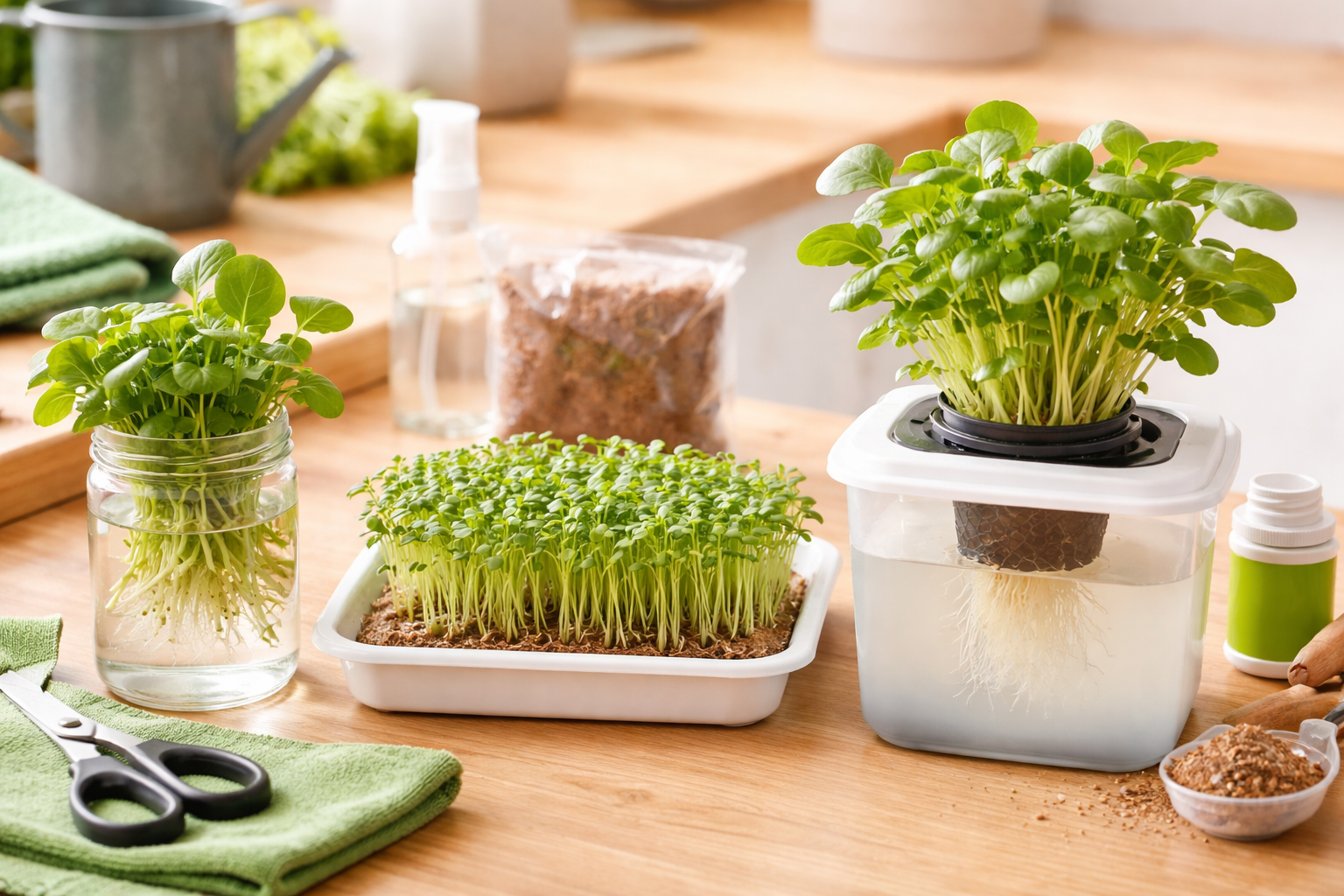
The best beginner setup is not the most technical one. It is the one you will actually keep fresh.
For a short run, a jar or wide glass can hold cuttings while they root. Keep only the lower stem nodes in the water. Change the water often. This is a bridge, not the destination.
For microgreens, use a shallow tray with a moist mat or pad. Keep the surface evenly damp and give the seedlings light as soon as they pop. That setup is all about speed and cleanliness.
For full plants, use an opaque tub, bucket, or reservoir with some support at the top. That support might be a net cup, a small perforated pot, or a lid with holes cut for stems and roots. The goal is simple: keep the roots wet and airy at the same time.
Utah State University Extension’s bucket method keeps pots sitting in 2 to 3 inches of water. That tells you something useful. Watercress likes a wet root zone, but it still benefits from oxygen around those roots. If the whole lower half of the plant is just sitting in stale soup, growth starts to drag.
I would start with a small reservoir before trying anything larger. A giant container sounds easier because it holds more water. In practice, it is harder to move, harder to clean, and easier to ignore.
Give Watercress the Light, Temperature, and Feeding It Needs to Stay Tender
Light and temperature shape the taste almost as much as they shape the growth.
Watercress can get by in bright natural light, but steady growth indoors is easier under a grow light or in the right window. If light is marginal, the plant stretches, the stems go loose, and the leaves get smaller than they should be. For a home setup, a bright window can work in cool weather, but a grow light often gives a tighter, better crop. If the indoor spot is questionable, a guide to the best-facing window for plants is worth a quick look before you blame the seed.
Temperature matters more than many people think. Utah State University Extension notes that flavor and quality drop once temperatures climb above 85 F. That matches what home growers notice. A warm room can keep watercress alive, but the leaves get sharper and rougher. Cool conditions keep it pleasant.
Feeding is where plain-water setups usually hit the wall. Rooting cuttings for a short stretch in clean water is fine. Long-term growth is different. Once the plant is actively making new leaves, it does better with a mild hydroponic nutrient solution meant for leafy crops.
You do not need to chase decimals here, but pH still matters. Missouri Extension gives the usual hydroponic pH window as 5.5 to 6.5 for most crops. That is a good beginner range. If your watercress is green, growing, and tasting good, do not go fiddling with a meter all afternoon. If the plant stalls or the newer leaves pale, then pH and feeding move up the suspect list.
Pro tip: Watercress is fussier about heat than it is about 5.9 versus 6.1. Fix the room and the light before you start playing chemist.
Prevent Algae, Rot, and Stagnation Before They Start
Most no-soil failures look dramatic but start with one quiet mistake: the water sits too long, too warm, and too bright.
Algae loves three things you are already giving the crop: water, light, and nutrients. That is why clear jars become green science projects so fast. Block light from the reservoir and you remove one of algae’s favorite toys.
Roots also need oxygen. In hydroponics, “too wet” often means “not enough air.” Brown, mushy roots are rarely asking for more water. They are asking for fresh water and better oxygen around the root zone.
For a small jar or glass with cuttings, change the water every few days. For a tiny standing-water setup, once or twice a week is a workable opening rhythm. Hot rooms and small containers push that faster. Cool rooms and larger reservoirs buy you more time. Top-offs help, but they do not replace a full change.
Clean dead bits out as soon as you see them. A dropped leaf under the waterline turns into slime faster than you’d think. And use an opaque container when you can. That one change solves more trouble than people expect.
Fast call
Green slime on the container means block the light. Brown mushy roots mean refresh the water and add oxygen. A sour smell means clean the whole setup, not just the top layer.
Harvest Watercress Early and Keep It Producing
Watercress rewards restraint. Waiting for a big glamorous bunch is how you slide past the best texture.
Microgreens are usually ready in about 10 to 15 days, when they are around 2 inches tall and still tender. Snip them cleanly and treat the crop as a quick cut.
Full plants are a little different. Cut the stems while they are young and dark green, before the plant flowers. For repeat harvests, trim stems back instead of stripping the plant bare. A good rule is to leave plenty behind and avoid taking more than about a third of the plant in one go. Some garden guides suggest cutting mature stems back to around 4 inches to nudge fresh regrowth, and that lines up with what works in small home setups too.
Flavor is your cue. A plant kept cool and harvested young tastes peppery in a crisp way. A plant left too long in warmth starts tasting harder, not richer. There is a difference.
If you are after regular salads or garnishes, a smaller harvest every few days beats one heroic cut.
Know When Raw Watercress Is Fine and When Caution Matters
Indoor homegrown watercress and wild streamside watercress are not the same food story.
The Centers for Disease Control and Prevention warns that raw watercress from contaminated freshwater can carry Fasciola, a parasite linked to liver fluke infection. That matters for foraged plants and any watercress grown in uncertain outdoor water. It is not a reason to panic about clean indoor growing. It is a reason not to romanticize “wild” as a built-in safety badge.
The same caution applies to very dense seed-starting systems. The Food and Drug Administration’s sprout guidance explains that sprout-style conditions are friendly to pathogen growth when seed or sanitation is compromised. If you grow watercress as a microgreen, start with clean seed, clean trays, and clean water. Don’t reuse a funky mat just because it still looks sort of fine.
For normal indoor hydroponic watercress grown with clean water and clean handling, raw use is generally straightforward. Just rinse it well, trim away any decaying bits, and skip anything slimy or sour-smelling. That is not paranoia. That is kitchen common sense.
Fix Slow Growth, Yellow Leaves, Leggy Stems, Bitter Flavor, and Brown Roots
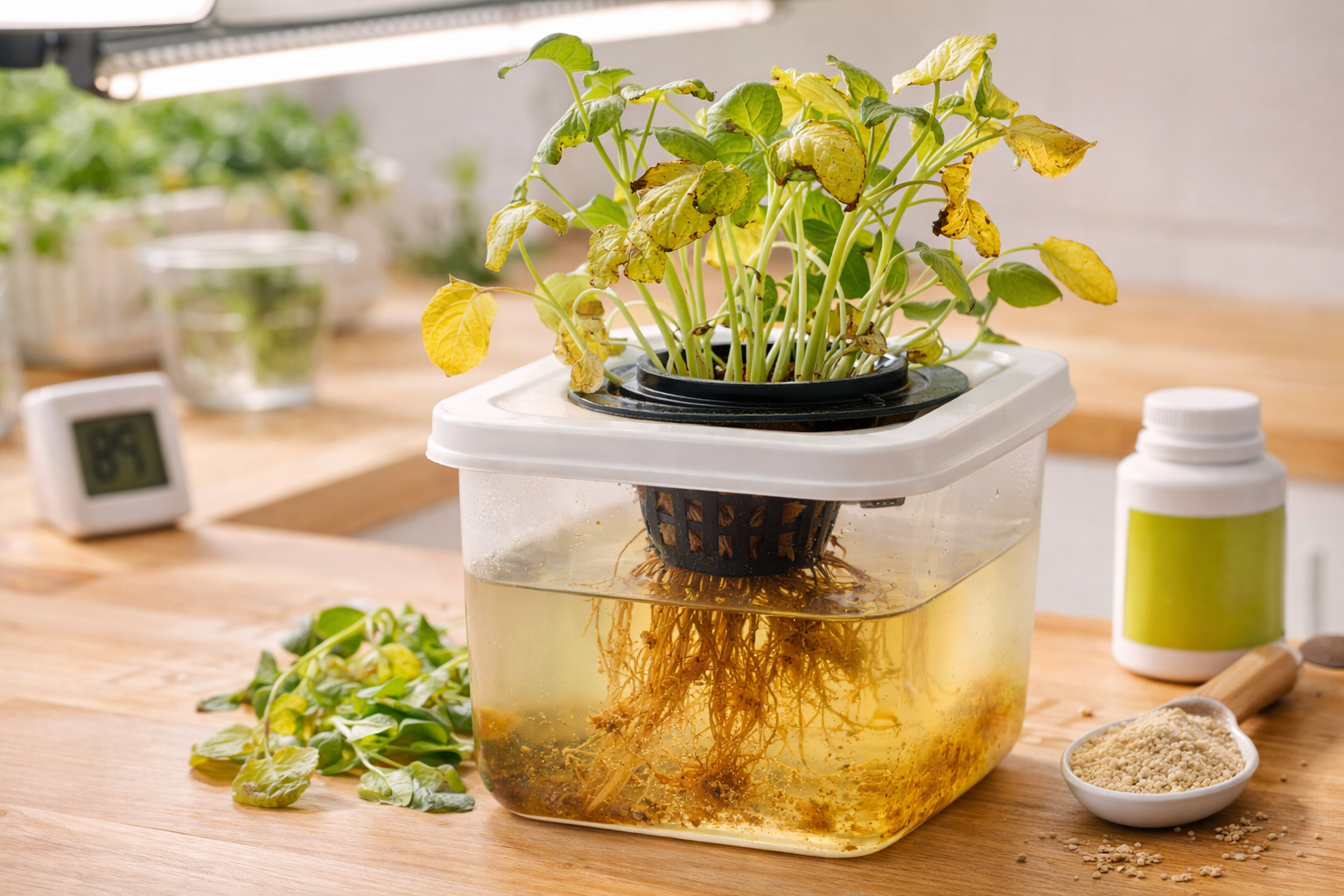
When watercress struggles, the symptoms are usually pretty honest. The trick is reading them in the right order.
| Symptom | Likely cause | What to do next |
|---|---|---|
| Yellow older leaves | Weak feeding or stale water | Refresh the water, then start or tighten a mild feeding routine |
| Pale new growth | Nutrient imbalance or pH drift | Check feeding strength and pH before adding more and more fertilizer |
| Long weak stems | Low light | Move to stronger light or add a grow light |
| Bitter or coarse leaves | Heat, age, or flowering | Harvest younger growth and cool the setup if you can |
| Brown mushy roots | Low oxygen and rot | Change the water, clean the container, and improve airflow around the roots |
| Green slime | Light hitting nutrient water | Use an opaque container or cover the reservoir |
A few nutrient clues are worth knowing. Utah State’s watercress guide notes that phosphorus shortage can stunt plants, potassium shortage can scorch margins, and iron shortage can show up as yellowing between the veins on newer leaves. Those signs help, but do not treat every pale leaf like a lab mystery. The boring fixes solve a lot: fresher water, better light, cooler conditions, and a sane feeding plan.
Change one big variable at a time. If you add nutrients, move the plant, change the water, and trim it hard all in one afternoon, you will not know which move actually mattered. That is how people end up circling the same problem for two weeks.
Common Questions About Soil-Free Watercress
Can watercress grow in just water long term?
For a short spell, yes. For steady leaf production, plain water usually falls short. Roots need fresh oxygen around them, and mature plants usually do better with mild hydroponic nutrients once they are growing hard.
Is it better to start with cuttings or seed?
Cuttings are easier for a beginner and faster for a trial run. Seed is cleaner when the goal is a dedicated hydroponic setup or a tray of microgreens. Pick cuttings for speed. Pick seed for a fresh start.
Why does watercress turn bitter indoors?
Warm rooms, older growth, and delayed harvest are the usual reasons. Watercress tastes best when it grows cool and gets cut young. If the plant is stretching and heating up on a bright sill, flavor usually follows the same downhill slide.

Michael Rowan is the founder and lead writer at The Garden Playbook. He has spent 10+ years growing plants across a range of settings — from indoor houseplants and container gardens to raised beds and in-ground plots — adapting methods to different light levels, seasons, and growing conditions.
Michael focuses on practical, experience-based guidance grounded in fundamentals: soil health, watering strategy, plant nutrition, pruning and propagation, and integrated pest management (IPM). His work aims to help readers diagnose common problems (such as yellowing leaves, stunted growth, or pest pressure) and apply straightforward solutions that are realistic for home gardeners.
At The Garden Playbook, Michael develops tutorials and plant guides using a consistent process: documenting real outcomes where possible, explaining the “why” behind each step, and verifying higher-risk topics (such as plant toxicity or pest treatment options) against reputable horticultural references.