
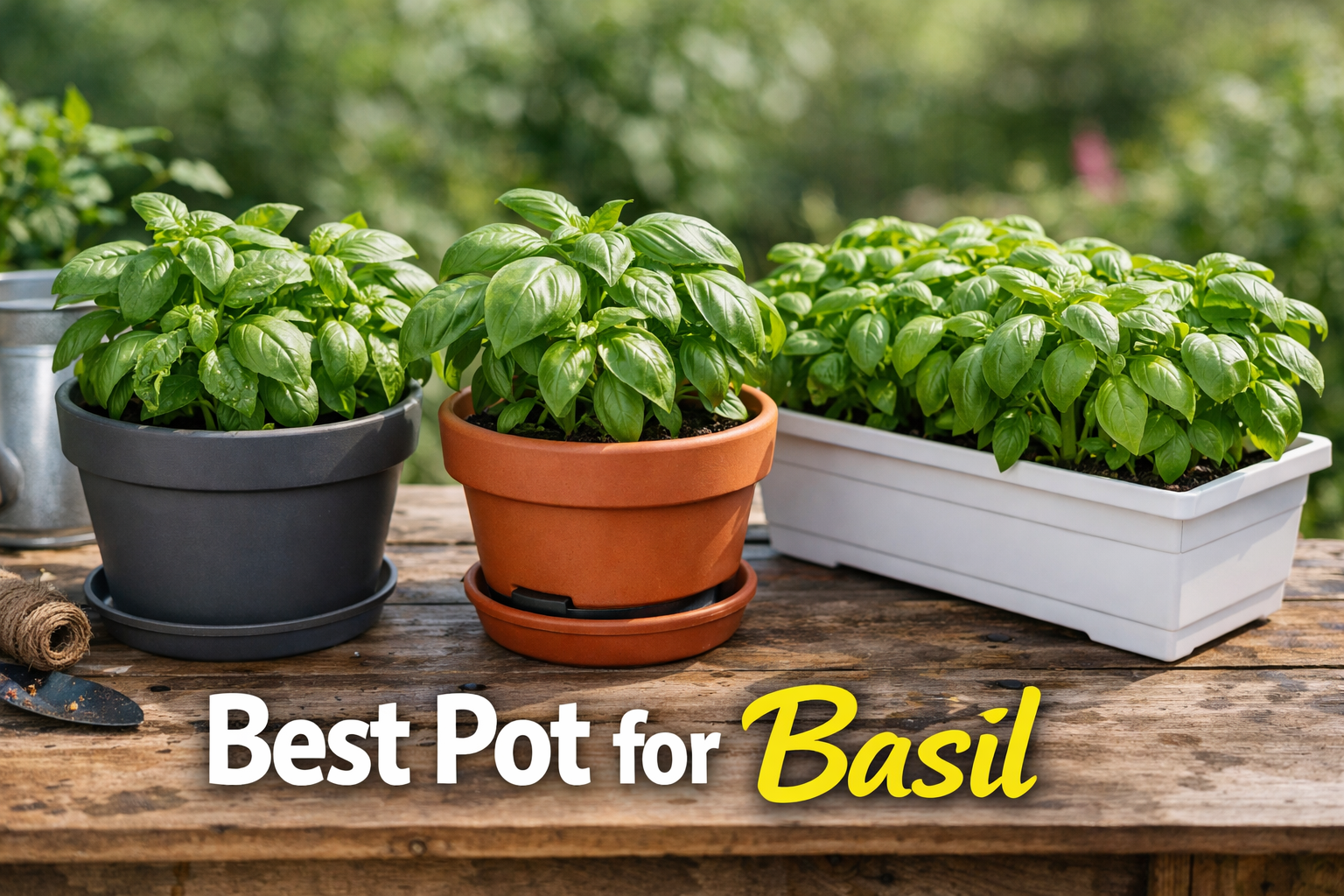
You can grow happy, bushy basil in lots of containers. But if you want the short answer without the usual fluff, the best pot for basil is usually an 8- to 10-inch-wide pot with real drainage and enough soil to keep roots from swinging between bone dry and swampy.
That sounds almost too tidy. Then basil does what basil always does. It looks fine on Tuesday, limp on Thursday, and weirdly yellow by Sunday because the pot looked cute but worked like a bad shoe fit. Too tight, too tall, too sealed, too thirsty. I’ve done that dance more than once on a hot patio and on a kitchen sill that got less light than I wanted to admit.
The useful answer is not just size. It is size plus material, plant count, and where the pot will live.
- How big a basil pot should be for one plant, a grocery-store clump, or a fuller planter
- Why width usually matters more than extra depth
- Which pot material fits your watering habits instead of fighting them
- When a larger pot helps, and when it quietly makes basil sulk
- Which ready-made planters are worth a look for indoor basil, patios, and window boxes
Best Suggestions Table (All products have been personally reviewed & tested by us! Click the buttons below to jump to the reviews.)
| Product | Best for | Action |
|---|---|---|
| Bloem Posy Planter | Most growers who want a simple 8- or 10-inch basil pot | Check Price Review |
| Bloem Ariana Planter | Forgetful waterers and hot, bright spots | Check Price Review |
| Bloem Dayton Window Box | Several basil plants near a rail, sill, or kitchen window | Check Price Review |
Tip: Clicking the “Review” button will move you to the review so you can decide fast.
Still in doubt? Here’s a fast guideline to save you some time.
- If you have one basil plant, start with 8 to 10 inches wide.
- If your basil lives outdoors in full sun, lean bigger or choose less porous material.
- If you forget to water, skip tiny terracotta and look at resin or a self-watering planter.
- If you bought supermarket basil, split or up-pot it soon. Those pots are for selling, not for staying.
- If the pot has no drainage hole, walk away. Seriously.
The best pot for basil for most people: 8 to 10 inches wide, with drainage
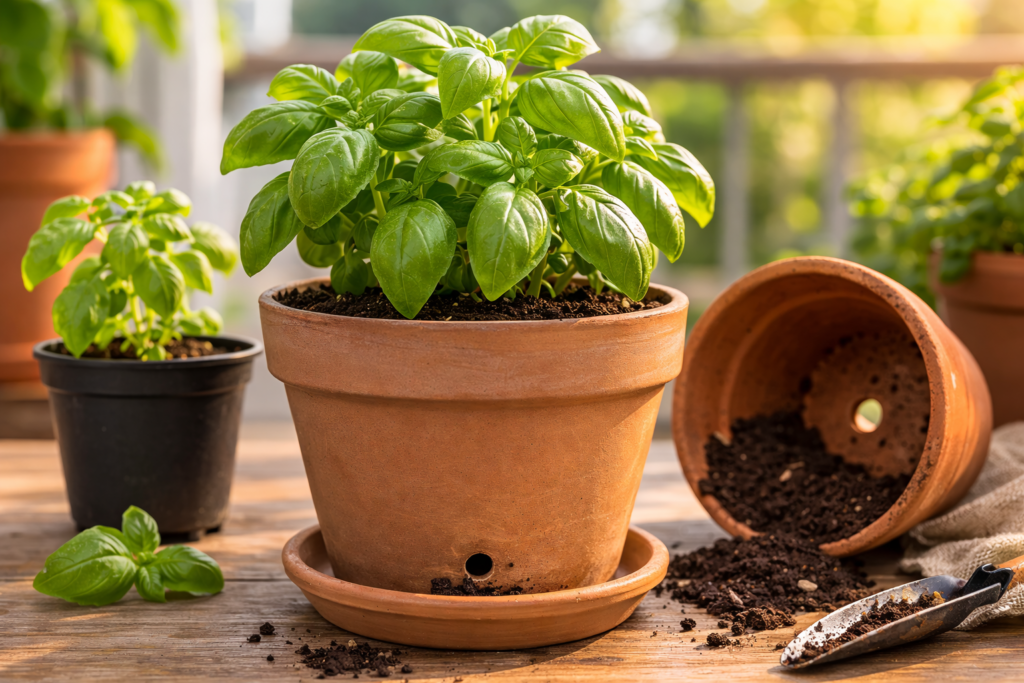
For one basil plant, that size range lands in the sweet spot. It gives you enough soil to steady moisture, enough room for roots to spread, and not so much empty wet mix that the plant sits there looking offended.
A 6-inch pot can work. It often does, at least for a while. But it is the bare-minimum answer, not the low-hassle answer. On a warm porch or a sunny sill, a 6-inch pot dries fast. You miss one watering and basil folds like a cheap lawn chair.
An 8- to 10-inch pot is more forgiving. That matters more than people think.
Use this baseline: one basil plant in an 8- to 10-inch pot, around 8 inches deep, with open drainage holes and a saucer if you’re growing indoors.
If you are repotting a dense grocery-store clump, step up a bit or split the clump into two smaller pots. If you are planting two or three basil plants together for a fuller look, move into the 10- to 12-inch range.
The pot that works best is not the biggest one you own. It is the one that keeps the soil in that boring, healthy middle. Not dusty. Not soggy. Just steady.
How big of a pot does basil need? Use this simple fit test
The fast way to judge basil container size is to match the pot to three things: how many plants are going in, how hot the spot gets, and how often you actually water on a normal week.
| Your setup | Good starting size | What to watch for |
|---|---|---|
| One small transplant | 8 to 10 inches wide | Tiny pots dry fast in heat |
| One divided supermarket section | 8 inches wide | Check root crowding after 2 to 3 weeks |
| Two to three basil plants together | 10 to 12 inches wide | Crowding and damp foliage |
| Hot patio or balcony rail | Lean larger or use resin/self-watering | Fast drying and droop by late afternoon |
| Indoor windowsill in average light | Stay moderate, not oversized | Wet soil hanging around too long |
Width matters more than people expect. Basil does not need a deep tower of soil nearly as much as it needs usable root room and a decent moisture buffer. A tall, skinny pot looks elegant. For basil, it often behaves like a narrow hallway. Plenty of height, not enough living space.
If you are torn between two sizes, ask a simple question. Will this pot help me miss a watering without paying for it the next day? If yes, good. If it is so large that wet soil will sit around a small rootball for ages, that is too far the other way.
And yes, this is where a lot of basil trouble starts. Not bad luck. Bad fit.
Terracotta, plastic, ceramic, or self-watering: which pot material is actually best?
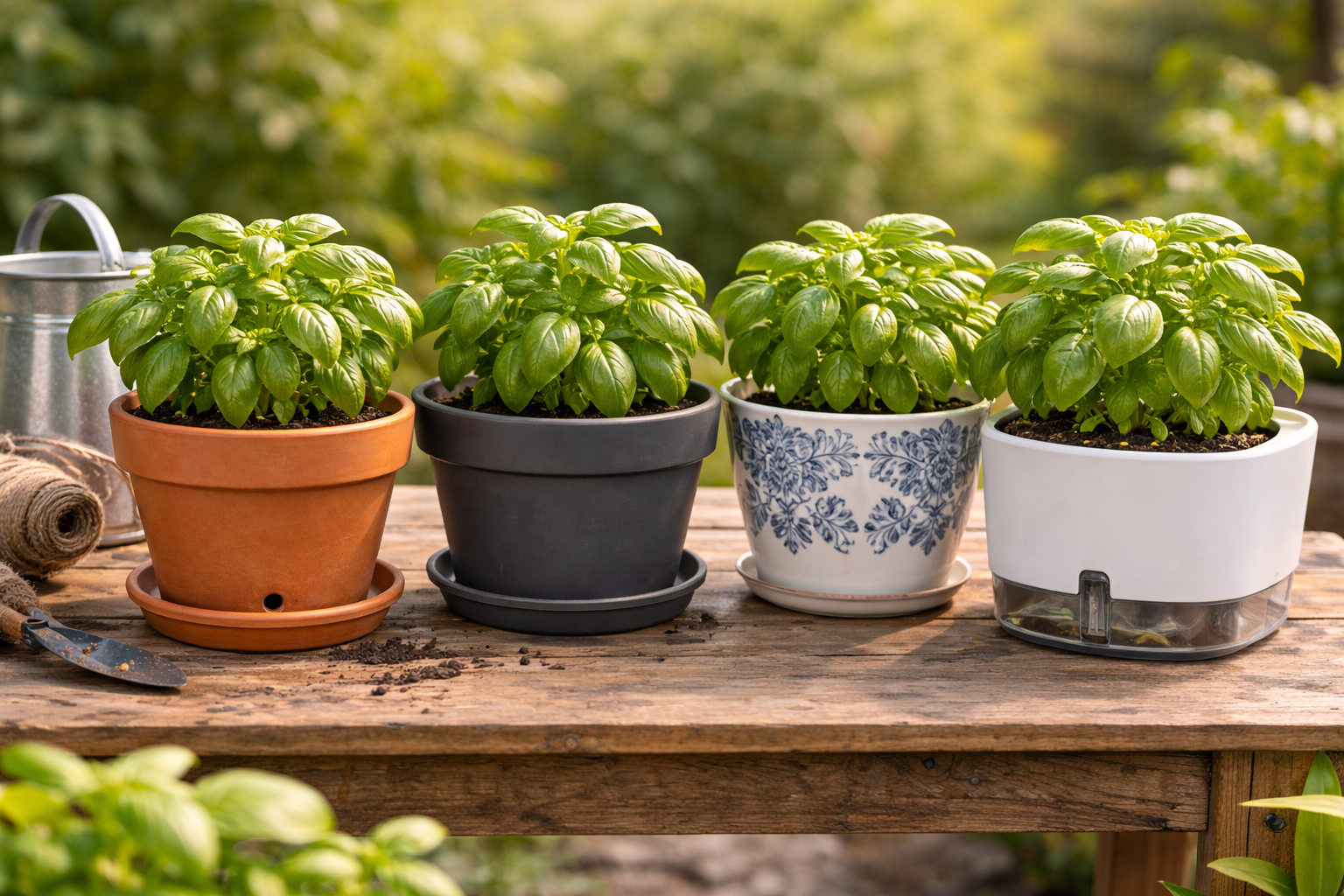
Pot material is not just a style choice. It changes your watering rhythm.
Terracotta is great if you run heavy with the watering can or live somewhere humid. It breathes, so the mix dries faster. That can save basil from sitting wet. The flip side is obvious after one windy July afternoon. Terracotta can drink right along with the plant.
Plastic and resin are easier on forgetful growers. They hold moisture longer, weigh less, and are easier to move from blazing afternoon sun to gentler morning light. For most people, that is the easiest all-round option.
Glazed ceramic can work well too, though it gets heavy fast. Some decorative ceramic pots still hide the same old problem: no drainage hole. Pretty trap, same result.
Self-watering planters are handy in hot weather and for people who do not want basil to crash between waterings. Indoors, though, they can run a bit wet if your light is weak and the plant is not using water quickly.
Quick read on materials
- Terracotta: best for overwaterers and humid spots
- Resin or plastic: best for most beginners and hot patios
- Glazed ceramic: good if it drains, awkward if it is heavy and sealed
- Self-watering: best for thirsty setups, not always for dim indoor corners
If you want the boring recommendation that causes the fewest headaches, pick a resin or plastic planter in the 8- to 10-inch range with drainage. It is not romantic. It works.
Indoor basil vs outdoor basil: the same pot does not behave the same way
This part gets missed a lot. A pot is not just a pot. The same container behaves one way on a bright, breezy patio and another way in a kitchen window with softer light and slower drying.
Indoors, basil often uses water more slowly. Air movement is lower. Light is weaker unless you have a very bright window or grow light. That means oversized pots stay wet longer. Wet roots plus slow growth is a lousy combo. The University of Minnesota Extension notes that basil in containers dries faster than garden basil, and that bright light matters, which is exactly why indoor and outdoor container choices should not be treated as twins.
Outdoors, especially in summer, the script flips. Sun, heat, and moving air pull water through the pot much faster. A tiny terracotta pot on a hot balcony can turn into a daily emergency. Been there. You water in the morning, feel smug, and by 4 p.m. the leaves look like wrinkled green tissue paper.
So here is the plain rule.
- If basil is indoors, stay moderate on pot size and be picky about drainage.
- If basil is outside in strong sun, a little more soil volume helps, and less porous material often makes life easier.
- If your basil wilts every day in a small container, size is part of the story, not just water.
Location changes the right answer more than many shopping guides admit.
What to do with supermarket basil: repot, divide, or leave it alone?
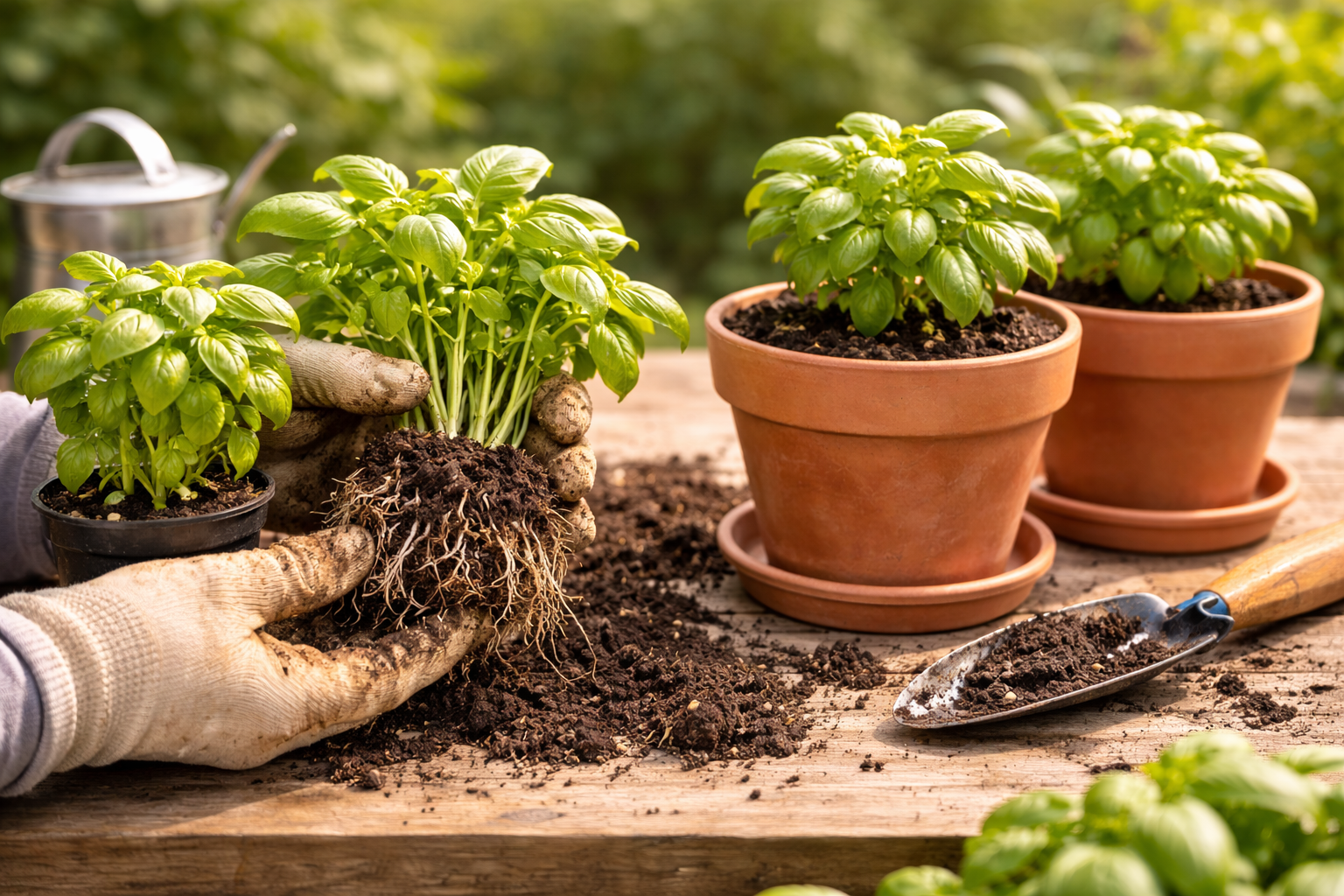
Supermarket basil is its own little category of chaos. Those pots are usually packed with many seedlings grown shoulder to shoulder so they look lush on the shelf. Great for selling. Not so great for long-term growth.
If you want a short-lived kitchen plant you will snip hard over a week or two, you can simply pot the whole clump up one size. That buys time.
If you want a plant that keeps going, divide it. Gently. You do not need to tease every root apart like you are combing wet hair. Split the clump into two or more sections with enough roots attached to each, then replant those sections into their own containers.
This is one of those jobs that looks scary and then turns out fine.
A divided section usually does well in an 8-inch pot. A fuller clump may want 10 inches. Give it a few days out of harsh sun after repotting and keep the mix evenly damp, not soaked. If it droops a little, that is normal transplant sulking. If it stays limp in soggy soil, the container is probably part of the problem.
And don’t treat the nursery pot as your sizing benchmark. It is not a model to copy. It is a temporary holding pattern.
Bigger is not always better: when a pot is too large for basil
A lot of gardeners hear “basil likes room” and jump straight from a tiny store pot into a giant decorative planter. It feels generous. Sometimes it is the move that starts the rot.
The trouble is not extra room by itself. The trouble is extra wet soil around a small rootball. The Oregon State University Extension guide on container gardening explains that an oversized container can hold more water than a small plant is ready to use. That is exactly why a huge pot can be awkward for freshly repotted basil.
Think in steps, not leaps. Move up one meaningful size. Not three.
Too small looks like this: the plant dries out fast, roots circle early, and growth stalls unless you baby it.
Too large looks different: the mix stays wet, the plant grows slowly, lower leaves yellow, and the whole thing gets a bit dull and lifeless.
A good repotting jump: from a tiny nursery pot to 8 inches, or from a crowded grocery clump into two medium pots. That is usually enough.
If your instinct is “I will put it in the biggest pot so I never have to repot again,” slow down. Basil is fast, leafy, and a little dramatic. It likes room, yes, but not a swamp.
Shared herb planters, window boxes, and multiple basil plants
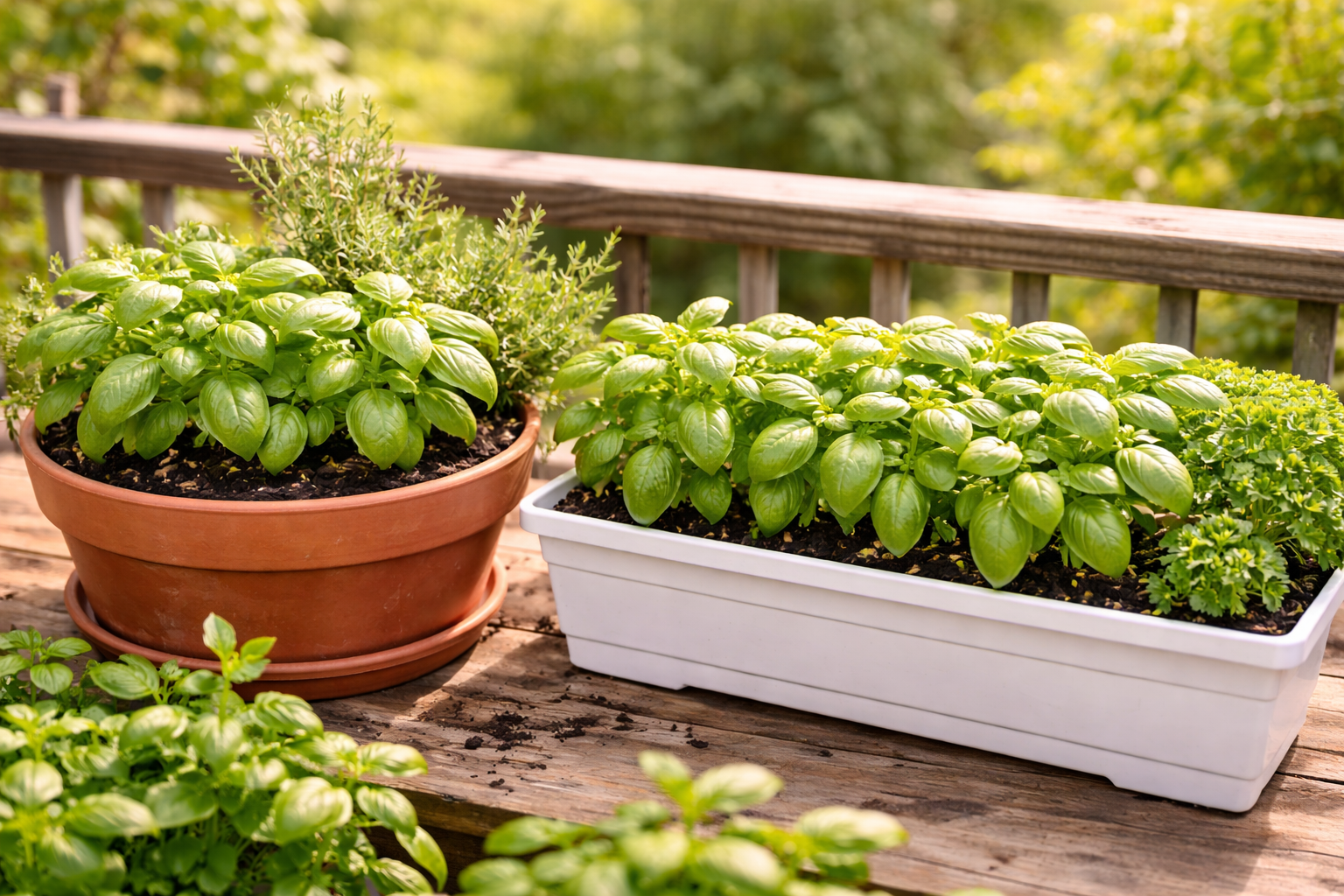
If you want one basil plant, keep it simple. If you want a fuller herb planter or a kitchen window box, now spacing starts to matter.
Two or three basil plants can share a wider planter just fine if the container has enough width and airflow. A 10- to 12-inch round planter works. A longer window box works too. What usually breaks the setup is trying to cram a herb garden into a shallow decorative tray with barely any root room.
Basil also does not pair neatly with every herb just because they all end up in the same cookbook. Rosemary and thyme usually like drier conditions than basil. Mint is a different sort of headache. It grows like it owns the lease. If you are tempted to pair those, this guide on what to plant with mint in container gardens is worth a look before you make the pot too crowded.
For grouped basil, choose width over depth again. Long, low planters can be excellent if they are not too shallow and if runoff has somewhere to go. The pot size rule for rosemary is also a helpful contrast. Herb advice is not one-size-fits-all, and basil’s water needs are a lot less dry and stoic.
One more small thing. If leaves are pressed together and staying wet after watering, the planter is probably too crowded even if the roots still have some space left.
The mistakes that make basil hate its pot
Some basil problems are light or watering issues. Some are just pot mistakes wearing a disguise.
- No drainage hole. Not “poor drainage.” No drainage. This is the fastest way to turn basil roots into mush.
- A nursery pot hidden inside a sealed outer pot. Easy to forget, easy to overfill, easy to drown.
- Rocks in the bottom. They do not improve drainage the way people hope. The University of Maryland Extension points out that drainage comes from the container opening and the mix itself, not from a layer of stones at the base.
- Tiny pot in blazing sun. That setup asks you to water on a hair trigger.
- Terracotta in harsh heat without adjusting watering. The pot and the plant both lose water fast.
- Too many plants in one cute bowl. It looks lush for a bit, then airflow drops and roots start competing.
If you want a quick check after repotting, use this little seven-day test.
| What you see | Most likely cause | What to do next |
|---|---|---|
| Wilts by late afternoon, perks up after watering | Pot too small or too porous for the spot | Size up or switch material |
| Soil still wet after several days | Pot too large, poor light, or weak drainage | Check drainage and hold back on bigger pots |
| Roots circling fast at the edge | Container too tight | Repot one step up |
| Yellowing with limp stems in wet mix | Too much water hanging around | Dry the cycle out and rethink the container |
Basil is not fragile exactly. It just tells on your container choices fast.
Best pot recommendations by scenario
If you want named picks instead of just rules, here are the three that line up best with the decision points above. I judged them on drainage setup, usable width, how forgiving they are with moisture, and whether they make sense for real basil situations instead of showroom photos.
Bloem Posy Planter
If you want one basil pot that covers the broadest number of people, this is the shape and style I would start with. The Posy comes in the sizes that matter for basil, especially 8 and 10 inches, and that is half the battle right there. It is resin, so it does not dry out as fast as terracotta. That makes it easier for windowsills, patios, and growers who are not hovering over the plant every day. The profile is simple and wide enough to suit basil better than those tall ornamental cylinders that look nice and then behave badly.
The catch is right there in the product design. The bottom is sealed for indoor use, with optional knockout drainage for outdoor planting. That means you need to use it correctly. If you keep it sealed and treat it like a normal draining pot, basil can end up in stale wet mix. If you open the drainage and pair it with a saucer indoors, it becomes a very sensible basil container.
I like it most for one plant, or for a divided section of supermarket basil. It is light enough to move, which matters more than it sounds. Basil often wants one spot in spring and a different one in midsummer. That little bit of flexibility saves plants. For most readers, this is the best overall pick because it asks the least from you while still matching the size rule that actually works.
Bloem Ariana Planter
The Ariana is the one I would look at if your basil lives somewhere bright, warm, and annoyingly quick to dry out. It uses a self-watering disk, and that small change can smooth out the feast-or-famine cycle that container basil falls into so easily. If you have ever come home to basil that looked tired, watered it, and watched it spring back like nothing happened, you already know the problem this planter is trying to solve.
For outdoor basil on a patio, porch, or sunny rail, that water reserve can be genuinely helpful. The same goes for people who travel a bit, forget an occasional watering, or just do not want the plant’s mood to hinge on one missed day. In 8- or 10-inch sizes it lines up well with the usual one-plant basil recommendation.
The thing to watch is indoor use in weak light. Self-watering designs are not magic. If the plant is growing slowly and the pot stays damp for too long, the reservoir becomes less of a cushion and more of a wet blanket. The Ariana works best when the plant is actively drinking. In the right setup, though, it is a very practical choice. Not fancy. Just smart in a “my basil keeps drying out by dinner” sort of way.
Bloem Dayton Window Box
If your goal is not one basil plant but several, or a kitchen window setup with more width than a round pot gives you, the Dayton Window Box is the stronger fit. Long planters are often better for basil than people expect because they give you side-to-side root room and let you space plants so the foliage is not jammed together. This one also includes drainage and a tray, which keeps the whole setup cleaner indoors and tidier on a sill or railing.
I would use a box like this for two or three basil plants, or for a basil-focused herb planter where basil is still the main event. The 24-inch length gives you real room to work with. You are not trying to fake abundance by cramming roots into a decorative shoebox. That part matters.
The caution here is depth. Window boxes can run shallower than round pots, so you still need to keep an eye on water use in hot weather. A long planter with plenty of exposure can dry fast. But if you have the light and want a fuller harvest near the kitchen, this kind of container makes sense in a way tiny individual pots often do not. It is the best pick here for grouped basil, window use, and cooks who want more leaves within arm’s reach.
Start here if you just want the fastest answer
- Best overall: Bloem Posy Planter in 8 or 10 inches
- Best for missed waterings: Bloem Ariana Planter
- Best for several basil plants: Bloem Dayton Window Box
How we tested them
I did not treat these like generic patio decor. I looked at them through the lens basil actually cares about. Size range first, then drainage, then whether the planter shape gives useful root room instead of wasted height. After that, I looked at how each design would change watering in common basil setups: a bright kitchen window, a warm porch, a balcony rail, and a crowded supermarket basil rescue.
I also checked whether each planter has a feature that helps or hurts basil in real use. Optional knockout drainage matters. Attached trays matter. Self-watering parts matter. A lot of pot advice falls apart because it talks as if every container behaves the same once you add soil. They don’t. Not even close.
For this kind of herb, I care less about decor language and more about what happens on day four, day seven, and the first hot weekend. Does the planter still give the roots air? Does it hold enough mix to soften watering swings? Can you actually use the drainage setup the way basil needs? Those are the questions that sort a decent basil pot from a frustrating one.
That is why the recommendations here lean toward moderate-width, practical containers rather than showpiece pots that make basil harder than it needs to be.
FAQ
Is terracotta or plastic better for basil?
Plastic or resin is better for most people because it dries out more slowly. Terracotta is better if you overwater or live somewhere humid. Basil does well in both, but the better choice is the one that matches your watering habits.
Can basil grow in a 6-inch pot?
Yes, though it is usually a short-term or higher-maintenance setup. A 6-inch pot works best for a small plant you watch closely. For easier care, 8 to 10 inches is a better baseline.
Should I put rocks in the bottom of a basil pot?
No. That old tip sounds sensible, but it does not fix drainage the way people hope. A pot with real drainage holes and a good container mix does a better job.

Michael Rowan is the founder and lead writer at The Garden Playbook. He has spent 10+ years growing plants across a range of settings — from indoor houseplants and container gardens to raised beds and in-ground plots — adapting methods to different light levels, seasons, and growing conditions.
Michael focuses on practical, experience-based guidance grounded in fundamentals: soil health, watering strategy, plant nutrition, pruning and propagation, and integrated pest management (IPM). His work aims to help readers diagnose common problems (such as yellowing leaves, stunted growth, or pest pressure) and apply straightforward solutions that are realistic for home gardeners.
At The Garden Playbook, Michael develops tutorials and plant guides using a consistent process: documenting real outcomes where possible, explaining the “why” behind each step, and verifying higher-risk topics (such as plant toxicity or pest treatment options) against reputable horticultural references.