
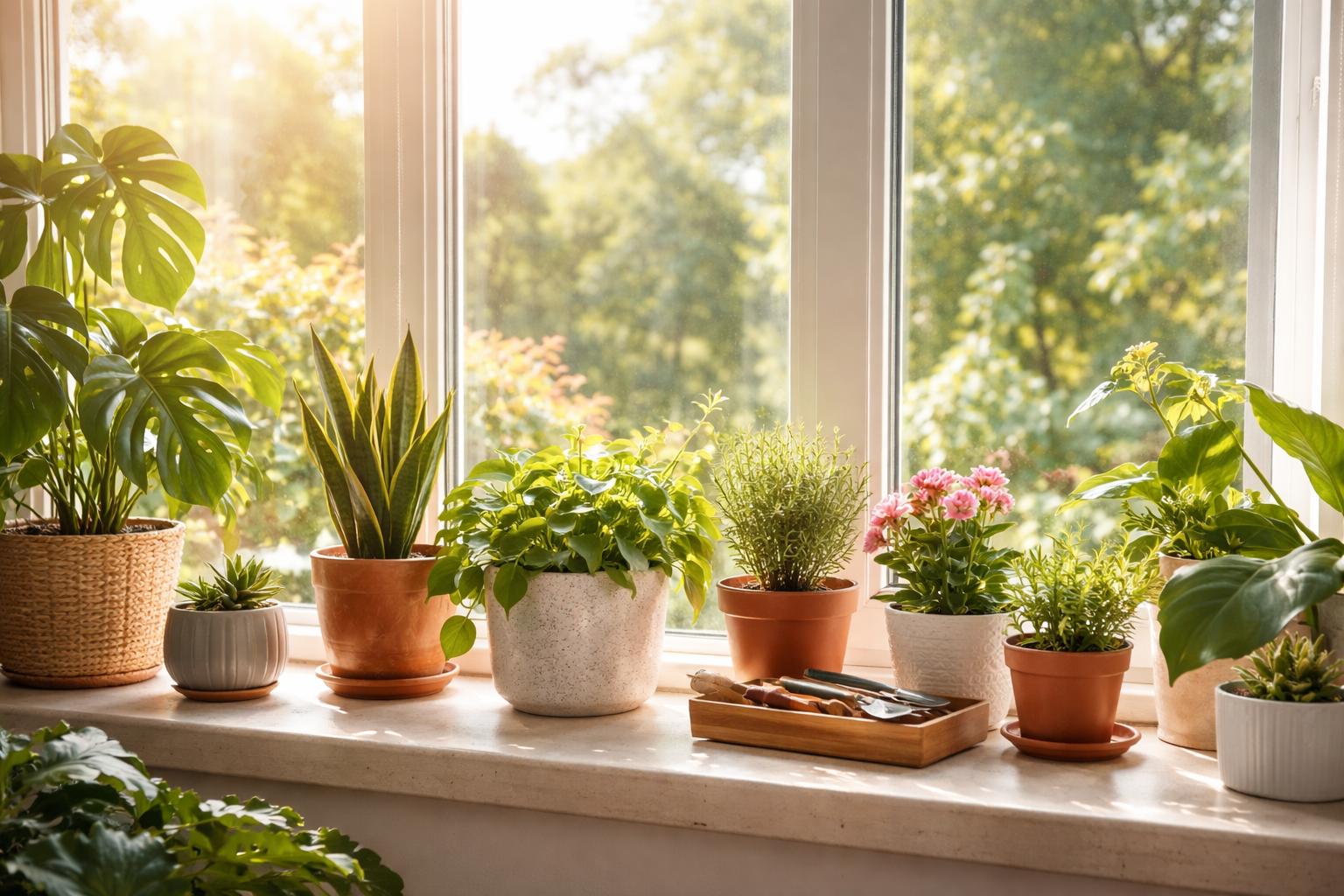
You can waste a weird amount of time chasing “bright light” around a house.
I’ve done it with a pothos that looked happy on Monday, limp by Friday, and somehow offended by a window that felt sunny enough to read beside. That is the trap with the phrase best facing window for plants. The generic answer is easy. The useful answer takes one more step.
Here it is: a south-facing window is usually the brightest option for indoor plants in the Northern Hemisphere. If your goal is raw light, that is the front-runner. But if you want the safest, easiest all-around choice for a mixed group of common houseplants, an east-facing window often wins because the morning sun is bright without being as punishing.
And that little split matters. “Brightest” and “best for your plant” are not always the same thing.
What usually changes the answer is simple: the kind of plant you have, how far it sits from the glass, what blocks that window, and what season you’re in. A south-facing window behind a deep porch roof can act weaker than you’d expect. A west-facing window in late July can feel like a frying pan by 4 p.m. A north-facing window can keep certain plants alive just fine, but it often won’t keep them compact, colorful, or blooming.
- Which window direction gives the strongest light
- Why east-facing windows are often the easiest place to start
- How distance from the glass changes everything
- What leaf scorch, stretching, and stalled growth are trying to tell you
- How to choose the right window in your house without guessing
Still in doubt? Here’s a fast guideline to save you some time.
| If your plant is… | Start here | Watch for |
|---|---|---|
| Succulent, cactus, rosemary, sun-loving herb | South-facing window | Heat stress if pressed against hot glass |
| Pothos, philodendron, peace lily, many tropical foliage plants | East-facing window | Slow growth if set too far back |
| Flowering houseplant or indoor herb that needs energy | South or bright west, with a close eye on heat | No blooms in dim rooms |
| Snake plant, ZZ plant, cast iron plant | North-facing window or a dimmer east window | “Alive but not thriving” growth if light stays weak |
The short answer: south is brightest, east is easiest, and “best” depends on the plant
If you want the short version without the fluff: south-facing is usually best for light-hungry plants, and east-facing is often best for the average indoor plant owner.
That sounds like two answers because, honestly, it is. A succulent, basil plant, or indoor citrus wants a very different window from a pothos or prayer plant. Lumping them together is how people end up calling a plant “fussy” when the real issue was placement.
If you’re in the Northern Hemisphere, south-facing windows usually get the longest, strongest light. The University of Missouri Extension puts south-facing windows at the top for intensity, especially in winter. If you live in the Southern Hemisphere, flip north and south in this article and the logic still holds.
East-facing windows are the quiet overachievers. Morning sun is bright, but it is less brutal than late afternoon sun. For many common houseplants, that is the sweet spot: enough light to keep them moving, not so much that you spend summer peeling crispy leaves off the sill.
Quick read: If you own a mixed collection and want one answer you can actually use, start with east. If you grow succulents, herbs, or flowering plants, start with south and adjust from there.
Pick your window by plant type, not by internet folklore
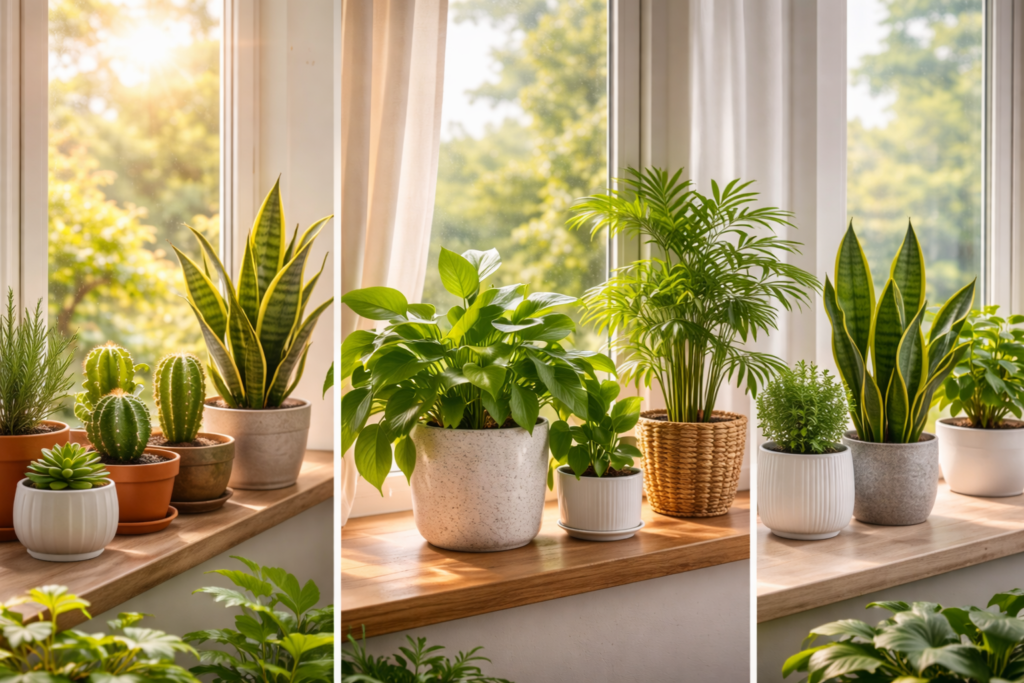
A lot of bad plant advice comes from treating “houseplants” as one category. That’s like saying one shoe size is best for feet. Neat idea. Doesn’t work.
Start by sorting the plant in front of you.
Sun-lovers such as succulents, cacti, rosemary, and many indoor herbs usually belong in a south-facing window first. If they stretch, thin out, or lose color, they are asking for more light, not more water.
Tropical foliage plants like pothos, heartleaf philodendron, peace lilies, and many ferns often do better in east-facing light or a filtered south window. They want brightness, but not all of them want hours of hard direct sun on the leaves.
Flowering houseplants are greedy in the best way. They need energy. African violets, many orchids, and blooming herbs usually respond better to brighter exposures than people assume. A plant can survive in a dim room and still refuse to flower. That part catches people off guard.
Low-light tolerant plants such as snake plant and ZZ plant can manage in a north-facing window, but “tolerant” gets abused. It means they cope. It doesn’t mean they love it. If yours just sits there like a wax museum piece, the light is probably on the low side.
If you grow edible plants indoors, light gets less negotiable. A weak window that keeps a pothos alive often won’t do much for cilantro or rosemary. If that is your lane, this guide on how to plant cilantro indoors is a good next step because the light question shows up fast with herbs.
What each window direction actually gives you
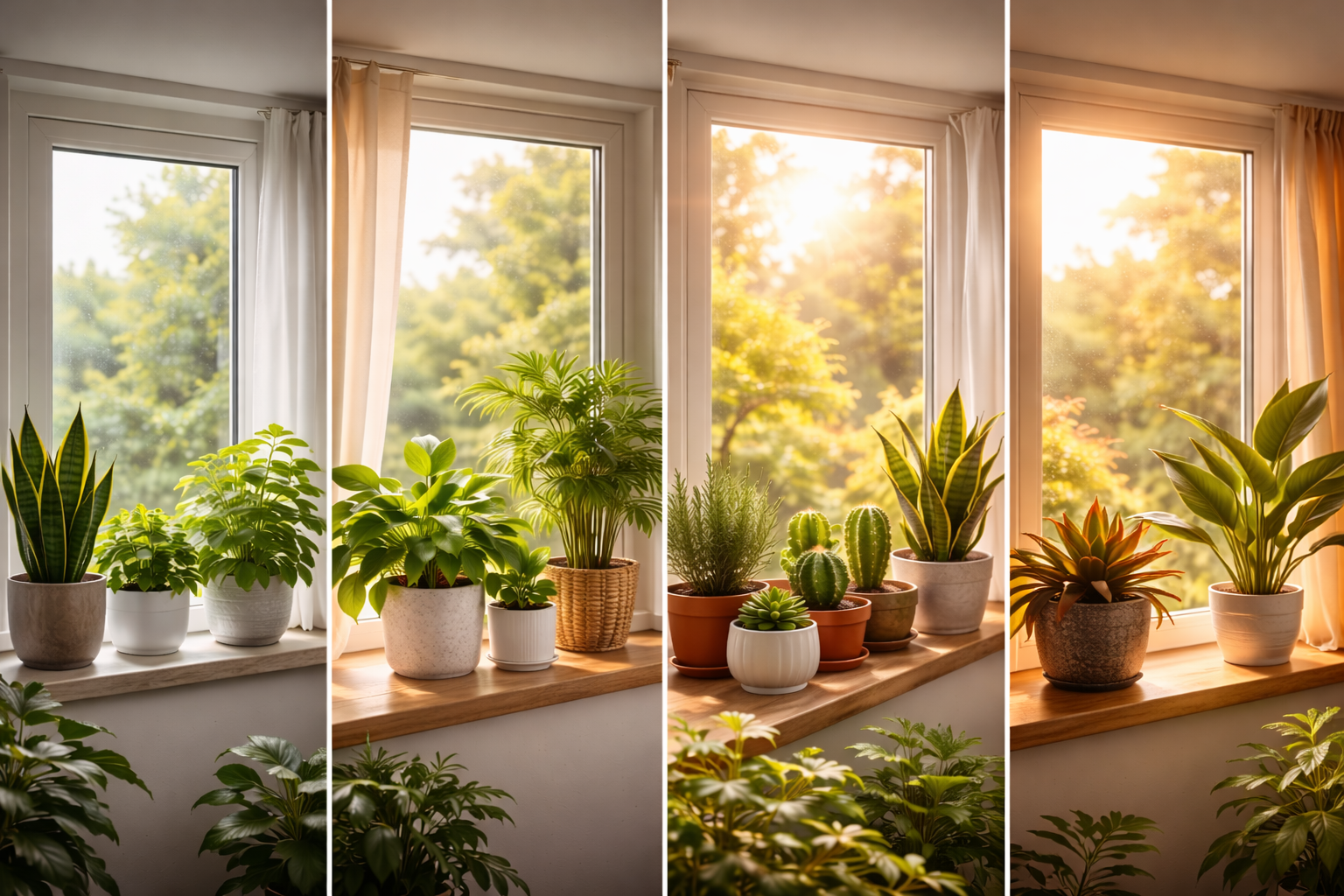
East-facing windows get bright morning light. This is usually the friendliest setup for a lot of indoor plants. The sun arrives early, does its job, and then backs off. You get brightness without the same afternoon bite that west-facing windows bring.
South-facing windows are the heavy hitters. More hours of direct light. Better odds for compact growth, stronger flowering, and happier succulents. In winter, they are gold. In high summer, they can cross the line from generous to obnoxious, especially if the plant is pressed right against the glass.
West-facing windows are bright, yes, but the light shows up hotter and later. That late-day heat can scorch softer foliage. A tough plant can love it. A delicate tropical plant can look offended by Thursday.
North-facing windows are the steadiest and weakest. They work for shade-tolerant plants and can be a relief for plants that fry easily, but they rarely support the kind of dense, energetic growth people picture from glossy plant photos.
There’s another wrinkle people miss: a window direction is just the label on the tin. Trees, neighboring buildings, insect screens, overhangs, and even dirty glass change what reaches the leaves. The University of Maryland Extension notes that all of those things can reduce indoor light, which is why two homes with “south-facing windows” can behave nothing alike.
A fast ranking, if you just need the shortlist
Brightest: South
Safest for many houseplants: East
Trickiest heat: West
Weakest: North
Distance from the glass matters more than most people think
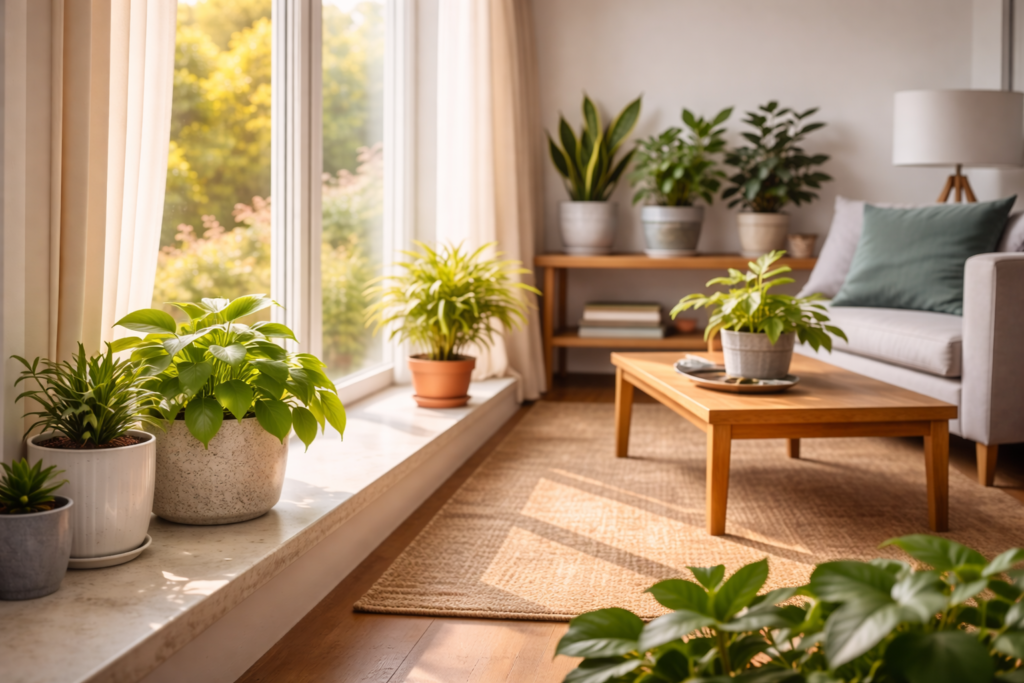
This is the part that wrecks a lot of otherwise good setups.
A plant “near a window” can still be starving for light. I’ve seen people set a plant six or eight feet back in a bright room and assume the room brightness counts. Human eyes are lousy judges here. A room can feel cheerful and still be dim for a plant.
Move a plant a few feet closer to the glass and the change is not subtle. Leaves orient differently. Growth tightens up. Colors hold better. New growth stops looking flimsy.
The University of Missouri Extension makes this pretty blunt: even low-light plants usually do not get enough light at distances greater than 10 feet from an average window. That’s a useful reality check. If a plant is struggling and it sits across the room, fix that first.
Use this as a working rule:
- If the plant is stretching, leaning hard, or growing long and sparse, move it closer before you change watering or fertilizer.
- If the leaves bleach, crisp, or get dry tan patches, keep the same window and back it off a bit or filter the light.
- If a plant is tucked into a corner because it “looks nice there,” be honest. Nice corner. Bad plant spot.
Window size matters too. A large unobstructed window throws more usable light than a small one, even with the same orientation. So a roomy east window can outplay a tiny shaded south window. That’s one of those annoying, practical truths.
When south-facing is too much and north-facing is not enough
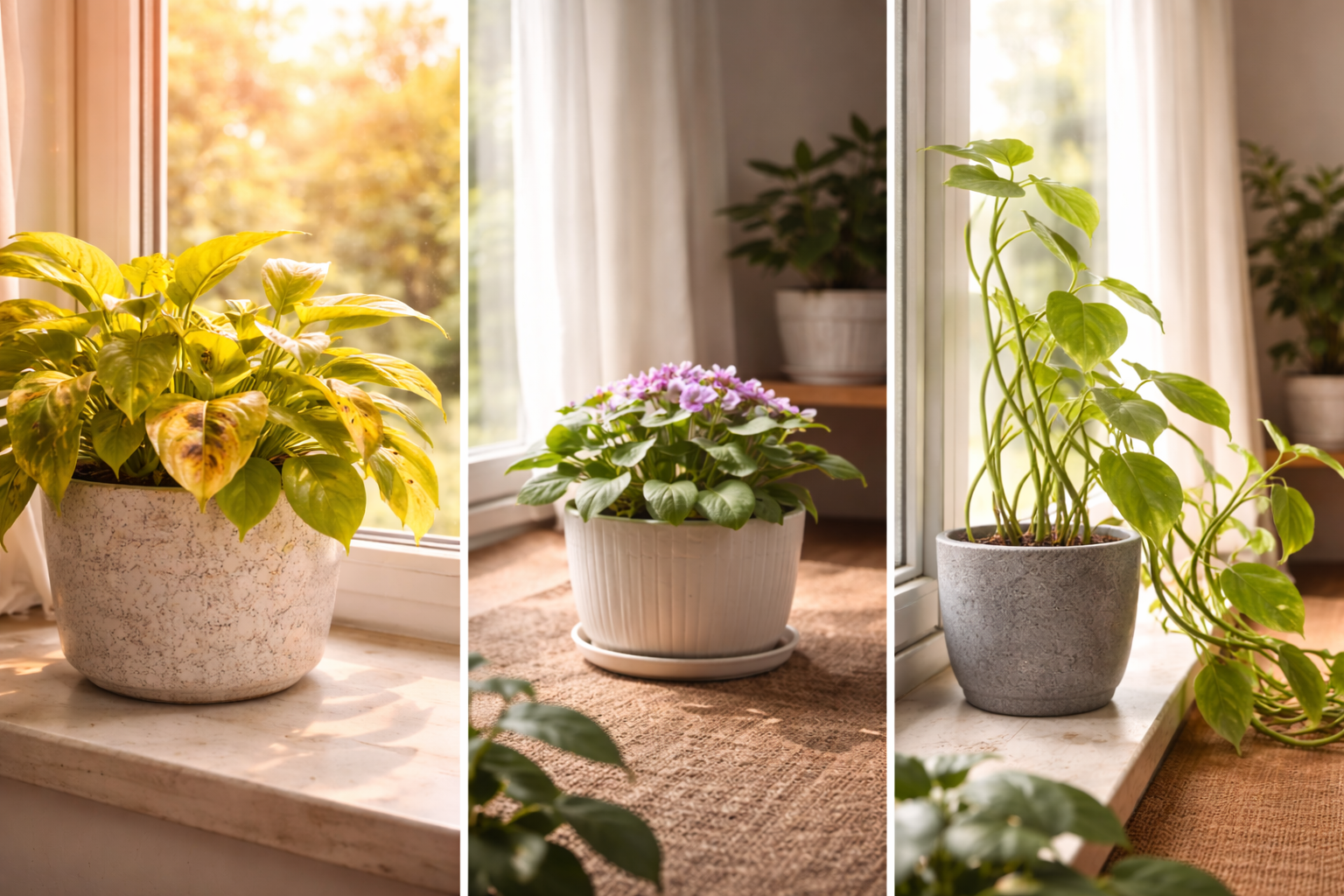
Strong light can cause trouble. Weak light can cause different trouble. The trick is reading the symptoms before you start tinkering with everything at once.
If a plant in a south or west window gets pale patches, dry brown spots, or a kind of washed-out look, the light is probably too direct for that plant in that exact position. That does not always mean the window is wrong. Sometimes the plant just needs to sit a foot or two back, or off to the side, or behind a sheer curtain.
If a plant in a north-facing window sends out long internodes, leans hard, or stops pushing meaningful growth, light is often the issue. A lot of so-called low-light plants survive like this for ages. They don’t look dead. They just don’t look right either.
The fix changes with the symptom:
- Scorched leaves: keep the bright window, soften the exposure.
- Leggy growth: move the plant closer or upgrade the light source.
- No blooms: assume the plant wants more light until proven otherwise.
- Leaves leaning hard one way: rotate the pot now and then, but also check whether the plant simply needs a brighter spot.
If you keep a ZZ plant or snake plant in a dimmer room, that can work. Just don’t confuse “not dead” with “happy.” If you’re deciding how tolerant a ZZ really is in different settings, this piece on whether a ZZ plant can live outside does a nice job showing how light tolerance and actual preference aren’t the same thing.
Seasonal shifts change the right answer more than people expect
A window is not one fixed light source all year. It behaves more like a moody coworker. Winter version, summer version, and a couple odd in-between personalities.
In winter, south-facing windows become especially valuable because the sun angle is lower and daylight is shorter. Plants that coasted through summer in an east window can start looking underfed by January. Bringing them closer to the brightest window often perks them up faster than anything else.
In summer, the opposite problem shows up. A plant that handled a south-facing sill in February can get singed in July if the sun slams through hot afternoon glass. That is where sheers, a small shift sideways, or an extra foot of distance helps.
My rough seasonal rule is plain: chase light in winter, soften it in summer.
That little adjustment saves a lot of grief. People often pick a “permanent” plant spot and then stick to it with the loyalty of a labrador. Plants don’t care about the plan. They care about what the light is doing now.
The fastest way to choose the best window in your house
If you want a fast method that works in regular homes, do this.
- Find your brightest unobstructed window.
- Decide whether your plant wants direct sun, bright indirect light, or simple tolerance.
- Start closer to the glass than feels decorative.
- Watch the plant for two to four weeks.
- Change one thing at a time.
That last part matters. Don’t move the plant, repot it, change the soil, and alter watering in the same week. You’ll learn nothing.
If you are unsure about the direction, use your phone compass or just track when direct sun hits the window. Morning sun points you toward east. Strong midday light hints at south. Hot later-day sun is west. North often gets the leftover gentler light.
And don’t ignore the sill itself. The Oregon State University guidance warns that leaves touching glass can be damaged by temperature swings and drafts. So yes, closer is often better, but smashed against a freezing or scorching pane is its own dumb problem.
What to check first: Is the window shaded by trees or a nearby building? Is the plant there for survival or for active growth and blooms? Is the light filtered by blinds, screens, or curtains? Is the pot sitting in a draft? Those four questions clear up most window-placement confusion.
What to do if your home only has “bad” windows
Some homes really do make this harder. Deep rooms. Tiny windows. A lovely apartment with one north-facing opening and the charm of a cave.
You still have options. They’re just less glamorous.
If all you have is a north-facing window, lean into plants that tolerate weaker light. Snake plant. ZZ plant. Cast iron plant. Certain pothos. That does not mean toss them in the darkest corner and hope for the best. Put them as close to that window as practical.
If your room is shaded by trees or buildings, choose plants with realistic expectations. High-light herbs and bloomers are usually poor bets there. For rosemary, especially, stronger light is part of the deal. If that’s on your list, this guide on how to care for rosemary in a pot lines up well with the window logic here.
If your only bright window is west-facing, don’t write it off. Use tougher plants there, or move more delicate ones a little off-axis so they catch brightness without eating the full heat of late afternoon.
If the room is just plain dim, be honest early. Some plants need help from a grow light. There’s no moral victory in forcing a sun-lover to “adapt” to a gloomy shelf. That usually ends with a stretched plant and a frustrated owner.
Window-placement mistakes that quietly sabotage healthy plants
The most common mistake is trusting the compass direction too much. A south-facing window sounds impressive. If it looks into a covered balcony or a wall of trees, that label doesn’t buy you much.
The next mistake is putting the plant where it suits the room instead of where it suits the plant. I get it. The empty corner wants a fiddle leaf fig. The fig, regrettably, does not want the empty corner.
A few others come up again and again:
- Calling a plant low-light when it is really low-light tolerant. Tolerant is not thriving.
- Ignoring distance. Three feet from the glass and nine feet from the glass are different universes.
- Treating summer and winter the same. The plant notices, even if you don’t.
- Pressing leaves against the window. Too cold in winter, too hot in summer, and sometimes both in the same week.
- Trying to fix a light problem with water. This one is painfully common. A dim, stalled plant often gets watered more and declines faster.
If you want a clean mental model, use this one: most indoor plant problems are diagnosis problems first. Care problems come second. Get the light read wrong and everything else gets messy fast.
FAQ
Is a south-facing window always the best for indoor plants?
No. It is usually the brightest, which is great for succulents, herbs, and many flowering plants. But lots of tropical foliage plants do better in east-facing light or in a filtered south window because the raw intensity can be too much.
Can plants live in a north-facing window?
Yes, some can. Snake plants, ZZ plants, and a few other tolerant plants often manage well there. What usually changes is growth speed and fullness. A plant can survive in north light and still grow slower or leggier than it would in a brighter spot.
How close should a plant be to a window?
Closer than most people think. If the plant is across the room, the light often drops off too much. Start near the window, watch the leaves for two to four weeks, and then back it off only if you see bleaching, scorch, or heat stress.

Michael Rowan is the founder and lead writer at The Garden Playbook. He has spent 10+ years growing plants across a range of settings — from indoor houseplants and container gardens to raised beds and in-ground plots — adapting methods to different light levels, seasons, and growing conditions.
Michael focuses on practical, experience-based guidance grounded in fundamentals: soil health, watering strategy, plant nutrition, pruning and propagation, and integrated pest management (IPM). His work aims to help readers diagnose common problems (such as yellowing leaves, stunted growth, or pest pressure) and apply straightforward solutions that are realistic for home gardeners.
At The Garden Playbook, Michael develops tutorials and plant guides using a consistent process: documenting real outcomes where possible, explaining the “why” behind each step, and verifying higher-risk topics (such as plant toxicity or pest treatment options) against reputable horticultural references.