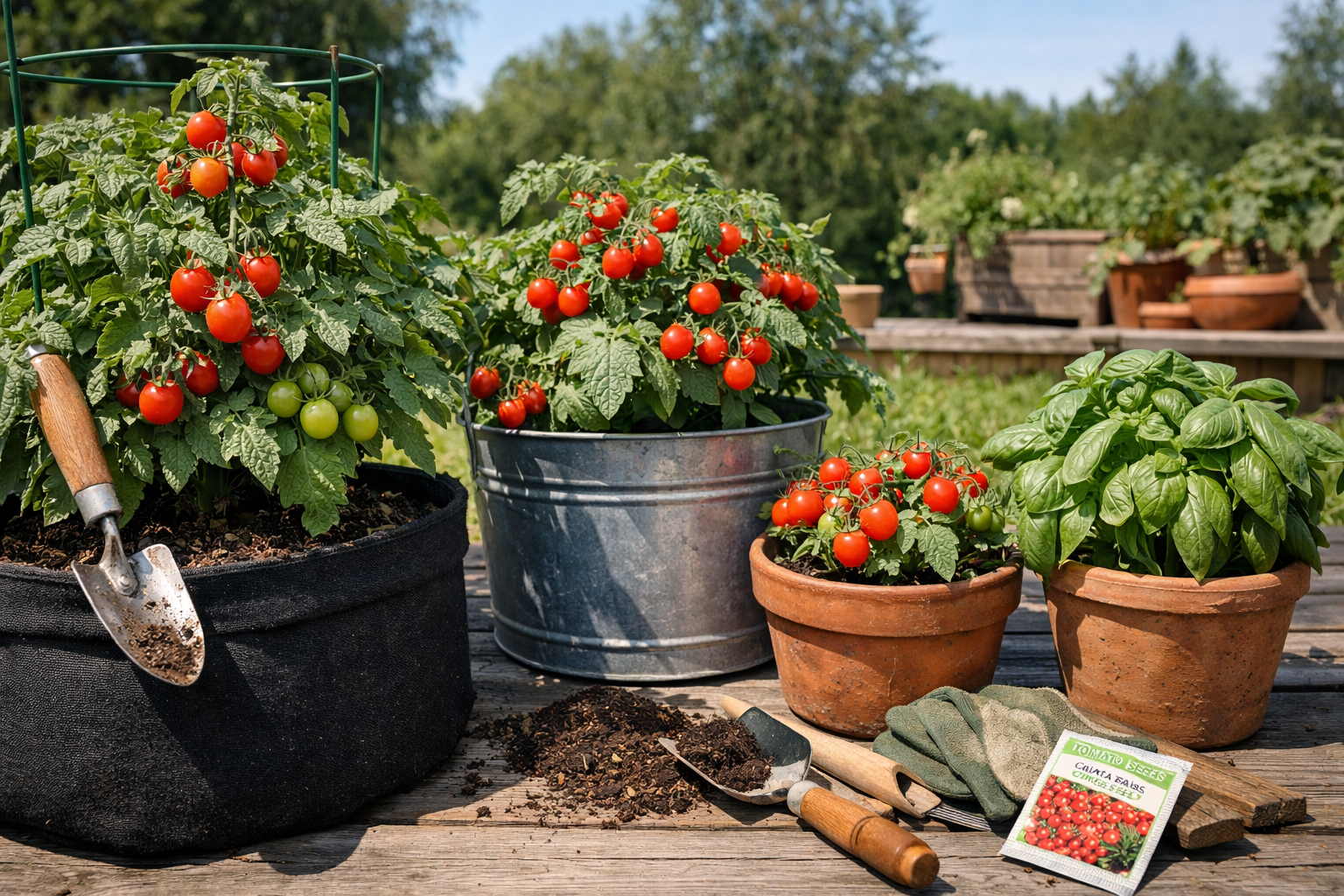
I once tucked a cherry tomato into a handsome little patio pot because the seedling looked tiny and harmless. By July, that same plant was drinking like a teenager after soccer practice, wilting by mid-afternoon, and turning a fun project into a twice-daily rescue mission.
If you want to know how to plant cherry tomatoes in containers, the clean answer is this: pick a container-suited variety, give it one pot with drainage and enough root room, fill that pot with a loose container mix, plant after nights stay warm, bury part of the stem, set support in place early, then keep moisture steady and feed once flowers start turning into fruit. Oregon State Extension says to plant one tomato in at least a 5-gallon container, and that is a solid floor, not a magic finish line.
The useful answer is a little sharper. A “Tiny Tim” in a compact pot and a “Sungold” on a hot west-facing patio are not playing the same game. Pot size, plant habit, and how fast your setup dries out will decide whether this feels easy or weirdly high-maintenance.
- How to match cherry tomato type to the right container
- What pot size actually gives you breathing room
- How deep to plant and when to move seedlings outside
- How to water and feed without swinging from drought to swamp
- Which problems are normal, and which ones need a fix fast
At a glance: match the plant to the pot
| Cherry tomato type | Practical minimum | Easier size | Support | What changes the answer |
|---|---|---|---|---|
| Micro or dwarf | 3 to 5 gallons | 5 gallons | Often light support or none | Hot patios and fabric pots dry out faster |
| Trailing basket type | 3 to 5 gallons | 5 gallons | Usually no cage | Wind and hanging baskets push water demand up |
| Compact patio or determinate | 5 gallons | 5 to 7 gallons | Short cage or stake | Small pots mean tighter watering windows |
| Vigorous indeterminate cherry | 5 gallons | 10 gallons or more | Cage, stake, or trellis | Heat, wind, dark pots, and travel days all push you toward bigger containers |
Quick rule: if you want more forgiveness in summer, size up the pot before you buy more fertilizer.
How to plant cherry tomatoes in containers without overcomplicating it
Cherry tomatoes are one of the easiest edible plants to grow in pots, and they are also one of the easiest to make annoying by accident. The usual culprit is not a bad gardener. It is a mismatch between plant vigor and container size.
Start with one plant per pot, not two. Fill that pot with a good container mix, not yard soil. Wait until frost risk has passed and nights are staying around 55°F or warmer, then plant the seedling a little deeper than it sat in its nursery pot, water it in well, and put it where it gets at least 6 to 8 hours of direct sun.
The part people skip is the margin for error. A tiny cherry tomato can coast in a smaller container. A vigorous vine can turn the same setup into a daily thirst test.
Remember: the goal is not just to get a tomato plant into a pot. The goal is to build a setup that still works in the hottest week of summer.
Choose a cherry tomato variety your container can actually handle
This is the first fork in the road. Cherry tomatoes sold in spring all look manageable in a 4-inch nursery pot, and that visual lies to you a little.
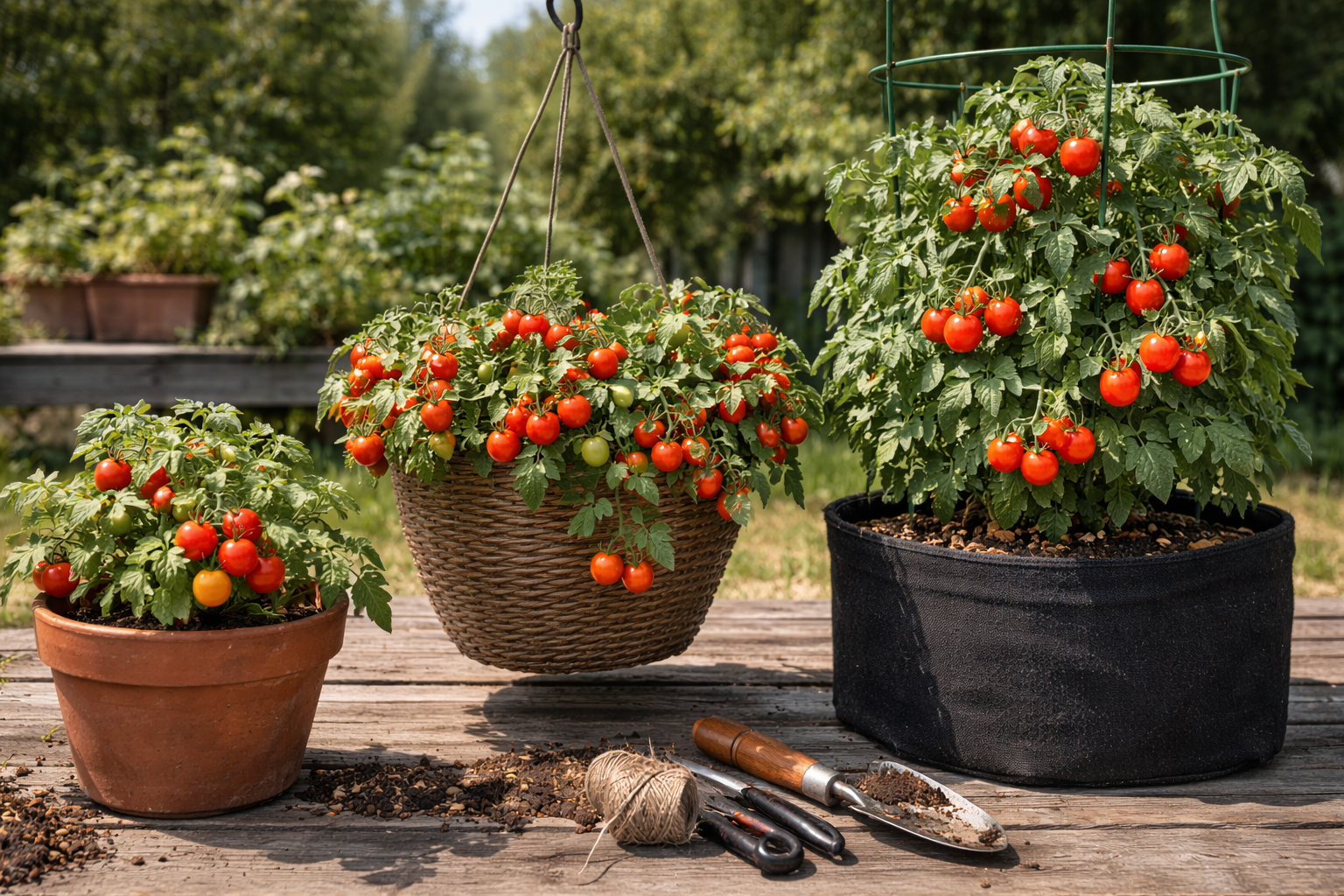
Compact types like “Tiny Tim” and many patio tomatoes stay friendlier in containers. Trailing picks like “Tumbling Tom” suit hanging baskets and rail planters. Then there are indeterminate cherries such as “Sungold” and “Sweet Million.” Those are productive, tasty, and a bit greedy. Give them a small pot and they will still grow, but the price shows up in water stress, root crowding, and extra support.
If you want the easiest first run, choose a dwarf, patio, or compact determinate cherry tomato. If you want a longer harvest and do not mind a cage plus more attentive watering, a vigorous indeterminate cherry makes sense.
- Best for balconies and small patios: dwarf or patio cherry tomatoes
- Best for hanging baskets: trailing cherry tomatoes bred for baskets
- Best for long harvests: indeterminate cherry tomatoes in larger pots
One smart tradeoff: small plants buy you ease. Bigger vines buy you a longer season and more fruit clusters, but they ask for more root room and steadier care.
Pick a container size that buys you root room and watering margin
Most bad container tomato experiences can be traced back to one cheerful mistake: the pot looked big enough in May. Roots, heat, and fruit load change the math fast.
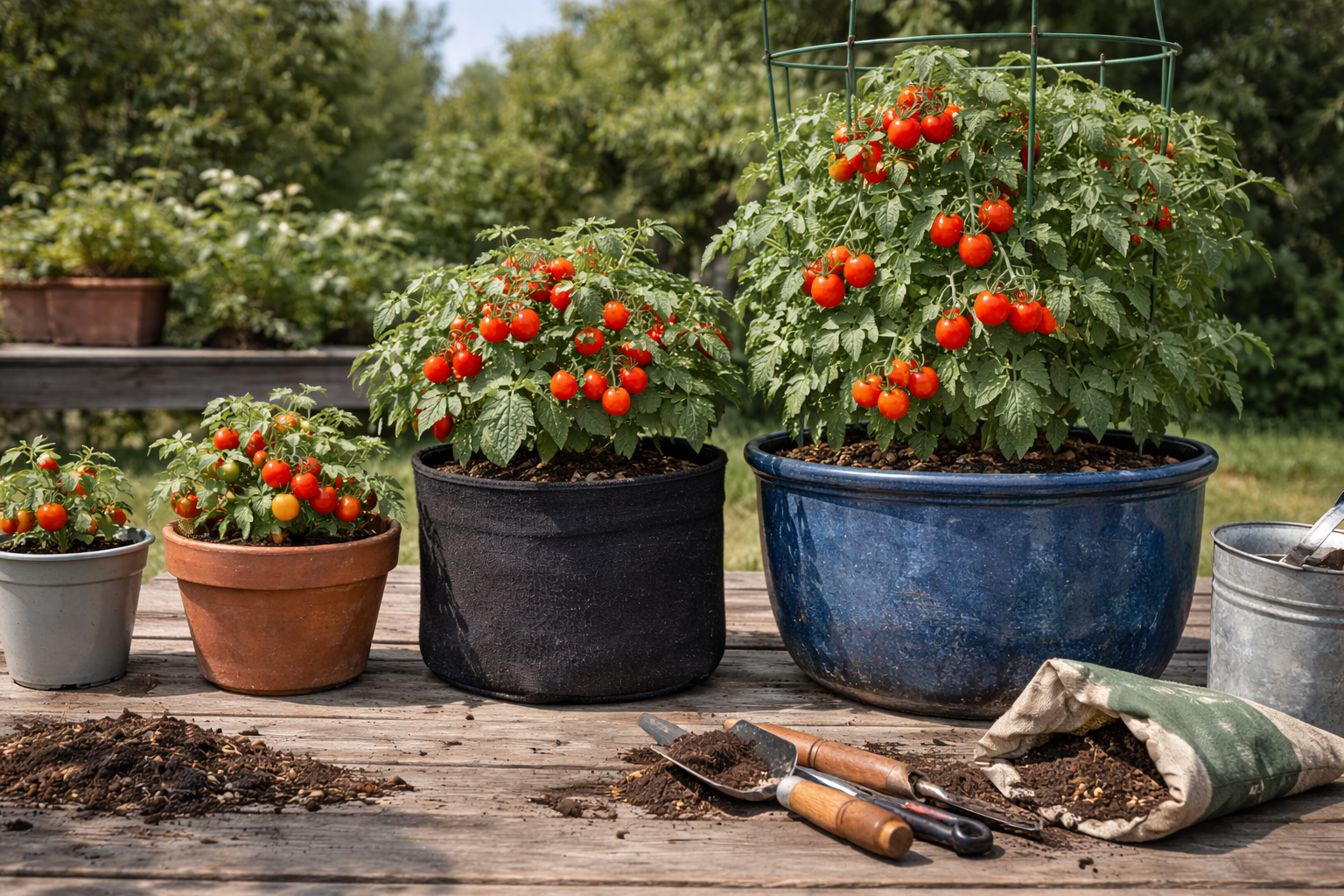
Use 5 gallons as your floor for one cherry tomato plant. That lines up with Oregon State’s 5-gallon minimum, and it is a solid baseline. But for vigorous indeterminate cherries, 10 gallons or more is often the better call because a larger pot holds more mix, more water, and more forgiveness.
Here is the clean decision rule:
- If the plant is micro, dwarf, or trailing, 3 to 5 gallons can work.
- If the plant is compact patio or determinate, 5 to 7 gallons is a comfortable range.
- If the plant is vigorous and indeterminate, start at 10 gallons if you want fewer summer headaches.
Pot material matters too. Plastic and glazed ceramic hold moisture longer. Terracotta breathes, which is nice in some climates but thirsty in hot weather. Fabric pots give roots a lot of air, and they also dry faster. On a windy deck in July, a fabric pot can be the gardening version of wearing a wool sweater in the rain. It works, but it asks more from you.
And yes, stick with one tomato plant per pot. Two plants in one container sounds space-smart until the roots start arguing over water and the canopy gets too crowded.
Pro tip: when you are stuck between two container sizes, pick the larger one if the spot gets hot afternoon sun, reflected heat from concrete, or steady wind.
Build a container setup that drains well without drying out too fast
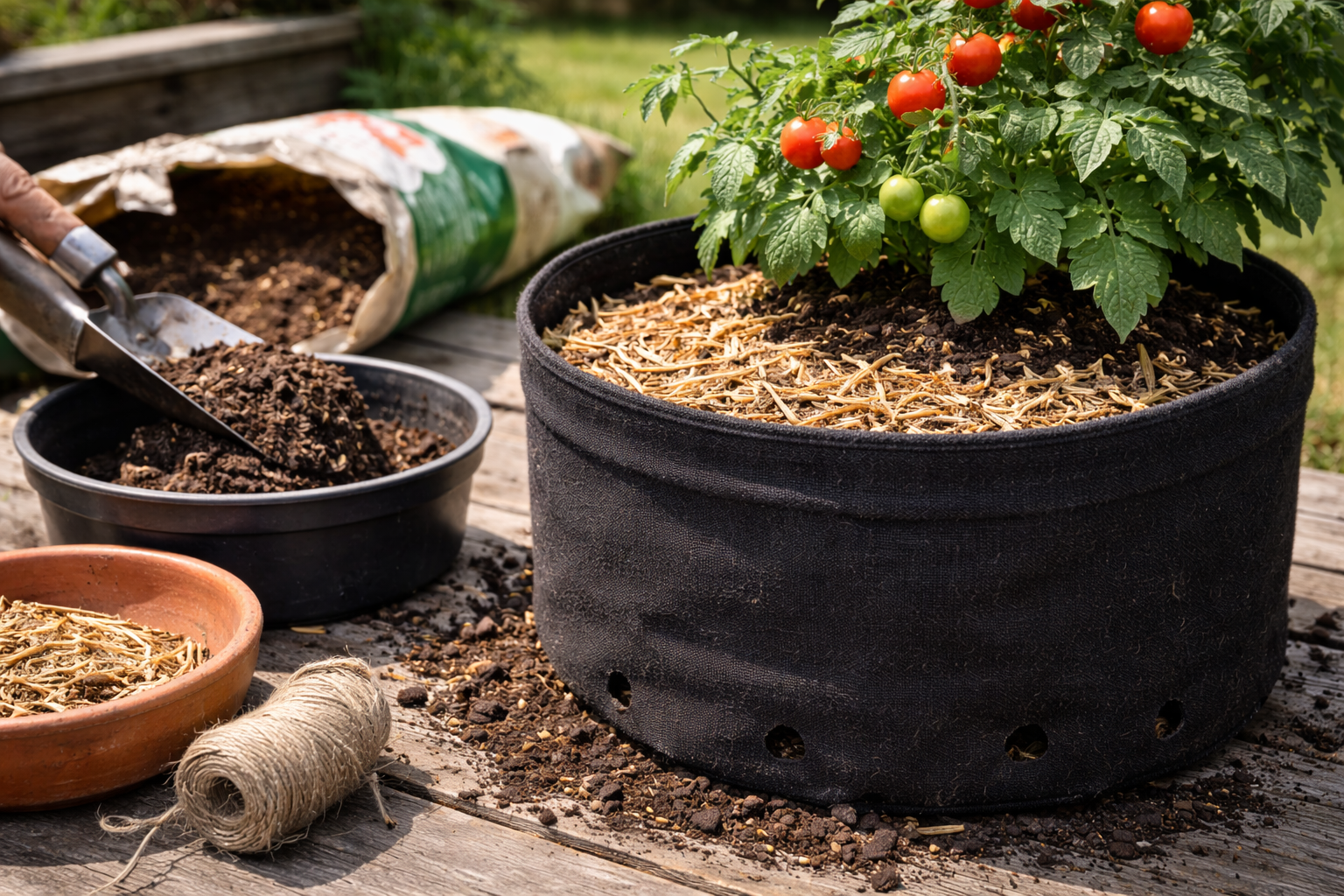
The right mix is light, airy, and made for containers. Yard soil is too dense for a pot. It compacts, drains badly, and turns root problems into a slow-motion mess.
For container tomatoes, use a quality soilless mix. University of New Hampshire Extension recommends a soilless potting mix for container tomatoes, and that tracks with how these plants behave in real life. You want a mix that holds moisture but still lets air move through the root zone.
Drainage holes are not optional. One good hole is fine. Several are better. What you do not need is a gravel layer at the bottom. University of Missouri Integrated Pest Management explains that gravel at the bottom shifts saturation upward, which leaves roots sitting in wetter mix instead of improving drainage. That old trick hangs on because it sounds right.
It is not right.
Pre-moisten the mix before planting if it came bone-dry from the bag. Dry potting mix can repel water at first, which is maddening. Fill the pot, leave an inch or so below the rim for watering space, and add a thin mulch layer after planting. Straw, shredded leaves, or fine bark help slow those wild moisture swings that crack fruit later.
Note: a saucer under the pot is fine for patios, but do not let it stay full of water. A tomato likes moisture around the roots, not a standing bath.
Plant at the right time and depth so roots take off fast
Tomatoes hate cold soil more than beginners expect. A warm afternoon can fool you into planting too soon, and then the seedling just sits there looking mildly offended for two weeks.
Wait until frost risk has passed and nights are staying warm enough for tomatoes to grow, not sulk. If your plants came from indoors or a sheltered greenhouse, harden them off first by easing them into outdoor sun and wind over about a week.
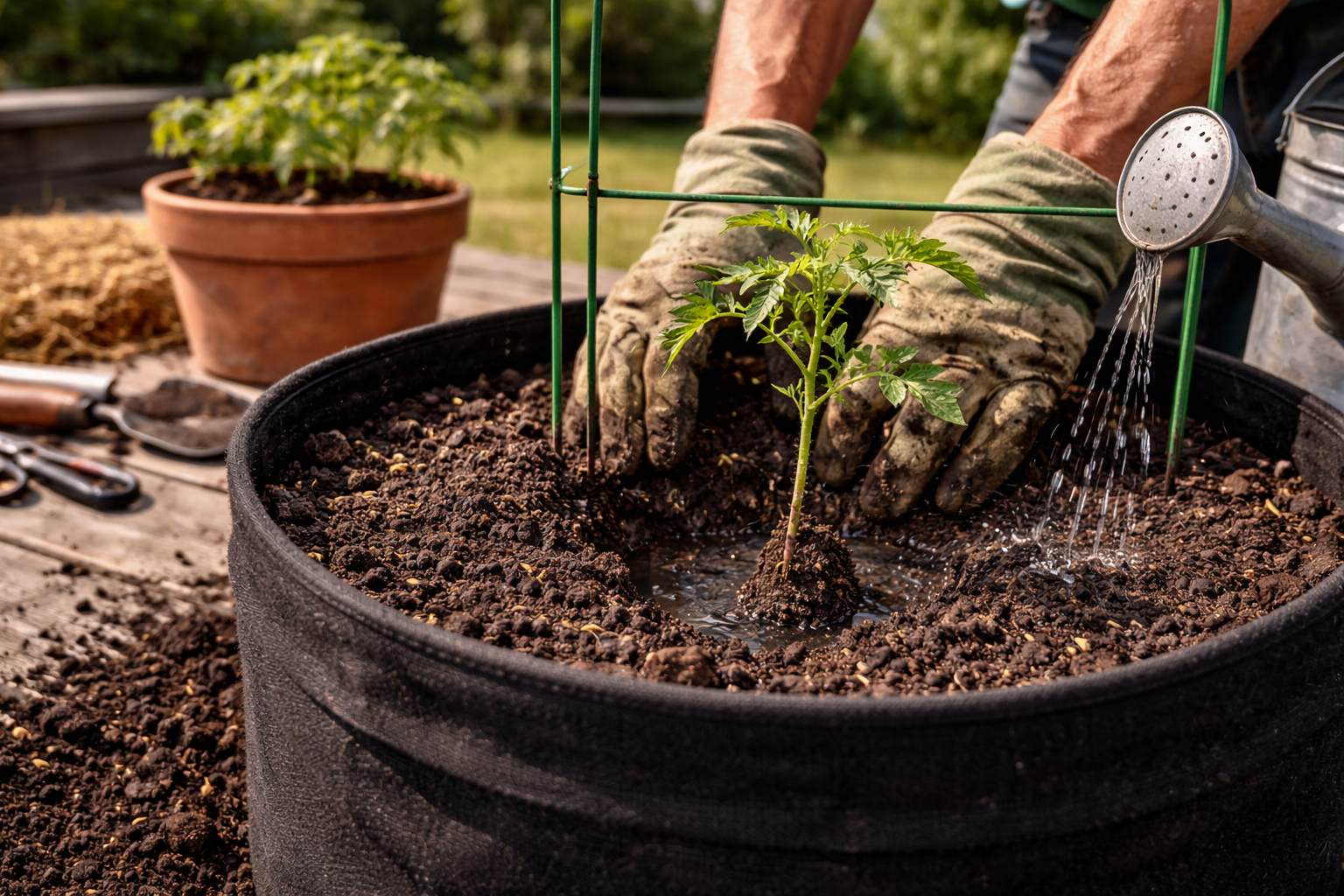
Then plant deeply. University of Vermont Extension notes that roots form along the buried stem, which is why tomatoes handle deeper planting so well. Remove the lower leaves if needed, bury the stem up to the lowest healthy leaves, firm the mix gently, and water in thoroughly.
If the seedling is leggy, that is not a disaster. It is one of the few times a stretched-out young plant can still turn into a strong one, because the buried stem becomes extra root zone.
Late afternoon planting helps, too. The same University of Vermont guidance points out that transplanting later in the day or under cloudy skies cuts shock. That little timing tweak is boring, and it works.
Small move, big payoff: set the support in the pot at planting time. It is easier on the roots than jamming in a cage once the plant is already settled.
Water and feed for steady fruit, not leaf-heavy growth
This is where container cherry tomatoes are won or lost. Not with fancy tricks, just with steadiness.
Water deeply until excess runs from the bottom, then let the top layer start to dry before you water again. University of New Hampshire Extension advises watering once the top two inches of potting soil are dry. That is much better than watering by the calendar because a black plastic pot in full sun and a shaded glazed pot do not dry at the same speed.
Morning is the easiest time to check. Lift the pot a little if you can. A light pot is telling you something. Look at the mix, not just the leaves. Cherry tomatoes can droop in hard afternoon heat and then recover by evening. That is very different from a plant that wakes up limp because the root ball dried too far overnight.
Feeding is simpler than people make it. If your mix already contains a starter charge, let the plant settle in first. Once flowering starts and tiny fruit begin to form, switch to a steady fertilizer rhythm. A slow-release product mixed in at planting or a liquid tomato feed every week or two works well. What usually goes wrong is too much nitrogen, which buys you a lot of leaves and a tomato jungle with less fruit than you expected.
Steady watering also cuts down on blossom end rot and fruit cracking. Illinois Extension explains that blossom end rot is usually a calcium uptake problem tied to how well the plant can absorb calcium, not some simple shortage you fix with a random splash of milk or a panicked calcium spray. Keep moisture even first. That is the move that matters most.
A watering rule that actually helps
If the plant is in a small pot, a hanging basket, a fabric grow bag, or a hot windy spot, check once in the morning and again late in the day during heat waves. If it is in a larger plastic or glazed pot, you will usually get a longer runway.
Support and prune just enough to keep plants productive
Cherry tomatoes in containers need support more often than they need pruning. Those are not the same job, and mixing them up creates extra fuss.
Put the cage, stake, or trellis in at planting time. Compact patio cherries may only need a short cage or one sturdy stake. Vigorous indeterminate cherries often want a taller cage or a tied stake system because they just keep climbing and setting trusses.
Pruning is more selective. A trailing basket type usually needs little more than cleanup. A dwarf or compact patio tomato may only need a few lower leaves removed once the plant fills out. A vigorous indeterminate cherry can benefit from light sucker removal if the canopy gets crowded and air flow starts to suffer.
What you do not need is a pruning crusade. Strip too many shoots and you can expose fruit to harsh sun, slow the plant down, and turn a healthy cherry tomato into a sun-scalded science project. Prune to solve a real problem, like crowding, tangles, or leaves dragging low over wet mix.
- Cage or stake early: easier on roots, easier on you
- Prune lower leaves first: that is often enough for potted plants
- Prune suckers lightly on vigorous vines: do it for airflow, not because every tomato article says so
Good rule: if the plant still looks open, healthy, and easy to harvest, stop pruning. You are done.
Solve the container problems that ruin harvests early
Most container cherry tomato problems are less mysterious than they look. A quick diagnosis beats random fixes every time.
| What you see | Likely cause | What to do next |
|---|---|---|
| Plant droops and the mix is dry | Underwatering or a root-bound plant in too little mix | Water deeply, then check whether the pot is just too small for the plant’s pace |
| Plant droops and the mix is wet | Poor drainage, overwatering, or roots staying too cold and too wet | Let the mix dry some, empty saucers, and check that drainage holes are open |
| Black patch on the blossom end | Blossom end rot from uneven moisture and poor calcium movement | Keep moisture steadier and avoid big dry-to-soaked swings |
| Cherry tomatoes split after heavy watering or rain | Rapid moisture swing after the fruit skin had tightened | Harvest closer to ripe, mulch the pot, and keep watering more even |
| Lots of flowers, little fruit set | Cold nights, extreme heat, stress, or overfeeding with nitrogen | Stabilize watering, avoid extra nitrogen, and give the plant time once weather settles |
| Older lower leaves yellow first | Normal aging, crowding, or a plant asking for a steadier feed rhythm | Remove the tired leaves, check feeding, and improve airflow |
One thing worth saying out loud: not every wilt is a crisis. On blazing afternoons, a container tomato can look dramatic and still be fine by evening. Morning wilt is the one that gets my attention fast.
Cracked fruit is another classic container complaint. It often happens when the plant went a bit too dry, then got a heavy watering or a surprise rain. Cherry tomatoes are quick growers, so the skin can split when the fruit swells in a hurry. That is annoying, but the fix is usually cultural, not chemical.
Flower drop can make you think the plant is failing when the real culprit is weather. Cool nights, hard heat, and abrupt swings all mess with fruit set. Give the plant stable moisture, skip the extra nitrogen, and do not assume every lost flower needs a bottle of something.
FAQ
Can two cherry tomato plants share one container?
They can, but it is rarely the smart play. One plant per pot gives each root system its own water and nutrient supply, and it keeps airflow better. If space is tight, a compact patio variety in its own smaller pot usually performs better than two plants crammed together.
Do self-watering containers work for cherry tomatoes?
Yes, they can work very well, especially for larger cherry tomato varieties or hot patios that dry out fast. The main win is steadier moisture. You still need a large enough reservoir and a decent pot size, because a tiny self-watering planter does not cancel out a root system that wants more room.
Can cherry tomatoes grow in hanging baskets?
Yes, but stick with trailing or compact varieties bred for baskets. A vigorous indeterminate cherry tomato in a hanging basket usually turns into a thirsty, tangled job. Basket tomatoes also need closer watering checks because they dry out faster than standard patio pots.

Michael Rowan is the founder and lead writer at The Garden Playbook. He has spent 10+ years growing plants across a range of settings — from indoor houseplants and container gardens to raised beds and in-ground plots — adapting methods to different light levels, seasons, and growing conditions.
Michael focuses on practical, experience-based guidance grounded in fundamentals: soil health, watering strategy, plant nutrition, pruning and propagation, and integrated pest management (IPM). His work aims to help readers diagnose common problems (such as yellowing leaves, stunted growth, or pest pressure) and apply straightforward solutions that are realistic for home gardeners.
At The Garden Playbook, Michael develops tutorials and plant guides using a consistent process: documenting real outcomes where possible, explaining the “why” behind each step, and verifying higher-risk topics (such as plant toxicity or pest treatment options) against reputable horticultural references.