
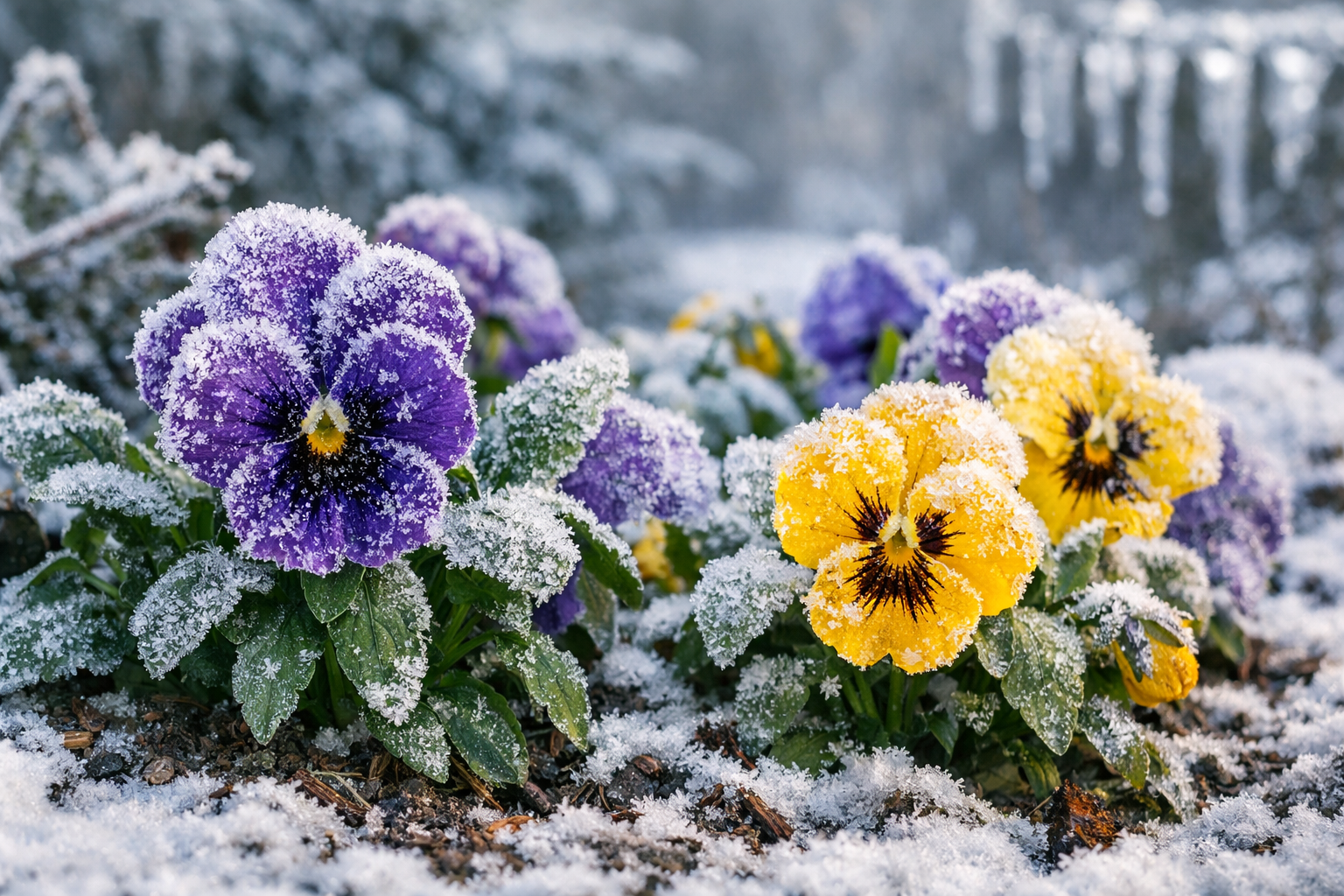
That sinking feeling usually starts with a weather app. You spot 24°F on the overnight forecast, look at the pansies by the front walk, and think: are these little guys tough enough or am I about to lose the lot?
If you’re wondering how cold can pansies tolerate, the short answer is this: healthy pansies usually handle light frost with no real trouble, many established plants can take brief hard freezes, and some can survive short dips into the single digits. But the number alone is not the whole answer. A plant in cold ground with mulch is playing a different game from a fresh nursery transplant in a windy porch pot.
That gap is where people get fooled. I’ve seen pansies in a brick-edged bed shrug off a rough night that left nearby window boxes looking like wet tissue paper by dawn. Same yard. Same forecast. Very different outcome.
Here’s what this page will help you sort out fast:
- What temperatures pansies usually ride through just fine
- When flowers get hit but the plant still lives
- When a freeze starts calling for covers, mulch, or moving pots
- Why in-ground pansies and potted pansies do not fail the same way
- How to tell “rough morning” from “dead plant”
- Which mistakes finish off pansies faster than cold itself
Pansy freeze snapshot
| Forecast low | What usually happens | What to do |
|---|---|---|
| 32°F to 29°F | Light frost. Blooms may mark. Plants are usually fine. | Mostly monitor. |
| 28°F to 25°F | Stress zone. Wilt and flower damage become more common. | Protect exposed pots and fresh plantings. |
| 24°F to 20°F | Real damage risk if wind is strong or soil may freeze. | Cover beds. Move containers if you can. |
| Teens and lower | Established pansies may still survive. Blooms often will not. | Protect hard and treat porch pots as high risk. |
Fast rule: the low temperature matters, but frozen soil, wind, and pot exposure often matter more.
How cold can pansies tolerate before they stop blooming or start dying
University of Georgia Extension describes healthy pansies as capable of surviving short periods in the single digits and even freezing solid before rebounding when weather turns. That sounds almost silly if you’ve only ever thought of pansies as soft spring flowers. But it is a good reminder that pansies are tougher than they look.
Flowering is another story. Clemson Extension notes that pansies bloom any time temperatures are above freezing. So a pansy can stay alive through a cold spell and still stop putting on a show for a while. That matters because people often judge survival by the flower count. Wrong test.
Here’s the clean answer. Light frosts around 32°F are usually no big deal. Around 25°F you start seeing more stress, especially on exposed plants. Below 20°F the risk rises fast if the cold hangs around for hours, wind is drying, or the soil can freeze. In the teens, established pansies in the ground may still pull through. Fresh transplants and potted pansies often do not have that same margin.
Keep this straight: flowers are the first thing to fail. The plant crown and roots are what decide whether the pansy lives.
Pansies also have a preferred comfort zone. Utah State University puts the ideal growing range around 40°F at night and 60°F during the day. That does not mean they die outside that range. It means that is where they tend to grow and flower best. “Can survive” and “likes best” are not the same sentence.
Why 25°F is not the whole story
A lot of garden advice gets flattened into one tidy number. That is nice for a chart and lousy for a real yard.
The same 25°F forecast can feel mild in one spot and brutal in another. What changes the answer is duration, root-zone conditions, and exposure. A brief dip before dawn is one thing. Six or eight hours of hard cold with wind pulling moisture from the leaves is another.
Arkansas Cooperative Extension says that when air drops below 25°F pansy foliage often wilts and turns gray-green. The same guidance points out why nearby plants can react so differently: one side of a raised bed may stay workable while the north side freezes solid to the depth of the root ball. That is a fancy way of saying microclimate is not garden-nerd trivia. It changes what survives.
Wind is a quiet killer here. Pansies do not just freeze from the top down. Their roots also need to pull water. If the soil is frozen and wind is pulling moisture off the leaves, the plant can dehydrate while you are standing there thinking, “But I watered those last week.”
Snow can help, oddly enough. A light snow cover often insulates better than a dry, exposed cold snap. A south-facing wall can help too. So can a brick border that holds a bit of heat. By comparison, an open porch railing is like hanging the plant out in the weather with no coat and no shelter.
Quick test: If the soil may freeze and the site gets winter wind, treat the forecast as colder than the number on your screen.
What to expect at 32°F, 25°F, 20°F, and the teens
It helps to stop thinking in one kill temperature and start thinking in action bands.
| Range | What you may see | Smart move |
|---|---|---|
| 32°F to 29°F | A little flower burn. Maybe no change at all. | Leave established beds alone. |
| 28°F to 25°F | Wilt, gray-green foliage, flattened flowers. | Cover fresh plantings and exposed containers. |
| 24°F to 20°F | Harder flower loss. Root stress becomes a real worry. | Use frost cloth or mulch. Move pots into shelter. |
| Teens and lower | Plants may survive if well-rooted and protected. Blooms usually look rough. | Protect aggressively and do not trust small containers. |
If the forecast is 31°F for an hour and the pansies are in the ground, mulched, and tucked near the house, you can probably sleep fine. If the forecast is 22°F until midmorning and the pots are on a breezy stoop, do not overthink it. Move them or cover them.
Arkansas guidance says special freeze protection usually comes into play when temperatures are expected to drop below 20°F for several hours, especially when drying wind shows up and the soil may freeze. That is a solid line in the sand for home gardeners too.
Simple rule: under 25°F gets your attention. Under 20°F for hours gets action.
Why pansies look limp, gray, or mushy after a freeze
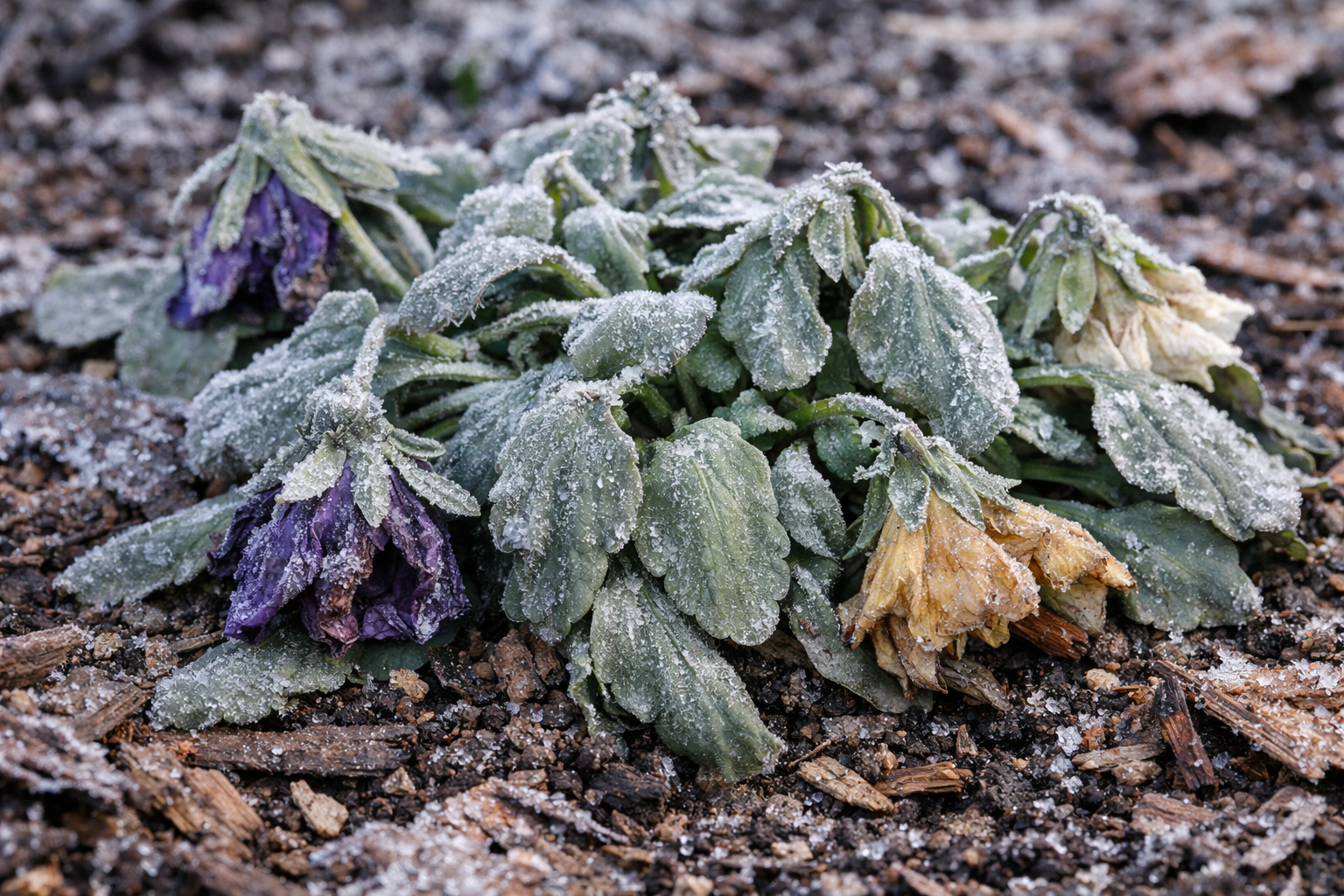
This is the part that spooks people. You step outside after a hard frost and the plant looks cooked. Leaves are limp. Flowers are collapsed. The color has that odd gray-green cast. It can look like the whole thing melted overnight.
That look does not always mean the plant is done. In fact, it often means the opposite. Pansies pull water in and out of their cells as temperatures swing. When the plant tissue is frozen or half-thawed it can look flat and miserable. A few hours later, once the sun is up and the tissue has thawed cleanly, the same plant may stand back up.
I’ve had this happen more than once with winter pansies in a bed near the driveway. At 7 a.m. they looked hopeless. By lunchtime the leaves were up again and only the flowers showed real damage. That kind of bounce-back is common.
What matters more is the crown and the pattern over time. If the center of the plant still feels firm and you can see fresh buds tucked low in the foliage, the odds are pretty good. If the whole crown stays mushy, dark, and collapsed for days, that is worse. If roots were sitting in frozen, dry soil, the plant may not recover even when the top looks only mildly damaged.
Do not rush the shears. Wait until the plant has fully thawed and had a bit of daylight before trimming anything. What looks dead at dawn can be fine by afternoon.
Flowers take the hit first. That is annoying, sure. But a blackened bloom is not the same thing as a dead pansy. Deadhead the ruined flowers once the cold passes and watch the center of the plant for new growth.
When to cover pansies, add mulch, or move containers
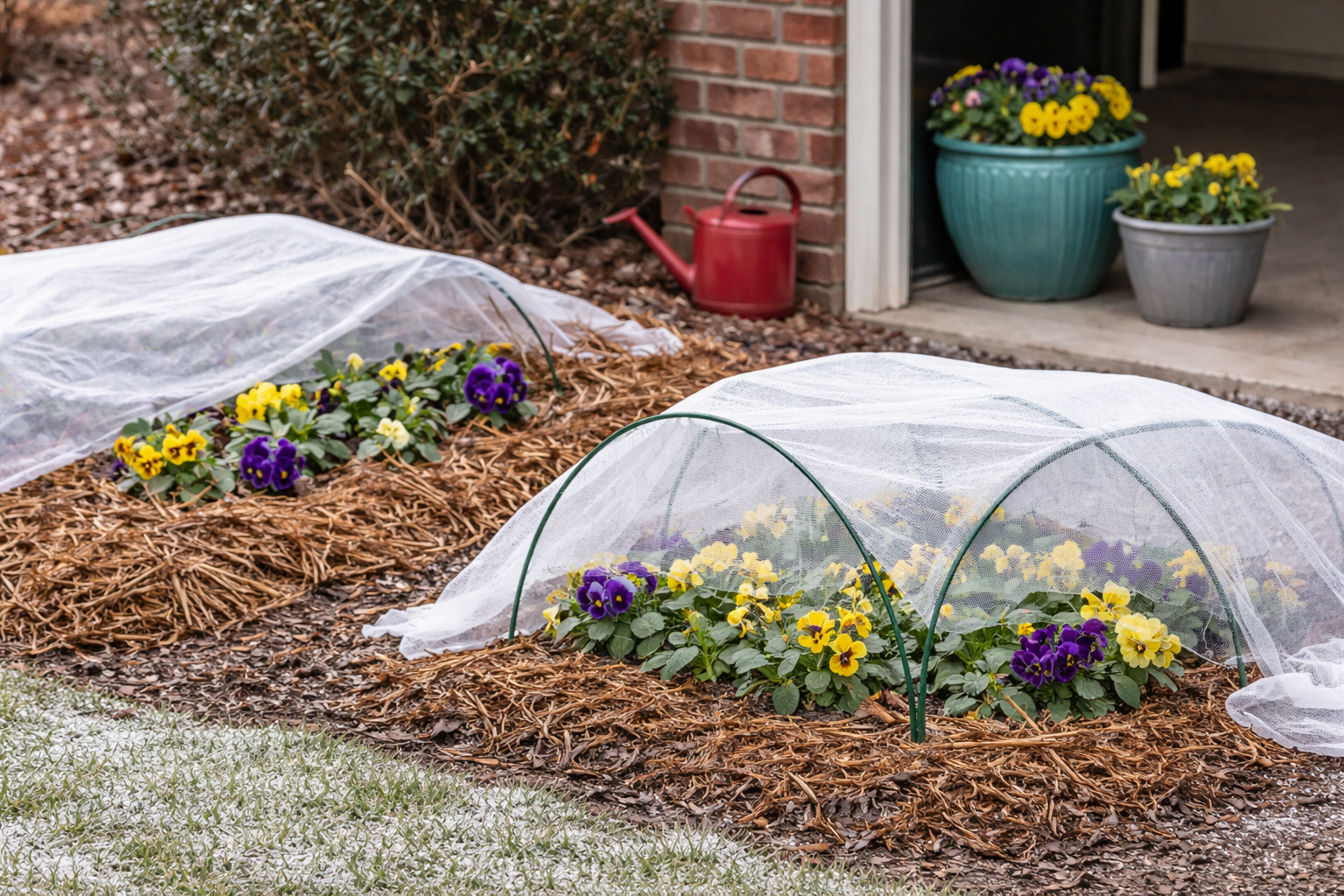
Protection works best when it helps the root zone hold onto a little ground heat. That is why timing matters. Put the cover on before the cold settles in. Tossing a sheet over frozen plants at sunrise does next to nothing.
For in-ground beds, mulch is the first line of defense. Pine straw, shredded leaves, or straw around and even lightly over the bed can buffer soil swings. University of Georgia Extension recommends 2 to 4 inches of pine straw during extreme cold because it traps heat in the soil and cuts exposure to drying wind. That is plain, useful advice.
For short hard freezes, frost cloth or another breathable cover works well. Plastic right on the foliage is not my favorite move. It traps condensation and can press cold onto tender tissue. If plastic is all you have, keep it off the leaves with hoops, stakes, or an upside-down crate.
Containers are easier. They are also touchier. If a rough night is coming, move them against the house, into an unheated garage, onto a covered porch, or anywhere out of the wind. You are not trying to make them warm. You are trying to stop the root ball from freezing hard and fast.
One more detail that gets missed: dry soil and frozen soil are a nasty combo. A plant with roots in cold bone-dry mix has less margin than one in evenly moist soil. You do not want soggy roots. But you also do not want a plant going into a freeze already thirsty.
Good default: mulch beds, cover before nightfall when a harder freeze is coming, and move porch pots sooner than you think you need to.
Why potted pansies lose cold tolerance faster than those in the ground
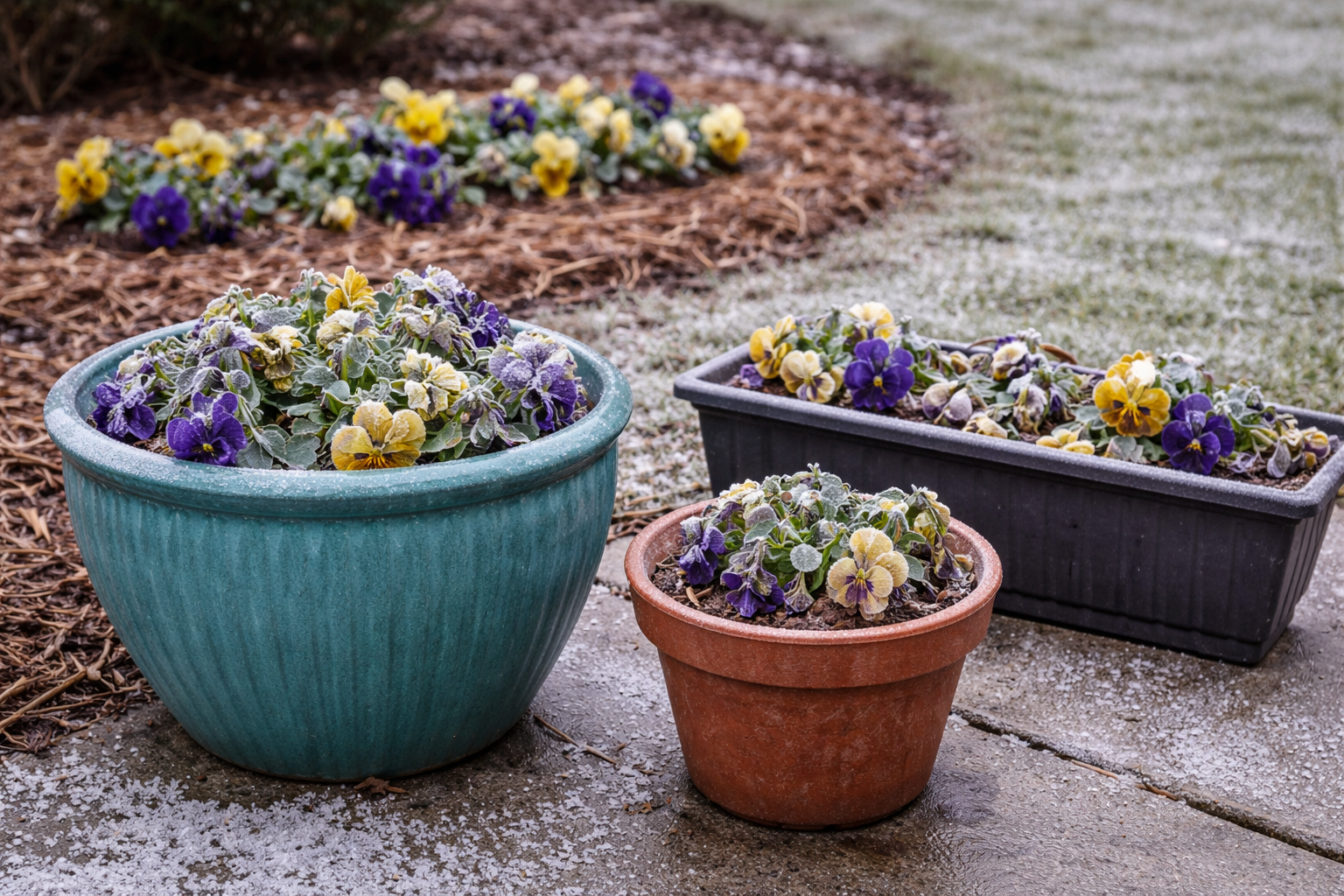
Ground soil is a big thermal mass. A pot is not. That one fact explains most of the difference.
In the ground, roots are buffered by the surrounding soil. Heat moves out slower. Temperature swings are softer. In a container, roots are exposed on all sides. The potting mix can chill fast and freeze deeper. That is why a porch planter can look wrecked after a night that barely touches a nearby bed.
Pot size matters too. A large planter full of soil has more cushion than a tiny nursery pot or a narrow window box. Material plays a role as well. Thin plastic and small terracotta pots swing faster than a broad, heavy planter tucked near a wall.
This is where people get a little overconfident. They hear that pansies can handle 25°F or colder, then leave container plantings fully exposed because the air number does not sound scary enough. But roots in a pot are living in a much smaller weather system.
If a forecast looks borderline for an in-ground bed, treat it as riskier for containers. That is the safer call almost every time.
How planting timing changes winter survival
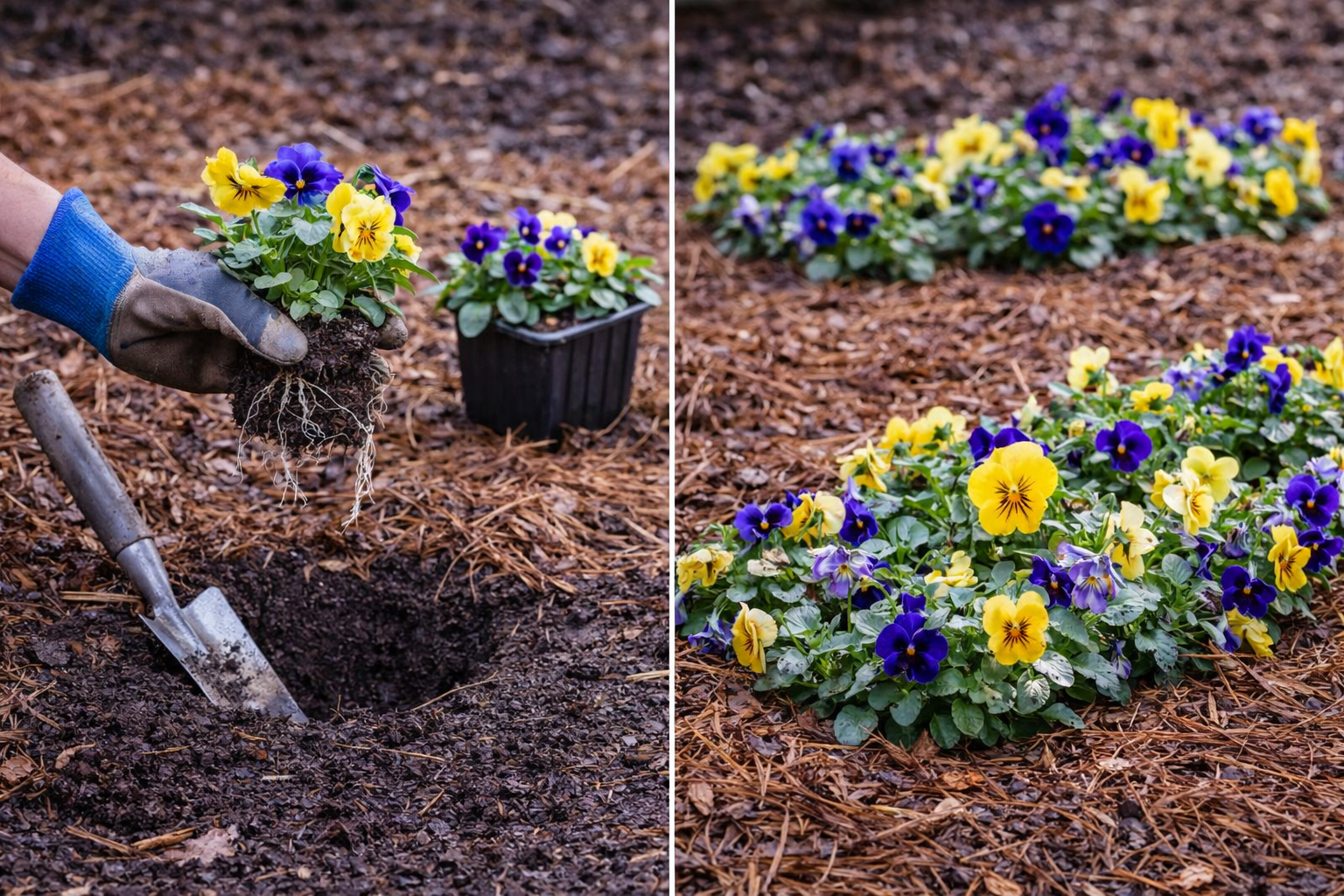
A pansy with a real root system is a different plant from a fresh greenhouse transplant that just left the nursery bench. Same species. Very different cold margin.
Texas A&M AgriLife recommends planting pansies when soil temperatures sit between 45°F and 70°F. That range gives roots time to settle in before harder weather arrives. If you plant into colder soil than that, roots stay sluggish. You end up with a plant that looks presentable above ground and underbuilt below it.
That weak start shows up later in winter. The pansy that never rooted in well is the one that heaves, dries out, or keels over after a rough freeze. Gardeners sometimes blame the variety when the real problem started at planting time.
Fresh nursery pansies need a little common sense too. If they were raised under protected conditions and then land straight into a windy cold snap, they can sulk hard. Stocky plants with deep green leaves and lots of buds usually settle in better than tall, bloom-heavy, stretched-out ones.
If you want pansies to act like winter pansies, plant them early enough to become winter plants. That is the whole trick.
The mistakes that kill more pansies than one cold night
Cold gets blamed for a lot of losses it did not cause alone.
- Planting too late. A weak root system has less margin when the first hard freeze lands.
- Ignoring wind. Dry winter wind can pull moisture from leaves faster than cold alone.
- Leaving pots fully exposed. A container on a railing is not the same as a mulched bed by the house.
- Using plastic right on the plant. It can trap moisture and press cold against foliage.
- Letting the soil go bone dry. Pansies in dry, freezing mix are more likely to dehydrate.
- Cutting everything back too soon. Wait for a proper thaw and a day or two of recovery before deciding what is gone.
There is also a quieter mistake: reading every ugly winter symptom as failure. Pansies do not stay pretty on command through every cold spell. Sometimes they just look rough for a bit. That is not the same thing as needing to replace them.
If I had to pick one bad habit that costs people the most, it is this: they react to the flowers and ignore the roots. Flowers are fast to fail and fast to replace. Roots decide the season.
A simple checklist for deciding whether tonight’s forecast is a real threat
Run through these five questions before you drag out covers or give up on the bed.
- Is the low below 25°F? If yes, pay closer attention.
- Will it stay that cold for several hours? A brief dip is lighter than a long freeze.
- Are the pansies in pots, a window box, or an exposed raised bed? If yes, treat them as higher risk.
- Could the soil freeze? Cold ground changes everything.
- Is wind part of the forecast? Wind plus cold dries plants out fast.
How to read the checklist
0 to 1 yes: usually watch and wait.
2 to 3 yes: cover beds or add mulch. Move containers if that is easy.
4 to 5 yes: protect hard and do not leave porch pots out in the open.
The easiest rule to remember is this: pansies often survive cold better than they survive exposure plus neglect. The forecast low is the headline. Wind, frozen soil, and root setup are the fine print. Read both and you will make better calls.
FAQ
Do pansies survive snow better than freezing rain?
Often, yes. Light snow can insulate the plant and soil a bit. Freezing rain is rougher because it coats foliage in ice and usually comes with heavier moisture and more tissue damage.
Are violas more cold-hardy than pansies?
Often they are. Violas usually have smaller flowers and a slightly tougher winter reputation. That said, the same rules still matter: established roots, protected placement, and the difference between a bed and a pot.
Should you water pansies before a freeze?
If the soil is dry, yes, give them moisture ahead of the cold. Do not leave the mix soggy. The goal is evenly moist soil, not wet soil. Dry roots heading into a freeze are more likely to struggle.

Michael Rowan is the founder and lead writer at The Garden Playbook. He has spent 10+ years growing plants across a range of settings — from indoor houseplants and container gardens to raised beds and in-ground plots — adapting methods to different light levels, seasons, and growing conditions.
Michael focuses on practical, experience-based guidance grounded in fundamentals: soil health, watering strategy, plant nutrition, pruning and propagation, and integrated pest management (IPM). His work aims to help readers diagnose common problems (such as yellowing leaves, stunted growth, or pest pressure) and apply straightforward solutions that are realistic for home gardeners.
At The Garden Playbook, Michael develops tutorials and plant guides using a consistent process: documenting real outcomes where possible, explaining the “why” behind each step, and verifying higher-risk topics (such as plant toxicity or pest treatment options) against reputable horticultural references.