
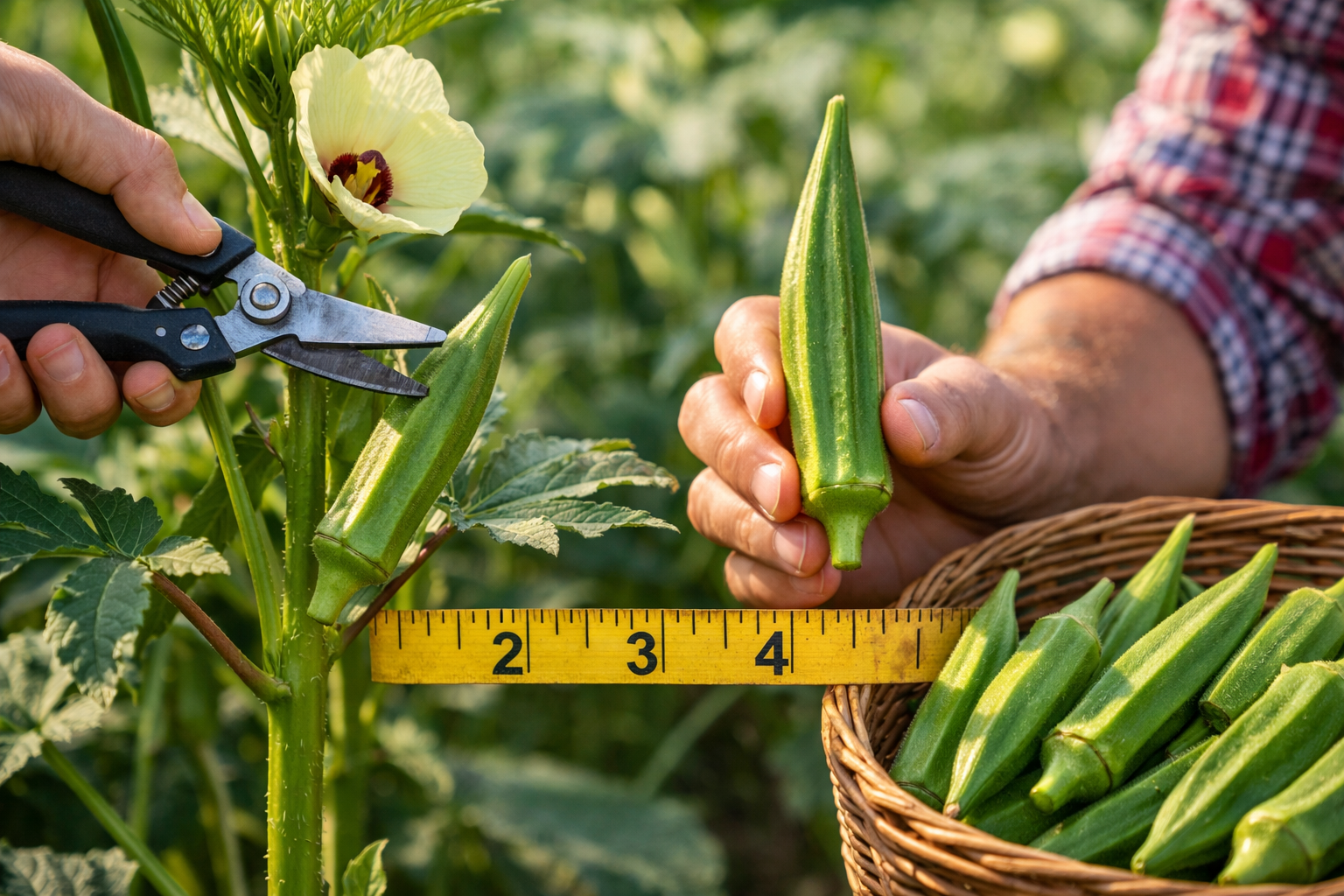
If you’re wondering “when should you harvest okra,” the short answer is this: pick most pods when they are about 2 to 3 inches long, or up to 4 inches on some varieties, and start checking them every day or two once flowering kicks in. Texas A&M AgriLife notes that pods are often ready about 3 to 4 days after flowering, which is why waiting for them to look “worth it” is the mistake that gets people.
That basic rule works. But it gets a lot more useful once you add three things: how fast the plant is growing, whether the pod still cuts cleanly, and what variety you’re growing.
At a glance
| What you see | What to do |
|---|---|
| 2 to 3 inch pod, fresh color, thin stem | Pick now |
| 3 to 4 inch pod and you are not sure | Cut one and test tenderness |
| Large pod that feels hard or fibrous | Remove it from the plant |
| Fully mature pod drying down | Leave only if you want seed |
- how to tell if a pod is ready without guessing
- how often to check plants in peak heat
- what to do with pods that got too big
- how to cut and store okra without making a mess of the plant
- which mistakes make tender pods harder to catch
When should you harvest okra? The direct answer first
For most home gardens, the sweet spot is simple: harvest pods young, usually at 2 to 3 inches. Some types stay tender closer to 4 inches, but that wider range is not a free pass to wait. The safer habit is to start early, then learn how your plant behaves.
I learned this the annoying way. One July, I left town for a weekend with a row of pods sitting at the “almost there” stage. I came back to a handful of green clubs. Good for compost, not much else.
So the real answer is not just a number. It is a timing rule:
Use this rule: once okra starts flowering, check plants every 1 to 2 days. If pods are in the 2 to 3 inch zone, pick them. If they are edging bigger, test one before you leave the rest another day.
That last part matters because the plant does not grow on a polite schedule. In warm weather it can move fast, and the jump from tender to woody is small.
The easy thing to remember is this: okra is better a little early than a little late. It behaves more like zucchini in miniature than a crop that improves by bulking up. Bigger usually means older, and older is where the trouble starts.
Read the pod, not just the ruler
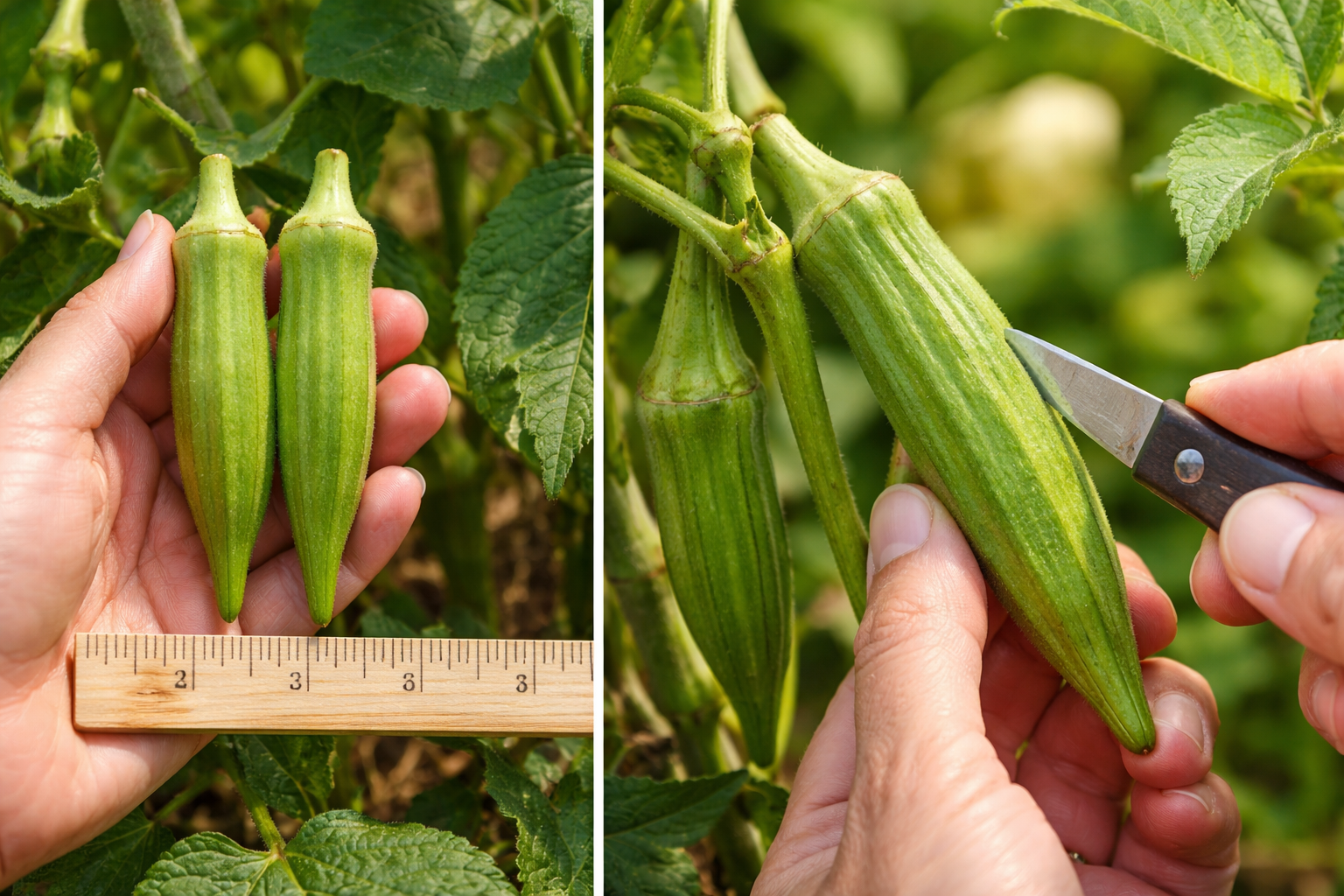
Measuring length helps, but the ruler is only one clue. If you want better picks, read the pod like a set of signals.
Start with size. Then add timing. Then add feel.
- Length: 2 to 3 inches is the cleanest target for most types.
- Age after bloom: pods often reach picking stage just a few days after the flower fades.
- Color and surface: look for fresh, bright-looking pods with no dull, tired finish.
- Tenderness: if a knife meets real resistance, the pod is already sliding out of the tender zone.
That tenderness check is what a lot of garden articles skip. And honestly, it is the part that helps most when the pod in front of you is 3 1/2 inches long and making you guess.
Here is the practical move. Cut one borderline pod near the stem end. If the blade slips through without much push, you are still in decent shape. If it feels tough right away, stop treating size charts like gospel and harvest smaller from that plant next time.
Remember
A 3-inch pod can already be late in hot weather. A slightly longer pod can still be fine on the right variety. That is why the cut test beats guesswork.
Clemson’s okra guidance points out that round-podded varieties can stay tender at larger sizes. That one detail saves a lot of needless second-guessing. Standard ribbed pods and round pods do not always play by the exact same inch mark.
So yes, keep the ruler in mind. But trust what the pod tells you more than what the seed packet promised.
Harvest often and cut clean so the plant keeps producing
Once the plant starts, you are not on a weekly harvest schedule anymore. You are on a quick loop. Check, pick, repeat.
That is not garden fussiness. It is how okra keeps giving you the good stuff.
When mature pods stay on the plant, okra shifts energy toward finishing seed. Fresh pod production slows down. That is why frequent harvesting changes next week’s yield, not just tonight’s dinner.
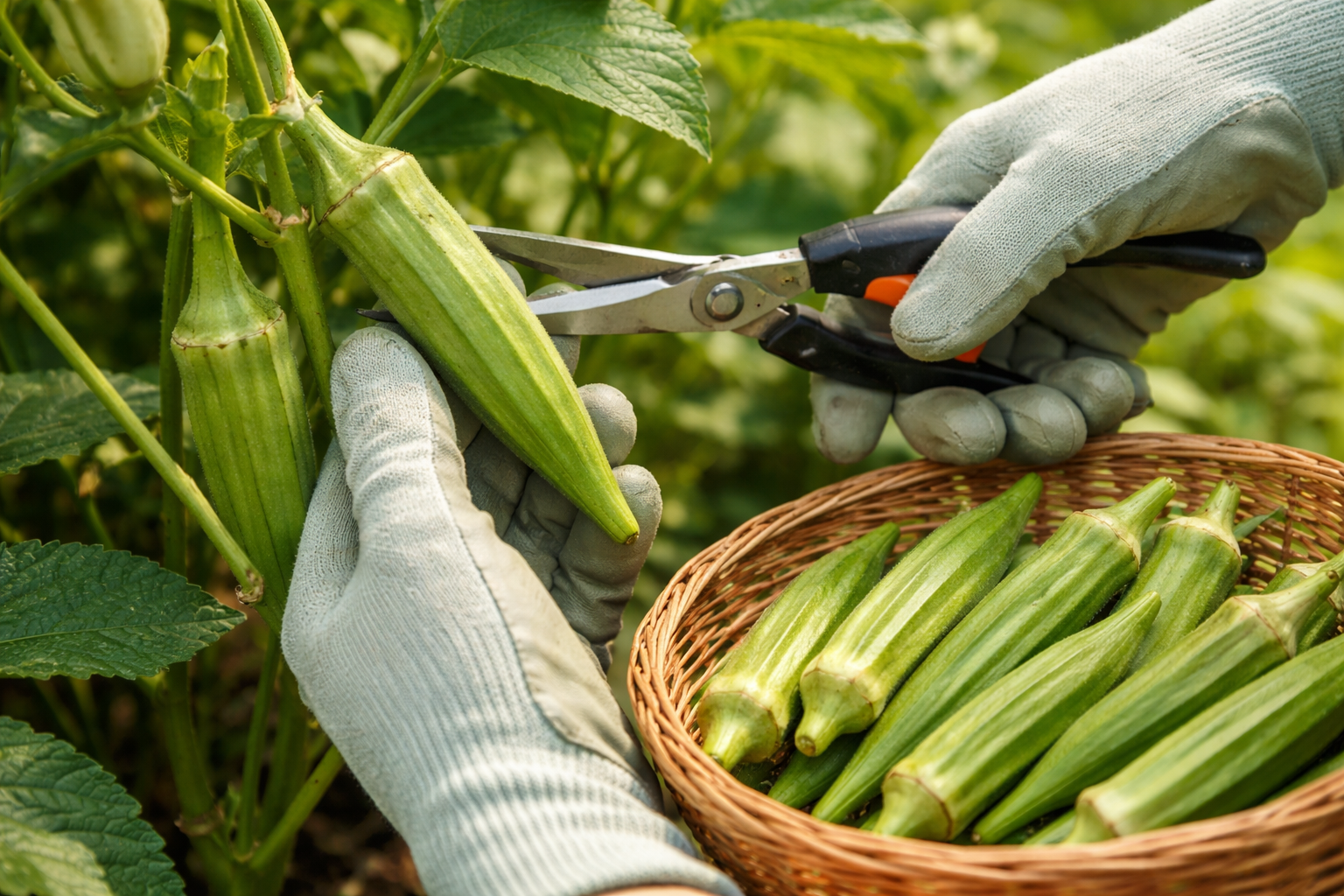
Use pruners, garden snips, or a knife and cut through the stem just above the cap. Don’t yank. Pulling can tear tissue and bend stems, and it is a silly way to lose flowers or nick your fingers.
Illinois Extension recommends a sharp knife or shears and notes that gloves and long sleeves can make harvesting a lot more comfortable. If you’ve ever brushed bare forearms against a mature okra plant, you already know why. The irritation is not dramatic, but it is plenty annoying.
Fast routine: harvest in a small container, cut cleanly, and keep moving down the row. The best okra harvests feel almost boring. That is good.
And one more thing. Pick the oversized pods too. Even if they are past eating quality, leaving them there tells the plant its job is done.
Adjust the rule for heat, moisture, and variety
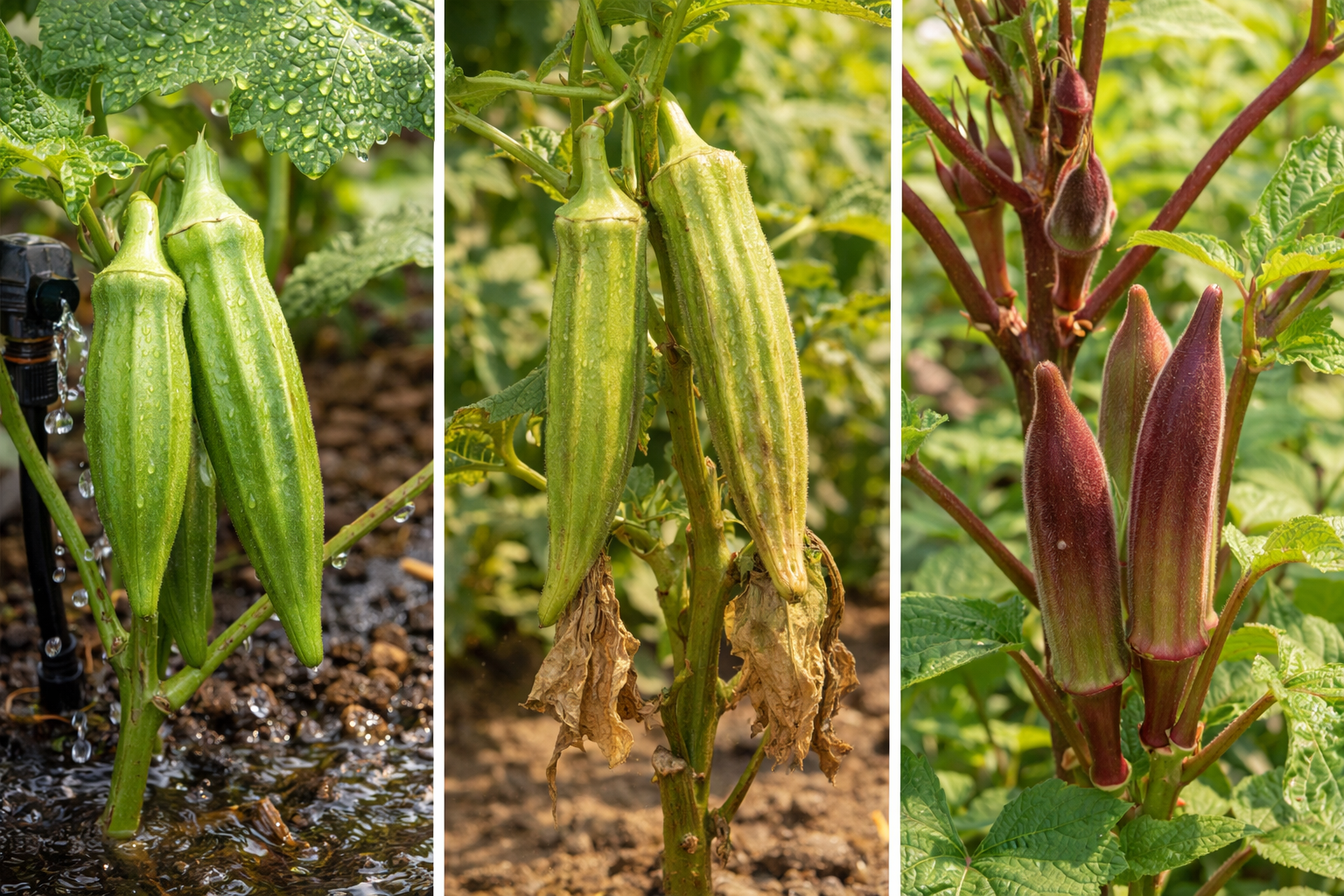
This is where the generic advice falls apart a bit. The same 3-inch rule that worked last week might feel late this week because the weather changed.
Hot spells speed things up. Steady moisture keeps pods sizing smoothly. Vigorous plants in summer can go from “check tomorrow” to “why is this thing tough already?” in no time. That is why some gardeners get away with every-other-day harvests early on, then switch to daily checks when the patch hits its stride.
Clemson’s harvesting guide notes that okra grows very fast and is often best harvested every 2 days. In peak summer, daily checks are often the calmer move. Not because the plant is fussy, just because the harvest window is short.
Moisture changes the rhythm too. During pod set and pod growth, plants respond better when water is steady rather than all over the place. For raised-bed growers, a simple, consistent setup matters more than heroic soaking now and then. A guide to the best irrigation for raised beds can help smooth out that stop-start cycle.
Variety changes the rule at the margins. Round pods may stay tender longer. Ribbed pods often need a tighter harvest window. Color is not the issue here. Green, red, and burgundy types can all be tender when young and rough when late.
Quick adjustment guide
- Cooler stretch: checking every other day may be enough.
- Hot, fast growth: check daily.
- Round-podded type: test a slightly larger pod before assuming it is too old.
- Standard ribbed type: lean earlier, not later.
The point is not to memorize more numbers. It is to watch the plant’s pace and tighten your timing when the garden is moving fast.
If you missed the window, decide fast
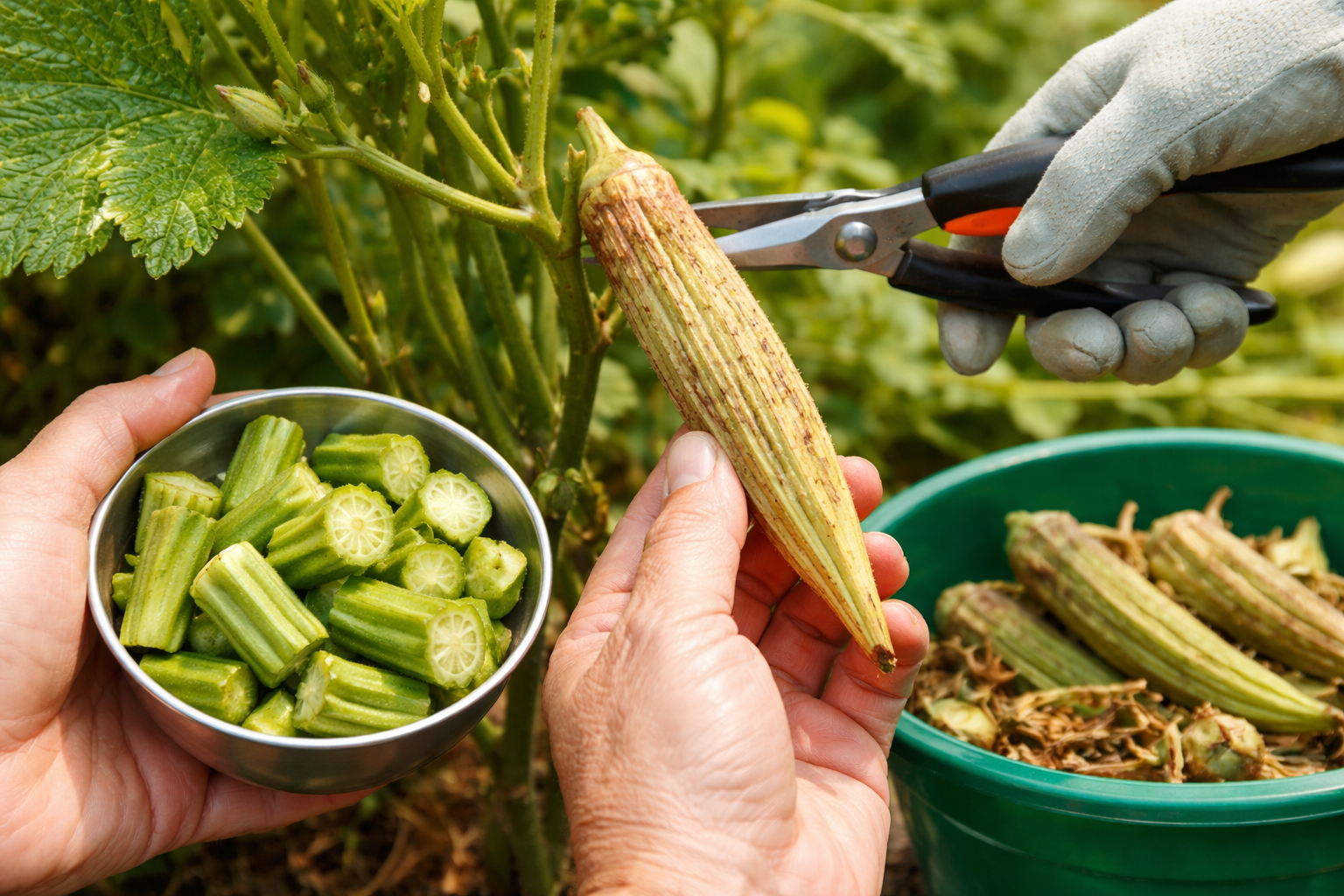
You will miss a few. Everybody does.
When that happens, the job changes from “is this ready?” to “what should I do with it now?”
If a slightly oversized pod still slices cleanly, use it soon. It may be fine in soups, gumbo, or dishes where the pod is cut up and cooked through. If it feels stringy at the knife or woody at the cap end, do not keep pretending it will eat like a young pod. It won’t.
So make the call fast:
- Still tender: cook it soon.
- Tough and fibrous: remove it and compost it.
- Fully mature and drying: keep it only if you want seed.
That last option is real. Seed saving works fine with okra. But do it on purpose, not by laziness. Seed Savers Exchange notes that pods for seed should be left to mature fully and dry on the plant. Once you let too many pods go that route, you are trading tender harvests for seed production.
Good rule: if a pod is too old for the kitchen, it is still not too old to remove. Leaving it on the plant is usually the worst option.
This is one of those small garden choices that changes the next ten days. Take the miss, clear the plant, and move on.
Store fresh-picked okra without speeding rot or slime
Fresh okra keeps best when you leave it alone a bit. Do not wash it before storage. Do not seal it up wet. And do not chop it ahead unless you know you will use it soon.
The cleaner rule is: pick dry pods, bring them in, brush off obvious dirt if needed, and refrigerate them whole. A perforated bag or a loose produce bag works better than trapping moisture around them.
University of Minnesota postharvest guidance lists about 45 degrees Fahrenheit with high humidity as a strong storage target for okra, which lines up with the home-garden advice to refrigerate it and use it while it is still firm. Most kitchen fridges are not lab-perfect, so think in days, not in grand storage plans.
Harvesting early in the day helps too. Pods come in cooler and they do not carry as much field heat into the kitchen. That little detail actually makes sense once you’ve handled okra in August. Midday harvests feel warm and tired before you even put them away.
Note
The “slimy” part of okra is mostly a cooking and cutting issue, not a reason to fear the crop. Wet storage and rough handling just make decline happen faster.
If you are not cooking it soon, freezing makes more sense than babying older pods in the fridge.
Avoid the mistakes that make okra harder than it needs to be
Most okra problems are not growing problems. They are timing problems.
These are the ones that trip people up most:
- Waiting for size. A bigger pod looks more rewarding, but okra is not a melon. Waiting is how tenderness slips away.
- Checking too slowly in hot weather. In a fast stretch, skipping two days can be enough to miss a whole round.
- Pulling instead of cutting. It is rough on the plant and rough on your hands.
- Leaving a few giant pods for later. Those are seed signals to the plant, not harmless decorations.
- Treating all varieties the same. Some give you a little more room. Some don’t. Learn your plant once and the rest gets easier.
- Washing before storage. Extra surface moisture is not your friend here.
The sharpest mental shift is this one: stop asking “How big can I let it get?” and start asking “How young can I pick it and still be happy to cook it?” That change alone fixes a lot.
It is a bit like bread. Waiting for stale bread to become softer is silly. Waiting for okra to become better by getting older is the same kind of bad bet.
Closing & Simple Rule To Remember
If you want one rule that works more often than not, use this: pick okra young, check it often, and trust tenderness over size charts.
That means:
- start around 2 to 3 inches
- watch the plant closely once it flowers
- cut pods cleanly instead of pulling
- remove misses instead of leaving them hanging around
That is really the whole game. Not fancy. Just fast enough.
And if you are still unsure, do one side-by-side test. Pick one pod a little early and one a little late. Cook both. You will not need a lecture after that. The plant teaches the lesson pretty quick.
FAQ
Yes, but slightly early is usually a much smaller problem than slightly late. A small young pod will still be tender. An older pod can turn fibrous fast, which is harder to fix in the kitchen.
Usually, yes. Color does not change the basic harvest rule much. Variety shape matters more than color, so a round pod may stay tender longer than a ribbed one even if both are the same shade.
Yes. If the pods are young and tender, freezing is a better move than trying to stretch fridge life too far. Use clean, dry pods and prep them soon after harvest for the best texture.

Michael Rowan is the founder and lead writer at The Garden Playbook. He has spent 10+ years growing plants across a range of settings — from indoor houseplants and container gardens to raised beds and in-ground plots — adapting methods to different light levels, seasons, and growing conditions.
Michael focuses on practical, experience-based guidance grounded in fundamentals: soil health, watering strategy, plant nutrition, pruning and propagation, and integrated pest management (IPM). His work aims to help readers diagnose common problems (such as yellowing leaves, stunted growth, or pest pressure) and apply straightforward solutions that are realistic for home gardeners.
At The Garden Playbook, Michael develops tutorials and plant guides using a consistent process: documenting real outcomes where possible, explaining the “why” behind each step, and verifying higher-risk topics (such as plant toxicity or pest treatment options) against reputable horticultural references.