
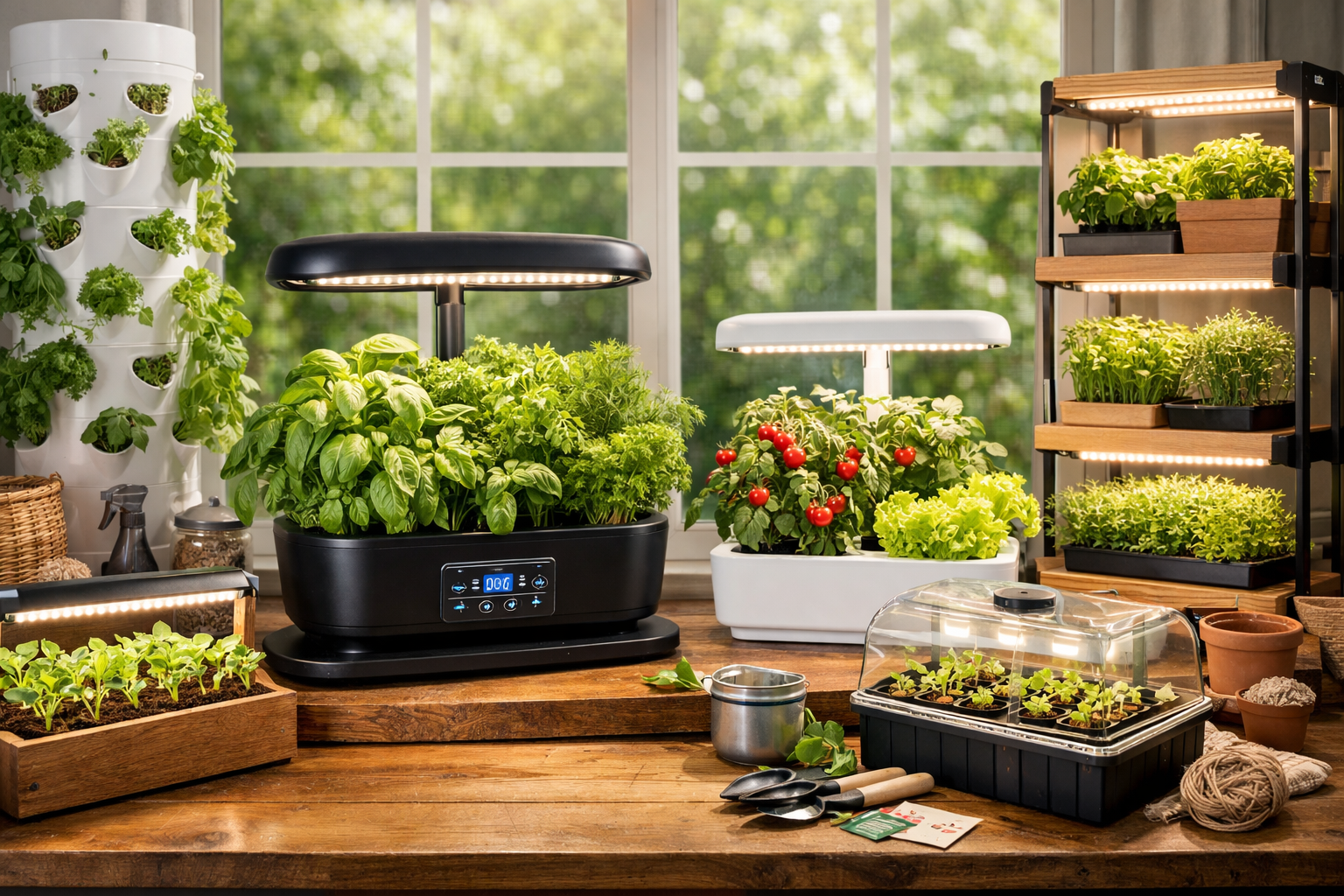
Most people start this search after a tiny kitchen disappointment. A basil plant from the store droops in four days. A windowsill herb pot turns leggy. Then a sleek countertop garden shows up in search results and suddenly every brand promises fresh greens with almost no effort.
Here’s the straight answer: the best indoor gardening system for most people is a compact hydroponic indoor garden with an adjustable grow light, enough room for six to twelve plants, and either open-seed flexibility or pod refills that don’t turn replanting into a chore. That’s the broad answer. The useful answer is narrower. A smart garden that works beautifully for basil and lettuce can be a lousy pick for tomatoes, and a big vertical tower can be overkill if all that’s needed is a few herbs for pasta night.
That tension is where people waste money.
Indoor gardening systems are sold like one category. They are not. A pod-based countertop garden, an open-seed hydroponic kit, a vertical indoor garden, and a microgreens tray all solve different problems. The trick is matching the machine to the harvest, not to the marketing.
- Which type of indoor garden system fits herbs, lettuce, microgreens, or fruiting crops
- The six buying factors that change whether a system feels easy or annoying
- Which real products make sense for small kitchens, beginners, and heavier growers
- What usually goes wrong in the first month, and how to avoid it
- When a simple pot-and-light setup beats a branded indoor gardening system
For this guide, each pick was judged with the same six-point fit test: crop fit, light design, seed freedom, maintenance load, space footprint, and ownership costs over time. I also leaned on university extension guidance for the parts that should not rest on opinion, like which crops are realistic indoors and how hydroponic systems need to be cleaned and maintained.
Best Suggestions Table (All products below were judged with the same fit test. The buttons jump to the review blocks so the tradeoffs are easy to scan.)
| Product | Best for | Action |
|---|---|---|
| AeroGarden Bounty Basic | Most beginners who want a useful amount of herbs and greens |
Check Price Review |
| AeroGarden Harvest Elite | Herb-first countertop growing |
Check Price Review |
| iDOO 12 Pods Indoor Herb Garden Kit | Value and seed flexibility |
Check Price Review |
| Click & Grow Smart Garden 3 | Tiny spaces and low-fuss growing |
Check Price Review |
| Gardyn Studio | People who want output, not garnish |
Check Price Review |
Tip: “Check Price” and “Review” both jump to the same review block because pricing shifts, while the fit and tradeoffs stay useful.
Still in doubt? Here’s a fast guideline to save time.
- If the goal is basil, parsley, dill, mint, or salad greens, start with a six to twelve plant countertop hydroponic garden.
- If the goal is lots of weekly lettuce, go bigger or go vertical.
- If the goal is tomatoes or peppers, buy only if the system has real light strength, height room, and you actually want the maintenance.
- If the goal is cheap flexibility, skip proprietary pods and look for an open-seed setup.
- If the goal is “I just want something foolproof on the counter,” a small pod-based smart garden usually feels easiest.
The best indoor gardening system for most people is not one product, it’s one type
The strongest starting point is a countertop hydroponic system with a built-in LED grow light and enough capacity to feel useful after the novelty wears off. In practice, that sweet spot is usually six to twelve planting sites. Three-site units can be charming, and some are genuinely handy, but they behave more like an herb garnish station than a steady indoor vegetable garden.
That sounds picky. It isn’t.
Once the first flush of basil comes in, people start asking a system to do more. A little parsley. Some lettuce. Maybe chives. A small unit that looked clean and tidy on day one starts to feel tight by week four. Fast growers crowd each other. The light bar runs out of headroom. Harvesting one pod without disturbing its neighbors becomes fiddly. That’s why the “best overall” answer lands on a type, not a single brand.
A compact hydroponic indoor garden hits the middle well. It gives enough room for herbs and leafy greens, the built-in timer removes most of the guesswork, and the water reservoir carries more of the workload than soil pots do. The category also has a nice split: pod-based systems are tidy and simple, while open-seed systems cut refill costs and let you use whatever varieties you want.
Note: The generic answer breaks fast once fruiting crops enter the picture. A unit that handles basil beautifully can leave cherry tomatoes hungry for light and short on space.
That’s why the rest of the article keeps coming back to one question: what, exactly, is supposed to come out of this thing?
Start with what you want to harvest, because basil and tomatoes do not need the same setup
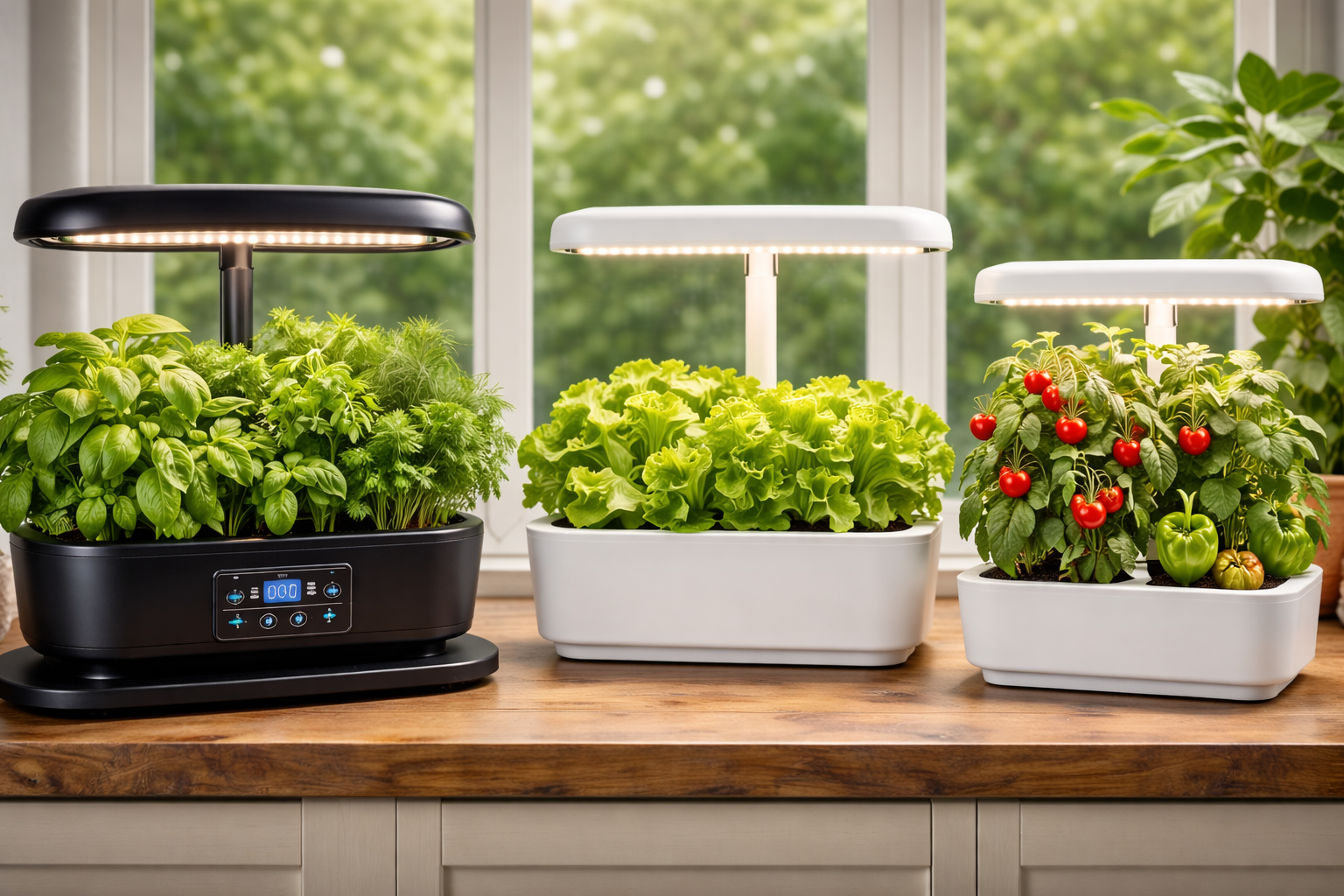
University of New Hampshire Extension puts the crop hierarchy plainly: lettuce, herbs, and other leafy greens are usually the easiest year-round hydroponic crops for home growers, while fruiting crops like tomatoes, cucumbers, and peppers need more light and are often too costly or awkward for many indoor setups. That’s not theory. It tracks with how these machines behave in normal homes.
If the plan is basil, cilantro, parsley, dill, mint, or salad greens, a countertop smart garden makes a lot of sense. These plants stay manageable, they respond well to regular trimming, and they reward small mistakes instead of punishing them. Herbs especially fit the rhythm of indoor systems. Harvest a little, let them rebound, repeat.
If the plan is lettuce every week, the question changes from “Can this grow?” to “Can this produce enough to matter?” A tiny three-pod system can grow lettuce. It just will not feed a lettuce habit. A larger unit, or a vertical indoor garden, starts to make more sense for households that actually eat greens several times a week.
Then there are fruiting crops. This is where product pages get cute. Cherry tomatoes, mini peppers, and strawberries show up in brand photos because they look exciting. Indoors, they ask for more from the light, more from the nutrient cycle, more from the pruning, and more from your patience. So yes, they can be grown. No, that does not make them a smart default.
Quick crop fit guide
- Mostly herbs: small to mid-size countertop system
- Herbs plus frequent salad greens: six to twelve plant hydroponic garden
- Lots of lettuce: larger unit or vertical system
- Tomatoes and peppers: only buy if stronger light, height room, and extra upkeep sound fine
- Fast harvests with little fuss: microgreens setup
Cilantro is a good example of why “herbs” should not be treated as one blob. It often bolts in warmth and can act moody indoors. That doesn’t make it a bad candidate, just a more specific one. A tighter crop guide like this cilantro indoor growing walkthrough helps if cilantro sits high on the wish list.
If the shopping list leans green and leafy, the field opens up. If the dream is a countertop tomato patch, narrow it hard.
Use the 6-point fit test so you pick the right system the first time
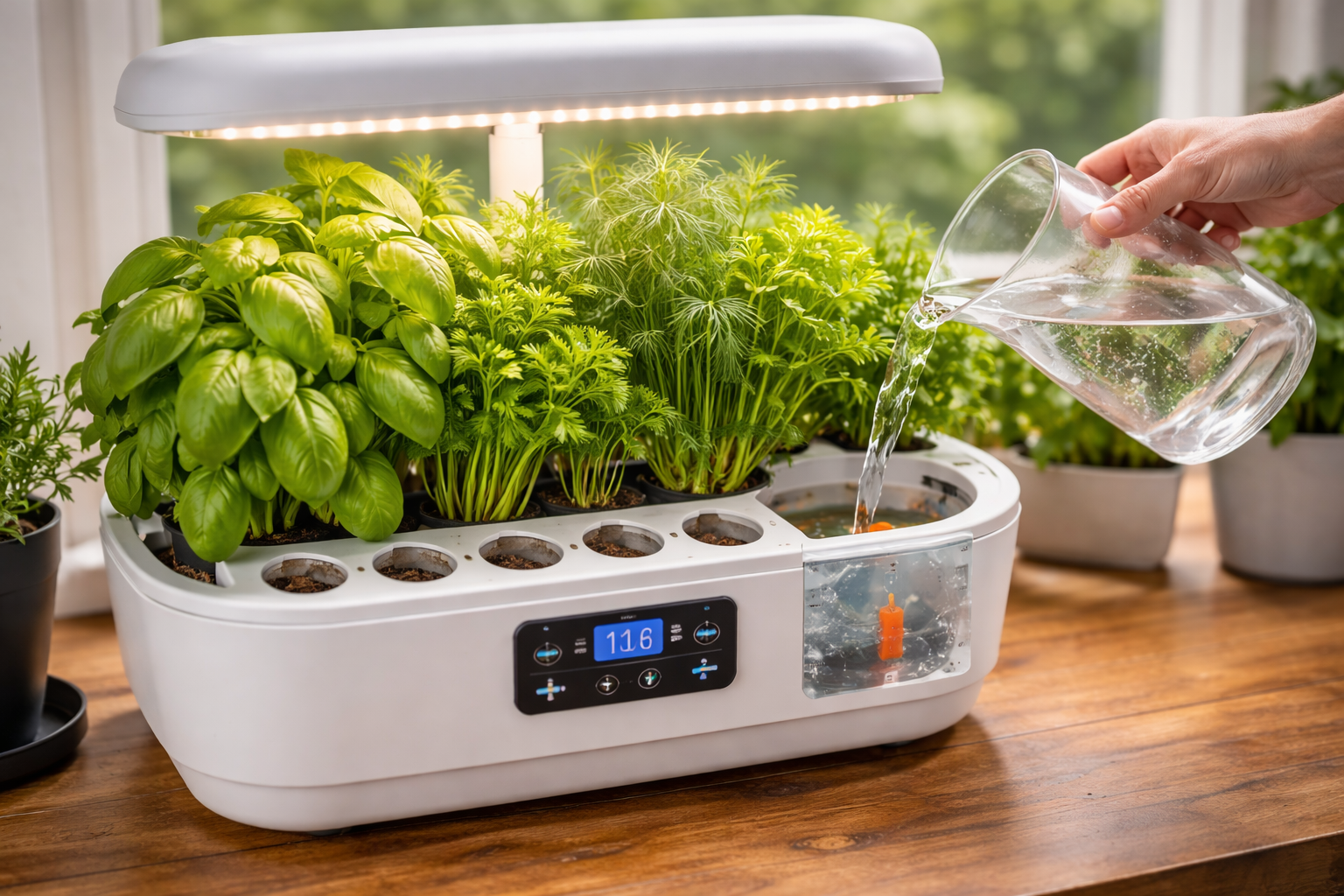
Specs alone are bad at telling the truth. A twelve-pod system looks bigger than a six-pod system, but if the light height is stingy, the water tank is annoying to refill, and the refill ecosystem is expensive, the “bigger” unit can feel smaller in use.
The fit test keeps that from happening.
- Crop fit. Start here. Herbs and lettuce are not fringe use cases. They are the main event for most indoor hydroponic gardens. If a system only looks good with short herbs, treat tomato claims with suspicion.
- Light design and adjustability. A fixed or low light bar is one of the quickest ways to outgrow a system. Tall basil gets floppy under low headroom. Lettuce gets crowded. Fruiting crops become a headache.
- Seed freedom. Proprietary pods are convenient. They are also a commitment. An open-seed system lets you use your own seeds and generic grow sponges, which changes the long-term math a lot.
- Maintenance load. Some units feel easy because setup is easy. The more revealing question is how they feel after three replanting cycles. Reservoir access, algae control, root cleanup, and pod replacement matter more then.
- Space footprint. Counter space is only half of it. Light spill, refill access, cable placement, and pruning room all matter. A unit tucked under cabinets can become weirdly annoying.
- Ownership costs. The purchase is step one. Replanting, nutrients, replacement sponges, and brand lock-in tell the fuller story.
If a system clears those six checks, it usually earns its place. If it fails two or three, it often becomes one more appliance that looked fun in a product photo.
Note: For most homes, a three-pod unit works as a compact herb helper. A six to nine site unit feels practical. Twelve sites is often the useful middle if fresh greens actually get eaten, not just admired.
Light placement is the sleeper factor. A built-in grow light solves the “best facing window” problem because it no longer asks the room to do all the work. But the room still matters. A unit in a dim corner can thrive under its own lights, while the same lights can feel harsh in a bedroom or at the end of a kitchen island. The tradeoff becomes comfort, not plant health. A quick reference on window direction and plant type helps frame that choice.
Choose your format: countertop pod garden, open-seed hydroponic kit, vertical tower, or microgreens setup
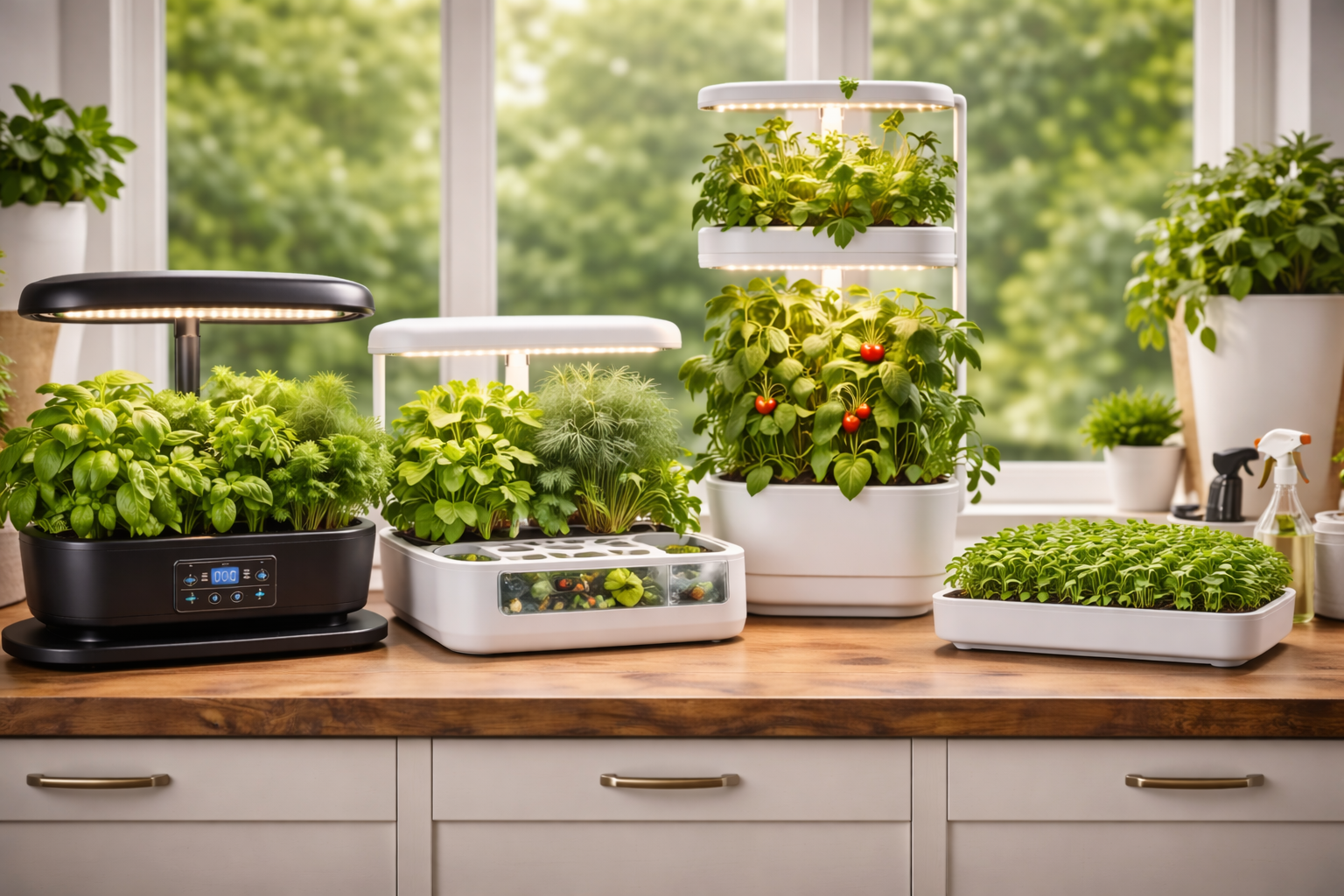
The USDA National Agricultural Library defines hydroponics broadly as growing plants in water-based nutrient solution, often with media like rockwool, coconut fiber, or perlite. That broad definition explains why indoor systems can feel wildly different even though they all fall under the same umbrella. The format matters as much as the brand.
Countertop pod gardens are the cleanest entry point. They are the plant version of a capsule coffee machine: tidy, fast to set up, and built to reduce decisions. The upside is convenience. The downside is being nudged into a brand’s seed pod system and plant spacing choices.
Open-seed hydroponic kits keep the same general idea but loosen the cage. You can use your own seeds, generic grow sponges, and whatever herb or lettuce variety actually sounds good. The trade is a little more tinkering. For plenty of people, that’s a fair deal because replanting costs drop and variety opens up.
Vertical indoor gardens make sense when output matters more than a clean little countertop footprint. They give more harvest per square foot of floor area, which is useful in apartments or for people who cook often. They also ask for more space in another direction: height, visual presence, and setup commitment. A vertical tower is not subtle. It becomes part of the room.
Microgreens setups are their own lane. Fast harvest, small footprint, almost instant gratification. They are great if the goal is frequent fresh greens with very little waiting. They are not the same thing as a general indoor herb garden or indoor vegetable garden. Great at one job. Narrow at others.
| Format | Best for | What gives it away |
|---|---|---|
| Pod-based smart garden | Beginners, kitchens, quick setup | Easy start, less seed freedom |
| Open-seed hydroponic kit | Value-focused growers, tinkerers | Flexible, but less plug-and-play |
| Vertical system | Higher greens output in limited floor space | Large harvest potential, big room presence |
| Microgreens kit | Fast harvest and low waiting | Quick payoff, limited crop range |
If the goal is a low-drama indoor herb garden, start with the first two formats. If the goal is weekly output, look hard at the third. If the goal is speed, microgreens are hard to beat.
Best indoor gardening systems by scenario, not by hype
The products below all show up for a reason. The trick is reading them through the fit test instead of through category labels like “best overall” or “best premium.” Each one is good at something specific. Each one asks for a trade.
AeroGarden Bounty Basic
Best for: most beginners who want a useful amount of herbs and greens, not just a countertop decoration.
The Bounty Basic tends to land in the sweet spot because it solves several everyday friction points at once. It gives more growing room than the smallest pod gardens, the adjustable light hood buys useful headroom for taller basil and crowded lettuce, and the interface is simple enough that it does not feel like managing another app. For a household that cooks a few nights a week, that balance matters more than flashy extras.
It also fits the reality of how people use these machines after week three. You stop caring about setup and start caring about trimming, refilling, and whether a fast grower is bullying the pod next to it. A mid-size AeroGarden usually handles that better than compact units. The reservoir is more forgiving, the layout feels less cramped, and the whole thing is easier to treat like a little indoor vegetable garden instead of a novelty gadget.
Where it gives ground is seed freedom and ongoing costs. AeroGarden’s ecosystem is convenient, but that convenience is also the lock. If using your own seeds and generic grow media matters, the Bounty Basic becomes less attractive. It also takes up real visual space on a counter. Not enormous, but not exactly invisible. Skip it if the kitchen is tight, if refill ecosystems annoy you on principle, or if the goal is only three herbs at a time. Buy it if the plan is steady herbs, occasional lettuce, and the least amount of fuss before the first harvest.
AeroGarden Harvest Elite
Best for: herb-first growing on a counter where size and simplicity still matter.
The Harvest Elite is easier to recommend once the goal gets narrower. For basil, parsley, dill, thyme, mint, and similar compact herbs, it hits a practical zone that small kitchens appreciate. It looks tidy, it starts quickly, and it keeps enough structure in place that beginners do not have to learn hydroponic housekeeping from scratch. For a lot of people, that matters more than absolute capacity.
This is also the kind of smart garden that works well for the person who really does want “fresh herbs near the stove” and means it literally. It takes less space, feels less imposing, and still gives the basic hydroponic benefits: timed light, water reservoir, simple nutrient routine. In day-to-day use, that means fewer dead pots on a windowsill and fewer uneven watering mistakes.
The catch is not hidden, but it is easy to underestimate. The smaller layout fills up fast. Basil can get bossy. Lettuce is doable, though not in the quantities that make a salad habit easy. The Harvest Elite is also still part of a proprietary pod ecosystem. That is fine if convenience is the whole point. It is a poor match if the appeal of indoor growing is experimenting with unusual varieties or cutting replanting costs. Pick it for herbs. Be careful if you are quietly hoping it turns into a mini farm.
iDOO 12 Pods Indoor Herb Garden Kit
Best for: value-conscious buyers who want more room and more seed flexibility.
The iDOO 12 Pods Indoor Herb Garden Kit keeps appearing in comparisons because it attacks the category’s sorest spot: refill dependence. A lot of buyers like the general shape of countertop hydroponics but dislike the feeling that every replant sends them back into a brand ecosystem. iDOO-style systems appeal because they make open-seed growing feel more normal. That changes the long game.
The other draw is simple scale. Twelve sites sounds like a small difference from six or nine until the first aggressive basil plant starts leaning into everything around it. Extra room helps. For mixed herbs, greens, and a bit of experimentation, that extra breathing room can make a mid-sized system feel calmer. It also makes it easier to dedicate a few spots to slower crops while keeping fast growers in play.
The trade is polish. Open-seed and value-focused systems often ask a bit more from the grower. Fit and finish can vary, instructions can feel less hand-holding, and long-term support may not be as polished as the big legacy names. That’s not a dealbreaker. It just changes who the product suits. If using your own seeds, generic sponges, and flexible planting plans sounds appealing, iDOO is a strong contender. If the dream is total autopilot and a smoother branded experience, a pod-first smart garden still feels easier.
Click & Grow Smart Garden 3
Best for: tiny spaces, low-fuss herb growing, and people who want the cleanest start possible.
Click & Grow’s Smart Garden 3 is not trying to be a salad engine. That’s why it works for the right person. It does one job well: it gives a very small footprint, a clean look, and a minimal learning curve. On a cramped counter, in a small apartment kitchen, or in a bright office where a bulky unit would feel intrusive, that restraint is a strength.
Its best use case is also the one people try to talk themselves out of. A few herbs. Maybe a flower. Maybe a small greens experiment. That’s enough. Not every indoor gardening system needs to behave like a miniature farm to earn its keep. For someone who keeps killing store-bought basil and wants a neater answer than loose pots and saucers, this kind of self-watering garden can be a relief.
The limit is pretty obvious. Three planting sites create fast tradeoffs. A compact system like this asks the buyer to be honest. Is the aim freshness and convenience, or a real volume of produce? If the answer is the second one, this is too small. Pod dependence also matters here because the system’s charm partly comes from how tightly controlled the format is. Great for ease. Less great for seed freedom and ongoing costs. Buy it for simplicity. Skip it if the plan is bigger harvests or frequent replanting with custom seeds.
Gardyn Studio
Best for: households that want output, floor-space efficiency, and a much bigger growing canvas.
Gardyn Studio sits in a different tier because it solves a different problem. It is not trying to fit beside the coffee maker. It is trying to pack more edible growth into a small footprint of floor space. For someone who actually wants a stream of greens and herbs, or likes the idea of a vertical indoor garden without a full outdoor setup, that shift matters. It moves the category from “countertop helper” into “serious indoor production.”
The best thing about a vertical system is simple: room to grow more without giving up lots of floor area. If a household eats greens often, or if countertop units keep feeling too cramped, the format starts making sense. Bigger systems also create more planting flexibility. There is space to separate faster and slower crops, and the whole setup feels less like plant Tetris.
But there is no sneaking one of these into a room. A vertical system becomes furniture. Light, height, and visual presence all go up. The buy-in is also harder to justify if the actual goal is only a little basil and a few salad leaves. That mismatch is where people overbuy. Gardyn Studio makes sense for people who really want output and are okay with a bigger, more noticeable machine. For a casual herb grower, it is too much machine for too little need.
Note: “Best for beginners” should mean easiest path to a successful first harvest, not just the most automation. A system that hides everything but locks you into pricey refills is still making a choice for you.
Avoid the mistakes that make indoor garden systems feel like expensive gadgets
The mistake that ruins most first purchases happens before the box is opened. People buy by pod count, styling, or the promise of “grow anything,” then discover the system they picked is bad at the crop they actually wanted. A sleek countertop unit with limited light height is fine for thyme. It is not a fair fight for tomatoes.
The second mistake is treating self-watering like maintenance-free. University of Minnesota Extension points out that hydroponic systems still need the right crop choice, nutrient management, and clean growing conditions. Water in a tank does not remove the job. It just changes the job.
Placement causes a sneaky category of regret. A bright built-in grow light is wonderful for plants and occasionally maddening for people. Put one in a bedroom and you may hate it. Put it under cabinets with poor clearance and refills become awkward. Put it where root cleanup is annoying and routine upkeep gets postponed. That is how a promising little countertop garden turns into an algae science project.
Algae is not some exotic edge case, either. UNH Extension notes that home hydroponic systems can support algae growth when light reaches the nutrient solution, which is why covered reservoirs and good cleaning habits matter. The same guidance also pushes regular nutrient replacement, oxygenation, and careful handling of edible portions. The practical translation is simple: if the tank looks murky, smells off, or has root tangles everywhere, it is time to clean up, not just top up.
What usually goes wrong first
- Too many fast-growing herbs packed close together
- Light bar too low for the crop mix
- Refills and nutrients cost more than expected
- Reservoir ignored because “the machine handles it”
- Bright light placed where people live, work, or sleep
The little trap I see most often is the tomato fantasy. Shoppers say they only want herbs, then quietly choose a system because the product page showed tomatoes. If tomatoes really matter, buy for tomatoes from the start. If they do not, stop letting them distort the choice.
Set the system up for an easy first harvest, not a frustrating first month
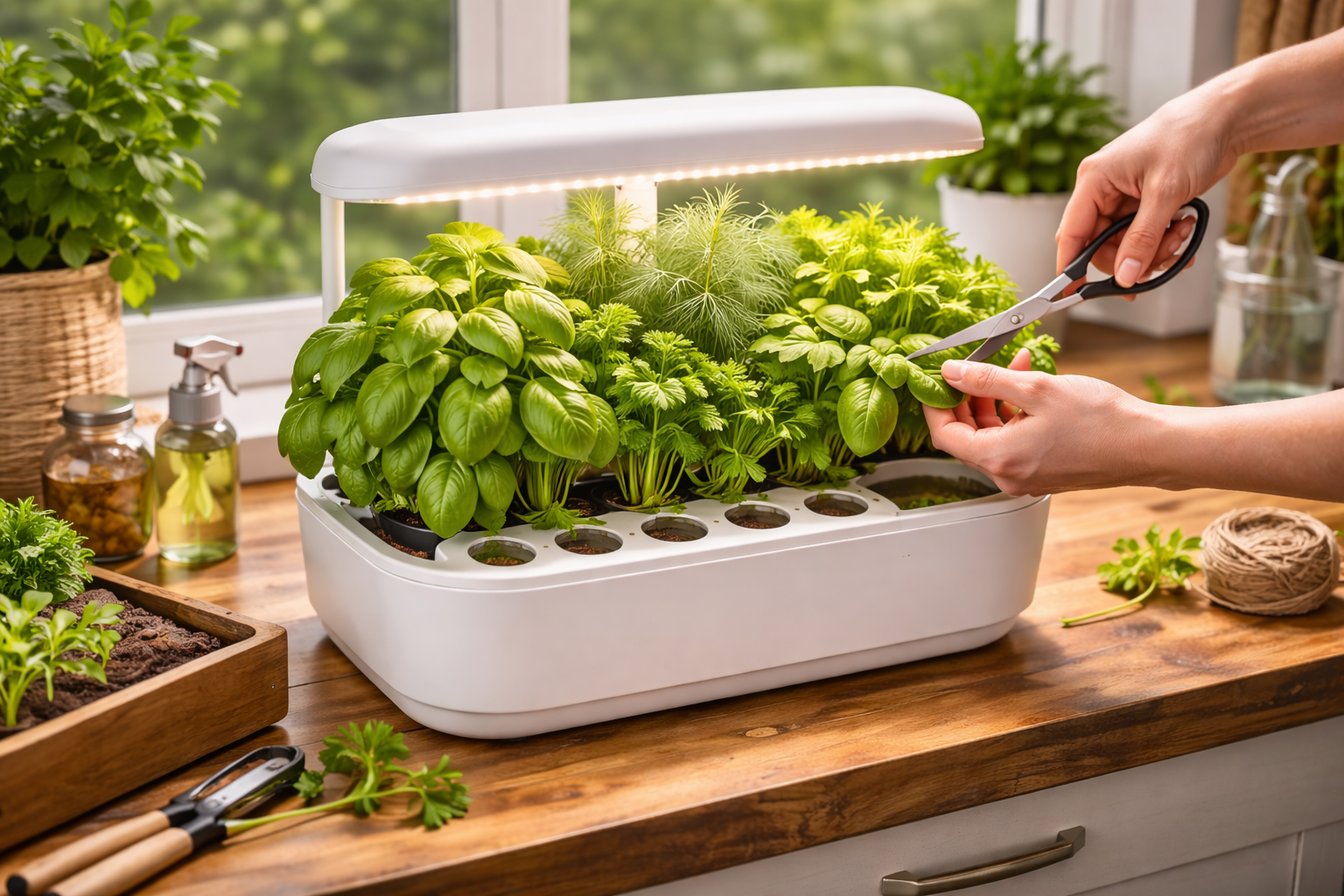
Good systems still need a good first setup. This is the part that decides whether the machine feels fun or fiddly.
Pick a forgiving first crop and get visible progress fast
Start with basil, parsley, dill, lettuce, or microgreens. These crops give feedback quickly and tolerate small beginner mistakes better than fussier choices do. Skip the heroic mixed planting plan. One tall, hungry basil next to two slow herbs and a compact lettuce can turn a neat layout into a crowding problem fast.
Place the unit where the light helps plants, not where it hijacks the room
A built-in grow light means natural light matters less, though it still helps to avoid dark, awkward corners where refilling and trimming feel annoying. Think about the human side too. A kitchen counter is usually easier than a bedroom nightstand. A home office can work, but only if the light schedule is not glaring during normal use.
Keep the reservoir clean and the roots happy
UNH Extension recommends clean systems, fresh nutrient solution, and care to limit algae and contamination in home hydroponics. In plain terms, don’t let the tank become old soup. Dump, rinse, trim roots when needed, and clean between crops. This part is not glamorous. It is the difference between “fresh herbs on demand” and “why does this thing smell weird?”
Trim early so one fast grower does not bully the rest
Indoor gardens reward regular light harvesting. Basil, mint, and lettuce often do better when they are cut back before they become jungle-thick. Waiting until plants look huge sounds satisfying. Usually it makes the layout harder to manage.
Note: The easiest first month usually comes from boring crop choices. That’s good news, not dull news. A steady basil plant teaches more than a dramatic failed tomato ever will.
The University of Tennessee Institute of Agriculture makes a similar point from the container side: herbs, leafy greens, and microgreens are usually the cleanest indoor starting point, and extra light often matters more than people think. That lines up neatly with what the better indoor systems are already built to do.
Sometimes the best indoor gardening system is no system at all
This is the part many roundups dodge, but it matters. Not everyone should buy one of these.
If the real goal is two herbs on a windowsill, a couple of containers and a decent grow light may be the saner call. If using your own seeds and spending as little as possible matters more than automation, a simple hydroponic kit or even standard containers can beat a branded smart garden. If the household barely cooks with herbs, the whole category can start to feel like an answer in search of a problem.
The same goes for people who hate recurring ecosystems. Pod systems are neat because they compress decisions. That same neatness can wear thin once replanting begins. Some people love the convenience and never think twice. Others get annoyed the second they realize the machine quietly chose their refill habit for them.
There is also a space truth here. An indoor gardening system does not only take up the square inches printed on a spec sheet. It takes visual space, mental space, trimming space, and “where do I do the refill?” space. If that sounds dramatic, ask anyone who has tried to clean a hydroponic tank in a cramped sink. It’s a bit of a faff.
So who should skip the category?
- People who only want one or two herbs
- People who already own a solid grow light
- People who dislike refill ecosystems
- People who want low cost and high seed freedom first
- People who do not want a machine living on the counter year-round
For everyone else, the category can be genuinely useful. Not magical. Useful. And that is enough. The best indoor gardening system is the one that fits the crop, fits the room, and still feels sensible after the first harvest.
FAQ
Do indoor gardening systems need a sunny window?
No. A built-in LED grow light is the whole reason many hydroponic indoor garden systems work in rooms that are not naturally bright. A sunny window can help, though the system light is usually doing the heavy lifting. The bigger question is placement comfort. Bright lights can be annoying in bedrooms and work zones.
Can every indoor garden system use your own seeds?
No. Some smart gardens are built around proprietary pods, while others make open-seed growing easy. If seed freedom matters, check that before buying. It changes refill costs, crop variety, and how experimental the system can be.
Are vertical systems actually better?
They are better for people who want more greens from a smaller patch of floor space. They are not better for casual herb growers who just want basil and chives near the kitchen. A vertical indoor garden wins on output. A countertop garden often wins on simplicity and room fit.

Michael Rowan is the founder and lead writer at The Garden Playbook. He has spent 10+ years growing plants across a range of settings — from indoor houseplants and container gardens to raised beds and in-ground plots — adapting methods to different light levels, seasons, and growing conditions.
Michael focuses on practical, experience-based guidance grounded in fundamentals: soil health, watering strategy, plant nutrition, pruning and propagation, and integrated pest management (IPM). His work aims to help readers diagnose common problems (such as yellowing leaves, stunted growth, or pest pressure) and apply straightforward solutions that are realistic for home gardeners.
At The Garden Playbook, Michael develops tutorials and plant guides using a consistent process: documenting real outcomes where possible, explaining the “why” behind each step, and verifying higher-risk topics (such as plant toxicity or pest treatment options) against reputable horticultural references.