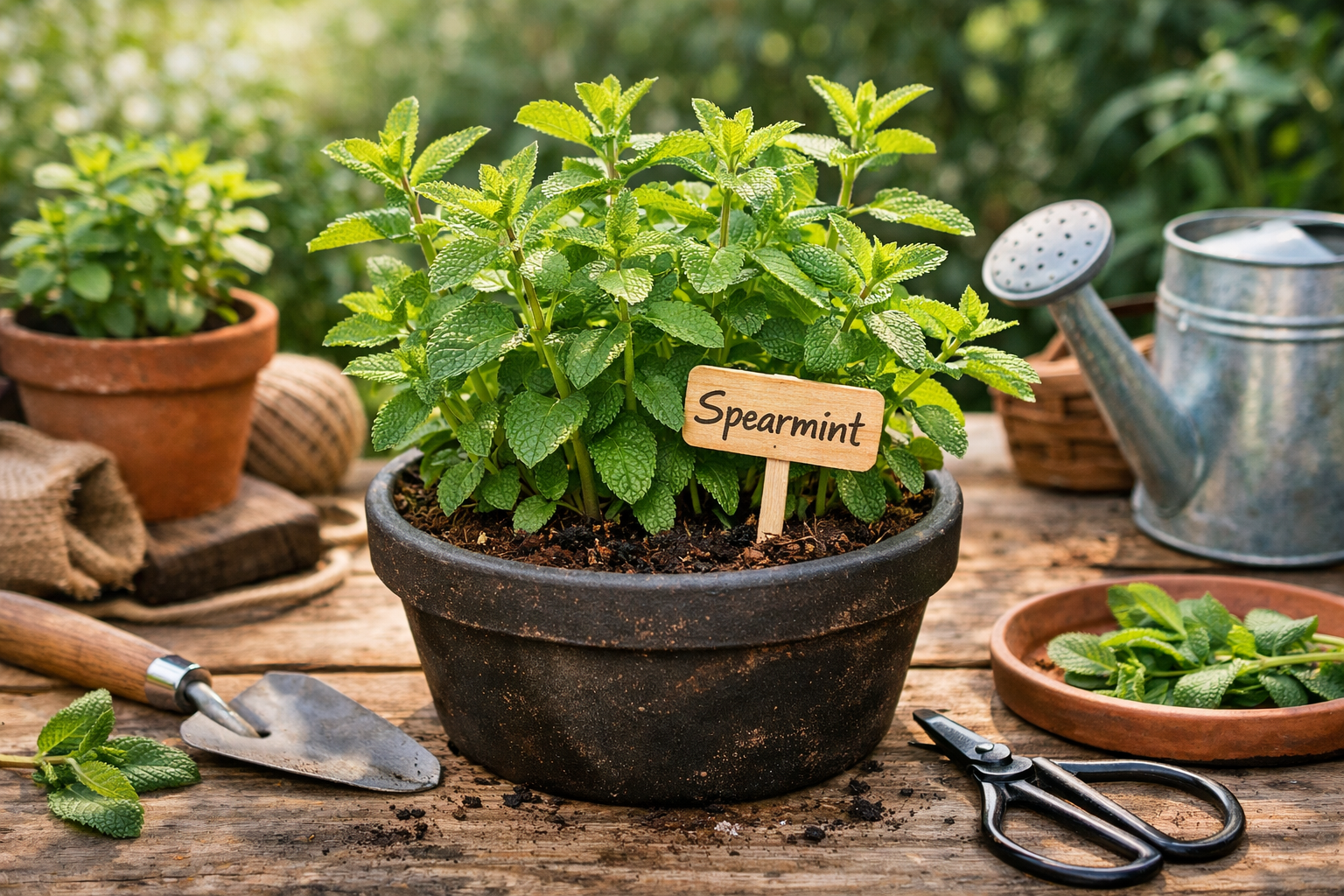
You know the setup. You buy a small spearmint plant, tuck it into a nice-looking pot, give it sun, add water, and expect an easy kitchen herb. Two weeks later it is either floppy and pale or trying to crawl out of the container like it pays rent there.
If you want to know how to grow spearmint in a pot, the short answer is this: put one plant in a container with drainage, use a loose potting mix, give it bright light or morning sun, keep the soil evenly damp rather than soaked, and trim it often. That gets you 80 percent of the way there.
The other 20 percent is why people get stuck. A tiny pot dries too fast. A west-facing patio cooks the roots. An indoor windowsill looks bright to you but not to mint. And once the roots pack the pot, the plant starts acting needy in a hurry.
That’s the tension with spearmint. It is easy, but only after you set up the container so the plant has some breathing room.
- How big the pot should be, and why size changes everything
- Where to place spearmint indoors or outside
- How to water without guessing or following a calendar
- How to prune for fuller growth and better flavor
- How to spot root crowding before the plant goes downhill
- How to fix the five container problems that trip up most beginners
What to check first
| If your spearmint looks like this | Most likely cause | Check this next |
|---|---|---|
| Long, floppy stems with small leaves | Not enough light | Move it to brighter light and trim above leaf nodes |
| Yellow leaves and soggy soil | Poor drainage or overwatering | Drainage holes, potting mix, and pot weight after watering |
| Crispy edges or sudden wilt in hot weather | Too much heat or the pot is drying too fast | Afternoon sun exposure, wind, and pot size |
| The pot dries out almost daily | Root crowding or a container that is too small | Slide the root ball out and look for tight circling roots |
| Lots of stems, weak minty taste | Flowering or tired old growth | Pinch flower buds and cut back for fresh shoots |
How to Grow Spearmint in a Pot Without Letting It Take Over
Spearmint belongs in a pot for a very practical reason: it spreads hard and fast. The University of Maryland Extension advises growing mint in containers because it can quickly overrun a garden bed. That is not garden folklore. Mint sends out runners, fills open soil, and keeps going.
In a container, you get control. You also get better leaf quality, easier harvesting, and far less regret.
Use one healthy spearmint plant per pot. Start with a container that drains. Fill it with a loose potting mix made for containers. Place it where it gets bright light and, outside, where morning sun is easy but harsh late-day heat is not baking the leaves. Then keep the soil evenly damp and pinch the plant often so it grows into a mound instead of a tangled mop.
That is the broad answer. The useful answer is more specific:
- If you garden on a hot balcony, lean toward morning sun and some afternoon shelter.
- If you grow spearmint indoors, the brightest window matters more than the room looking “light.”
- If the pot is tiny, watering gets fiddly fast.
- If the roots have filled the container, the plant will dry out much faster than it did a month ago.
Note: If you are wondering whether mint is actually as easy as people say, this guide pairs well with Is Mint Easy to Grow? The No-Fuss Method That Keeps It Lush (Not Invasive). The short version: yes, but not in a random pot with random light.
Pick the Right Pot So Spearmint Stays Manageable and Easier to Water
The pot is not just a container. It sets the pace of care.
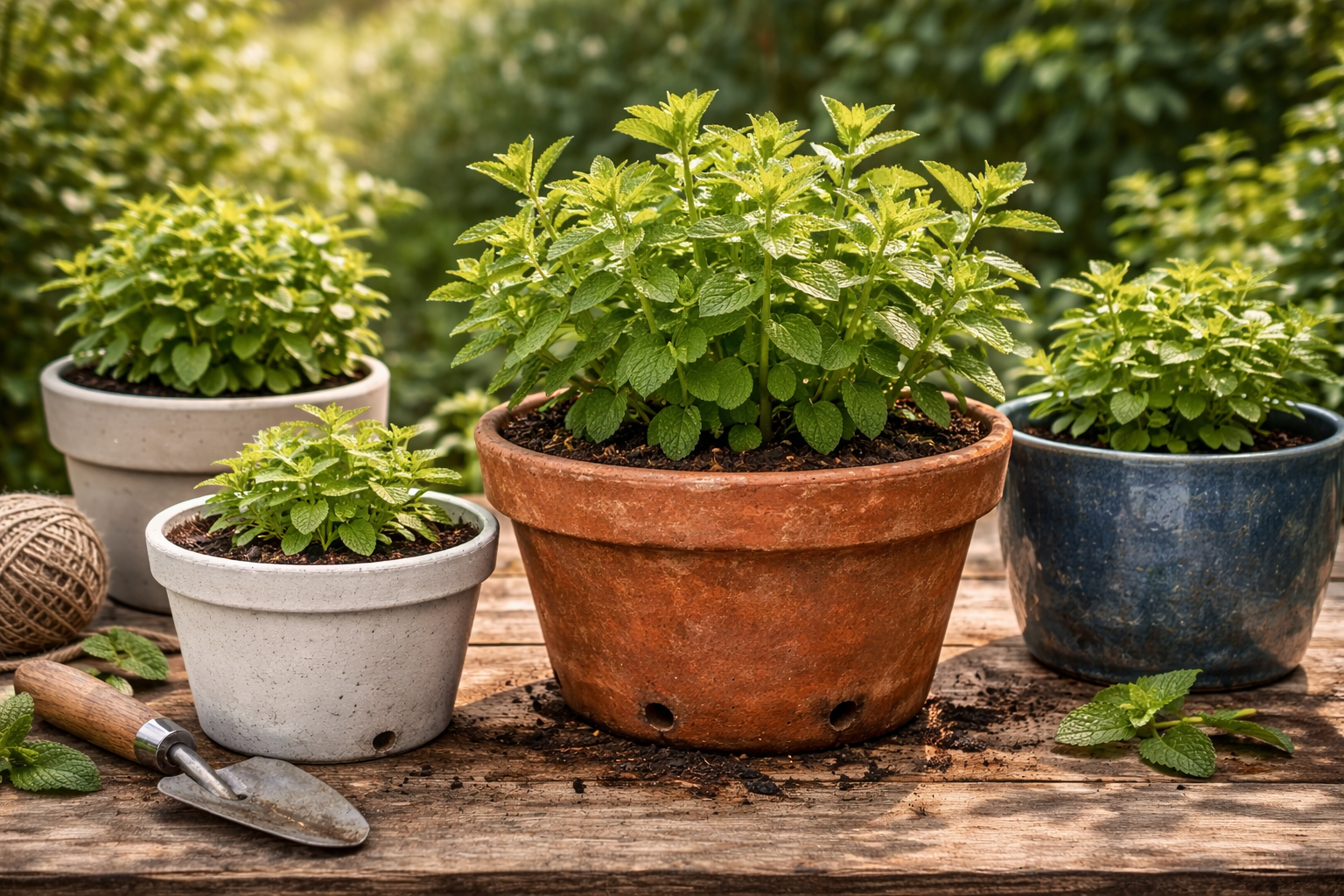
The University of Maryland Extension suggests a container about 14 to 18 inches in diameter for mint. For one spearmint plant, I like the middle of that range because it buys you margin. A 12-inch pot can work, especially for a smaller starter plant, but a 14- to 16-inch pot is calmer. The soil volume holds water longer, roots have room to spread, and the plant stays less dramatic during hot spells.
Small pots are the trap. They look tidy on day one, and then the plant turns into a daily chore.
Here is a simple way to choose:
- 8 to 10 inches wide: fine for a very temporary start, not great for a full season unless you enjoy constant checking
- 12 inches wide: workable for one plant, but watch drying speed in summer
- 14 to 16 inches wide: the sweet spot for most home growers
- 18 inches and up: useful if you want a large, productive plant and have space
Drainage holes are not optional. No hole, no deal. Spearmint likes evenly damp soil, but roots sitting in trapped water go sour fast.
Pot material changes your workload too:
- Terracotta: dries faster. Good in wet or humid spots. More forgiving if you tend to overwater.
- Plastic or resin: holds water longer. Helpful on sunny patios or in dry climates.
- Glazed ceramic: similar to plastic for water retention, but heavier and slower to move.
If your pot sits outside on bare soil, lift it onto a paver, pot feet, or a saucer. Mint has a cheeky habit of sending roots through drainage holes if it gets the chance. That sounds funny until you try to move the pot and discover it has quietly colonized the ground beneath it.
Pro tip: If your patio is hot, windy, and exposed, choose a slightly larger plastic or glazed pot over terracotta. The plant will need less babysitting.
Use a Soil Mix That Holds Moisture Without Staying Swampy
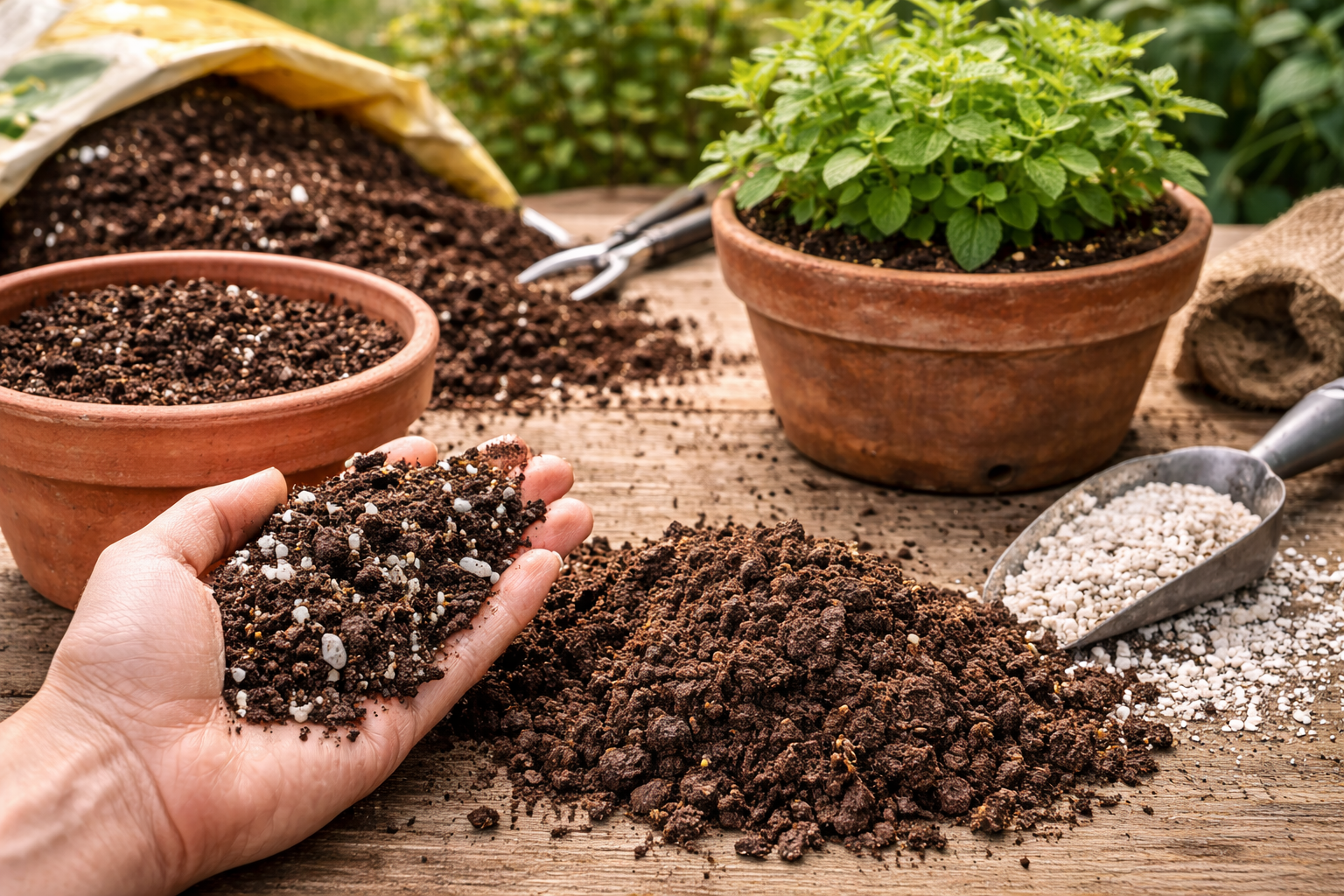
Spearmint likes steady access to water, but it does not want heavy, airless soil pressed around its roots. That is why container potting mix works better than garden soil from the yard.
The reason is physical, not fancy. Potting mix stays lighter in a container. Garden soil compacts. Once that happens, water either runs down odd channels or sits too long in places you cannot see, and roots stop being happy.
Use a general-purpose potting mix for containers. A good one should feel springy and loose in your hands. If it clumps into a dense lump and stays there, skip it.
What you are after is a mix that does three jobs at once:
- holds enough water that the plant does not crash by afternoon
- lets extra water drain out fast
- keeps some air around the roots
If you already have a potting mix that runs a little heavy, you can lighten it with extra perlite. Not a science experiment. Just enough to stop the mix from feeling dense and sticky. You do not need a precise recipe here.
And do not fill the pot with straight compost. That sounds rich and generous. In a container, it often turns into a dense, wet blanket.
For readers growing mint with something else in a large planter, the partner plant matters. Similar watering needs make life easier. If you are weighing that idea, What to Plant With Mint in Container Gardens Without Regret is the next useful read.
Important: If water sits on top of the pot for more than a few seconds before sinking in, the mix is usually too compacted, too dry and peat-heavy, or the roots have packed the pot tight.
Place the Pot in the Right Light for Your Climate, Not Someone Else’s
Light advice for spearmint gets sloppy online because people flatten very different conditions into one rule. Full sun in a mild coastal garden is not the same thing as full sun on a west-facing balcony that reflects heat off concrete all afternoon.
The National Parks Board in Singapore notes that mint grows in full sun to light shade. That sounds broad because it is. Spearmint is flexible. The trick is matching light to heat and watering rhythm.
Here is the useful version:
- Cool or mild climate: 4 to 6 hours of direct sun is usually fine, and more can work if the pot does not dry out too fast.
- Hot climate or exposed patio: morning sun is better. Bright light with some afternoon shelter keeps leaves from scorching.
- Indoors: put it in your brightest window. A dim room with “good ambient light” is usually not enough for sturdy growth.
If the stems stretch and the spaces between leaves get longer, light is too weak. If the leaves bleach, crisp, or wilt by late afternoon while the pot feels too warm to touch, the spot is probably too harsh for that container setup.
This is where people lose the plot a bit. They keep asking, “full sun or partial shade?” The better question is, “what does this plant look like by 3 p.m. in my space?”
For indoor growers, a south-facing or west-facing window often works best, though west exposure can get hot in summer. East-facing windows are gentle and often reliable. North-facing windows usually fall short unless the room is unusually bright. If you want help sorting window direction by plant type, Best Facing Window for Plants? The Right Answer by Plant Type fills in that piece.
Note: Rotate indoor pots every week or so. Mint leans hard toward light, and a quarter turn keeps the plant fuller.
Water Spearmint by Soil Feel and Pot Behavior, Not by the Calendar
This is the part people try to simplify into “water every three days” and then wonder why the plant ignores the schedule.
The better rule starts with your finger. Check the top inch of soil. If it feels dry, water thoroughly until excess runs out of the drainage holes. If it still feels damp, wait and check again later.
That baseline lines up with common container herb guidance, but it becomes far more useful once you watch the pot itself.
Pay attention to these patterns:
- The pot gets very light by the next day: either the weather is hot and windy or the roots have packed the pot tight.
- The top dries but the lower mix stays soggy: drainage is poor or the mix has compacted.
- The plant droops while the soil is still wet: that is not a cue to add more water. Check the roots and drainage.
- The plant perks up fast after watering: thirst was likely the issue.
Wind matters more than many beginners expect. A breezy balcony can dry a spearmint pot much faster than a sheltered porch with the same sun. Pot material matters too. So does root crowding.
Here is the if/then version I actually use:
- If the top inch is dry and the pot feels light, water deeply.
- If the plant needs water far more often than it used to, slide the root ball out and check for crowding.
- If the soil stays heavy and cold-feeling for days, cut back watering and inspect drainage.
- If leaves droop in afternoon heat but the plant recovers by evening, heat stress is more likely than true thirst.
Quick diagnosis of watering problems
| Symptom | Likely cause | Next step |
|---|---|---|
| Wilts fast, then perks up after watering | Too dry | Water deeply and check more often |
| Yellow lower leaves, slow growth, heavy pot | Too wet | Reduce watering and inspect drainage |
| Needs water much more often than before | Rootbound or pot too small | Repot or divide |
| Afternoon droop in heat, then recovery at dusk | Heat stress | Shift to gentler light or buffer the pot from heat |
The main mistake here is watering by guilt. The plant looks sad, so you water. Then you water again because it still looks sad. That spiral ends badly.
Prune and Harvest in a Way That Makes the Plant Fuller, Not Scraggly
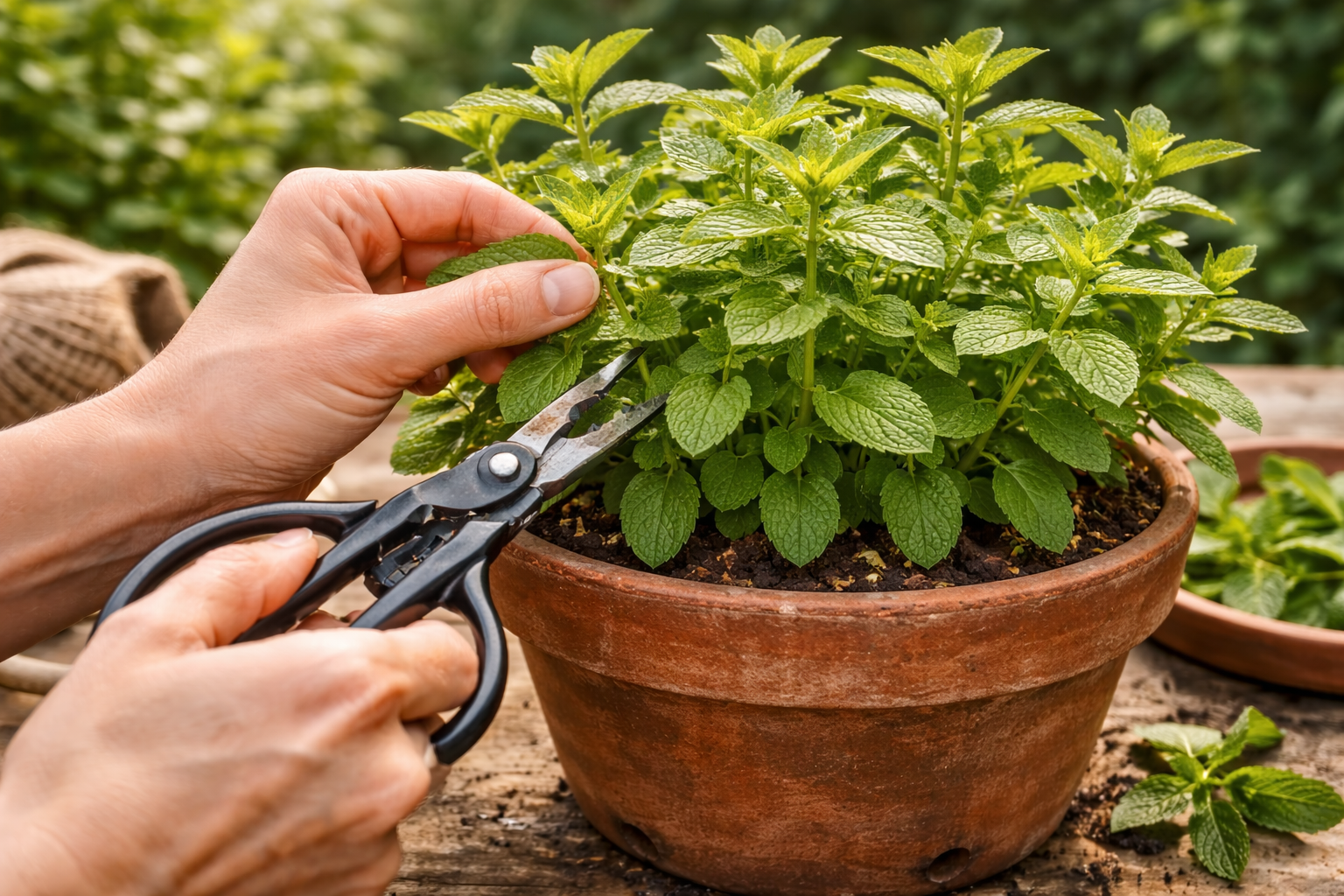
Spearmint responds well to cutting. That is one of its best traits. The Royal Horticultural Society recommends regular harvesting to keep mint productive, and that matches what you see in a pot: trim often, and the plant branches. Ignore it for weeks, and you get long stems with leaves mostly at the ends.
Cut just above a pair of leaves or a leaf node. That is where new side shoots tend to break. Each careful snip can turn one stem into two, and then two into four. It is not magic. It is just how the plant is built.
For a young plant, start with light pinching. Once it fills out, you can take longer sprigs for tea, cooking, or drying. A decent rule is to avoid stripping huge chunks from a weak plant. If it is still getting established, go easy.
Flower buds are another turning point. The University of Illinois Extension notes that removing flower stalks helps keep leaf production going. Flavor often tastes better before flowering or right as buds form. Once a mint plant throws energy into flowers, the leaves can get a little rougher and less punchy.
I treat spearmint like hair that behaves best with regular trims. Small, steady cuts keep it neat. One giant hack-back after neglect works, but the plant looks annoyed for a bit.
Pro tip: If you only pluck the biggest top leaves and leave the stems behind, you slowly train the plant into a lanky shape. Cut stems, not just leaves.
Repot, Divide, or Refresh the Plant Before the Pot Turns Into a Root Brick
This part sneaks up on people because spearmint often looks fine until it suddenly doesn’t.
The Royal Horticultural Society advises lifting and replanting mint every few years to keep it healthy. In a container, I would trust the plant’s behavior before the calendar. Some pots fill fast. Some take longer. The visible clues are what matter.
Check for these signs:
- water runs through the pot very fast
- the plant wilts sooner than it used to
- growth slows after harvesting
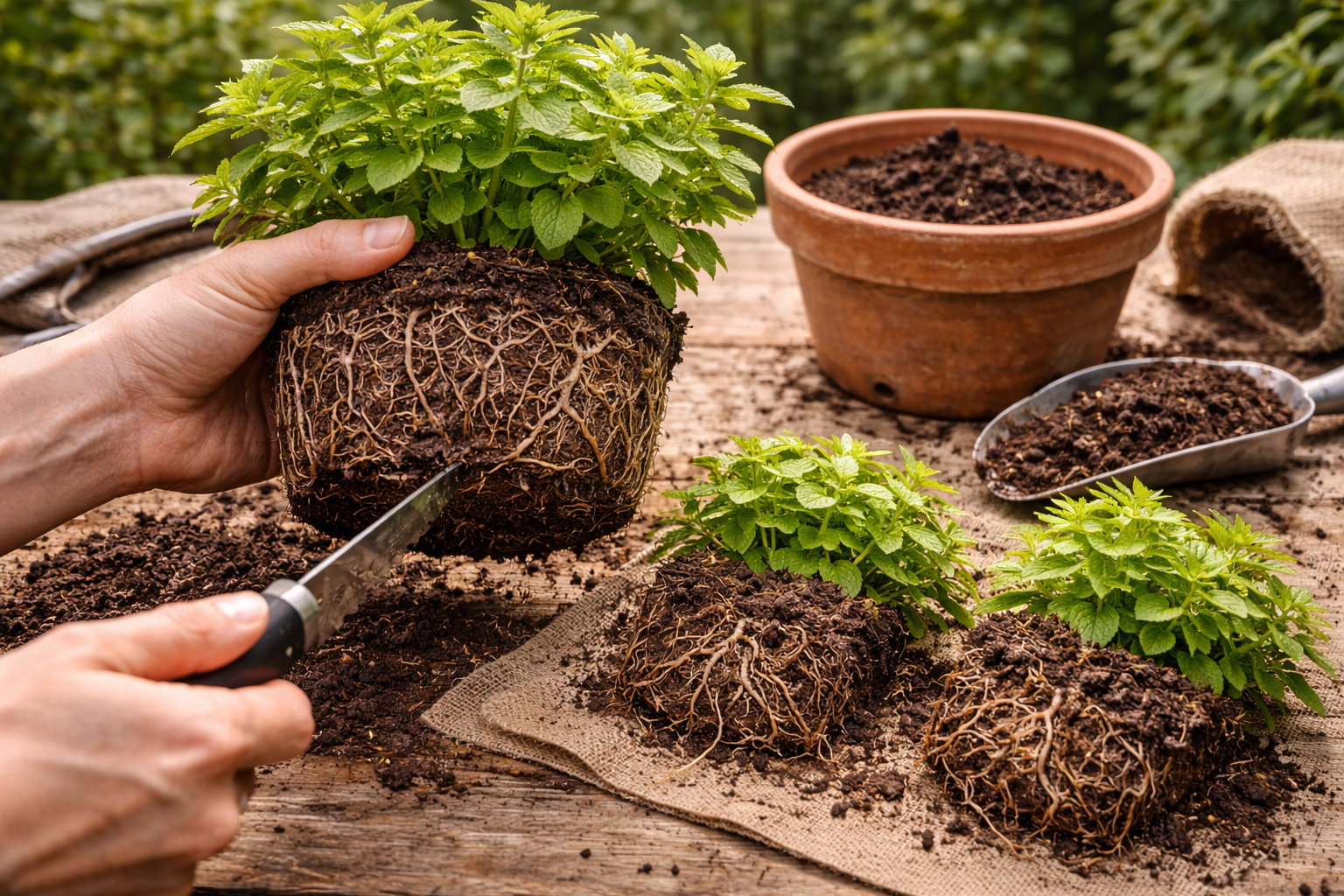
- roots circle densely around the outside when you tip the plant out
- the soil level seems to disappear because roots have taken over the space
Then make a choice.
Divide the plant if you want to keep the same pot size. Lift the root ball out, cut it into sections with healthy roots and shoots, replant one section in fresh mix, and share or compost the rest. This is often the best move for mint because it resets the plant without letting it become a monster.
Move up one pot size if you want more growth and more harvests. Do not leap from a modest pot to a huge one just because you can. One size up is easier to water well.
Refresh the mix if the soil has broken down and feels dense. Old potting mix loses structure. Spearmint notices.
Many gardeners reach for fertilizer when mint starts acting tired. Sometimes that helps a bit. Quite often, though, the real problem is a root-packed pot that dries too fast and has no fresh mix left to work with.
Important: If the plant is healthy but constantly thirsty, do not assume it needs “more food.” Check the roots first. A crowded pot is a far more common culprit.
Fix the 5 Problems That Make Potted Spearmint Look Harder Than It Is
Most spearmint trouble in containers comes back to four things: light, water, pot size, and airflow. Once you know what each problem looks like, the fix is usually pretty plain.
1. Leggy growth with long bare stems
This is usually weak light. The plant stretches, leaf spacing gets wider, and the whole thing looks floppy rather than dense. Move it to a brighter spot, then cut stems back above leaf nodes so it branches. If the plant is indoors, brighter window placement matters more than almost anything else.
2. Yellow leaves in a pot that stays heavy
That points to too much water, poor drainage, or a mix that has gone dense. Let the top layer dry a bit more between waterings, confirm the drainage holes are open, and repot into a looser mix if needed. Yellow leaves with a sour smell from the pot are a giant clue that roots are not enjoying life down there.
3. Brown or crispy leaf edges
That often means heat stress or rapid drying, not a mysterious disease. Check afternoon sun, reflected heat, wind, and container size. A black plastic pot on hot paving can roast the root zone faster than people expect. Shift the plant to gentler light or move the pot where it is less exposed.
4. White film or mildew-like growth
Mint can get fungal issues if growth is crowded and air barely moves. Thin the stems, avoid keeping foliage wet for long stretches, and stop cramming the pot into a dead-air corner. Outdoor plants usually improve with better spacing. Indoor plants need more airflow around them.
5. Weak flavor
Older growth is often less exciting. Flowers pull energy away from leaves. So trim off flower spikes, harvest younger shoots, and keep the plant pushing fresh growth. Overfeeding can also give you a lot of leafy bulk without much punch.
If you use anything to treat pests or fungal problems on edible herbs, stick to products labeled for edible plants and follow the label exactly. That is not me being fussy. It is just common sense with herbs you plan to eat.
If this, check that
- If your spearmint is tall and floppy, check light first.
- If it is yellow and sad, check drainage before you add fertilizer.
- If it dries out absurdly fast, check roots before you blame the weather.
- If flavor is weak, check for flower spikes and tired old growth.
FAQ
Can spearmint grow indoors all year?
Yes, if it gets enough light. Indoors, the common failure is not temperature. It is weak light and stale air. Put spearmint in the brightest window you have, rotate the pot now and then, and trim it often so it stays compact.
Should I grow spearmint from seed, cuttings, or a starter plant?
A starter plant is the easiest route. Cuttings also work well if you already have healthy spearmint. Seed is slower and less convenient for most home growers, especially if your goal is a quick, productive pot on a patio or windowsill.
Can I grow spearmint with other herbs in the same pot?
You can, but it is often more trouble than it looks. Spearmint spreads, drinks steadily, and can crowd out slower herbs. It usually behaves better on its own unless the container is large and the companion plants like similar light and watering.

Michael Rowan is the founder and lead writer at The Garden Playbook. He has spent 10+ years growing plants across a range of settings — from indoor houseplants and container gardens to raised beds and in-ground plots — adapting methods to different light levels, seasons, and growing conditions.
Michael focuses on practical, experience-based guidance grounded in fundamentals: soil health, watering strategy, plant nutrition, pruning and propagation, and integrated pest management (IPM). His work aims to help readers diagnose common problems (such as yellowing leaves, stunted growth, or pest pressure) and apply straightforward solutions that are realistic for home gardeners.
At The Garden Playbook, Michael develops tutorials and plant guides using a consistent process: documenting real outcomes where possible, explaining the “why” behind each step, and verifying higher-risk topics (such as plant toxicity or pest treatment options) against reputable horticultural references.