
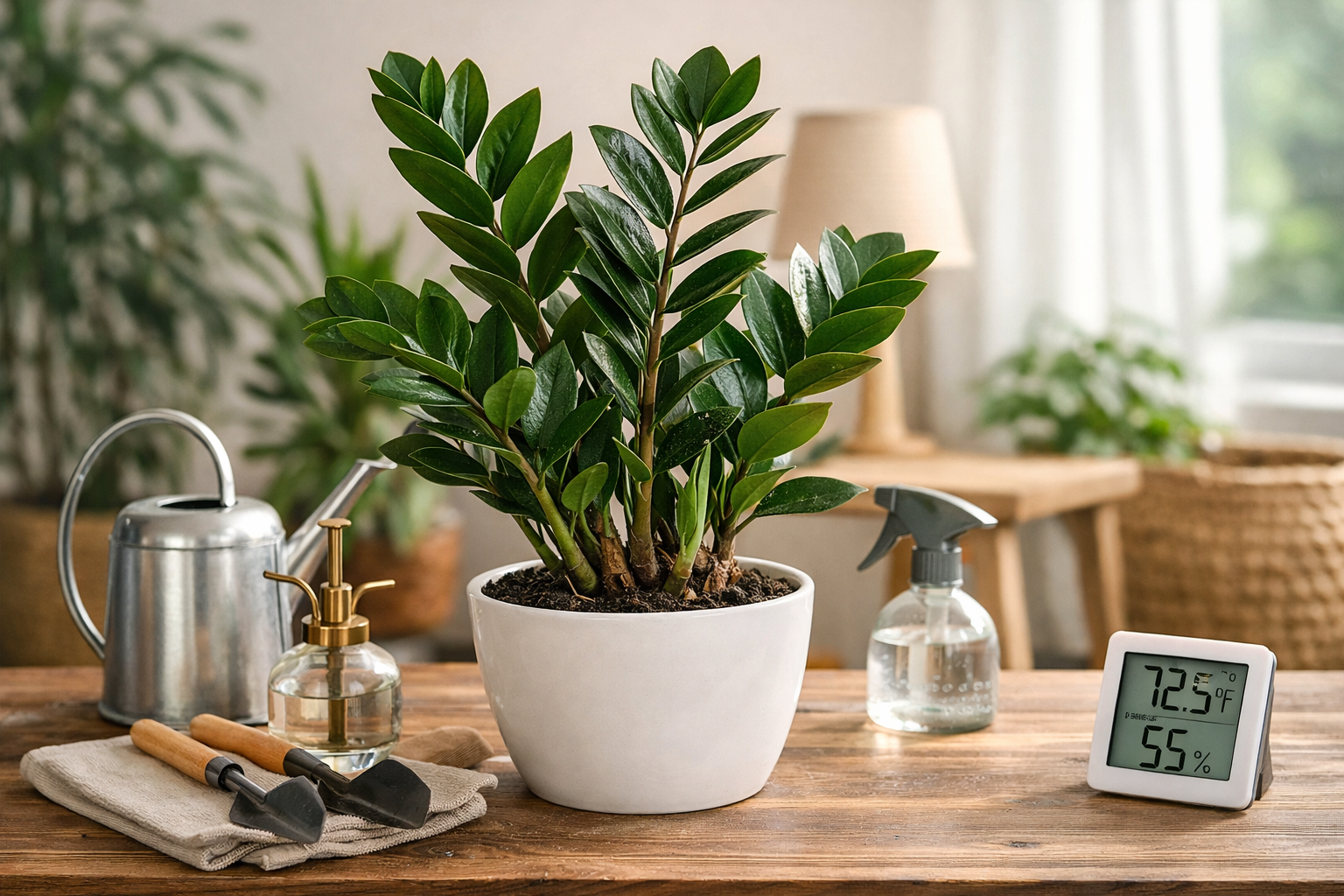
You bought a ZZ plant because everybody says the same thing: it thrives on neglect. Then a few leaves turned yellow, the soil stayed wet for ages, and now you’re side-eyeing the pot like it lied to you.
Here’s the direct answer to how to care for zz plant indoors: give it bright to moderate indirect light, plant it in a pot with drainage, let the soil dry well between waterings, and resist the urge to fuss. That’s the core. But that stock answer falls apart fast if your plant sits in a dim office, a giant decorative pot, or a room that barely gets winter sun.
The real job is reading the setup, not memorizing a watering calendar.
I’ve kept ZZ plants in bright living rooms, dull hallways, and one embarrassingly dark corner that turned a sturdy plant into a slow-motion sulk. The pattern is pretty consistent. Most problems start when people treat “tough plant” like “random care works.”
- How much light a ZZ plant actually wants indoors
- How to water it without sliding into root rot
- What pot and soil choices change the whole game
- How to read yellow leaves, leaning stems, and slow growth
- What to change first in winter, low light, or busy households
What to check first (simplified)
| If you see this | Most likely cause | Check this next |
|---|---|---|
| Yellow leaves and damp soil | Too much water or poor drainage | Drainage hole, pot size, soggy mix |
| Leaning or stretched stems | Not enough usable light | Distance from window, room brightness |
| Wrinkled stems and bone-dry mix | Plant got too dry for too long | Water deeply, then let it drain |
| Pale patches or scorched leaves | Too much direct sun | Move it back from harsh afternoon light |
The 60-Second Answer: What a ZZ Plant Needs Indoors to Stay Healthy
A ZZ plant, or Zamioculcas zamiifolia, stores water in thick underground rhizomes. North Carolina State Extension describes those swollen rhizomes as part of why the plant handles dry spells so well, which explains a lot about its care needs from the start. That storage habit is why the plant wants a dry-down between waterings instead of constant damp soil.
So the short version is simple. Put it where it gets decent indirect light. Use a fast-draining potting mix. Water deeply, then wait until the mix dries well before watering again. Keep it in a container with a drainage hole.
That last part matters more than people think.
A ZZ plant in a small nursery pot near an east-facing window can dry in a reasonable rhythm. The same plant dropped into a big cachepot with no drainage and parked in a dim room can stay wet for way too long. Same species. Totally different outcome.
Note: If you only keep one rule in your head, keep this one: don’t water a ZZ plant on a fixed schedule if the soil is still damp.
Place It in the Right Light and You Solve Half the Care Problems
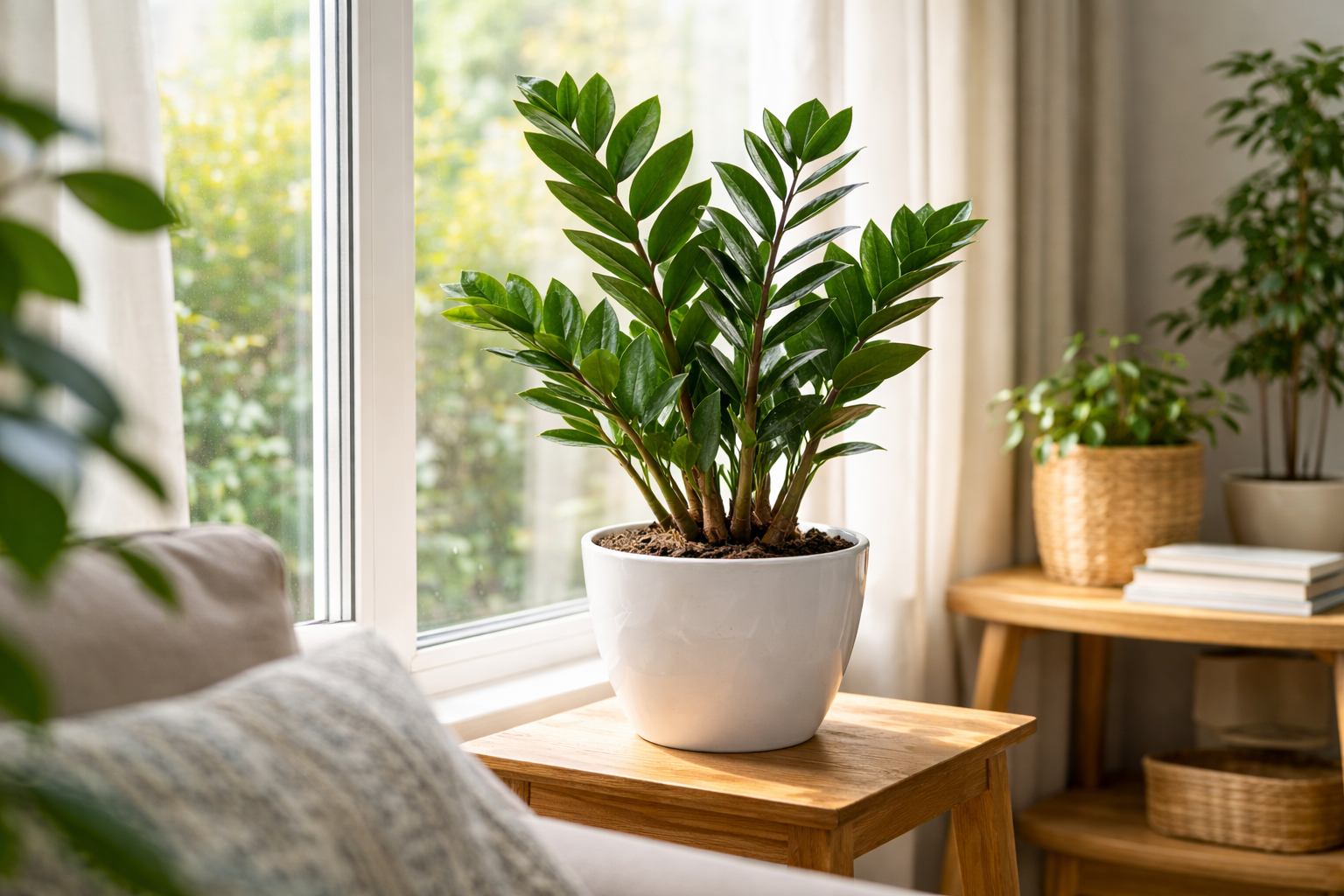
Most guides say the ZZ plant tolerates low light and prefers bright indirect light. Both are true. The problem is that people read those two lines as if they mean the same thing.
They don’t.
Low light means survival. Bright indirect light means better shape, steadier growth, and less weird stretching. The Sill’s care guide puts it plainly: the plant can handle lower light, but it grows best with bright, indirect exposure. That’s the distinction that clears up a lot of confusion. You can see that pattern in most healthy indoor ZZ plants. The ones near usable light stay tighter and fuller.
For placement, a few setups usually work well:
- Near an east-facing window with gentle morning light
- A few feet back from a south- or west-facing window, where direct sun is softened
- In a north-facing room, if the room itself is still fairly bright
- In a lower-light office, if you’re fine with slower growth and longer gaps between waterings
If stems start leaning hard toward a window, that’s your cue. If new growth is thin and stretched, same story. Move the pot closer to indirect light and then wait. ZZ plants don’t react overnight, so don’t ping-pong the plant around every few days.
Harsh direct afternoon sun is the opposite problem. Leaves can bleach or scorch, especially right against hot glass. Morning sun is often fine. Angry late-day sun in summer, not so much.
If you’re still not sure what “bright indirect” looks like in an actual room, this guide on the best window direction for houseplants helps translate vague light advice into something you can use.
Pro tip: Rotate the pot every few weeks if the plant leans toward one side. Not because it “needs” rotating as some ritual, but because indoor light is lopsided and plants follow it.
Water Deeply, Then Wait Long Enough That the Roots Can Breathe
This is where most people wreck an easy plant.
BBC Gardeners’ World points to overwatering as the main danger with ZZ plants, and that’s dead right. Root rot shows up fast in a plant that sits wet, especially indoors where soil dries slower than people expect.
Use this rhythm instead:
Step 1. Check the soil and avoid false alarms.
Stick a finger into the mix, then go deeper than the top crust if you can. The top inch can feel dry while the lower half is still wet. If the pot feels oddly heavy for its size, that’s another clue that water is hanging around.
Step 2. Water thoroughly and wet the whole root zone.
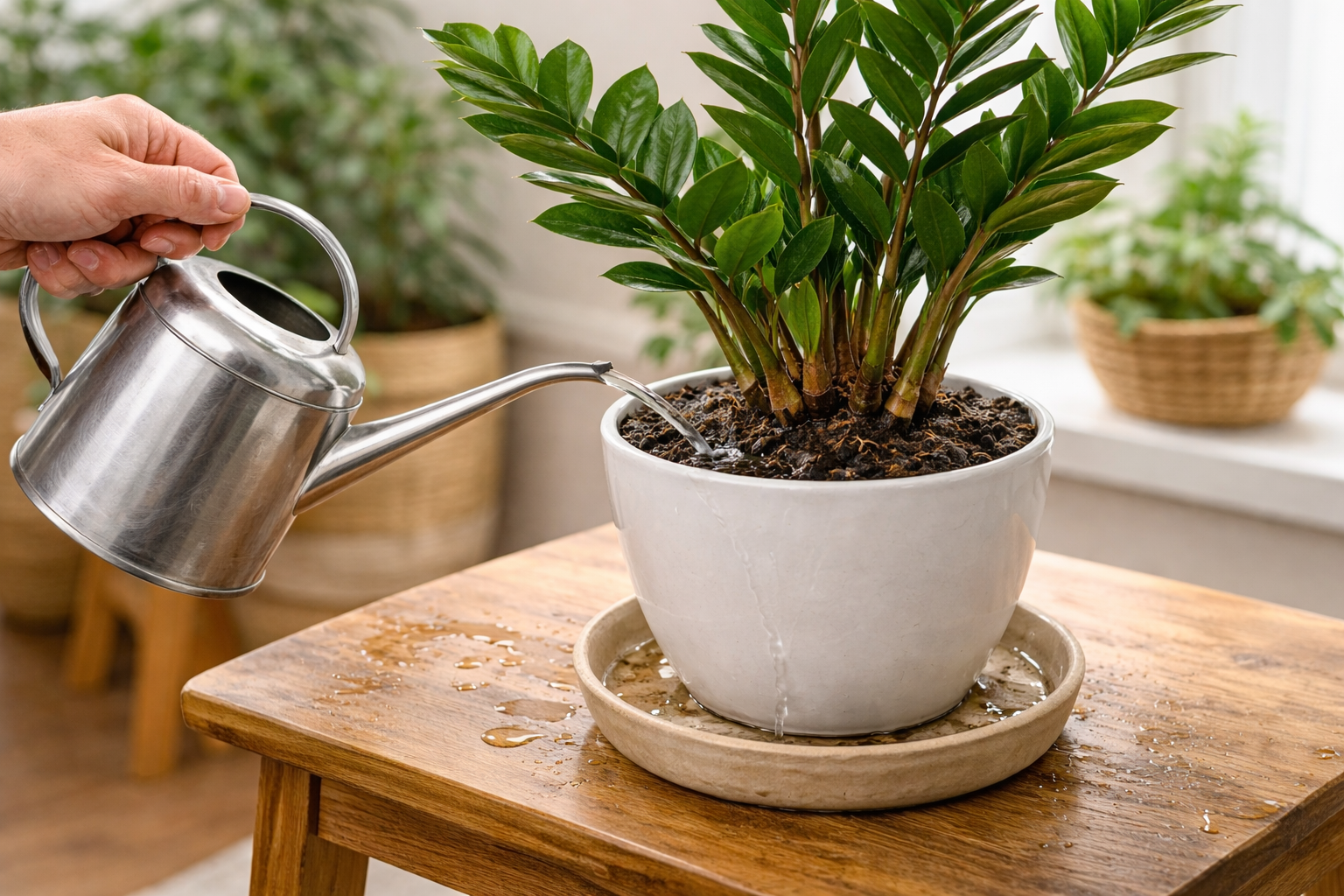
When it is time, water until excess runs from the drainage hole. A quick sip on one side of the pot doesn’t help much. You want an even soak.
Step 3. Let excess water leave the pot.
Empty the saucer or decorative outer pot. Sitting in runoff is just slow overwatering by another name.
Step 4. Wait for a real dry-down.
In a bright room during active growth, that can land around every 2 to 4 weeks. In low light or winter, it often stretches much longer. The calendar is a rough hint, not the boss.
A ZZ plant isn’t a thirsty fern in disguise. Its rhizomes are more like backup batteries. They store water, so the plant can coast. That’s why frequent light watering is such a bad fit. You keep the mix damp without giving the roots the air gap they need.
Quick watering checklist
- The mix feels dry well below the surface
- The pot feels lighter than it did after the last watering
- There is no cool dampness near the bottom of the pot
- You can water fully and let it drain right away
If your question is “how often should I water my ZZ plant indoors?” the honest answer is this: water when the soil has dried well, and that timing changes with light, pot size, season, and mix. That’s less neat than a schedule, but it’s the answer that keeps the plant alive.
Use a Pot and Soil Setup That Dries on Time, Not One That Stays Soggy
A lot of indoor plant trouble starts one layer below the leaves.
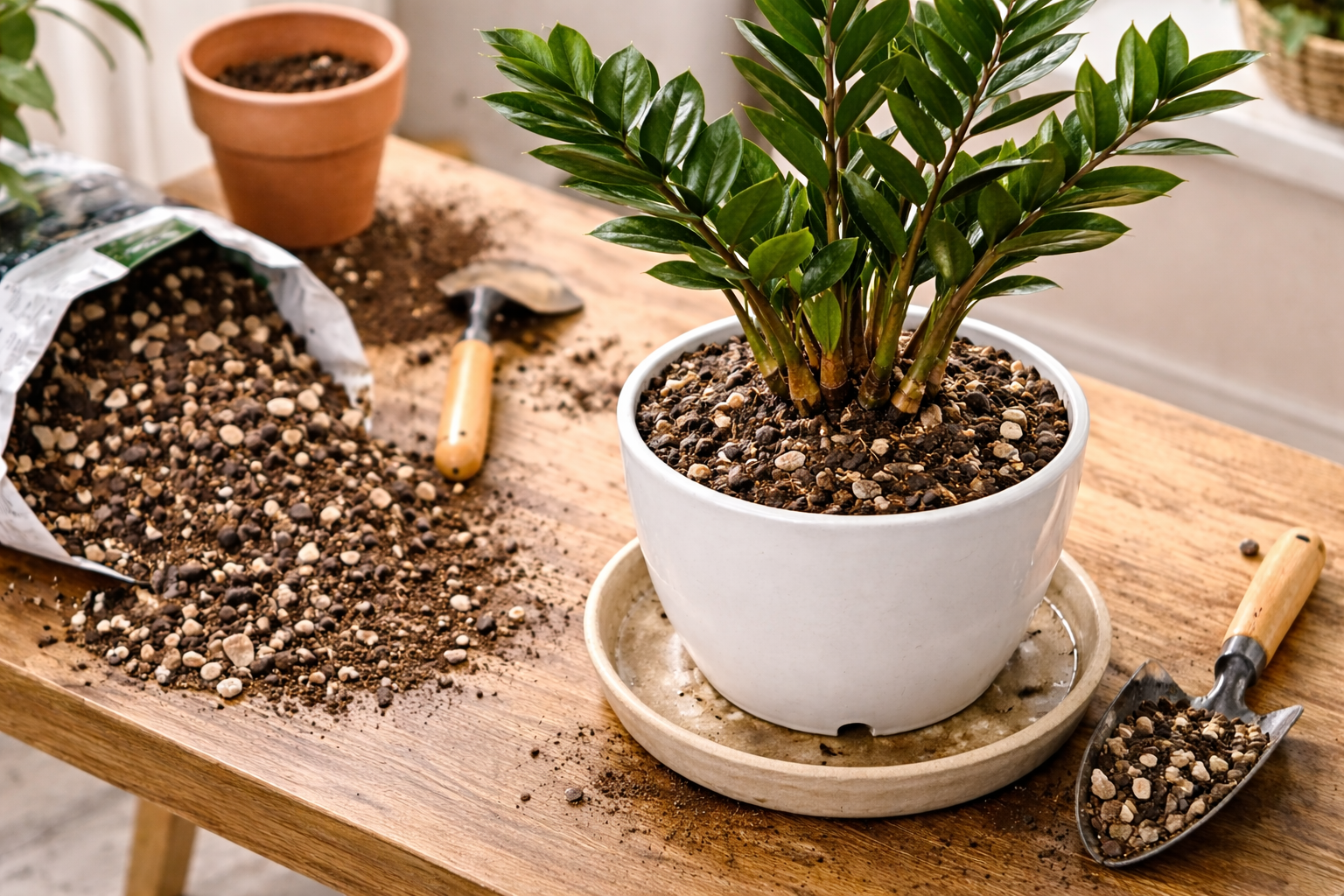
Scotts recommends a well-draining potting mix and a container with drainage, and that lines up with what works in homes. The point isn’t chasing a magic branded mix. The point is giving the roots air between waterings.
Good ZZ plant soil is loose enough that water moves through it and the pot doesn’t stay swampy for ages. Standard indoor potting mix can work if it drains well. Chunkier houseplant or aroid mixes also work if they don’t dry into a brick. What you’re after is balance, not a recipe cult.
Pot size matters just as much. Maybe more.
An oversized pot acts like a wet jacket wrapped around the roots. There’s simply more soil than the plant can use, so it stays wet longer. For a drought-tolerant plant with rhizomes, that’s a bad deal. If you repot, go just 1 to 2 inches wider than the current pot. That’s usually enough.
I’ve seen this one a bunch: a small ZZ plant gets moved into a large statement pot “so it has room to grow,” then the owner follows a normal watering routine and the plant starts yellowing a month later. The plant didn’t need more room. It needed a pot that could dry on time.
Note: Decorative outer pots are fine if the ZZ plant is still sitting in a nursery pot you can lift out and drain. No drainage hole plus indoor shade is a rough combo.
Feed Lightly, Repot Infrequently, and Stop Trying to Speed Up a Naturally Slow Plant
Better Homes & Gardens describes ZZ plants as slow growers indoors, and that’s exactly how they behave in most homes. They often grow in spurts instead of in a steady stream. So if your plant isn’t pumping out new stems every week, that is not a red flag by itself.
Fertilizer is where people get twitchy. They see slow growth and think the plant needs a boost. Usually it needs better light, or just patience.
A light feeding once or twice during spring and summer is enough for many indoor ZZ plants. The Spruce notes that heavy feeding isn’t needed, which fits how the plant actually behaves indoors. More fertilizer won’t fix low light or soggy soil. It just adds another variable.
Repotting is the same story. Don’t do it on a schedule because a blog said “every year.” Repot when the plant is clearly crowded, the roots are circling hard, the soil is collapsing, or watering has become awkward because the pot is packed out. If the plant is stable and the mix still behaves well, leave it alone.
ZZ plants like a little peace. That’s part of their charm.
Diagnose Yellow Leaves, Wrinkles, and Leaning Stems Before You Change Anything
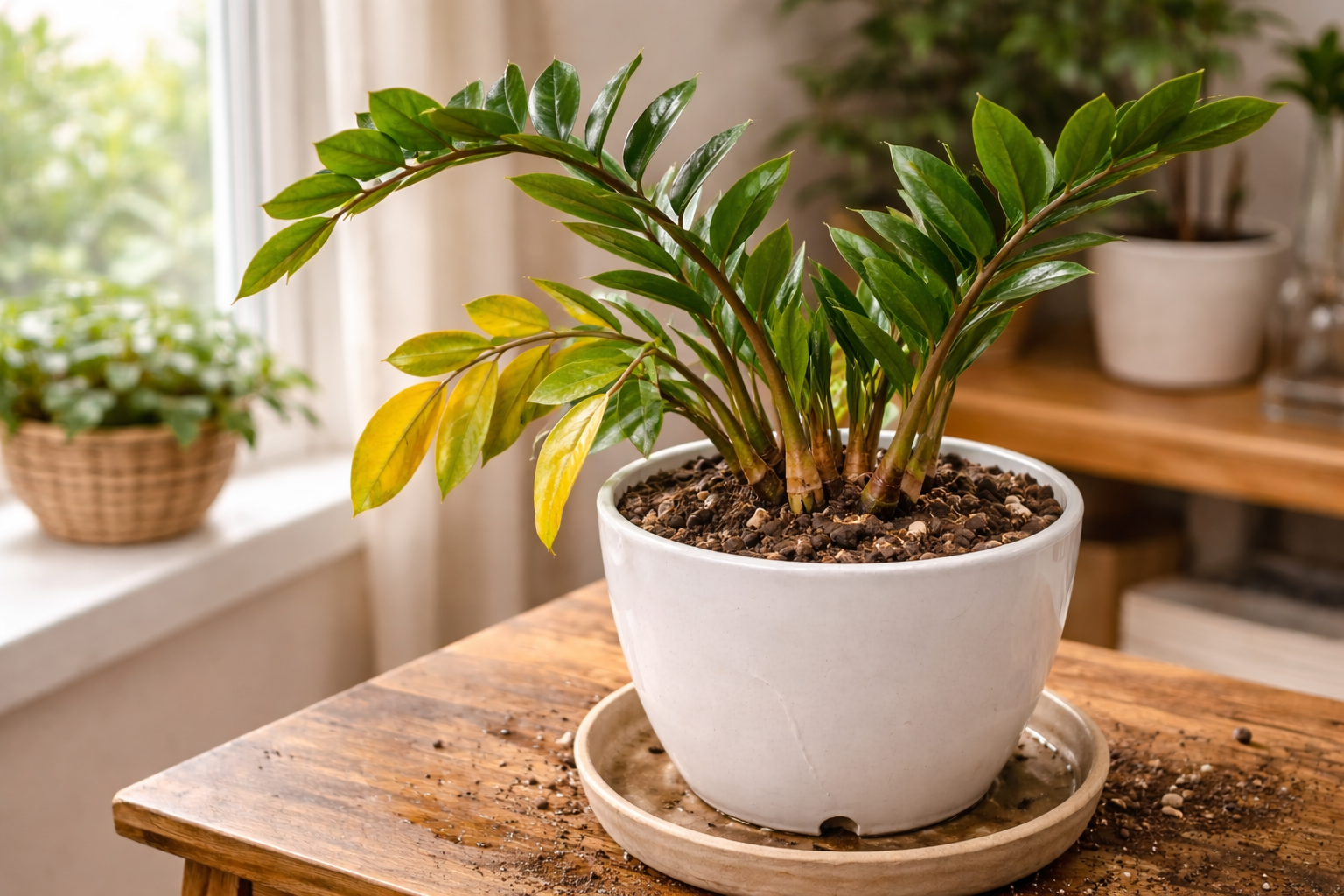
This is the section that saves plants.
Leaf problems look dramatic, but the fix gets easier once you match the symptom to the setup. Don’t change three things at once. Check the soil, check the light, and check the pot first.
| Symptom | Most likely cause | What to do next |
|---|---|---|
| Yellow leaves with damp soil | Overwatering or poor drainage | Cut back watering, inspect roots, check pot and mix |
| Wrinkled stems or drooping with dry soil | Underwatering | Water deeply, then resume normal dry-down cycle |
| Leaning or stretched growth | Low light | Move closer to bright indirect light |
| Bleached or scorched patches | Too much direct sun | Move back from the window or filter the light |
| Fungus gnats around the pot | Mix staying wet too long | Let the soil dry more between waterings and review pot setup |
One yellow leaf on an older stem isn’t always a crisis. Plants age out old growth. That’s normal. A wave of yellowing across the plant, plus wet soil, is different. That points back to the roots.
I’ve also seen people react to yellow leaves by watering more because yellow looks dry-ish in their head. That’s the trap. If the mix is still wet, more water is the last thing the plant needs.
Pro tip: Change one variable, then give the plant time. Move it to better light or fix the watering rhythm first. Don’t repot, feed, trim, and relocate all in the same weekend.
Adjust Your Care for Winter, Low-Light Rooms, and Busy Households
Indoor care changes with the room. That’s why fixed advice can feel weirdly wrong even when the basics are right.
In winter, short days slow growth and slow drying. A ZZ plant that needed water every few weeks in summer can sit much longer in colder months. Watch for cold drafts near windows, and keep it away from direct heat blasts that make the room harsh without actually making the soil dry in a healthy way.
In low-light rooms, the plant can still live there. Just don’t expect much movement. Water less often, because the plant is using less energy and the mix is drying slower. Low light and a large pot is one of the sneakiest failure combos with ZZ plants.
Busy households often do well with ZZ plants for a simple reason: forgetting a watering is usually safer than hovering. What causes trouble is the rebound. Someone notices the plant got ignored, then pours in a big drink while the lower soil is still damp. That “catch-up” watering can do more harm than the original neglect.
If you move your plant outside in warm weather, don’t treat that like a tiny detail. Outdoor light, rain, and temperature can change the whole care rhythm. This quick guide on whether a ZZ plant can live outside is handy if that’s your next question.
Handle Pets, Propagation, and Cleaning Without Turning It Into a Big Project
The American Society for the Prevention of Cruelty to Animals lists ZZ plant as toxic to cats and dogs because of insoluble calcium oxalates. That means it’s smart to keep the plant out of chewing range, especially in homes with curious pets or kids.
This isn’t a panic item. Just a placement item.
If you’re dividing or repotting the plant, gloves are a good idea if your skin is touchy. Propagation is possible, though division is much faster than waiting on leaf or stem cuttings to do their slow thing. For most people, propagation is a side quest, not the main event.
Cleaning is low effort and worth doing. Dust builds up on those glossy leaves. Wipe them with a soft damp cloth now and then so the plant can use the light it gets. No leaf shine sprays. No weird kitchen hacks. Just clean the leaves and move on.
Follow This Simple ZZ Plant Care Routine and You’ll Avoid Most Problems
If you want a routine that works without turning plant care into homework, use this one.
Each week:
Check the soil before you even think about watering. Glance at the leaves for yellowing or sun scorch. Rotate the pot if the plant is leaning toward the window.
Each month:
Wipe dust from the leaves. Look at the drainage hole and saucer. Notice whether the room’s light has changed with the season.
Each season:
Water less in darker months. Feed lightly, if at all, in active growth. Repot only if the plant has clearly outgrown its container or the mix has gone off.
Fast guideline to save you some time
- If the soil is wet and leaves are yellow, stop watering and check drainage.
- If stems stretch, move the plant closer to indirect light.
- If the pot is huge for the plant, expect slower drying and more risk.
- If growth is slow but the leaves look good, don’t “fix” it with extra fertilizer.
- If you’re unsure, do less first. ZZ plants usually prefer that.
That really is the heart of it. A ZZ plant indoors wants a decent spot, a dry-down between waterings, and a keeper who doesn’t panic.
FAQ
Can a ZZ plant live in a room with no natural light?
Not for long without help. A ZZ plant tolerates low light, but a room with no natural light at all is different. If the room is truly windowless, you’d need a proper grow light to keep the plant going.
Should you mist a ZZ plant?
No, not as a normal care step. ZZ plants handle average indoor humidity well, so misting doesn’t solve much. A better use of your time is checking the soil and wiping dust from the leaves.
Why is my ZZ plant not growing?
Slow growth is normal, especially in low light or winter. If the plant looks healthy, the most likely reason is that it isn’t getting enough usable light for faster growth. Check placement before you reach for fertilizer.

Michael Rowan is the founder and lead writer at The Garden Playbook. He has spent 10+ years growing plants across a range of settings — from indoor houseplants and container gardens to raised beds and in-ground plots — adapting methods to different light levels, seasons, and growing conditions.
Michael focuses on practical, experience-based guidance grounded in fundamentals: soil health, watering strategy, plant nutrition, pruning and propagation, and integrated pest management (IPM). His work aims to help readers diagnose common problems (such as yellowing leaves, stunted growth, or pest pressure) and apply straightforward solutions that are realistic for home gardeners.
At The Garden Playbook, Michael develops tutorials and plant guides using a consistent process: documenting real outcomes where possible, explaining the “why” behind each step, and verifying higher-risk topics (such as plant toxicity or pest treatment options) against reputable horticultural references.