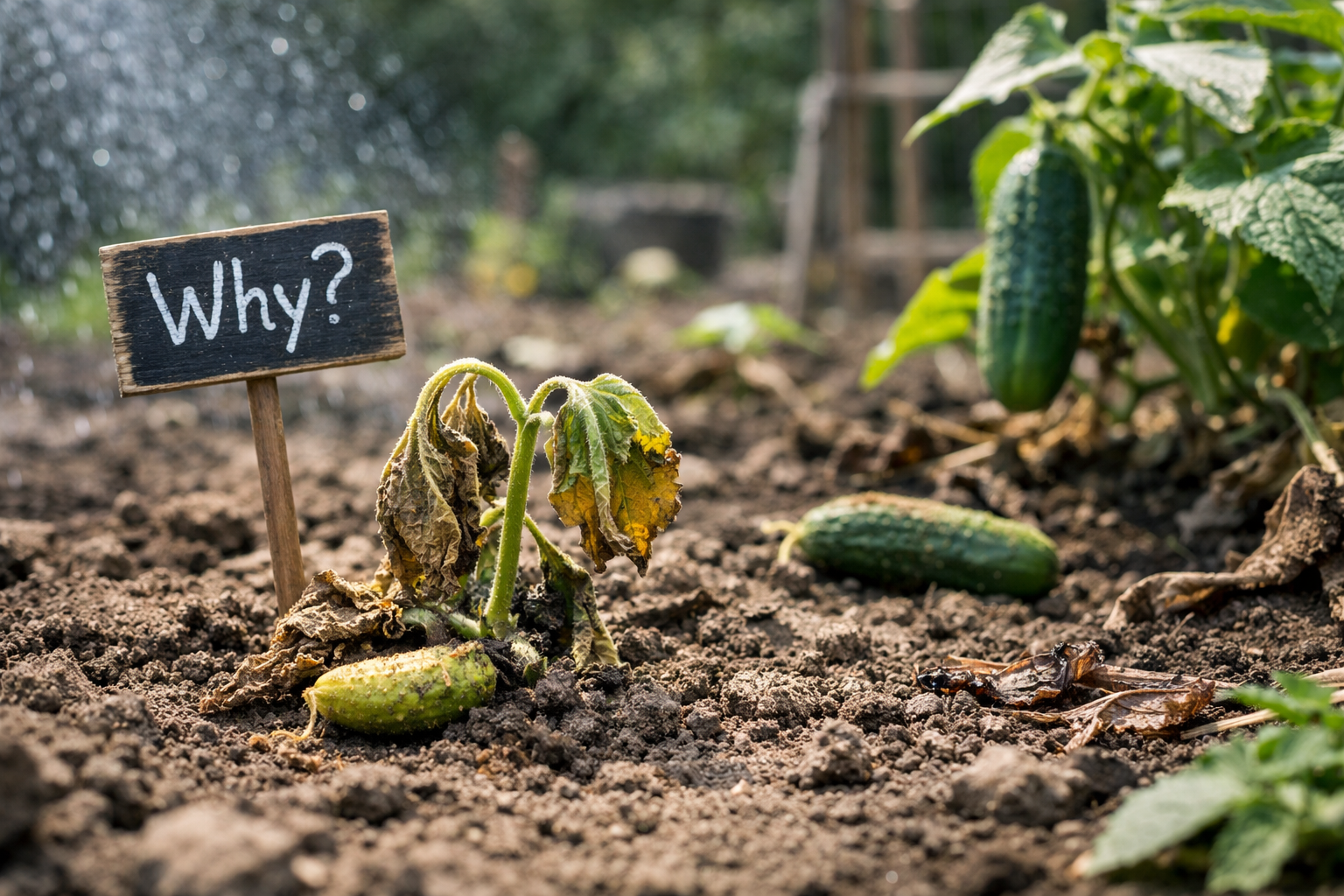
You stare at the vine, see flowers everywhere, and still end up with no cucumbers. I’ve had plants do that maddening thing where they look busy, healthy, even a little smug, and then produce exactly nothing useful.
Most of the time, the answer to why arent my cucumbers growing is not one big mystery. Fruit set is getting interrupted. The usual culprits are poor pollination, heat stress, uneven watering, cramped roots, too much nitrogen, or a pest and disease issue that is slowing the plant down.
The catch is this: those problems do not look the same on the plant. A vine with lots of flowers but no tiny fruit is a different problem from a vine that starts baby cucumbers and then drops them. A lush plant with giant leaves and no flowers is different again.
What you’ll sort out in this guide
- How to tell whether you should wait a little longer or step in now
- Why flowers are the first place to look
- How to separate pollination trouble from water, heat, and feeding mistakes
- What container growers get wrong more often than they realize
- When the problem is fixable and when pests or disease are taking over
- A simple 7-day reset that helps you stop guessing
If you diagnose the symptom instead of throwing random fixes at the plant, cucumbers usually get a lot less mysterious.
Why your cucumbers aren’t growing: the short answer and the quick triage
Here is the fast version.
If your cucumber plant has flowers but no tiny fruit, start with pollination and flower type. If it has tiny cucumbers that turn yellow, stay small, or fall off, think pollination or stress. If it is making a jungle of leaves and not much else, look hard at nitrogen, heat, and root space.
Quick triage
- Flowers, but no baby cucumbers: check whether you have female flowers yet, then look at pollination.
- Baby cucumbers start, then stall or drop: think incomplete pollination, heat, or uneven moisture.
- Lots of vine, almost no fruit: think excess nitrogen, hot weather, or roots that have run out of room.
The main mistake I see is treating every cucumber problem like a fertilizer problem. That is how you end up feeding a plant that already has plenty of energy for leaves and not enough reason to set fruit.
Key takeaway: if you fix the wrong bottleneck, the plant will stay stuck and the season keeps slipping away.
First check the flowers, because this is where most cucumber problems start
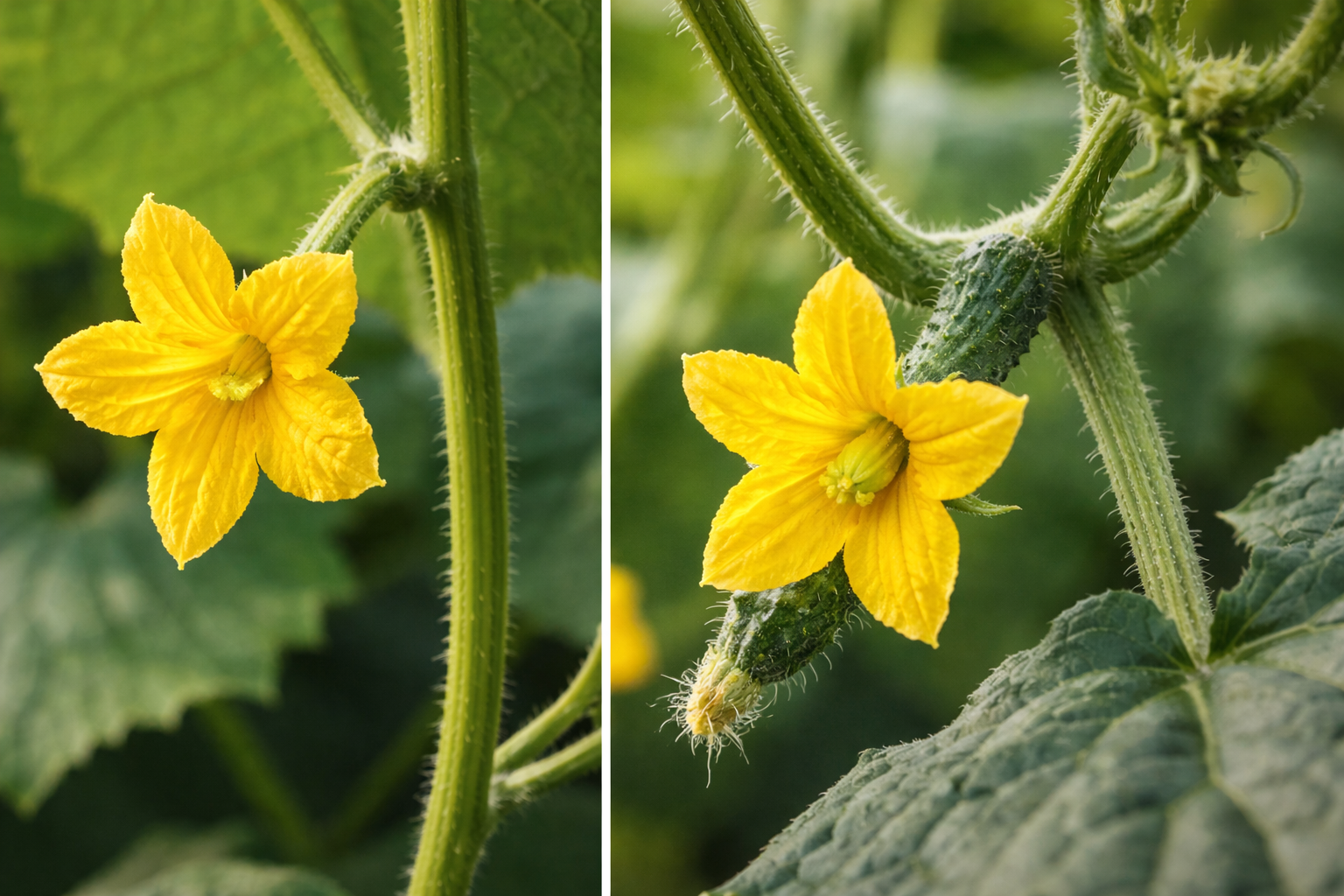
Cucumber flowers tell you more than the leaves do.
Male flowers usually show up first. That part is normal. The University of Illinois Extension notes that cucumbers often open male flowers before female flowers, which is why a plant can look full of blooms and still not be ready to produce fruit yet.
If you have never checked closely, here is the simplest way to tell them apart. A female flower has a tiny immature cucumber right behind the petals. A male flower sits on a thin stem and has no little fruit at the base.
I still remember the first time I bothered to look closely. I was annoyed, ready to blame the fertilizer, and then realized the plant had barely started making female flowers. That changed the whole diagnosis in about ten seconds.
There are three common flower-stage scenarios:
- Only male flowers so far: often normal early on. Give the plant a bit more time unless it has been stuck there while growing poorly.
- Female flowers are present, but no fruit swells behind them: pollination is the first thing to check.
- Female flowers appear and tiny fruit starts, then shrinks: look at pollination, heat, and water swings.
Common mistake: assuming every flower should turn into a cucumber. Early male flowers exist to set up the next stage, not to tease you personally.
If the plant is still young, growing steadily, and only showing male flowers, patience is the right move. If the plant is mature, flowering heavily, and female flowers are aborting, patience stops helping.
If flowers are there but fruit is not forming, pollination is the first suspect
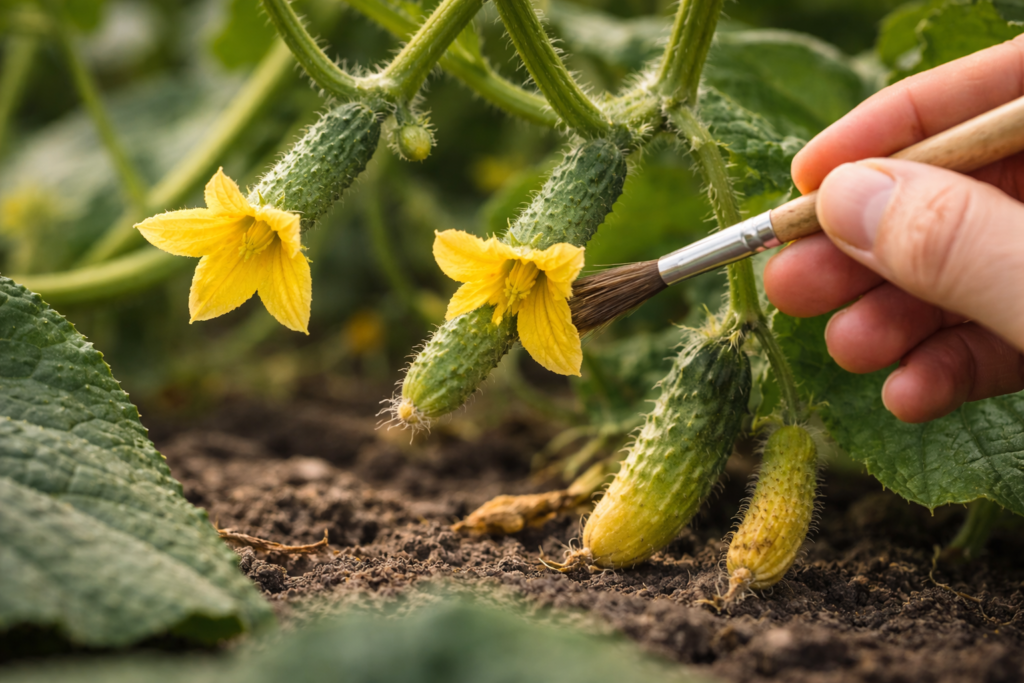
This is the classic cucumber frustration: you get blooms, you get hope, and then the tiny fruit never really takes off.
Pollination failure is often behind that pattern. The Iowa State University Extension points out that poor pollination is a major reason cucumber flowers fail to develop into marketable fruit. Cool rainy weather can keep bees away, and insect sprays used at the wrong time can make things worse.
Here is what poor pollination often looks like in a backyard bed:
- baby cucumbers that yellow quickly
- fruit that starts but never fills out
- crooked or pinched fruit
- female flowers that dry up after opening
If pollinators seem scarce, hand-pollinating is worth trying for a few mornings. Use a small soft brush or simply pick a freshly opened male flower, peel the petals back, and dab the pollen onto the center of the female flower. It is not glamorous gardening. It does work.
Weather matters here too. Hot spells can wreck fruit set in a sneaky way. The plant still looks green, but pollen quality drops and flowers abort more easily. As a practical rule, long stretches above 90°F often line up with worse cucumber fruit set, especially when nights stay warm too.
Pollination checklist
- You can find female flowers, but they do not swell after opening
- Bee activity is low during bloom
- Rainy, windy, or very hot weather hit during flowering
- Fruit starts small, then yellows or drops
Key takeaway: if tiny cucumbers start and then quit, pollination deserves your attention before plant food does.
Healthy vine, no cucumbers? Check heat, water, and nitrogen before you do anything drastic
A cucumber plant that looks lush can still be off balance.
This is the “all leaves, no fruit” version of the problem, and it fools a lot of gardeners because the plant does not look sick. It just looks productive in the wrong direction.
Too much nitrogen is a common cause. You get long vines, fat leaves, fast green growth, and weak fruiting. Lawns love heavy nitrogen. Cucumbers are not that excited by it once they start pushing toward bloom and fruit.
Then there is heat. The plant may stay alive just fine, but fruit set gets shaky. The University of Minnesota Extension notes that excessive heat can reduce flower retention and lower yields in vegetable crops. In the garden, this often shows up as blossoms dropping, sluggish fruit growth, or flowers that go nowhere.
Watering adds another layer. Cucumbers hate the swing from dry to drenched. If the soil dries out hard, then gets soaked, the plant spends its energy recovering instead of setting steady fruit.
Use this as a simple decision rule:
- If the plant is huge and leafy: stop pushing nitrogen and let it rebalance.
- If the top inch dries fast and leaves sag in the afternoon but recover by evening: you are flirting with moisture stress.
- If the soil stays wet and the plant still looks dull: roots may be sitting in airless soil.
I am not a fan of rigid watering schedules for cucumbers. A plant in cool weather and deep soil does not drink like one in blazing sun and a fabric pot. Check the soil. Then water based on what the roots are actually living in.
Common mistake: feeding a cucumber harder because it has no fruit, when the real issue is that it already has too much leaf growth or too much heat stress.
When cucumbers start but stay tiny, go crooked, or fall off
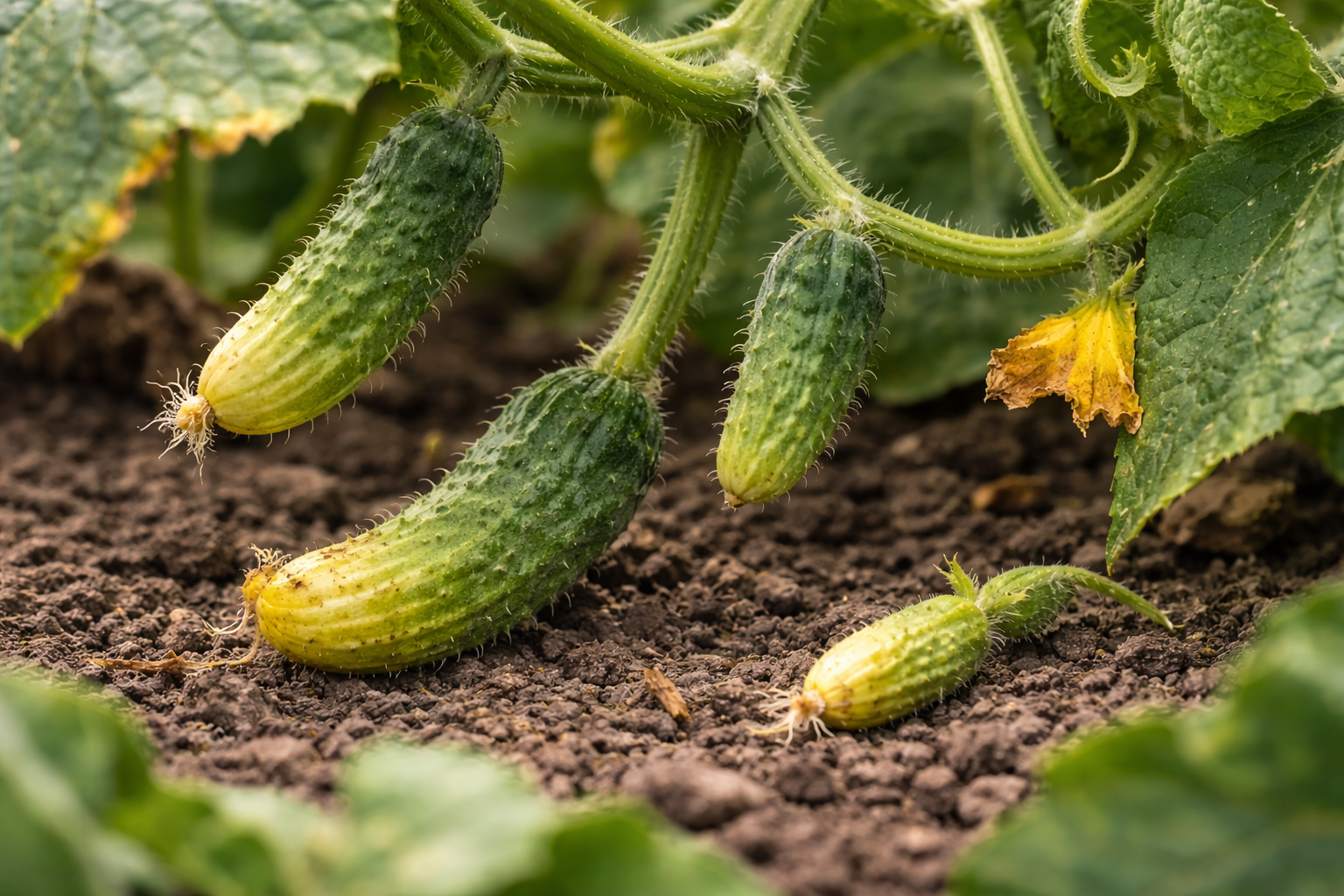
This is not the same problem as “no fruit at all,” and it helps to treat it that way.
If baby cucumbers form but never bulk up, the plant is giving you a clue. Something interrupted development after flowering. The Missouri Botanical Garden notes that misshapen cucumbers are often linked to incomplete pollination, which lines up closely with what home growers see in the yard.
A few patterns are especially useful:
- Narrow, pinched, or underfilled fruit: incomplete pollination is high on the list.
- Repeated tiny fruit drop during hot weather: heat and water stress are likely part of the story.
- Small fruit plus weak, damaged foliage: pests or disease may be dragging the plant down.
There is another overlooked problem here. Oversized cucumbers left on the vine too long can slow down new production. The plant shifts from making more fruit to finishing the big one you forgot under a leaf. I have done this more than once, usually right after congratulating myself on how well the plant was “doing.”
So if you are seeing stalled fruit, harvest regularly, steady the watering, and pay close attention to the next wave of flowers. The new fruit tells you whether your fix worked. The old misshapen fruit usually does not.
Key takeaway: a baby cucumber that stalls is feedback. Read it like a symptom, not a random failure.
Container cucumbers fail for different reasons than bed-grown cucumbers
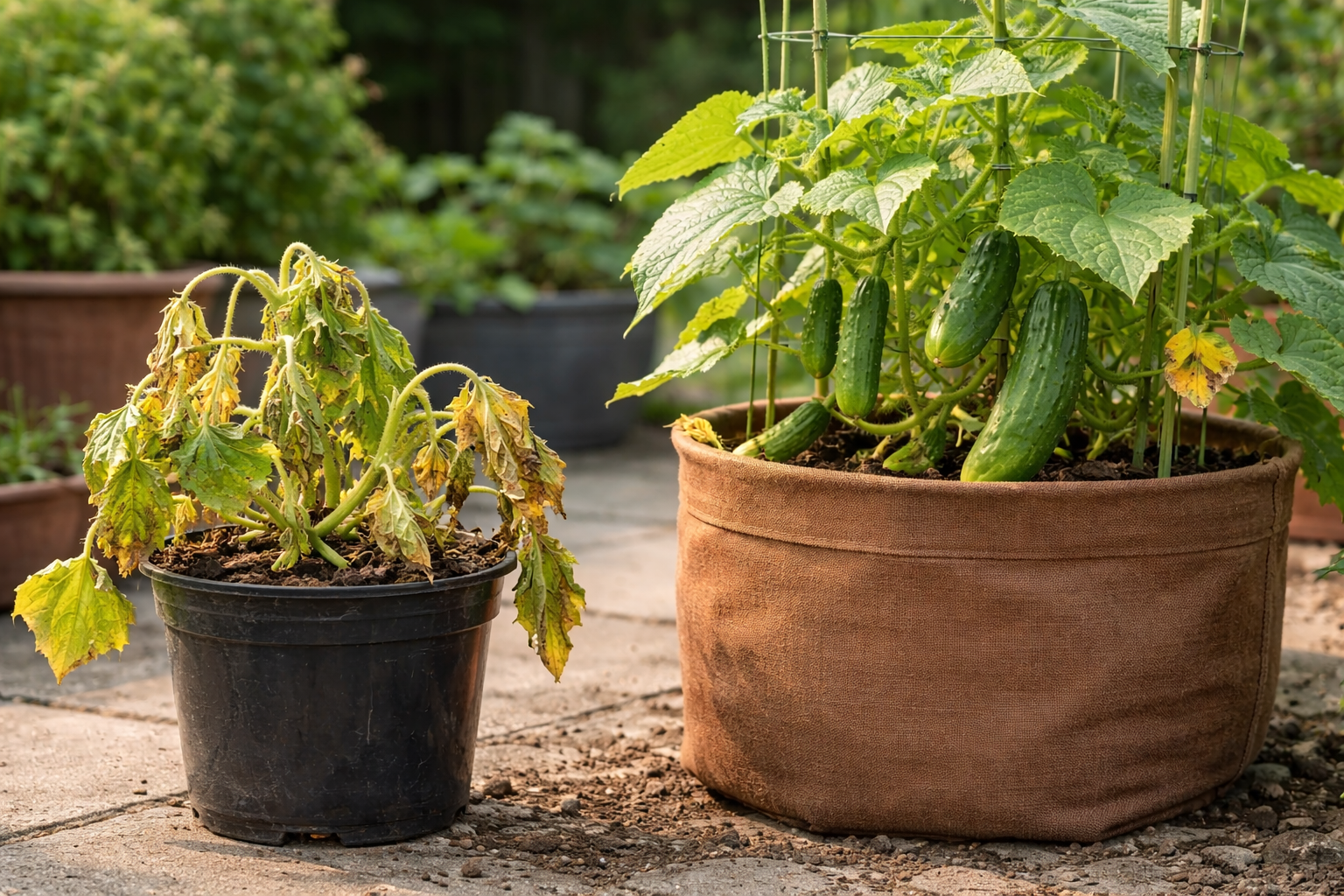
Containers change the whole equation.
A cucumber in a small pot is like somebody trying to run in shoes two sizes too small. They can move for a while, but it gets ugly fast. Roots hit the wall, soil dries quicker, nutrients flush out faster, and hot sun can turn the container itself into part of the problem.
The biggest container trouble spots are simple:
- pot too small for the variety
- too many plants sharing the same soil volume
- watering that swings from dust-dry to swampy
- black or thin-walled containers heating the root zone hard in summer
If you are growing standard vining cucumbers, one plant per 5-gallon container is the bare minimum. Bigger is easier. Compact or bush types forgive smaller setups, but cramped roots still make fruiting less reliable.
If your plant is in a pot and not producing, check size first. This is one of the few container issues that does not improve much with “better care.” The plant simply runs out of room.
If you need a quick sizing reference, this guide on what size container to grow cucumbers lays out the pot size rule cleanly. And if you suspect overcrowding, this piece on how many cucumber plants per container is the next place I’d look.
Common mistake: watering container cucumbers the same way you would water in-ground cucumbers. They are living in a much smaller world, and they react faster.
Variety matters more than most gardeners realize
Sometimes the plant is not “failing.” You are just assuming it works like a different kind of cucumber.
There are three broad types worth knowing:
- Standard monoecious cucumbers: these make male and female flowers on the same plant.
- Gynoecious cucumbers: these produce mostly female flowers and often rely on a pollinizer arrangement that is handled in the seed mix or nearby planting.
- Parthenocarpic cucumbers: these can set fruit without pollination, which makes them especially handy in protected spaces.
If you planted a parthenocarpic variety in a greenhouse, the diagnosis is different from an outdoor slicing cucumber that relies on pollinator traffic. That is why checking the seed packet or plant tag is not fussy bookkeeping. It changes what “normal” looks like.
I like parthenocarpic cucumbers for awkward spots where pollinators are unreliable. Standard outdoor varieties are still excellent, but they ask for the right conditions at the right time. A plant cannot follow rules it was not bred for.
Key takeaway: before you fix the plant, make sure you know what sort of cucumber you planted.
When the problem is pests or disease, here’s how to tell
Not every bad cucumber season is a feeding or pollination issue. Sometimes the plant is under attack.
The trick is to avoid seeing a bug, panicking, and spraying first. Pest and disease problems usually come with a pattern, not a single clue.
Watch for these red flags:
- Cucumber beetles: feeding damage plus the larger worry of disease spread
- Sudden wilt that does not recover: especially suspicious if the soil is moist
- Mottled, distorted leaves: possible virus issue
- Heavy spotting or mildew: reduced leaf area means less energy for fruit
The University of Maryland Extension has a very useful symptom guide for cucumber problems, and it is worth checking if your plant is declining fast rather than just fruiting poorly.
Here is my rough line in the sand. If the vine is otherwise vigorous and the main problem is flower or fruit behavior, the issue is often cultural and fixable. If the plant is collapsing, wilting oddly, or showing widespread leaf damage, pests or disease deserve serious attention.
Be careful with sprays during bloom. A lot of gardeners accidentally make fruit set worse by knocking back pollinators while trying to “help” the plant.
Watch, treat, or remove? A stressed but growing plant usually deserves correction and a little time. A plant with rapid wilt, severe distortion, or spreading disease symptoms may be better removed before it becomes a larger problem.
A 7-day rescue plan to get cucumber growth back on track
If your plant has been stuck, do this for one week before you start buying remedies or blaming the variety.
Day 1: Check the flowers. Are they male only, female but failing, or female with tiny fruit aborting?
Day 2: Check the soil properly. Push a finger in, or use a simple moisture check below the surface. Surface dryness alone is not enough.
Day 3: Inspect the plant for cucumber beetles, sudden wilt, leaf spotting, and distorted growth.
Day 4: Stop extra nitrogen feed unless the plant is clearly pale and undernourished. Most stalled cucumbers do not need a panic dose of fertilizer.
Day 5: Support pollination. Leave flowers open to pollinators and hand-pollinate a few female blooms if activity looks low.
Day 6: Stabilize moisture. Water deeply, then mulch if you have bare soil so the root zone stops swinging so wildly.
Day 7: Reassess the new wave of flowers and tiny fruit. That is your scoreboard.
You are looking for small positive movement, not overnight magic. New female flowers should hold better. Tiny fruit should stay green and begin thickening. The plant should stop cycling through disappointment.
Key takeaway: judge the plant by the next set of flowers and fruit, not by the damaged fruit that already failed.
FAQ
Why do my cucumber plants have lots of flowers but no cucumbers?
The two most common reasons are that the plant is still in its male-flower stage or female flowers are not getting pollinated well. Heat, low bee activity, and overfeeding with nitrogen can also keep fruit set low.
Do cucumbers need two plants to produce fruit?
No. Standard cucumber plants carry male and female flowers on the same plant. What they do need is successful pollination, unless you are growing a parthenocarpic variety that sets fruit without it.
Why do baby cucumbers turn yellow and fall off?
That usually points to incomplete pollination or stress during early fruit development. Heat and uneven watering are common partners in that problem.

Michael Rowan is the founder and lead writer at The Garden Playbook. He has spent 10+ years growing plants across a range of settings — from indoor houseplants and container gardens to raised beds and in-ground plots — adapting methods to different light levels, seasons, and growing conditions.
Michael focuses on practical, experience-based guidance grounded in fundamentals: soil health, watering strategy, plant nutrition, pruning and propagation, and integrated pest management (IPM). His work aims to help readers diagnose common problems (such as yellowing leaves, stunted growth, or pest pressure) and apply straightforward solutions that are realistic for home gardeners.
At The Garden Playbook, Michael develops tutorials and plant guides using a consistent process: documenting real outcomes where possible, explaining the “why” behind each step, and verifying higher-risk topics (such as plant toxicity or pest treatment options) against reputable horticultural references.